

TL;DR
Mobile detailers need steamers that run on standard 110V household power since 220V outlets don’t exist in client driveways. Your options range from $180 consumer units (Dupray Neat, McCulloch MC1385) to $2,000+ commercial boilers (Hoffman ELG4, Fortador Volt Mini). Budget steamers work for supplemental tasks like cup holders and vents, but practitioners consistently report that sustained professional use requires a commercial-grade boiler. The Hoffman EVD-1 ($1,199) hits the sweet spot for most mobile detailers: USA-made pressurized boiler, 110V power, transparent pricing, and lifetime technical support.
What Is the Best 110V Steamer for Mobile Detailing?
The best 110V steamer for mobile detailing is the Hoffman EVD-1 because it combines commercial-grade boiler construction, continuous steam production, standard household power compatibility, transparent pricing, and lifetime technical support. For professionals detailing multiple vehicles per day, it offers a better long-term value than consumer steamers that lose pressure during extended use.
For budget-conscious detailers, the McCulloch MC1385 and Dupray Neat provide affordable entry points for testing steam cleaning workflows. For maximum pressure, the Chief Steamer MINI 125 delivers up to 125 PSI while still operating on standard 120V power.
Quick Recommendations
Use Case | Recommended Steamer |
|---|---|
Best Overall | Hoffman EVD-1 |
Highest PSI | Chief Steamer MINI 125 |
Best Budget Option | McCulloch MC1385 |
Most Portable | Dupray Neat |
Best Premium Option | Fortador Volt Mini |
Best Certified Commercial Unit | Hoffman ELG4 |
Why Voltage is the First Filter for Mobile Detailers
Every “best steam cleaner for cars” article on the internet misses the point. They review products without addressing the single most important constraint for mobile operators: you’re plugging into a client’s garage outlet. That means 110V, 15-amp circuits. No 220V. No three-phase power. Sometimes not even a dedicated circuit.
This limitation shapes everything. It determines which steamers you can run, which generators you need if there’s no outlet available, and how much sustained steam pressure you’ll actually get. A 110V steamer for mobile detailing isn’t just a preference. It’s a hard requirement that eliminates most commercial and industrial equipment from consideration.
The global car steam cleaner market is projected to reach $250 million by 2033, growing at 9.2% annually. Mobile detailing is a significant piece of that growth, and manufacturers are paying attention. Still, finding honest comparisons of 110V units built for professional daily use takes real digging.
This guide covers seven steamers across every budget tier. Each one runs on standard 110V/120V power. For each, you’ll get real specs, real limitations, and real feedback from mobile detailers who use them on the job.
Explore the Hoffman EVD-1 for a closer look at commercial steam equipment options.
Who Should Buy a 110V Steamer?
Not every detailer needs a commercial boiler.
A 110V steamer is ideal for:
Mobile detailers working at customer homes
Apartment-complex detailing services
Fleet maintenance contractors
Dealership reconditioning teams
RV and boat detailers
Interior restoration specialists
A commercial-grade steamer becomes worthwhile once you consistently detail more than 10 to 15 vehicles per month. Below that threshold, a consumer-grade unit may provide sufficient value while keeping startup costs lower.
At-a-Glance Comparison Table
Model | Price | PSI | Temp | Weight | Runtime | Warranty | Best For |
|---|---|---|---|---|---|---|---|
Hoffman EVD-1 | $1,199 | 40 | Commercial boiler temp | N/A | Continuous (boiler) | 3yr tank + lifetime support | USA-made daily commercial use |
Chief Steamer MINI 125 | ~$999–$1,200 | 125 | N/A | N/A | Continuous | N/A | High-PSI daily mobile work |
US Steam Falcon | ~$800+ | 70 | 305°F | N/A | Boiler-limited | 3 years | Hot water injection pros |
Fortador Volt Mini | $1,949 | 100 | 338°F | 16.5 lbs | N/A | 5yr boiler, 12mo parts | Lightweight high PSI |
Hoffman ELG4 | $1,899–$2,099 | N/A | Commercial boiler temp | N/A | Continuous (boiler) | 3yr + ASME/UL cert | Certified commercial upgrade |
McCulloch MC1385 | ~$220 | 58 (drops to ~35) | 200°F+ | ~10 lbs | 120 min | 2 years | Budget starter |
Dupray Neat | ~$180 | 50 | 275°F | 9 lbs | 50 min | Limited | Ultra-portable supplemental use |
Commercial vs Consumer Steamers at a Glance
Feature | Consumer Steamers | Commercial Steamers |
|---|---|---|
Typical Cost | $150-$300 | $800-$2,500+ |
Boiler Material | Plastic / Aluminum | Stainless Steel |
Continuous Fill | Rare | Common |
Expected Lifespan | 1-3 Years | 10+ Years |
PSI Stability | Drops During Use | Consistent |
Repairability | Replace Unit | Serviceable |
Daily Usage | Light Duty | Heavy Duty |
Warranty Support | Limited | Manufacturer Support |
How to Choose a 110V Steamer for Mobile Detailing
Before jumping into individual reviews, there are five things every mobile detailer should understand about steam equipment.
PSI: Advertised vs. Sustained Pressure
The number on the box and the number during actual use are rarely the same. Practitioners on Auto Geek Online report that the McCulloch MC1385, rated at 58 PSI, drops to roughly 35 PSI after a couple seconds of sustained use. This is common with consumer canister steamers. Pressurized boiler units (like the Hoffman EVD-1 or Chief Steamer 125) maintain more consistent output because steam is generated continuously rather than stored in a finite tank.
Understanding how much PSI you need for your specific work matters more than chasing the highest spec number.
Weight and Van Space
Mobile detailing vans are cramped. A 9-pound Dupray Neat takes up almost no space. A 16.5-pound Fortador Volt Mini is still manageable. Larger boiler systems may need a dedicated shelf or cart. Think about your vehicle layout before buying.
Tank Capacity vs. Continuous Boilers
Consumer steamers use pressurized tanks that must cool before refilling. A 50-minute runtime means stopping mid-detail on SUVs. Commercial boilers generate steam continuously, which means no downtime between vehicles. If you’re doing three or more cars a day, this distinction matters enormously.
Generator Compatibility
This is the conversation nobody’s having. If you’re truly mobile (parking lot details, apartment complexes, offices without accessible outlets), you need a generator. Chief Steamer specifies their MINI 125 requires a generator with at least 3,000 watts and a 120V circuit with at least 15 amps. The Hoffman EVD-1, designed for standard 110V outlet use, is more forgiving in this regard.
Understand power requirements for commercial steamers before you commit to a unit that exceeds your electrical setup.
Generator Sizing Guide for Mobile Detailing Steamers
One of the most common mistakes mobile detailers make is buying a generator that cannot support their steamer under load.
Recommended Generator Sizes
Steamer Type | Minimum Generator Size |
|---|---|
Consumer Steamers | 2,000W Inverter |
Mid-Range Commercial Units | 3,000W Inverter |
High-Output Commercial Boilers | 3,500-4,000W Inverter |
Steamer + Extractor Setup | 5,000W+ |
When possible, choose a pure sine wave inverter generator. It produces cleaner power and reduces the risk of damaging electronic controls inside modern steam equipment.
Steam is Not Extraction
This is the biggest misconception in mobile detailing. Steam cleaners sanitize and loosen dirt with high-heat vapor. They do not extract the dirt like a wet vacuum does. For best results, steam first to break down grime, then follow with a shop vac or extractor. Many mobile detailers buy a steamer expecting it to replace an extractor, then feel disappointed. They’re complementary tools, not substitutes.
For a deeper comparison, see this guide on steamers vs. carpet extractors.
The 7 Best 110V Steamers for Mobile Detailing
1. Hoffman EVD-1
Best for: Mobile detailers who want a USA-made commercial boiler they can depend on daily, with transparent pricing and actual manufacturer support.
Price: $1,199
Key Specs:
110V, 1-gallon pressurized boiler
40 PSI continuous steam output
Foot pedal control for hands-free activation
Ships with steam nozzle, foot pedal, fill funnel
Compatible with steam irons, brushes, and spray guns
Made in Dushore, Pennsylvania
Why it stands out:
The EVD-1 is a pressurized boiler, not a flash steamer or canister unit. That distinction matters for mobile detailing. Flash steamers and consumer canisters lose pressure during sustained use. A boiler maintains consistent steam output because it’s generating steam continuously from a heated reservoir.
The foot pedal is a genuine mobile detailing advantage. When you’re working an interior with one hand holding a brush and the other maneuvering around seats, foot-activated steam control saves real time. Practitioners in Reddit communities (r/jewelers, r/BenchJewelers) have reported Hoffman equipment lasting 24+ years. While those references come from jewelry applications, the underlying boiler construction is identical.
Tradeoffs:
40 PSI is lower than some competing commercial units on raw pressure
No chemical injection feature
Weight and dimensions not published, so assess in-person or via virtual demo
Support and warranty:
3-year tank warranty plus 1-year components warranty
Unlimited lifetime remote technical support
30-day money-back return policy
Free shipping within the contiguous U.S.
Financing available including 0% APR promotions
At $1,199, the EVD-1 sits at the entry point of commercial-grade steamers. The lifetime technical support and 30-day return policy mean you can test it on actual mobile jobs before committing.
See the EVD-1 and Hoffman’s full product line to understand how pressurized boilers differ from flash steamers.
2. Chief Steamer MINI 125
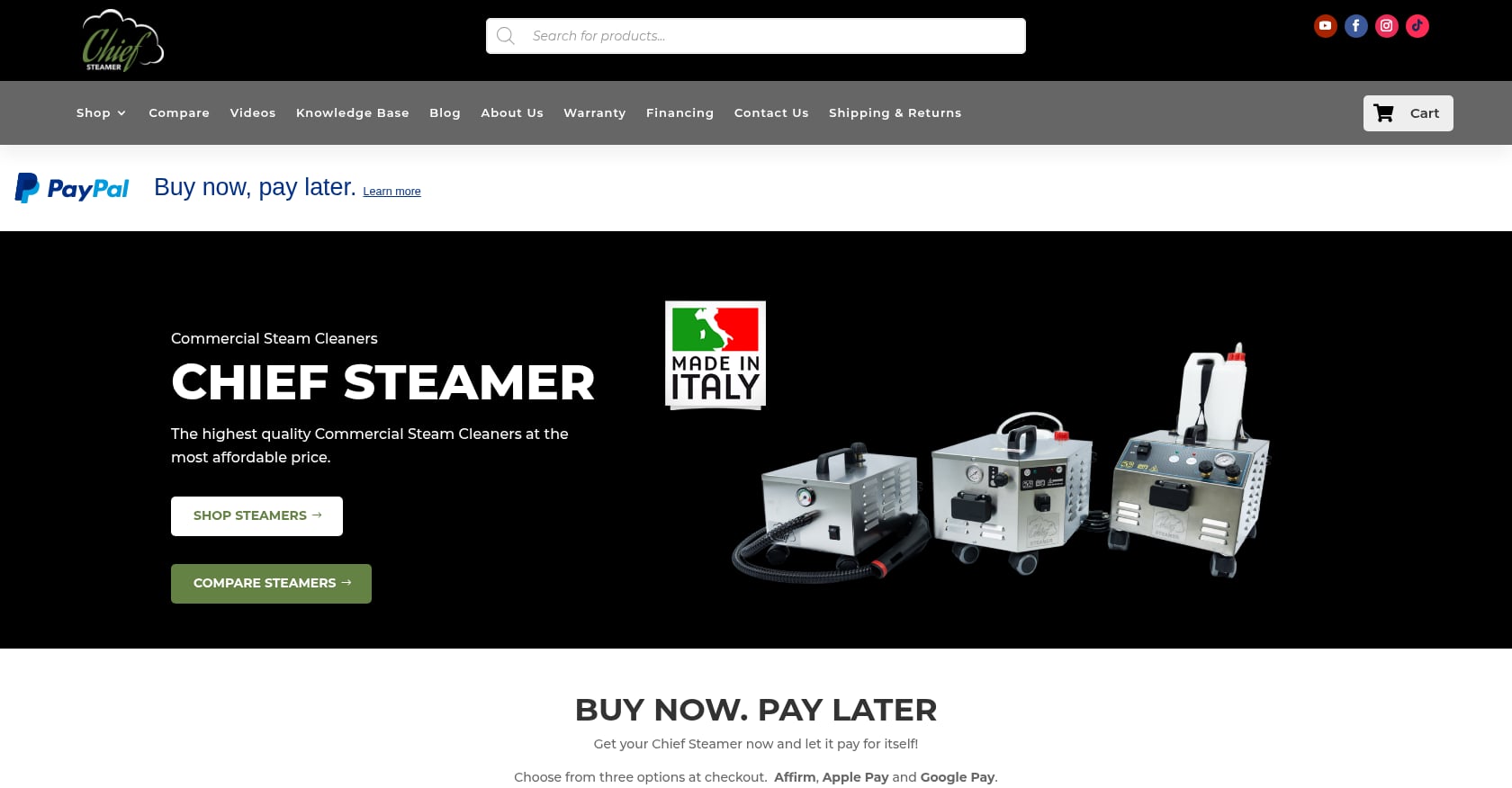
Best for: Full-time mobile detailers doing multiple vehicles daily who need the highest PSI available on 120V power.
Estimated Price: ~$999–$1,200
Key Specs:
120V (standard household power)
125 PSI
Chemical injection capability
Stainless steel construction, made in Italy
Requires a generator with at least 3,000 watts for truly mobile use
Why it stands out:
This unit has the strongest mobile detailer testimonials of any product in this space. A semi-truck detailing specialist reported, “At 120 volts you can easily plug into any outlet, the steam pressure and volume are strong.” A California mobile detailer stated, “I use this thing pretty much daily and I’ve done jobs that would’ve been either impossible without the Chief.” Another mobile operator chose the 125 over the larger 155 model specifically “since I’m running a mobile business and the 155 would’ve required a generator upgrade to something much larger and louder.”
The chemical injection feature is a standout. One mobile detailer noted, “The chemical injection is fantastic and to be honest I’ve only used water in the second tank and that alone has done the trick.” Consumer steamers simply don’t offer this capability.
Tradeoffs:
Requires a 3,000W+ generator for locations without outlet access, adding $400–$800 to your setup cost
Recovery time between steam bursts is longer than the 155 model
No ASME/UL certification mentioned in available documentation
Pricing is not always transparent online
3. US Steam Falcon
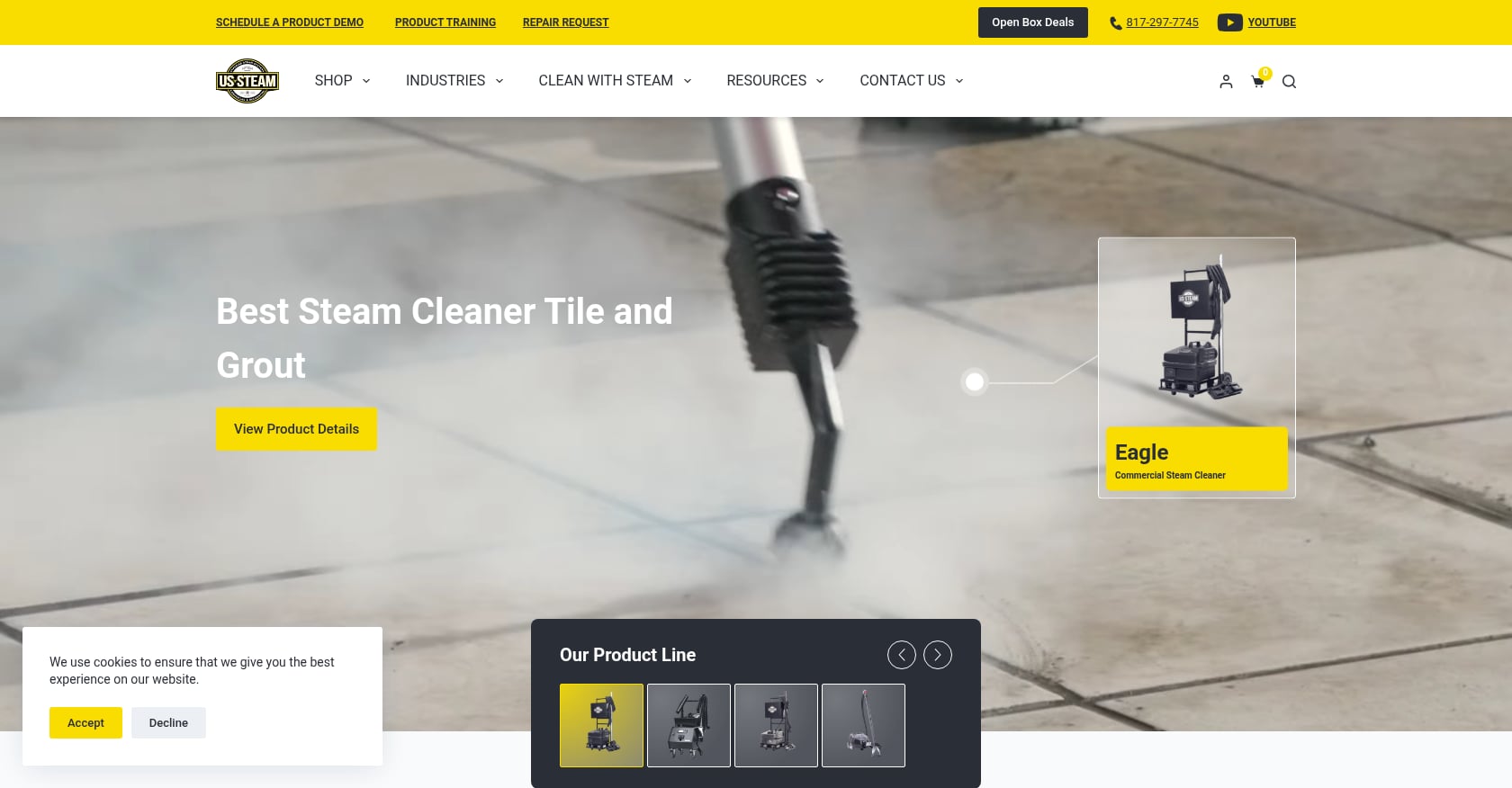
Best for: Mobile detailers who want Italian-built commercial quality with hot water injection in a compact 110V package.
Estimated Price: ~$800+
Key Specs:
110V power
70 PSI max pressure
305°F steam temperature
1-liter stainless steel boiler
Hot water injector with ergonomic hose handle controls
13-piece accessory kit
3-year warranty with in-house repairs
Why it stands out:
A San Diego professional mobile detailing service reported standardizing on the Steam Falcon for their operations, citing “exceptional performance, continuous operation capability, and outstanding durability.” The 305°F steam temperature is significantly higher than consumer units, and the hot water injection adds cleaning versatility that matters when tackling heavily soiled interiors.
Tradeoffs:
1-liter boiler is small, requiring cooldown before refilling unless you step up to the Eagle or higher models with continuous fill
Not ASME/UL certified
Price is higher than consumer units but less than the Chief Steamer or Fortador
Limited online pricing transparency
4. Fortador Volt Mini
Best for: Mobile detailers who want 100 PSI in a sub-17-pound package running on standard 120V.
Price: $1,949 (includes free shipping and fogger for disinfection)
Key Specs:
USA-120V or EU-220V options
100 PSI
338°F maximum temperature
AISI 304 stainless steel construction
16.5 lbs (7.5 kg)
5-year boiler warranty, 12-month parts (extendable to 36 months)
Why it stands out:
The specs are genuinely impressive for a 110V steamer for mobile detailing. At 338°F and 100 PSI, this is the highest-temperature unit on this list. It weighs just 16.5 pounds, making it one of the most portable commercial options available. The included fogger adds a disinfection service you can upsell to clients.
Tradeoffs:
Fortador is primarily known for diesel-powered steamers (their Pro line uses Lamborghini burners). The Volt Mini is their electric entry, meaning limited user feedback specifically from auto detailing professionals
At $1,949, it’s among the most expensive options without the ASME/UL certification that Hoffman’s Pro line offers
12-month standard warranty on parts is shorter than most competitors in this price range
5. Hoffman ELG4
Best for: Growing mobile detailing businesses ready to invest in a certified, commercial-grade boiler built for daily professional use.
Price: $1,899–$2,099 (110V); optional 220V/3kW upgrade available
Key Specs:
ASME/UL certified
1.5kW heating on 110V
Manual fill
3-year tank warranty plus 1-year components
Optional equipment cart and steam wand upgrades
Made in the USA
Why it stands out:
ASME and UL certification is the ELG4’s defining differentiator. Most competing detailing steamers in this price range cannot match it. For mobile detailers who work with commercial clients (dealerships, fleet accounts, corporate campuses), this certification can be a contractual requirement. It’s also a meaningful safety consideration when you’re operating pressurized equipment in close quarters.
The Workhorse Protection Programs are unique in this market. The Workhorse Lite plan ($216/year) covers automatic consumable shipments, VIP support, and compliance documentation. The Workhorse Essential plan ($280/year) adds full factory reconditioning every 24 months, a 47-point inspection, and a hot-swap loaner machine so you’re never without a steamer during servicing.
Tradeoffs:
Higher price point than the EVD-1
Manual fill system (no automatic pump)
PSI rating not published in available documentation
The optional 220V upgrade defeats the mobile-friendly purpose unless your setup already supports it
6. McCulloch MC1385 Deluxe Canister
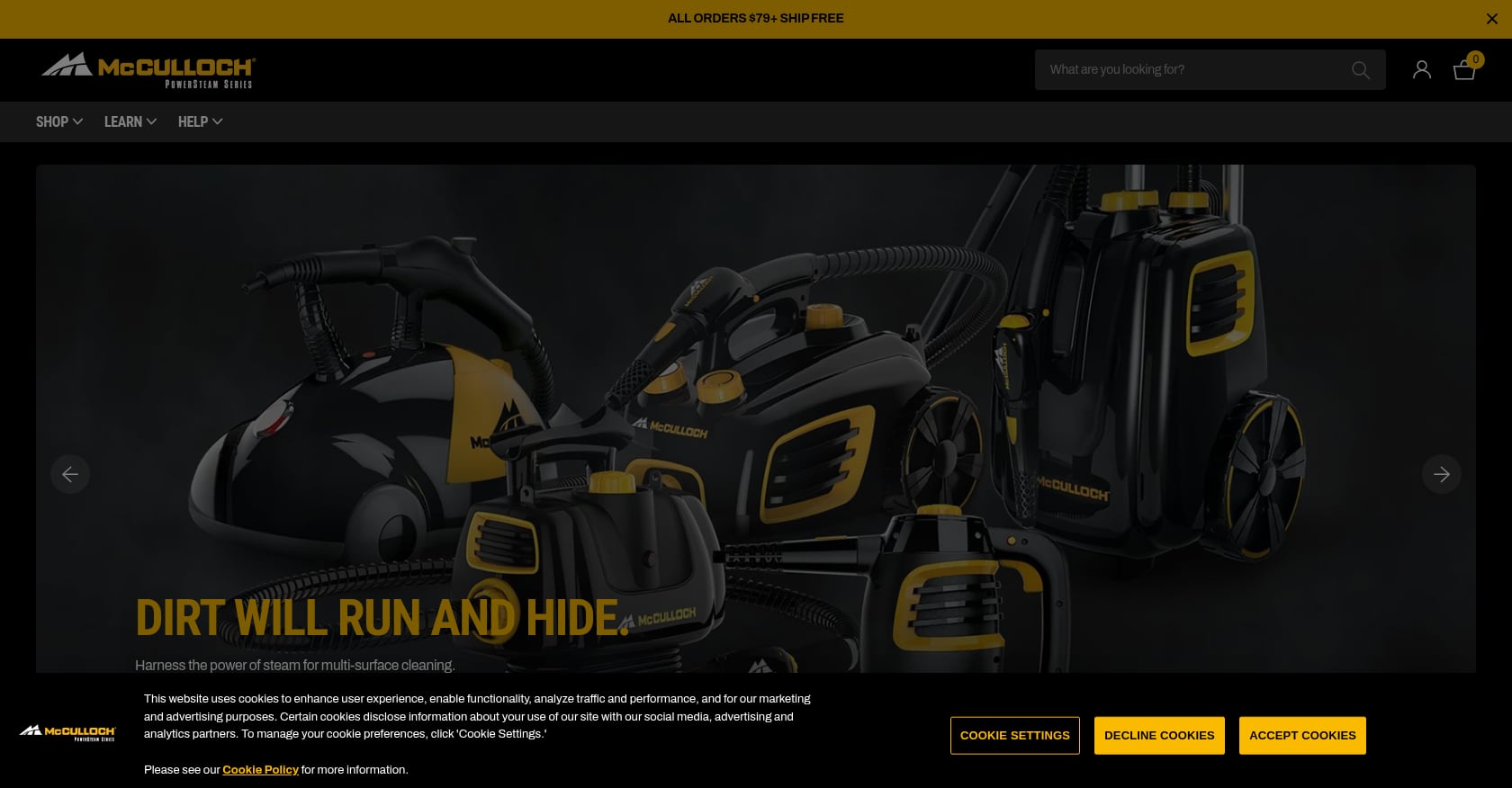
Best for: New mobile detailers on a tight budget doing supplemental steam work alongside chemical cleaning.
Price: ~$220 MSRP (frequently found at $149–$180 on sale)
Key Specs:
110V
58 PSI (advertised) with variable steam control
64-ounce water tank, heats in under 12 minutes
Up to 120 minutes of runtime
18-foot power cord and 7-foot steam hose
23 included accessories
~10 lbs
2-year warranty
Why it stands out:
At under $200 on sale, the MC1385 is the most accessible entry point for testing whether steam fits your mobile detailing workflow. The 120-minute runtime is longer than any other consumer unit on this list. The 18-foot power cord plus 7-foot hose gives you 25 feet of reach from the outlet, which is handy when working in driveways.
Real-world feedback:
On Auto Geek Online, one user reported, “It says 58 PSI initially but goes down to 35 after a couple seconds of use,” though they still found it effective for seatbelts, cup holders, and vents. On Autopia forum, a detailer reported purchasing the earlier MC1275 model “only to be heavily disappointed as I found it unable to remove dirt and grime any quicker or better than I could with a towel and some APC.” The MC1385 is an improvement, but shares similar fundamental limitations for heavy professional work.
Tradeoffs:
Not a continuous refill unit. You have to wait for the unit to cool down before refilling with water, which means potential downtime during busy days
Pressure drops significantly during sustained use
Plastic construction won’t survive years of daily professional abuse
No chemical injection capability
An experienced detailer on Autopia put it bluntly: “You’re not going to find a steamer worth using for under $500.” That’s harsh but reflects a pattern across forums. The McCulloch works as a testing ground, not a career tool.
7. Dupray Neat
Best for: Mobile detailers who need maximum portability for lighter interior refreshes rather than heavy restoration work.
Price: ~$180
Key Specs:
110V
50 PSI (3.5 bar)
275°F
54oz. tank capacity
8-minute heat-up time
9 lbs with retractable handle
17-piece accessory kit
ETL listed for USA and Canada
Why it stands out:
One buying guide noted, “The Dupray Neat wins for mobile work… it weighs only 9 pounds, heats in 7 minutes, and runs on standard 110V power.” At 9 pounds with a retractable handle, it’s the lightest and most compact 110V steamer for mobile detailing on this list. The 8-minute heat-up means you can have steam ready before you’ve finished your walk-around inspection.
Critical safety notice:
As of February 26, 2026, Dupray recalled approximately 651,145 Dupray Neat steam cleaners citing a potential burn hazard. Check your unit’s serial number before use.
Tradeoffs:
50 minutes of runtime means refilling mid-detail on larger vehicles, and cooling is required before refilling
On Autopia forum, a detailer reported his Dupray/Technovap continuous-fill machine lasted less than a year, and a replacement “lasted less than a year” as well
Consumer-grade product being pressed into professional service
50 PSI is marginal for heavy interior work like ground-in stains or heavily soiled carpets
Budget vs. Commercial: The Real Difference
The gap between a $200 steamer and a $1,200 steamer isn’t just about specs on paper. It’s about what happens over 6 months of daily mobile use.
Boiler construction is the first divide. Consumer units use plastic tanks and aluminum heating elements. Commercial units use stainless steel boilers designed for continuous duty. Understanding the differences between pressurized and non-pressurized steamers clarifies why a commercial boiler delivers more consistent results.
PSI sustainability is the second. A consumer steamer rated at 58 PSI that drops to 35 PSI during use is functionally a 35 PSI steamer. A commercial boiler rated at 40 PSI that holds 40 PSI continuously is the stronger tool.
Repairability is the third, and often the deciding factor. When a McCulloch breaks, you buy another McCulloch. When a Hoffman needs service, you have unlimited lifetime remote technical support, factory technicians in Pennsylvania, and protection plans that include loaner machines during reconditioning.
One detailing service estimated that steam cleaning technology saves businesses up to $4,000 annually while reducing water usage by 95%. A Vapamore user on Autopia calculated he could steam 22 vehicle interiors using just 3 gallons of distilled water for a total cost of $2.07. The cost per detail is almost negligible once you own the equipment.
That’s the real math. A $1,199 commercial steamer that lasts 10+ years at $0.09 per vehicle in consumables costs far less than replacing $200 consumer units every year or two.
Cost-Per-Detail: The ROI Case for Commercial Equipment
Professional steam detail services charge $150 to $300 per vehicle. If your 110V steamer for mobile detailing costs $1,199 and your consumable cost is roughly $0.09 per vehicle in distilled water, the unit pays for itself within your first 8 to 10 full details. Even accounting for generator fuel and microfiber towels, the margins are extraordinary compared to chemical-heavy cleaning methods.
The $4,000 annual savings figure that mobile detailing services report comes from reduced chemical purchases, lower water consumption, and faster job completion. Steam does in minutes what spray-and-wipe methods take much longer to accomplish, especially on seams, vents, and textured surfaces.
For detailers considering the tax implications, commercial steam equipment often qualifies under Section 179 deductions. Hoffman offers financing options including 0% APR to help spread the investment.
Common Mobile Detailing Tasks and Recommended PSI
Task | Recommended PSI |
|---|---|
Air Vents | 35-50 PSI |
Cup Holders | 35-50 PSI |
Door Panels | 40-60 PSI |
Leather Cleaning | 40-70 PSI |
Cloth Seats | 60-90 PSI |
Carpet Spot Removal | 70-100 PSI |
Heavy Interior Restoration | 100+ PSI |
Frequently Asked Questions
Can I use a 110V steamer off a generator?
Yes, but size the generator correctly. Chief Steamer specifies a minimum of 3,000 watts for their 120V unit. Lower-draw consumer steamers like the McCulloch or Dupray can run on smaller inverter generators (2,000W should suffice). Always use a pure sine wave inverter generator, not a conventional one, to protect the steamer’s electronics. The Hoffman EVD-1 is designed for standard 110V outlet use, making it more forgiving with generator selection.
How much PSI do I actually need for auto detailing?
For light interior work (vents, cup holders, seat seams), 40 to 50 PSI is sufficient. For heavily soiled carpets, ground-in stains, and upholstery restoration, 70+ PSI makes a noticeable difference. The key metric isn’t peak PSI but sustained PSI under continuous use. A 125 PSI rating means nothing if it drops to 60 PSI after three seconds.
Steam cleaner vs. extractor: do I need both?
Almost certainly yes. Steam loosens and sanitizes. It does not extract. For thorough interior cleaning, steam first to break down grime, then follow with a shop vac or hot water extractor to pull the dissolved contaminants out. Many mobile detailers carry both a steamer and a portable extractor.
How long does a commercial steamer last?
Consumer units typically last 1 to 3 years under daily professional use. Commercial boilers built with stainless steel tanks can last a decade or more. Reddit users in jewelry communities have reported Hoffman steamers running for 24+ years. Understanding commercial boiler longevity helps justify the higher upfront cost.
Should I use distilled water?
Always. Tap water contains minerals that build up as scale inside the boiler, reducing efficiency and eventually causing failures. Distilled water costs roughly $1 per gallon at any grocery store. At $0.09 per vehicle in water costs, this is not the place to cut corners.
Is 110V enough for professional mobile detailing?
For the majority of mobile detailing work, absolutely. The 110V constraint limits you compared to 220V shop units, but manufacturers like Hoffman, Chief Steamer, and Fortador have engineered commercial-grade units specifically for this voltage. The trade-off is slightly lower wattage (meaning slower heat-up or recovery times), not inferior cleaning capability. For a more detailed comparison, read this guide on 110V vs. 220V commercial steamers.
What’s the difference between a flash steamer and a boiler?
A flash steamer heats water instantly as it passes through a heating element. A boiler heats a reservoir of water under pressure, creating stored steam that’s ready on demand. Boilers deliver more consistent pressure and temperature. Flash steamers heat faster but can’t sustain output as reliably during continuous use. For mobile detailing, boilers are generally preferred for their sustained performance.
Do any 110V mobile detailing steamers come with ASME/UL certification?
Among units reviewed here, only the Hoffman ELG4 carries both ASME and UL certification. This matters for detailers who work with commercial clients that require certified equipment on their premises, or for anyone who wants the safety assurance of third-party pressure vessel inspection.
Can steam cleaning damage vehicle electronics?
When used correctly, steam cleaning is generally safe around modern vehicle interiors. Avoid directing concentrated steam into exposed electrical connectors, infotainment ports, and damaged wiring.
Is steam cleaning safe for leather seats?
Yes. Most professional detailers use steam on leather when paired with proper brushes and conditioners. Keep the nozzle moving and avoid prolonged heat exposure on one area.
How much water does a steam cleaner use per vehicle?
Most steamers use less than one gallon of water per vehicle. This makes steam cleaning one of the most water-efficient detailing methods available.
Can a steam cleaner remove odors?
Steam can help eliminate odor-causing bacteria and organic contamination, but severe smoke, mold, or pet odors often require additional odor-removal treatments.
Best 110V Steamer by Budget
Under $250
Dupray Neat
McCulloch MC1385
$800-$1,200
US Steam Falcon
Chief Steamer MINI 125
Hoffman EVD-1
$1,500+
Hoffman ELG4
Fortador Volt Mini
The Bottom Line
The best 110V steamer for mobile detailing depends on where you are in your business. If you’re testing whether steam fits your workflow, a McCulloch MC1385 at $200 answers that question cheaply. If you’re building a career around mobile detailing, the math points clearly toward commercial equipment.
The Hoffman EVD-1 at $1,199 offers the combination most mobile detailers need: a pressurized boiler on 110V power, USA manufacturing, transparent pricing, and the kind of after-sale support (lifetime technical support, 30-day returns, 0% financing) that consumer brands simply don’t provide. For operators ready to scale, the ASME/UL-certified Hoffman ELG4 adds the compliance documentation and factory reconditioning programs that protect your investment over the long haul.
Explore Hoffman’s commercial steamer lineup and see what questions to ask before making your decision.


