

TL;DR
The best commercial steamer for hat shops depends on workload. For occasional retail reshaping and customer touch-ups, a non-pressurized hat steamer (Jiffy-class, ~212°F at atmospheric pressure) gets the job done safely on a 110V outlet. For daily shaping, blocking, and creasing, especially on felt, a pressurized electric steam boiler running 40 to 70 PSI (287°F to 316°F) with a hat shaping head is the right tool. Pressurized systems deliver hotter steam that transfers heat faster, which means quicker fiber relaxation and shorter cycle times when you’re working through a stack of hats.
For low-volume retail shops (under 10 hats/day), the Jiffy J-4000H is the industry standard for safe, non-pressurized shaping. For high-volume production and custom blocking (10+ hats/day), a pressurized electric steam boiler (40-70 PSI) like the Hoffman JEL3 or Reliable 7000 series is essential. Pressurized systems reach temperatures of 287°F to 316°F, allowing for significantly faster fiber relaxation and professional-grade creasing.
What “Commercial” Actually Means in a Hat Steamer
A commercial hat steamer is a high-duty steam appliance built for sustained daily use in a hat shop, western store, or millinery studio. It is not a handheld travel steamer. It is not a tea kettle. It is purpose-built equipment designed to shape, block, crease, stretch, or refresh felt and straw hats quickly and repeatably throughout the workday.
The word “commercial” carries weight here for two reasons. First, commercial units deliver stable steam output over long sessions, something hobby-grade tools cannot sustain. Second, commercial settings often require safety certifications (ASME and UL) on pressurized equipment, and established manufacturers publish those listings on their spec sheets source.
Practitioners on Reddit put it bluntly. Across multiple threads in r/CowboyHats and r/hats, the consensus is consistent: “A tea kettle or handheld works fine for the occasional reshape, but the big shop units are only worth it if you’re shaping hats all day” source. That framing is exactly right, and it should guide your purchase.
If you want to see how commercial steamers are configured in working hat shops, Hoffman’s hat shaping industry page shows real setups with shaping heads, irons, and bundled accessories.
Two Families of Steamers That Cover 99% of Hat Shops
Nearly every hat shop steamer falls into one of two categories: non-pressurized hat/garment steamers or pressurized electric steam boilers. Understanding the difference is the single most important step in choosing the best commercial steamer for hat shops.
Non-Pressurized Hat Steamers
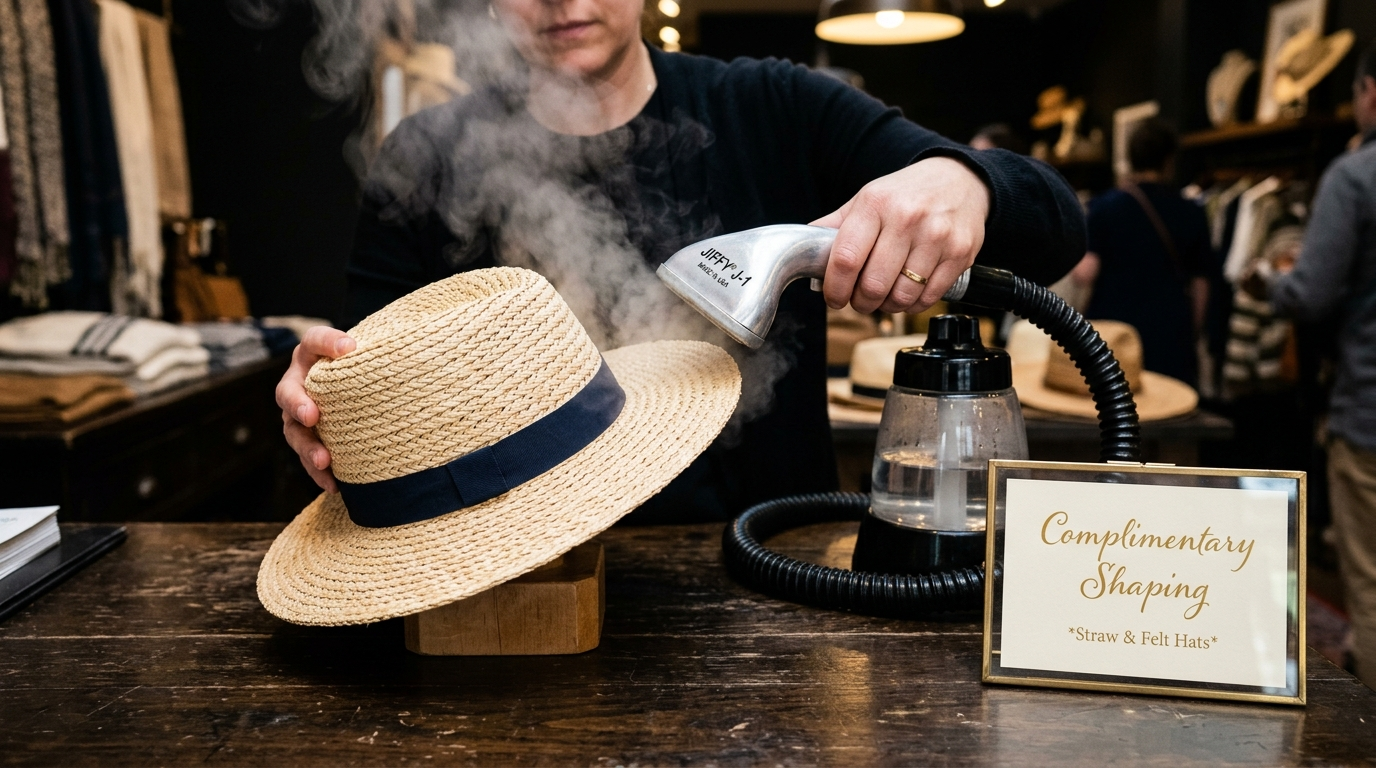
These units operate at atmospheric pressure (0 psig), producing steam at roughly 212°F source. The Jiffy J-1 and J-4000H are the most common examples. They’re UL/cUL/TÜV/CE listed, hold about one gallon of water, and deliver approximately two hours of steam per fill source.
Strengths for hat shops:
Plug into a standard 110/120V outlet
No boiler permits needed
Simple operation with minimal training
Small footprint for counter or sales-floor use
Widely available and familiar to most hat retailers
Limitations:
Lower steam temperature means slower heat transfer to hat fibers
Manual refill requires cool-down breaks
Not ideal for extended blocking or high-volume shaping sessions
Limited accessory ecosystem (no high-pressure iron or spray gun compatibility)
One user on r/CowboyHats mentioned using a Jiffy at a Cavender’s retail location when their main unit was down, calling it serviceable for quick customer work source. That tracks. For a retail counter where you’re touching up a hat every hour or two, a Jiffy-class steamer is a solid baseline.
Pressurized Electric Steam Boilers
These sealed boilers generate steam at 40 to 70+ PSI, which raises the temperature dramatically. At 40 PSI, saturated steam reaches about 287°F. At 65 PSI, it hits 312°F. At 70 PSI, you’re looking at 316°F source. That extra 75 to 100 degrees of heat makes a real difference in how quickly felt fibers relax and how efficiently shellac-based stiffeners reactivate.
Strengths for hat shops:
Faster shaping cycles, especially on stiff fur felt
Compatible with hat shaping heads, steam irons, brushes, and spray guns
Auto pump-fill models eliminate downtime from manual refills
Higher throughput for shops shaping 10 or more hats per day
ASME/UL certification available on pro models
Limitations:
Higher upfront cost
Some models require 220V power
More maintenance (weekly blowdown to remove scale and sediment)
Requires more care around straw to avoid heat damage
Pressurized boilers from brands like Reliable (60 to 70 PSI, 4.5 to 9 liter tanks) source and Reimers (ASME/CSD-1 certified, with “hat steaming” explicitly listed in their manuals) source represent the industrial end of this category. Hoffman Steam occupies a similar tier, with models ranging from the 1-gallon, 110V, 40 PSI EVD-1 up to 6-gallon continuous-duty boilers producing 70 to 90 PSI.
For shops that shape and block hats as a core service, compare complete hat shop bundles to see what a ready-to-work pressurized setup looks like, including shaping heads, irons, and carts.
Comparison: Non-Pressurized vs. Pressurized Steamers
Feature | Non-Pressurized (Jiffy-Class) | Pressurized Boiler (Shop-Grade) |
Operating Pressure | 0 PSI (Atmospheric) | 40 – 90 PSI |
Steam Temp | ~212°F | 287°F – 320°F |
Best For | Retail touch-ups, straw hats | Felt blocking, high-volume shaping |
Power Req. | Standard 110V Outlet | 110V or 220V (Recommended) |
Speed | Moderate (Slow heat transfer) | Rapid (Deep fiber penetration) |
Key Advantage | No boiler permits required | Truly continuous “all-day” duty |
The Numbers That Actually Matter
Too many steamer guides skip the physics. But when you understand why pressure matters, the buying decision becomes straightforward.
PSI-to-Temperature Cheat Sheet
Gauge Pressure (PSIG) | Saturated Steam Temperature |
|---|---|
0 (atmospheric) | ~212°F |
40 | ~287°F |
65 | ~312°F |
70 | ~316°F |
Source: saturated steam tables
Why does this matter for hat work? When steam contacts a cooler hat surface, it condenses and releases latent heat. Hotter steam releases more energy per unit and does it faster. That means a 40 PSI boiler relaxes felt fibers noticeably quicker than a non-pressurized steamer at 212°F. For a shop doing five reshapes before lunch, that time savings adds up. For a shop doing 20 or 30 hats a day, it is the difference between keeping up with demand and falling behind.
Duty Cycle and Refill
Non-pressurized steamers like the Jiffy J-4000 series offer about two hours of continuous steam from a one-gallon fill, with a preheat time of roughly 15 minutes source. When the tank runs dry, you wait for it to cool before refilling.
Pressurized boilers come in two refill types. Manual-fill models require periodic stop-and-refill breaks, similar in concept to non-pressurized units but with longer run times on larger tanks. Auto pump-fill models draw from an external reservoir and maintain water level automatically, enabling truly continuous duty with no breaks. If your shop runs steam all day, auto-fill is worth the premium.
Felt vs. Straw: Material-Specific Steaming Tips
Choosing the best commercial steamer for hat shops is only half the equation. How you use it on different materials matters just as much.
Felt Hats
Felt, particularly fur felt and wool felt, responds well to higher-temperature steam. The heat relaxes fibers and reactivates shellac-based stiffeners that were applied during manufacturing. When the stiffener softens, the hat becomes pliable enough to reshape. Once you remove it from the steam and let it cool, the stiffener re-bonds and the new shape holds source.
This is why pressurized boilers shine on felt work. Brief, high-heat bursts can be safer and more effective than long, low-heat soaking, because you spend less total time wetting the material. Millinery instructors on practitioner blogs like HATalk and MilliStarr emphasize this point: controlled, focused steam with proper cooling is the key to clean shaping source.
Felt steaming guidelines:
Hold the steam source 5 to 6 inches from the hat surface
Keep the steam moving; don’t soak one spot
Shape while the hat is warm and pliable
Let it cool completely on the block or form to set the shape
A light mist of alcohol-based stiffener before steaming can help even penetration
For a deeper dive into technique, read about steam settings for felt vs. straw hats.
Straw Hats
Straw demands a lighter touch. High heat can embrittle natural straw fibers and soften or damage lacquer coatings source. Cracking, warping, and discoloration are all risks of over-steaming.
Straw steaming guidelines:
Use maximum distance between the steam outlet and the hat
Apply steam in short bursts, not sustained contact
Avoid prolonged exposure to any single area
Cool the hat on a form immediately after shaping
Non-pressurized steamers are generally safer for straw because the lower temperature is more forgiving
Community discussions on Reddit reinforce this: experienced hat workers consistently warn against getting too aggressive with steam on straw, recommending distance and restraint source.
Safety and Compliance in Plain Language
If you’re buying a pressurized steamer for a commercial space, safety certification is not optional. It is a practical consideration that affects insurance, inspections, and liability.
ASME (American Society of Mechanical Engineers) and UL (Underwriters Laboratories) are the two frameworks that matter most. ASME governs pressure vessel construction and integrity. UL covers electrical safety and component testing. Established electric boiler manufacturers like Jiffy, Reliable, Reimers, and Hoffman publish their listings clearly source.
Here’s the threshold that catches some buyers off guard: many U.S. jurisdictions apply stricter code requirements (often ASME Section I, the Power Boiler code) to any pressurized device operating above 15 psig. Minnesota, for example, adopts ASME I at that threshold source. Your state or municipality may have different rules, and your insurer almost certainly has opinions.
Before you buy, ask three questions:
Does the unit carry ASME and/or UL certification?
Does my local jurisdiction require permits or inspections for pressurized steam equipment?
Does my commercial insurance policy have requirements for steam equipment in the shop?
Hoffman Steam’s Pro line models (ELG4 and above) carry ASME/UL certification. Their Workhorse protection plans also include compliance documentation, factory reconditioning, and ASME/UL recertification, which can simplify the paperwork side of staying compliant. Learn about the Workhorse Protection Program for details on coverage and loaner machine availability.
Decision Flow: Pick Your Best Commercial Steamer in 30 Seconds
How many hats do you steam or shape per day?
Fewer than 10, mostly touch-ups and light reshaping:
Go with a non-pressurized hat steamer. A Jiffy J-4000H or similar unit plugs into a standard 110V outlet, preheats in about 15 minutes, and runs for roughly two hours per fill. It handles quick customer reshapes and refresh work with minimal fuss.
If you want more pressure without jumping to a full boiler, the Hoffman EVD-1 is a compact 1-gallon, 110V unit that delivers 40 PSI. It bridges the gap between atmospheric steamers and dedicated shop boilers.
10+ hats per day, or regular blocking and creasing work:
Step up to a pressurized electric steam boiler with a hat shaping head. You need the higher temperature (287°F and above), the longer duty cycle, and the accessory compatibility (irons, spray guns, brushes) that makes production work efficient.
For daily shaping operations, the Hoffman JEL3 Hat Shaper Bundle ships as a complete, ready-to-work setup with a 2-gallon boiler and hat shaping head.
What about 220V vs. 110V? If your shop has 220V available, use it. Higher voltage means more wattage, faster heat-up, and better steam recovery between hats. But plenty of shops run productive operations on 110V. Don’t let electrical concerns stop you from upgrading; just match the model to your available power.
Manual fill or auto-fill? Manual fill works for most hat shops. Auto pump-fill is worth it when you’re running steam for six or more hours a day without wanting to stop and refill.
The Step-Up Path: What Working Milliners Actually Do
Millinery instructors and practitioner blogs describe a natural progression that mirrors growing workload source:
Kettle or handheld steamer for hobby work and occasional reshaping
Garment steamer (non-pressurized, floor-standing) for light studio use
Dedicated hat steamer (Jiffy-class) for retail counters and boutique work
Steam generator iron for longer blocking sessions where you need heat and pressure on a brim
Pressurized electric boiler with hat shaping head for production-level daily shaping
Most hat shops that do customer shaping as a service land at step 3 or step 5. Steps 1, 2, and 4 are transitional. If you already know shaping is a daily activity, skip straight to a pressurized boiler and save the intermediate purchases.
To see how the equipment works in practice, watch setup and use videos in Hoffman’s video library.
Competitive Landscape: Brands Worth Knowing
Three other brands appear frequently in hat-shop steamer conversations. Here is what each brings to the table, stated factually.
Jiffy (J-1, J-4000H, J-4000M): Made in the USA. UL/cUL/TÜV/CE listed. One-gallon internal tank with approximately two hours of steam per fill. Stainless boiler tank on the J-4000 series. The most commonly referenced non-pressurized hat steamer in retail settings source. Best fit: retail counters and small boutiques needing safe, simple steaming on 110V.
Reliable (6000, 7000, 7500, 8000 Series): Made in Italy. Stainless boilers from 4.5 to 9 liters. 60 to 70 PSI operating pressure. Compatible with brushes, wands, and spray guns. Available in manual-fill and auto-feed variants source. Best fit: shops wanting a pressurized system with add-on tools.
Reimers Electra Steam: ASME/UL certified electric boilers used across garment finishing and dry cleaning. Documentation references CSD-1 compliance and explicitly lists “hat steaming” as an application source. Best fit: production hat shops or combined back-of-house environments.
Hoffman Steam differentiates through its factory-direct model with transparent online pricing, hat-shop-specific bundles (shaping heads, irons, spray guns, and carts included), ASME/UL certification on Pro models, a 3-year tank warranty with 1-year components, lifetime remote tech support, and protection programs that include loaner machines and factory reconditioning. Models range from the non-pressurized GEM-III portable ($995) through 1-gallon and 2-gallon boilers ($1,199 to $2,599) up to 6-gallon continuous-duty units ($4,495 to $7,895). Hat shop bundles start at $2,149.
For those stepping up from a Jiffy-class unit to a certified boiler, the Hoffman ELG4 is an ASME/UL certified entry Pro model with manual fill and 110V power, starting at $1,899.
Mini-Glossary of Hat Steamer Terms
Non-pressurized hat steamer: A tabletop or floor steamer operating at atmospheric pressure (0 psig, approximately 212°F). Jiffy-class units are the most common example. Safe and simple for retail counters with no boiler permit required.
Pressurized electric steam boiler: A sealed electric boiler delivering 40 to 70+ psig steam for faster shaping. Available in manual-fill or auto pump-fill configurations.
Hat shaping head: A focused outlet or nozzle assembly that delivers controllable steam at the workstation. Used for precise crown and brim work. Typically sold as an accessory or included in hat-shop bundles.
Manual fill vs. auto-fill (pump-fill): Manual fill requires cool-down and refill breaks when the tank runs low. Auto-fill draws from an external reservoir and maintains water level automatically for continuous duty.
Blowdown: Periodic draining of boiler water to remove scale and sediment. Typically done weekly on light commercial units. Essential for maintaining steam quality and boiler longevity.
PSI (pounds per square inch, gauge): The measure of steam pressure above atmospheric. Higher PSI means higher steam temperature, which means faster heat transfer to hat materials.
Saturated steam: Steam in equilibrium with liquid water at a given pressure. At any specific pressure, saturated steam has a fixed, predictable temperature. This is the basis for the PSI-to-temperature relationship that drives shaping technique.
ASME/UL: Construction and safety compliance frameworks. ASME governs pressure vessel integrity. UL covers electrical safety. Many jurisdictions and insurers require one or both for commercial pressurized equipment.
CSD-1: Controls and Safety Devices for Automatically Fired Boilers, a standard referenced in boiler compliance documentation. Relevant for shops using auto-fill pressurized systems.
Keeping Your Steamer in Production
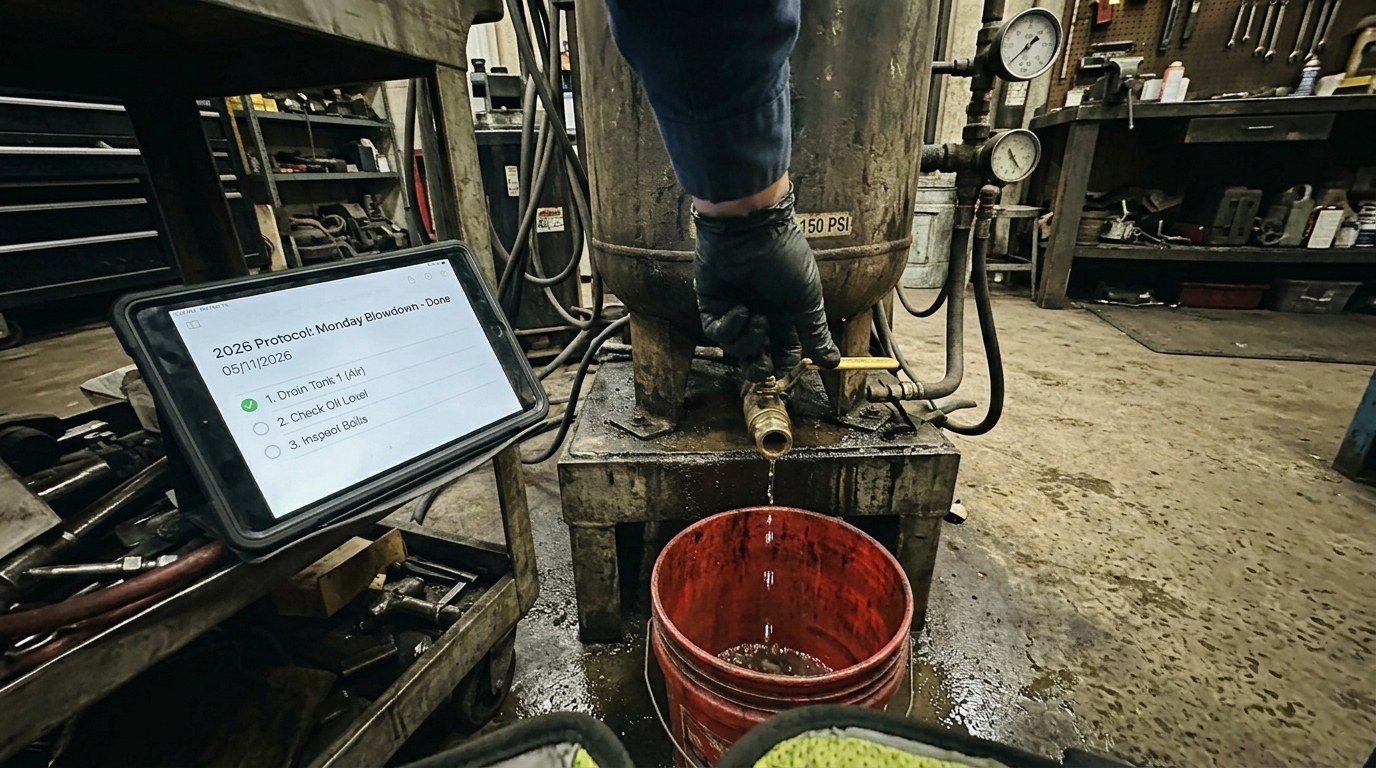
A commercial steamer is an investment. To avoid “spitting” water or mineral buildup (limescale) that can ruin a customer’s $500 felt hat, follow this 2026 maintenance protocol:
Weekly Blowdown: For pressurized boilers, perform a full “blowdown” (draining the unit under low pressure) once a week to eject sediment.
Water Quality: Use distilled or demineralized water. If using tap water in hard-water areas, a dedicated inline water softener is required to prevent heating element failure.
Visual Inspection: Check safety valves and gaskets monthly. In 2026, most commercial insurance providers require documented proof of maintenance for pressurized equipment over 15 PSI.
Frequently Asked Questions
Will a handheld steamer work on a felt hat?
For light touch-ups and minor brim adjustments, yes. A decent handheld can soften felt enough for small corrections. But handhelds lack the sustained output and temperature for serious blocking or creasing. Practitioners on Reddit consistently note that handhelds are fine for home use but inadequate for commercial throughput source. If you’re offering shaping as a service, invest in purpose-built equipment.
Can I reshape straw hats with steam?
Yes, but carefully. Steam makes straw pliable enough to reshape, but too much heat or prolonged exposure can crack fibers and damage lacquer coatings source. Use maximum distance between the steam source and the hat, apply short bursts, and cool the hat on a form immediately. A non-pressurized steamer at 212°F is more forgiving than a pressurized boiler for straw work.
Do I need ASME/UL certification on my steamer?
It depends on your equipment type and location. Non-pressurized steamers typically fall outside boiler code requirements. Pressurized units above 15 psig may trigger ASME Section I requirements in many states. Minnesota, for example, applies this threshold source. Even where code doesn’t mandate it, your commercial insurance policy or landlord may require certified equipment. Ask before you buy.
What’s the difference between a hat steamer and a garment steamer?
A garment steamer is designed for vertical fabric panels and typically uses a wide diffuser head. A hat steamer uses a focused nozzle or shaping head that directs steam to specific areas of a crown or brim. Some units (like the Jiffy J-4000H) are marketed for hat use specifically, while pressurized boilers accept interchangeable attachments for different applications.
How often do I need to maintain a pressurized steam boiler?
Weekly blowdown (draining sediment) is standard practice. Beyond that, descaling frequency depends on your water quality. Consumables like gaskets and valves have their own replacement intervals. Hoffman’s Workhorse protection plans automate consumable shipments and include factory reconditioning on the Essential tier, which takes the guesswork out of maintenance scheduling.
Is 110V enough for a commercial hat steamer?
For non-pressurized steamers, 110V is standard and sufficient. For pressurized boilers, 110V works but limits wattage (typically 1.5kW), which means slower heat-up and recovery between hats. If your shop has 220V available, stepping up gives you 3kW heating and noticeably faster performance. Many boiler manufacturers, including Hoffman, offer both 110V and 220V configurations on the same model.
What should a hat shop budget for a commercial steamer?
Non-pressurized hat steamers run from roughly $250 to $500 for basic models up to around $1,000 for premium units. Pressurized boilers with hat-specific accessories range from approximately $1,200 to $5,000, depending on tank size, pressure rating, and included accessories. Hoffman’s Hat shop bundles start at $2,375 and include the boiler, shaping head, and accessories needed to start working immediately.. Financing options, including 0% APR promotions, are available from some manufacturers.


