

TL;DR
The best hat steamer for a western wear store depends on your daily shaping volume and local compliance requirements. Most small counters start with a non-pressurized upright or flash steamer for simplicity and portability. Stores handling heavy traffic or mixed felt and straw jobs benefit from stepping up to an ASME/UL-coded electric boiler with a shaping head and foot pedal. Your water quality plan matters as much as the brand you choose, and a mid-tier steamer can pay for itself in under a month if you actively sell reshaping services.
Quick Summary: Which Hat Steamer is Right for Your Store?
The best hat steamer for a western wear store depends on daily shaping volume. Small stores usually need a reliable upright steamer like the Jiffy J-4000H, while high-volume retailers should invest in a commercial boiler system such as the Hoffman JEL3. The right choice depends on hat volume, felt versus straw workload, compliance requirements, and whether reshaping is a revenue service.
Best Hat Steamers for Western Wear Stores: Quick Comparison
Model | Best For | Daily Volume | Main Advantage | Store Type |
|---|---|---|---|---|
Jiffy J-4000H | Small retail counters | 1–15 hats/day | Reliable, simple operation | Boutique western stores |
Hoffman GEM-III | Mobile/event shaping | 1–10 hats/day | Portable commercial setup | Rodeos, pop-ups |
Hoffman EVD-1 | Growing stores | 10–30 hats/day | More steam recovery | Independent retailers |
Hoffman JEL3 | High-volume shaping | 30+ hats/day | Boiler-level output | Large western retailers |
Best Hat Steamer by Store Size
Best Overall Hat Steamer for Most Western Wear Stores
Hoffman EVD-1 Commercial Steamer
Why:
Better fit for stores offering paid reshaping
Faster recovery than basic upright steamers
Supports professional shaping workflows
Best Budget Hat Steamer for Small Western Shops
Jiffy J-4000H
Why:
Lower investment
Simple operation
Proven retail use case
Best Professional Hat Steamer for High-Volume Stores
Hoffman JEL3 Hat Shaper Bundle
Why:
Designed around continuous commercial use
Includes accessories needed for a complete station
Better choice for stores processing many hats daily
What Western Wear Stores Should Evaluate Before Buying a Hat Steamer:
Buying Factor | Why It Matters |
|---|---|
Hats per day | Determines required steam output |
Felt/straw mix | Straw requires more controlled steaming |
Voltage availability | Determines equipment options |
Insurance requirements | May affect boiler choice |
Water hardness | Determines maintenance cost |
Service revenue | Determines ROI |
What “Hat Steamer” Actually Means in a Western Wear Store
A hat steamer is a dedicated steam appliance that softens felt or straw so a shaper can form the crown and brim, remove shipping dents, and refresh the finish. Steam works because it relaxes fibers without waterlogging the material, which is why professional milliners prefer it over water or other methods.
In a retail context, “best hat steamer for western wear stores” is not about the fanciest specs. It means the device that matches your daily shaping volume and your local compliance reality. A small ranch supply shop doing five reshapes a day and a flagship western retailer running 40 jobs on a Saturday need very different equipment. The rest of this guide breaks down exactly how to figure out which category you fall into, and what to buy once you know.
For a broader look at how steam fits into the shaping workflow, Hoffman’s hat shaping industry page walks through common setups and applications. Learn more about the complete process in our guide to professional hat shaping techniques, including steaming, blocking, creasing, and finishing.
Types of Hat Steamers You’ll See in Western Wear Retail
Two broad categories dominate the retail hat steaming world. Understanding the difference is the single most important step in choosing the best hat steamer for your western wear store.
Non-Pressurized Upright and Flash Steamers
These are the workhorses of most western retail counters. They heat water in a reservoir and deliver steam through a nozzle or hat-specific head without building internal pressure. Think Jiffy’s J-2000H and J-4000H, Reliable’s Vivio 500GC (adapted from garment use), or portable flash steamers designed for retail settings.
What makes them popular:
Heat up in roughly 1 to 2 minutes source
Simple to operate, with minimal training required
Portable enough for pop-up events or rodeo vendor booths
Lower upfront cost (typically under $1,200)
No boiler permits or pressure vessel inspections in most jurisdictions
Where they fall short:
Lower peak steam energy per unit of time compared to boilers
Can struggle with back-to-back heavy felt jobs when a line of customers is waiting
Moisture management on straw requires more skill and patience
Practitioners on Reddit consistently report that stores like Boot Barn and Cavender’s rely on Jiffy hat steamers for everyday shaping work, which speaks to how well non-pressurized units handle moderate retail volume source.
Pressurized Electric Boilers
These units build steam under pressure (often 40 to 90+ PSI) inside a coded vessel, then deliver it through a wand, spray gun, or shaping head. The result is denser, hotter steam that recovers faster between jobs.
What makes them worth the step up:
Higher, more consistent steam output
Better recovery time, meaning less waiting between hats
Continuous duty options for all-day operation
ASME/UL certification available on pro models, which matters to inspectors and insurers
The trade-offs:
Higher cost (typically $1,200 to $5,000+ depending on capacity)
May trigger state boiler/pressure vessel inspection requirements
Heavier, less portable
Electric boiler definitions and pressure thresholds are outlined by industrial sources that explain ASME Section I classifications. The key threshold: “power boilers” generate steam above 15 PSIG for external use. Non-pressurized hat steamers fall well below that line and face fewer regulatory steps.
Feature | Upright/Flash Steamer | Pressurized Electric Boiler |
Best For | Low/Mid-Volume & Pop-ups | High-Volume & Pro Shaping |
Steam Pressure | Non-pressurized (Ambient) | 40–90+ PSI |
Heat-up Time | 1–2 Minutes | 15–30 Minutes |
Recovery Time | Moderate | Instant / Continuous |
Compliance | No boiler permit required | May require ASME/UL permit |
Price Range | $300 – $1,200 | $1,500 – $5,000+ |
How Material and Technique Change Your Needs
Not all hats steam the same way. The mix of felt and straw you handle should directly influence which steamer you buy.
Felt Hats
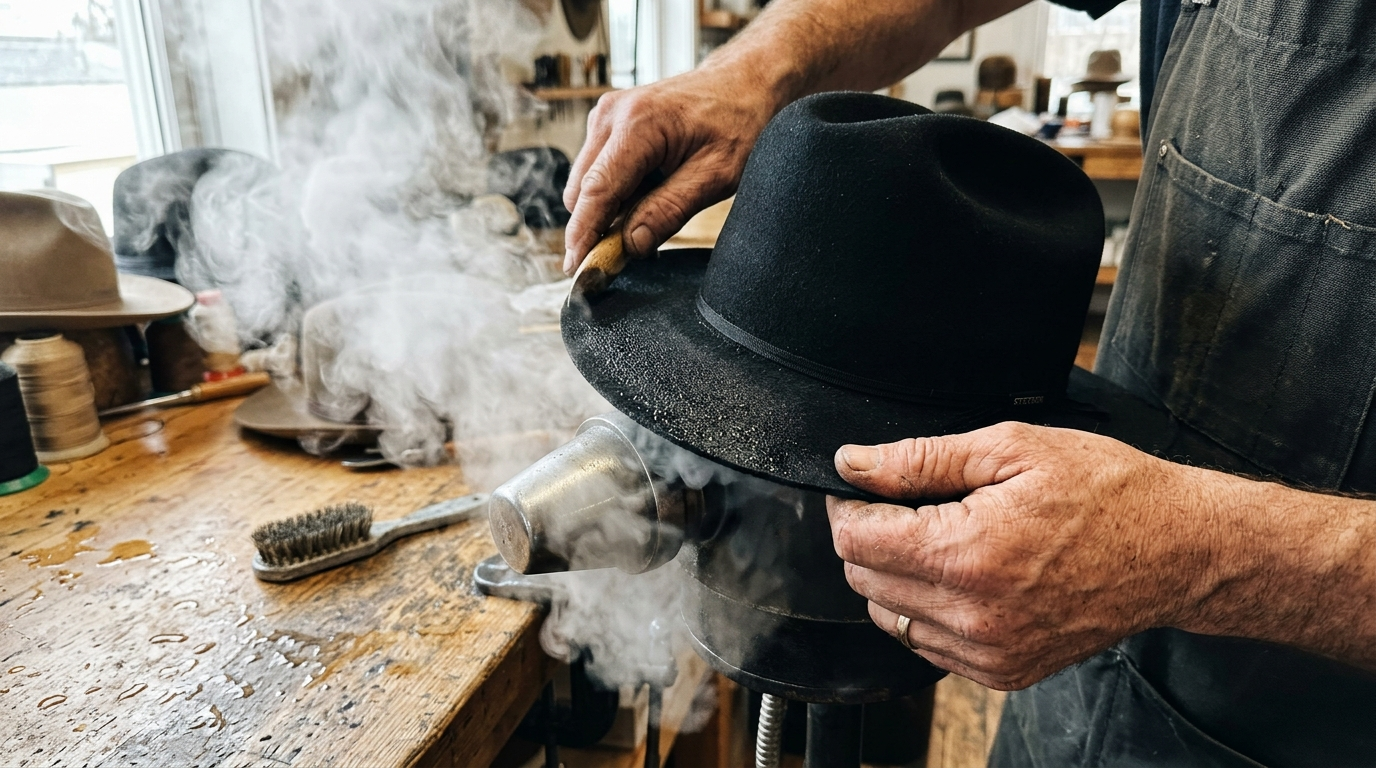
Felt is the easier material to work with. Individual sections soften in roughly 20 to 30 seconds of direct steam, and a shaper can set the new form in 1 to 2 minutes per area source. Experienced hands then apply stiffener spray to lock in creases if needed. On a busy day, a capable steamer can push through felt reshapes quickly.
Straw Hats
Straw takes longer to heat and soften. Rush it, and you risk cracking or that unpleasant “crunch” that ruins a hat. Practitioners on Reddit recommend multiple light passes rather than sustained blasts, which naturally slows throughput source. Straw also benefits from denser, more controlled steam delivery, which is where pressurized boilers start to earn their price premium.
The seasonal factor matters. Stores that are heavy on straw during spring and summer will feel the limits of a small upright steamer more than shops that mostly handle felt year-round. Build your equipment decision around your seasonal product mix, not just average annual volume.
What Pros Actually Use (and Why)
The gap between what hobbyists use and what working retail counters rely on is wide.
Home shapers and hobbyists often use tea kettles or handheld garment steamers. These work for occasional personal use but lack the sustained output and control needed when customers are waiting. HATalk’s steamer hierarchy mirrors this progression: kettle, then upright steamer, then specialist hat steamer.
At the store level, things look different. Multiple threads in r/CowboyHats confirm that Jiffy uprights are the default across mass-market western retailers source. Small independent shops also lean on upright hat steamers, sometimes paired with a basic garment steamer as a backup. The common thread: stores want something that heats fast, runs reliably for hours, and doesn’t require an engineering degree to maintain.
Shops that offer premium reshaping or run high-volume counters tend to graduate to electric boilers with shaping heads and foot pedals. The foot pedal in particular is a detail that working shapers mention repeatedly because it keeps both hands free to hold and form the hat.
For visual demonstrations of store-level shaping workflows, Hoffman’s video library shows how different equipment handles real jobs. It is worth watching before committing to a purchase.
Compliance and Safety, in Plain English
This is the section most hat steamer buying guides skip entirely. It is also the section that determines which equipment many U.S. retailers actually end up buying.
The Basic Rule
Non-pressurized hat steamers (the upright, flash-steamer type) are not pressure vessels. They face minimal regulatory overhead in most states. Plug them in, fill the reservoir, and start working.
Pressurized electric boilers are a different story. In the United States, OSHA and state agencies regulate boilers and pressure vessels, with many states requiring ASME construction and periodic inspection for pressurized equipment used in commercial settings source.
What This Means for Your Store
If your landlord, insurer, or local authority having jurisdiction (AHJ) expects an ASME-coded vessel for any pressurized steam on the premises, that single requirement can push you toward a coded electric boiler even if a non-pressurized hat steamer could technically handle your workload. State boiler programs vary widely. Missouri, New Jersey, and many other states publish their requirements online source. Check yours before you buy.
Practical Steps
Regardless of which steamer type you choose:
Ensure proper relief valves are in place and unobstructed
Never install a valve between the vessel and relief valve
Keep manuals, spec sheets, and any inspection certificates near the unit source
For coded boilers, mount required placards and maintain documentation for inspector access
Hoffman publishes product documents and spec sheets for their equipment, which makes keeping compliant paperwork on-site straightforward.
Store-Ready Setup Checklist
Finding the best hat steamer for western wear stores is only half the job. The other half is building a station that lets your shaper work efficiently all day.
Core Station Components
Steamer or boiler positioned close to a sturdy workbench
Hat stand(s) for holding work in progress
Shaping head or wand for directing steam precisely (especially important on straw edges and detailed crown work). A dedicated hat shaper accessory focuses steam where you need it and reduces excess moisture on surrounding areas.
Foot pedal control to keep both hands free
Brushes and sponges for finishing
Brim press or ironing pad for flat work
Stiffener spray for locking in creases
Rolling cart for mobility and cable/hose management
Maintenance Supplies to Keep at the Station
Spare gaskets
Descaler or manufacturer-recommended cleaner
Dedicated fill funnel or bottle (prevents cross-contamination with stiffener or other chemicals)
A visible maintenance card showing last descale date and next scheduled service
Practitioner threads consistently flag mineral scale and ergonomic frustrations as daily pain points source. A clean, organized station prevents both.
Buying Framework: Best Hat Steamer for Your Volume
Here is where the decision gets concrete. Match the tool to your daily workload, available space, and compliance posture.
Low Volume: 1 to 10 Shapes Per Day (Pop-ups, Small Counters)
A non-pressurized upright hat steamer or portable flash steamer handles this load comfortably. Look for 110V operation, fast startup, small footprint, and a hat-specific nozzle. Add a hat stand and basic tools, and you are operational.
This is the category where most small shops and event vendors land. The Hoffman GEM-III portable flash steamer fits here: foot pedal control, dual heating elements, no boiler permits required, and portable enough for mall or rodeo setups.
Medium Volume: 10 to 30 Shapes Per Day (Steady In-Store Reshaping)
At this volume, you will start noticing the recovery limits of non-pressurized steamers, especially during straw season. A small electric boiler with a shaping head delivers denser steam and faster recovery between customers.
Verify your state’s inspection and ASME expectations before purchasing any pressurized unit. For this tier, the Hoffman EVD-1 commercial steamer (1-gallon, 110V, 40 PSI, ships with nozzle and foot pedal) provides a meaningful step up without requiring 220V wiring.
High Volume: 30+ Shapes Per Day (Mixed Straw/Felt, Team-Based Service)
At this level, you need an ASME/UL-coded electric boiler, a cart, a spray gun or steam wand, foot control, and a documented maintenance program. Your landlord or insurer may require coded equipment at this scale regardless.
Plan for regular relief valve testing, scheduled descaling, and keeping inspection records accessible. The Hoffman JEL3 commercial steamer (2-gallon, ASME/UL certified, 70 to 90 PSI, optional 220V) is built for this duty cycle. For stores wanting a turnkey solution, the JEL3 hat shaper bundle includes the shaping head, cart, hoses, and accessories needed to start taking customers immediately.
The Impact of Water Mineral Content on ROI
Using tap water in your steamer introduces calcium and magnesium. In a high-volume western store, even “moderately hard” water can reduce steam efficiency by 20% within 90 days.
Total Dissolved Solids (TDS): If your local water is above 120 ppm, you must use a dedicated filtration system or switch to distilled water.
The Bottom Line: A clogged heating element increases energy consumption and extends the time it takes to soften felt, directly lowering your hourly profit margin on reshaping services.
Maintenance and Water: The Overlooked Factor
Here is something that ranking pages on this topic almost universally miss: your water policy matters more than your brand choice for long-term uptime.
The Scale Problem
Mineral buildup is the number one failure mode for hat steamers of every type. Both Jiffy and Reliable flag scale as a root cause when steam output drops source. In hard-water areas, buildup accelerates, and even a high-end boiler will underperform if you ignore it.
Pick a Water Strategy and Stick With It
Option 1: Tap water with regular descaling. Simpler day-to-day (no buying distilled water), but requires a strict descaling schedule. Jiffy publishes cleaning instructions and sells proprietary cleaner. Other manufacturers have similar products.
Option 2: Distilled or filtered water with extended descaling intervals. Lower mineral input means less frequent cleaning, but you need a reliable supply of distilled water and discipline about never “just using tap.”
Either approach works. What fails is having no plan at all. Post a visible maintenance card at your steam station showing the last descale date, the water type being used, and when the next service is due.
ROI Snapshot: Numbers a Store Owner Can Believe
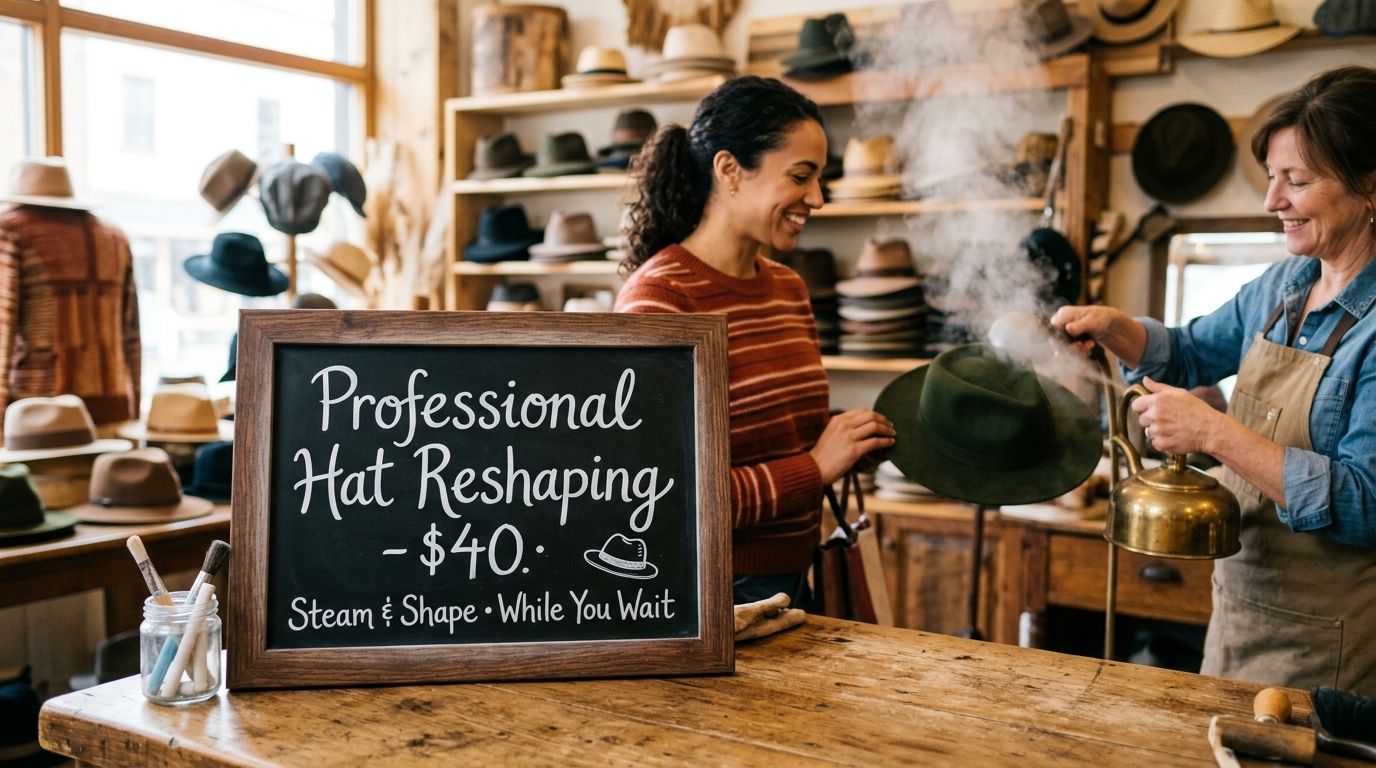
The best hat steamer for western wear stores is ultimately the one that pays for itself. Here is a straightforward way to think about the math.
Revenue Inputs
In-store hat reshaping and cleanup services are commonly advertised between $25 and $50 per hat, with some shops charging more for complex re-creasing work source. Many stores also offer free shaping with a new hat purchase, which drives sales rather than direct service revenue.
Time Inputs
Felt sections soften in about 20 to 30 seconds, with 1 to 2 minutes to set the shape source. Straw takes longer due to the multiple-pass approach. A skilled shaper’s technique dominates cycle time more than equipment specs.
Sample Calculation
Assume $40 per reshape, 5 reshapes per day, 22 business days per month. That is $4,400 in gross monthly revenue from reshaping services alone. If your equipment costs $1,200 to $2,500 (covering the range from a portable flash steamer to a mid-tier coded boiler), payback happens in well under a month for an active program.
The key word is “active.” Stores that post reshaping services prominently, mention them at the register, and offer while-you-wait turnaround see dramatically better returns than shops that own a steamer but never promote the service.
Choosing the Right Steamer: A Quick Summary
Store Profile | Recommended Type | Key Features | Compliance Notes |
|---|---|---|---|
Pop-ups, small counters (1-10/day) | Non-pressurized flash or upright | 110V, portable, fast heat-up | Minimal regulatory overhead |
Steady reshaping (10-30/day) | Small electric boiler + shaping head | Denser steam, quicker recovery | Check state boiler/ASME rules |
High-volume counters (30+/day) | ASME/UL coded boiler with cart and wand | Continuous duty, inspector-ready | Full documentation and maintenance plan required |
To browse all available models and bundles side by side, Hoffman’s full steamer lineup includes options across every tier.
Frequently Asked Questions
What is the difference between a hat steamer and a garment steamer?
A hat steamer is designed (or adapted) to deliver focused steam through a hat-specific nozzle or shaping head, allowing the shaper to soften precise areas of a crown or brim. Garment steamers distribute steam more broadly over fabric surfaces. Some stores use garment steamers for hats in a pinch, but purpose-built hat steamers and boilers with shaping accessories give better control and faster results.
Can I use a tea kettle to steam hats in my store?
Technically, yes. Hobbyists and home users do it all the time. But a tea kettle lacks sustained output, consistent temperature control, and hands-free operation. For a retail counter where customers are waiting, a dedicated hat steamer or boiler is significantly more practical and professional.
Do I need an ASME-certified steamer for my western wear store?
It depends on your state’s boiler and pressure vessel regulations, your landlord’s requirements, and your insurance policy. Non-pressurized hat steamers generally fall outside boiler codes. Pressurized electric boilers may require ASME construction and periodic inspection depending on your jurisdiction. Always confirm local rules before purchasing pressurized equipment.
How often should I descale my hat steamer?
Frequency depends on your water quality and daily usage. Stores using tap water in hard-water areas may need to descale every few weeks. Shops using distilled or filtered water can extend intervals to every few months. The most important thing is to have a written schedule and follow it consistently. Scale buildup is the leading cause of reduced steam output across all major steamer brands.
Is straw harder to steam than felt?
Yes. Straw takes longer to heat and soften, and it risks cracking if you apply too much steam too fast. Practitioners recommend multiple light passes rather than sustained direct steam. This means straw-heavy stores should factor in longer per-hat times and may benefit from a higher-output boiler for denser, more controlled steam delivery.
How much can I charge for hat reshaping services?
Publicly posted prices from western hat shops typically range from $25 to $50 for a standard reshape and cleanup source. Complex re-creasing or restoration work can command more. Some stores offer free shaping with a new hat purchase as a sales incentive. Check what competitors in your area charge and position accordingly.
What accessories should I buy with my hat steamer?
At minimum: a hat stand, shaping head or wand for focused steam, and a foot pedal (if not included). A rolling cart helps with mobility and keeps hoses organized. Brushes, sponges, stiffener spray, and a brim iron round out the station. Buying a complete bundle rather than piecing together components individually saves time and ensures compatibility.
How long does it take to shape a cowboy hat with a steamer?
For felt, individual sections soften in 20 to 30 seconds, with 1 to 2 minutes to set each area. A full reshape might take 5 to 15 minutes depending on complexity. Straw jobs run longer because of the gentler, multi-pass approach required. Your shaper’s experience level is the biggest variable in total cycle time.
Ready to add reshaping revenue to your western wear store? Compare Hoffman’s hat shaping bundles and find the machine that pays for itself in weeks, not months.


