

The art of shaping a western hat is a craft built on tradition, skill, and the right tools. At the heart of that process is one essential element: steam. The right plume of hot, consistent steam can transform a stiff felt body into a perfectly creased and curved masterpiece. But with so many types of steamers on the market, finding the right tool can feel overwhelming.
Ultimately, the best steamer for a western hat shop is a commercial-grade unit designed for durability and continuous, high-pressure steam, such as the classic Jiffy J-1 or a professional boiler system. This guide will walk you through everything you need to know so you can make an informed choice for your business.
Quick Answer: What is the best steamer for a western hat shop?
For professional western hat shaping in 2026, the Jiffy J-1 Hat Steamer is the industry standard for small-to-midsize shops due to its targeted brass nozzle and 1300W heating element. For high-volume production, a high-pressure boiler system (like the Reliable 5000IS or Hoffman Steam) is superior, providing 50+ PSI of “dry” steam to penetrate heavy 100X fur felt without over-saturating the material.
Understanding the Different Types of Steamers
Not all steam is created equal. The device that gets wrinkles out of a travel shirt is vastly different from the workhorse needed in a busy hat shop. Let’s break down the common types.
The Basics: Kettle and Electric Kettle Steamers
The original hat shaping tool was a simple kettle steamer, which is exactly what it sounds like: a kettle of boiling water on a stove. The steam softens felt fibers so they can be molded. While this DIY method works in a pinch, it produces a modest amount of steam, which can limit its effectiveness for professional work.
An electric kettle steamer is the modern version of this concept. It’s a self contained unit that plugs in and heats water to produce steam, much like the classic Jiffy Steamer Model J-1 patented shortly after 1940. These devices are designed for steaming tasks, providing a more directed and continuous plume of steam than an open kettle, making them a significant step up for light use. For portable, non‑pressurized retail or demo setups, consider the GEM-III portable flash steamer.
Common Consumer Steamers (And Why They Fall Short)
You’ll find many steamers at big box stores, but most are not designed for the demands of a hat shop.
Travel Garment Steamer: These are compact, lightweight devices perfect for de-wrinkling a shirt in a hotel room. With a small water reservoir of between about 100 ml and 250 ml, they typically provide only 10 to 15 minutes of steam, which is not nearly enough for shaping multiple hats.
Wallpaper Steamer: Designed to soften adhesive, a wallpaper steamer uses a large, flat plate to diffuse steam over a wide area. This is the wrong tool for the precise, concentrated steam needed for hat shaping.
Jiffy J-2 Garment Steamer: The J-2 is the bigger sibling to the J-1 hat steamer, designed with a tall rod and hanger for de-wrinkling clothes. While a good tool for a retail boutique, its design is for garments, not the focused work of shaping a felt crown or brim.
Rowenta Steam Station: These are powerful ironing systems that pair a lightweight iron with a separate, high pressure boiler. A Rowenta steam station can produce three times more steam than a regular iron, which is fantastic for pressing clothes but not configured for shaping hats.
These tools are all excellent for their intended purposes, but they lack the focused power, durability, and specific design needed to be the best steamer for a western hat shop.
Professional Hat Steamer Comparison 2026
Model | Category | Steam Pressure | Heat-Up Time | Best Use Case |
Jiffy J-1 | Commercial Kettle | Low (Continuous) | 1 Minute | Boutique Shops & Personal Use |
Reliable 5000IS | Steam Station | 50 PSI | 10–15 Minutes | Tailors & Heavy Shaping |
Hoffman Industrial | Boiler System | 70–90 PSI | 20+ Minutes | High-Volume Manufacturing |
GEM-III | Portable Flash | Moderate | Instant |
The Professional Contenders
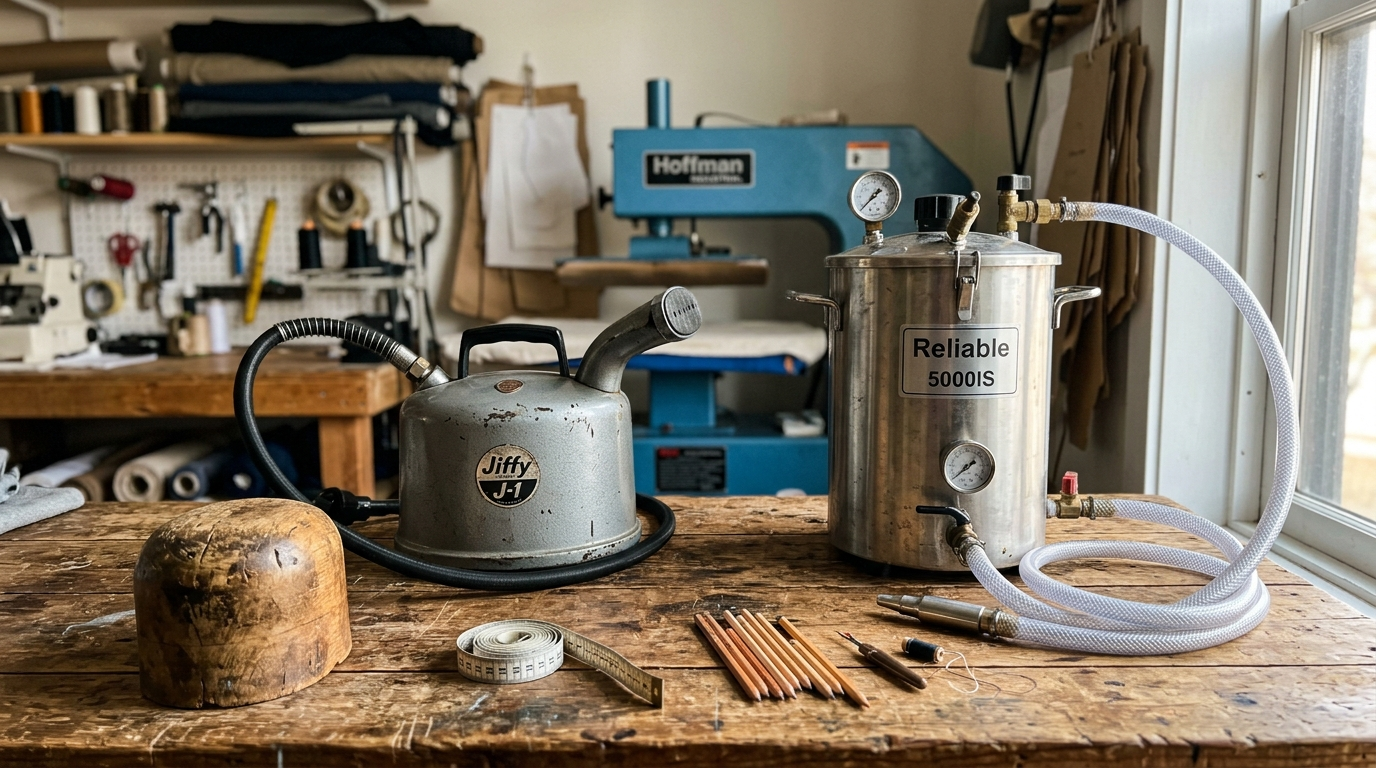
When you’re ready for a serious tool, you enter the realm of commercial grade steamers.
The Jiffy J-1 Hat Steamer is the industry’s classic workhorse. Since 1950, it has been the go to for hatters, providing a quick, continuous jet of steam from a durable die cast aluminum body. Its short brass nozzle offers excellent control for blocking, stretching, and creasing felt and straw hats.
For even more power and continuous operation, many shops look to professional ironing stations like the Reliable 5000IS Steam Station. This type of unit features a large stainless steel boiler that can deliver hours of high pressure steam, making it suitable for tailors and alteration shops that need constant steam for pressing.
At the top end, a high pressure, high volume steamer is a small industrial boiler designed for intensive, all day use. These machines deliver steam at 70 to 90 PSI or higher, which is powerful enough to shape dense felt hats quickly and efficiently. This is where a specialist like Hoffman Steam excels, offering ASME certified boilers built for safety and continuous performance in a professional setting.
Key Features to Look for in the Best Steamer for a Western Hat Shop
Understanding the specs helps you compare models and choose a machine that will serve you well for years.
Power and Performance Specs
Wattage: This measures the heating power of the steamer. A higher wattage means a faster heat up time and better steam production. The J-1 hat steamer, for instance, uses a 1300 watt element to produce steam in about one minute.
Reservoir Size: This determines how long you can work before refilling. A small travel steamer might run for 10 minutes, while a commercial unit with a 1.8L tank can provide up to 75 minutes of continuous steam. For a busy shop, a larger reservoir or a continuous fill system is essential to avoid downtime.
Steam Pressure (PSI): Standard garment steamers operate at very low pressure (maximum steam pressure of 0 PSI). However, commercial units generate much higher steam pressure (PSI). Steam at 50 PSI is around 298°F (148°C), providing more power to penetrate and shape thick felt. Industrial grade units can reach 70 to 90 PSI, offering maximum efficiency for demanding jobs.
Continuous Steam: This refers to the steamer’s ability to provide a steady, uninterrupted flow of steam. It’s often measured in grams per minute. A strong, continuous output means you can work smoothly without the steam sputtering or pausing to reheat.
Build Quality and Durability
Brass Nozzle: Look for steamers with a brass nozzle and fittings. Brass withstands high temperatures without warping, resists corrosion, and helps keep the steam hot and dry right up to the outlet, preventing spitting. It’s a key indicator of a well built, professional machine.
Professional Durability: A commercial steamer is an investment. Professional durability means it’s built with heavy duty materials like cast aluminum or stainless steel, high temperature wiring, and is designed for all day use. Companies that build these machines, such as Hoffman Steam, often back them with multi-year warranties and robust technical support, ensuring your equipment stays running.
Must-Have Specs for Western Hat Shapers
Wattage: Minimum 1300W for recovery speed.
Nozzle Material: Solid Brass (Plastic heads can melt or spit water droplets).
Safety Features: Automatic shut-off and a fusible link for 24/7 shop environments.
Steam Type: Dry Steam (High-pressure boilers produce less water moisture, preventing felt shrinkage).
The Art and Science of Steaming Hats
Having the right tool is only half the battle. The other half is mastering the technique.
The Hat Shaping Workflow: Steam and Block
Western hat shaping and blocking is the process of using steam to make felt pliable, then molding it by hand or on a wooden hat block. The hat steaming and blocking workflow is a delicate dance between the steamer and the block.
Steam: Apply steam evenly to the hat’s crown and brim until the felt becomes soft.
Shape: Quickly move the hat to the block or shape it by hand, creating the desired creases and curves. A powerful steamer gives you a wider window of time to work before the felt cools and stiffens.
Set: Allow the hat to cool and dry completely in its new shape.
This workflow highlights the importance of the workflow moving steamer vs hat block. A steamer with a flexible hose allows you to bring the steam to the hat while it’s on a block, which is more efficient than repeatedly moving the hat back and forth to a stationary steam source.
Steaming Different Materials: Beyond Felt
While felt is the primary material for western hats, you may also work with others. Material compatibility for steam is crucial.
Felt: Highly compatible. Steam is the preferred method for shaping wool and fur felt.
Straw: Moderately compatible. Use steam sparingly to avoid making the straw too soft or damaging its finish.
Leather: Not recommended. High heat and moisture can cause leather to shrink, stiffen, or discolor.
Suede: Avoid steaming. Water vapor can easily stain suede and ruin its napped texture.
Velvet: Highly compatible. Steaming is the best way to remove wrinkles from velvet without crushing its pile.
2026 Trends: Steaming for Modern Shapes
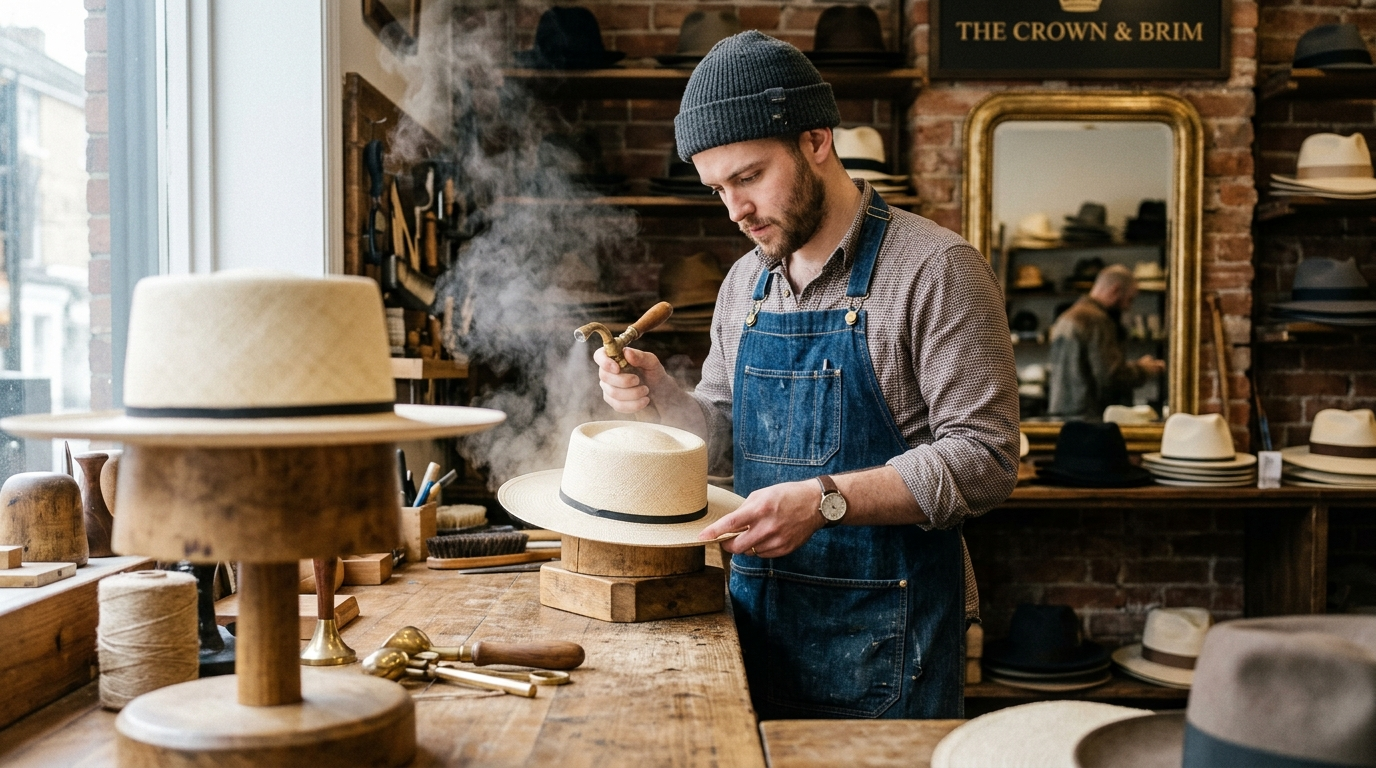
As the “Gus” and “Cattleman” creases remain staples, 2026 has seen a rise in flat-brim “Gambler” styles and distressed finishes.
Precision Shaping: Using a concentrated brass nozzle allows you to “spot-steam” specific areas of the crown without losing the stiffness of the brim.
Straw Trends: With the rise of high-end Montecristi straws, “cool-steaming” or low-PSI settings are essential to avoid wilting the delicate fibers.
Keeping Your Steamer in Fighting Shape
Proper care ensures your steamer performs reliably for years.
Maintenance, Descaling, and Long Term Care
Over time, minerals in water can build up as limescale inside your steamer, reducing its efficiency and potentially clogging it. Maintenance and descaling are vital. The best practice is to use distilled or demineralized water to minimize scale buildup. If you use tap water, you should descale the unit periodically by running a solution of white vinegar and water through it, followed by a thorough flush with clean water. For businesses that rely on their equipment daily, some manufacturers offer maintenance plans, like the Workhorse Protection Program, to keep your steamer in peak condition.
Safety First: Burn Prevention and Best Practices
Steam can cause severe burns almost instantly. Safety and burn prevention should always be your top priority. Quality steamers include safety features like automatic shut-offs to prevent overheating if the unit runs dry and insulated cool touch hoses. Always direct the steam nozzle away from your body, use protective gloves when handling a hot hat, and allow the machine to cool down completely before refilling or storing it.
Choosing the Right Steamer for Your Shop
Finding the best steamer for a western hat shop means looking past consumer gadgets and investing in a professional tool. A classic like the Jiffy J-1 is a reliable starting point, but for higher volume or thicker felt, a high pressure boiler offers unmatched performance. Prioritize professional durability, a brass nozzle, and a sufficient reservoir for continuous steam.
By investing in the right equipment, you not only improve your workflow but also enhance the quality of your craft, producing beautifully shaped hats that will last a lifetime. To see how a commercial grade steamer can elevate your shop, explore the purpose‑built hat shaping bundles from Hoffman Steam.
Frequently Asked Questions about the Best Steamer for a Western Hat Shop
1. Can I use a regular clothes steamer for shaping hats?
While you can use a garment steamer for very light touch ups, it generally lacks the focused steam jet and durability needed for serious western hat shaping. They are not considered the best steamer for a western hat shop.
2. What’s more important for shaping hats, PSI or wattage?
Both are important. Wattage affects how quickly the steamer heats up and produces steam. PSI (steam pressure) determines the force and temperature of the steam. For shaping dense felt, higher PSI (40+) is very effective at making the material pliable quickly.
3. How often should I descale my hat steamer?
This depends on your water hardness and usage. If you use distilled water, you may rarely need to descale. With hard tap water and daily use, descaling every month or two is a good practice to maintain performance.
4. What makes a steamer “commercial grade”?
Commercial grade steamers are defined by their professional durability. This includes heavy duty construction (metal housings, brass fittings), the ability to run for extended periods, and being designed for easy maintenance and repair.
5. How do I prevent my steamer from spitting water on expensive felt? Spitting is usually caused by condensation in the hose or mineral buildup. To prevent this, always allow the unit to reach full temperature before use, keep the hose vertical during operation, and use a steamer with a brass head which retains heat more effectively than plastic.
6. Can I use tap water in a professional hat steamer? While possible, it is not recommended for a business. Tap water minerals cause “scaling,” which clogs internal elements. For a professional shop, use distilled water or install a demineralization filter to extend the life of your equipment by 3–5 years.


