

TL;DR
A commercial garment steamer is any steam equipment chosen for business-level garment finishing, from professional upright steamers used in boutiques to ASME-certified electric boilers powering steam irons and wands in dry cleaning shops. This guide defines the terms business buyers encounter on spec sheets, in forums, and on sales pages, then translates each term into a practical buying or operating decision. Understanding the difference between wattage and PSI, runtime and tank capacity, or a garment steamer and a steam boiler can save a shop thousands of dollars and hours of wasted labor.
What is a Commercial Garment Steamer?
A commercial garment steamer is a professional-grade finishing tool designed for high-volume business use. Unlike consumer models, commercial units feature 1,300–1,500+ watts of power, a minimum 1-gallon water capacity, and a continuous runtime of 90–120 minutes. They are categorized into three types: Upright Professional Steamers (retail/boutiques), Handheld Pro Units (travel/quick touch-ups), and Pressurized Steam Boilers (industrial dry cleaning and tailoring).
Commercial Garment Steamer Guide: Glossary of Terms for Shops and Workrooms
“Commercial garment steamer” is not one product. It is a spectrum that runs from portable touch-up tools to pressurized electric boilers feeding steam irons and spray guns. The phrase gets used loosely by manufacturers and retailers, which makes comparison shopping frustrating for anyone running an actual business.
This commercial garment steamer guide exists to fix that problem. It explains the vocabulary so boutique owners, tailors, dry cleaners, costume shops, hotel operators, resellers, and workroom managers can compare equipment on facts rather than marketing language.
A garment steamer uses hot vapor to relax fabric fibers and release wrinkles without pressing the fabric flat. Textile research describes this as a steam-jet heat-and-mass-transfer process: steam moves heat and water through fabric structures, which is why fabric type, thickness, and weave all affect results source. That definition matters because steaming is not ironing. Steamers are good at wrinkle release and freshening. Irons and presses are better at sharp creases, collars, cuffs, pleats, and flat structure.
The rest of this guide is organized by category: equipment types, performance specs, electrical terms, safety and compliance, fabric care, and maintenance. Each term gets a plain definition and a practical note explaining why it matters to your shop.
What Makes a Garment Steamer “Commercial”?
The word “commercial” gets attached to steamers in four different ways, and buyers should know which one applies:
Commercial as workload. The equipment is built for daily shop use, with longer runtime, larger water capacity, a more stable base, and replaceable parts. A boutique steaming 30 garments a day needs a different machine than someone touching up a shirt before a meeting.
Commercial as application. The steamer is used in a business setting: retail stores, dry cleaners, workrooms, hospitality, costume departments, or resale operations.
Commercial as compliance. If the unit is a pressurized boiler, terms like ASME certification, pressure relief valves, and local boiler codes become relevant. This is a completely different buying conversation than choosing an upright steamer.
Commercial as marketing. Some products labeled “pro” or “commercial” are still consumer-grade appliances with a higher price tag. The guide below teaches you how to verify with specs, not just packaging.
Practitioners on Reddit confirm the pain behind this confusion. In a thread on r/smallbusiness, a boutique owner described spending “a wild amount of time” steaming clothes with small 120V steamers and asked what larger retailers actually use. The top answer compared home steamers at roughly 750 to 1,000 watts with professional models at 1,500 watts, noting that a full tank lasts about two hours of continuous steaming source. That thread captures the real question behind every commercial garment steamer guide search: not “which is best?” but “what do I actually need?”
Equipment Types Glossary
Understanding equipment types is the first step in any commercial garment steamer comparison. Here is how the categories break down.
Handheld Garment Steamer
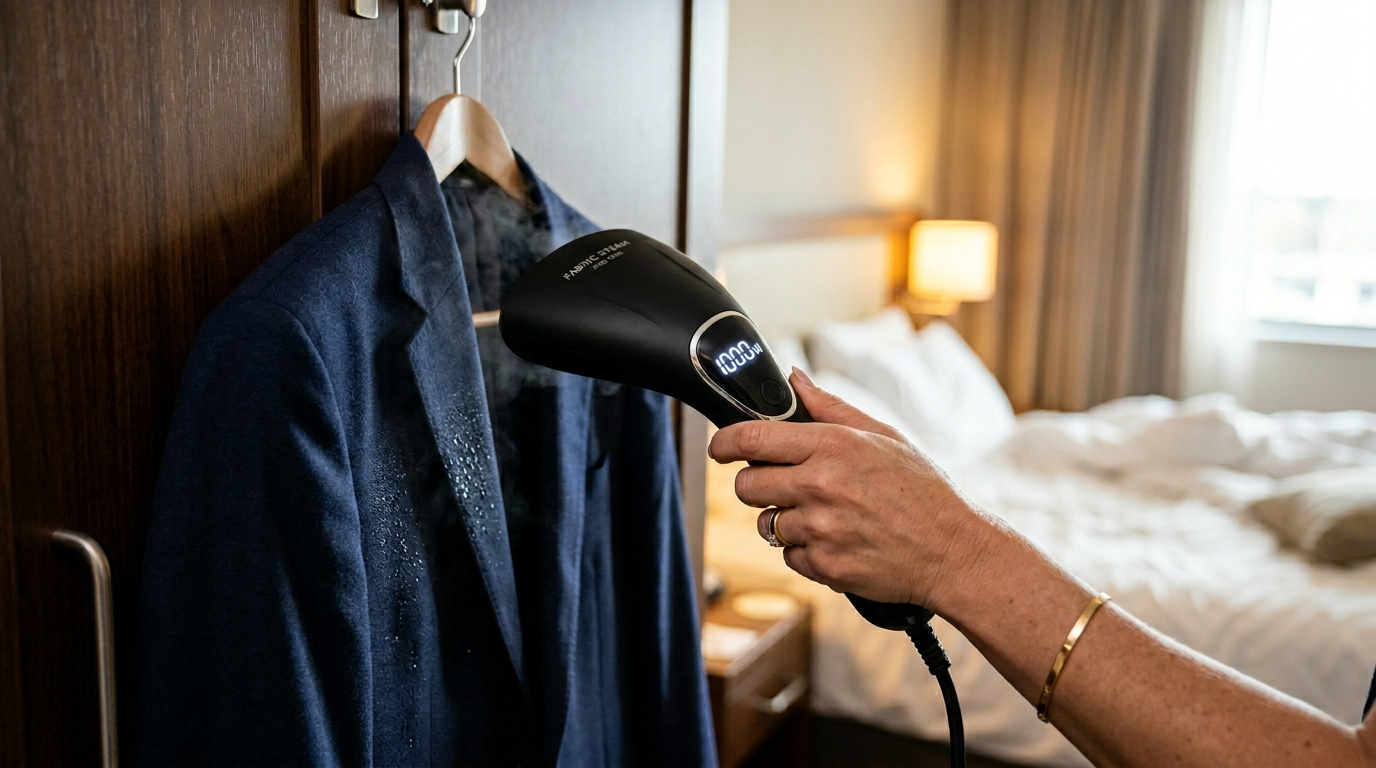
A compact steamer with a small water reservoir, designed for travel, single garments, or quick touch-ups.
Why it matters for your shop: A handheld steamer is a backup tool, not a primary commercial steamer. The vintage boutique owner behind Malena’s Boutique explains from decades of hands-on experience that handhelds are great for travel but have smaller heating elements, weaker output, longer steam times, and can produce water droplets that damage clothing source. Practitioners on Reddit’s r/BuyItForLife echo this: small travel steamers work for one or two garments, but small reservoirs become a drawback when steaming larger batches source.
Take a clear position: if your business steams racks, daily inventory, resale shipments, costumes, or fitting-room returns, a handheld should not be your main finishing system.
Upright Garment Steamer
A floor-standing steamer with a tank or bottle, hose, pole, and steam head. This is the category most people picture when they search for a commercial garment steamer guide.
Why it matters for your shop: Upright steamers are the most common choice for boutiques, resellers, wardrobe rooms, and retail stores. Common professional models feature 1-gallon water capacity and 120V power, making them compatible with standard outlets.
Professional Garment Steamer
A higher-duty upright steamer marketed for retail, boutique, fashion, visual merchandising, or workroom use. Eddie’s buyer guide describes professional steamers as ideal for retail stores, boutiques, designers, and visual merchandisers, emphasizing continuous use, large tanks, and powerful steam output source.
Why it matters for your shop: Look at construction, runtime, service support, and parts availability, not just the word “pro” on the box.
Commercial Garment Steamer
A steamer selected specifically for business workload and uptime requirements. This can mean a professional upright steamer for clothing display or a more serious steam system for garment finishing. Verify with specs.
Steam Boiler / Electric Boiler
A boiler heats water to generate steam, often under pressure, for tools such as steam irons, wands, brushes, spray guns, or industry-specific attachments. This is where the vocabulary shifts significantly. PSI, ASME certification, pressure relief valves, permits, and inspections may all become relevant.
ASME’s Boiler and Pressure Vessel Code certification program covers the quality control system for manufacturers and assemblers, and its certificate scopes explicitly include electric boilers, power boilers, heating boilers, pressure vessels, and pressure relief devices source.
Hoffman Steam, for example, sells factory-direct commercial electric steamers and steam boilers ranging from portable non-pressurized flash steamers to ASME/UL-certified electric boilers in 1- to 6-gallon capacities. That range illustrates how wide the “commercial” category really is.
Steam Iron
An iron that uses heat, pressure, and steam to flatten fabric. Better than a steamer for crisp edges, collars, cuffs, pleats, and trouser creases.
Press / Pressing Machine
Equipment that uses pressure and heat (with or without steam) to flatten or shape garments. More appropriate when the desired finish is crisp structure, not just wrinkle release.
Tunnel Finisher / Cabinet Finisher
High-volume garment-finishing equipment used in larger laundry, apparel, or production operations. Mentioned here for completeness. Most small commercial buyers searching for a commercial garment steamer guide are not shopping for tunnel finishers.
At-a-Glance: Commercial Steamer Category Comparison
Feature | Handheld Pro | Upright Professional | Pressurized Boiler |
Best For | Travel & Touch-ups | Boutiques & Resale | Tailors & Dry Cleaners |
Avg. Wattage | 600W – 1,000W | 1,300W – 1,500W | 1,500W – 2,000W+ |
Runtime | 10 – 15 Minutes | 1.5 – 2 Hours | Continuous / All Day |
Key Spec | Portability | 1-Gallon Tank | 70+ PSI Pressure |
Power Req. | Standard 120V | Standard 120V | 120V or 220V/240V |
Performance Specs Glossary
This section covers the numbers buyers see on spec sheets and explains what they actually tell you.
Operational Throughput: The “Hidden” Commercial Metric
In a professional setting, the most critical metric isn’t just steam volume—it’s throughput.
Retail/Boutique: Throughput is measured by how many garments can be processed per hour without a refill.
Production/Workroom: Throughput is measured by the “recovery time” between heavy steam bursts. If your staff is waiting 60 seconds for the unit to “re-steam” after every garment, you are losing approximately 15 minutes of labor for every 15 garments processed.
Wattage
Wattage is the heating element’s power draw. Higher wattage often supports stronger steam generation and faster recovery, but wattage alone does not prove commercial durability.
Benchmark: The Jiffy J-4000 uses a 1,500-watt heating element. The Jiffy J-2 and Reliable Vivio 500GC both use 1,300 watts source. These represent the common range for professional upright garment steamers.
Why it matters for your shop: A boutique steaming racks should compare wattage alongside water capacity, runtime, hose design, and serviceability. A 1,500-watt steamer with a tiny tank will still interrupt your workflow with constant refills.
Water Capacity
How much water the tank or bottle holds. Larger capacity usually means fewer refills, but tank shape and filling method also matter.
Benchmark: The Jiffy J-4000, Jiffy J-2, and Reliable Vivio 500GC all list 1 gallon (3.8 liters) source.
Steam Time per Filling (Runtime)
How long the steamer can produce steam on one tank. This is arguably the most useful number for shops.
Benchmark: The Jiffy J-4000 lists 1 hour 45 minutes per filling. The Reliable Vivio 500GC lists 120-minute runtime. Jiffy’s FAQ says the J-2’s 1-gallon bottle provides about 2 hours source.
Why it matters for your shop: Every refill interrupts the rack. If you are steaming a batch of 40 garments and each one takes 3 to 5 minutes, a 2-hour runtime gets you through the batch without stopping. A 45-minute runtime does not.
In the Reddit r/smallbusiness thread, one commenter questioned whether high-volume stores can afford 5 to 7 minutes per item source. That is the operational pain point that generic guides miss: commercial steaming is a labor problem before it is a product problem. A steamer that saves 30 seconds per garment matters more than a slightly lower purchase price when staff are steaming racks every day.
Heat-Up Time
Time from powering on to usable steam.
Benchmark: The Jiffy J-4000 reaches standby temperature within 15 minutes and is ready to steam within 2 minutes once at standby. The Reliable Vivio 500GC heats up in under 2 minutes source.
Why it matters for your shop: Important for quick touch-ups. Less important than runtime for batch work.
Recovery Time
How quickly the equipment returns to usable steam after heavy use or heat loss. Important for continuous garment finishing where you move from garment to garment without breaks.
Steam Output
The amount and consistency of steam delivered through the head or wand. More useful than vague “powerful steam” claims. If grams per minute is not listed, use wattage, runtime, head temperature, user reports, and construction as proxies.
PSI (Pounds Per Square Inch)
A pressure measurement. Important for pressurized boilers and some commercial steam systems. Often not listed for basic upright garment steamers.
Why it matters for your shop: If you are comparing garment steamers for dewrinkling clothes, do not over-focus on PSI unless the product is actually a pressurized boiler. For upright garment steamers, steam consistency, runtime, hose and head design, and workflow usually matter more. For commercial steam boilers, PSI becomes a central buying and safety term.
Hoffman Steam’s boiler-based products, for context, produce up to 70 to 90 PSI. That kind of pressure serves applications beyond simple garment steaming, including hat shaping, jewelry cleaning, and light manufacturing.
Steam Head Temperature
Temperature measured at the steam head. The Reliable Vivio 500GC lists 194°F at the head source. Head temperature is useful but not the same as steam pressure or fabric-safe temperature.
Duty Cycle
How long the equipment can operate before it needs rest, refill, or cooldown. Continuous-duty equipment can run all day. Some lighter equipment needs periodic breaks. Duty cycle rarely appears in spec sheets for upright garment steamers, but it is a real factor in commercial environments.
Electrical Terms Glossary
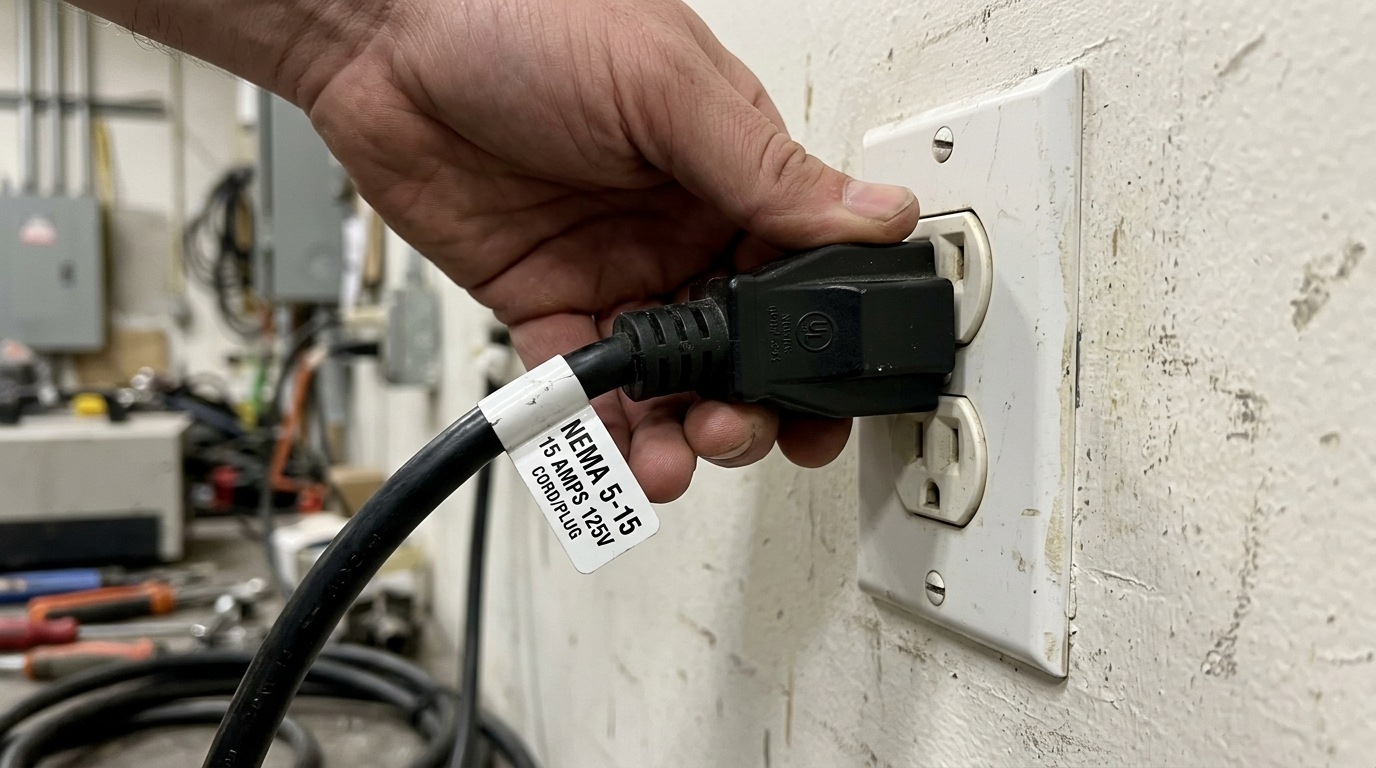
Electrical specs determine whether your steamer will work safely in your space. This section of the commercial garment steamer guide covers the terms that trip up first-time buyers.
110V / 120V
The standard North American outlet voltage class used by many upright garment steamers. The Jiffy J-4000 and J-2 list 120V versions, and the Reliable Vivio 500GC lists 110V at 12 amps source.
Why it matters for your shop: Convenient for boutiques and retail spaces because you can plug into existing outlets. But a high-wattage steamer still needs a circuit that can handle the draw without tripping breakers or sharing load with other equipment.
220V / 240V
Higher-voltage electrical service used by some commercial and industrial equipment. May support larger boilers or higher-output steam systems, but installation depends on your building’s wiring. Hoffman Steam offers both 110V and 220V options across different commercial electric steamer and boiler models.
Amps
Electrical current draw. A 1,500-watt appliance on 120V draws about 12.5 amps, matching the Jiffy J-4000’s 120V spec source.
NEMA 5-15
The common North American 120V, 15-amp plug configuration. If a steamer uses this plug, it is intended for common outlet types. Jiffy lists NEMA 5-15 for its 120V J-4000 and J-2 models.
Dedicated Circuit
A circuit that serves only one piece of equipment. Useful when a steamer or boiler draws high current and should not share a circuit with lighting, registers, or other shop equipment.
Extension Cord
Avoid using extension cords unless the manufacturer explicitly permits it. Jiffy’s FAQ says extension cords should not be used on its products source. The risk includes voltage drop, overheating, and fire hazard.
Safety and Compliance Glossary
This is where a commercial garment steamer guide diverges from consumer content. Most household steamer reviews never mention ASME or pressure relief valves. Businesses buying pressurized steam equipment need to understand these terms.
ASME
ASME is the organization behind the Boiler and Pressure Vessel Code (BPVC) certification program. ASME matters when buying pressurized boilers or pressure vessels, not merely because a product says “professional.” The certification program covers the quality control system for manufacturers and assemblers, and certified products are stamped with the Certification Mark source.
Why it matters for your shop: If you are buying a pressurized boiler rather than a simple upright garment steamer, ask whether ASME documentation is required for your use case and jurisdiction.
UL / cUL / cETLus
Electrical safety certification and listing marks used for equipment sold in North America. The Jiffy J-4000 lists UL, cUL, TUV/GS, CE, NOM, and ANCE. The Reliable Vivio 500GC lists cETLus source.
Why it matters for your shop: These are helpful electrical safety signals, but they are not the same as ASME boiler certification. A UL-listed steamer is not necessarily an ASME-certified boiler.
Pressure Relief Valve
A safety device that releases pressure if a pressurized system exceeds safe limits. This is a core safety term for boilers and pressure vessels.
California’s laundry and dry-cleaning equipment rules require safety relief valve protection downstream of pressure-reducing valves source. Hawaii’s rules require ASME/National Board certified pressure relief valves on power boilers, miniature boilers, electric boilers, and high-temperature water boilers source.
Maximum Allowable Working Pressure
The maximum pressure a pressure vessel or boiler is designed to safely handle. Important for boilers. Not usually how basic upright steamers are compared.
Low-Water Cutoff
A safety control that prevents the heating element from firing when water level is too low. Important on boilers and steam generators because heating without water can damage equipment and create safety risk.
Boiler Permit / Inspection
Local or state approval and inspection requirements for certain pressure equipment. These vary by jurisdiction. Buyers should verify local requirements before installing pressurized steam equipment. This is not legal advice, but it is a real step that gets overlooked.
Data Plate
A plate on the equipment showing manufacturer, model, serial number, ratings, and certifications. Useful for inspections, insurance, and parts ordering.
Fabric Care and Finishing Glossary
A commercial garment steamer does not override the care label. This section explains the fabric-related terms that protect both the garment and your business.
Wrinkle Release
Relaxing distorted fibers so the garment hangs smoother. This is the core job of a garment steamer source.
Pressing
Applying heat and pressure to flatten, crease, or shape fabric. Better than steaming for crisp details like collars, cuffs, and trouser creases.
Drape
How fabric hangs and flows. Steamers often improve drape without flattening texture, which is why they work well on hanging garments.
No Steam / Do Not Steam
A care instruction warning that steam may damage the garment. The FTC requires manufacturers to attach care instructions and warn consumers about procedures that could harm the product, and explicitly notes that dry-cleaning instructions may need “No steam” if steam would damage the garment source. Canada’s care-symbol guide includes a specific “Do not steam” symbol source.
Do not override this warning with a more powerful steamer.
Colorfastness
Resistance of dye to bleeding, fading, or transfer when exposed to heat, moisture, or friction. Steam introduces both heat and moisture, so garments with unstable dyes require caution.
Test Area
A hidden part of the garment used to test steam reaction before steaming the visible surface. Essential for delicate, dyed, embellished, vintage, or unknown fabrics.
Steam from Underside
Applying steam from inside or underneath the garment rather than directly on the face. Often useful for delicate surfaces, textured fabrics, or avoiding direct head contact. Jiffy’s FAQ notes that some garments steam better from the underside because steam relaxes fibers through the fabric source.
When to Use a Steamer vs. an Iron
This question comes up in every commercial garment steamer guide, and the answer is straightforward:
Need | Better tool |
|---|---|
Remove shipping wrinkles from hanging garments | Steamer |
Freshen delicate or textured garments (if care label allows) | Steamer |
Crisp collars, cuffs, pleats, trouser creases | Iron or press |
High-volume garment finishing with a steam iron | Steam boiler + iron setup |
Hat shaping, jewelry cleaning, industrial tasks | Purpose-built commercial steam equipment |
Practitioners are consistent on this point. The Malena’s Boutique owner recommends an iron over a steamer for pleats and collar points source. Reddit users on r/malefashionadvice agree that upright steamers work for casual shirts and general wrinkle removal, but irons remain better for formal crispness source. A forum reviewer on Ask Andy About Clothes reported that a Jiffy J-2000 worked very well on suits and jackets but not as well on cotton shirts source.
Commercial Safety & Compliance Checklist
Before purchasing for a commercial space, verify these three compliance markers:
NRTL Testing: Ensure the unit carries a UL, CSA, or ETL mark for workplace insurance compliance.
Boiler Permits: If choosing a pressurized system (over 15 PSI), check local municipal codes regarding “Miniature Boiler” inspections.
Automatic Shut-off: For hospitality or fitting room use, an auto-off feature is a critical fire-safety requirement to prevent dry-firing.
Maintenance and Uptime Glossary
Scale, sediment, and condensation are the silent killers of commercial garment steamers. Competitor guides mention tank size but rarely talk about what keeps that tank producing clean steam six months later.
Hard Water
Water containing dissolved minerals (calcium, magnesium) that leave deposits inside the tank, heating element, hose, and head. Hard water is the single biggest maintenance issue for commercial garment steamers. Jiffy’s cleaning instructions reference hard-water deposits and sediment buildup as a cause of poor performance source.
Scale
Mineral buildup inside equipment caused by hard water. Reduces steam output, clogs components, and shortens equipment life.
Descaling
The cleaning process used to remove mineral deposits. Should follow manufacturer instructions exactly. Jiffy warns not to steam cleaning solution through the unit, and to rinse thoroughly afterward source.
Sediment
Mineral or debris buildup inside the steamer. Can cause weak steam and water spitting. Jiffy’s troubleshooting links poor performance and spitting with sediment buildup source.
Additives
Salt, fragrances, dyes, perfumes, or other substances added to steamer water. Avoid them unless the manufacturer specifically permits it. Jiffy’s FAQ says salt, perfumes, and dyes should never be added because they can corrode or plug internal parts source.
Condensate
Liquid water that forms when steam cools in the hose or head. Condensation is normal, but it becomes a problem when it collects in the hose and gets pushed out as hot droplets.
Spitting
Hot water droplets coming from the steam head. Common causes include hose kinks, trapped condensation, overfilling, sediment buildup, damaged steam heads, or incomplete assembly. Jiffy advises using the steamer vertically so condensation flows back into the steamer, and recommends straightening the hose when steaming near the floor source.
Before assuming the unit is broken or underpowered, check positioning, assembly, and maintenance first.
Gurgling
Often a sign of condensate collecting in the hose. Usually resolved by repositioning the hose or straightening kinks.
Hose Kink
A bend in the steam hose that traps condensate and reduces steam flow. A straightforward problem that looks like a more expensive one.
Replacement Parts
Commercial buying is not just about the initial purchase. A business steamer is a maintainable asset. Practitioners on the Threads Magazine forum reported getting replacement steam heads shipped in two days from Jiffy source. Users on r/BuyItForLife report Jiffy units lasting 15 to 18 years with basic maintenance source. One user on r/BehindTheClosetDoor described working retail for over 20 years using an industrial-sized Jiffy, calling professional steamers a “game-changer” source.
Hoffman Steam takes this further with its Workhorse Protection Program, which includes automatic consumable shipments, factory reconditioning, parts discounts, compliance documentation, and loaner machines, treating uptime as a service rather than just a product feature.
How to Read a Commercial Garment Steamer Spec Sheet
When comparing products, this table translates the spec sheet into decisions:
Spec | What it means | Why it matters | Example benchmark |
|---|---|---|---|
Wattage | Heating element power draw | Steam generation and recovery speed | 1,300 to 1,500W is common in professional uprights |
Water capacity | Tank size | Refill frequency | 1 gallon (3.8L) in Jiffy J-4000, J-2, Reliable 500GC |
Runtime | Steam time per fill | Batch and rack workflow | 1h45 to 2h in common pro examples |
Voltage / amps | Electrical requirement | Outlet and circuit planning | 120V / 12.5A (Jiffy J-4000), 110V / 12A (Reliable 500GC) |
Certification | Safety or compliance signal | Electrical or boiler confidence | UL, cUL, cETLus for electrical; ASME for pressure |
Tank material | Durability and scale resistance | Long-term serviceability | Jiffy J-4000 lists 304 stainless internal boiler tank |
Hose and head design | Ergonomics and condensate control | Reduces fatigue and spitting | Check for kink resistance and head material |
Parts and support | Repairability | Uptime over years | Ask about replacement heads, hoses, elements, warranty |
Sources for benchmarks: Jiffy J-4000 specs, Reliable Vivio 500GC specs.
Which Steam Setup Does Your Business Need?
This decision framework cuts through the noise in any commercial garment steamer guide by matching equipment type to actual use case.
Use a handheld steamer if:
You only touch up one or two garments occasionally
You need travel portability
You do not steam inventory or customer garments daily
Use a professional upright garment steamer if:
You run a boutique, resale operation, costume room, or small workroom
You steam hanging garments before display, fitting, or photography
You need about 1 to 2 hours of steam time per fill
You want common 110/120V outlet compatibility
Use a boiler-fed steam iron or commercial electric steam boiler if:
You need steam plus pressing capability
You need attachments like irons, brushes, wands, or spray guns
You need higher-pressure steam for shaping, finishing, cleaning, or light industrial tasks
You need compliance documentation for pressure equipment
This is where Hoffman Steam’s product range becomes relevant. Their equipment spans from the GEM-III portable non-pressurized flash steamer (no boiler permit needed, suitable for mall and retail environments) through ASME/UL-certified Pro Line boilers and up to the RHPG series for continuous-duty industrial use. For shops ready to move beyond consumer steamers, exploring Hoffman’s trade-specific bundles for clothing stores, hat shops, or upholstery businesses is worth the time.
Use a press or finishing table if:
Your goal is crisp structure, folded edges, pleats, creases, or production finishing
A steamer gets wrinkles out but cannot create the finish customers expect
When to Upgrade: A Checklist
Practitioners on Reddit’s r/BehindTheClosetDoor and r/smallbusiness consistently identify these as upgrade triggers:
You steam more than a few garments at a time
Staff avoid steaming because the tool is slow or unreliable
You refill the tank constantly
Steam output fades mid-task
The hose spits or clogs regularly
Garments are being photographed, sold, or fitted immediately after steaming
Downtime costs more than the equipment price difference
Common Mistakes When Choosing a Commercial Garment Steamer
Years of forum discussions, practitioner reports, and manufacturer troubleshooting pages reveal the same mistakes repeated across industries.
Buying a handheld for rack steaming. A handheld is a travel tool. It is not built for the daily volume of a shop.
Comparing only wattage. A 1,500-watt steamer with a half-gallon tank will have you refilling constantly. Wattage matters, but it is only one number.
Ignoring runtime. Steam time per filling is the spec that determines whether your workflow flows or stops.
Chasing PSI for non-boiler garment steaming. PSI is critical for pressurized boilers. It is often irrelevant for upright garment steamers, which may not even list it.
Ignoring care labels. “Do not steam” means do not steam. A more powerful steamer does not change the fabric’s tolerance.
Letting scale build up. Mineral deposits from hard water are the most common cause of weak steam, spitting, and premature failure. Follow the manufacturer’s cleaning schedule.
Using additives. No salt, no perfume, no dyes in the water unless the manufacturer says otherwise.
Using a steamer when an iron or press is the right tool. Steamers release wrinkles. They do not create crisp collars, sharp pleats, or pressed trouser creases.
Frequently Asked Questions
What is a commercial garment steamer?
A commercial garment steamer is steam equipment used in business settings to remove wrinkles and refresh garments for display, fitting, sale, photography, or finishing. In practice, “commercial” can mean a professional upright steamer built for daily shop use or a more serious steam boiler system used with irons, wands, or attachments. The term is not standardized, so buyers should verify with specs.
Is a commercial garment steamer the same as a steam boiler?
No. Many garment steamers are upright appliances with a tank, hose, and steam head. A steam boiler is a steam-generating pressure system, often used with accessories such as steam irons, wands, or spray guns. Boiler equipment brings additional terms like PSI, ASME, pressure relief valves, and inspection requirements source. Hoffman Steam sells both categories: non-pressurized flash steamers and ASME/UL-certified electric boilers.
How many watts should a commercial garment steamer have?
Many professional upright garment steamers fall in the 1,300 to 1,500 watt range, based on examples like the Jiffy J-4000 (1,500W) and Reliable Vivio 500GC (1,300W) source. Wattage is important, but evaluate it alongside tank size, runtime, construction, serviceability, and certifications.
How long should a commercial steamer run on one tank?
A 1-gallon professional upright steamer commonly claims about 1 hour 45 minutes to 2 hours per fill. The Jiffy J-4000 lists 1 hour 45 minutes, the Reliable Vivio 500GC lists 120 minutes, and Jiffy’s FAQ says the J-2’s 1-gallon bottle provides about 2 hours source.
Why does my steamer spit water?
Common causes include hose kinks that trap condensation, overfilling the tank, hard-water sediment buildup, damaged steam heads, or incomplete assembly. Jiffy advises vertical use so condensation flows back into the steamer and warns that kinked hoses trap condensation source.
Can steam damage clothes?
Yes. Steam is often gentler than pressing, but some garments, trims, or finishes can be damaged by heat or moisture. FTC guidance says care labels should warn against harmful procedures, including “No steam” when steam would damage the garment source. Always check the label first.
Do I need distilled water in my steamer?
Follow the manufacturer’s instructions. Hard water causes mineral deposits and sediment that reduce steam output and cause spitting. Many practitioners prefer distilled water to reduce scale, but manufacturer recommendations vary. Regular cleaning and rinsing to flush deposits is important regardless of water type source.
Is a steamer better than an iron?
They serve different purposes. A steamer is usually better for hanging garments, delicate drape, quick wrinkle release, and retail touch-ups. An iron or press is better for crisp collars, cuffs, pleats, trouser creases, and formal structure. Practitioners and forum users consistently make this distinction source. The best commercial setups often include both.


