

TL;DR
Commercial steam boiler maintenance does not need to be complicated for small businesses. Jewelry stores, hat shops, tailoring businesses, dry cleaners, and dental labs can prevent most boiler failures by following a simple routine: check water levels daily, inspect components weekly, test safety controls monthly, and remove mineral scale on a regular schedule. Proper maintenance improves steam performance, reduces repair costs, and helps extend equipment life.
This guide focuses on small commercial electric steam boilers, not large industrial systems. It covers the maintenance tasks business owners and operators can perform themselves, the warning signs that require attention, the parts most likely to wear out, and when professional service or protection coverage makes sense.
Quick Answer
Commercial steam boiler maintenance includes daily water and pressure checks, weekly leak inspections, monthly safety testing, and scheduled descaling every 6–12 months depending on water quality. Small businesses should focus on preventing scale buildup, testing safety devices like the low-water cutoff (LWCO), maintaining clean water supply, and replacing worn components before they cause downtime.
Running a small business means your steam boiler is a production tool, not just another piece of equipment.
A jewelry store depends on reliable steam for cleaning. A hat shop needs consistent pressure for shaping. A tailoring business needs dependable steam output for pressing garments. When a boiler stops working, the problem is not only the repair bill. It can mean delayed orders, unhappy customers, and lost working hours.
Many commercial steam boiler maintenance guides are written for industrial facilities with large gas-fired systems, dedicated engineers, and full-time maintenance teams. Those recommendations often focus on combustion tuning, burner inspections, and complex water treatment programs that do not apply to small electric steam boilers.
Small businesses need a different approach.
A 1–2 gallon electric steam boiler in a jewelry shop has different maintenance needs than a 500-horsepower plant boiler. The biggest threats are usually:
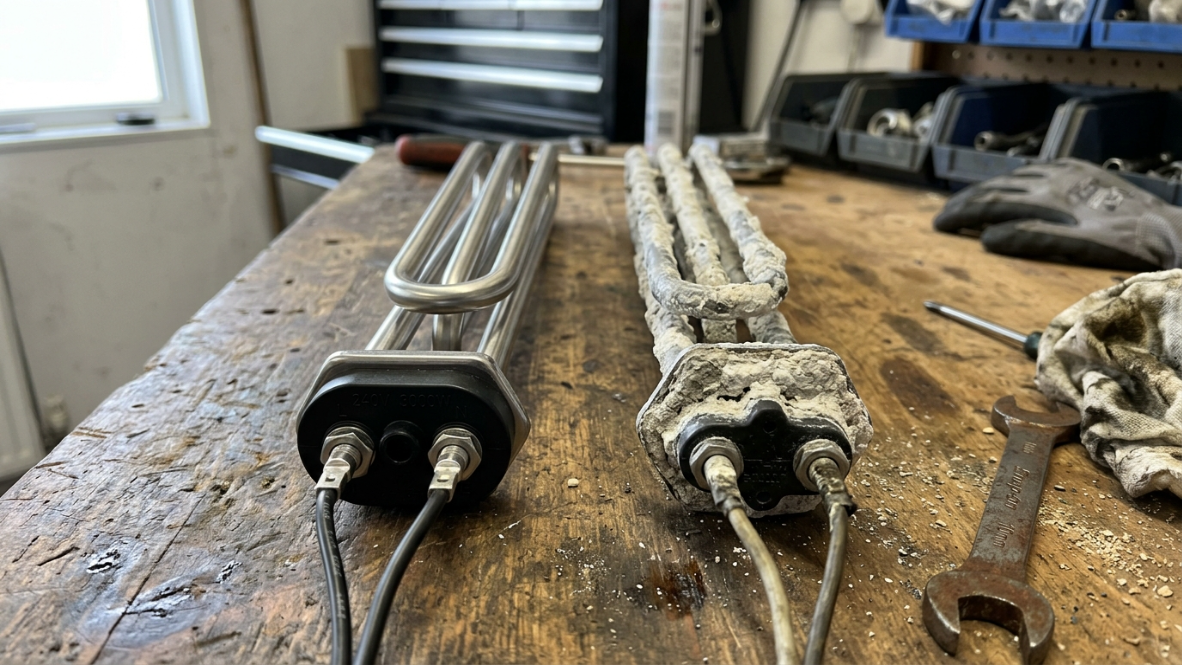
Mineral scale buildup on heating elements
Poor water quality
Failed safety controls
Neglected cleaning routines
Worn valves, seals, and electrical components
This commercial steam boiler maintenance checklist is designed specifically for small business owners and operators who need practical steps they can follow without becoming boiler engineers.
If you are still choosing equipment, start with our guides to the best jewelry steamers and best hat shop steamers to compare options for different trades.
Commercial Steam Boiler Maintenance Checklist for SMBs
The easiest way to prevent boiler problems is to follow a consistent maintenance schedule.
Small businesses should divide maintenance tasks by frequency:
Frequency | Maintenance Task | Why It Matters |
|---|---|---|
Daily | Check water level | Prevents heating element damage |
Daily | Check operating pressure | Confirms safe operation |
Daily | Perform blowdown when required | Removes concentrated minerals |
Weekly | Inspect for leaks | Finds failing seals and fittings early |
Weekly | Clean steam nozzle/wand | Maintains steam performance |
Monthly | Test low-water cutoff (LWCO) | Confirms critical safety protection |
Monthly | Check for scale buildup | Prevents efficiency loss |
Quarterly | Test relief valve | Confirms pressure protection |
Every 6–12 months | Descale boiler | Removes mineral deposits |
Annually | Inspect controls and electrical components | Prevents unexpected failures |
Daily Commercial Steam Boiler Maintenance Checklist
Daily checks take only a few minutes but prevent many expensive repairs.
1. Check Boiler Water Level
The first daily maintenance task is confirming the boiler has enough water.
Electric steam boilers heat water using immersion heating elements. If the water level drops too low, those elements can overheat and fail.
Check:
Sight glass level (if equipped)
Water reservoir level
Fill system operation
Any unusual water loss
A boiler that constantly needs refilling may have a leak, faulty valve, or water quality issue.
For more background on boiler operation, see our guide on how commercial steamers work.
2. Check Operating Pressure
The pressure gauge shows whether your boiler is producing steam within its normal operating range.
A healthy boiler should:
Build pressure consistently
Maintain stable readings
Avoid sudden pressure spikes
Warning signs include:
Pressure takes much longer than normal to build
Gauge readings fluctuate heavily
Boiler shuts down unexpectedly
High pressure can indicate a failed pressure control. Low pressure may point to scale buildup, heating element problems, or leaks.
3. Perform Blowdown When Needed
Blowdown removes mineral-rich water from the boiler before deposits accumulate.
Every time water becomes steam, minerals remain behind. Over time, those minerals concentrate and create scale.
Small businesses using boilers frequently should follow manufacturer recommendations for blowdown frequency. Heavy-use shops may need more frequent blowdown than occasional users.
Weekly Commercial Steam Boiler Maintenance Checklist
Weekly inspections help identify small problems before they become equipment failures.
1. Inspect for Leaks
Check around:
Valves
Pipe connections
Sight glass fittings
Drain valves
Steam hoses
Small leaks can waste water, reduce steam output, and create corrosion around components.
A leaking sight glass or valve should not be ignored because these parts often indicate pressure or sealing problems.
2. Clean the Steam Nozzle and Wand
The steam delivery point can collect mineral deposits over time.
A partially blocked nozzle can cause:
Weak steam output
Water spitting
Uneven cleaning performance
Cleaning the nozzle regularly improves steam quality and reduces troubleshooting time.
3. Inspect Exterior Condition
Look for:
Rust
Water stains
Damaged wiring
Loose fittings
Unusual sounds
A quick visual inspection often catches problems before a technician is needed.
Monthly Commercial Steam Boiler Maintenance Checklist
Monthly maintenance focuses on safety systems and early failure detection.
1. Test the Low-Water Cutoff (LWCO)
The low-water cutoff is one of the most important safety devices on an electric steam boiler.
Its job is simple:
If the water level becomes unsafe, the LWCO shuts down power to the heating elements.
A failed LWCO can allow heating elements to operate without enough water, causing expensive damage.
Monthly testing should confirm:
The boiler shuts down when water drops below the safe level
The control resets correctly
Sensors are free from mineral buildup
For more information about boiler safety systems, see our steam boiler safety features guide.
2. Check for Early Scale Formation
Scale is the biggest maintenance problem for many small electric boilers.
Signs include:
Longer heat-up times
Lower steam output
Weak pressure
White mineral residue
Noisy heating cycles
Frequent element failures
Even a thin mineral layer can reduce heat transfer because the heating element has to work harder to transfer heat through the deposit.
Signs Your Commercial Steam Boiler Has Scale Buildup
Scale develops when minerals in water remain behind after evaporation.
The most common causes are:
Hard tap water
Infrequent blowdown
No descaling schedule
Poor water management
Common Scale Warning Signs
1. Longer Warm-Up Time
If your boiler used to produce steam quickly but now takes much longer, scale may be insulating the heating element.
2. Reduced Steam Pressure
Mineral deposits restrict heat transfer, making it harder for the boiler to generate consistent steam.
3. Wet Steam or Water Spitting
Scale can contribute to poor steam quality and carryover, where water droplets travel with steam.
4. Higher Energy Use
A scaled heating element must run longer to achieve the same output.
5. Frequent Heating Element Failures
Scale traps heat around the element, causing excessive operating temperatures and shortening component life.
Why Small Businesses Need Preventive Commercial Steam Boiler Maintenance
Preventive maintenance costs far less than emergency repairs.
For small businesses, the biggest maintenance benefits are:
Reduced Downtime
A failed boiler can interrupt customer orders and production schedules.
Lower Repair Costs
Replacing seals, cleaning scale, and testing controls costs far less than replacing a damaged heating element or pressure vessel.
Longer Equipment Life
With proper maintenance, many commercial electric steam boilers can operate for 20 years or more.
The difference between a boiler lasting 10 years and lasting 20+ years often comes down to water quality and routine care.
Commercial Steam Boiler Parts: What Small Businesses Need to Monitor
Understanding the main parts of your steam boiler makes maintenance easier. You do not need to become a boiler technician, but knowing what each component does helps you identify problems early and communicate clearly with service providers.
For small commercial electric steam boilers, most maintenance issues come from a limited number of components:
Heating elements
Low-water cutoff systems
Pressure controls
Relief valves
Sight glasses
Fill systems
Drain valves
Steam wands and nozzles
Replacing small parts before they fail completely can prevent expensive downtime.
Essential Commercial Steam Boiler Maintenance Parts Checklist
Part | Function | Common Problem | Maintenance Action |
|---|---|---|---|
Heating element | Converts electricity into heat | Scale buildup, burnout | Inspect and descale regularly |
Low-water cutoff (LWCO) | Prevents dry firing | Mineral buildup, sensor failure | Test monthly |
Safety relief valve | Releases excess pressure | Sticking or leaking | Test quarterly |
Pressure gauge | Displays operating pressure | Incorrect readings | Check daily |
Sight glass | Shows water level | Clouding, cracks, leaks | Inspect weekly |
Pressure control | Maintains steam pressure | Calibration issues | Inspect annually |
Fill valve/pump | Adds water to boiler | Valve failure, pump wear | Check operation |
Drain/blowdown valve | Removes mineral buildup | Leaks or blockage | Operate correctly |
Steam nozzle/wand | Delivers steam | Mineral deposits | Clean weekly |
Heating Element Maintenance
The heating element is the electric boiler equivalent of a burner in a gas-fired system.
It sits directly in the water and converts electricity into heat. Because it is constantly exposed to water minerals, it is one of the components most affected by poor water quality.
Common Heating Element Problems
Scale buildup
Minerals create an insulating layer around the element. The element must run hotter and longer to heat the same amount of water.
Symptoms:
Slow heat-up time
Reduced steam output
Higher electricity use
Element failure
Electrical deterioration
Electric boilers have fewer mechanical parts than gas systems, but electrical components still age.
Inspect:
Wiring connections
Contactors
Terminals
Temperature controls
For a comparison of equipment types and electrical considerations, see our guide on electric steam boiler vs gas systems for small businesses.
Low-Water Cutoff (LWCO) Maintenance
The low-water cutoff protects the boiler from operating without enough water.
When water drops below a safe level, the LWCO interrupts power to the heating elements.
This prevents:
Overheated elements
Internal boiler damage
Unsafe pressure conditions
LWCO Maintenance Checklist
Monthly:
✓ Test shutdown function
✓ Check sensor condition
✓ Remove visible mineral buildup
✓ Confirm proper reset operation
A common cause of LWCO failure is mineral deposits covering the sensor. A dirty probe may incorrectly detect water levels and prevent proper shutdown.
Safety Relief Valve Maintenance
The safety relief valve is the final protection against excessive pressure.
If pressure rises beyond the safe operating limit, the valve opens and releases steam.
A relief valve should:
Match the boiler pressure rating
Remain unobstructed
Open when tested
Reseal properly afterward
Quarterly Relief Valve Check
A basic operational check includes:
Confirm the discharge area is safe.
Lift the test lever briefly.
Verify steam or water releases.
Release the lever.
Confirm the valve closes completely.
Never block, cap, or modify the relief valve.
For more details about required safety systems, see our commercial steamer safety checklist.
Pressure Gauge Maintenance
The pressure gauge gives you a quick view of boiler operation.
A healthy gauge should:
Move smoothly as pressure builds
Return normally when pressure drops
Match expected operating conditions
Warning Signs of Gauge Problems
Replace or inspect the gauge if you notice:
Needle movement without pressure changes
Gauge stuck at zero
Unusual pressure readings
Fogging inside the gauge
A faulty gauge can hide a pressure problem until another safety device activates.
Sight Glass Maintenance
The sight glass allows operators to visually confirm water level.
It is one of the simplest and most useful maintenance tools on a small commercial steam boiler.
Inspect weekly for:
Cracks
Leaks
Mineral deposits
Cloudy appearance
A damaged sight glass should be replaced immediately.
Many jewelry and small workshop operators replace sight glass tubes and seals during routine servicing because these inexpensive parts prevent larger problems.
Pressure Control Maintenance
The pressure control regulates when heating elements turn on and off.
It maintains consistent steam production by controlling:
Cut-in pressure
Cut-out pressure
A failing pressure control may cause:
Weak steam output
Excessive pressure
Frequent cycling
Boiler shutdowns
If your boiler produces inconsistent steam despite proper water levels, pressure control issues should be investigated.
Manual Fill vs Auto Fill Boiler Maintenance
Small businesses typically use one of two water delivery systems.
Manual Fill Boilers
Manual-fill boilers require operators to add water by hand.
Advantages:
Simple design
Lower maintenance requirements
Fewer moving parts
Disadvantages:
Requires monitoring
Must stop operation to refill
Manual-fill systems work well for businesses with intermittent steam use.
Auto-Fill Boilers
Auto-fill systems use pumps and sensors to maintain water levels automatically.
Advantages:
Continuous operation
Less operator involvement
Better for high-volume use
Disadvantages:
More components can fail
Requires pump and sensor maintenance
Understanding the difference between these systems helps determine the right maintenance routine.
Learn more about the differences in our guide:
manual-fill vs auto-fill steam boilers.
Commercial Steam Boiler Troubleshooting Checklist
Before calling for service, small business owners can check several common issues.
Problem: Boiler Takes Too Long to Produce Steam
Possible causes:
Scale buildup
Failing heating element
Low water level
Electrical issue
First checks:
✓ Confirm water level
✓ Check pressure gauge
✓ Review descaling history
Problem: Steam Is Weak
Possible causes:
Scale-covered heating element
Pressure control problem
Blocked nozzle
Excessive mineral buildup
First checks:
✓ Clean nozzle
✓ Check pressure
✓ Perform recommended blowdown
Problem: Steam Contains Water Droplets
Possible causes:
High TDS levels
Water level too high
Scale buildup
Carryover
First checks:
✓ Drain and refill if needed
✓ Check water quality
✓ Inspect boiler cleanliness
Problem: Boiler Shuts Down Unexpectedly
Possible causes:
LWCO activation
Pressure control failure
Electrical issue
Low water condition
First checks:
✓ Confirm water level
✓ Check safety controls
✓ Review recent maintenance
Commercial Steam Boiler Maintenance Schedule by Business Type
Not every small business uses steam the same way.
Your maintenance schedule should match usage.
Jewelry Stores
Typical use:
Several hours per day
Small batches
High-quality steam requirements
Recommended focus:
Water quality
Nozzle cleaning
Scale prevention
Hat Shops
Typical use:
Repeated steaming cycles
Fabric and felt shaping
Recommended focus:
Steam consistency
Hose and nozzle inspection
Regular blowdown
For trade-specific equipment advice, see our hat steamer accessories guide.
Tailors and Garment Businesses
Typical use:
Daily pressing
Continuous steam demand
Recommended focus:
Pressure stability
Fill system reliability
Leak inspection
Dental Labs and Specialty Workshops
Typical use:
Precision applications
Clean steam requirements
Recommended focus:
Water purity
Contamination prevention
Documentation
When Professional Commercial Steam Boiler Maintenance Makes Sense
Many routine tasks can be handled by trained operators, but some situations require professional service.
Schedule professional maintenance when:
The boiler fails safety tests
The pressure vessel shows damage
Electrical components require replacement
Scale buildup is severe
Compliance inspection is required
Repairs become frequent
Professional maintenance is especially valuable when downtime affects revenue.
Protect Your Equipment With a Maintenance Plan
Preventive maintenance reduces failures, but unexpected repairs can still happen.
For small businesses that rely on steam equipment every day, equipment protection plans can help reduce repair uncertainty and keep operations moving.
A protection plan can provide support for:
Unexpected equipment failures
Covered repairs
Replacement support
Maintenance guidance
Explore Workhorse Protection to learn how a commercial equipment protection plan can help protect your steam boiler investment.
Water Quality: The Foundation of Commercial Steam Boiler Maintenance
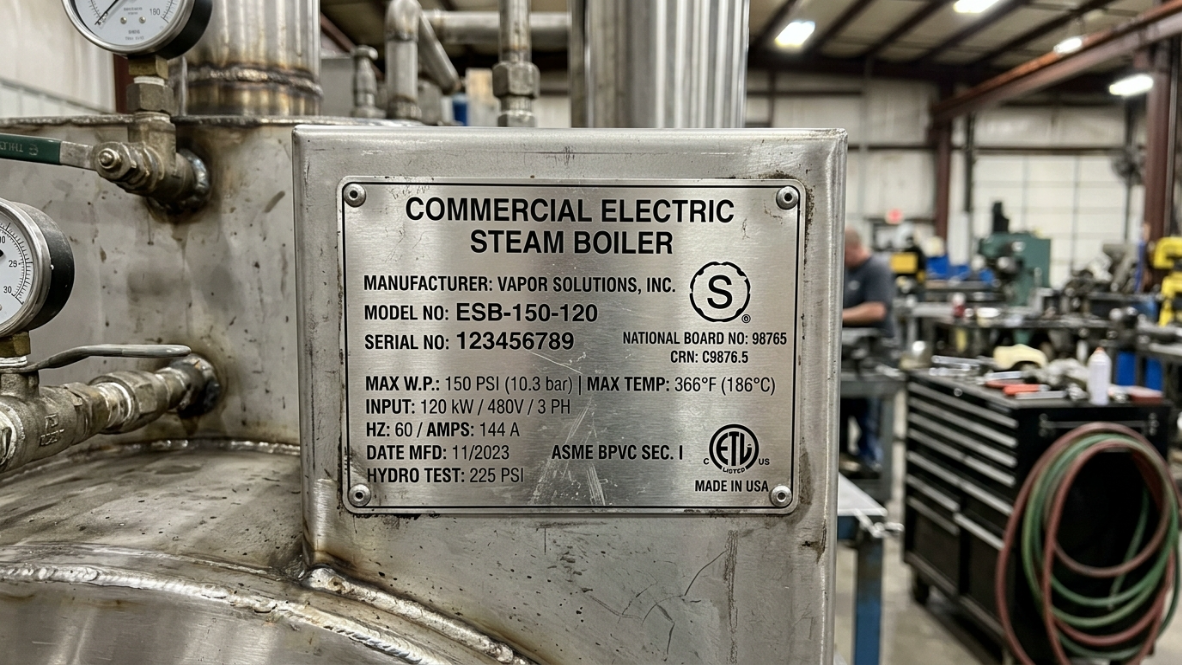
For small commercial steam boilers, water quality determines how often you need repairs.
Unlike large industrial plants with dedicated water treatment systems, many small businesses operate simple electric boilers filled with tap water. That makes mineral management one of the most important parts of commercial steam boiler maintenance.
Every time water turns into steam, dissolved minerals remain behind. Over time, those minerals concentrate and form scale on internal surfaces, especially heating elements.
The result:
Longer heat-up times
Reduced steam output
Higher energy consumption
Premature component failure
A consistent water maintenance routine is one of the easiest ways to extend boiler life.
Commercial Steam Boiler Water Maintenance Checklist
Task | Recommended Frequency | Purpose |
|---|---|---|
Check water quality | Monthly | Identify mineral problems early |
Perform blowdown | Daily to weekly depending on use | Remove concentrated minerals |
Monitor scale buildup | Monthly | Prevent efficiency loss |
Use distilled/deionized water when recommended | Ongoing | Reduce mineral deposits |
Descale boiler | Every 6–12 months | Remove existing buildup |
Scale: The Most Common Commercial Steam Boiler Problem
Scale is a hard mineral deposit that forms when calcium and magnesium remain behind after water evaporation.
In small electric boilers, scale typically builds directly on the heating element.
Even a thin layer can create problems.
How Scale Affects Your Boiler
Scale acts like insulation.
The heating element still produces heat, but the heat cannot transfer efficiently into the water.
This causes:
Longer heating cycles
Increased electricity use
Higher operating temperatures
Reduced element lifespan
A boiler with heavy scale may appear to work normally while quietly damaging internal components.
Signs Your Boiler Needs Descaling
Many small businesses wait until the boiler fails before addressing scale. Look for these early warning signs instead.
1. Steam Takes Longer Than Normal
If your boiler used to produce steam quickly but now needs extra time, mineral buildup may be reducing heat transfer.
2. Lower Steam Pressure
A scaled heating element cannot produce steam as efficiently.
You may notice:
Weak steam flow
Longer recovery time between uses
Poor cleaning performance
3. White Mineral Residue
White powder or crust around:
Drain valves
Steam nozzles
Fill openings
usually indicates mineral accumulation.
4. Water Spitting From the Nozzle
Wet steam can indicate:
High mineral concentration
Incorrect water level
Internal scale buildup
5. Frequent Heating Element Replacement
If elements fail repeatedly, scale should be one of the first things investigated.
How to Descale a Commercial Steam Boiler
Descaling removes mineral deposits that regular blowdown cannot eliminate.
The basic process:
Shut down and cool the boiler.
Drain remaining water.
Apply the manufacturer-approved descaling solution.
Allow the solution to dissolve mineral deposits.
Flush thoroughly.
Refill with clean water.
Verify normal operation.
The exact procedure depends on the boiler manufacturer.
Some technicians use inhibited acid-based descaling products because they remove mineral deposits while reducing damage to metal components. Always follow manufacturer instructions before choosing a cleaning chemical.
For more maintenance guidance related to accessories and cleaning supplies, see our hat steamer accessories guide.
Should You Use Tap Water, Distilled Water, or Deionized Water?
Water choice has a major impact on maintenance frequency.
Tap Water
Advantages:
Convenient
Inexpensive
Disadvantages:
Contains minerals
Creates scale faster
Requires more frequent cleaning
Distilled Water
Advantages:
Very low mineral content
Reduces scale formation
Easy to purchase
Best for:
Manual-fill boilers
Small jewelry steamers
Low-volume operations
Deionized Water
Advantages:
Removes dissolved minerals
Minimizes deposits
Often used where very clean steam quality is important.
Printable Commercial Steam Boiler Maintenance Checklist
Use this checklist as a simple routine for your shop.
Daily Checklist
☐ Check boiler water level
☐ Confirm pressure gauge is normal
☐ Check for unusual noises
☐ Perform blowdown if required
☐ Confirm steam output is normal
Weekly Checklist
☐ Inspect valves and fittings for leaks
☐ Check sight glass condition
☐ Clean steam nozzle/wand
☐ Inspect exterior condition
☐ Check hoses and connections
Monthly Checklist
☐ Test low-water cutoff (LWCO)
☐ Inspect for scale buildup
☐ Review water quality
☐ Check electrical connections visually
☐ Record maintenance completed
Quarterly Checklist
☐ Test safety relief valve
☐ Review pressure control operation
☐ Inspect drain/blowdown valve
Every 6–12 Months
☐ Descale boiler
☐ Inspect heating element
☐ Replace worn seals if needed
☐ Review maintenance history
Annually
☐ Complete professional inspection
☐ Review safety controls
☐ Verify compliance requirements
☐ Evaluate repair vs replacement costs
Commercial Steam Boiler Maintenance FAQs
How often should a commercial steam boiler be maintained?
Small commercial electric steam boilers should be checked daily, inspected weekly, have safety controls tested monthly, and receive professional servicing at least annually. Descaling is typically needed every 6–12 months depending on water hardness and usage.
Do small electric steam boilers need blowdown?
Yes.
Even electric boilers create mineral concentration because steam removes water but leaves dissolved solids behind. Regular blowdown helps reduce scale buildup and maintain steam quality.
How often should I descale my commercial steam boiler?
Most small businesses should plan to descale every 6–12 months.
You may need more frequent descaling if:
Your water is hard
You use tap water
The boiler runs many hours daily
Steam output has decreased
What causes a commercial steam boiler to lose pressure?
Common causes include:
Scale buildup
Leaking valves
Blocked steam nozzle
Faulty pressure control
Heating element problems
Start with basic checks before assuming a major repair is needed.
How do I know if my boiler heating element is failing?
Common warning signs include:
Slow heating
Reduced steam output
Frequent electrical trips
Boiler fails to reach normal pressure
Scale buildup is often the cause before complete element failure occurs.
What is the most important commercial steam boiler maintenance task?
For most small businesses, water management is the most important.
Preventing scale through proper water quality, blowdown, and descaling protects the heating element and extends equipment life.
Can regular maintenance extend boiler lifespan?
Yes.
A properly maintained commercial electric steam boiler can often operate for 20 years or longer. Regular maintenance reduces avoidable failures and protects expensive components.
Final Commercial Steam Boiler Maintenance Checklist for SMB Owners
If you only remember five things, remember these:
Check water levels every day.
Watch for scale before performance drops.
Test safety controls regularly.
Use better-quality water when possible.
Schedule preventive maintenance before failure occurs.
Small businesses depend on reliable steam equipment. A simple maintenance routine protects your investment, prevents unexpected downtime, and keeps your operation running smoothly.
If you want additional protection beyond routine maintenance, Explore Workhorse Protection to see how an equipment protection plan can help reduce unexpected repair costs and keep your commercial steam equipment working when you need it.
For additional equipment guidance, explore our complete commercial steam equipment guide covering steam equipment types, safety considerations, and business applications.


