

The core commercial steam boiler safety requirements mandate that your equipment must be built to ASME code, pass regular state-mandated inspections, and have a valid operating certificate. While navigating the web of state laws, national codes, and inspection schedules can feel overwhelming, compliance is non-negotiable for safe operation. This guide breaks down these essential rules into clear, understandable terms.
Think of this as your roadmap to safety and compliance. Understanding these rules helps you avoid hefty fines, prevent dangerous accidents, and keep your operations running smoothly. Let’s dive into what you need to know.
Summary of Commercial Steam Boiler Safety Requirements
In 2026, commercial steam boiler safety is governed by state-mandated periodic inspections, ASME Boiler and Pressure Vessel Code (BPVC) construction standards, and valid operating certificates. Key requirements include annual internal/external inspections for high-pressure units (above 15 PSI), biennial inspections for low-pressure units, and mandatory National Board (NB) registration to ensure equipment traceability and compliance.
State Boiler Inspection Requirements: The Foundation of Safety
In the United States, boiler safety isn’t primarily a federal issue; it’s handled at the state level. Each state, and sometimes even large cities, has its own set of laws that mandate periodic safety inspections for the more than 183,000 commercial boilers in operation. These rules are designed to prevent catastrophic failures like explosions or the release of toxic gases.
While the specifics vary, state requirements generally dictate:
How often your boiler needs to be inspected.
That inspections must be done by a qualified, commissioned inspector.
That your boiler must be built to a recognized safety code (like ASME).
That you must display a valid Certificate of Inspection as proof of compliance.
The penalties for operating an unsafe or uninspected boiler.
ASME and National Board: The Gold Standard for Construction
Before a boiler even gets inspected, it must be built correctly. This is where two key organizations come in.
Construction and Stamping Compliance with ASME BPVC
The American Society of Mechanical Engineers (ASME) Boiler and Pressure Vessel Code (BPVC) is the international standard for boiler design and construction. Compliance with this code is required by law in nearly every state.
When a boiler is built according to these strict rules, it earns an official ASME stamp on its nameplate. You’ll typically see:
“S” Stamp: For high pressure Power Boilers.
“H” Stamp: For low pressure Heating Boilers.
This stamp is your guarantee that the boiler was constructed with proper materials and techniques, and that it passed rigorous quality control checks during fabrication. When an inspector shows up, one of the first things they’ll look for is this stamp.
National Board Registration Requirement
The National Board of Boiler and Pressure Vessel Inspectors (NB) adds another layer of safety and traceability. When a boiler is registered with the National Board, it gets a unique NB number stamped on its nameplate. This registration creates a permanent record of the boiler’s manufacturing data, which can be accessed by inspectors anywhere in the country.
Many states require both an ASME stamp and National Board registration. It’s the industry standard for ensuring a boiler is built safely and its history is properly documented.
Fortunately, you don’t have to navigate this alone. Reputable manufacturers ensure their equipment meets these standards from day one. All professional line boilers from Hoffman Steam—such as the ASME/UL-certified ELG4 commercial steam boiler—are built to ASME Code and come with the required stamps and National Board registration, providing the official paperwork you need to pass your first inspection without a hitch.
Component | Safety Requirement | Code Reference |
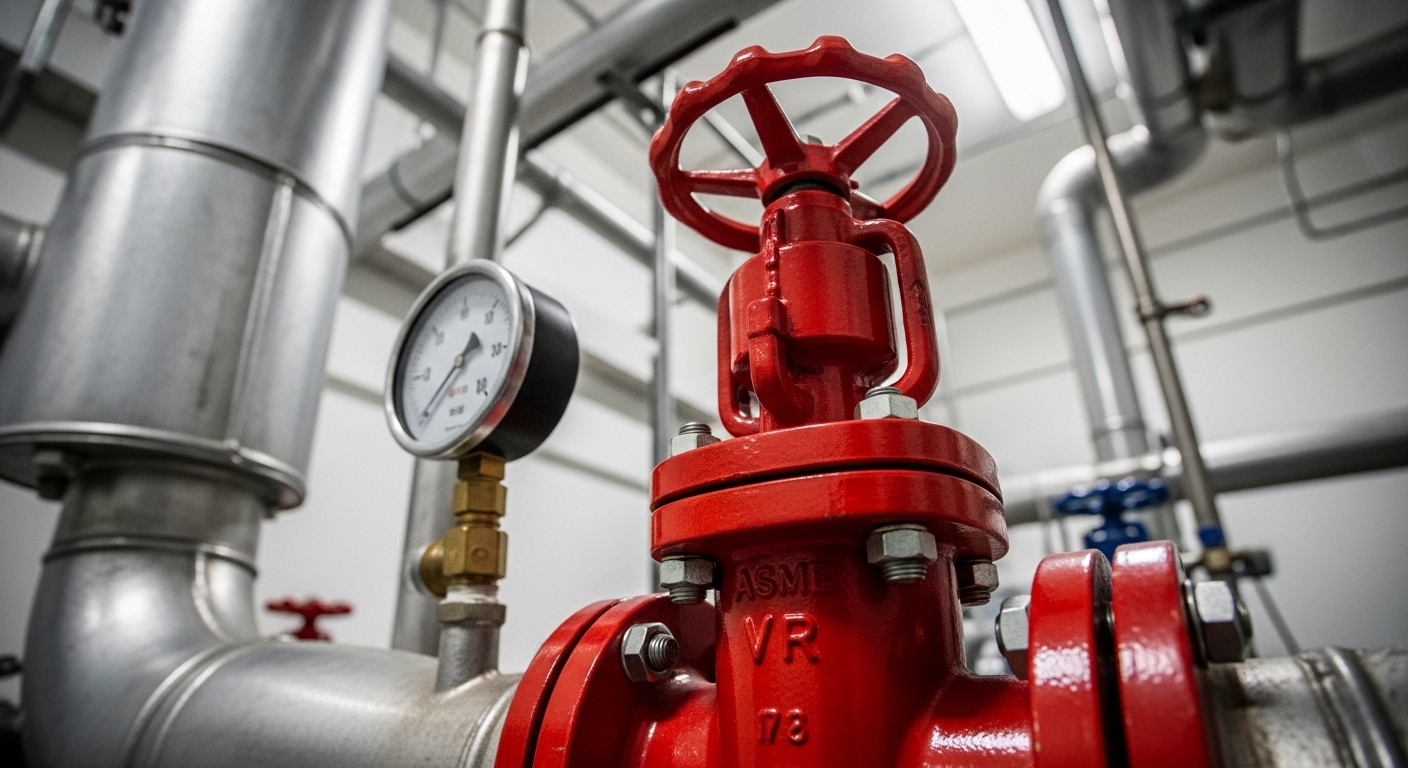
Safety Relief Valve | Must be ASME-certified and VR-stamped if repaired. | ASME Section I / IV |
Low Water Cutoff | Mandatory dual-device systems for most high-pressure units. | ASME CSD-1 |
Pressure Gauge | Must be visible and calibrated to 2x the safety valve set pressure. | NBIC Part 1 |
Blowdown Valves | Required for sediment removal and water level control. | ASME BPVC |
2026 Inspection Frequency & Regulatory Standards
Commercial boiler inspection intervals are determined by the boiler’s Maximum Allowable Working Pressure (MAWP). While specific state laws vary, the following table represents the national standard for 2026:
Boiler Type | Operating Pressure | Inspection Frequency | Common States |
High Pressure (Power) | > 15 PSI | Annual (12 Months) | IL, DE, MI, NJ |
Low Pressure (Heating) | ≤ 15 PSI | Biennial (24 Months) | OH, PA, KY, VA |
Miniature Boilers | < 100 PSI / 5 cu.ft | Annual | Most Jurisdictions |
Electric Boilers | Varies | Standard Schedule | National |
High Pressure (Power) Steam Boilers
A high pressure boiler, often called a power boiler, operates at steam pressures above 15 pounds per square inch (PSI). Due to the higher energy and risk involved, these units require more frequent attention.
The inspection frequency requirement for high pressure boilers is almost universally annual. States like Illinois, Delaware, and Michigan mandate an inspection at least once every 12 months. Some jurisdictions go even further. Tennessee and New Jersey, for instance, require an annual internal inspection plus an external inspection every six months.
Low Pressure Steam or Heating Boilers
Low pressure boilers operate at 15 PSI or below. Since they pose a lower risk, inspection schedules are often less frequent. The most common inspection cycle for low pressure steam boilers is biennial, or once every two years. This is the standard in many states, including Ohio, Pennsylvania, and Kentucky.
However, always check your local rules. Some high density areas like New York City require annual inspections for all boilers, regardless of pressure. On the other end of the spectrum, a state like Wisconsin may allow a three year interval for certain low pressure units.
A Closer Look: Internal vs. External Inspections
Boiler inspections come in two main flavors: internal and external. Each serves a different purpose.
The Internal Inspection Requirement
An internal inspection is the most thorough checkup your boiler can get. For this, the boiler must be completely shut down, cooled, drained, and opened up. The inspector removes manhole and handhole covers to get a direct look at the inside surfaces of the pressure vessel.
They are looking for signs of:
Corrosion, pitting, or rust
Cracks or deformation in the steel
Excessive scale or sediment buildup
Erosion or bulging in the tubes
This deep dive allows inspectors to catch serious problems that would be invisible from the outside.
The External Inspection Requirement
An external inspection is a check of the boiler’s exterior and its safety controls, often performed while the boiler is in operation. This is a less intrusive process where the inspector verifies that everything is working as it should.
During an external check, the inspector will:
Visually check for leaks, overheating, or deterioration.
Confirm gauges are working correctly.
Test safety devices, like the low water cutoff and the safety valve test lever.
Examine attached piping and valves.
Ensure the area around the boiler meets code for clearance and ventilation.
Preparing for a Smooth Inspection
An inspector can refuse to perform an inspection if the boiler isn’t prepared correctly, potentially causing delays and extra costs. Proper preparation, especially for an internal inspection, is your responsibility.
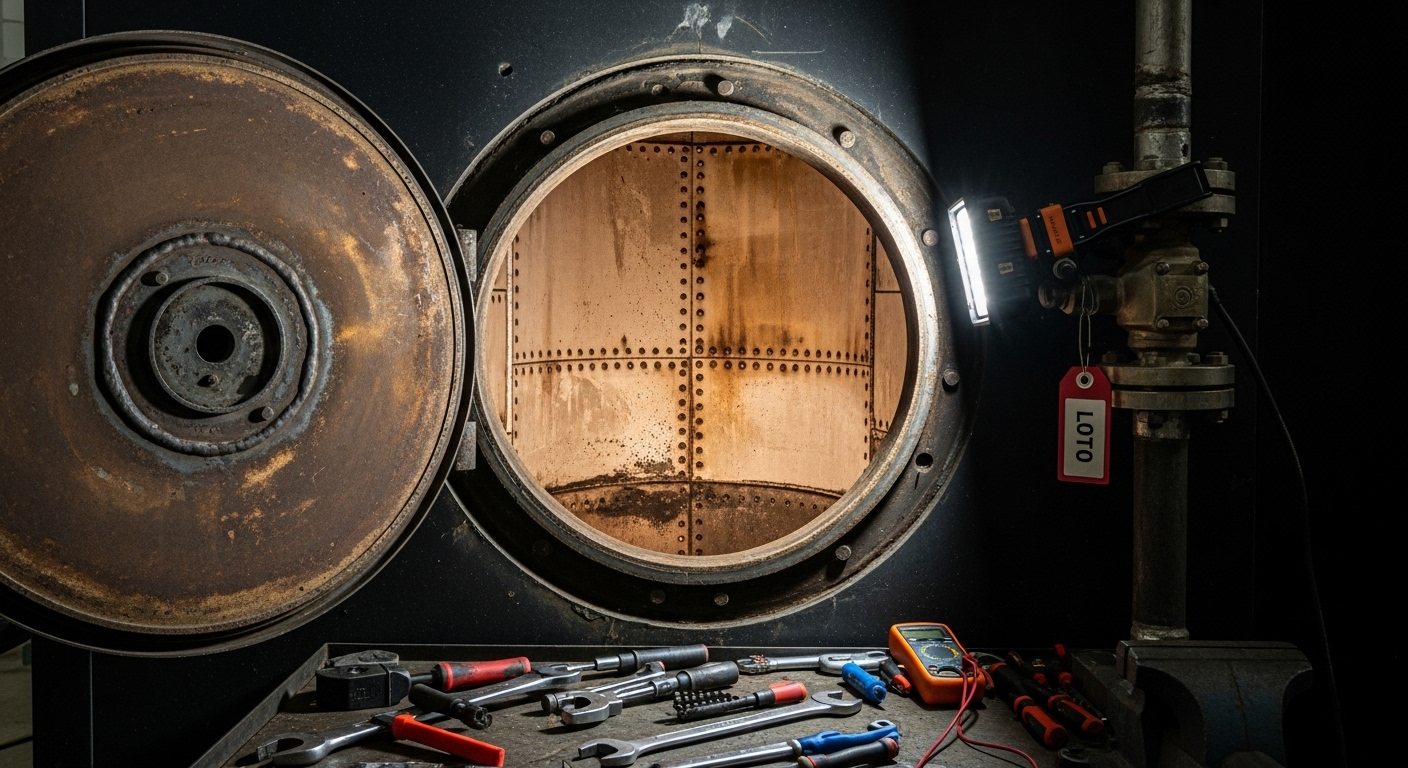
Before the inspector arrives, make sure to:
Shut down and cool the boiler well in advance. It must be at atmospheric pressure and a safe temperature.
Lockout and tagout all energy sources (fuel and electric) to prevent accidental startup.
Drain all water from the boiler.
Open all manhole and handhole covers to provide access and ventilation.
Thoroughly clean the interior surfaces. The inspector needs to see bare metal, not a layer of scale or soot that could hide defects. If scale buildup is a recurring issue, download our free Water 101 guide for feedwater best practices.
Provide adequate lighting and ventilation for the interior.
The People and Paperwork Behind Compliance
Meeting commercial steam boiler safety requirements involves coordinating with the right people and keeping your documents in order.
Authorized Inspectors and Agencies
Inspections must be performed by a Commissioned Inspector who holds a credential from the National Board and a license for your state. These inspectors work for an Authorized Inspection Agency (AIA), which is typically either your state’s boiler inspection department or an authorized insurance company. If your boiler is insured, your insurance provider will often handle the inspections.
The Certificate of Inspection and Operating Permit
After a successful inspection, the state issues a Certificate of Inspection, also known as an Operating Permit. This is your boiler’s official license to operate. The certificate is only valid for a limited time, usually one or two years, depending on your required inspection frequency. It must be posted in a visible place near the boiler. Operating a boiler with an expired certificate is illegal and can result in fines or a shutdown order.
Owner User Inspection Agencies
In some cases, very large companies (like refineries or chemical plants) with many boilers can be authorized as an Owner User Inspection Agency. This allows them to use their own in house commissioned inspectors. It’s a special designation that comes with strict recordkeeping and reporting duties to the state.
Beyond the Vessel: Essential Safety Systems
A safe boiler is more than just a strong tank. The controls and safety devices are just as important.
Control and Combustion Safety Compliance
For fuel fired boilers, several codes dictate the safety requirements for combustion systems. The most common are ASME CSD-1 (for smaller boilers) and NFPA 85 (for larger industrial units). These standards require safety controls like flame sensors, fuel shutoff valves, and purge cycles to prevent furnace explosions. They also mandate annual testing of these critical devices.
This is one area where electric boilers offer a distinct advantage. Because they don’t burn fuel, electric steam boilers from Hoffman Steam are not subject to these complex combustion safety codes, simplifying compliance.
Safety Valve Requirements
The safety valve is your boiler’s most important safety device. It’s the last line of defense against a dangerous overpressure event. Key requirements include:
Capacity: The valve must be large enough to release all the steam the boiler can generate without letting pressure build.
Testing: Valves must be tested regularly to ensure they open at the correct pressure. This includes periodic “pop tests” under pressure and more frequent manual checks using the test lever.
Repair: If a safety valve needs repair, it must be done by a shop holding a National Board “VR” stamp. This certifies the shop is qualified to repair and recalibrate these critical devices to code.
Getting Started: The Installation Permit
You can’t just buy a boiler and turn it on. Most jurisdictions require you to obtain an Installation Permit before you install a new or secondhand boiler. The application process ensures the unit you plan to install is code compliant from the start. You’ll typically need to provide the boiler’s specifications and a copy of its ASME Manufacturer’s Data Report. If budget planning is a concern, explore our financing options to keep your project on schedule.
When Things Go Wrong (and When Rules Don’t Apply)
Even with the best preparation, issues can arise. It’s also important to know when certain rules don’t apply to your equipment.
Unsafe Conditions and Suspension of Operation
If an inspector finds an unsafe condition that poses an immediate threat (like a crack or a disabled safety valve), they have the authority to suspend operation on the spot. They will “red tag” the equipment, and you cannot legally operate it until the defect is repaired and the boiler passes a re inspection.
Coordination and Notification Requirements
It is the owner’s responsibility to schedule inspections before the current certificate expires. You must proactively coordinate with your state or insurance inspector to get the inspection done on time. Waiting until the last minute can lead to a lapse in certification.
Equipment Exemptions
Not every piece of steam equipment is subject to the full list of commercial steam boiler safety requirements. States typically exempt certain equipment that poses a minimal risk. Common exemptions include:
Boilers in private residences.
Boilers used exclusively for agricultural purposes on farms.
Very small boilers below a certain size, pressure, and heat input threshold.
This is where choosing the right equipment can make a big difference. For example, Hoffman Steam’s portable GEM III flash steamer operates at atmospheric pressure, meaning in most places it isn’t legally considered a boiler and requires no permits or inspections. This makes it an ideal choice for businesses in retail environments like malls.
Commercial Boiler Safety Compliance Checklist
To ensure your facility remains compliant and passes its 2026 audit, follow these four critical steps:
Verify the Stamp: Confirm your boiler has the ASME “S” (Power) or “H” (Heating) stamp and an NB (National Board) registration number.
Maintain the Log: Keep a daily log of water levels, pressure, and temperature. Inspectors view consistent record-keeping as proof of “safe operation.”
Pre-Inspection Prep: Prior to an internal inspection, ensure the unit is cooled, drained, and “Locked Out/Tagged Out” (LOTO) for safety.
Display the Permit: Ensure your current Certificate of Inspection is framed and visible in the boiler room.
Your Partner in Compliance
Staying on top of commercial steam boiler safety requirements is a continuous process. From initial installation to routine inspections and maintenance, it’s a critical part of running a safe and successful business. Choosing an ASME certified boiler from a reputable US manufacturer is the best first step you can take. Not sure which model fits your pressure and inspection needs? Start with Which Steamer Is Right for Me?
With comprehensive support like the Workhorse Protection Plan, which includes compliance documentation and service reminders, you can focus more on your work and less on paperwork.
Frequently Asked Questions
1. What are the most common commercial steam boiler safety requirements?
The most common requirements include having an ASME stamped and National Board registered boiler, undergoing periodic internal and external inspections by a commissioned inspector, and maintaining a valid, publicly displayed Certificate of Inspection or Operating Permit.
2. How often does my commercial steam boiler need to be inspected?
It depends on the pressure. High pressure boilers (above 15 PSI) typically require an inspection every year. Low pressure boilers (15 PSI and below) usually need to be inspected every two years, though this can vary by state.
3. Do electric steam boilers have different safety requirements?
Yes, in some key areas. While they must still meet all pressure vessel construction (ASME) and inspection requirements, electric boilers are exempt from combustion safety codes like ASME CSD-1 and NFPA 85 because they do not have a flame or burn fuel. This can simplify installation and annual compliance.
4. What is an ASME stamp and why is it important?
The ASME stamp is a mark on a boiler’s nameplate certifying that it was designed and built according to the American Society of Mechanical Engineers’ Boiler and Pressure Vessel Code. It is a legal requirement in most states and serves as your guarantee of safe construction.
5. Can I operate my boiler if the inspection certificate has expired?
No. Operating a boiler without a valid certificate is illegal. It can result in significant fines, shutdown orders from the state, and potentially the voiding of your insurance coverage.
6. What happens if my boiler fails an inspection?
If an inspector finds a minor issue, you will be given a set amount of time to make corrections. If a serious, unsafe condition is found, the inspector will immediately suspend the boiler’s operating permit (“red tag” it), and it cannot be used again until it is repaired and passes a re inspection.
7. Are there any commercial steamers that don’t need inspections?
Yes. Certain small, low pressure units may fall under your state’s exemption criteria. For instance, non pressurized or atmospheric steamers, like some portable models used in jewelry or retail, often do not require any boiler permits or inspections. Always check your local regulations to be sure.


