

TL;DR
The biggest commercial steamer buying mistakes are choosing by PSI alone, confusing consumer and commercial equipment, underestimating peak workload, selecting the wrong fill method, overlooking ASME or UL requirements, ignoring water quality, forgetting electrical requirements, buying the wrong accessories, and underestimating warranty and parts support. Before buying, match the steamer to your application, workload, power supply, water conditions, safety requirements, and expected maintenance.
What Should You Check Before Buying a Commercial Steamer?
Before buying a commercial steamer, check the machine’s application, working pressure, steam output, duty cycle, fill method, boiler capacity, electrical requirements, water-quality requirements, certifications, accessories, warranty, and parts support. Do not choose a machine based on PSI or price alone. The right commercial steamer is the one that can continuously meet your workload while fitting your facility’s power, water, safety, and maintenance requirements.
The 10 Commercial Steamer Buying Mistakes to Avoid
Choosing a steamer by PSI alone
Confusing consumer-grade and commercial equipment
Ignoring duty cycle and peak workload
Choosing the wrong fill method
Skipping ASME, UL, or local compliance requirements
Ignoring water quality and scale
Forgetting electrical requirements
Buying a boiler without the right accessories
Overlooking warranty, parts, and technical support
Ignoring application-specific risks
What Counts as a Commercial Steamer?
A commercial steamer buying mistake is any overlooked technical, operational, safety, or support factor that makes a machine underperform, cost more than expected, fail early, or fail an inspection. These mistakes rarely look dramatic at the time of purchase. They show up later as tripped breakers, scaled-up boilers, spitting nozzles, warranty denials, or equipment that simply cannot keep up with the workload.
The core problem is that “commercial steamer” is not one product category. A jewelry store, a western hat shop, a clothing boutique, a dry cleaner, an upholstery business, and a light manufacturing facility all mean something different when they search for a commercial steamer. The term spans portable flash steamers, small boiler units, and continuous-duty industrial boilers. Buying the wrong type for the job is the most expensive mistake of all.
A commercial steamer can refer to several different equipment types, including flash steamers, pressurized boiler steamers, garment steamers, jewelry steamers, hat-shaping steamers, upholstery steamers, and industrial steam systems. These machines can differ substantially in pressure, steam output, fill method, electrical requirements, operating cycle, and safety requirements.
That means the right buying criteria depend on the application. A jewelry store may prioritize concentrated steam and portability, while a hat shop may need shaping accessories and foot-pedal control. A clothing business may prioritize continuous garment finishing, while an industrial operation may need a pressurized boiler with specific electrical and compliance requirements.
The first buying decision is therefore not “Which steamer has the highest PSI?” It is “What type of steam equipment matches the work I need it to perform?”
The Biggest Commercial Steamer Buying Mistakes at a Glance
Before the detailed glossary, here is a quick reference table of the most common commercial steamer buying mistakes and what to check instead.
Buying mistake | Why it causes problems | What to check instead |
|---|---|---|
Buying by PSI alone | Peak pressure does not show sustained steam performance | Working pressure, steam flow, recovery time |
Buying consumer-grade equipment | Consumer units may not be designed for repeated commercial use | Duty cycle, construction, warranty, parts support |
Ignoring peak workload | The machine may struggle during busy periods | Jobs per hour, runtime, recovery, refill frequency |
Choosing the wrong fill method | Manual refilling can create unnecessary downtime | Manual fill, pump fill, or flash-steam design |
Skipping certification questions | Equipment may not satisfy applicable safety, inspection, or insurance requirements | ASME, UL, local codes, insurer requirements |
Ignoring water quality | Minerals can create scale and affect boiler performance | Manufacturer water specification and local hardness |
Forgetting electrical requirements | The machine may require a circuit or electrical configuration the facility does not have | Voltage, phase, amperage, plug and circuit capacity |
Buying without the right accessories | The steamer may not perform the actual job efficiently | Nozzles, wands, irons, brushes, hat heads and other attachments |
Overlooking warranty and parts | A small failure can create expensive downtime | Commercial-use warranty, parts availability, service support |
Ignoring application-specific risks | Different industries have different safety and performance requirements | Application, material compatibility and workflow |
Which Commercial Steamer Do You Need?
The best commercial steamer depends on what you are steaming, how frequently you use it, and whether the work requires portable steam, continuous output, specialized attachments, or a pressurized boiler.
Application | Important buying factors | Common mistake |
|---|---|---|
Jewelry store | Concentrated steam, controllable output, suitable water specification, precision nozzle | Buying based on PSI without considering control and stone compatibility |
Hat shop | Steam output, shaping attachments, hat heads, foot-pedal control | Buying a generic garment steamer without shaping accessories |
Clothing boutique | Runtime, reservoir or boiler capacity, garment attachments, portability | Using a small consumer steamer for high-volume daily work |
Upholstery | Steam type, moisture control, hose length, fabric compatibility, attachments | Choosing equipment without testing the material or moisture requirements |
Dry cleaner or garment business | Continuous output, recovery time, accessories, serviceability | Underestimating peak workload |
Light industrial operation | Duty cycle, boiler capacity, electrical supply, safety controls, certification | Buying equipment without checking facility power or compliance requirements |
Small retail business | Portability, simple operation, refill method, available power | Paying for industrial capacity that the business does not need |
Mistake #1: Buying by PSI Alone
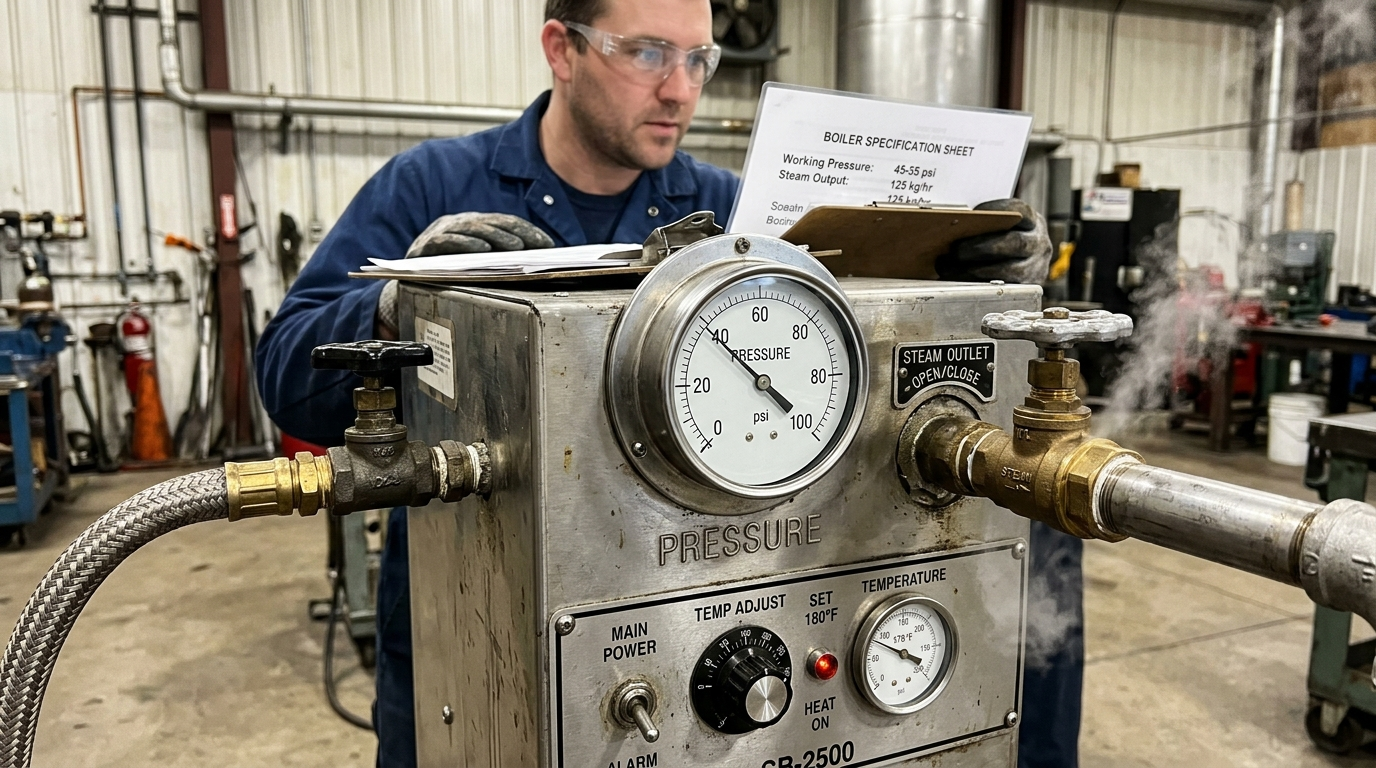
PSI (pounds per square inch) measures steam pressure. Higher PSI means more force at the nozzle and hotter saturated steam. According to saturated steam tables, 40 psig produces steam at about 286°F, 70 psig at about 316°F, and 90 psig at about 331°F. Those numbers matter, especially for jobs that need heat and force, like removing polishing compound from jewelry prongs or shaping stiff felt.
Specification | What it tells you | Why it matters |
|---|---|---|
PSI / working pressure | Pressure maintained during operation | Helps determine the force and operating conditions at the steam outlet |
Maximum pressure | Highest rated pressure | Does not necessarily represent normal operating performance |
Steam flow | Amount of steam delivered over time | Important for sustained work and larger surfaces |
Recovery time | How quickly usable steam returns after discharge | Critical during repeated or high-volume jobs |
Duty cycle | How long the machine can operate under its intended conditions | Helps determine whether it can handle the workload |
But PSI alone does not tell you whether a steamer can handle your workload. Three other terms matter just as much:
Working pressure vs. maximum pressure. Maximum pressure is a peak rating under ideal conditions. Working pressure is what the machine actually maintains during repeated use. Cheaper units may advertise impressive numbers but cannot hold heat and pressure at the nozzle during real jobs.
Recovery time. This is how quickly the steamer returns to usable pressure after steam is discharged. A machine that performs well for one ring or one garment but needs minutes to recover between items will bottleneck a busy shop.
Steam flow. This describes the volume of steam delivered over time. A narrow burst of high-pressure steam may suit jewelry cleaning but fall short for garment finishing or continuous production work.
The buying mistake here is comparing machines by the biggest PSI number on the spec sheet. The real question is whether the machine can deliver the right steam, at the right endpoint, for the full workload. For a deeper breakdown, see this guide on PSI for commercial steamers.
Mistake #2: Confusing Consumer and Commercial Steamers
“Commercial” is not a specification. It is a claim that needs to be backed by measurable factors: duty cycle, construction quality, parts support, certification, and warranty terms. A product listing that says “commercial” does not guarantee the machine can survive daily shop use.
Factor | Consumer steamer | Commercial steamer |
|---|---|---|
Typical workload | Intermittent or occasional | Repeated business use |
Runtime | Often limited | Designed around the intended duty cycle |
Water capacity | Usually smaller | Varies by application and equipment type |
Accessories | Basic attachments | Application-specific options may be available |
Parts support | May be limited | Commercial parts and service support are more important |
Warranty | May exclude business use | Check that commercial use is explicitly covered |
Electrical requirements | Often simpler | May require dedicated circuits or higher power |
Serviceability | Often replacement-focused | Repairability and parts availability matter more |
The difference between consumer and commercial steamers shows up fast in practice. Practitioners on Reddit’s garment-steaming forums consistently report that handheld consumer units spit water, hold tiny reservoirs, require constant refilling, and fail under repeated use. One resale-business owner described needing to refill after just six items, with water spitting onto garments during staging.
A true commercial steamer differs from a consumer unit in build materials, sustained pressure, electrical wiring, hose quality, available attachments, training resources, and after-sale support. Consumer steamers are designed for occasional wrinkles. Commercial steamers are designed for an eight-hour day, week after week.
This is one of the most common steamer buying mistakes for first-time business owners. A jewelry store, boutique, or hat shop that buys a $50 handheld steamer will likely replace it within months and lose labor productivity along the way. For a side-by-side comparison, read about the differences between commercial and consumer steamers.
Mistake #3: Ignoring Duty Cycle and Peak Workload
Duty cycle describes how long a steamer can operate continuously before it needs to cool, rest, refill, or lose output. Runtime is the related measure of how long the machine produces usable steam before a refill or pressure drop.
The buying mistake is sizing equipment for an average day instead of the busiest hour. If a jewelry store handles twenty cleaning jobs between 11 a.m. and 1 p.m. on a Saturday, the steamer needs to keep up with that peak, not just Monday’s five jobs. Equipment buying guides across industries emphasize matching capacity to peak-hour demand, not just normal volume.
A steamer that works fine during slow periods but chokes during the holiday rush is not the right machine. Size for peak workload, then confirm the duty cycle can handle it.
Spitting often shows up here, too. When a steamer cannot maintain adequate heat under heavy use, condensation forms in the hose and expels hot water droplets instead of dry steam. The CPSC has recalled millions of consumer steamers for expelling hot water and causing burns. In a commercial setting, spitting is not just a performance problem. It is a burn hazard and a product-damage risk.
Fill method | Best suited to | Main advantage | Main limitation |
|---|---|---|---|
Manual fill | Small shops and intermittent use | Simple setup and portability | Refilling can interrupt work |
Pump / automatic fill | Higher-volume or longer workflows | Reduces manual refill interruptions | More system complexity and installation considerations |
Flash / non-pressurized | Portable, rapid-use applications | Fast steam generation and portability | Different output and operating characteristics than a boiler system |
Mistake #4: Choosing the Wrong Fill Method
How water gets into the steamer shapes the entire workflow. Three options exist:
Manual fill. The operator fills the boiler or reservoir by hand. This works for small shops with intermittent steaming needs, but it becomes a bottleneck when the shop needs repeated steam throughout the day. Every refill means downtime while the boiler reheats.
Pump fill (automatic fill). A system that automatically feeds water into the boiler, supporting longer or continuous operation. This is better for higher-volume workflows where refill interruptions cost real money.
Flash steamer (non-pressurized). A steamer that generates steam rapidly without storing a large pressurized boiler volume. Hoffman’s GEM-III, for example, is a portable, non-pressurized flash steamer with foot pedal control that requires no boiler permits, making it suitable for mall and retail environments.
The mistake is paying for pump fill when you do not need it, or skipping it when downtime will cost more than the upgrade. A Reddit jeweler producing 25 to 35 pieces per week specifically asked for a professional steamer that was easy to maintain and not connected to a waterline, preferring portability and simplicity over continuous plumbing. That is a legitimate choice for many small shops.
For a detailed comparison of these options, see the guide on manual fill vs. auto fill.
Interested in pricing across Hoffman’s portable, boiler, and industrial lines? See the commercial steamer cost guide.
Mistake #5: Skipping ASME, UL, and Compliance Questions
A pressurized commercial steamer is not a casual appliance. If the equipment stores steam under pressure, certification and compliance documentation may be required by inspectors, insurers, landlords, or local safety codes.
ASME certification relates to pressure-vessel construction. The ASME Boiler and Pressure Vessel Code covers quality systems for design, fabrication, assembly, and inspection. Products stamped with the ASME Certification Mark are built under the applicable BPVC section. This matters for any buyer whose location requires inspected pressure vessels.
UL certification relates to electrical and equipment safety. UL 834 specifically covers electric boilers for commercial or industrial steam applications and requires an ASME-constructed vessel plus safety valves and controls. ASME and UL solve different problems: ASME addresses pressure-vessel construction, while UL addresses electrical safety.
Low-water cutoff is a safety device that shuts off heat when water falls below a safe level, preventing dry-fire damage. Safety relief valves release pressure if the boiler exceeds safe limits. Both are standard on properly certified commercial boilers.
The buying mistake is discovering after delivery that the machine cannot pass inspection, satisfy insurance requirements, or meet a landlord’s lease restrictions. Inspection and permit requirements vary by state, jurisdiction, insurer, and equipment design. States like New York and Pennsylvania define specific pressure thresholds and inspection programs for boilers. Before installing a pressurized commercial steamer, verify local requirements.
For buyers who need ASME and UL documentation, Hoffman’s Pro and industrial boiler lines carry these certifications. Learn more about ASME-certified steam boilers.
Mistake #6: Ignoring Water Quality and Scale
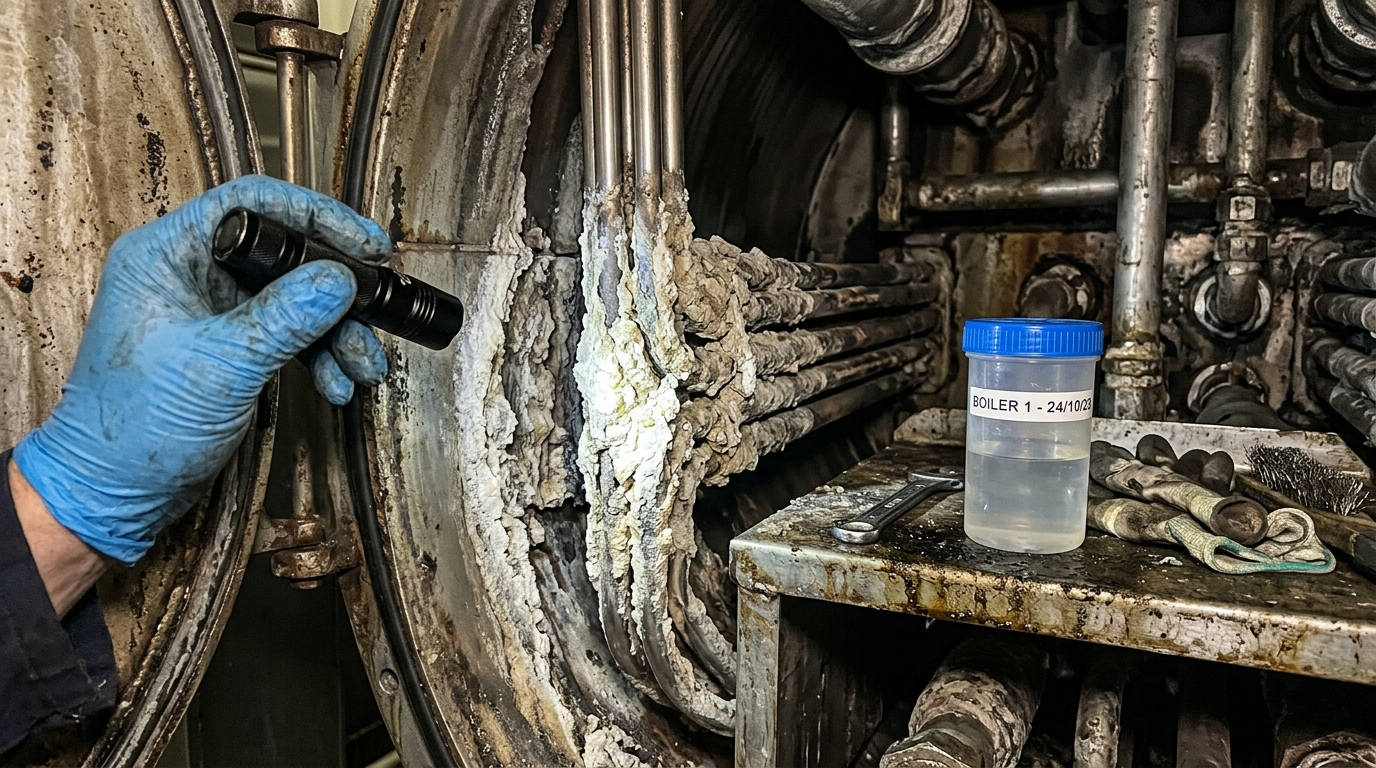
Water quality is one of the most underestimated factors in commercial steamer performance, and ignoring it is one of the most expensive buying mistakes.
Hard water contains high levels of dissolved calcium and magnesium. The USGS classifies water hardness as soft (0 to 60 mg/L as calcium carbonate), moderately hard (61 to 120 mg/L), hard (121 to 180 mg/L), and very hard (above 180 mg/L). About 60% of sampled domestic wells in USGS studies showed hard water above 120 mg/L, with hard water especially prevalent in the east-central and western United States.
Scale is the mineral deposit that forms on heating surfaces, pipes, valves, and boiler internals when hard water is heated. According to the DOE-hosted CIBO Energy Efficiency Handbook, calcium, magnesium, and silica can form hard scale on boiler tube interiors, reducing heat transfer and lowering efficiency. Even 1/8 inch of scale can cause a 2 to 3% efficiency loss.
In practical terms, scale causes weak steam output, longer heat-up times, spitting, element failure, and shortened equipment life. LinkedIn practitioners in the boiler and water-treatment space describe poor water chemistry as a primary cause of downtime and equipment damage. One practitioner posted a photo of a scaled boiler with a breached heating element as a cautionary example.
Blowdown is the maintenance process of draining water and sediment from a boiler to reduce mineral concentration and buildup. Regular blowdown and descaling extend equipment life significantly.
Here is the critical nuance most competitors miss: the correct water type depends on the machine design. Many guides simply say “use distilled water,” but experienced jewelers on the Ganoksin Orchid forum point out that some boiler-type steamers with conductivity-based low-water cutoff probes may not work properly with distilled water, because distilled water does not conduct electricity well enough for the sensor. Meanwhile, some instant or non-boiler units may require distilled water because minerals can damage internal components.
Do not follow generic water advice. Follow the manufacturer’s water specification for the exact machine you are buying. For a complete breakdown, see the water quality guide for steam boilers.
Mistake #7: Forgetting Electrical Requirements
This mistake is simple and completely preventable, yet it happens constantly. A buyer orders a steamer, it arrives, and the shop does not have the right outlet, circuit, or voltage to run it.
110V vs. 220V. Smaller commercial steamers may run on standard 110V household outlets. Larger boilers and industrial units often require 220V power, which may need a dedicated circuit or electrician installation.
Single-phase vs. three-phase. Most small shops have single-phase power. Larger industrial spaces may have three-phase. Buying a three-phase machine for a single-phase building means paying for electrical upgrades before the steamer even turns on.
Amperage and plug type. Even if the voltage matches, the circuit must handle the amperage draw. A dedicated circuit with the correct NEMA plug type prevents tripped breakers, shared-circuit conflicts, and potential fire hazards.
Check voltage, phase, amperage, plug type, and circuit capacity before ordering. The cost of an electrical upgrade can change the total price of the purchase significantly. For a detailed comparison, read the 110V vs. 220V steamer guide.
Mistake #8: Buying the Boiler Without the Right Accessories
A steam boiler generates steam. Accessories direct that steam to the actual work. Buying a boiler without the right end tools is like buying a compressor without any air tools.
Different applications need different attachments:
Jewelry cleaning needs a precision steam nozzle or wand for directing force into prongs and settings.
Hat shaping needs hat heads, controlled steam delivery, and often a foot pedal for hands-free operation.
Garment finishing needs a steam iron, brush, or hose with proper nozzle heads.
Upholstery restoration needs attachments that control moisture and coverage area.
Shrink packaging needs a spray gun or wand that delivers consistent steam.
Hoffman offers trade-specific bundles for hat shops, clothing stores, upholstery shops, and taxidermy operations, each including the relevant accessories. This bundle approach means a business can be fully operational immediately without sourcing attachments separately.
The buying mistake is focusing entirely on the boiler specifications and discovering after delivery that you still need to buy (and wait for) the tools that make it useful.
Mistake #9: Overlooking Warranty, Parts, and Support
A commercial steamer is only as reliable as the support system behind it. This section covers the terms that affect whether a breakdown means a few hours of inconvenience or weeks of lost revenue.
Warranty coverage varies widely. Some warranties cover only the tank or vessel. Others cover components, labor, and shipping. The critical question is whether the warranty explicitly covers commercial use, because some manufacturers void coverage when a consumer-grade product is used in a business setting.
Replacement parts matter more than most buyers realize. Hoses, O-rings, gaskets, valves, and heating elements are wear items that will eventually need replacement. If those parts are unavailable, proprietary, or backordered, the machine becomes disposable when a $15 part fails. Practitioners on Reddit’s foodservice forums warn that a bad repair company can matter as much as the brand itself and recommend confirming authorized service support before buying.
Total cost of ownership is the full picture: purchase price plus maintenance, consumables, repairs, downtime, accessories, water treatment, electricity, and lost labor. One Reddit jeweler reported using two Hoffman steamers over 30 years, with the first lasting 24 years. Another said the Hoffman in their shop was old enough that it “will likely outlive all of us.” That kind of longevity changes the cost-per-year math dramatically compared to replacing a cheaper unit every few years.
Refurbished equipment can offer real savings, but only if it is factory remanufactured, inspected, documented, and sold with a warranty. Hoffman offers factory-remanufactured units at reduced prices, including a Refurbished JEL3 Workhorse Bundle at $999 with a 1-year warranty and 2-year Workhorse Essential plan. Avoid “as-is” used equipment from unknown sellers for business-critical applications.
Hoffman’s Workhorse Protection Program covers automatic consumable shipments, compliance documentation, discounted parts, factory reconditioning options, and loaner machine availability depending on the plan. That kind of structured support is what separates a steam uptime partner from a one-time equipment vendor.
For full specs and pricing across Hoffman’s product range, see the steamer specs and power guide.
Mistake #10: Ignoring Application-Specific Risks
Every trade has its own version of commercial steamer buying mistakes. Here are the most common ones by application.
Jewelry Store Mistakes
Buying weak steam that cannot remove polishing compound from prongs and settings. Ignoring gemstone compatibility, since porous and treated stones like opal, turquoise, emeralds, and pearls can be damaged by steam. Choosing a machine too large for the counter or too small for repair volume. Failing to ask about water quality, which leads to dirty steam and cloudy results.
A jeweler needs not only enough steam, but also controlled technique and staff knowledge. GIA warns that steam applied unevenly to large stones can cause localized heating and fracture risk. More steam power does not make every stone steam-safe.
Hat Shop Mistakes
Buying a garment steamer instead of a steam source with proper shaping attachments and hat heads. Ignoring foot pedal control, which frees both hands for shaping work. Not matching steam output to felt and straw workflows, which require different levels of moisture and heat.
Clothing Boutique Mistakes
Using handheld consumer units for daily rack steaming. Ignoring runtime and reservoir capacity, leading to constant refilling. Expecting a steamer to replace a press for sharp creases. A steamer relaxes wrinkles and refreshes fabric, but it does not create structured collars or crisp pleats the way a press or iron can.
Upholstery Mistakes
Ignoring the difference between wet steam and dry vapor steam. Wet steam leaves surfaces too damp and extends drying time. Not testing fabric compatibility before committing to a machine or technique. Buying without the right upholstery-specific attachments.
Light Industrial Mistakes
Underestimating continuous-duty requirements for production workflows. Buying manual fill when production demands pump fill. Ignoring three-phase or 220V power requirements. Skipping ASME and UL compliance documentation. OSHA recognizes steam as hazardous energy that can cause serious burns and injuries, making safety controls and training essential in industrial settings.
How to Choose a Commercial Steamer
Choosing a commercial steamer is easier when you evaluate the machine in the same order that the business will use it.
1. Define the application
Identify exactly what you will steam and whether the work involves jewelry, garments, hats, upholstery, cleaning, restoration, or industrial production.
2. Estimate peak workload
Calculate the number of jobs or items you need to process during your busiest period. Do not size equipment only from average daily volume.
3. Determine the required steam performance
Compare working pressure, steam flow, recovery time, and duty cycle rather than relying on maximum PSI alone.
4. Choose the appropriate fill method
Decide whether manual fill, pump fill, or a flash-steam design best fits the workflow.
5. Check facility requirements
Verify voltage, phase, amperage, circuit capacity, plug type, water supply, installation requirements, and available workspace.
6. Verify safety and compliance requirements
Ask whether the equipment requires specific certifications, inspections, permits, safety controls, or documentation for the intended location.
7. Check water requirements
Confirm the manufacturer’s approved water specification and determine whether local water hardness requires treatment.
8. Build the complete equipment package
Add the required hoses, nozzles, wands, irons, brushes, shaping tools, or other accessories to the purchase calculation.
9. Evaluate lifetime support
Check warranty coverage, commercial-use terms, replacement parts, technical support, repair options, and expected service life.
10. Compare total cost of ownership
Consider equipment, installation, accessories, maintenance, energy, repairs, downtime, and eventual replacement.
The right commercial steamer is not necessarily the most powerful or most expensive model. It is the machine whose performance, configuration, safety requirements, and lifetime cost match the actual application.
Commercial Steamer Buying Checklist
Before placing an order, work through this list. If you cannot answer a question, you are not ready to buy yet.
What job will the steamer do most often?
How many items or jobs per hour at peak demand?
Is steam needed in short bursts or continuous runs?
What PSI and working output does the task require?
What fill method fits the workflow: manual, pump, or flash?
What boiler capacity and runtime are needed?
What electrical supply is available (voltage, phase, amperage, plug type)?
Is ASME or UL certification required by inspectors, insurers, or the landlord?
Are local inspection or permit rules involved?
What water does the manufacturer require for this specific machine?
What is the local water hardness?
What maintenance is required weekly, monthly, and annually?
Are required accessories and attachments included?
Are replacement parts (hoses, valves, gaskets, elements) readily available?
What does the warranty cover: tank, components, labor, shipping, commercial use?
What happens if the steamer fails during business hours?
Is refurbished equipment factory remanufactured with documentation and warranty, or simply used?
Is the seller transparent about pricing, support, and compliance documentation?
If any of those answers are missing, ask the manufacturer directly before committing.
Ready to match your application, workload, and power supply to the right machine? Explore Hoffman’s electric steam boiler guide for model-by-model recommendations.
Commercial Steamer Buying Red Flags
Be cautious when a commercial steamer listing or sales conversation:
Emphasizes maximum PSI but does not provide working pressure or steam output.
Uses the word “commercial” without explaining duty cycle or intended workload.
Does not clearly state voltage, amperage, phase, or plug requirements.
Provides no information about water requirements.
Does not explain warranty coverage for business use.
Makes replacement parts difficult to identify or order.
Does not provide clear certification or compliance documentation when applicable.
Requires accessories that are not clearly disclosed in the advertised price.
Gives no guidance on maintenance, descaling, or service.
Has no clear process for repairs or technical support.
Uses an unusually low price without explaining what is included.
Cannot provide documentation for the specific model being sold.
Buying takeaway: If a seller cannot clearly explain how the machine is intended to operate, what it requires, and how it will be supported after purchase, investigate further before ordering.
FAQ
Is higher PSI always better in a commercial steamer?
No. Higher PSI means hotter saturated steam and more force, which matters for some applications. But buyers also need to evaluate working pressure, steam flow, recovery time, and duty cycle. A machine that advertises high peak PSI but cannot sustain output at the nozzle during repeated jobs will underperform a lower-rated machine with better recovery and build quality.
What is the single biggest commercial steamer buying mistake?
Buying by headline specs instead of matching the steamer to the application, workload, power supply, water quality, certification needs, and support plan. The word “commercial” on a listing does not guarantee the machine can survive daily business use. Translate that word into measurable requirements before spending.
Do commercial steamers always need distilled water?
Not always. Some non-boiler or instant steamers benefit from distilled water because minerals can damage components. However, some boiler-type steamers with conductivity-based low-water cutoff probes may not function properly with distilled water. Always follow the manufacturer’s water specification for the exact machine.
What is ASME certification on a commercial steamer?
ASME certification relates to pressure-vessel construction under the ASME Boiler and Pressure Vessel Code. It covers quality systems for design, fabrication, assembly, and inspection. It matters most for pressurized boilers that may require inspection, insurance documentation, or landlord approval.
Why does water quality matter so much?
Hard water creates mineral scale inside boilers, pipes, valves, and heating surfaces. Scale reduces heat transfer, weakens steam output, increases energy consumption, and shortens equipment life. About 60% of sampled domestic wells in the U.S. show hard water. Checking local water hardness and following manufacturer water guidelines is one of the cheapest ways to protect a major equipment investment.
Should I buy a manual-fill or pump-fill steamer?
Manual fill works for intermittent use and small shops. Pump fill or automatic fill is better for longer or higher-volume workflows where refill downtime is costly. The right choice depends on how many times per day you need steam and how long each session lasts.
Can a garment steamer replace a press?
No. Steamers relax wrinkles and refresh fabric, but they do not create crisp creases, structured collars, or pressed finishes. If the work requires sharp lines, a steam iron or press is still necessary.
Is a refurbished commercial steamer safe to buy?
It can be, if it is factory remanufactured, inspected to documented standards, and sold with a real warranty. Avoid “as-is” used equipment without documentation, safety checks, or support. Factory-remanufactured units from a known manufacturer offer a way to reduce cost without eliminating accountability.


