

TL;DR
Commercial steamer duty cycle describes how reliably a machine delivers usable steam during your workload, including how it handles pressure recovery, water replenishment, and sustained steam demand.
Pressure matters under load: Peak PSI alone does not tell you how well a steamer performs during repeated or extended use.
Heating capacity determines recovery: A boiler must generate steam fast enough to replace what the application consumes.
Continuous refill is not continuous duty: Adding water without a shutdown does not guarantee stable pressure or adequate steam output.
Tank size affects runtime: A larger tank can delay refilling, but it cannot compensate for insufficient heating capacity.
Maintenance protects performance: Scale buildup and neglected servicing can increase recovery time and downtime.
The best machine matches the workload: Jewelry cleaning, garment finishing, hat shaping, and industrial processes require different steam delivery patterns.
Buying rule: Compare steam output, pressure stability, recovery time, refill design, electrical requirements, and maintenance needs against your actual workload before choosing a commercial steamer.
What Does Commercial Steamer Duty Cycle Mean?
In electronics, duty cycle is the fraction of one period in which a system is active, expressed as a percentage. In welding, it describes how many minutes out of ten a welder can operate before needing to cool down. For commercial steam equipment, the concept is more practical and involves more variables.
Commercial steamer duty cycle is the amount of time a steamer can deliver useful steam at the required pressure, temperature, flow, and moisture level during a work period before it needs recovery, refill, cooldown, maintenance, or operator intervention.
The shorter version: duty cycle tells you how much usable steam uptime you get before the machine has to recover.
This matters because small businesses do not buy steamers for spec sheets. They buy them to get work done. A jeweler steaming polishing compound off rings, a hat shop shaping felt, a dry cleaner pressing garments, and a manufacturer running shrink wrap all need different things from their steam equipment. But they share the same question: “Can this machine keep up with my real workload?”
If you are comparing machines for your shop, our guide to choosing a commercial steamer covers the full selection process.
What Is Commercial Steamer Duty Cycle?
Commercial steamer duty cycle describes how consistently a steamer can deliver usable steam under a specific workload before performance is interrupted by pressure recovery, refilling, reheating, cooldown, or maintenance. Unlike peak PSI or tank capacity, it reflects how well the machine keeps up with actual use.
A practical way to evaluate duty cycle is to measure usable steam time, pressure recovery time, refill frequency, and steam output under normal operating conditions. Continuous refill does not automatically mean continuous-duty performance; the heating system must also produce enough steam to meet demand.
The bottom line: Choose a commercial steamer based on the steam performance your work requires over time, not just its maximum pressure or advertised runtime.
Commercial Steamer Duty Cycle: Quick Comparison
Workload category | Typical work pattern | What matters most | Features to evaluate |
|---|---|---|---|
Burst duty | Short steam bursts with pauses between items | Fast pressure recovery | Pressure stability, nozzle flow, recovery time |
Session duty | Extended work sessions with occasional pauses | Consistent steam delivery | Heating capacity, steam quality, tank capacity |
Shift duty | Repeated use throughout the working day | Low interruption time | Pump-fill system, serviceability, water treatment |
Continuous-process duty | Steam demand integrated into production | Sustained output under load | Rated steam output, electrical supply, controls, applicable certifications |
These categories are practical workload descriptions, not universal standardized duty-cycle ratings. A machine’s suitability depends on the manufacturer’s specifications and the steam demand of the application.
Why Duty Cycle Matters More Than Peak Specs
Most steamer listings emphasize peak PSI, tank size, and wattage. Those specs matter, but they describe potential, not sustained performance. A steamer that reaches 90 PSI but collapses to 40 PSI after 30 seconds of trigger use is worse for production than a lower-pressure machine that holds steady through the job.
Practitioners confirm this. An Autopia forum user testing a vapor steamer measured pressure falling from roughly 100 PSI to 65 PSI after a one-minute spray, then slowly recovering during idle time. The same user noted that reducing steam volume made pressure steadier. This is what spec sheets hide: commercial steamer duty cycle is not about starting pressure. It is about pressure stability under use.
In welding, Miller Welds explains duty cycle as protection against overheating and thermal damage. The same principle applies to steam equipment. A machine operated beyond its real duty cycle will lose pressure, produce wet steam, trip thermal safety controls, or simply make the operator wait. Weak duty cycle causes slow jobs, inconsistent results, and frustration.
How to Calculate Commercial Steamer Uptime
Commercial steamer manufacturers do not necessarily publish duty cycle using one standardized formula. For practical purchasing comparisons, you can calculate an operational steam-availability ratio based on observed work cycles.
Formula:
Operational steam availability (%) = Usable steam time ÷ Total elapsed work-cycle time × 100
Total elapsed work-cycle time includes usable steaming time and any additional time spent waiting for pressure recovery, refilling, reheating, or cooling down. Count only downtime that extends the work cycle; do not count recovery time twice if it overlaps with active work.
Example
A shop completes a work cycle with 20 minutes of usable steam and 5 additional minutes of downtime.
Operational steam availability = 20 ÷ 25 × 100 = 80%
In this example, the machine delivers usable steam for 80% of the elapsed work cycle.
This is a practical operational metric, not a universal manufacturer-certified duty-cycle rating. To compare machines fairly, use the same workload, steam setting, accessory, and measurement method for each unit.
For production equipment, also compare rated steam output, typically expressed in pounds per hour (lb/hr) or kilograms per hour (kg/hr), against the application’s actual steam demand. A runtime percentage alone cannot establish whether a boiler can supply enough steam.
Continuous Refill Is Not Continuous Duty
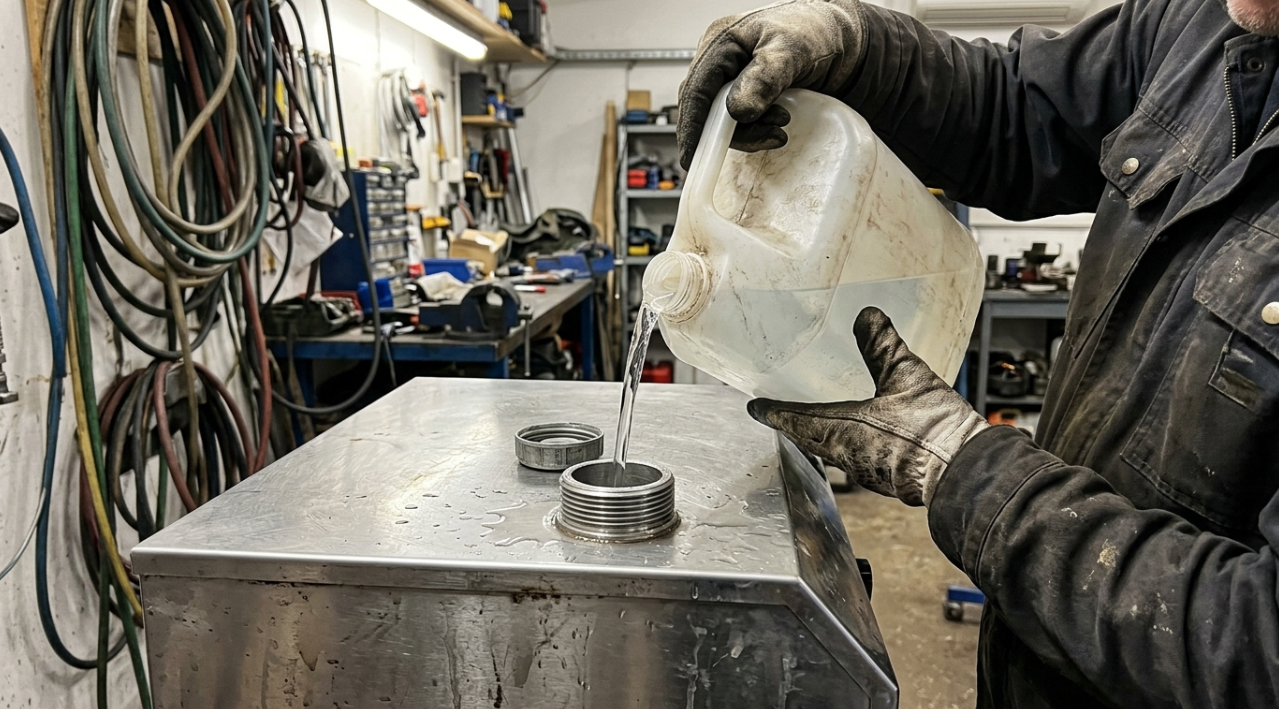
This is the single most important distinction buyers need to understand about commercial steamer duty cycle.
Continuous refill means the operator can add water without waiting for a pressurized boiler to cool and depressurize. Dual-tank designs and pump-fill systems allow this. Manufacturers like Dupray describe dual-tank systems that let users refill during operation, and Kärcher markets continuously refillable tanks for uninterrupted work.
Continuous duty means the machine is designed to keep producing usable steam under the expected workload for an extended session or full shift, without repeated pressure collapse, thermal cutout, or workflow interruptions.
The difference matters because a steamer can be continuous-refill but still have poor duty cycle performance if:
The heating elements are undersized for the demand
The boiler is small relative to the steam draw
Cold makeup water entering the tank drops steam temperature
Scale buildup insulates heating surfaces and slows recovery
The nozzle or accessory demands more steam than the boiler can replace
Daimer’s content on continuous-refill steam cleaners illustrates the refill problem well: pressure-cap units can require shutdown, refill, and reheating, with some models taking about 20 minutes before steaming again. Continuous refill eliminates that specific bottleneck. But refill design is only one part of duty cycle.
The takeaway: continuous refill solves the water-access problem. It does not automatically solve the steam-production problem. For a deeper comparison, see our breakdown of manual fill vs auto fill boilers.
What Determines a Commercial Steamer’s Duty Cycle?
Think of duty cycle as governed by four clocks running simultaneously. When any one of them runs out, your usable steam stops.
The Heat Clock
Heating capacity determines how fast a steamer can replace steam after you draw it. In electric boilers, a useful conversion from Reimers is that 1 kW equals 3.48 lb/hr of steam (measured from and at 212°F), which also equals 3,412 BTU/hr.
This means a 1.5 kW unit has far less recovery capacity than a 3 kW unit, which in turn is much smaller than a 10 kW or 30 kW industrial boiler. Reimers’ catalog shows the scale difference clearly: 10 to 30 kW electric boilers produce 34 to 102 lb/hr of steam, while 36 to 120 kW models produce 123 to 409 lb/hr.
For small commercial applications like jewelry or hat shops, the practical question is whether 1.5 kW on a 110V circuit is enough, or whether 3 kW on 220V is needed for acceptable recovery. For production environments, the math gets bigger fast.
Tank size alone does not solve recovery. A large tank delays refill, but if the heating elements cannot generate steam as fast as you use it, a bigger tank just means a bigger container of warm water. Understanding steamer power requirements helps clarify this relationship.
The Water Clock
How long before refill becomes an issue? And how disruptive is that refill?
Manual-fill units work well for intermittent tasks, but duty cycle drops when the operator must stop, wait for the boiler to cool and depressurize, refill, then wait again for reheat and pressure buildup. For shops where steam is used throughout the day, pump-fill or continuous-refill designs reduce that interruption significantly.
Tank capacity predicts how soon refill becomes an issue. The refill system predicts how disruptive refill becomes.
The Pressure Recovery Clock
For jewelry cleaning, hat shaping, upholstery work, and detailing, pressure recovery is often the real steamer duty cycle.
Pressure is directly tied to steam temperature. Saturated steam at 40 psig is about 286.7°F, while saturated steam at 90 psig reaches roughly 331.2°F, according to published steam table values. When pressure drops during use, steam temperature drops too, and cleaning or shaping effectiveness can fall off.
The question to ask is not “What PSI does this machine reach?” but “What PSI can it hold during my normal trigger pattern?” If your steamer is struggling with low steam pressure, recovery time is likely the bottleneck.
The Maintenance Clock
Duty cycle is not fixed forever. It degrades over time if maintenance is neglected.
Scale and mineral deposits reduce heat transfer, slow recovery, and can cause unplanned downtime. The EPA notes that poor water quality in steam equipment can cause scale buildup, decreased efficiency, and component damage. Boiler practitioners on LinkedIn repeatedly identify water treatment as central to reliability, citing hard-water scale as a cause of reduced heat transfer, higher operating costs, and shorter equipment life.
Reddit jewelers say the same thing in plainer language. In r/jewelers discussions about cleaning steam equipment, users recommend distilled water and regular flushing. One user said their shop flushes monthly to prevent buildup, while another opens the drain valve weekly and does a full drain and refill monthly.
Scale is a duty-cycle thief. It slows heat transfer, lengthens recovery, and turns a once-fast steamer into a waiting game. Our water quality guide covers the standards and routines that keep boilers performing over time.
Duty Cycle by Application
Different trades mean different things when they say “I need a steamer that keeps up.” Here is how commercial steamer duty cycle translates across common applications.
Duty Category | What It Means | Typical Users | What to Check |
|---|---|---|---|
Burst duty | Short steam blasts with recovery between uses | Jewelry cleaning, spot work, dental labs | PSI recovery speed, nozzle control, heat-up time |
Session duty | 15 to 60+ minute work sessions with pauses | Hat shaping, upholstery, taxidermy | Tank capacity, recovery, steam dryness, hose comfort |
Shift duty | Repeated use across a full workday | Dry cleaners, busy retail shops, production benches | Auto-fill or pump-fill, kW rating, serviceability, water treatment |
Continuous/process duty | Steam is part of production workflow | Light manufacturing, shrink packaging, multi-operator setups | lb/hr output, voltage and phase, ASME/UL certification, maintenance plan |
Jewelry Cleaning
Jewelers use short, repeated blasts to remove polishing compound, lotion, and debris from under stones. Pressure recovery between blasts matters more than hours of continuous trigger-on steaming. A good jewelry steamer should snap back to target PSI by the time the jeweler picks up the next piece.
A Ganoksin jewelry forum discussion captures this well. One user said a compact steamer was ready for another blast by the time they grabbed the next ring, but when they “leaned on it for a minute,” it started to fade. Another jeweler contrasted big boiler-style units, which deliver strong pressure for extended cleaning but require more maintenance (draining, gaskets, eventual heating element replacement).
On Reddit, a jeweler reported using two Hoffman steamers over 30 years, with the first lasting 24 years after a single repair. That kind of longevity is anecdotal, but it points to something real: commercial equipment built for daily burst-duty use, properly maintained, can outlast multiple consumer-grade alternatives.
Hat Shaping, Upholstery, and Taxidermy
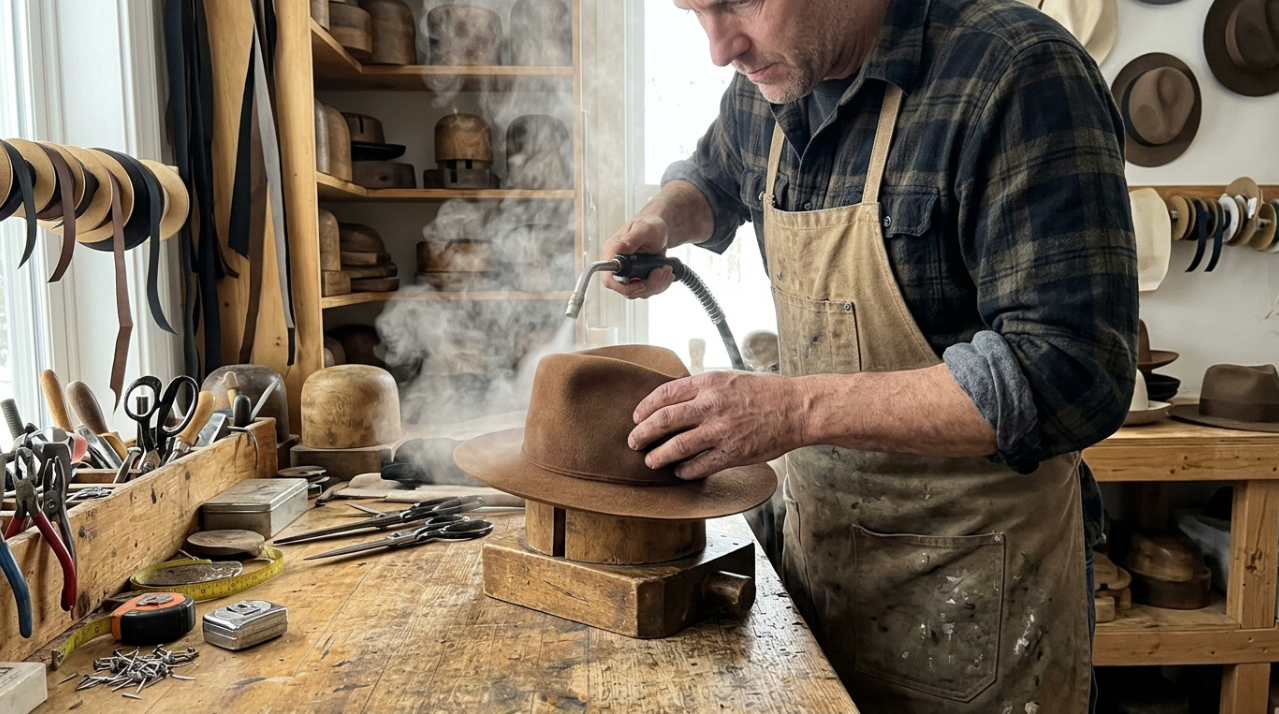
These trades need longer, more sustained steam sessions with consistent moisture and temperature. A hat maker working felt needs steady steam for shaping, not just a quick blast. An upholstery restorer treating fabric needs reliable coverage across larger surface areas.
Manual-fill boilers may work fine if sessions are planned around refill intervals. But for all-day or production-oriented work, pump-fill or continuous-duty boilers become important. Duty cycle here means steady steam availability over a job, not just peak PSI at startup.
For hat shops specifically, our continuous duty boiler guide covers the sizing and selection process in detail.
Garment Finishing and Dry Cleaning
Garment work is typically lower-pressure steam with longer wand or steam head use and high garment counts. Runtime per fill, steam volume, heat-up time, and operator comfort matter more than high PSI.
For context, the Jiffy J-4000 commercial garment steamer offers 1 gallon of capacity at 1500 watts and lists about 1 hour 45 minutes of steam time per filling. The Reliable 5000IS boiler and iron station has a 2.5L boiler, reaches 50 PSI, takes 10 to 15 minutes to heat up, and claims up to 4 hours of continuous steam depending on valve setting.
These are different machines for different duty patterns, but both illustrate that garment steamer duty cycle is about sustained volume over time rather than short high-pressure blasts.
Light Manufacturing and Production
When steam is part of production (shrink packaging lines, multi-operator bench setups, dental lab workflows), duty cycle becomes an uptime and compliance issue. Buyers should evaluate:
kW and steam output in lb/hr
Voltage and phase requirements
Automatic pump-fill capability
ASME and UL certification where required
Water treatment and blowdown procedures
Parts and support availability
UL 834 covers electric boilers for commercial and industrial steam applications, requiring ASME-stamped vessels, safety valves, and pressure controls. These are not optional extras for production environments. They are baseline requirements.
How to Compare Commercial Steamers by Duty Cycle
Most manufacturers do not publish a single “duty cycle” number the way welding equipment makers do. You need to piece it together from available specs and, ideally, a demonstration.
Ask These Spec Questions
What is the boiler capacity?
What is the heating capacity in watts or kW?
What is the steam output in lb/hr, if listed?
Is it manual fill, continuous refill, or automatic pump-fill?
What is the heat-up time from cold?
How long can it steam continuously at the expected setting?
What is the operating PSI range?
Does the unit have low-water protection?
Is it ASME/UL certified?
What water quality is required?
Ask This in a Demo
“Show me the gauge before, during, and after a one-minute steam draw.”
This is the simplest test of real-world steamer duty cycle. If pressure drops sharply and recovers slowly, that machine may not keep pace with your workload. If pressure holds reasonably steady or recovers within the time it takes to reposition your work, the machine fits burst-duty or session-duty use.
Match Duty Category to Your Workload
Before comparing machines, answer a few questions about your own shop:
How many minutes per hour will the steamer actually produce steam?
Are you using short blasts or long trigger pulls?
How many operators or stations will draw steam?
How much downtime is acceptable for refill, reheat, or cooldown?
Is steam part of revenue production or a support task?
A jeweler doing 5-second blasts on individual pieces has very different duty requirements than a hat shop running 2-minute shaping sessions or a manufacturer feeding a shrink line.
How to Test a Commercial Steamer’s Real-World Duty Cycle
A commercial steamer’s advertised pressure, tank capacity, and runtime do not always show how it performs under your actual workload. Before buying, ask the supplier to demonstrate the machine using a repeatable test.
Step 1: Establish the starting conditions
Record the machine model, rated power, operating pressure, water level, steam setting, accessory, and time required to reach operating readiness.
Step 2: Simulate your normal workload
Use the same trigger pattern, nozzle, and work interval you expect in your business. Short, repeated blasts may suit jewelry cleaning, while garment finishing or production work may require longer steam draws.
Step 3: Observe pressure during use
Record the starting pressure, lowest pressure reached during the test, and pressure after the trigger is released. Follow the manufacturer’s operating instructions and do not bypass safety controls.
Step 4: Measure recovery and interruptions
Record how long the machine takes to return to its normal operating range. Note any refill, reheating, cooldown, low-water warning, or thermal shutdown.
Step 5: Evaluate usable steam, not just pressure
Check whether the machine maintains the steam delivery required for your application. Where relevant, ask the manufacturer about rated steam output and the conditions under which it was measured.
Step 6: Compare machines under equivalent conditions
Use the same test duration, accessory, workload, and starting conditions for each machine. Document the results rather than relying on a single demonstration or an unsupported claim of continuous operation.
What to record: Starting PSI, minimum PSI, recovery time, usable steaming time, interruption time, refill frequency, and observed steam consistency.
A pressure drop alone does not prove that a machine is unsuitable. The important question is whether its performance remains adequate for the process and whether recovery interrupts the work.
How to Choose the Right Commercial Steamer Duty Cycle
Use this table as an initial screening tool when comparing commercial steamers.
If your main requirement is… | Prioritize… | Verify before buying |
|---|---|---|
Short, repeated steam bursts | Fast pressure recovery | Recovery time under a representative workload |
Longer individual work sessions | Consistent steam delivery | Steam output, runtime, and pressure stability |
Frequent use throughout the day | Reduced interruptions | Refill method, recovery capacity, and service intervals |
Multiple operators or stations | Sufficient capacity for combined demand | Total steam demand and rated output |
Continuous production | Sustained process output | Engineering suitability, applicable certifications, and manufacturer support |
Lower operating downtime | Maintainability and reliability | Water requirements, parts availability, and maintenance procedures |
No single specification determines the right choice. Select a machine that meets the application’s required steam output and operating conditions while minimizing interruptions during normal work.
Common Duty Cycle Mistakes
Mistake 1: Equating high PSI with high duty cycle. PSI is only starting pressure unless the machine can hold or recover it under load. The Autopia forum pressure-drop example shows why recovery matters more than peak numbers.
Mistake 2: Assuming a big tank means continuous duty. A big tank delays refill, but heating capacity determines how quickly steam regenerates. Tank size without adequate kW just gives you more water to heat slowly.
Mistake 3: Treating continuous refill as no downtime. Continuous refill reduces one type of downtime. It does not guarantee pressure stability, dry steam, or adequate recovery if the heating system is undersized.
Mistake 4: Ignoring maintenance as a duty cycle factor. A steamer that performs well when new can degrade significantly as scale builds up on heating surfaces. Regular descaling and water quality management are not optional if duty cycle matters to your business.
Mistake 5: Buying a consumer steamer for commercial work. Consumer garment steamers marketed for light home use cannot sustain the duty cycles that jewelry stores, hat shops, or production environments require. The heating elements, boiler construction, pressure ratings, and safety controls are fundamentally different. This distinction is covered in detail in our commercial vs consumer steamer guide.
Red Flags in Steamer Listings
Watch for these warning signs when evaluating commercial steamers:
“Commercial” label but no published PSI, wattage, tank size, or heat-up time
Runtime listed without specifying steam setting or flow rate
Continuous refill promoted without recovery or pressure-under-load data
High PSI promoted without any mention of pressure stability during use
No maintenance instructions or recommended service intervals
No parts availability information
No mention of low-water protection on pressurized units
No safety certification (ASME, UL) on a pressurized boiler used in a commercial setting
Consumer garment steamer marketed for jewelry cleaning, industrial use, or production
Sizing Duty Cycle to Your Shop
Hoffman Steam’s product line spans the full duty cycle range. The GEM-III portable flash steamer suits mall and retail environments where burst duty is enough and boiler permits are not practical. The EVD-1 offers 1-gallon, 110V, 40 PSI performance for small-shop daily use. The Pro Line ELG4 and JEL3 boilers are ASME/UL-certified manual-fill units with optional 220V/3 kW upgrades for faster recovery. The JEL11 series provides 6-gallon large capacity, and the JEL11 model adds an automatic pump system. For continuous-duty industrial applications, the RHPG series features automatic pump-fill systems built for all-day operation.
That range matters because duty cycle is application-specific. A jewelry counter doing short blasts does not need the same steam system as a light manufacturer running all day. The Workhorse Protection Program adds another dimension, with automatic consumable shipments, compliance documentation, factory reconditioning options, and loaner machines depending on the plan tier.
For pricing and model comparisons across these tiers, see the commercial steamer cost guide.
FAQ
What does duty cycle mean on a commercial steamer?
It means how much usable steam uptime the machine delivers during a work cycle before it needs recovery, refill, cooldown, or maintenance. Unlike the electronics definition (simple on/off ratio), steamer duty cycle accounts for pressure recovery, water supply, heating capacity, and steam quality.
Is continuous refill the same as 100% duty cycle?
No. Continuous refill reduces refill downtime by letting you add water while the machine runs. But duty cycle also depends on heating capacity, pressure recovery speed, steam flow rate, water quality, and safety controls. A machine can accept water continuously and still lose pressure if demand exceeds its heating output.
What is a good duty cycle for a jewelry steamer?
For jewelry, pressure recovery between short blasts matters more than hours of nonstop steam. A good jewelry steamer recovers to target PSI within the few seconds it takes to pick up the next piece. Practitioners on Ganoksin forums report that compact steamers handle piece-by-piece work well but fade under sustained one-minute blasts.
Does tank size determine duty cycle?
No. Tank size affects how often you need to refill, but heating power and recovery speed determine how fast useful steam is regenerated. A large tank with undersized heating elements just means more water heating slowly.
Why does my steamer lose pressure during use?
Steam demand is exceeding steam generation. Common causes include undersized heating capacity, too much steam flow through a wide nozzle, scale buildup insulating the heating elements, cold refill water dropping the boiler temperature, or a worn component like a valve or gasket.
Does water quality affect steamer duty cycle?
Yes. Scale insulates heating surfaces and slows heat transfer, which directly lengthens recovery time and reduces effective duty cycle. The EPA identifies poor water quality as a cause of scale, reduced efficiency, and component damage in steam equipment. Using distilled water and maintaining a regular drain and descale schedule protects duty cycle over the life of the machine.
Do commercial steam boilers need safety certifications?
Many pressurized commercial and industrial electric boilers fall under safety standards and jurisdictional requirements. UL 834 covers electric boilers for commercial and industrial steam applications, referencing ASME-stamped vessel construction, safety relief valves, and pressure and temperature controls. Whether certification is required depends on local codes and the operating pressure of the equipment.
How do I test a steamer’s duty cycle before buying?
Ask the vendor to show you the pressure gauge before, during, and after a one-minute steam draw. Watch how far pressure drops and how quickly it recovers. Also ask for the heat-up time from cold, recovery time after a typical steam session, and what water quality is required for reliable operation. These real-world numbers tell you more than any peak PSI claim.


