

When it comes to serious cleaning, two powerful tools often enter the conversation: the commercial steamer and the pressure washer. The right choice depends entirely on your needs: pressure washers use brute force for large, durable outdoor surfaces, while steamers use intense heat for sanitizing, degreasing, and cleaning delicate indoor areas.
Both are champions at tackling tough grime, but they work in fundamentally different ways. Choosing the right one for your business isn’t just about cleaning power; it’s about efficiency, safety, and protecting your assets.
This guide breaks down the essential differences in the commercial steamer vs pressure washer debate. We’ll cover everything from how they work to where they shine, so you can make an informed decision for your specific cleaning needs.
Quick Answer: Steam Cleaner vs Pressure Washer — Which Should You Buy?
A commercial steamer is the better choice when your priority is sanitization, grease removal, indoor cleaning, detailing, and delicate surfaces. A pressure washer is the better choice when you need maximum force for outdoor surfaces like concrete, buildings, vehicles, and heavy equipment.
Choose a commercial steamer if you clean kitchens, healthcare facilities, automotive interiors, machinery components, upholstery, or areas where water runoff and chemicals are a concern. Choose a pressure washer if you need to remove mud, paint, algae, or heavy buildup from large outdoor surfaces.
For many commercial operations, the best solution is not choosing the most powerful machine, but choosing the tool that matches the cleaning environment.
Commercial Steamer vs. Pressure Washer
Feature | Commercial Steamer | Pressure Washer |
|---|---|---|
Cleaning Method | Dry vapor heat | High-pressure water |
PSI | 40–120 PSI | 2,000–4,000+ PSI |
Temperature | 200°F–300°F steam | Cold or hot water |
Water Usage | Low | High |
Chemical Need | Minimal | Often required |
Indoor Use | Excellent | Limited |
Sanitization | Excellent | Limited |
Surface Risk | Lower | Higher |
Best ROI For | Detail + sanitation businesses | Exterior cleaning companies |
Commercial Steamer vs Pressure Washer: Buyer Decision Guide
If Your Main Cleaning Need Is… | Choose | Why |
|---|---|---|
Sanitizing surfaces without chemicals | Commercial Steamer | High-temperature dry steam kills germs while using minimal water |
Cleaning concrete, sidewalks, or parking lots | Pressure Washer | High PSI removes embedded dirt quickly |
Automotive detailing interiors | Commercial Steamer | Cleans upholstery, vents, dashboards, and engines without soaking |
Removing mud from trucks or equipment | Pressure Washer | High-pressure water removes heavy outdoor buildup faster |
Cleaning kitchens and food equipment | Commercial Steamer | Removes grease while reducing chemical residue |
Removing oil stains from industrial floors | Hot Water Pressure Washer | Heat plus pressure breaks down heavy contamination |
Cleaning delicate surfaces | Commercial Steamer | Lower pressure reduces risk of damage |
Large outdoor maintenance projects | Pressure Washer | Covers more square footage faster |
Decision takeaway:
If your business depends on sanitation and precision, buy a commercial steamer. If your business depends on speed and surface restoration, buy a pressure washer.
What is a Pressure Washer?
A pressure washer is a machine that uses a high pressure water spray to blast away dirt, mud, loose paint, and other tough grime from surfaces. It takes water from a source like a garden hose, pressurizes it with a pump, and shoots it out of a small nozzle at incredible force.
Commercial units often operate between 2,000 to 4,000 PSI (pounds per square inch). This powerful mechanical force acts like a water chisel, scraping contaminants off durable materials like concrete, metal, and brick. They are typically powered by gasoline engines for outdoor mobility or electric motors for lighter tasks. At its core, a pressure washer is all about using force and a high volume of water to clean large, rugged outdoor surfaces quickly.
What is a Commercial Steamer?
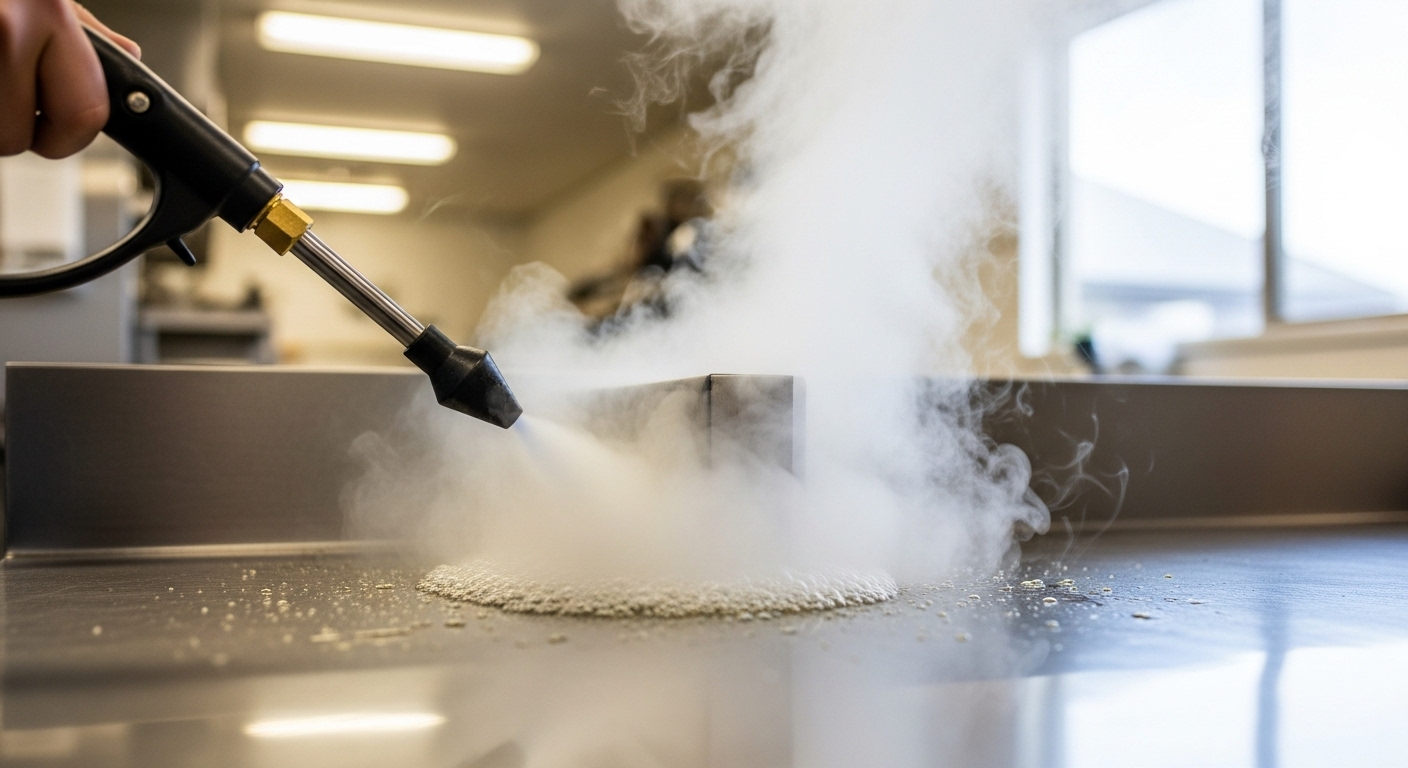
A commercial steamer cleans using high temperature steam (water vapor) instead of high pressure water. The machine heats a small amount of water in a boiler to temperatures between 200°F and 300°F, creating pressurized “dry” steam with low moisture content. This hot vapor is then directed through a nozzle onto a surface.
The magic is in the heat. The steam instantly loosens grease, oil, and dirt while simultaneously sanitizing surfaces by killing bacteria, viruses, and mold on contact. Commercial steamers, like the ASME and UL approved Pro Line units from Hoffman Steam, generate steam at 70 to 90 PSI. This is much lower than a pressure washer, making it a gentler but highly effective cleaning method, perfect for sanitizing and deep cleaning without chemicals or excess water. For the full breakdown of how commercial steam equipment works—boiler types, certifications, sizing, and use cases—see our commercial steam equipment guide.
Key Terminology for 2026
To choose the right industrial tool, you must understand how performance is measured:
PSI (Pounds per Square Inch): Measures the stripping power. High PSI (Pressure Washer) blasts; low PSI (Steamer) treats.
GPM (Gallons per Minute): Measures the rinsing power. Pressure washers rely on high GPM to flush debris.
Dry Steam: Steam with less than 5% moisture content. This is what commercial steamers produce, allowing for fast drying times indoors.
BTU (British Thermal Unit): Relevant for hot water pressure washers; it measures the heating capacity of the burner.
The Core Differences: How They Work
Understanding the matchup of a commercial steamer vs pressure washer starts with their fundamental mechanics.
Cleaning Method (Vapor vs High Pressure Water)
Commercial Steamer: Uses thermal energy. It heats water into a vapor that penetrates pores and crevices, melting and dissolving grease, grime, and other substances. The dirt is then easily wiped away. The steam does the heavy lifting, not brute force.
Pressure Washer: Uses kinetic energy. It relies on the physical impact of a high velocity water stream to knock contaminants loose and flush them away. It’s a forceful, mechanical scrubbing action.
Water Temperature
A key distinction in the commercial steamer vs pressure washer comparison is heat. A commercial steamer always uses heat; its entire function is to turn water into steam, often well above the boiling point of 212°F.
Pressure washers, on the other hand, can be either cold or hot water units. A cold water unit is standard, but a hot water pressure washer adds a burner to heat the water (typically to around 180°F). This added heat dramatically improves performance on greasy or oily messes, sometimes cutting cleaning time in half.
Water Usage
The difference here is massive.
Commercial Steamer: Extremely water efficient. Because a small amount of water expands into a huge volume of steam (1 liter of water creates about 1,700 liters of steam), it uses very little water. In fact, steam cleaning can use up to 90% less water than traditional methods.
Pressure Washer: Water intensive. Its cleaning power relies on a high flow of water, typically using 2 to 8 gallons per minute (GPM). A short cleaning session can easily consume hundreds of gallons of water.
Cleaning Power
“Power” means different things for these two machines.
Pressure Washer: Offers brute force cleaning power. Its high PSI is unmatched for stripping heavy, caked on materials like mud, flaking paint, or thick layers of grime from large surfaces.
Commercial Steamer: Provides precision cleaning power. Its strength is thermal energy. The superheated steam excels at dissolving sticky, oily, or hardened residues and penetrating tiny cracks. It also adds the power of sanitization, which cold water pressure washers lack entirely.
Steam Cleaner vs Pressure Washer Limitations
Both machines are powerful, but neither replaces the other.
Where Commercial Steamers Fall Short
Commercial steamers are not designed for:
Cleaning entire parking lots
Removing thick layers of mud
Large-scale exterior washing
Quickly covering thousands of square feet
Steam provides precision cleaning, not maximum surface coverage.
Where Pressure Washers Fall Short
Pressure washers are not ideal for:
Indoor cleaning
Sanitizing without chemicals
Delicate materials
Upholstery and fabrics
Areas where wastewater runoff is restricted
High pressure can damage surfaces if used incorrectly.
A pressure washer wins when the problem is too much dirt on a large surface.
A commercial steamer wins when the problem is grease, germs, contamination, or sensitive materials.
Sanitization, Safety, and Eco Friendliness
Disinfection Ability
This is a clear win for steam. A commercial steamer is a natural sanitizer. The high temperatures (over 212°F) kill 99.9% of germs, bacteria, viruses, and even dust mites on contact. This allows for chemical free disinfection, which is critical in many commercial settings.
A pressure washer, even a hot water model, does not reliably disinfect. Its water temperature is generally not high enough to kill all pathogens. To sanitize with a pressure washer, you must add chemical disinfectants.
Chemical Requirement
Commercial Steamer: Typically requires no chemicals. The heat from the steam is sufficient to break down most grime and sanitize surfaces. This makes it an ideal choice for food prep areas, healthcare facilities, and eco conscious businesses.
Pressure Washer: Often requires chemicals. For tough jobs like removing oil stains, mildew, or graffiti, detergents and solvents are usually necessary to achieve the best results.
Environmental Impact
The commercial steamer vs pressure washer choice has environmental implications. Steam cleaning is widely considered the more eco friendly option. Its minimal water usage conserves a vital resource, and the chemical free operation prevents harmful detergents from entering storm drains and soil.
Pressure washing, due to its high water consumption and reliance on chemicals, can have a larger environmental footprint. Runoff must be managed carefully to avoid polluting local waterways. Furthermore, gas powered models produce noise and exhaust fumes.
Practical Considerations for Your Business
Surface Suitability
This is one of the most important factors.
Commercial Steamers are safe for a wide variety of surfaces, including delicate ones. They are perfect for tile and grout, sealed wood, glass, upholstery, carpets, and sensitive equipment. The gentle vapor cleans without risk of etching or damage.
Pressure Washers are for hard, durable surfaces only. Think concrete, brick, stone, and metal. Using a pressure washer on soft wood, vinyl siding, or glass can cause irreversible damage, from chipping paint to shattering windows.
Portability
Generally, commercial steamers are more portable for indoor use. Many are compact, canister style units on wheels that weigh as little as 15 pounds. They just need an electrical outlet. If you’re deciding between 110V and 220V power, see our 110V vs 220V commercial steamer guide.
Pressure washers, especially powerful gas models, are heavier and bulkier, often weighing 50 to 80 pounds or more. They are designed for outdoor jobs where they can be wheeled into position and connected to a hose.
Reach and Coverage
Pressure washers have a distinct advantage in reach. Their powerful stream can clean surfaces 20 to 30 feet away, making them great for second story walls or large driveways.
Steam cleaning is a close range job. The nozzle must be held just a few inches from the surface to effectively transfer heat. This makes it ideal for detail work, but slower for covering large, open areas.
Indoor vs Outdoor Use
The location of the job often makes the decision for you.
Pressure Washers are almost exclusively for outdoor use. The massive water spray and potential carbon monoxide from gas engines make them unsafe and impractical for indoors.
Commercial Steamers excel indoors. They use little water, produce no fumes, and are relatively quiet. This makes them perfect for use in kitchens, restrooms, showrooms, and workshops without creating a mess or a hazard.
Best Use Cases: Steam Cleaner vs Pressure Washer by Industry
Different industries need different cleaning methods. The right machine depends on whether the goal is removing contamination, restoring surfaces, or maintaining hygiene standards.
Automotive Detailing
Best choice: Commercial Steamer
Professional detailers often use steam cleaners for:
Interior sanitization
Leather and upholstery cleaning
Dashboard and console cleaning
Engine bay detailing
Odor removal
Cleaning tight areas around seats and vents
A pressure washer works better for:
Removing mud from tires
Washing wheel wells
Cleaning exterior vehicle surfaces
For businesses focused on vehicle interiors and premium detailing, explore our guide to Auto Detailing Steam Cleaners.
Food Service and Commercial Kitchens
Best choice: Commercial Steamer
Steamers are better suited for:
Ovens
Grills
Food preparation areas
Exhaust equipment
Floors and grout
The combination of heat and low moisture allows cleaning without flooding sensitive areas.
Industrial Facilities
Best choice: Depends on contamination
Use a pressure washer for:
Equipment exteriors
Concrete floors
Loading areas
Heavy mud and debris
Use a commercial steamer for:
Machine parts
Grease removal
Electrical-sensitive areas
Precision cleaning
Businesses requiring continuous steam production should consider commercial steamers designed for industrial workloads.
Application Showdown: Which Tool Wins Where?
Here’s a practical look at the commercial steamer vs pressure washer matchup in common business scenarios.
When to Use a Pressure Washer
Choose a pressure washer for big, tough, outdoor jobs where you need to remove heavy buildup from durable surfaces quickly.
Large Outdoor Surfaces: Cleaning driveways, parking lots, building facades, and fences.
Heavy Grime Removal: Stripping loose paint, caked on mud, and deep set grime from concrete or brick.
Fleet and Equipment Cleaning: Blasting mud and road grime off trucks, tractors, and construction equipment.
Surface Prep: Cleaning siding or decks before painting or sealing.
When to Use a Commercial Steamer
Opt for a commercial steamer when you need sanitization, precision, or are working on delicate or indoor surfaces. Hat shops can review our hat shaping industry page for the right tools and accessories.
Sanitization: Disinfecting kitchens, healthcare facilities, restrooms, and food processing equipment without chemicals.
Indoor Deep Cleaning: Cleaning tile grout, shower stalls, ovens, and other areas where water spray must be contained.
Delicate Surfaces: Safely cleaning upholstery, carpets, mattresses, curtains, and even antique wood or stone.
Detailing and Nooks: Reaching into tight spaces like engine components, air vents, jewelry settings, and the crevices of machinery. Jewelry retailers can explore our jewelry steam cleaning page for trade-specific recommendations.
If your business needs this level of detailed, reliable steam, Hoffman Steam offers specialized bundles for industries like jewelry and hat making.
Hoffman’s Pro Line covers this work from 2 gallons up to 6: the JEL3 at 70 to 90 PSI for detail and counter work, the JEL11M at 31.5 lbs of steam an hour for steady shop use, and the RHPG-17 at 41 lbs an hour for production floors. All are ASME and UL approved.
Building Exterior Cleaning
For standard brick or vinyl siding, a pressure washer is the fastest way to remove dirt and mildew. For historic buildings with fragile stone or brick, low pressure steam is the method of choice for restoration experts to clean without causing damage.
Sidewalk and Parking Lot Cleaning
Pressure washers are the clear winner for large paved areas. They efficiently remove ground in dirt, tire marks, and oil stains. Steam has a niche role here for melting away stubborn chewing gum without a trace.
Vehicle and Equipment Cleaning
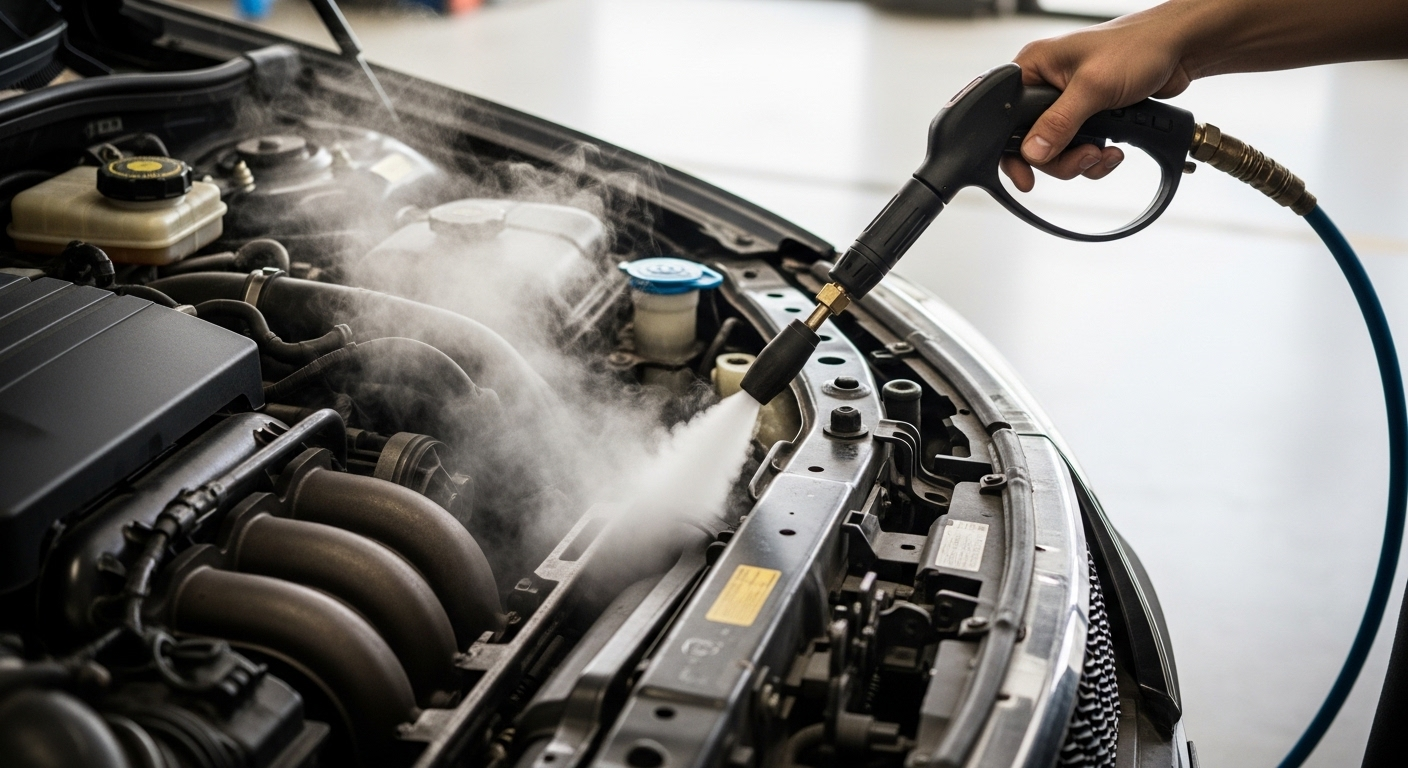
This is a great example of where both tools have a place. A pressure washer is perfect for blasting mud off a truck’s exterior. A commercial steamer is superior for degreasing an engine bay, cleaning sensitive electronics, and sanitizing a vehicle’s interior upholstery and vents safely.
Graffiti Removal
Hot water pressure washers combined with chemical agents are the industry standard for removing spray paint from robust surfaces like concrete. For delicate or historic masonry, superheated steam is used to gently lift the paint without damaging the surface beneath.
Kitchen and Food Prep Areas
Commercial steamers are the undisputed champion in kitchens. They cut through grease on ovens, grills, and hoods while sanitizing surfaces to meet health codes, all without chemical contamination. Pressure washers are a non starter for indoor food prep areas.
Restrooms and Grout Cleaning
Another clear win for steam. A steamer’s jet of hot vapor blasts grime and mildew out of grout lines and sanitizes toilets and sinks far more effectively than scrubbing. A pressure washer would be too destructive and messy for an indoor restroom.
Healthcare Facility Cleaning
In environments where hygiene is critical, commercial steamers are essential. They provide hospital grade disinfection for patient beds, wheelchairs, and floors without leaving behind chemical residues that could affect patients. Pressure washers are only used for exterior maintenance. For specifics, see our dental and medical industry guide.
Carpet and Upholstery Cleaning
This is the exclusive domain of steam and hot water extraction. A pressure washer would destroy fabrics and soak padding, leading to mold. Steam gently lifts dirt, kills dust mites, and deodorizes upholstery and carpets, leaving them only lightly damp and quick to dry.
Commercial Steamer Recommendations: Which Hoffman Model Should You Choose?
The right commercial steamer depends on cleaning frequency, steam output requirements, and workspace demands.
Best for Detail Shops and Small Businesses: Hoffman JEL3 Commercial Steamer
Recommended for:
Automotive detailing
Jewelry cleaning
Small workshops
Countertop cleaning
Why choose it:
Compact footprint
Fast steam availability
Lower water consumption
Ideal for precision cleaning
Learn more about the Hoffman JEL3 Commercial Steamer
Best for Daily Commercial Cleaning: Hoffman JEL11M Commercial Steamer
Recommended for:
Detail shops
Production environments
Professional cleaning operations
Why choose it:
Higher steam production
Designed for repeated daily use
Better for businesses with multiple cleaning jobs
Explore the Hoffman JEL11M Commercial Steamer
Best for Heavy-Duty Industrial Applications: Hoffman RHPG-17 Steam Boiler
Recommended for:
Manufacturing facilities
Production floors
High-volume cleaning operations
Why choose it:
Maximum steam output
Designed for continuous commercial workloads
View the Hoffman RHPG-17 Commercial Steam Boiler
Advanced Options and Final Considerations
Hot vs Cold Water Pressure Washers
A cold water pressure washer is great for general dirt and mud. A hot water pressure washer is a game changer for greasy, oily messes. The heat helps break down oils and can significantly speed up cleaning times, often reducing the need for detergents. It’s a worthwhile upgrade for commercial and industrial users.
Combination Steam and Pressure Systems
For ultimate versatility, some high end machines combine both functions. These “steam pressure washers” can switch between high pressure water flow for blasting and superheated steam for degreasing and sanitizing. This allows one machine to tackle a wider variety of jobs.
Safety Considerations
Both tools demand respect.
Pressure Washer: The primary risk is the high pressure spray, which can cause serious lacerations or injection injuries. Flying debris is also a hazard, so eye protection is mandatory. Gas models produce carbon monoxide and must never be used indoors.
Commercial Steamer: The main danger is burns from the hot steam or heated surfaces. Always use with caution and wear appropriate gloves. For commercial use, ensure your machine has safety certifications. For example, quality units like Hoffman Steam’s Pro Line models are ASME certified to ensure they operate safely under pressure.
Cost Considerations
The initial investment for a quality commercial steamer vs pressure washer can be similar, often falling in the low thousands for professional grade units. However, operating costs differ. If cash flow is a concern, explore our financing options to spread payments over time.
Pressure Washers have ongoing costs for fuel (if gas powered), water, and chemical detergents.
Commercial Steamers have lower operating costs due to minimal water and chemical use, with electricity being the main expense. Over time, the savings on consumables can be significant. When investing, look for transparent pricing and strong warranties to protect your purchase. You may also be able to expense equipment under Section 179 (see our Section 179 tax benefit guide).
User Friendliness
Steam cleaners are generally considered more user friendly for indoor and detail work. They are quieter, lighter, produce no kickback, and are less likely to cause accidental damage.
Pressure washers require more physical effort to manage the kickback and heavy hoses. They are loud and require more safety awareness during operation. Each tool is user friendly only when used for its intended purpose.
Long-Term Investment: ROI Comparison
When choosing between a steamer and a pressure washer, consider the Total Cost of Ownership (TCO).
Pro Tip: While a high-end pressure washer might have a lower entry price, the “hidden costs” of water runoff management and chemical consumables often make a commercial steamer more cost-effective over a 3-year period.
Expense Breakdown
Water Costs: Pressure washers can increase utility bills significantly in high-volume operations.
Chemicals: Commercial steamers eliminate the need for $50–$200/month in specialized degreasers.
Labor: Steamers often reduce “wipe-down” time because the heat melts grime instantly, whereas pressure washing requires a secondary drying or recovery phase indoors.
Frequently Asked Questions
Which is better, a commercial steamer vs pressure washer?
Neither is universally “better.” It completely depends on the job. For large scale outdoor cleaning of durable surfaces, a pressure washer is better. For indoor sanitization, detail work, and cleaning delicate materials, a commercial steamer is the superior choice.
Can a pressure washer be used for sanitizing?
Not effectively on its own. Even hot water pressure washers don’t typically reach temperatures high enough for reliable sanitization. To kill germs with a pressure washer, you need to add a chemical disinfectant. A commercial steamer sanitizes naturally with high temperature heat.
Can I use a commercial steamer on my car’s exterior?
Yes, and many professional detailers do. Steam is very gentle on car paint and can safely lift dirt and grime without the risk of scratching. It uses far less water than a pressure washer but is a slower process for the entire exterior. It excels at cleaning wheels, engines, and interiors.
Is a commercial steamer powerful enough to clean a concrete driveway?
While a commercial steamer can spot clean oil stains or remove chewing gum from concrete, it is not the right tool for cleaning an entire driveway. Its focused, low volume output would make the job extremely slow. A pressure washer is far more efficient for that kind of large scale work.
What is safer to operate, a commercial steamer vs pressure washer?
Both have potential hazards, but the risks are different. Pressure washers pose a risk of physical injury from the high pressure spray. Steamers pose a risk of burns from the high temperature. With proper training and personal protective equipment, both can be used safely. Steamers are generally safer for indoor use as they produce no fumes.
Do I need chemicals with a commercial steamer?
Almost never. The power of a commercial steamer comes from the high heat of the steam, which breaks down grime and kills germs without any added detergents or sanitizers. This is one of its biggest advantages.
What’s the biggest difference in cost between a commercial steamer vs pressure washer?
While the initial purchase price can be similar for professional models, the long term cost of ownership is often lower for a commercial steamer. This is because you save money on water and you don’t need to constantly buy chemical detergents, degreasers, or sanitizers.
Is steam cleaning better than pressure washing?
Steam cleaning is better for sanitization, grease removal, and delicate surfaces. Pressure washing is better for removing heavy outdoor dirt and debris. The better option depends on the surface and cleaning goal.
Can steam replace a pressure washer?
No. Steam cleaners and pressure washers solve different problems. Steam replaces pressure washing for some detail and sanitation applications but cannot efficiently clean large outdoor surfaces.
Which is better for car detailing: steam cleaner or pressure washer?
Professional detailers often use both. Pressure washers remove exterior dirt, while steam cleaners excel at interior cleaning, sanitization, and precision detailing.


