

TL;DR: This commercial upholstery steam cleaner guide defines the 25+ terms that cause the most confusion when buying and operating steam equipment for upholstery work. It covers the critical difference between dry vapor steam and hot water extraction, explains fabric cleaning codes (W/S/WS/X), breaks down boiler types and certifications, and provides spec tables so you can match equipment to fabric types without guessing.
The steam cleaning industry has a terminology problem. “Steam cleaner” can mean three different things depending on who’s talking. “Commercial grade” gets slapped on machines that belong in a kitchen, not a production shop. And the phrase “upholstery steam cleaner” is one of the most commonly misused terms in the business, because many machines sold under that label are actually carpet extractors with a smaller nozzle attached.
For upholstery businesses, getting the vocabulary wrong leads directly to getting the equipment wrong. That means saturated cushions, damaged fabric, wasted capital, and unhappy clients. This glossary exists to prevent those outcomes.
Whether you run a furniture restoration shop, manage facility cleaning for a hotel chain, or operate an upholstery steam equipment setup for daily production work, this guide translates confusing specs and jargon into plain decisions.
Commercial Upholstery Steam Cleaner: Quick Answer
If you clean upholstered furniture commercially, prioritize a dry vapor steam cleaner over a hot water extractor when fast drying and low moisture matter.
Minimum specs to look for:
Requirement | Recommended Minimum |
|---|---|
Steam type | Dry vapor |
Nozzle temperature | 290°F+ |
Pressure | 65–90 PSI |
Boiler material | Stainless steel |
Refill | Continuous / pump-fill |
Certifications | ASME + UL |
Upholstery compatibility | W or WS fabrics only |
Bottom line: For most upholstery businesses, nozzle temperature, refill method, and fabric compatibility matter more than raw PSI.
Core Steam Technology Terms
These are the foundational concepts. Every other term in this guide builds on them.
Dry Vapor Steam
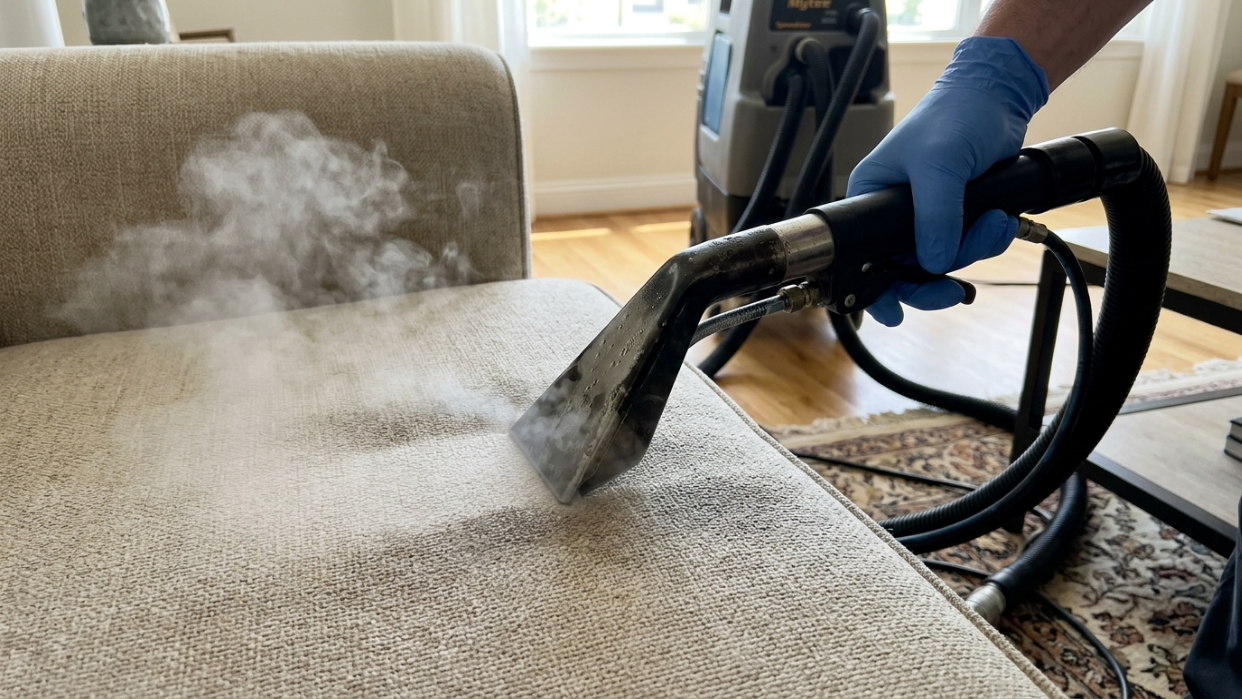
Steam heated to temperatures between 240 and 310°F with minimal moisture content, typically around 5 to 6% water. The result is a nearly dry vapor that cleans and sanitizes surfaces without soaking them.
Why it matters for upholstery: Dry vapor is the only steam type safe for most upholstered furniture. It penetrates fabric fibers to loosen dirt and kill bacteria, then evaporates quickly. Minimal moisture means no saturation of foam padding, no mold risk, and no extended drying times. If your equipment produces dry vapor, you can clean a client’s sofa and have them sitting on it within the hour.
Wet Steam
Any steam below 90% dryness is classified as wet steam. It contains 10 to 20% water content at lower temperatures and doesn’t transfer heat energy as efficiently. Wet steam may fail to kill bacteria because the lower temperature and higher moisture content reduce its sanitizing effectiveness.
Why it matters for upholstery: Wet steam is the enemy. It saturates fabric, pools in cushion cores, and creates the exact conditions that breed mildew. If you’re evaluating a machine and it doesn’t specify dryness percentage, ask. Practitioners on Reddit’s r/AutoDetailing community frequently report that budget machines advertised as “steam cleaners” actually produce wet steam that leaves seats damp for hours.
Hot Water Extraction (HWE)
This is the big confusion point. “Steam cleaning” in the carpet and upholstery cleaning industry usually means hot water extraction, not actual steam. HWE machines spray hot water (sometimes mixed with detergent) into fabric at high pressure, then vacuum it back out.
Why it matters for upholstery: HWE and true steam cleaning are fundamentally different processes. HWE saturates and rinses. Dry vapor steam sanitizes and dries quickly. Many people buy an HWE machine thinking they bought a steam cleaner. The results are completely different, and understanding this distinction before you spend money is the single most important takeaway from this guide. For a deeper comparison, see this breakdown of steamers versus carpet extractors.
Dry Vapor Steam vs Hot Water Extraction
Category | Dry Vapor Steam | Hot Water Extraction |
|---|---|---|
Moisture level | Very low | High |
Dry time | 15–45 min | 6–12 hrs |
Sanitization | Excellent | Moderate |
Soil removal | Moderate | Excellent |
Mold risk | Lower | Higher |
Upholstery suitability | W / WS | W / WS |
Chemical requirement | Optional | Common |
PSI (Pounds per Square Inch)
Pressure determines how effectively steam penetrates fabric fibers, seams, and crevices. A cloud of 300°F steam is useless if it doesn’t push into the material.
Why it matters for upholstery: Different fabrics need different pressure levels. Delicate upholstery requires 45 to 65 PSI. Standard commercial furniture handles 65 to 90 PSI. Heavy-duty industrial seating can tolerate 150 to 250 PSI for deep stain removal. Using too much pressure on the wrong fabric causes fiber damage and distortion. Using too little means the steam sits on the surface without cleaning anything underneath.
PSI Range by Fabric Type
Fabric Category | Recommended PSI | Examples |
|---|---|---|
Delicate | 45–65 PSI | Silk blends, thin cotton, vintage upholstery |
Standard commercial | 65–90 PSI | Polyester, nylon, standard office furniture |
Heavy-duty industrial | 150–250 PSI | Vinyl, thick canvas, restaurant booth seating |
For a complete guide to pressure settings, read more about commercial steamer PSI.
Boiler Temperature vs. Nozzle Temperature
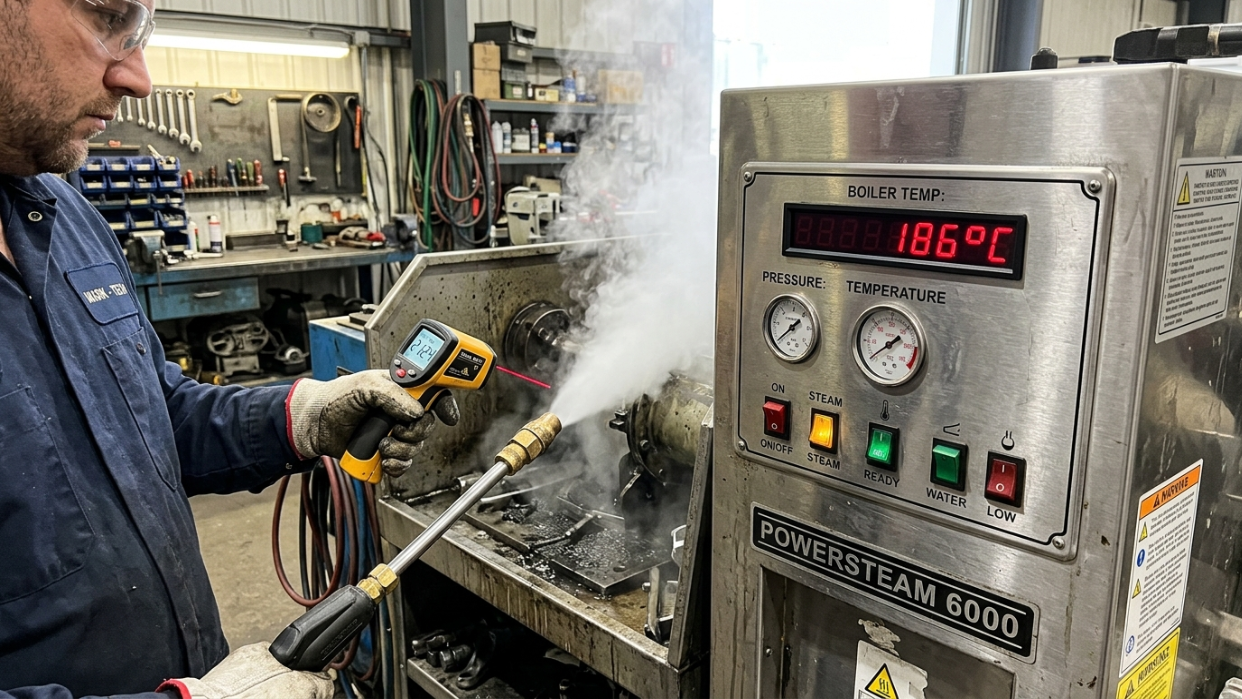
Boiler temperature is what the water reaches inside the tank. Nozzle temperature is what actually hits the surface you’re cleaning. The gap between them can be 40 to 80°F depending on hose length, insulation quality, and ambient conditions.
Why it matters for upholstery: You need sustained temperatures above 212°F at the nozzle to kill 99.9% of bacteria on contact. If a manufacturer only lists boiler temperature, there’s usually a reason they’re hiding the nozzle spec. Always ask for nozzle temperature, because that’s the number that determines whether your equipment actually sanitizes or just gets things warm and damp.
Continuous Fill vs. Manual Fill
Manual fill boilers require you to shut down the machine, depressurize, open the cap, add water, and wait for it to reheat. Continuous fill (sometimes called auto-fill or pump-fill) systems let you add water while the machine runs.
Why it matters for upholstery: A noted detailer on the Mike Phillips Forum emphasized that “with a pressurized version, you have to turn the unit off and let it cool down. For a production shop, this would be a time-killer.” If you’re cleaning multiple pieces of furniture per day, the 15 to 20 minutes of downtime per refill on a manual system adds up fast. Understanding the differences between manual-fill and auto-fill boilers is worth your time before purchasing.
Stainless Steel Boiler
Consumer boilers typically hold 0.3 to 0.5 liters in aluminum housings that burn out after 1,000 to 2,000 hours of use. Commercial boilers use stainless steel rated for 10,000+ hours. The boiler material matters more than capacity. Aluminum scales, corrodes, and fails under the demands of daily commercial use.
Why it matters for upholstery: If you’re running a shop that steams furniture every day, an aluminum boiler will need replacing in a year or two. A stainless steel boiler lasts a decade or more with proper maintenance. One user on Reddit’s r/jewelers reported using two Hoffman steamers over 30 years, with the first lasting 24 years.
Upholstery-Specific Terms
These terms apply specifically to fabric care and the tools used to work on upholstered surfaces.
Upholstery Cleaning Codes (W, S, WS, X)
Every piece of commercially manufactured upholstered furniture carries a cleaning code tag, usually found under a cushion or on the frame. These codes dictate what cleaning methods are safe.
Code | Meaning | Steam Safe? | Recommended Method |
|---|---|---|---|
W | Water-based cleaners safe | Yes | Steam cleaning works well |
S | Solvent-based cleaners only | No | Dry cleaning solvents only |
WS | Both water and solvent safe | Yes | Steam or solvent, your choice |
X | Vacuum only | No | No liquids, no steam, no foam |
Why it matters for upholstery: This is where expensive mistakes happen. Using water or steam on an “S” code fabric (common with silk, certain rayons, velvet, and damask) can cause browning, water rings, and irreversible shrinkage. No ranking page in the search results connects these codes to steam cleaning decisions, but this is arguably the most important check you perform before touching a client’s furniture. Steam cleaning is a water-based method, which means it’s only compatible with W and WS fabrics.
Upholstery Nozzle / Wand
A specialized attachment, typically about 4 inches wide, that directs concentrated steam into the tight crevices, seams, and flat surfaces of upholstered furniture. Without the right attachment, a commercial boiler is just producing steam with nowhere useful to go.
Why it matters for upholstery: Practitioners on the Detailing World Forum noted that “the attachments make the steam usable.” A powerful boiler paired with a generic nozzle wastes both steam and time. Purpose-built upholstery wands concentrate the steam where it needs to go and often include brush edges for agitating fabric fibers. Hoffman offers a dedicated commercial upholstery steam wand designed for this type of production work.
Fabric Emulsifier / Pre-Conditioner
A cleaning agent sprayed onto upholstery before steaming to help lift ground-in dirt. The emulsifier breaks the bond between soil and fabric fibers so the steam can flush contaminants to the surface more effectively.
Why it matters for upholstery: Skipping pre-conditioning on heavily soiled furniture often means the fabric stiffens after cleaning. A light misting of soil emulsifier before your steam pass prevents hardening and improves results significantly, especially on commercial furniture that sees daily use.
Colorfastness Test
A mandatory pre-cleaning step where you apply steam to a small, hidden area of the upholstery (typically under a cushion or on the back panel), then wait for it to dry and check for color bleeding, fading, or fabric distortion.
Why it matters for upholstery: Ignoring this step can void manufacturer warranties and cause visible damage to client furniture. It takes two minutes and prevents phone calls you don’t want to receive. Always test, even on fabrics labeled W or WS.
Equipment and Certification Terms
These terms help you evaluate whether a machine is truly commercial grade and whether it meets the safety standards your business insurance likely requires.
ASME Certification
The American Society of Mechanical Engineers Boiler and Pressure Vessel Code (BPVC) provides rules for the design, fabrication, inspection, testing, and certification of boilers and pressure vessels. An ASME-stamped boiler has been independently verified to meet these safety standards.
Why it matters for upholstery: If you’re running a pressurized steam boiler in a commercial shop, most states require ASME compliance. Your insurance carrier may also require it. Machines without ASME certification can create liability exposure you don’t want to discover after an incident. For a thorough explanation, see this guide on commercial steam boiler safety.
UL Listing
Underwriters Laboratories (UL) certification means the electrical components of the equipment have been tested and meet safety standards. Many commercial landlords, local codes, and insurance policies require UL-listed equipment before it can operate on premises.
Why it matters for upholstery: If you operate in a shared commercial space or strip mall, your landlord may ask for proof of UL listing. Operating non-UL equipment can void your lease or insurance coverage. It’s not a nice-to-have for commercial operations. It’s table stakes.
Maximum Allowable Working Pressure (MAWP)
The maximum pressure a boiler is designed to handle safely during normal operation. A high-pressure boiler operates at steam pressures above 15 PSI and typically requires annual inspections because of the higher energy and risk involved.
Why it matters for upholstery: Your MAWP determines your inspection schedule and the permits you need. Higher MAWP means more paperwork but also more cleaning power. Understanding your MAWP helps you plan for compliance costs as part of your operating budget.
Flash Steamer
A non-pressurized device that heats water on demand without storing pressure. Flash steamers are portable, require no boiler permits, and are suitable for retail environments or mobile operations.
Why it matters for upholstery: If you clean upholstery on-site at client locations (hotels, offices, showrooms), a flash steamer eliminates permit headaches. The tradeoff is lower pressure and shorter sustained output compared to a true boiler. For a detailed comparison, check the guide on flash steamers versus boilers.
Pump-Fill Steam Boiler
An automatic water-feed system that maintains the boiler water level without manual intervention. The pump adds water as needed, so the machine never runs dry and never needs to shut down for refilling.
Why it matters for upholstery: Extended jobs (cleaning an entire hotel’s worth of lobby furniture, for example) demand uninterrupted runtime. Pump-fill systems eliminate the biggest productivity killer in steam-based upholstery work: downtime between refills.
Performance and Maintenance Terms
These terms affect your daily operations and long-term costs.
Descaling
The process of removing mineral buildup from inside the boiler tank. Tap water contains dissolved minerals that deposit on heating elements and tank walls over time, reducing efficiency and eventually causing failure.
Why it matters for upholstery: Using distilled water reduces scaling but isn’t strictly required. If you use tap water, plan on regular descaling flushes. Good maintenance practice includes daily tank draining, weekly descaling, and monthly attachment cleaning. Neglecting descaling is the number one cause of premature boiler death.
Total Cost of Ownership (TCO)
The full cost of buying, operating, maintaining, and eventually replacing a piece of steam equipment. TCO includes the purchase price, consumables (filters, descaling solution), electricity, maintenance labor, downtime costs, and warranty or protection plan fees.
Why it matters for upholstery: A $500 consumer machine that dies in 18 months and ruins a $3,000 sofa along the way costs far more than a $2,000 commercial unit that runs for a decade. When budgeting for steam equipment, a slightly more expensive unit with better build quality, lifetime technical support, and available parts can save thousands in downtime and repairs.
Dwell Time
The amount of time a cleaning agent or heat source needs to remain in contact with a surface to be effective. Chemical cleaners often require 2 to 10 minutes of dwell time to kill bacteria. Steam’s advantage is near-instant contact kill at temperatures above 212°F.
Why it matters for upholstery: Speed matters in commercial work. If you’re cleaning a waiting room or hotel lobby, you can’t leave surfaces wet with chemicals for 10 minutes while guests walk by. Steam sanitizes on contact and dries in minutes, which makes it practical for environments that never fully close.
Steam Drying Time
The time it takes for a steamed surface to return to a dry, usable state. Most hard surfaces dry within minutes due to the low moisture output of dry vapor systems. Upholstery may take longer depending on fabric thickness, cushion density, and ventilation in the room.
Why it matters for upholstery: Drying time is a selling point when pitching steam cleaning services to commercial clients. “Your furniture will be dry and usable in 30 minutes” is a very different conversation than “it’ll be damp for 6 to 12 hours,” which is common with hot water extraction.
Sanitization Threshold
The temperature at which steam kills bacteria and other pathogens. Commercial steam cleaners sanitize surfaces to 99.9% bacteria reduction at sustained temperatures above 212°F, without chemicals. Steam above 122°F also kills bed bugs and their eggs on contact.
Why it matters for upholstery: Hotels, hospitals, and daycares increasingly demand chemical-free sanitization. Being able to document that your equipment exceeds the sanitization threshold gives you a competitive advantage in these markets.
Vacuum Extraction
The ability to simultaneously suction moisture and debris while steaming. Machines with integrated wet/dry vacuum allow you to clean and remove residue in a single pass.
Why it matters for upholstery: Practitioners on the Detailing World Forum noted that steam cleaners are excellent at loosening dirt on upholstery, but without extraction capability, the dirt remains on the surface. One user commented that cleaning seats takes “5 times longer” with steam alone versus combining steam with extraction. If your business does heavy-soil upholstery cleaning, consider whether your steam setup needs a paired extraction unit.
Consumer vs. Commercial: A Spec Comparison
This table clarifies what separates a consumer appliance from commercial equipment.
Specification | Consumer Grade | Commercial Grade |
|---|---|---|
Nozzle temperature | 200–220°F | 290–330°F |
PSI range | 15–45 PSI | 65–90+ PSI |
Boiler material | Aluminum | Stainless steel |
Tank capacity | 0.3–0.5 liters | 1–6 gallons |
Expected lifespan | 1,000–2,000 hours | 10,000+ hours |
Certifications | None typically | ASME, UL |
Refill method | Manual, full shutdown | Manual or continuous pump-fill |
Users on the BobIsTheOilGuy forum report that consumer-grade spot cleaners “throw a lot of solution” and shouldn’t be used on upholstery because they’re designed for carpet spot work. The machines look similar on a shelf. The results are not similar at all.
How to Choose a Commercial Upholstery Steam Cleaner (3-Step Decision Framework)
Step 1: Identify your cleaning volume
Workflow | Recommended Setup |
|---|---|
1–3 pieces/day | Manual-fill boiler |
4–10 pieces/day | Continuous-fill boiler |
Hotel/fleet production | Pump-fill commercial system |
Step 2: Match the fabric
Fabric Type | Steam Recommendation |
|---|---|
W | Safe |
WS | Safe |
S | Avoid steam |
X | Vacuum only |
Step 3: Match drying expectations
Client Need | Recommended Method |
|---|---|
Fast turnaround | Dry vapor |
Heavy soil extraction | HWE |
Sanitization | Steam |
Odor flushing | Extraction |
Pressurized vs. Non-Pressurized Boilers
This distinction trips up more buyers than any other. A pressurized boiler stores steam under pressure, delivering consistent high-PSI output for extended periods. A non-pressurized (flash) steamer heats water on demand and produces steam at lower pressure.
Pressurized advantages: Higher PSI, sustained output, better deep-cleaning results on heavy commercial fabrics.
Non-pressurized advantages: No boiler permits required, portable, suitable for retail environments, and you can add water on the fly without shutdown.
The tradeoff: Pressurized boilers require cooling before you can open the fill cap, which creates downtime on manual-fill models. This is exactly why pump-fill pressurized boilers exist, and they combine the benefits of both approaches. For the full breakdown, read the guide on pressurized versus non-pressurized steamers.
Common Mistakes in Commercial Upholstery Steam Cleaning
Confusing steam cleaners with hot water extractors. These are different machines that do different things. Steam sanitizes with minimal moisture. Extraction rinses with lots of water. Using an extractor when you needed a steamer (or vice versa) produces poor results every time.
Using consumer equipment for commercial work. Consumer machines can’t maintain temperatures above the sanitization threshold. They also can’t sustain output long enough to finish a single couch without refilling. Buying cheap costs more in the long run.
Applying too much pressure to delicate fabric. Cleaning upholstery requires low to medium steam pressure. Delicate fabric should be steamed on the lowest setting. Cranking the pressure because “more is better” destroys fibers and voids client warranties.
Skipping the colorfastness test. Every time. Every fabric. No exceptions. Two minutes of testing prevents hours of explaining damage to a client.
Oversaturating upholstery. Even with a steam cleaner (as opposed to an extractor), oversaturation is possible if you hold the wand too long in one spot or use a machine that produces wet steam. Move steadily, maintain distance, and monitor moisture levels in thick cushions.
Ignoring cleaning codes. Steaming an S-code fabric will cause damage. Period. Check the tag before you touch the upholstery. If there’s no tag, test conservatively and document everything.
Choosing the Right Equipment for Your Upholstery Business
Selecting a commercial upholstery steam cleaner comes down to matching your daily workflow to the right specifications. Small shops doing occasional steam cleaning can start with a manual-fill boiler in the 1 to 2 gallon range. High-volume operations cleaning hotel furniture or managing fleet vehicle upholstery need pump-fill systems with 6-gallon capacity and continuous-duty ratings.
Regardless of volume, prioritize stainless steel construction, ASME/UL certification, and a nozzle temperature above 290°F. These three specs separate equipment that performs from equipment that disappoints.
Browse commercial steam equipment to compare models across the full range, from portable flash steamers to industrial pump-fill boilers.
Commercial Upholstery Steam Cleaner Use Cases
Hotels
Prioritize low drying time and chemical-free sanitization.
Healthcare Waiting Areas
Focus on temperature consistency and documented sanitation.
Restaurants
Higher PSI tolerance for vinyl and booth seating.
Furniture Restoration Shops
Lower PSI and detailed nozzle control reduce fabric damage.
Auto and Fleet Interiors
Portable continuous-fill systems reduce downtime.
Commercial Upholstery Steam Cleaner Buying Checklist
Before purchasing, confirm:
☐ Actual nozzle temperature published
☐ Steam dryness percentage published
☐ Stainless steel boiler
☐ Continuous-fill option available
☐ Upholstery attachment included
☐ ASME certification (if required)
☐ UL electrical listing
☐ Warranty coverage for commercial use
☐ Replacement parts available
☐ Maintenance schedule documented
Frequently Asked Questions
Can I use a steam cleaner on all types of upholstery fabric?
No. Steam cleaning is a water-based method, so it’s only safe for fabrics labeled W (water-safe) or WS (water and solvent safe). Fabrics coded S require solvent-based cleaning only, and X-coded fabrics can only be vacuumed. Always check the cleaning code tag before steaming any upholstered surface.
What’s the difference between a steam cleaner and an upholstery extractor?
A true steam cleaner produces dry vapor at high temperatures (290°F+) with very little moisture. An extractor (hot water extraction machine) sprays hot water into fabric and vacuums it back out. Steam sanitizes and dries fast. Extraction deep-rinses but leaves fabric wet for hours. They’re complementary tools, not interchangeable ones.
What PSI should I use for upholstery steam cleaning?
It depends on the fabric. Delicate materials like silk blends need 45 to 65 PSI. Standard commercial fabrics handle 65 to 90 PSI. Heavy-duty vinyl or canvas can tolerate 150 to 250 PSI. Start low and increase only if needed.
Do I need ASME certification for my steam boiler?
If you’re operating a pressurized steam boiler in a commercial setting, most states require ASME-compliant equipment. Your business insurance may also mandate it. Non-pressurized flash steamers typically don’t require ASME certification, which makes them popular for mobile or retail operations.
How often should I descale a commercial steam boiler?
With tap water, weekly descaling flushes are recommended along with daily tank draining. Using distilled water reduces mineral buildup and can extend the interval between descaling, but regular maintenance remains essential regardless of water source.
Does steam cleaning kill bed bugs in upholstery?
Yes. Steam above 122°F kills bed bugs and their eggs on contact. Commercial steam cleaners that produce sustained temperatures above 212°F at the nozzle are effective tools for bed bug remediation in upholstered furniture, mattresses, and soft furnishings.
Should I choose a pressurized or non-pressurized steamer for upholstery work?
Pressurized boilers deliver higher PSI and sustained output, making them better for production shops handling multiple pieces daily. Non-pressurized flash steamers are more portable and don’t require boiler permits, making them ideal for on-site or retail work. If you need high volume and high pressure, go pressurized with a pump-fill system to avoid downtime.
How long does upholstery take to dry after steam cleaning?
With a proper dry vapor steam cleaner, most upholstery surfaces dry within 15 to 45 minutes depending on fabric thickness, cushion density, and room ventilation. This is dramatically faster than hot water extraction, which can leave furniture damp for 6 to 12 hours.


