

TL;DR
Engine cleaning with steam uses high temperature, low moisture vapor (above 212°F with only 5 to 6% water content) to cut through grease, oil, and grime without soaking sensitive electronics. It uses 80 to 90% less water than pressure washing and eliminates most chemical degreasers, which matters for shop compliance and wastewater regulations. The catch? Most services marketed as “steam cleaning” actually use hot water pressure washers, and shops running consumer-grade equipment face inconsistent results, higher liability, and more downtime. This guide covers what professional detailing and service shops need to know about equipment specs, process standardization, cost-per-job economics, and the commercial boiler systems that make engine bay steam cleaning a reliable, repeatable revenue stream.
Engine cleaning with steam is one of the highest-margin add-on services a detailing shop or automotive service business can offer. A grimy, oil-caked engine bay becomes spotless in under an hour. Leaks become visible for upsell diagnostics. And unlike pressure washing (which sends contaminated water into your shop drain and introduces liability with every electrical connector it touches), steam keeps water volume to a minimum.
The confusion starts with terminology, and it costs shops money. A 28-year veteran on Garage Journal Forum put it bluntly: “‘Steamer’ is often used slang, really hot hi pressure washer.” Most operations advertising engine steam cleaning don’t actually use true steam. They use hot water under high pressure, and that difference matters when a customer’s check engine light comes on the next morning.
This guide covers the science behind why steam works, how to standardize the process for shop technicians, the commercial equipment specs that separate reliable operations from inconsistent ones, safety and compliance considerations, and the business case for adding engine bay steam cleaning as a service line.
Quick Answer: Is Engine Cleaning With Steam Safe for Customer Vehicles?
Yes, engine cleaning with steam is safe for most modern cars and trucks when performed with true dry vapor steam, proper component masking, and documented drying procedures. Commercial steam systems use high heat and minimal moisture to dissolve grease without flooding electrical components. It’s actually safer than pressure washing because it uses 80 to 90% less water. The risks come from skipping prep steps or using equipment that can’t maintain consistent temperature and pressure, which is why equipment selection matters so much for professional operations.
What Engine Cleaning with Steam Actually Means
Engine steam cleaning uses high temperature, low moisture vapor to break down oil residue, road grime, and carbon deposits. Unlike pressure washing or chemical degreasing, heat does the heavy lifting, not water volume or harsh solvents.
True dry vapor steam operates at temperatures above 212°F and contains roughly 5 to 6% liquid water. The other 94 to 95% is vapor. That low moisture content is the whole point. Modern engines are packed with electronic control units, sensors, and wiring harnesses that react badly to liquid water. Steam delivers enough heat to melt grease without creating the liability of drowned electronics.
Three Methods That Get Confused Constantly
Forum veterans and professional detailers consistently identify three distinct methods that get conflated, both by customers and by shops that should know better:
- Cold water pressure washing. High water volume, no heat. The highest risk to electronics and the most wastewater to manage.
- Hot water pressure washing (150 to 200°F). Often mislabeled as “steam cleaning.” Still delivers large volumes of liquid water. One practitioner noted that these units use standard pressure washer hoses, while true steam cleaners need thicker hoses rated for higher temperatures.
- True dry vapor steam (212°F and above). Minimal liquid water. Heat does the work. This is actual engine cleaning with steam, and it requires a boiler-based system to produce.
If a shop is running a standard pressure washer hose with no boiler, that’s option two. Not three. Knowing the difference protects your customers’ vehicles and your shop’s reputation.
How Steam Cleans an Engine Bay
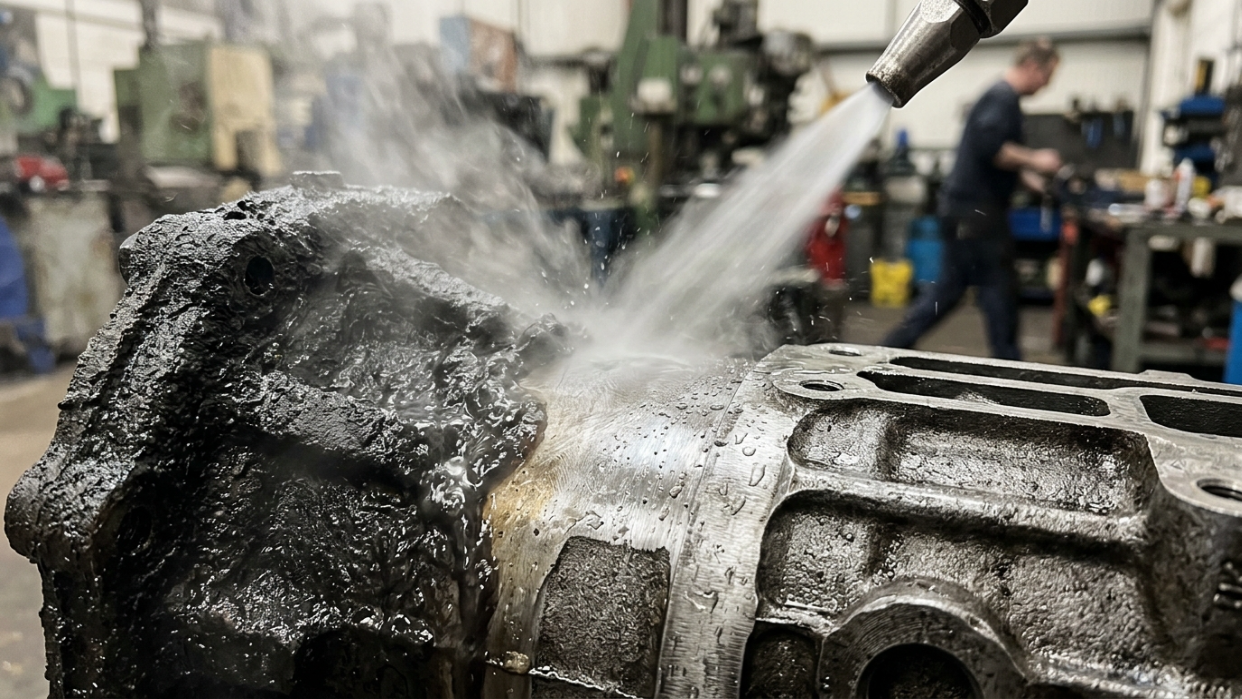
The science is straightforward. Heat breaks the molecular bonds in oil, grease, and carbon deposits. At temperatures above 270°F, baked-on grease starts to liquefy without any scrubbing. The vapor gets into crevices, lifts contaminants off surfaces, and the small amount of condensed water carries the loosened grime away.
What Specs Actually Matter for Shop Equipment
Not all steam equipment produces equal results. For a professional operation running multiple engine bays per day, these specifications determine whether your process is consistent or a liability:
| Specification | Consumer Canister Steamers | Commercial Boiler Systems | Why It Matters for Shops |
|---|---|---|---|
| Temperature | 200 to 275°F | 275 to 380°F | Higher temps dissolve grease faster, reducing labor time per vehicle |
| Pressure | 15 to 45 PSI | 70 to 90+ PSI | Consistent pressure means consistent results across technicians |
| Duty cycle | Intermittent (cycles off to reheat) | Continuous duty | No downtime between vehicles; critical for throughput |
| Water use per engine bay | 2 to 3 gallons | 2 to 3 gallons | Minimal wastewater simplifies environmental compliance |
| Safety certifications | Rarely ASME/UL certified | ASME and UL certified | Required for insurance compliance in many jurisdictions |
Here’s the critical point most equipment buyers miss: the relationship between temperature and pressure isn’t what you’d expect. A unit pushing 100 PSI at only 200°F will be far less effective than a 70 PSI unit running at 300°F. Temperature is the main driver of cleaning power. Pressure helps with delivery, but heat is what actually dissolves grease.
Consumer canister steamers that top out around 200°F will struggle with baked-on oil and carbon. They cycle on and off, meaning your technician sometimes gets warm water instead of actual dry vapor. That inconsistency is where customer complaints and rework happen. For a deeper look at how boiler-based steam systems work, Hoffman Steam’s guide to how steamers work explains the engineering in plain language.
Steam Alone Isn’t Always Enough
The consensus among experienced detailers on Reddit’s r/AutoDetailing is that the best approach for heavily neglected engine bays combines a pre-soak with a diluted all purpose cleaner (APC) to loosen heavy contamination, followed by steam to lift and flush everything away. Steam by itself handles light to moderate buildup, which covers the majority of maintenance cleans. Building both approaches into your shop’s standard operating procedure means technicians can assess on intake and quote accordingly.
Shop SOP: How to Steam Clean an Engine Bay
Standardizing your engine bay steam cleaning process eliminates inconsistency between technicians and reduces liability. Here’s the workflow your team should follow.
Step 1: Vehicle Intake Inspection
Before any work starts, document the engine bay condition:
- Cracked wiring insulation
- Loose connectors
- Missing plastic covers
- Active oil leaks
- Exposed electronics
- Any pre-existing warning lights on the dashboard
Photograph the engine bay and record dashboard status. This documentation protects the shop if a customer claims damage from a pre-existing condition. Many shops use a simple intake form that the customer signs before work begins.
Step 2: Mask Sensitive Components
This step is non-negotiable. Cover these with waterproof bags or plastic sheeting secured with tape:
- Alternator
- Fuse panels
- Air intake and filter housing
- ECU modules
- Battery terminals
- Any aftermarket electronics (sound systems, dashcams, etc.)
Five minutes of masking prevents the callbacks that erode profit margins. Build this time into every quote. Some shops keep pre-cut masking kits for common vehicle models to speed this step up.
Step 3: Pre-Treat Heavy Contamination
For severely dirty engines (fleet vehicles, trucks, vehicles with known leaks):
- Spray a diluted APC or degreaser on the worst areas
- Let it sit for 2 to 5 minutes
- Don’t let it dry on the surface
For routine maintenance cleans, skip straight to steam. Tracking which vehicles need pre-treatment vs. steam-only helps refine your quoting accuracy over time.
Step 4: Apply Dry Vapor Steam
Work in this order:
- Top to bottom
- Rear to front
- Light contamination areas first, heavy areas last
Keep the nozzle 6 to 8 inches from the surface. Use controlled, steady passes rather than blasting one spot for a long time. With a commercial boiler system running at 70 to 90 PSI and consistent temperature, most engine bays take 15 to 25 minutes of actual steam time.
Step 5: Wipe Away Residue
Use clean microfiber towels to wipe up loosened grime as you go. Compressed air helps blow moisture and debris out of tight crevices. Having a dedicated air line at the steam cleaning station saves time.
Step 6: Dry, Verify, and Document
Start the engine and let it idle for 10 to 15 minutes. The heat accelerates drying. Check for:
- No new warning lights on the dashboard
- Stable idle
- No signs of trapped moisture
Photograph the finished engine bay. This before/after documentation serves double duty: it protects the shop legally and gives your team marketing assets for social media and your website.
The Business Case: Why Shops Add Engine Bay Steam Cleaning
High Margins Per Job
Engine bay steam cleaning services typically command $75 to $200 per vehicle, depending on size and condition. With commercial equipment, total material cost per job (water, towels, minor chemical use) runs well under $10. Labor time for a trained technician is 30 to 45 minutes including prep and documentation. That’s a service with margins above 70% at even conservative pricing.
Better Cooling Means Upsell Opportunities
A layer of caked dirt and oil on a radiator, intercooler, and cooling fans acts like insulation. Removing it can improve cooling efficiency by 10 to 15%. But the bigger business value is visibility. A clean engine bay lets technicians spot oil seeps, coolant weeps, and worn belts that were invisible under grime. Many shops report that engine bay cleaning leads directly to additional repair work the customer approves on the spot.
Reduced Fire Risk (Fleet and Commercial Accounts)
Grease buildup near hot exhaust manifolds or turbocharger housings is a documented fire hazard. For fleet customers, delivery companies, and commercial vehicle operators, engine bay cleaning is a maintenance requirement, not a cosmetic choice. Positioning your shop to serve fleet accounts with scheduled steam cleaning creates recurring revenue.
Environmental Compliance Advantage
Steam cleaning uses about 2 to 3 gallons of water per engine bay compared to 15 to 20 gallons for pressure washing. It eliminates roughly 90% of chemical usage. For shops in jurisdictions with strict wastewater discharge regulations, this is a significant compliance advantage. Less contaminated water means simpler (and cheaper) waste management.
For a full comparison of these two approaches, the steamer vs. pressure washer comparison breaks down where each method works best.
Resale Prep and Dealer Accounts
Used car dealerships and pre-owned vehicle operations are a natural customer segment. A clean engine bay signals maintenance to buyers and removes one of the most common reasons they negotiate price down or walk away. Shops that offer engine bay cleaning as part of dealer reconditioning packages build steady B2B volume.
Equipment Selection: What Professional Shops Actually Need
The gap between a consumer canister steamer and a commercial boiler system determines whether engine bay cleaning is a reliable service line or an inconsistent headache.
Consumer units produce steam at around 200 to 220°F and 15 to 45 PSI. They cycle on and off constantly, meaning temperature and pressure fluctuate throughout use. During a low cycle, the unit basically sprays warm water onto a customer’s engine. That inconsistency is where electrical damage, rework, and customer complaints happen. These units are also not rated for continuous duty, meaning they can’t handle the throughput of a busy shop day.
Commercial boiler-based systems maintain consistent temperature and pressure throughout continuous operation. That consistency means your technicians are getting actual dry vapor throughout the cleaning process, not an unpredictable mix of steam and water. It also means predictable job times, which is how you schedule and staff efficiently.
Key factors for shop equipment selection:
- Continuous duty rating. Can the unit run back to back without cooldown periods? If not, it creates bottlenecks.
- PSI output. 70 to 90 PSI is the range where you get both effective delivery and the temperature to dissolve grease efficiently. Understanding how PSI affects performance helps you evaluate spec sheets.
- ASME/UL certification. Many commercial insurance policies require certified pressure vessels. Running uncertified equipment can void your coverage.
- Maintenance and support infrastructure. A steamer that’s down for repair is a service line that’s offline. Look for manufacturers with parts availability, technical support, and maintenance programs.
- Total cost of ownership. The purchase price matters less than the five-year cost including maintenance, parts, downtime, and consumables.
Hoffman Steam manufactures commercial electric steam boilers in the US (Dushore, Pennsylvania) with models producing 70 to 90 PSI, ASME/UL certification on Pro models, and continuous duty ratings on their industrial line. Their equipment is used across industries from jewelry cleaning to garment finishing to light manufacturing, and the same boiler engineering that makes their commercial units reliable applies to any application where steam quality and uptime matter.
What differentiates their approach for shop owners: transparent published pricing (no “call for quote” games), a 3-year tank warranty plus 1-year components warranty, unlimited lifetime remote technical support, and their Workhorse Protection Program that includes automatic consumable shipments, factory reconditioning, and loaner machines to keep you running during service. On Reddit’s r/jewelers and r/BenchJewelers, users report Hoffman boilers lasting 24 years or more in daily commercial use. That kind of longevity comes from proper maintenance and quality construction.
For shops evaluating options, their product line ranges from the EVD-1 (a 1-gallon, 40 PSI entry point at $1,199) up through the RHPG industrial series for high-volume operations. Explore Hoffman’s commercial steam equipment guide to understand what separates professional boilers from consumer tools.
When Steam Cleaning Is Not the Right Service to Offer
Steam isn’t the answer for every vehicle that rolls into your bay. Training your team to identify these situations prevents liability and protects your reputation.
| Situation | Recommended Action |
|---|---|
| Exposed distributor ignition systems (older vehicles) | Hand clean with rags and degreaser; document the limitation for the customer |
| Owner’s manual prohibits engine bay washing | Decline the service and document why; this protects both parties |
| Damaged or frayed wiring harnesses | Flag the wiring issue and recommend repair before cleaning |
| Flood-damaged vehicle | Require electrical inspection before any cleaning |
| EVs or hybrids with high-voltage components | Check manufacturer guidelines; refer to dry ice blasting specialists if needed |
| Open electronic enclosures without covers | Dry cleaning methods only |
Having a written policy for when to decline engine bay cleaning, and training technicians to follow it, is a sign of a professional operation. Customers respect it, and it prevents the one bad experience that generates a negative review.
Risks, Safety, and Compliance
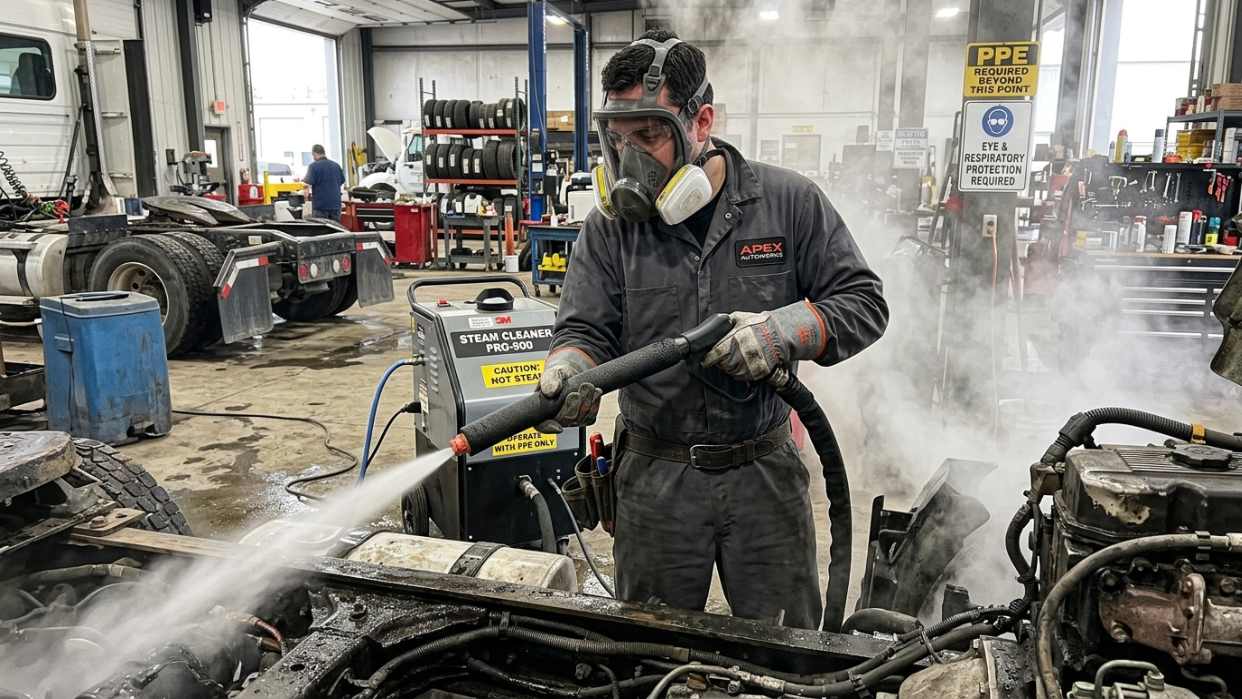
Engine steam cleaning is a safe service when your shop respects the risks and standardizes around them. Here’s what can go wrong and what your SOPs should address.
Electrical Damage to Customer Vehicles
This is the biggest liability. Even with steam’s low moisture content, water can still reach connectors and sensors if your technician is careless or the masking step is skipped.
Practitioners on the Corvette Forum have shared direct cautionary experiences. One user warned: “I would not do it without completely shrink wrapping the distributor. I fried an optispark distributor by washing the engine compartment.” Another noted that “steam is powerful and can actually get passed wiring harnesses if you aren’t careful.”
The fix is process discipline: masking happens on every vehicle, every time, with photo documentation before and after. Build it into your workflow so it’s not optional.
Seal and Gasket Considerations
Pressurized steam can dislodge grime but also has the potential to damage old, brittle seals and gaskets. Rubber hoses and o-rings that are already deteriorating can tear or shift under pressure. This is another reason temperature matters more than PSI for engine work: you want heat to dissolve grease, not brute force to blast it away.
After cleaning, applying a rubber conditioner or protectant to all visible rubber and plastic components is a value-add step that takes two minutes and extends the life of those parts. It also gives your work a finished look that justifies your pricing.
Technician Safety Requirements
This is a point that many shops overlook. Practitioners on Reddit’s r/AutoDetailing have warned that combining an all purpose cleaner with steam creates potentially harmful vapor. Your shop needs documented PPE requirements for this service.
Required PPE:
- Respirator with organic vapor cartridges (a paper dust mask is not sufficient)
- Heat-resistant gloves (steam above 212°F causes instant burns)
- Safety glasses (hot, oily water splashes back)
- Long sleeves
For more on safe practices around commercial steam equipment, the steam boiler safety guide covers the essentials, including ASME compliance documentation that some insurers and inspectors require.
Steam Cleaning vs. Other Methods: Positioning Your Services
Understanding how the common engine cleaning methods compare helps you position your steam cleaning service correctly and educate customers on why it costs more than a basic wash.
| Method | Water Use | Chemical Use | Electronics Risk | Typical Shop Price | Best For |
|---|---|---|---|---|---|
| Steam (dry vapor) | Very low (2 to 3 gal) | Minimal to none | Low with proper prep | $75 to $200 | Most modern cars, trucks, fleet vehicles |
| Pressure washing | High (15 to 20 gal) | Often needed | High | $50 to $100 | Undercarriage and exterior only |
| Chemical degreasing | Moderate (rinse needed) | Heavy | Moderate (rinse risk) | $50 to $150 | Heavily neglected engines with no electronics concern |
| Dry ice blasting | None | None | Zero | $350+ | Classic cars, EVs, show vehicles |
| Hand cleaning | None | Light | Very low | Your labor cost | Quick touch-ups and spot cleaning |
Dry ice blasting is worth mentioning for shops that serve the collector car or luxury market. It shoots frozen CO2 pellets at the surface, and they turn to gas on impact, leaving zero moisture behind. One user on the Bronco6G forum recommended it specifically, noting “You don’t want moisture/water in the electronics.” The price tag ($350 and up per job) limits it to high-value vehicles, but it could be a referral partner opportunity if your shop doesn’t offer it directly.
For the volume of a typical detailing or service shop, steam cleaning with commercial equipment is the sweet spot of margin, safety, and throughput.
Steam Cleaning vs Dry Ice Blasting: Quick Comparison
| Factor | Steam Cleaning | Dry Ice Blasting |
|---|---|---|
| Water Usage | Very Low | None |
| Chemical Usage | Minimal | None |
| Equipment Investment | $1,200 to $10,000 (commercial boiler systems) | $15,000+ plus ongoing dry ice supply costs |
| Cost Per Job | Under $10 in materials | $50 to $100+ in dry ice alone |
| Electronics Safety | High (with masking) | Very High |
| Carbon Removal | Excellent | Excellent |
| Throughput for Shops | High (continuous duty commercial units) | Moderate (setup and supply logistics) |
| Best For | Volume service work, fleet accounts, general maintenance | Show cars, classics, EVs, specialty restoration |
For most professional detailing and automotive service operations, steam cleaning with commercial boiler equipment offers the best combination of margin, reliability, and applicability across vehicle types.
Common Myths Your Customers Will Ask About
“Steam cleaning causes rust”
Not true. When the drying protocol is followed, steam cleaning doesn’t increase rust risk. In fact, removing corrosive road salts and chemical residue actually reduces long-term corrosion. This is a common customer objection that’s easy to address with a quick explanation of the low moisture content.
“A pressure washer does the same thing”
Not even close. Pressure washers lack temperature control and blast enormous amounts of liquid water into every crevice. They produce no real heat advantage and dramatically increase the risk of water getting into electrical components. Different tool, different results, different risks. This distinction is also your selling point: you can explain why your service costs more and is worth it.
“Only visibly dirty engines need cleaning”
Even clean-looking engine bays collect microscopic contaminants that reduce cooling efficiency and accelerate corrosion over time. The grime you can see is a fraction of what’s actually there. For fleet accounts, this is the maintenance interval argument that sells recurring service.
“Steam cleaning is safe for every car, every time”
Almost, but not quite. It’s safe for the majority of modern vehicles when done correctly with masking. But some manufacturers (particularly EV and performance car makers) say no engine bay washing, period. And older cars with exposed distributors or non-sealed ignition systems carry higher risk. A professional shop checks the owner’s manual and declines when appropriate.
Understanding the difference between steam equipment types also helps explain to customers why not all “steam cleaning” services are equal.
Troubleshooting Common Equipment and Process Issues
Even with proper training and equipment, your team will encounter these situations. Here’s how to handle them.
Steam Pressure Drops Mid-Job
Consumer-grade units do this constantly because they’re not rated for continuous duty. With commercial equipment, a mid-job pressure drop usually indicates scale buildup inside the boiler, a failing heating element, or a water supply issue. The low steam pressure troubleshooting checklist covers the usual suspects. This is also where equipment with a maintenance support program pays for itself, as you want the problem diagnosed and fixed the same day, not next week.
Surfaces Getting Visibly Wet
If the engine bay is getting soaked rather than lightly damp, your steam quality is too low. Either the equipment isn’t reaching proper temperature, or the technician is holding the nozzle too close for too long. Back off to 6 to 8 inches, slow down the passes, and verify the steamer has reached full operating temperature before starting. This is a training issue more often than an equipment issue.
Streaking or Smearing
Streaks mean contaminants are being pushed around instead of lifted off. Wipe with a clean microfiber between steam passes, especially on plastic covers and painted surfaces. For stubborn carbon, spray a little diluted APC, let it sit, then make a second steam pass.
Check Engine Light Comes On After Cleaning
This is the callback every shop dreads. It usually means some moisture reached a sensor or connector. In most cases, running the engine for 15 to 20 minutes and blowing compressed air on suspect connectors resolves it. If the light is still on after 48 hours, pulling the connector, drying it manually, and resetting the code typically fixes things. This is exactly why the masking step and documentation exist. With photos showing proper prep work, you can demonstrate due diligence.
Post-Cleaning Protocol: The 48-Hour Standard
What happens after steam cleaning matters almost as much as the cleaning itself. Standardize these steps for every vehicle.
- Blow out crevices with compressed air, especially around connector housings and recessed areas.
- Idle the engine for 10 to 15 minutes. The heat accelerates evaporation from tight spots.
- Leave the hood open in a covered, dry area for a few hours if the vehicle isn’t being picked up immediately.
- Brief the customer: advise them to avoid driving in rain for at least 24 hours if possible.
- Schedule a follow-up check at 48 hours for any warning lights, rough idle, or misfires (a quick phone call works).
- Apply protectant to rubber hoses, plastic covers, and trim. Steam strips natural oils from these materials. This finishing step takes two minutes and adds perceived value.
Service Frequency: Setting Customer Expectations
For most daily drivers, once a year is the right recommendation. Customers who drive on dirt roads frequently, tow regularly, have known oil leaks, or live in heavy road salt areas benefit from every six months.
Fleet accounts are the real opportunity. Vehicles in commercial service (delivery vans, trucks, equipment carriers) benefit from quarterly or semi-annual engine bay cleaning as part of a preventive maintenance program. Structuring a recurring service agreement with fleet operators creates predictable revenue.
Maintaining Your Commercial Steam Equipment
Your steam boiler is the core asset behind this service line. Keeping it running is not optional.
Use the Right Water
Hard water is the quiet killer of steam equipment. Mineral deposits (scale) build up inside the tank and on heating elements, reducing performance and eventually causing failure. Use distilled or demineralized water. The cost per gallon is trivial compared to a heating element replacement or, worse, a day of lost revenue from a down machine.
Descale on Schedule
Follow your manufacturer’s descaling schedule religiously. If your shop runs the steamer daily, you may need to descale more often than the manual suggests. Operators who skip this end up replacing heating elements far sooner than necessary.
On Reddit’s r/jewelers and r/BenchJewelers, users report Hoffman Steam boilers lasting 24 years or more in daily commercial use. That kind of longevity comes from disciplined maintenance and quality construction, not luck. The maintenance checklist for continuous duty boilers provides a solid framework.
Consider a Maintenance Program
For shops where the steamer is a revenue-generating tool, equipment downtime directly impacts the bottom line. Manufacturer maintenance programs that include automatic consumable shipments, factory reconditioning, and loaner machines during service eliminate the risk of extended downtime. Hoffman Steam’s Workhorse Protection Program, for example, includes a hot-swap loaner so your service line stays operational during planned maintenance or unexpected repair.
FAQ
Is engine steam cleaning safe for all customer vehicles?
It’s safe for most modern vehicles when you mask sensitive electronics and follow proper drying procedures. Some manufacturers (certain EV and performance car brands) explicitly prohibit engine bay washing in their owner’s manual. Older cars with exposed distributors or non-sealed ignition systems carry higher risk. A professional shop checks the manual and declines when appropriate, documenting the reason.
How much should a shop charge for engine steam cleaning?
Most shops charge $75 to $200 depending on vehicle size and contamination level. Trucks and heavily neglected engine bays command the higher end. With commercial equipment, material cost per job is under $10 and labor runs 30 to 45 minutes, making margins above 70% achievable.
How often should fleet vehicles get engine bay steam cleaning?
For vehicles in daily commercial service, quarterly or semi-annual cleaning is a reasonable recommendation. Cars and trucks that see dirt roads, heavy towing, or salty winter conditions benefit from cleaning every six months at minimum. Structure recurring service agreements with fleet customers for predictable revenue.
What’s the difference between steam cleaning and pressure washing an engine?
True steam cleaning uses high-temperature vapor (above 212°F) with only 5 to 6% moisture, produced by a boiler. Pressure washing uses high-volume liquid water, sometimes heated but still mostly liquid. Steam relies on heat to dissolve grease. Pressure washing relies on water force, which carries much higher risk of electrical damage, uses 5 to 10 times more water, and creates more wastewater management challenges for shops.
What PPE do technicians need for engine steam cleaning?
Practitioners on Reddit’s auto detailing community have specifically warned that combining all purpose cleaners with steam creates potentially harmful vapor. A respirator with organic vapor cartridges (not a paper dust mask), heat-resistant gloves, and safety glasses are all required. Document your PPE requirements as part of your shop’s safety policy.
What kind of steam equipment do professional shops need?
Professional shops need commercial boiler-based systems that produce 70 to 90 PSI at consistent temperatures above 275°F with continuous duty ratings. Consumer canister steamers cycle off to reheat, producing warm water during recovery, which is both ineffective and risky on customer vehicles. ASME/UL certification matters for insurance compliance. Total cost of ownership (including maintenance, parts, and downtime) matters more than purchase price.
Will steam cleaning void a vehicle’s warranty?
Not automatically, but it depends on the manufacturer. Some EVs and performance cars have explicit restrictions against engine bay washing. If a customer ignores that, warranty claims could be affected. For most conventional gas and diesel vehicles, properly done steam cleaning with component masking shouldn’t affect warranty coverage. Have customers sign an intake form acknowledging the service.
What should the post-cleaning process include?
Blow moisture out of crevices with compressed air. Idle the engine for 10 to 15 minutes to generate drying heat. Leave the hood open in a dry area. Brief the customer to avoid rain for 24 hours. Follow up at 48 hours for any warning lights or rough idle. Apply protectant to rubber hoses and plastic trim. Document the completed work with photos.
Can steam cleaning damage paint or coatings in the engine bay?
At proper distance (6 to 8 inches) and with steady passes, steam won’t damage factory engine bay paint or coatings. Problems happen when a technician parks the nozzle on one spot too long, which can soften aftermarket paint or peel adhesive labels. Training on consistent technique prevents this.
How long does it take to steam clean an engine bay?
With commercial equipment and a trained technician, plan on 30 to 45 minutes per vehicle including intake documentation, masking, cleaning, and drying verification. Heavily neglected engines or large truck bays can take 60 to 90 minutes. Most of the time goes to masking and post-cleaning inspection, not the steam itself. Cutting corners on prep to improve throughput is never worth the liability.


