

Choosing the right steam equipment can have a major impact on productivity, operating costs, installation requirements, and daily workflow. Many businesses searching for steam solutions compare a flash steamer vs boiler because both systems produce high-pressure steam, but they are built for very different jobs.
A flash steamer such as Hoffman’s GEM-III is designed for businesses that need fast, on-demand steam without waiting hours for equipment to heat up. Traditional steam boilers, on the other hand, are designed for applications requiring a large, continuous steam supply for extended production cycles.
The right choice depends less on maximum steam pressure and more on how you actually use steam. A jewelry repair shop, hat shaping business, garment store, or restoration company may benefit from the speed and simplicity of a flash steamer. A manufacturing facility running steam equipment continuously may require the storage capacity and output of a boiler.
This guide explains the key differences between flash steamers and boilers, including startup time, duty cycle, steam output rate, wattage, water tank capacity, dry steam quality, surface compatibility, cost ranges, and how Hoffman’s GEM-III compares with commercial boiler models.
Compare Hoffman steam equipment options to find the right fit for your workflow.
Quick Answer: Flash Steamer vs Boiler
A flash steamer is best for fast, intermittent steam applications, while a steam boiler is better for continuous, high-volume steam production. A flash steamer like the Hoffman GEM-III heats water instantly as it passes through a coil, allowing steam production within minutes without storing a large volume of pressurized water. A boiler stores and heats a larger water supply, making it better suited for facilities that need steady steam output for hours at a time.
For most small and medium businesses that use steam in short sessions throughout the day, a flash steamer provides faster startup, lower standby energy costs, simpler installation, and fewer permitting concerns. Businesses with constant steam demand should consider a traditional boiler system.
Flash Steamer vs Boiler Comparison at a Glance
| Feature | Flash Steamer (GEM-III) | Traditional Steam Boiler |
|---|---|---|
| Steam Generation Method | Once-through coil heating | Heated water reservoir |
| Startup Time | About 5 to 10 minutes | Often 1 to 4 hours |
| Best Operating Style | Intermittent, on-demand use | Continuous production |
| Water Storage | Minimal (no tank) | Large internal reservoir (2 to 6+ gallons) |
| Typical Wattage | 1,200 to 1,500W (110V) | 1,500W to 6,000W+ depending on model |
| Steam Output Rate | Bursts on demand | Sustained lbs/hour output |
| Dry Steam Quality | Good for short bursts | Consistent at steady state |
| Footprint | Compact and portable | Larger fixed installation |
| Energy Use | Efficient for start-stop operation | Efficient for constant operation |
| Maintenance | Coil cleaning and scale prevention | Boiler inspections, blowdown, water treatment |
| Permits | Often simpler depending on jurisdiction | Frequently requires boiler compliance |
| Typical Cost Range | Under $1,000 | $1,200 to $10,000+ |
| Ideal Users | Retail, workshops, specialty businesses | Industrial plants and large facilities |
What Is a Flash Steamer?
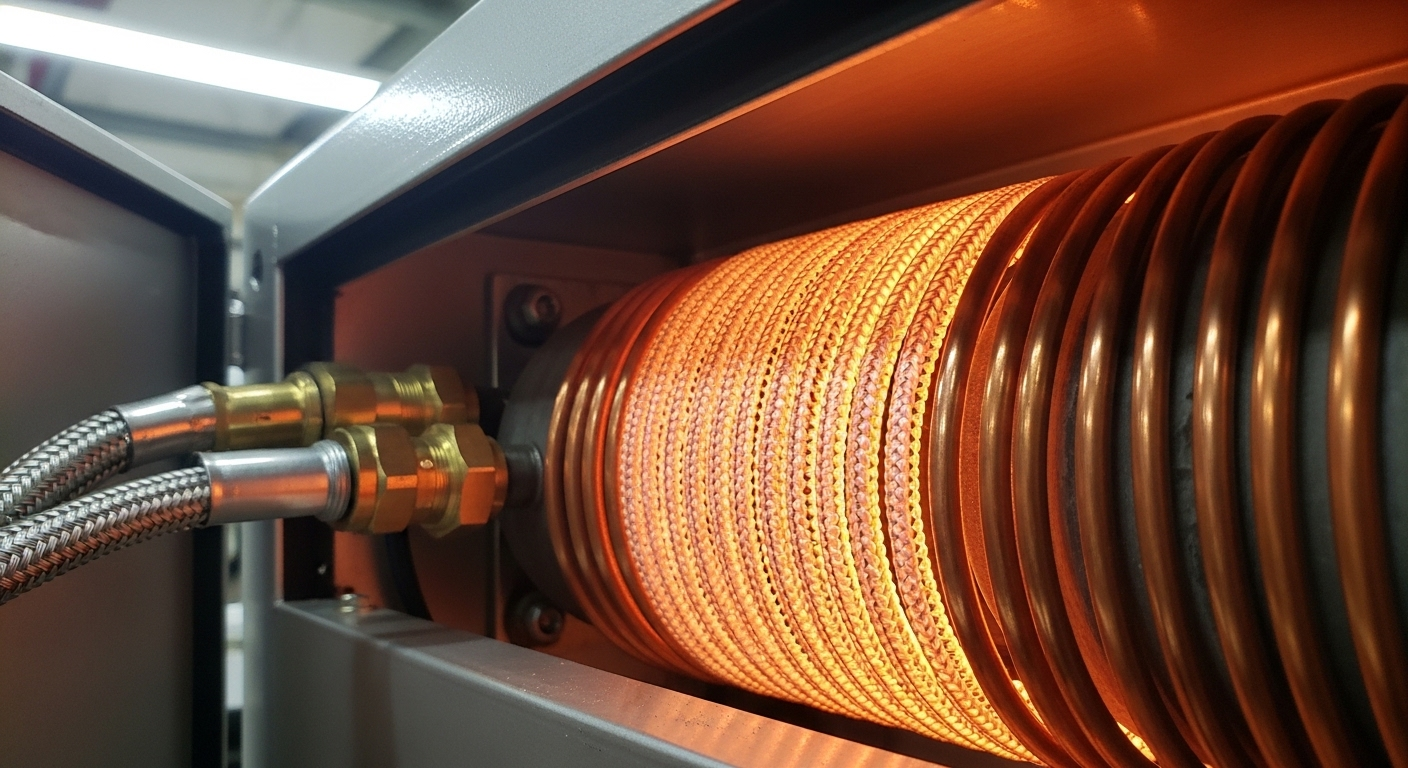
A flash steamer, also known as a once-through steam generator, is a compact steam-producing machine that creates steam only when needed. Instead of heating and storing gallons of water inside a pressure vessel, it rapidly heats a small amount of water as it moves through a heated coil.
The process works similarly to a tankless water heater, except the goal is producing steam rather than hot water.
A flash steamer typically includes:
- A water pump that moves water through the system
- A heating element or burner that transfers heat
- A tightly wound coil where water changes into steam
- A separator that removes excess moisture before steam reaches the application
Because the system does not maintain a large reserve of hot water, it can reach operating pressure quickly.
This design makes flash steamers ideal for businesses that need steam occasionally throughout the day rather than continuously.
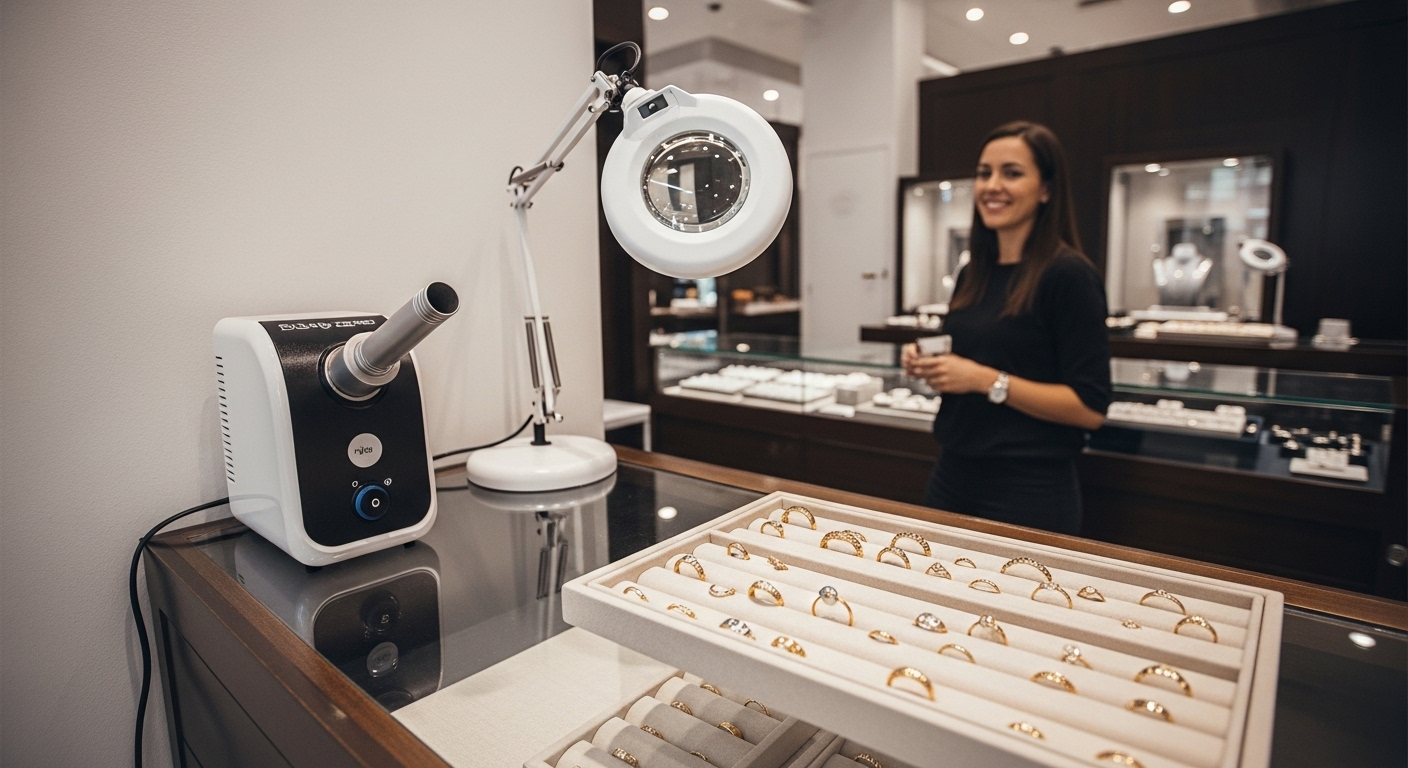
For example, a jeweler may only need steam several times per hour for cleaning pieces, while a hat shaping business may need bursts of steam during production. These applications benefit from equipment that turns on quickly without wasting energy keeping unused water hot.
Hoffman’s jewelry steam cleaning equipment is an example of where compact, high-pressure steam provides practical advantages over a larger boiler system.
Refill Process and Water Tank Capacity on Flash Steamers
One of the most common questions about flash steamers concerns the refill process. Because flash steamers do not store a large volume of water, they use a small reservoir or direct water feed that supplies the heating coil. On a unit like the GEM-III, the operator adds water to a small container, and the machine draws from it as needed. There is no large tank to fill beforehand and no long wait while a tank heats up.
This is a meaningful practical difference. A traditional boiler with a 2 to 6 gallon tank needs that entire volume heated before it reaches operating pressure. The GEM-III, by contrast, heats only the water passing through the coil at that moment.
Practitioners on Reddit (particularly in r/jewelers and r/BenchJewelers) have noted that Hoffman flash steamers can run for extended periods on a single fill, and one user reported using Hoffman equipment for over 24 years before needing a replacement. That kind of longevity speaks to the simplicity of the refill and heating system.
For businesses that want to understand refill options more broadly, Hoffman’s guide on manual fill vs auto fill steam boilers explains how each system works and which is better for different workflows.
What Is a Steam Boiler?
A steam boiler is a pressure vessel designed to heat and store a large amount of water until it produces steam. Unlike a flash steamer, a boiler maintains a steam reserve that can supply equipment continuously.
Traditional boilers are commonly used in industries where steam is a core part of production, including:
- Manufacturing plants
- Food processing facilities
- Hospitals
- Large commercial buildings
- Chemical processing operations
The two most common boiler designs are:
Firetube Boilers
A firetube boiler sends hot combustion gases through tubes surrounded by water. Heat transfers from the tubes into the water, gradually creating steam. Firetube boilers are commonly used for commercial and industrial heating because they are durable and capable of producing large amounts of steam.
Watertube Boilers
A watertube boiler reverses the design. Water flows through tubes that are heated externally by combustion gases. These systems are often used in high-pressure industrial applications where very large steam output is required.
Unlike a flash steamer, a boiler’s strength comes from thermal storage. Once heated, the stored water and steam provide consistent output during heavy demand periods. The tradeoff is that heating a large volume of water requires more startup time and more infrastructure.
Water Tank Capacity and Run Time on Boilers
Tank size directly affects how long a boiler can run before needing attention. A 1 gallon boiler like the Hoffman EVD-1 will run for shorter sessions before needing a refill (if manual fill), while a 6 gallon unit like the JEL11M can sustain steam production for hours without interruption.
For continuous duty applications, auto-fill boilers like the RHPG series connect to a water supply line and replenish automatically, removing run time limits caused by tank capacity. According to the U.S. Department of Energy, boiler efficiency at steady state typically exceeds 80%, but that number drops significantly when a boiler cycles on and off to maintain standby temperature.
This is why tank size and run time matter: a boiler that’s too large for your actual steam demand wastes energy maintaining water temperature you never use. A boiler that’s too small forces frequent refills and recovery cycles.
The Main Difference Between a Flash Steamer and Boiler
The biggest difference in the flash steamer vs boiler comparison comes down to how steam is produced and stored.
A flash steamer creates steam immediately as water passes through the heating coil.
A boiler heats and stores water first, then releases steam from that stored supply.
This creates two completely different operating styles:
Flash steamer = fast response
- Starts quickly
- Produces steam when needed
- Avoids standby heating losses
- Works well for short steam cycles
Boiler = sustained capacity
- Maintains a steam reserve
- Handles large continuous loads
- Supports multiple steam users
- Designed for long operating periods
Neither system is universally better. The correct choice depends on your steam demand pattern.
Steam Output Rate and Wattage: What the Numbers Actually Mean
Many buyers fixate on PSI ratings when comparing a flash steamer vs boiler, but steam output rate and wattage tell a more complete story about what a machine can actually do.
Wattage
Wattage determines how quickly a system converts water into steam. The GEM-III runs at approximately 1,200 to 1,500 watts on a standard 110V outlet, which is enough to produce strong bursts of steam for intermittent tasks. Higher capacity boilers like the RHPG-17 draw significantly more power (often requiring 220V single or three-phase circuits) to sustain continuous steam production.
For businesses operating in retail environments, malls, or shared office spaces, a 110V flash steamer eliminates the need for special electrical work. Hoffman’s guide on 110V vs 220V steamers breaks down how voltage affects both performance and installation.
Steam Output Rate
Steam output rate is typically measured in pounds per hour for boilers. The Hoffman RHPG-17, for example, produces 41 lbs/hour of steam, enough to feed multiple workstations or run continuously throughout a shift.
A flash steamer does not produce steam at a constant rate measured in pounds per hour. Instead, it delivers steam on demand in short, concentrated bursts. For applications like jewelry cleaning (where a few seconds of high-pressure steam is all that’s needed per piece), this burst delivery is actually more practical than a steady flow.
The key question is not “which produces more steam?” but “does the machine match how you actually use steam?” A flash steamer producing 120 PSI on demand can outperform a boiler for a jewelry store, while that same flash steamer would be inadequate for a garment finishing line running eight hours straight.
Dry Steam Quality: Why It Matters for Your Application
Dry steam quality refers to how much moisture remains in the steam when it exits the nozzle. Steam with less moisture (higher dryness fraction) performs better for cleaning, shaping, and finishing because it transfers heat more effectively without leaving water residue.
Flash steamers produce dry steam during active use because water passes through a superheated coil and exits as vapor with minimal liquid content. The tradeoff is that steam quality can vary slightly between bursts, particularly during the first few seconds after the machine fires up.
Boilers, once they reach steady state operation, produce consistent dry steam because the large water volume and pressure vessel design create stable conditions. For applications where steam quality must remain uniform over long periods (like garment pressing lines or industrial processes), a boiler has the edge.
For most small business applications, the dry steam quality from a well-maintained flash steamer is more than adequate. Practitioners in online forums frequently note that flash steamers clean jewelry and shape hats just as effectively as larger boiler systems, as long as the equipment is properly descaled and the water quality is good.
Regular descaling is critical for maintaining dry steam quality on any system. Hoffman’s guide on how to descale a commercial steamer covers best practices.
Surface Compatibility: Flash Steamer vs Boiler
Both flash steamers and boilers produce steam that can be used across a wide range of surfaces and materials. The differences come down to pressure control and application technique, not the steam itself.
Flash steamers work well on:
- Precious metals and gemstones (jewelry cleaning)
- Felt and straw (hat shaping)
- Delicate fabrics (garment finishing)
- Upholstery fabrics
- Hard surfaces (specialty cleaning)
Boilers are commonly used on:
- Heavy fabrics requiring sustained pressing
- Industrial components
- Multi-station garment finishing
- Large-scale surface cleaning
The GEM-III’s foot pedal control gives operators precise control over steam delivery, which matters when working with heat-sensitive materials. A blast of 120 PSI steam is perfectly safe on a gold ring but would damage a silk blouse if applied carelessly. The operator controls the outcome, not the machine type.
For businesses working with delicate fabrics, understanding proper technique matters more than whether you’re using a flash steamer or a boiler.
GEM-III vs Boiler Models: Which Hoffman Steam System Fits Your Business?
When comparing a flash steamer vs boiler, the most important question is not simply “which produces more pressure?” Both systems can produce high-pressure steam. The better question is:
How often do you need steam, how much steam do you need at once, and how long will the equipment run each day?
Hoffman offers both flash steamer and boiler-style solutions, allowing businesses to choose equipment based on their workflow rather than buying more capacity than they actually need.
Hoffman GEM-III Flash Steamer vs Commercial Boiler Comparison
| Model | System Type | Steam Output Style | Pressure | Best For | Key Advantage |
|---|---|---|---|---|---|
| GEM-III Commercial Steamer | Flash Steamer | On-demand steam | Up to 120 PSI | Jewelry, hats, garments, upholstery, specialty cleaning | Fast startup, compact design, no large boiler tank |
| JEL3 Commercial Steamer | Boiler-style steamer | Stored steam capacity | 70 to 90 PSI | Businesses needing longer steam sessions | Larger water capacity for extended operation |
| RHPG-17 Commercial Steam Boiler | Commercial boiler | Continuous steam supply | 41 lbs/hour steam output | Higher-demand commercial applications | Greater steam production capacity |
The GEM-III represents the flash steamer approach: compact, fast, and designed for businesses that need steam throughout the day but do not operate a steam system continuously.
Commercial boiler models provide more stored steam capacity and are better suited for applications where steam demand remains high for extended periods.
Duty Cycle: The Most Important Difference Between Flash Steamers and Boilers
Many businesses choose the wrong steam equipment because they focus only on pressure ratings or maximum output.
The more important factor is duty cycle.
Duty cycle refers to how often and how long equipment operates during a normal workday.
Low-Duty Cycle Applications
A flash steamer is usually the better choice when steam is needed:
- Several times per day
- For a few minutes at a time
- At different points throughout the workflow
- Without predictable continuous demand
Examples include:
- Cleaning jewelry pieces between customers
- Shaping hats during production
- Removing wrinkles from clothing
- Restoring upholstery
- Performing specialty cleaning tasks
In these situations, keeping a large boiler heated all day can waste energy because the equipment spends much of its time maintaining unused steam. A flash steamer eliminates much of this standby loss because it only heats water when steam is required.
Medium-Duty Cycle Applications
Some businesses fall between occasional use and industrial production.
Examples include:
- Tailoring shops
- Costume departments
- Small manufacturing operations
- Multiple-person workshops
These businesses should compare how many hours per day steam is used, how many operators need steam simultaneously, and whether steam demand is continuous or occasional. A larger flash steamer or small boiler system may both work depending on the workflow.
High-Duty Cycle Applications
A traditional boiler becomes the better option when:
- Steam runs for several hours continuously
- Multiple users need steam at the same time
- Production cannot stop while equipment reheats
- Steam demand remains consistent throughout the day
Examples include industrial manufacturing, large-scale processing, and facilities with centralized steam systems. In these cases, the stored steam capacity of a boiler provides stability that a small flash steamer cannot match.
Home vs Commercial Use: Why the Distinction Matters
One of the most common mistakes people make when shopping for steam equipment is comparing commercial flash steamers and boilers against consumer-grade handheld or home steamers. These are fundamentally different categories of equipment.
Consumer and Home Steamers
Consumer steamers (handheld garment steamers, home steam mops, multipurpose cleaners) typically operate at low pressure, often below 15 PSI. They are designed for light household tasks: refreshing a shirt, cleaning a countertop, loosening wallpaper. Their water tanks are small (often under 10 oz), their wattage is low (800 to 1,200W), and their run times are short.
These devices are not built for repeated daily commercial use. They lack the pressure, steam volume, and durability needed for professional applications.
Commercial Flash Steamers and Boilers
Commercial flash steamers like the GEM-III operate at up to 120 PSI, far beyond what any consumer device can produce. Commercial boilers store pressurized water in ASME certified tanks and deliver sustained output measured in pounds per hour.
The distinction is important because searching for “flash steamer” online returns a mix of consumer handheld devices and professional equipment. Hoffman’s guide on commercial vs consumer steamers explains the differences in detail.
The Cheap Pressurized Handheld Pitfall
Buyers on a tight budget sometimes consider cheap pressurized handheld steamers priced between $30 and $150 as alternatives to commercial equipment. This is a false economy that practitioners warn about repeatedly.
These devices share several problems:
- Pressure claims are misleading. Many cheap handhelds advertise pressure in bars at the pump, not at the nozzle. The actual steam pressure at the point of use is a fraction of the advertised number.
- Run time is extremely short. Small tanks (sometimes under 6 oz) mean 5 to 10 minutes of steam before refilling and waiting for reheat.
- Build quality is poor. Plastic components, thin heating elements, and lack of safety certification mean these devices fail quickly under daily use. According to reviews across Amazon and home improvement forums, many cheap pressurized handhelds last less than six months with regular use.
- No safety certification. Commercial equipment from manufacturers like Hoffman carries ASME and UL certification. Cheap handhelds rarely carry any meaningful safety certifications for commercial environments.
- No support or parts. When a $50 handheld breaks, it goes in the trash. Commercial equipment comes with warranties, replacement parts, and technical support.
For a business owner considering a cheap handheld steamer to “test the waters” before investing in commercial equipment, the better path is Hoffman’s 30-day return policy, which effectively functions as a risk-free trial with professional-grade equipment.
Best Use Cases: Flash Steamer vs Boiler
The best equipment choice depends on the application.
When a Flash Steamer Is the Better Choice
A flash steamer is ideal for businesses that need flexibility, speed, and easy operation.
Jewelry Cleaning
Jewelry professionals often need immediate bursts of high-pressure steam throughout the day. A flash steamer eliminates long warm-up periods and allows operators to quickly clean individual pieces. See Hoffman’s jewelry steam cleaning solutions for examples of point-of-use steam applications.
Hat Shaping
Hat makers need controlled steam exactly when shaping and forming materials. Waiting hours for a boiler to reach operating temperature slows production. Hoffman’s hat shaping steamers are designed for this type of specialized workflow.
Retail Clothing and Garment Businesses
Retail stores often need steam for removing wrinkles, preparing inventory, and finishing garments before display. A compact flash steamer avoids dedicating valuable retail space to a large boiler installation. Hoffman’s clothing store steamers are built around this type of quick-response use.
Upholstery and Restoration
Restoration professionals often move between jobs and need reliable steam without complex infrastructure. A portable system provides flexibility for workshops and mobile operations. Hoffman’s upholstery steam solutions demonstrate how flash steam systems support specialized trades.
When a Steam Boiler Is the Better Choice
A boiler is typically the better option when steam is the foundation of daily operations.
Boilers are commonly used for:
- Continuous production lines
- Large-scale cleaning operations
- Industrial processing
- Facilities requiring centralized steam distribution
The advantage of a boiler is not speed. It is endurance. Once fully heated, a boiler can maintain a consistent supply of steam for long periods without interruption.
Flash Steamer vs Boiler Cost Comparison
Cost is not just the purchase price. Businesses should consider equipment cost, installation requirements, energy consumption, maintenance, permitting requirements, and operator requirements.
Cost Range Overview
Here is a realistic picture of what each system costs:
| Equipment Type | Typical Price Range | Installation Complexity |
|---|---|---|
| Consumer handheld steamer | $30 to $150 | Plug in and use |
| Commercial flash steamer (GEM-III) | Around $995 | Minimal, 110V outlet |
| Entry-level commercial boiler (EVD-1) | Around $1,199 | Simple, 110V outlet |
| Mid-range commercial boiler (JEL3) | $1,999 to $2,599 | Moderate, optional 220V |
| Large capacity boiler (JEL11 series) | $4,495 to $7,895 | Requires 220V, plumbing considerations |
| Industrial continuous duty (RHPG series) | $6,999 to $9,499 | Full installation, 220V or three-phase |
The GEM-III at $995 represents one of the lowest entry points for commercial-grade steam equipment. For businesses exploring financing, Hoffman offers 0% APR equipment financing options that spread the cost over time.
Initial Equipment Cost
A flash steamer usually costs less to install because it does not require large pressure vessels, boiler rooms, extensive plumbing, or complex infrastructure.
Boiler systems often require additional expenses beyond the equipment itself, including installation labor, water treatment systems, safety controls, and inspection requirements.
Operating Costs
For intermittent use, a flash steamer has the advantage because it only heats water when needed, avoiding the energy cost of maintaining a hot water reservoir during idle periods.
For continuous use, a properly sized boiler can operate efficiently when demand remains constant because it is designed for sustained production.
Maintenance Costs
Flash steamers generally require regular descaling, water quality monitoring, and coil maintenance.
Boilers typically require water treatment, blowdown procedures, pressure vessel inspections, and more extensive servicing.
Businesses should choose based on actual usage rather than selecting the largest available system.
Flash Steamer vs Boiler Permits: Do You Need Approval?
One of the biggest practical differences between a flash steamer and boiler is regulatory complexity.
Traditional boilers are pressure vessels and may require:
- Installation permits
- Regular inspections
- Certified operators
- Documentation requirements
Requirements vary by location, pressure rating, and local regulations. Hoffman’s guide on boiler permit requirements provides a detailed overview for small business owners.
Flash steamers often have simpler compliance requirements because they do not store large amounts of pressurized water. The Hoffman GEM-III is designed as a compact flash steam system that avoids many of the installation challenges associated with larger boiler systems.
Energy Efficiency: Flash Steamer vs Boiler
Energy efficiency depends heavily on how a business uses steam. The most efficient system is not always the one with the lowest energy rating. It is the one that matches the operating pattern.
Flash Steamer Efficiency
A flash steamer is typically more efficient for intermittent applications because it does not maintain a large volume of hot water.
Energy advantages include:
- No long warm-up period
- Minimal standby heat loss
- Steam produced only when needed
- Less wasted energy during idle periods
For businesses that use steam in short bursts throughout the day, a flash steamer can reduce unnecessary energy consumption. A jeweler who uses steam for a few minutes between customer jobs does not need a large boiler maintaining operating temperature for eight hours.
Boiler Efficiency
A boiler becomes more efficient when it operates continuously under a steady load. Once heated, the stored thermal energy inside a boiler allows it to respond to consistent demand without repeatedly starting and stopping.
Boilers are designed for long operating hours, stable steam demand, multiple simultaneous steam users, and large production environments.
The key takeaway: Flash steamers are usually more efficient for intermittent steam demand. Boilers are usually more efficient for continuous steam demand.
Safety Comparison: Flash Steamer vs Boiler
Safety is another important consideration when comparing a flash steamer vs boiler. Both systems require proper installation, operation, and maintenance, but their designs create different safety considerations.
Flash Steamer Safety Advantages
A flash steamer contains a relatively small amount of water at any given time. This design provides advantages such as lower stored energy, reduced water volume under pressure, compact construction, and easier placement near the point of use.
Because there is no large steam drum or water reservoir, flash steamers avoid some of the risks associated with large pressure vessels.
Boiler Safety Considerations
Traditional boilers are engineered with extensive safety controls, but they require more management because they store significant amounts of pressurized water and steam.
Boiler systems typically require pressure controls, safety valves, regular inspections, proper water treatment, and trained operators. Hoffman’s steam safety orientation guide covers the basics every commercial steam operator should know.
For businesses that need industrial-scale steam, these requirements are necessary. However, smaller businesses may prefer equipment with a simpler operating profile.
Maintenance Requirements: Flash Steamer vs Boiler
Maintenance requirements are another area where the two systems differ.
| Maintenance Task | Flash Steamer | Steam Boiler |
|---|---|---|
| Descaling | Important due to smaller water passages | Required due to water treatment needs |
| Water Quality | Important to prevent mineral buildup | Critical for preventing corrosion and scale |
| Blowdown | Usually minimal | Regular blowdown often required |
| Inspections | Generally simpler | More frequent compliance inspections |
| Service Complexity | Lower | Higher |
Flash Steamer Maintenance
The main maintenance concern with a flash steamer is mineral buildup inside the heating coil. Regular maintenance includes using proper water quality, descaling when necessary, checking connections, and inspecting steam output. Because the system is compact, servicing is generally straightforward.
Boiler Maintenance
Boilers require a more structured maintenance program. Common requirements include monitoring water chemistry, removing dissolved solids, checking pressure controls, inspecting safety equipment, and maintaining combustion systems.
For large facilities, these maintenance requirements are part of normal operations. For smaller businesses, they can add unnecessary complexity.
How to Choose Between GEM-III and a Boiler
The best choice depends on four questions:
1. How Quickly Do You Need Steam?
Choose a flash steamer if you need steam within minutes, you cannot wait for boiler startup, or steam demand changes throughout the day.
Choose a boiler if equipment runs continuously, startup time is less important, or steam availability must remain constant.
2. How Long Will You Use Steam Each Day?
| Daily Steam Usage | Recommended System |
|---|---|
| Minutes to a few hours | Flash steamer |
| Several hours with changing demand | Larger flash steamer or small boiler |
| Continuous daily production | Boiler |
3. How Much Space Do You Have?
Flash steamers are ideal when space is limited. They can often be installed near the workstation, inside retail environments, or in small workshops.
Boilers usually require dedicated installation space, additional plumbing, safety clearances, and infrastructure planning.
4. Do You Want Simpler Installation?
Businesses often choose flash steamers because they want a steam solution without the complexity of a traditional boiler installation. The GEM-III provides commercial steam capability while avoiding many of the challenges associated with larger systems.
Flash Steamer vs Boiler: Which One Should You Buy?
There is no universal winner in the flash steamer vs boiler comparison. The correct choice depends on your workflow.
Choose the Hoffman GEM-III flash steamer if you need:
- Fast steam startup
- Compact equipment
- On-demand operation
- Lower standby energy usage
- Steam for specialized applications
- Easier installation
- A 110V plug-and-play solution
Choose a commercial boiler system if you need:
- Continuous steam production
- Higher sustained output
- Multiple steam users
- Long operating cycles
- Consistent dry steam quality over hours of use
For most specialty businesses, workshops, and retail operations, a flash steamer provides the flexibility and speed needed without investing in a large boiler system. For industrial operations, a properly sized boiler remains the better solution.
Find which steamer is right for you using Hoffman’s guided selection tool.
Frequently Asked Questions About Flash Steamer vs Boiler
Can a flash steamer replace a boiler?
A flash steamer can replace a boiler for many small and medium commercial applications where steam is needed intermittently. Examples include jewelry cleaning, hat shaping, garment finishing, and specialty cleaning. However, a flash steamer is not designed to replace a large industrial boiler supplying continuous steam to multiple processes.
Which is better: a flash steamer or a boiler?
Neither system is better for every application. A flash steamer is better when you need fast startup, portable equipment, or intermittent steam. A boiler is better when you need continuous steam, large output capacity, or industrial reliability. The correct choice depends on steam demand rather than pressure rating alone.
How fast does a flash steamer produce steam?
A flash steamer can typically produce steam within 5 to 10 minutes because it heats only a small amount of water as it passes through the system. This is one of the biggest advantages of a once-through steam generator compared with a traditional boiler, which may take 1 to 4 hours to reach full operating pressure.
Does the GEM-III require a boiler permit?
Permit requirements depend on local regulations and equipment classification. Because flash steamers do not store large amounts of pressurized water like traditional boilers, they often have simpler regulatory requirements. Businesses should always confirm requirements with local authorities before installation.
Is a flash steamer cheaper than a boiler?
For many small businesses, a flash steamer has a lower total cost because it usually requires less installation work, less infrastructure, lower standby energy use, and simpler maintenance. The GEM-III is priced at $995, while commercial boilers range from about $1,200 to over $9,000 depending on capacity. A boiler may have a higher upfront and installation cost but can be more economical for continuous high-volume steam production.
What PSI does the Hoffman GEM-III produce?
The Hoffman GEM-III flash steamer is rated up to 120 PSI, providing high-pressure steam for applications requiring strong cleaning and shaping performance. For businesses comparing options, pressure is only one factor. Steam volume, duty cycle, wattage, and operating pattern are equally important when choosing between a flash steamer and boiler.
What wattage do commercial steamers typically use?
Flash steamers like the GEM-III typically use 1,200 to 1,500 watts on 110V circuits. Entry-level boilers often run at similar wattage on 110V, while larger commercial boilers require 220V circuits drawing 3,000 to 6,000+ watts. Higher wattage means faster steam recovery and greater sustained output, but also requires appropriate electrical infrastructure.
Can a flash steamer clean all the same surfaces as a boiler?
Yes, both systems produce steam that works on the same range of materials. The difference is in how long and how consistently they can deliver that steam. For short-burst applications (jewelry, hats, spot cleaning), a flash steamer is ideal. For extended pressing or continuous cleaning lines, a boiler provides more consistent results over time.
Final Takeaway: Flash Steamer vs Boiler
The flash steamer vs boiler decision comes down to how your business uses steam.
A flash steamer like the Hoffman GEM-III is built for speed, flexibility, and on-demand steam. It is ideal for businesses that need powerful steam without running equipment continuously. Its low wattage requirements, minimal water tank, fast refill process, and strong dry steam output make it the right choice for the majority of small and medium commercial applications.
A traditional boiler is built for endurance. It is the better choice when steam demand is constant, large, and production depends on uninterrupted output.
Avoid the temptation of cheap pressurized handheld devices. They cannot deliver commercial-grade pressure, run time, or reliability, and they carry no meaningful safety certifications.
Understanding your duty cycle, application, installation needs, and operating costs will help you choose the right steam system.
Compare the Hoffman GEM-III and commercial boiler options to find the steam solution that fits your workflow.


