

TL;DR
Boutique owners who steam every garment before display see measurable gains in perceived value, customer satisfaction, and sales. This garment steamer boutique case study glossary defines every term you need to understand, from PSI and ASME certification to flash steamers and continuous duty boilers, while walking through a practical framework for choosing the right equipment. The gap between a $30 handheld and a commercial-grade boiler is enormous, and picking wrong costs time and money every single day.
Why a Garment Steamer Boutique Case Study Starts with Vocabulary
The garment steamer market was valued at $3.01 billion in 2023 and is projected to reach $4.46 billion by 2030. Commercial adoption in fashion outlets, hotels, and retail spaces now accounts for over 35% of overall demand. Yet most boutique owners make their first steamer purchase based on Amazon reviews for consumer handhelds, only to discover months later that they need something entirely different.
That confusion is the problem this guide solves. Before you can evaluate a garment steamer boutique case study, whether it’s your own or someone else’s, you need a shared vocabulary. The terms below are drawn from real boutique workflows, practitioner experience, and the technical distinctions that separate hobby tools from commercial equipment.
If you want a companion overview of commercial steamer models, the commercial garment steamer guide covers product tiers in detail.
Core Steamer Types Every Boutique Owner Should Know
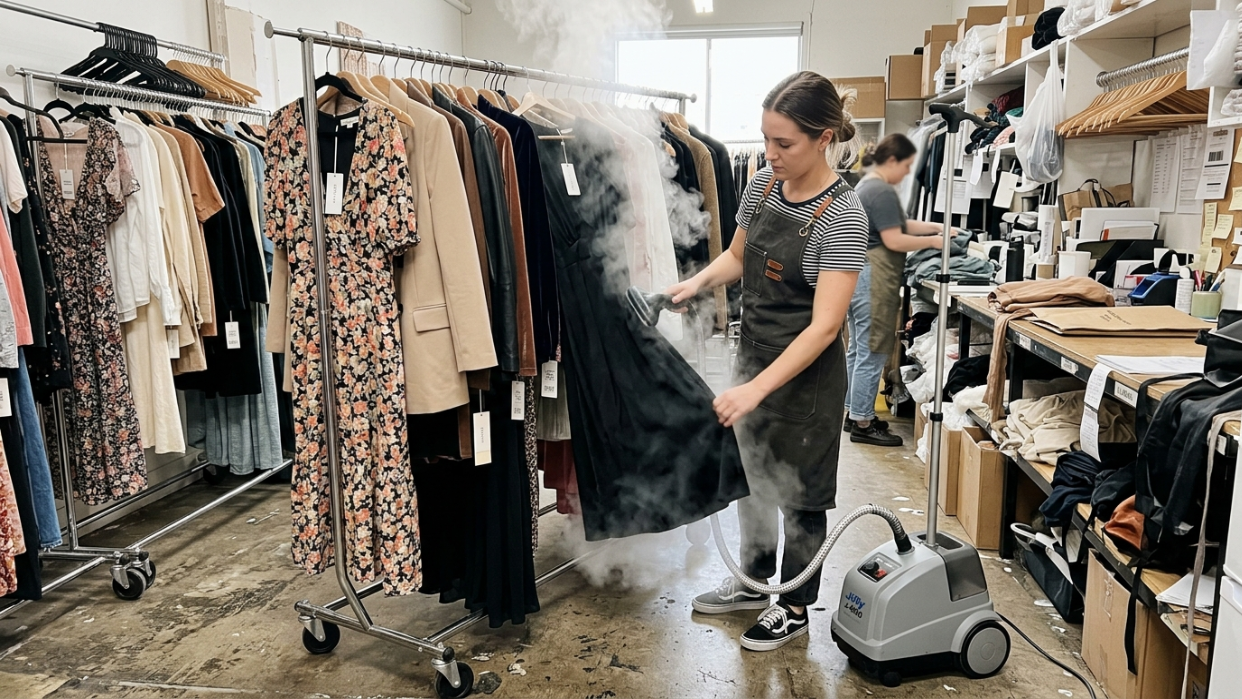
Boiler (Electric Steam Boiler)
A sealed pressure vessel that heats water under pressure to produce steam at temperatures well above 212°F. Electric steam boilers for boutique and retail use come in manual-fill and auto-fill configurations, with capacities ranging from 1 to 6 gallons. Models operating above 15 psig typically require ASME certification.
Boutique context: A boiler-based system is what distinguishes commercial steaming from the consumer experience. When a downtown boutique processes 40 garments each morning before opening, an electric steam boiler delivers the pressure and volume to get through that workload without interruption. For a deeper look at manual-fill versus auto-fill trade-offs, see this manual vs. auto-fill comparison.
Flash Steamer
A non-pressurized steamer that heats water on demand rather than storing pressurized steam in a tank. Flash steamers require no boiler permits, making them well suited for mall environments and retail storefronts where building codes restrict pressurized equipment.
Boutique context: Flash steamers sit in the sweet spot between consumer uprights and full commercial boilers. They’re a strong fit for boutiques doing quick touch-ups on the sales floor or in a small back room. The key trade-off is lower steam pressure compared to a boiler-based system. If you’re weighing these two categories, the flash steamer vs. boiler guide breaks down the differences.
Garment Steamer (Consumer)
A handheld or upright appliance that produces steam at atmospheric pressure (0 PSI, 212°F max). Consumer garment steamers range from 700 to 1,600 watts with small water reservoirs. They’re designed for home use or very light-duty retail applications of 1 to 5 garments per day.
Boutique context: Consumer handhelds are the most common starting point for new boutique owners. They work fine for occasional touch-ups, but their limitations show quickly under daily retail use. Malena, a vintage boutique owner with decades of experience, warns that handheld steamers have a “heating element [that] is much smaller than their free-standing cousins so the steam output is not as strong. This can contribute to longer steam times and water droplets which can damage clothing.”
Garment Steamer (Commercial)
A pressurized, boiler-based steaming system that operates at 40 to 90 PSI and produces steam at 300°F or higher. Commercial garment steamers are built for continuous duty and used in high-volume clothing stores, dry cleaners, and fashion production environments.
Boutique context: This is the category that most garment steamer boutique case study analyses point to as the turning point. When a store moves from consumer to commercial equipment, the workflow shift is dramatic: faster wrinkle removal, no waiting for reheat cycles, and the ability to steam heavy fabrics that consumer units struggle with. For more on how commercial steam equipment differs from other cleaning tools, the commercial steamer vs. carpet extractor comparison is a useful reference.
Handheld Steamer
A compact, portable steamer weighing 1 to 3 pounds with a small onboard water tank. Typical wattage runs 700 to 1,600W. Heat-up time is fast (15 to 45 seconds), but steam output is limited to roughly 18 to 26 grams per minute.
Boutique context: Practitioners on retail forums are blunt about handhelds in a store setting. One forum commenter noted: “I would buy a high output commercial steamer. I used to work retail and they worked great and were used a lot and rarely went kaput.” Handhelds are travel tools, not production tools.
Upright Steamer
A floor-standing garment steamer with a 1 to 3 gallon water tank, a pole, and a hose attachment. The Jiffy J-2 is the archetype of this category: roughly 1,300 watts, atmospheric pressure, and 2+ hours of continuous run time per fill.
Boutique context: Upright steamers are the workhorse of small boutiques steaming 10 to 25 garments per day. One boutique owner on a Wayfair review noted: “Ive had this steamer for a year now and every time I use it it amazes me. Im a boutique owner so this is definitely something very useful for me.” A member of The Fedora Lounge forum reported using a Jiffy J-2 for 12 years with no issues, adding that “it paid for itself a long time ago both in saved time and lower dry cleaning bills.”
Browse commercial steamer models to see where each tier falls in terms of price and capability.
Technical Specs That Matter for Boutiques
ASME Certification
The American Society of Mechanical Engineers sets standards for pressure vessels. Any steam boiler operating above 15 psig may trigger ASME Section I compliance requirements. ASME certification means the vessel has been designed, manufactured, and inspected to meet rigorous safety standards.
Boutique context: This isn’t an abstract regulatory detail. Many commercial landlords and insurance policies require ASME-certified equipment for pressurized steam applications. If your boutique is in a multi-tenant retail space or a mall, ask your landlord about this before purchasing. Read the commercial steam boiler safety guide for a full overview.
Continuous Duty
The ability to run all day without mandatory cooldown periods. A continuous duty steamer maintains operating temperature and pressure throughout a full work shift.
Boutique context: If your store steams 50 or more garments daily, continuous duty is not optional. A costume house professional on The Fedora Lounge described steaming costumes “up to 4 times a day (on matinee days)” over six years of heavy daily use, replacing only one unit during that period, and that was because someone dropped it down stairs.
Heat-Up Time
The time from a cold start to operational steam output. Consumer handhelds heat up in 15 to 45 seconds. Upright steamers take 1 to 3 minutes. Commercial boilers need several minutes to reach operating pressure but then run continuously once hot.
Boutique context: Heat-up time matters most for the first steam of the day. After that, a well-chosen commercial steamer stays hot. One boutique owner recommended the Jiffy brand specifically because “it heats up freaky fast and gets the job done efficiently.”
PSI (Pounds per Square Inch)
The operating pressure of steam inside the vessel. Non-pressurized steamers (consumer handhelds, uprights, flash steamers) operate at essentially 0 PSI and 212°F. Commercial boilers produce 40 to 90 PSI at temperatures exceeding 300°F.
Boutique context: Higher PSI means steam penetrates fabric faster and more completely. For heavy fabrics like wool coats, denim, or multiple layers, the difference between 0 PSI and 70 PSI is the difference between minutes of work and seconds. One commercial equipment source notes that the gap between 60 PSI and 90 PSI is “a big difference when you need heavy duty cleaning and need more pressure to do it.” For a deeper look, the PSI guide for commercial steamers walks through pressure selection in detail.
Steam Output (Grams per Minute)
The volume of steam delivered to the fabric per minute. Consumer handhelds typically produce 18 to 26 grams per minute. Commercial boilers produce significantly more, which translates directly into faster wrinkle removal and shorter per-garment processing times.
Boutique context: When you’re steaming 30 garments before opening and another 15 throughout the day, the difference between 20 g/min and 50+ g/min adds up to hours per week.
UL Listing
Underwriters Laboratories certification indicating that a product has been tested to U.S. safety standards. UL listing is separate from ASME certification and covers electrical safety rather than pressure vessel integrity.
Boutique context: Both ASME and UL certifications matter for commercial insurance compliance. Having both means your equipment meets the highest recognized safety standards in the United States.
Wattage and Voltage
Power draw determines how much energy the steamer consumes and what electrical circuit it requires. Most boutique-friendly models run on standard 110V outlets. Higher-powered commercial boilers may require 220V circuits, typically installed in back-of-house areas or production environments.
Boutique context: Check your store’s electrical panel before ordering. A 110V unit plugs into any standard outlet, which makes it ideal for sales floor or small back room use. A 220V unit delivers more power but needs a dedicated circuit, similar to what a commercial dryer uses. The 110V vs. 220V steamer guide covers this in full.
Boutique Workflow Terms
Garment Finishing
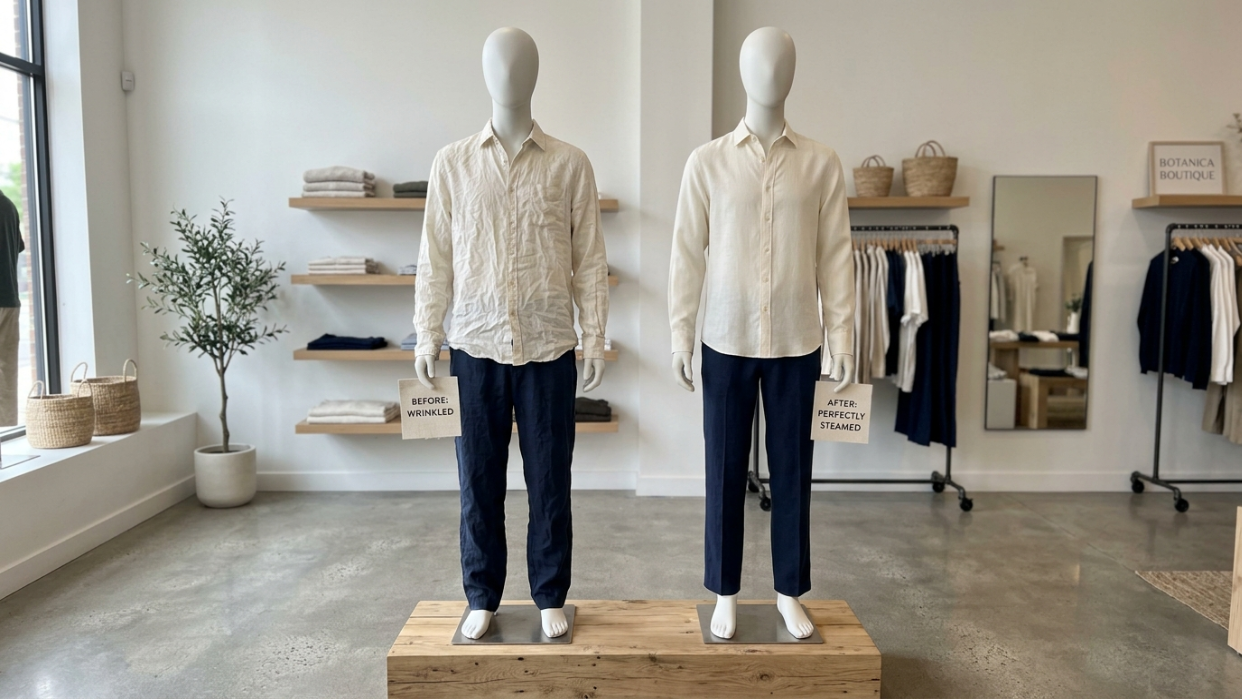
The process of steaming or pressing garments to sale-ready condition before placing them on the floor. Garment finishing is the final step between receiving inventory and displaying it, and it directly affects how customers perceive your merchandise.
Boutique context: A merchandising guide from SweetKama puts it plainly: “A commercial-grade steamer is one of the most valuable tools in a boutique. Steam every single item to release wrinkles and give the fabric a fresh, luxurious drape. This small step elevates the perceived value of your apparel immensely.” This single practice, steaming every item before it hits the rack, is the most common finding in any garment steamer boutique case study.
Steamer vs. Iron
Two different finishing tools suited to different garment types. Steamers excel at delicate fabrics, vertical touch-ups, and speed. Irons deliver the pressure needed for sharp creases, heavy cotton, and structured pieces like blazers and dress shirts.
Boutique context: Most boutiques need both, but the steamer handles 80% or more of daily work. As one garment care guide notes, “structured pieces like blazers get their crisp look back faster under an iron’s pressure. On the flip side, quick touch-ups or sensitive materials often find their best friend in a steamer.”
Visual Merchandising (and Steam’s Role)
Visual merchandising is the practice of designing store displays to maximize customer engagement and sales. Steaming is a core part of daily VM routines, alongside rotating layouts, cleaning mannequins, and adjusting lighting.
Boutique context: PlanoHero lists steaming clothes as part of the daily routine of a visual merchandising specialist. Wrinkled garments on a mannequin or front-facing display communicate carelessness to the customer, even subconsciously. Steaming is not a luxury in retail; it’s maintenance.
Wrinkle Prevention
Hanger selection, rack spacing, and storage practices that reduce the amount of steaming needed each day. Using appropriate hanger shapes, avoiding overcrowding on racks, and storing folded items with tissue between layers all minimize wrinkle formation.
Boutique context: Prevention doesn’t eliminate steaming, but it reduces the daily workload. A boutique that spaces garments properly on the rack might steam 20 items per morning instead of 40.
Business and Operational Terms
Case Study (in Steamer Context)
A documented example of a boutique’s steamer adoption, including the equipment chosen, workflow changes, and measurable business outcomes. A proper garment steamer boutique case study tracks metrics like garments steamed per day, labor hours saved, equipment lifespan, and impact on customer perception or sales.
Boutique context: Most online “case studies” are really testimonials. A true case study includes before-and-after data, the decision criteria used, and the outcomes measured. Section 5 of this guide provides a framework for building your own.
Descaling and Blowdown
Routine maintenance procedures that remove mineral buildup from the boiler’s heating elements and tank interior. Descaling involves using a cleaning solution to dissolve mineral deposits. Blowdown is the process of flushing water and sediment from the boiler under pressure.
Boutique context: Mineral buildup is the single biggest threat to steamer longevity. Malena’s Vintage Boutique insists on one rule above all others: “Use distilled water only.” Distilled water contains no minerals, which dramatically extends the interval between descaling procedures.
Garment Steamer ROI
A straightforward calculation: equipment cost divided by daily time saved, multiplied by your labor rate, equals your payback period. Factor in reduced dry cleaning outsourcing, fewer damaged garments from consumer-grade units, and the revenue impact of better-presented merchandise.
Boutique context: A $1,200 commercial steamer that saves 30 minutes per day at a $20/hour labor rate pays for itself in about 120 working days, roughly six months. That math gets even better when you account for the garments you no longer send out for professional pressing.
Protection Plan and Maintenance Program
Service contracts that include scheduled consumable shipments, inspections, loaner units during repairs, and (in some cases) factory reconditioning. These programs turn unpredictable repair costs into a fixed monthly expense.
Boutique context: For a boutique that depends on its steamer every day, downtime is the real cost. Programs that include loaner machines eliminate that risk entirely.
Trade-Specific Bundle
Pre-configured equipment packages designed for specific industries. Instead of buying a boiler, hose, attachments, and accessories separately, a trade-specific bundle arrives ready to use. Hoffman Steam offers bundles specifically configured for clothing stores, hat shops, upholstery businesses, and other trades.
Steamer Type Comparison for Boutiques
Feature | Consumer Handheld | Consumer Upright | Flash Steamer | Commercial Boiler |
|---|---|---|---|---|
PSI | 0 (atmospheric) | 0 (atmospheric) | 0 (non-pressurized) | 40 to 90 PSI |
Max Temperature | 212°F | 212°F | 212°F | 300°F+ |
Run Time | 5 to 15 minutes | 1 to 2+ hours | Continuous (on-demand) | Continuous |
Best For | Travel, 1 to 5 garments/day | Small boutiques, 10 to 25/day | Mall retail, quick touch-ups | High-volume stores, 50+/day |
Typical Price | $25 to $100 | $100 to $300 | ~$1,000 | $1,200 to $10,000+ |
Boiler Permit Needed | No | No | No | Depends on PSI and jurisdiction |
ASME/UL Certified | No | No | Varies | Yes (Pro models) |
Building Your Own Garment Steamer Boutique Case Study
No single narrative applies to every boutique. Instead, here is a framework for evaluating what steamer category fits your operation and documenting the results.
Step 1: Assess Your Daily Volume
Count how many garments you steam on a typical day. Include new inventory processing, customer returns that need refreshing, and display garments that need daily touch-ups. Be honest about peak days (new shipment arrivals, seasonal resets).
1 to 10 garments/day: A consumer upright may suffice.
10 to 30 garments/day: A flash steamer or entry-level commercial boiler.
30+ garments/day: A pressurized commercial boiler with continuous duty capability.
Step 2: Identify Your Fabric Mix
Lightweight fabrics like silk, chiffon, and polyester blends respond well to low-pressure steam. Heavy fabrics like wool, denim, and structured suiting benefit enormously from the penetrating power of 40+ PSI steam. A boutique specializing in vintage workwear has different needs than one selling contemporary women’s fashion.
Step 3: Check Your Space and Electrical Capacity
Mall locations often restrict pressurized equipment, making a flash steamer the practical choice. Standalone storefronts with dedicated back rooms can accommodate full boiler setups. Verify whether your space has 110V only or also has 220V circuits available.
Step 4: Calculate Your ROI
Use this formula:
Equipment Cost ÷ (Daily Time Saved × Hourly Labor Rate × Working Days/Month) = Months to Payback
Add secondary savings: reduced dry cleaning bills, fewer garments damaged by dripping consumer handhelds, improved sell-through from better presentation.
Step 5: Document Before and After
A real garment steamer boutique case study requires data. Track these metrics for 30 days before your upgrade and 30 days after:
Minutes spent steaming per day
Number of garments processed
Customer comments on merchandise presentation
Dry cleaning or outsourced pressing costs
Equipment downtime or reliability issues
This data turns your experience into a case study that can justify the investment to a business partner, landlord, or accountant.
Nearly 50% of buyers now prefer appliances that preserve fabric quality and extend clothing life. That preference shows up in how customers respond to well-steamed merchandise versus wrinkled items straight from the shipping box.
Why Commercial Equipment Wins in Boutique Case Studies
Every garment steamer boutique case study that tracks long-term outcomes arrives at the same conclusion: commercial-grade equipment costs more upfront and costs less over time.
A men’s clothing store reviewer on Wayfair reported: “We use it every day in our men’s clothing store! That’s a lot of steaming, folks!” That kind of daily usage destroys consumer-grade equipment within months. Commercial boilers, by contrast, are built for exactly this kind of workload.
The longevity data from practitioners is striking. On The Fedora Lounge forum, a costume house professional reported six years of heavy daily use from a single unit, steaming costumes up to four times per day on matinee days. In Reddit communities like r/jewelers, users have reported running Hoffman equipment for 30 years, with one user’s first unit lasting 24 years before needing replacement.
The commercial sector of the garment steamer market is growing at 5.67% annually through 2030, driven by exactly this kind of adoption in retail, hospitality, and fashion production.
Frequently Asked Questions
What steamer do most boutique owners use?
Small boutiques commonly start with consumer upright steamers like the Jiffy J-2, which operates at atmospheric pressure and offers 2+ hours of continuous steaming. Boutiques processing 30 or more garments daily typically upgrade to commercial-grade boiler systems that deliver 40 to 90 PSI for faster, more thorough results.
How many garments per day justifies a commercial steamer?
The threshold varies by fabric type, but most garment steamer boutique case study analyses suggest that once you consistently steam 20 or more garments per day, the time savings and reliability of commercial equipment justify the higher purchase price. The payback period is typically six months or less.
Can I use a flash steamer in a mall location?
Yes. Flash steamers are non-pressurized and heat water on demand rather than storing pressurized steam. They require no boiler permits, making them compliant with most mall and multi-tenant building codes. They’re one of the most popular choices for retail environments with space or regulatory constraints.
Why does PSI matter for steaming clothes?
Higher PSI means steam penetrates fabric faster and more completely. A consumer steamer at 0 PSI and 212°F works fine for lightweight blouses. But heavy fabrics like denim, wool coats, or layered garments benefit from commercial boilers operating at 40 to 90 PSI and temperatures above 300°F, cutting steaming time from minutes to seconds per garment.
Do I need ASME certification for my boutique’s steamer?
It depends on the operating pressure and your local jurisdiction. Pressurized vessels above 15 psig generally trigger ASME compliance requirements. Beyond the regulatory question, many commercial landlords and insurance providers require ASME and UL certified equipment. Check your lease and insurance policy before purchasing.
How long do commercial garment steamers last?
With proper maintenance (distilled water, regular descaling), commercial steamers routinely last 10 to 20+ years. Forum practitioners report 12 years on consumer upright models and well over 20 years on commercial boilers under daily heavy use.
Should I use a steamer or an iron for my boutique?
Both have a role. Steamers handle the majority of daily work: delicates, touch-ups, vertical steaming on hangers, and speed processing of new inventory. Irons are better for crisp creases on dress shirts, structured blazers, and heavy cotton. Most boutiques use a steamer for 80% or more of their finishing work.
What water should I use in my garment steamer?
Distilled water, always. Tap water contains minerals that build up on heating elements and inside the tank, reducing performance and eventually causing damage. Every experienced practitioner, from vintage boutique owners to costume house professionals, insists on distilled water as the single most important maintenance practice.
Ready to match the right commercial steamer to your boutique’s daily workflow? Explore Hoffman’s clothing store bundles to see equipment packages configured specifically for retail garment finishing.


