

For hat shops, western wear retailers, and custom milliners, offering expert hat shaping isn’t just a service. It’s a cornerstone of the business. A perfectly creased crown or a crisply reshaped brim can restore a vintage classic, customize a new purchase, or salvage valuable inventory. This hat shaping steamer guide covers the professional techniques, commercial grade equipment, and steamer types required to deliver consistent, high quality results that build customer loyalty and strengthen your reputation.
Direct Answer: How to Shape a Hat with a Steamer
Apply high pressure steam to the felt or straw for 10 to 15 seconds until the fibers become pliable. Use a commercial grade boiler to ensure “dry” steam, which prevents water spotting. Once softened, use hat blocks or manual pressure to mold the crown and brim. Allow the hat to cool and dry completely for at least 2 to 4 hours (overnight is best) to lock the fibers into their new shape.
The Principles of Professional Hat Shaping
Hat shaping uses a controlled application of steam (heat and moisture) and pressure to relax and reset the natural fibers in materials like wool felt or straw. When steamed, the fibers become pliable, allowing a skilled hand to mold the hat into a new form. As the hat cools and dries, the fibers lock into their new position, creating a durable and lasting shape.
Mastery of this process depends on understanding the material. High quality wool felt becomes soft and workable in seconds under high pressure steam, while straw requires a more delicate touch to avoid brittleness. A critical step in any hat shaping steamer guide is identifying the material before applying steam. Synthetic felts (polyester or acrylic) can warp or melt under direct heat, making material identification essential to prevent irreversible damage.
For a deeper comparison of how steam affects different hat materials, see our guide on steam settings for felt vs. straw hats.
Hat Steamer Types: Choosing the Right Steam Source
Not all steamers generate steam the same way, and the type you choose will directly affect your results. Understanding the differences between hat steamer types is essential before investing in equipment for your shop. This section of the hat shaping steamer guide breaks down every major category.
Commercial Steam Boilers
These are the gold standard for professional hat shaping. A commercial boiler heats water under pressure inside a sealed tank to produce consistent, high pressure, dry steam. “Dry” steam is the key phrase here. It means the output contains minimal water droplets, which is what prevents spotting on delicate felt and straw. Boilers typically operate between 40 and 90 PSI, and they can run continuously throughout a workday.
Practitioners on Reddit (particularly in r/cowboyboots and western wear communities) consistently recommend dedicated boiler systems over consumer alternatives, noting that the steam quality difference is immediately obvious in the finished product.
Explore Hoffman’s hat shaping steamer bundles for a turnkey station ready for daily use.
Flash Steamers
A flash steamer (sometimes called an “instant” steamer) heats water on demand rather than storing it under pressure in a tank. Water passes over a superheated element and converts to steam almost instantly. These units are compact, require no boiler permits, and heat up in seconds rather than minutes.
Flash steamers work well on retail floors and at pop up events where portability matters and volume is moderate. They produce lower pressure steam than a full boiler, so they’re best suited for light reshaping and touch ups rather than heavy duty crown restructuring.
Steam Kettles
The steam kettle is the oldest and simplest method for generating steam for hat work. It’s literally a kettle of boiling water producing open steam. Some hobbyists and very small operations still use a steam kettle approach, holding the hat over the rising vapor.
The drawbacks are significant for any commercial setting. There’s no pressure control, no directed nozzle, and the steam is extremely wet, which increases the risk of water spotting and uneven results. Steam kettles also pose burn hazards since there’s no foot pedal, no directed flow, and no safety shutoff. For professional use, a steam kettle should be considered a starting point that businesses quickly outgrow.
Handheld Steamers
A handheld steamer is what most people picture when they think of garment care. These consumer devices produce low pressure steam from a small water reservoir. They’re inexpensive and widely available.
For professional hat shaping, a handheld steamer falls short in several ways. The steam pressure is too low to penetrate heavier felt quickly, the output is often wet enough to cause spotting, and the units aren’t built for continuous duty cycles. One YouTube walkthrough from a western wear shop owner demonstrated the difference side by side: the commercial boiler softened a 10X beaver felt in about 6 seconds, while a consumer handheld steamer took over 30 seconds and left visible moisture marks. Our guide on commercial vs. consumer garment steamers breaks down these differences in detail.
Upright Steamers
An upright steamer (also called a standing or floor steamer) is essentially a larger version of a handheld unit, with a bigger water tank mounted on a pole or base. These are common in clothing retail for steaming garments on hangers. While they generate steam more consistently than a handheld device, they still operate at low pressure without the “dry” steam output of a true boiler. For occasional light hat work in a clothing boutique, an upright steamer can manage minor touch ups, but it won’t deliver the precision or speed needed for dedicated hat shaping services.
Steam Generator Irons
A steam generator iron pairs a pressurized base unit with a connected iron. These are popular in tailoring and dry cleaning for pressing garments. While they do generate steam at higher pressure than a handheld unit, the steam is delivered through a flat iron plate rather than a focused nozzle, making them poorly suited for three dimensional hat work. A steam generator iron has its place in garment finishing, which is covered in our comparison of steam irons vs. steam boilers for tailoring, but it’s the wrong tool for crown and brim shaping.
Steamer Type Comparison for Hat Shaping
| Steamer Type | Steam Quality | Pressure | Hat Shaping Suitability | Best Use Case |
|---|---|---|---|---|
| Commercial Boiler | Dry, consistent | 40 to 90 PSI | Excellent | Dedicated hat shops, high volume |
| Flash Steamer | Dry, on demand | Moderate | Good | Retail floors, pop up events |
| Steam Kettle | Wet, uncontrolled | None | Poor | Hobby or emergency only |
| Handheld Steamer | Wet, low output | Low | Poor | Minor touch ups at best |
| Upright Steamer | Moderately wet | Low to moderate | Fair | Light boutique use |
| Steam Generator Iron | Dry but flat delivery | Moderate | Not suitable | Garment pressing, not hat work |
Essential Equipment for a Hat Shaping Business
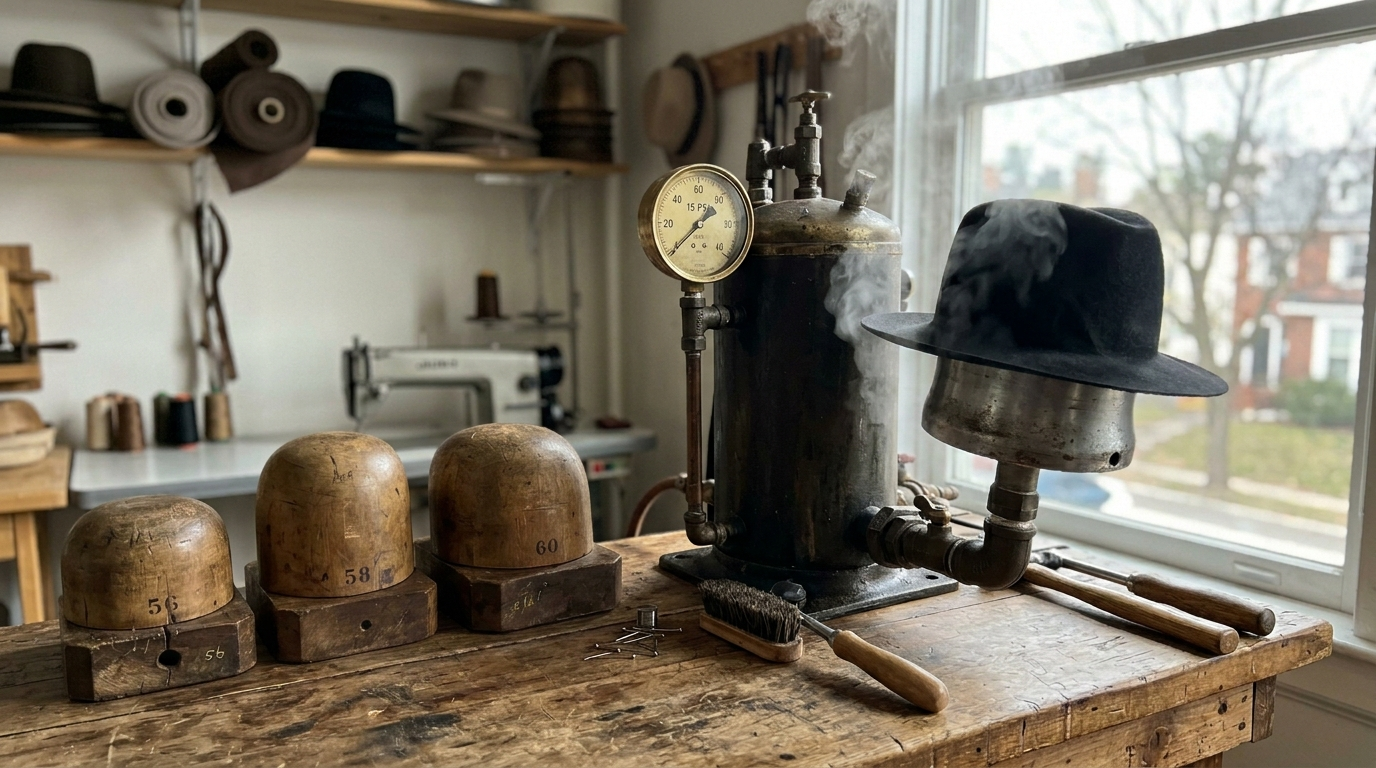
Any hat shaping steamer guide worth reading will emphasize this point: investing in the right equipment is crucial for efficiency, safety, and achieving superior results. While consumer grade tools exist, they lack the power, durability, and safety certifications required for a commercial environment.
The single most important tool is a commercial grade steam boiler. A professional unit provides the consistent, high pressure, and dry steam needed to work quickly and effectively without spotting or damaging delicate materials. For a dedicated hat shaping station, a system like the Hoffman Pro ELG4 delivers the reliable performance required for daily operations.
Key professional tools include:
- Commercial Steam Boiler: The engine of your operation, providing high pressure steam on demand. Look for models with ASME and UL certifications to meet safety and insurance compliance standards. Our guide on ASME certified steam boilers explains why these certifications matter.
- Hat Shaping Head: An attachment like the Hoffman Hat Shaper Accessory provides a stable, head shaped form to steam and shape crowns with precision and control.
- Hat Blocks: A collection of wooden forms in various sizes and crown styles is essential for achieving perfectly symmetrical and repeatable shapes. They are the industry standard for professional results.
- Workstation & Safety Gear: A dedicated, well ventilated shaping station protects your workspace and keeps tools organized. Heat resistant gloves are mandatory PPE to prevent serious burns from direct steam contact, which can reach 212°F (100°C). For a full walkthrough on organizing your setup, check out our hat shop steam station layout guide.
| Tool Type | Best For | Key Benefit |
|---|---|---|
| Flash Steamer (GEM III) | Retail floors & pop up shops | Fast heat up; no special permits required |
| All Purpose Boiler (JEL3) | Dedicated western wear shops | High pressure dry steam; 1 to 2 gallon capacity |
| Industrial Pump Fill System | High volume manufacturing | Continuous operation; connects to water line |
| Hat Shaping Head | Crown & brim precision | Provides a stable form for symmetrical results |
Setting Up an Efficient & Safe Workspace
A professional shaping station should be designed for safety and workflow efficiency. An organized space allows you to work without interruption once a hat is pliable and the shaping window is open.
Choose a well ventilated area, away from customer traffic, to allow steam to dissipate and prevent accidental contact. Protect your work surface from moisture and heat. Before you begin, ensure the hat is clean by brushing away any surface dust or dirt; steaming a dirty hat can permanently set stains into the fibers. Flip out the interior sweatband to protect it from excess moisture, especially if it is made of leather. Designate a safe, out of the way area with hat stands where shaped hats can cool and dry completely undisturbed.
For workplace safety standards around steam equipment, our OSHA steam equipment safety guide covers the key considerations.
| Material | Steaming Time | Technique | Risk Level |
|---|---|---|---|
| Wool Felt | 10 to 15 seconds | Interior steaming preferred | Low |
| Fur Felt (Beaver/Rabbit) | 5 to 10 seconds | Very responsive; requires light touch | Low |
| Panama/Straw | 30 to 60 seconds | Mist with water first; low pressure | Medium (Brittle) |
| Synthetic/Polyester | DO NOT STEAM | Can melt or warp permanently | High |
Professional Steaming Techniques by Material
The success of your shaping service hinges on applying the correct technique for each material. This is the hands on core of any hat shaping steamer guide, where knowledge translates directly into quality.
How to Steam a Felt Hat
Felt is the most common material for shaping. Hold the hat approximately 6 to 8 inches from the steam nozzle, moving continuously for even heat distribution. Applying steam to the inside of the hat is often preferable to protect the exterior finish and any embellishments.
Apply steam for 10 to 15 seconds, or until the felt feels warm and pliable to the touch. The material will only remain workable for a short time before it begins to cool and stiffen. If more time is needed, simply re apply steam to the section. Always use smooth, open hand pressure to shape the felt, avoiding fingerprints or creases. Purely synthetic felts should not be steamed, as the material can be easily damaged.
How to Steam a Straw Hat
Shaping straw hats requires a lighter touch, as the fibers can scorch or become brittle if overheated. Keep the steam source several inches away and use a commercial steamer’s pressure control to apply a lower volume of steam if possible.
A brief application of steam for 30 seconds to a minute is typically sufficient to remove dents or reshape the brim. For more significant reshaping, lightly misting the straw with a water bottle before steaming can increase its flexibility. It is critical to allow a straw hat to dry completely before it is worn; the shape will not set until all moisture has evaporated.
Reshaping Your Hat: Crown & Brim Techniques
Professional shaping focuses on achieving crisp, intentional lines in the two most important areas: the brim and the crown.
Mastering Brim Shaping
To ensure a symmetrical finish, work on the brim in sections.
- For a Flat Brim: After steaming, place the hat on a clean, flat surface. Use specialized brim flanges or weights to hold it perfectly flat as it cools.
- For a Curved Brim: Steam the section, then use your hands to form the desired curve, holding it in place for 30 to 40 seconds as the fibers cool and set. Repeat this process around the brim to create a uniform, flowing curve.
For brims containing a wire, gently heat the area to make the felt pliable, then carefully bend the internal wire back into its intended shape.
Perfecting Crown Shaping
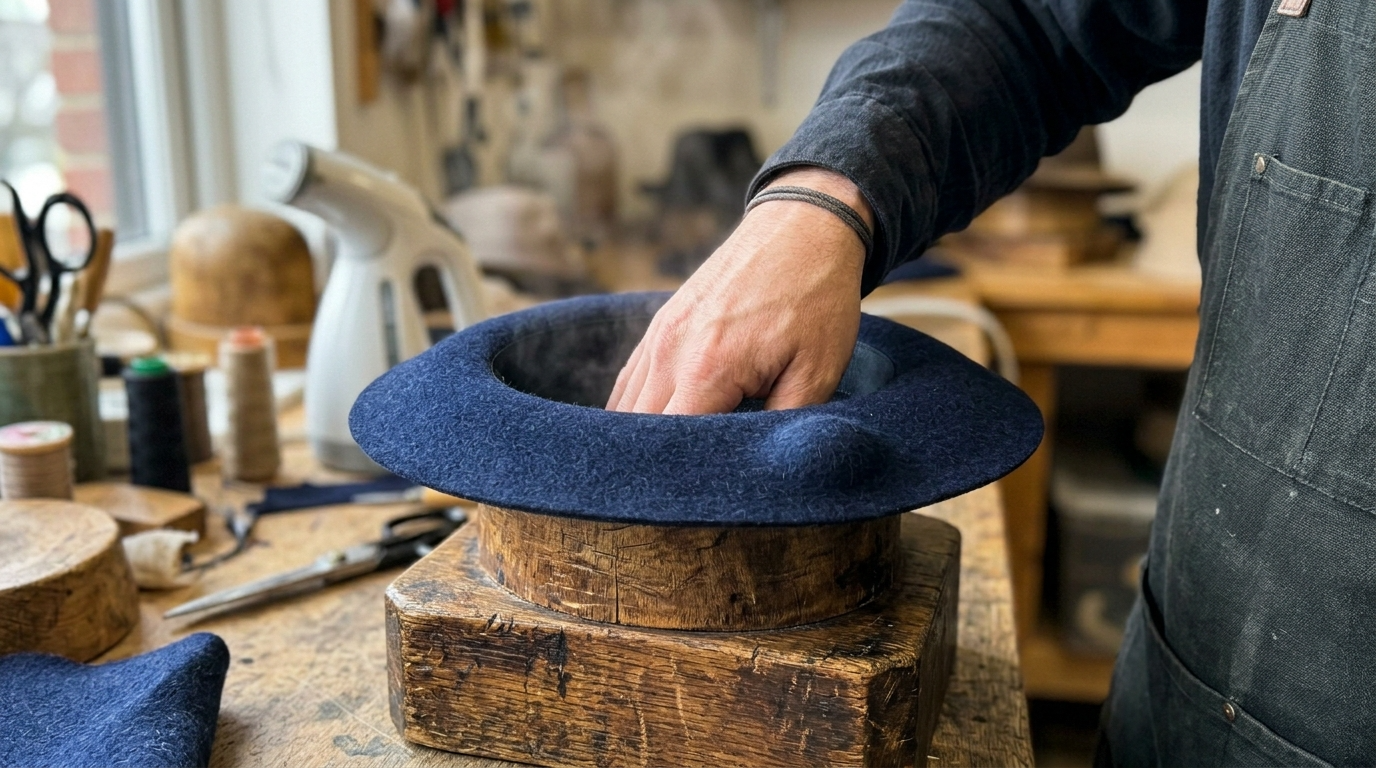
The golden rule for crown shaping is to always apply pressure from the inside out. To remove a dent, steam the interior of the crown and use your knuckles or the end of a hat brush to gently push the felt outward. This technique avoids creating shiny spots or marks on the exterior.
For creating or restoring the crown’s shape, a hat block is indispensable. After steaming, pull the crown down firmly over a block of the correct size and style. The block acts as a perfect mold, ensuring a symmetrical, professional result every time. For a comparison of steamer based shaping versus traditional block methods, see our guide on hat steamers vs. traditional blocks.
For shops that don’t have a full set of blocks, stuffing the crown tightly with clean tissue paper can provide internal support while it dries, preventing sagging.
How Commercial Steamers Generate Steam (And Why It Matters)
Understanding how different machines generate steam helps explain why results vary so dramatically between equipment tiers. No hat shaping steamer guide is complete without explaining the mechanics behind these differences.
A commercial boiler works by heating water inside a sealed, pressure rated tank. As the water temperature exceeds 212°F, it converts to steam, and the sealed environment forces pressure to build. When released through a nozzle or hat shaping head via a foot pedal, the steam exits at high velocity and relatively low moisture content. This is what “dry” steam means in practice: the water has been fully converted before it leaves the unit.
By contrast, consumer devices (handheld steamers, upright steamers, steam kettles) typically boil water at atmospheric pressure or very low pressure. The resulting steam carries more liquid water droplets because the conversion isn’t as complete. That extra moisture is exactly what causes spotting on felt and inconsistent softening on straw.
The pressure difference matters for penetration too. A boiler producing 40 to 70 PSI drives steam deep into felt fibers in seconds. A handheld unit operating around 5 to 10 PSI barely penetrates the surface, forcing longer exposure times that increase the risk of oversaturation. For more on how pressure ratings affect performance, our guide on how much PSI for a commercial steamer provides specific benchmarks.
Selecting the Right Commercial Steamer for Your Business
Choosing the right equipment is an investment in your shop’s capability and efficiency. Different business models require different types of steamers, and this hat shaping steamer guide breaks the decision into three tiers based on volume and use case.
Portable Steamers for Retail & Events
For mall kiosks, pop up shops, or adding a small shaping station to a retail floor, a portable flash steamer like the GEM III is an ideal choice. These units heat up quickly, operate with a convenient foot pedal, and typically do not require special permits. Our portable hat shaping steamer guide walks through how to set up a mobile station.
All Purpose Boilers for Hat Shops
A dedicated hat shop or western wear store with moderate daily volume needs a stationary boiler. Models in the 1 to 2 gallon range provide ample steam for continuous work. The JEL3 Hat Shaper Bundle pairs a high performance boiler directly with a shaping head, creating an all in one station built for professional hat shaping workflows.
High Volume & Continuous Duty Systems
For high volume repair shops, small scale manufacturing, or businesses where the steamer runs all day, an industrial boiler with an automatic pump fill system is essential. These systems connect directly to a water line, eliminating the need to stop work to refill the tank. This ensures maximum uptime and throughput, making it possible to service more customers per day.
Client Education & Long Term Care
Once a hat is perfectly shaped, the final step is ensuring the form lasts. This is also an opportunity to educate your customer and offer value added products and services.
Shape Setting and Cooling
This is the most critical step. After shaping, the hat must be left to cool and dry completely without being disturbed. This allows the fibers to set and lock in the new shape. Advise customers that a felt hat should rest for at least several hours, preferably overnight. Rushing this process can compromise the shape.
Using Hat Stiffener for Added Durability
For felt hats that need extra structure, especially on the brim, applying a hat stiffener can provide added rigidity and shape memory. Stiffener can be purchased in commercial spray bottles or made in house. Always test on an inconspicuous area first, and apply in several light, even coats. Offering this as an add on service can increase the value of each transaction.
Educating Customers on Long Term Maintenance
Providing customers with care instructions demonstrates expertise and helps them protect their investment. Key tips to share:
- Storage: Store hats upside down on their crown, or in a hat box, to protect the brim’s shape.
- Handling: Pick up the hat by the brim, not by pinching the crown, which can weaken the felt over time.
- Environment: Advise against leaving hats in hot cars, as high heat can cause warping.
- Moisture: If a hat gets wet, it should air dry naturally, away from any direct heat source.
Business Considerations for Hat Shaping Services
Integrating professional shaping services requires attention to quality control and equipment ROI. The recommendations throughout this hat shaping steamer guide all point toward the same conclusion: consistent results depend on proper tools and processes.
Always Check the Manufacturer’s Care Instructions
Before steaming any hat, check the interior label for material composition. This is your primary source of information and a crucial step in liability management. A label reading “100% Wool Felt” is a clear indicator that steaming is the correct method. Taking a moment to verify the material can prevent costly damage to a customer’s property.
Investing in Professional Equipment for ROI
For any business, the decision to use professional grade equipment is a matter of return on investment. Commercial steamers deliver the power and consistency needed to work faster, serve more customers, and produce a higher quality finish. This translates to increased revenue and a stronger brand reputation. Using certified equipment ensures workplace safety and compliance, protecting your business, your employees, and your customers.
Browse Hoffman’s complete hat shaping bundles to find the right system for your shop’s volume.
Troubleshooting & Pro Tips
- Water Spotting: This usually happens with consumer grade steamers. Use a commercial boiler to ensure dry steam.
- Losing Shape Quickly: The hat was likely not allowed to cool long enough. Ensure a minimum 2 hour set time.
- Shiny Spots on Felt: Caused by over handling the exterior. Always apply pressure from the inside out.
- Stiffener Residue: If using a spray on stiffener, apply from 12 inches away in light coats to avoid white flaking.
- Low Steam Pressure: If your boiler isn’t performing as expected, run through a low steam pressure troubleshooting checklist before calling for service.
Frequently Asked Questions about Hat Shaping
What is the best tool for shaping hats professionally?
A commercial grade steam boiler connected to a dedicated hat shaping head. This setup provides the consistent high pressure steam needed for speed, precision, and repeatable results. For an overview of professional equipment, see our hat shaping solutions.
Can a handheld steamer or upright steamer work for hat shaping?
In a pinch, yes. But neither a handheld steamer nor an upright steamer produces the dry, high pressure output needed for professional quality results. They work for minor touch ups on lighter felts, but they’ll leave moisture marks on higher quality hats and take significantly longer. For a business offering shaping as a service, they aren’t viable long term tools.
What about using a steam kettle?
A steam kettle is the most basic way to generate steam for hat work, and it’s how many people learn. But the lack of pressure control, directed flow, and safety features makes it unsuitable for a commercial setting. The wet, uncontrolled steam increases spotting risk, and there’s no way to regulate temperature or output.
Can I use a steam generator iron for hat work?
A steam generator iron delivers steam through a flat pressing surface, which is designed for fabric pressing rather than three dimensional shaping. It’s not practical for working on crowns or curved brims. Stick with a boiler and nozzle setup for hat work.
How long does it take for a hat to dry after steaming?
Drying time depends on the material and ambient humidity. As a best practice, advise customers to let the hat rest for several hours, with overnight being ideal to ensure the shape is fully locked in.
Can you fix a hat that has shrunk?
Minor shrinkage in a felt hat can often be corrected by using steam and a professional hat stretcher. Severe shrinkage is typically irreversible, and it’s important to manage customer expectations.
What kind of hat should you not steam?
While many synthetic materials respond well to steaming, you should never steam a hat if the care label explicitly advises against it, or if it’s made of materials that can melt or warp, like certain plastics or adhesives. Always check the label.
Why is a professional hat shaping steamer guide important for my business?
A consistent, professional process is key to profitability and reputation. Following a thorough hat shaping steamer guide helps you train staff on proper techniques to deliver high quality results safely and efficiently. Investing in the right commercial steamer ensures you can meet customer demand, protect inventory from damage, and build a reputation as a trusted expert in your community.


