

TLDR: A hat shop steam case study documents how a hat retailer, western wear store, or mobile hat bar uses steam to shape, restore, and personalize hats, and what business results follow. Steam softens felt so it can be reshaped by hand, then the hat sets as it cools. Shops charge anywhere from $5 to $200+ depending on the service, and the real value of a case study comes from tracking workflow changes, not just equipment purchases. This guide covers the definition, how steam works, pricing benchmarks, equipment decisions, safety considerations, and how to build your own case study.
What is a Hat Shop Steam ROI Case Study?
A hat shop steam case study evaluates the return on investment (ROI) of using commercial-grade steam equipment for hat shaping and restoration. Key metrics include a 30% to 50% reduction in service time and an average service revenue of $10–$50 per hat. By 2026, retail stores utilizing professional steam setups report higher conversion rates for premium fur felt and western headwear through on-site personalization.
What Is a Hat Shop Steam Case Study?
A hat shop steam case study is a documented example of how a hat business uses steam in daily shaping or restoration work and what changed as a result. It typically covers the shop’s starting problem, steam equipment, shaping workflow, hat materials handled, staff process, and measurable business results like service speed, paid reshaping revenue, or improved customer experience.
This matters because most content about hat shaping online falls into two categories: product testimonials and how-to videos. Neither gives a shop owner the full picture. A proper case study for a hat shop steam operation should connect the equipment to a workflow, and the workflow to an outcome. “We bought a steamer” is not a case study. “Steam changed how we serve customers” is.
The term applies across business types. A traditional western wear retailer offering free shaping with hat purchases, a boutique custom hatter charging $50 per reshape, and a mobile hat bar steaming hats at a rodeo are all candidates for a hat shop steam case study. The common thread is that steam becomes part of the operation, not just part of the toolbox.
What Steam Actually Does in a Hat Shop
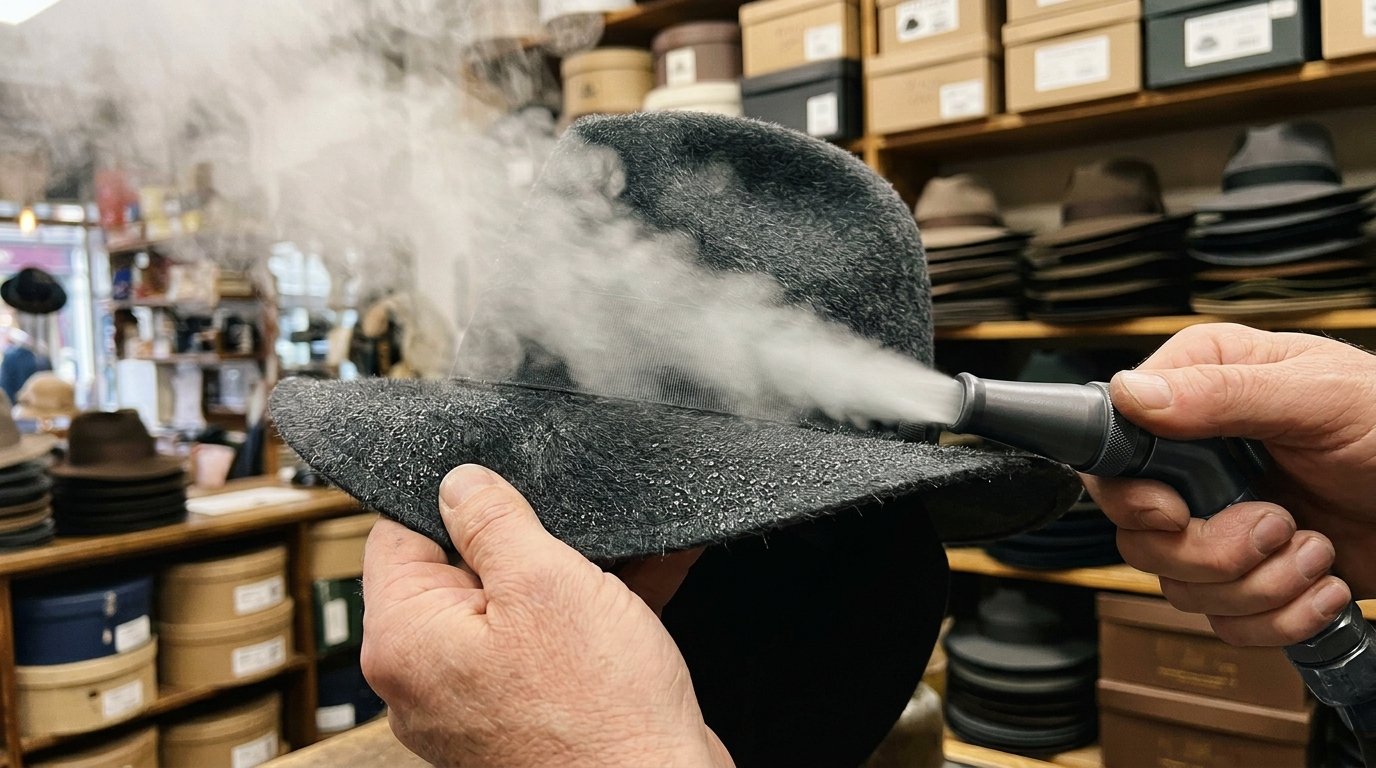
Steam is not decoration. It is the mechanism that makes hat shaping possible.
When steam is applied to a section of a fur felt hat, it softens the felt within seconds, making it flexible enough to reshape by hand. Once the hat cools and dries, the new shape sets and holds source. The David Morgan hat manual explains the same principle: steam softens the stiffeners in fur felt, allowing the hat to retain a new shape after drying source.
This is not a hack or shortcut. Professional hat manufacturers use the same basic process. Resistol describes fur felt hats going through steam blocking for sizing, followed by shellac application, heat and pressure, sanding, and final shaping source. What a hat shop does with steam at the retail level echoes what happens in the factory.
In practice, a hat shop uses steam to:
Shape a new hat’s brim and crown at the point of sale
Re-crease a crown to a customer’s preference (cattleman, pinch front, open crown)
Fit or adjust a hat that is slightly too tight or loose
Restore a hat after storage, shipping, travel, or weather exposure
Refresh a customer’s existing hat as a maintenance service
Support hat bar events where guests customize hats on the spot
The 2026 Western Wear Resurgence
The western wear market is projected to reach $84.52 billion in 2026, growing at a CAGR of 3.44%. This growth is driven by a fusion of traditional “Rodeo Culture” and mainstream fashion trends like “Cowboy Carter” aesthetics. For retailers, steam shaping is no longer a niche craft; it is a critical differentiator in a market where 42% of sales occur online. Offering expert, on-site steam shaping provides a “physical-only” value proposition that e-commerce cannot replicate.
Why Steam Is a Business Tool, Not Just a Craft Tool
The shift that makes a hat shop steam case study worth documenting is when steam moves from “something we sometimes do” to a defined part of the business.
Western retail is large enough to support this kind of service differentiation. Boot Barn, the largest U.S. lifestyle retail chain focused on western and work-related footwear, apparel, and accessories, operated 489 stores across 49 states as of September 2025, with roughly 9.6 million loyalty members source. That footprint exists because western events, rodeos, country music, and outdoor activities continue driving demand.
The customer base is also expanding. After Beyoncé’s Cowboy Carter release and tour, western wear entered mainstream fashion conversations. Tecovas reported a 55% increase in website traffic from Q1 2024 to Q1 2025 source. In the U.K., one shoe designer reported cowboy boot sales up 48% year over year, with 70% of those sales going to first-time customers source.
First-time western wear buyers often need help. They do not know what crown shape suits them, how a brim should sit, or what size they actually wear. A shop that can steam, shape, and fit a hat during the purchase creates a reason to visit a physical store instead of ordering online.
Hat bars and mobile event setups are pushing this further. Hatbox, a modern haberdashery, describes bringing unshaped cowboy hats, hat bands, steamers, tools, and experienced staff to western events for live customization source. Rancher Hat Bar grew from a vintage camper trailer in January 2023 to multiple locations with a national expansion story. These businesses run on steam.
Decision Matrix: DIY vs. Professional Intervention
Scenario | Recommended Method | DIY Risk Level | Estimated Professional Cost |
Minor Brim Warp | Steam | Low | $20 – $45 |
Fresh Sweat Stains | Targeted Chemical (Foam) | Moderate | $40 – $60 |
Deep Grease/Oil | Professional Solvent | High | $75+ |
Vintage Restoration | Multi-Stage (Hatter) | Extreme | $150 – $250 |
The 4S Framework: Shape, Set, Serve, Scale
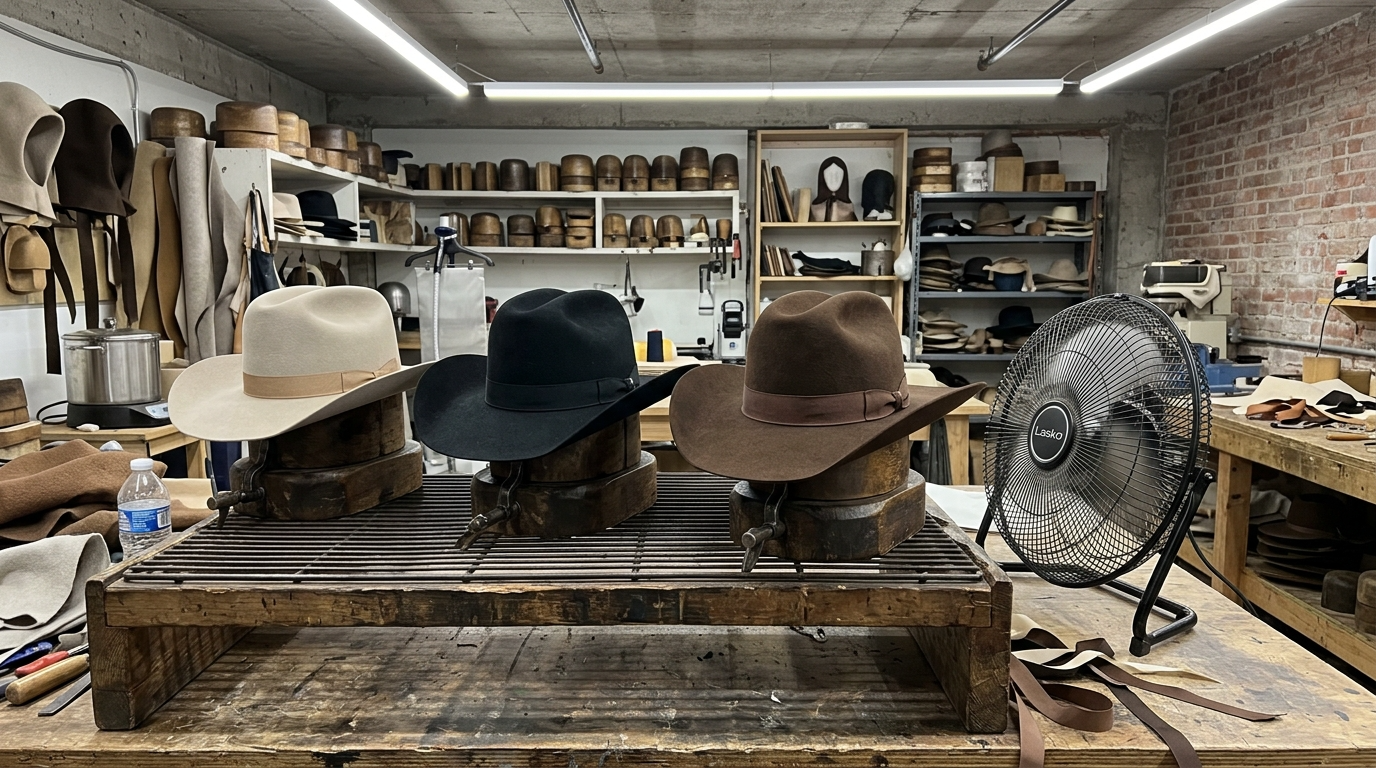
A useful way to think about any hat shop steam case study is through four stages. Most shops start at Shape and stop. The ones worth studying push further.
Shape
Steam softens the hat material so staff can form the crown, crease the brim, or adjust the fit. This is the foundational skill. Practitioners on Reddit consistently emphasize that the steamer does not do the shaping: “The steamer doesn’t do the shaping for you, your hands do” source. Equipment matters, but technique matters more, especially early on.
Set
After shaping, the hat must cool and dry in the desired position. Forum users with shop experience describe using a fan to cool and dry hats after shaping, which helps set the new form and keeps the work area moving source. Skipping this step can result in shapes that relax or revert.
Serve
The shop turns shaping into a defined service. This could be free shaping with every hat purchase, a tip-based courtesy service, a $10 basic reshape, a $50 professional cleanup, or a $200 full restoration. The service model determines how ROI gets measured.
Scale
As volume grows, the shop needs a repeatable workflow: trained staff, consistent steam output, safe equipment, appropriate accessories, and reliable uptime. This is where commercial-grade steam equipment starts to separate itself from kettles and handheld steamers.
If you are building a hat shaping service and want to explore commercial steam setups, Hoffman Steam’s hat shaping bundles range from $2,149 to $4,895 and ship with trade-specific accessories so the setup is operational immediately.
Service Pricing Benchmarks From Real Hat Shops
One of the most practical elements of a hat shop steam case study is the pricing model. Published service menus from real shops show a wide range.
Shop | Service | Price |
|---|---|---|
High Country Western Wear | Hat cleaning / hat shaping | $10 each source |
SoulHide | In-store shaping (purchased in-store / outside hat) | $5 / $10 source |
Landers Hatworks | Cleaning / shaping / reblocking | $20 / $20 / $70 source |
La Minita Western Wear | Basic cleaning and shaping bundle | $45 source |
Roper Hat & Co. | Cleanup and reshape (45 min service) | $50 source |
Eclipse Hat Shop | Basic steam clean / re-blocking / full restoration | $45 / $150 / $200 source |
Simple shaping or cleanup typically falls in the $5 to $50 range. Deeper restoration or re-blocking moves into $70 to $200+ territory. That spread matters because the business case is completely different for a store using shaping as a free loyalty perk versus a shop treating it as a standalone paid service.
Practitioners on Reddit confirm this range. In one thread about where to get a hat reshaped, users mention western stores doing hat shaping for free, for tips, or for low fees. One hat renovator describes using a Jiffy steamer regularly, spraying the crown with distilled water for major reshaping, and removing old crease “ghosts” before steaming and reshaping source.
A Simple Payback Illustration
Using Hoffman Steam’s hat shaping bundle pricing of $2,149 to $4,895, here is a rough payback calculation. This excludes labor, taxes, consumables, financing, maintenance, and opportunity cost.
Avg Revenue Per Job | Jobs to Recover $2,149 | Jobs to Recover $4,895 |
|---|---|---|
$10 | ~215 | ~490 |
$20 | ~108 | ~245 |
$45 | ~48 | ~109 |
$50 | ~43 | ~98 |
If shaping is offered free with purchase, the ROI calculation shifts to hat conversion rate, average order value, repeat visits, tips, and customer satisfaction rather than direct shaping fees.
When a Commercial Hat Steamer Makes Sense
Not every hat shop needs a commercial boiler. The community evidence is clear about this, and pretending otherwise would be dishonest.
A kettle or handheld steamer works when:
You are shaping personal hats occasionally
You are learning basic technique before investing
You work on low-risk practice hats
Volume is very low (a few hats per month)
Reddit users in r/CowboyHats recommend simple starting points like boiling water or cheap handheld steamers while learning. One commenter notes that larger shop units are only worth it if someone is shaping hats all day source.
A retail or professional steamer makes sense when:
Staff shape hats for customers as a regular service
Steam output consistency affects customer wait time
The business handles events, rodeos, or weekend rushes
Multiple employees need a repeatable, standardized workflow
A commercial boiler and hat shaping bundle makes sense when:
Hat shaping is daily work
The business needs strong steam output with reliable recovery between hats
Steam service supports revenue, store experience, or a paid restoration menu
Uptime, service support, and compliance documentation matter for the business
Feature | Handheld/Kettle | Commercial Boiler (Pro Line) | Business Impact |
Steam Pressure | 0–1 PSI | 15–50+ PSI | Faster felt softening |
Recovery Time | Slow (Minutes) | Instant (Seconds) | Higher customer throughput |
Certifications | None | ASME / UL Certified | Compliance & Insurance safety |
Daily Volume | 1–3 Hats | 20–100+ Hats | Scalable service revenue |
One Reddit user shared that they bought a steamer because they lived far from any hat shop and were tired of driving two hours to be disappointed. After the initial buyer’s remorse, they made their money back shaping and restoring hats for other people source. Geography can turn a personal purchase into a business opportunity.
Not sure where your volume falls? Request a virtual demo from Hoffman Steam to discuss which setup matches your daily shaping needs.
Material-Specific Handling: Not All Hats Are the Same
A common weakness in any hat shop steam case study is treating all hats identically. They are not.
Material | Steam Behavior | Warning |
|---|---|---|
Fur felt | Softens with steam, can be reshaped by hand, sets when cooled source | Too much steam or heat can shrink felt or damage the leather sweatband source |
Wool felt | Can often be steamed, but may not shape as cleanly as high-quality fur felt | Test carefully and manage customer expectations on the result |
Straw | Coatings can break down if overheated or if steam is held in one place too long source | Keep the hat moving under steam and avoid concentrated exposure |
Lacquered straw | May resist steam entirely, according to practitioner discussions source | Do not promise the same result as felt |
Palm leaf | Some palm leaf hats respond to water rather than steam, depending on brand and treatment | Separate palm leaf handling from felt shaping instructions entirely |
Forum users with experience warn that too much heat can burn felt depending on quality and stiffness rating source. Stetson’s official FAQ adds that heat can shrink sweatbands and reactivate the felting process, causing shrinkage when a hat is wet source.
The takeaway for any hat shop steam case study: document which hat types you handle, and be honest about which ones you turn away.
What a Strong Case Study Should Measure
If you are building your own steam case study, track more than just “we like the steamer.” Here are the metrics that separate a useful case study from a testimonial.
Metric | Why It Matters |
|---|---|
Hats shaped per day or week | Shows capacity and utilization |
Average shaping time | Shows efficiency and customer wait impact |
Rush-hour wait time | Shows experience during peak periods |
Paid shaping revenue | Shows direct ROI |
Tips earned | Shows value even when shaping is “free” |
Hat sales conversion rate | Shows whether shaping drives purchases |
Average order value with customization | Shows upsell impact |
Event guests served per hour | Shows mobile/event throughput |
Customer reviews mentioning shaping | Shows experience quality |
Rework rate | Shows consistency and staff skill |
Staff training time | Shows how quickly new employees get up to speed |
Equipment downtime | Shows reliability impact |
A weak case study says “we bought a steamer and like it.” A strong hat shop steam case study says “we reduced average shaping time from 20 minutes to 8, added a $25 cleaning-and-shape service, and saw 30% of hat buyers add the service at checkout.”
Common Mistakes in Hat Shop Steam Case Studies
Treating all hats the same
Felt, straw, palm leaf, and lacquered straw respond differently to steam. A case study that does not specify hat types is incomplete.
Measuring only direct shaping fees
If shaping is free with purchase, the value might show up in higher hat conversion rates, larger average orders, more repeat visits, or better online reviews. Track those too.
Ignoring staff technique
Equipment enables the work. Hands and experience produce the result. A case study should acknowledge training time and skill development, not just the machine.
Overlooking safety
Steam burns are real. A case study that mentions zero safety considerations is either incomplete or dishonest.
Writing a testimonial instead of a case study
“Great product, love it” is a review. A case study needs a before state, a change, and measurable after-effects.
Safety Notes for Steam in a Hat Shop
Steam is a powerful tool, which means it carries real risks.
OSHA warns plainly that steam can burn, advises workers not to stand above steaming equipment, and warns against opening steam equipment under pressure source. For shops using pressurized equipment, OSHA defines pressure vessels operating above 15 psig as requiring safe design, installation, operation, and maintenance in accordance with applicable codes source.
ASME’s Boiler and Pressure Vessel Certification Program certifies manufacturers’ quality control systems, and certified products are stamped according to the applicable code section source. This matters when insurance, inspections, or local regulations come into play.
Practical safety points for any hat shop steam setup:
Train every operator on the specific equipment before they use it
Use appropriate PPE (heat-resistant gloves at minimum)
Position steam stations so bystanders and customers are clear of the steam path
Cool and dry hats away from the steam area
Follow manufacturer instructions for filling, pressurizing, and maintaining equipment
Keep equipment documentation accessible for inspections
Hoffman Steam’s Pro line models carry ASME and UL certification, which provides compliance documentation that can matter for insurance and workplace safety requirements.
How to Write Your Own Hat Shop Steam Case Study
Use this template. Fill in your real numbers, and you will have something more useful than 90% of the content currently ranking for this topic.
Shop profile. What kind of business is it? Western wear store, custom hatter, mobile hat bar, boot shop with a hat section?
Problem. What was slow, inconsistent, or unprofitable before? Long wait times? Dependence on one skilled employee? No shaping service at all?
Steam setup. What equipment and accessories are in use? Portable flash steamer, shop boiler, hat shaping heads, foot pedal, steam nozzle?
Workflow. Who operates the equipment, when, and how? Is there a standard process or does it vary by employee?
Hat types. Fur felt, wool felt, straw, palm leaf, vintage, fashion hats?
Service model. Free with purchase, tip-based, paid per service, bundled cleaning and shaping, event packages?
Results. Time saved, revenue generated, customer reviews, event throughput, fewer reworks?
Lessons. What would the shop do differently next time?
A western wear store might find that standardizing its steam station cut average shaping time in half and allowed any trained employee to handle the work, not just the one experienced hatter. A mobile hat bar might discover that a commercial steamer with fast recovery time let them serve 15 guests per hour instead of 8. Those are the details that make a hat shop steam case study worth reading.
To explore hat-shop-ready steam equipment with trade-specific accessories included, compare Hoffman Steam’s hat shaping bundles or request a virtual demo to discuss your volume and workflow needs.
Frequently Asked Questions
What is a hat shop steam case study?
A hat shop steam case study is a documented example of how a hat business uses steam to shape, clean, restore, or personalize hats, and what business results the process creates. It should include the shop type, equipment, workflow, hat materials, service pricing, and measurable outcomes.
Can steam damage a cowboy hat?
Yes. Too much steam or heat can shrink fur felt, damage leather sweatbands, or break down coatings on straw hats. Both Stetson and Akubra warn against excessive heat during hat care source. Controlled, short-duration steam applied to small areas is the standard approach.
How much do hat shops charge for steam shaping?
Published service menus vary widely. Simple shaping or cleanup typically runs $5 to $50, while deeper restoration or re-blocking commonly falls in the $70 to $200+ range source. Some stores offer free shaping with purchase and treat it as a loyalty driver rather than a revenue line.
Do I need a commercial steamer to shape hats?
Not necessarily. Hobbyists and learners often start with kettles or handheld steamers. But commercial shops that shape hats regularly need to think about steam output consistency, customer wait time, staff ergonomics, safety, and uptime. Practitioner discussions consistently note that volume changes the equipment question source.
Is a hat steamer the same as a steam cleaner?
Not in this context. A hat steamer refers to steam used to soften hat material for shaping. Some shops also use steam as part of cleaning or refreshing, but shaping and cleaning are distinct services with different techniques and pricing.
What metrics should a hat shop track in a steam case study?
At minimum: hats shaped per day, average shaping time, paid shaping revenue or tips, hat sales conversion rate, customer satisfaction mentions, rework rate, and equipment downtime. The best case studies track at least five of these.
Does hat material affect how steam works?
Significantly. Fur felt softens quickly and shapes well. Wool felt is less predictable. Straw and lacquered straw can resist steam or suffer coating damage. Palm leaf hats sometimes respond better to water than steam. Any serious hat shop steam case study should specify which materials were handled and how results differed.
What does Hoffman Steam offer for hat shops?
Hoffman Steam sells factory-direct commercial electric steamers and steam boilers, with hat-shop-specific bundles priced from $2,149 to $4,895. These bundles include hat shaping heads and relevant accessories. Pro models carry ASME and UL certification, and all equipment ships with unlimited lifetime remote technical support. Visit Hoffman Steam to compare options or request a virtual demo.


