

TL;DR
A hat shop steam station layout refers to the physical arrangement of steam equipment, tools, and workflow zones inside a hat-shaping workspace. The station itself is a system of connected components (boiler, hat shaper head, hoses, foot pedal, and valves) rather than a single machine. This glossary covers every term hat shop owners need to understand, from equipment specs and process vocabulary to workspace planning and safety compliance, so you can plan your layout with confidence before spending a dollar on gear.
What “Hat Shop Steam Station Layout” Actually Means
Search for “hat shop steam station layout” and you will find scattered fragments: a manufacturer’s PDF manual here, a Facebook group question there, a Pinterest board of pretty retail displays with zero equipment context. No single page ties it all together. That is exactly what this glossary does.
The phrase combines three ideas. “Hat shop” is the business context, whether that is a western hat store, a custom millinery studio, or a hat bar adding steam shaping to its service menu. “Steam station” is the cluster of equipment that generates and directs steam for hat blocking and shaping. “Layout” is how you arrange that equipment within a workspace to maximize workflow, safety, and comfort.
If you are building out your first hat shop or upgrading an existing one, the terms below will help you read product pages, talk to vendors, and plan your space. Browse the full hat shaping equipment lineup for context on how these components fit together in a commercial setting.
Steam Equipment Terms: Core Station Components
Feature | Entry-Level (Occasional) | Professional (Daily) | Industrial (High Volume) |
Pressure (PSI) | 40 PSI | 70 – 90 PSI | 90+ PSI |
Voltage | 110V | 110V or 220V | 220V |
Water Feed | Manual Fill | Auto-Fill | Pump-Fill |
Best For | Hobbyists / Hat Bars | Custom Studios | Western Wear Stores |
These are the parts that make up the steam station itself. Think of them as a connected system, not individual purchases.
Steam Boiler (Pressure Vessel)
A sealed tank that heats water to produce pressurized steam. This is the engine of any hat shop steam station layout. Commercial boilers range from 1 gallon to 6 gallons and generate anywhere from 40 to 90 PSI depending on the model. A professional steamer generating 90 PSI delivers the sustained power needed for daily hat production, while an entry-level unit at around 40 PSI suits occasional use.
Flash Steamer
A non-pressurized alternative to a boiler. Flash steamers convert heat energy directly into steam for instant use without requiring a pressurized tank. The key advantage: no boiler permits required, making flash steamers ideal for mall locations, pop-up shops, and retail environments where permitting would be a headache. The Hoffman GEM-III portable flash steamer is a common choice for these settings, priced at $995 with foot pedal control and dual heating elements.
Hat Shaper Head
The specialized attachment that sits atop or beside the boiler and directs steam upward in a controlled column. The operator holds the hat over this steam column to soften the material before shaping. The hat shaper head connects to the boiler via pipe and flow valve. It is the component that turns a general-purpose steamer into a hat-specific tool. The Hoffman hat shaper accessory is purpose-built for this function.
Foot Pedal
Controls steam flow hands-free. When pressed, it activates the solenoid valve to release steam. When released, it stops flow. This lets the hatter keep both hands on the hat during shaping, which is essential for precise work.
Solenoid Valve
An electrically controlled valve that opens and closes steam flow, typically activated by the foot pedal. It is the mechanism that makes hands-free operation possible.
Steam Hose / Pipe
The tubing that connects the boiler to the hat shaper head or steam wand. Length matters for your steam station layout because it determines how far the shaper head can sit from the boiler. Longer hoses give flexibility but can reduce steam pressure slightly at the nozzle end.
Flow Valve / Regulator
Controls steam intensity and dampness reaching the hat. Too much steam too fast can oversaturate felt. A good regulator lets you dial in the right amount for different hat materials.
Steam Wand / Nozzle
A handheld steam applicator used for spot steaming and touch-up work. Not the primary tool for blocking, but useful for detail work on brims and crowns after the initial shaping.
Water Tank Capacity
Measured in gallons. Larger tanks mean more hats between refills. A 2-gallon tank suits a small custom shop. A 6-gallon tank serves high-volume operations. This directly affects your workflow because every refill interrupts production.
Manual Fill vs. Auto-Fill vs. Pump-Fill
Three approaches to adding water to the boiler:
Manual fill requires you to depressurize the boiler, open it, and add water by hand. Simplest and most affordable.
Auto-fill connects to a water line through a water feed regulator, adding water as needed.
Pump-fill uses a built-in pump to add water automatically at high pressure, even while the boiler is operating. This is the most capable option for continuous-duty use.
Hat-Making Process Terms: Why the Steam Station Exists
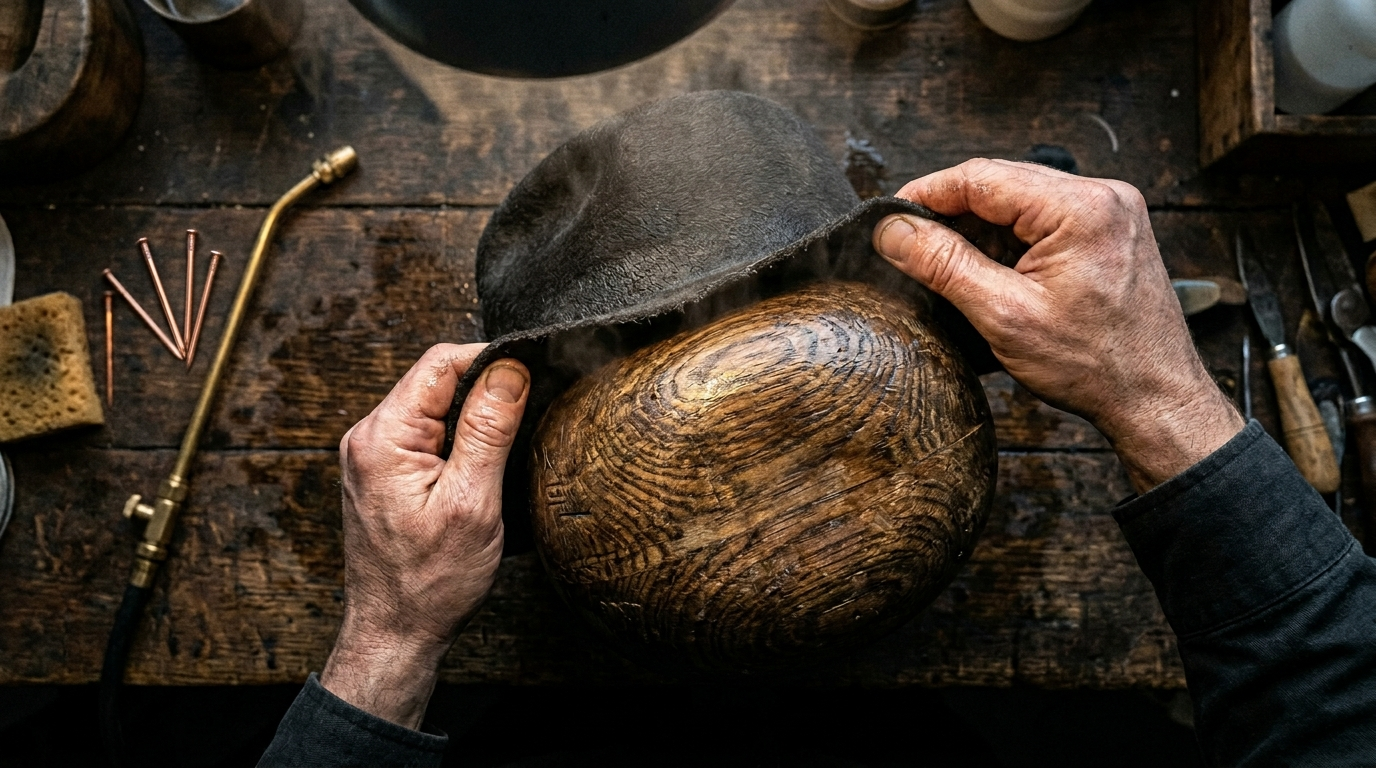
Every piece of equipment in a hat shop steam station layout exists to serve the hat-making process. These terms describe the steps where steam plays a role.
Blocking
The core reason a steam station exists. Blocking is the process of shaping a hat using steam and a wooden form (called a hat block). Steam softens felt or straw so it becomes pliable enough to stretch over the block and hold a new shape. As the HATalk blog puts it, “having a reliable way to produce steam is vital. Steam is one of a hat maker’s most important tools.”
Pouncing
Smoothing the hat’s surface using fine abrasive paper after blocking. This step comes after the hat leaves the steam station and reveals the true quality of the fur felt. It is slow and meticulous, but it is what separates a professional hat from a craft project.
Flanging / Brim Breaking
Creating the hard crease between the brim and the crown. A brim iron sandwiches the brim between heated plates to set this crease. Flanging happens downstream from the steam station in your layout, in the shaping/finishing zone.
Sizing
Adjusting the hat to fit a specific head measurement. This often involves re-steaming and using stretch blocks to increase size by a half to full size.
Crown Shaping
Using steam and hand tools to create the desired crown profile, whether that is a teardrop, pinch front, or open crown. The crown iron, a spinning iron, smooths the crown surface after stretching and shaping.
Hat-Making Tools and Hardware
These tools surround the steam station in a well-planned layout. They are not part of the steam equipment itself, but they complete the workflow.
Hat Block
A wooden or metal form used to shape hats. Available in over 10 styles and multiple head shapes (regular oval, long oval, round). JWR Custom Hats calls hat blocks “the most critical starting tools for any hat shop of any size.”
Stretch Block
A tool used to stretch a finished hat to increase its size within a half to one full size. Available in sizes ranging from 6⅝ to 8 in oval or round configurations.
Brim Iron / Plating Machine
A heated press that creates crisp edges and flat surfaces on hat brims. The brim is sandwiched between heated plates for a consistent finish.
Conformateur
A device used to measure the exact shape of a customer’s head for a truly custom fit. This is a prep-zone tool, typically stationed at the front of the shop where customers are measured before any steaming begins.
Tolliker
A hand tool used to smooth and shape the brim of a hat. Small but essential for detail finishing work.
Crown Iron
A spinning iron designed to iron the crown of a hat after stretching and shaping. It creates a smooth, polished surface.
Layout and Workspace Terms: Planning Your Steam Station
This is where terminology meets real spatial decisions. No competitor page currently frames hat shop steam station layout in terms of workflow zones, which is the most practical way to think about it.
Workflow Zones
Professional hat shops organize their space around a linear or horseshoe workflow with five distinct zones:
Prep zone (measuring with conformateur, selecting hat blanks and blocks)
Steam zone (the steam station itself, where blocking happens)
Shaping zone (brim irons, crown irons, hand shaping tools)
Finishing zone (pouncing, trimming, adding bands and linings)
Display/retail zone (customer-facing area)
Material flows in one direction through these zones. This prevents bottlenecks and keeps hot, moist steam equipment away from finished product displays.
Steam Zone Placement
The steam station should be positioned with access to electrical outlets (110V or 220V depending on your boiler), adequate ventilation, and enough clearance for the operator to move freely around the hat shaper head. A general rule from workshop planning guides: allow at least 36 inches of clear space on all working sides of the steam station.
Ventilation
Steam creates heat and moisture. Without adequate airflow around the steam station, you risk moisture buildup on walls and ceilings, mold growth over time, and operator discomfort. The OSHA Technical Manual notes that industrial ventilation involves supply and exhaust ventilation to control emissions and exposures. For a hat shop, this can be as simple as a properly placed exhaust fan or as involved as a ducted hood above the steam station.
Condensate Drainage
Steam condenses back into water. Your steam station layout needs to account for where that water goes. A drip tray beneath the hat shaper head, a floor drain nearby, or absorbent mats are all common solutions.
Electrical Requirements (110V vs. 220V)
Entry-level boilers run on standard 110V household circuits. Higher-capacity models require 220V circuits, which deliver more power and faster heat-up times. Know your shop’s electrical capacity before purchasing. Upgrading to 220V is a common investment for shops doing more than a handful of hats per day.
Practitioners on Reddit report that a steam station is a long-term fixed investment, not something you rearrange frequently. One user in r/jewelers shared that they used two Hoffman steamers over 30 years, with the first lasting 24 years. Plan your layout for the long haul.
Hat Bar vs. Hat Shop Steam Station
These terms get confused often. A “hat bar” typically refers to a retail experience where customers customize hats with patches, pins, and bands using heat presses. The top-ranking page for hat shop layout keywords is actually about heat-press hat bars, not steam shaping at all. A hat shop steam station is fundamentally different: it is a professional workspace for blocking, shaping, and finishing hats using pressurized steam. If you are searching for steam station layout guidance, you are in the shaping business, not the patch-pressing business.
How to Set Up Your Steam Station for Maximum Efficiency
Identify Your Power Source: Place the boiler within 4 feet of a dedicated circuit to avoid voltage drops. Use 220V for faster recovery times if your shop volume exceeds 5 hats per day.
Position the Shaper Head: Mount the head at waist height (approx. 36–40 inches) to prevent back strain during long blocking sessions.
Manage the “Steam Path”: Ensure the steam column doesn’t vent directly toward retail displays or electronics. Install a simple exhaust hood or high-CFM wall fan 24 inches above the shaper head.
Organize Drainage: Place a rubber anti-fatigue mat with drainage holes in the Steam Zone to manage condensation and prevent slips.
Safety and Compliance Terms
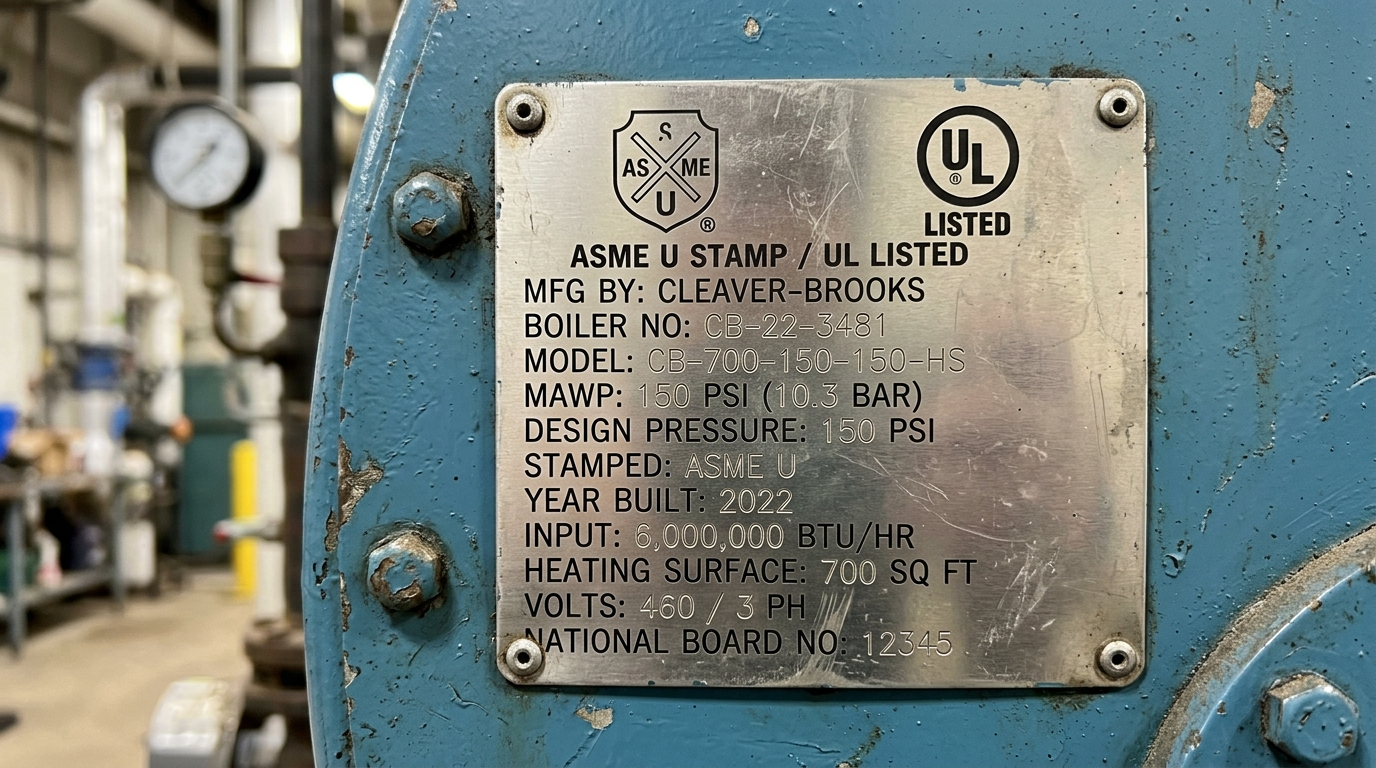
Steam is powerful. These terms keep you and your customers safe.
ASME Certification
A stamp from the American Society of Mechanical Engineers verifying that a pressure vessel meets ASME standards for design and construction. For hat shop owners, ASME certification means the boiler has been independently verified as safe. This matters for insurance, lease agreements, and peace of mind. Hoffman’s Pro line boilers carry ASME certification.
UL Certification
Underwriters Laboratories safety certification for electrical equipment. UL testing covers electrical safety, fire risk, and shock hazards. Look for UL marks on any steam equipment you install in a commercial space.
PSI (Pounds per Square Inch)
The pressure measurement for steam output. Higher PSI means more force and heat in the steam. An occasional-use steamer generates about 40 PSI. A professional steamer generates up to 90 PSI. For daily hat production with heavy felt, 90 PSI makes the blocking process faster and more consistent.
Pressure Relief Valve
A mandatory safety device on any pressure vessel. It releases excess pressure automatically if the boiler exceeds safe operating limits. Never operate a boiler without a functioning pressure relief valve.
Auto Shut-Off / Low-Water Protection
A safety feature that turns off the heating element when the water level drops too low or pressure exceeds safe limits. This prevents the boiler from running dry, which can damage the tank and create a hazard.
Boiler Permit
Some jurisdictions require permits for pressurized steam equipment. Flash steamers (non-pressurized) typically bypass this requirement entirely, which is one reason they are popular in retail and mall settings. Check your local codes before finalizing your hat shop steam station layout.
For questions about compliance and equipment safety, Hoffman offers unlimited lifetime remote technical support from their Pennsylvania factory.
Steamer Selection Terms: Choosing the Right Equipment
Knowing these specs helps you match a steamer to your shop’s production volume.
Tank Capacity
Measured in gallons. A 1-gallon tank works for occasional use. A 2-gallon tank handles a steady stream of custom orders. A 6-gallon tank suits high-volume operations like western wear stores or hat-shaping events. Bigger tank means fewer interruptions.
Wattage / kW
The power of the heating element. Higher wattage means faster heat-up and faster steam recovery between hats. A 1.5 kW element is standard at 110V. A 3 kW element (requiring 220V) roughly doubles the heating speed.
Heat-Up Time
How long from cold to operational steam. This affects your daily opening routine. Fast heat-up times matter if you steam hats in front of customers as part of a retail experience.
Steam Output (lbs/hr)
The rate at which the boiler produces steam, measured in pounds per hour. Higher output supports longer continuous use without pressure drops.
Duty Cycle
How long the steamer can run continuously before needing rest or refill. “Continuous duty” means the unit can run all day. This is critical for shops doing 10 or more hats daily.
Matching Steamer to Shop Volume
On the HATalk blog, the community maps five tiers of steam equipment: steam kettles, upright garment steamers, handheld steamers, steam generator irons, and specialist hat steamers. For a professional hat shop, only the specialist tier delivers consistent commercial results. Hat Academy forum members have noted that beginners often start with repurposed kettles or garment steamers, then quickly discover the limitations when working with heavy felt or straw.
Hoffman offers trade-specific hat shop bundles ranging from $2,149 to $4,895, each including the steamer, shaping head, and all plumbing attachments so you are operational immediately. For shops with tighter budgets, financing options including 0% APR promotions are available.
Steam Station Layout Checklist
[ ] Clearance: 36″ of 360-degree access around the shaper head.
[ ] Ventilation: Active airflow to prevent mold and heat buildup.
[ ] Water: Proximity to a distilled water source (to prevent scale).
[ ] Safety: Accessible pressure relief valve and auto-shutoff sensors.
Bringing It All Together
A hat shop steam station layout is not just about where you put the boiler. It is a system of connected equipment organized within a workflow that moves material from raw blank to finished hat. Getting the terminology right is the first step toward making smart purchasing and spatial decisions.
If you are planning a new hat shop or upgrading your current setup, the JEL3 Hat Shaper Bundle ($2,375 to $2,575) provides a complete steam station in one package: boiler, hat shaper head, hoses, and foot pedal. For higher-volume operations, the JEL11M high-capacity hat shaping setup delivers 6-gallon capacity for all-day production. You can also request a virtual demo to see the equipment in action before committing.
Frequently Asked Questions
What is a hat shop steam station?
A hat shop steam station is the cluster of connected steam equipment used to block and shape hats. At minimum, it includes a steam boiler or flash steamer, a hat shaper head, steam hose, solenoid valve, and foot pedal. Together these components generate, direct, and control steam so a hatter can soften felt or straw for shaping over a hat block.
How much space does a steam station need in a hat shop layout?
Plan for at least 36 inches of clearance on all working sides of the hat shaper head. The boiler can sit underneath a workbench or on a rolling cart beside it. Total footprint for the steam zone alone is typically 4 to 6 feet wide, depending on whether you include adjacent prep surfaces for hat blocks and tools.
Do I need a boiler permit for a hat shop steamer?
It depends on your jurisdiction and the type of steamer. Flash steamers (non-pressurized) generally do not require boiler permits. Pressurized boilers may require permits depending on local codes, tank size, and operating pressure. Check with your local building department before installation.
What PSI do I need for hat shaping?
Occasional hat shaping works at around 40 PSI. Professional daily production benefits from 70 to 90 PSI, which softens heavy fur felt faster and more consistently. Higher PSI reduces the time each hat spends at the steam station, improving throughput.
What is the difference between a hat bar and a hat shop steam station?
A hat bar is typically a retail experience focused on customizing hats with patches, pins, and bands using heat presses. A hat shop steam station is professional equipment for blocking and shaping hats using pressurized steam. They serve different purposes entirely, though some businesses offer both services.
How long does a commercial hat steamer last?
With proper maintenance, commercial steamers can last decades. Practitioners on Reddit report using Hoffman steamers for over 24 years before replacing them. This longevity makes the steam station a long-term fixed feature of your shop layout, which is why getting the placement right from the start matters.
What ventilation does a hat shop steam station need?
At minimum, an exhaust fan near the steam zone to remove excess moisture and heat. Larger operations may benefit from a ducted hood above the steam station. The goal is preventing moisture buildup on walls and ceilings, which leads to mold and uncomfortable working conditions over time.
Can I start with a basic steamer and upgrade later?
Yes, but plan your layout for the upgrade. Many hatters start with an entry-level boiler (1 gallon, 110V) and later move to a larger capacity unit or add a 220V circuit. If you position your steam zone with room to grow and plan your electrical infrastructure accordingly, upgrading becomes a matter of swapping equipment rather than rebuilding the workspace.


