

TL;DR
Hat shop steamer maintenance comes down to water quality, regular descaling, and knowing your equipment’s components. Using distilled water is the single most effective preventive step, since 85% of U.S. water is hard enough to cause mineral buildup. Commercial hat steamers need weekly descaling, daily tank draining, and periodic replacement of consumable parts like gaskets and O-rings. This glossary breaks down every maintenance term you’ll encounter in manuals, warranty documents, and technician conversations.
Quick Summary: How to Maintain a Hat Steamer
To keep a commercial hat steamer in peak condition, follow the Daily, Weekly, Monthly Rule:
Daily: Perform a blowdown (drain the tank) to remove concentrated solids.
Weekly: Descale the unit using a 50/50 distilled water and vinegar solution.
Monthly: Inspect gaskets and O-rings for steam leaks, check the sight glass for clarity, and examine hoses and power cords for wear. Pro Tip: Always use distilled water to eliminate 90% of potential mineral scale issues.
Why Hat Shop Steamer Maintenance Vocabulary Matters
A commercial hat steamer is not a garment steamer. It runs at higher pressure, uses concentrated brass nozzles, and takes a beating that most steam equipment never sees. A busy western hat shop might steam dozens of hats in a single day, pushing equipment through duty cycles that compress every maintenance interval. For a deeper look at what separates these machines from consumer gear, see this commercial vs. consumer steamer guide.
The problem is that most hat shop owners learn maintenance vocabulary the hard way, usually after a steamer starts sputtering onto a $200 felt cowboy hat. Manuals reference terms like “blowdown,” “TDS,” and “ASME certification” without much explanation. Technicians use shorthand that assumes you already know the basics.
This glossary exists to close that gap. Every term below is defined in plain language, tied to its real world impact on hat shop steamer maintenance, and paired with practical guidance on when and why it matters. Bookmark it. Print it. Tape it to the wall next to your boiler.
For shops still evaluating their equipment options, Hoffman’s hat shaping page shows the full range of steamers built specifically for this work.
Water Quality Terms
Water is everything. The quality of water going into your steamer determines 90% of the maintenance problems you will (or won’t) face. For a comprehensive breakdown of what water standards mean for steam equipment, the water quality for steam boilers guide covers the topic in depth.
Distilled Water
Water that has been boiled into vapor and condensed back into liquid, leaving behind virtually all dissolved minerals. For hat shop steamers, distilled water is not a suggestion. It is the single most effective preventive maintenance step you can take.
One commercial steamer owner on the review site Steamer Advice put it plainly: “As an owner of a standing steamer, handheld steamer and a commercial clothing steamer for the last 7 years, I very rarely clean these steamers, as I have only ever used distilled water. They do not spit.” source That is seven years of operation with almost zero descaling, simply because the water going in was clean.
The math is straightforward. A gallon of distilled water costs about a dollar. A replacement heating element, or worse, a full reconditioning service, costs far more. Use distilled water every single time.
Hard Water
Water containing high concentrations of dissolved calcium and magnesium. According to the U.S. Geological Survey, roughly 85% of the United States has hard water. If your hat shop is in the western U.S., the Southwest, or the Great Plains, your tap water is almost certainly in the “hard” or “very hard” category.
Hard water is the root cause of mineral scale inside steamers. Even if your water looks perfectly clear, those dissolved minerals stay behind every time water turns to steam. Over weeks and months, they accumulate into the crusty buildup that kills steamers.
Total Dissolved Solids (TDS)
A measurement (usually in parts per million, or PPM) of everything dissolved in your water, including minerals, salts, and metals. TDS is the technical way to quantify what “hard water” means for your specific location.
Controlling TDS is critical in every boiler design because high TDS levels cause scaling, foaming, and corrosion. For small commercial boilers used in hat shops, TDS accumulation is what triggers the need for descaling or blowdown. You can buy an inexpensive TDS meter to test your shop’s water, which helps you understand how aggressively you need to maintain your equipment.
Mineral Deposit / Limescale
The hard, chalky buildup that forms inside a steamer’s boiler tank, water lines, and nozzle when dissolved minerals are left behind during the heating process. Limescale is the visible consequence of using hard water without descaling. It insulates heating elements (forcing them to overwork), restricts water flow, and eventually causes the sputtering that damages hats.
Descaling and Cleaning Terms
Descaling is the hat shop steamer maintenance task owners encounter most often. Understanding the vocabulary around it helps you choose the right method and avoid costly mistakes. The descaling best practices guide walks through detailed protocols for different levels of buildup.
Descaling / Decalcification
The process of chemically dissolving mineral scale from inside a steamer’s boiler, water lines, and nozzle. This is the core hat shop steamer maintenance task. When minerals accumulate faster than they’re removed, steam pressure drops, output becomes inconsistent, and the steamer starts spitting water instead of producing dry steam.
For commercial hat shop use, steamer manufacturer Fridja recommends descaling at least every week. That frequency might sound aggressive, but consider that their recommendation for home use is every two months. A hat shop running a steamer for several hours daily needs weekly attention at minimum.
Vinegar Solution
The most common descaling agent: a 50/50 mix of white vinegar and distilled water. The acetic acid in vinegar dissolves calcium and magnesium deposits without damaging most boiler components. A standard maintenance descale involves running or soaking this solution in the tank for 30 to 60 minutes, then flushing thoroughly with clean distilled water.
Practitioners on auto detailing forums (who use commercial steamers with similar intensity to hat shops) have developed a more thorough protocol. One daily commercial user on the Auto Geek forum reported: “I run my steamer for a half hour with vinegar then drain it, then fill with distilled water and run it for 15 minutes, then drain it again.” source This two stage flush then rinse approach is more thorough than most manufacturer guides suggest, and it is worth adopting for heavily used hat shop equipment.
Citric Acid
An alternative descaling agent. Mix one to two tablespoons per quart of warm water and soak for about 30 minutes. Citric acid is food safe, effective on heavy calcium deposits, and a good option when vinegar isn’t cutting it. It is particularly useful for shops dealing with very hard water where standard vinegar descaling can’t keep up.
Manufacturer Specific Cleaner
Some brands produce their own descaling solutions formulated for their equipment. Jiffy, for example, makes a liquid cleaner with specific instructions: allow the cleaning solution to remain in the unit for two to three hours, and do not steam the solution through the unit, as this may cause damage. Always follow the manufacturer’s protocol when using their proprietary cleaner, since the soak times and procedures differ from vinegar descaling.
Maintenance Supplies Kit
A pre assembled collection of the consumable items and cleaning products needed to keep a commercial steamer running. A proper maintenance supplies kit for a hat shop steamer typically includes descaling solution (or citric acid packets), replacement gaskets and O-rings, a nozzle cleaning pin, a TDS meter, and lint free cloths for exterior wipe downs.
Stocking a kit saves time and prevents the scramble of hunting for supplies when a steamer starts acting up on a busy Saturday. Some manufacturers and protection plans ship consumables automatically on a schedule, which removes the guesswork entirely. You can browse Hoffman replacement parts to build your own kit, or the Workhorse Protection Program handles it for you with automatic shipments.
Practitioners on Reddit’s small business forums report that keeping a kit next to the steamer station encourages staff to actually do the weekly descale rather than putting it off. The easier you make maintenance, the more consistently it happens.
Flush Cycle
Running clean distilled water through the steamer after descaling to rinse out dissolved mineral residue and any remaining cleaning solution. Skipping the flush cycle means traces of vinegar or cleaner end up in the steam contacting your hats. One hat enthusiast on The Fedora Lounge forum described flushing a neglected steamer and finding that “a lot of rust came out,” requiring three or four rinses before the water ran clean. Neglecting regular flushing leads to internal corrosion that compounds mineral scale problems.
Critical warning: Except when descaling, never put anything other than water in a steam cleaner. No detergents, no essential oils, no additives during normal operation.
Boiler and Pressure Terms
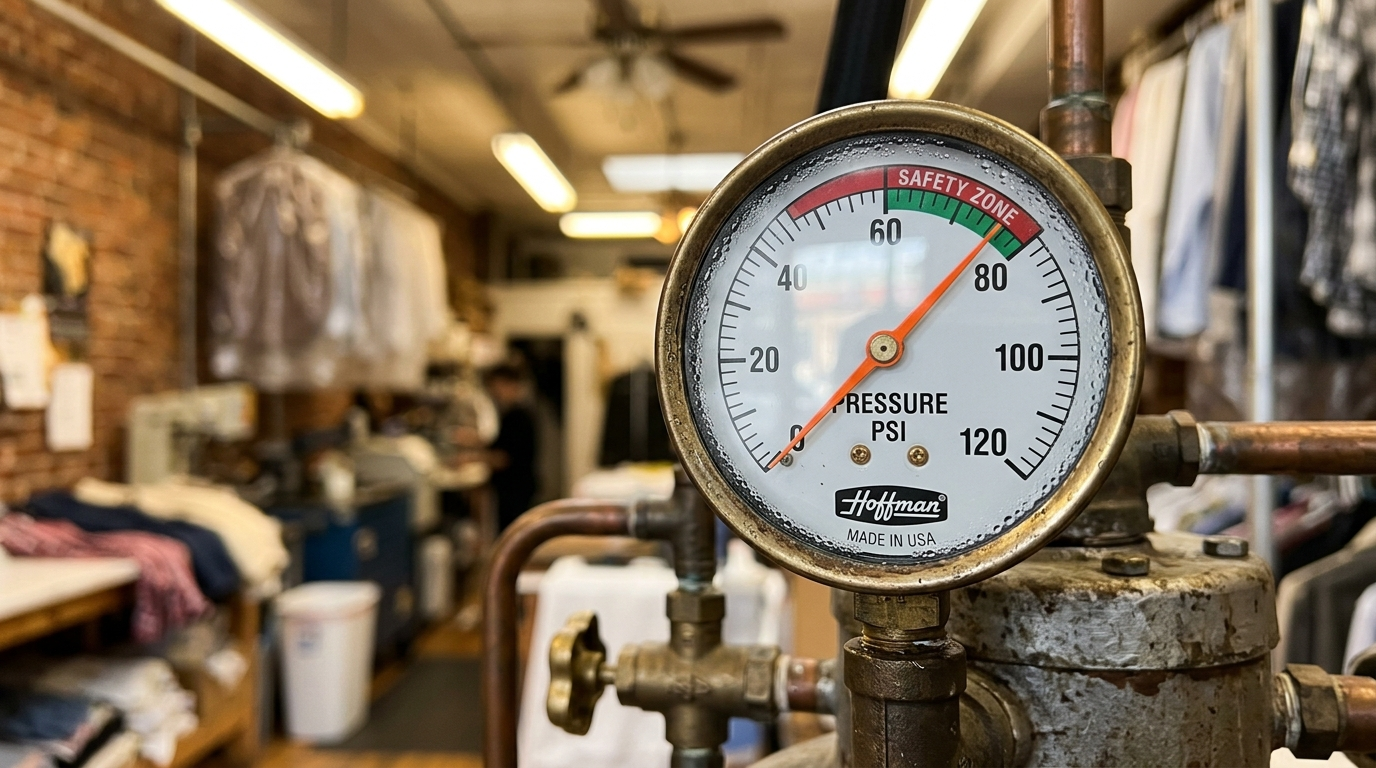
The boiler is the heart of a hat shop steamer. Understanding these terms helps you communicate with technicians, read your manual accurately, and recognize problems before they become expensive.
Boiler
The pressurized tank where water is heated to produce steam. In commercial hat shop steamers, the boiler is typically made of stainless steel and ranges from one to six gallons in capacity. Larger boilers hold more water and produce steam for longer periods without refilling, which matters for shops doing high volume hat work.
Hoffman’s Pro Line models, like the ASME/UL certified ELG4, are purpose built for this kind of sustained commercial use.
PSI (Pounds Per Square Inch)
The unit of measurement for steam pressure. This is where hat shop steamers diverge sharply from garment steamers. Hat shaping, especially on felt and straw bodies, requires significantly higher pressure than simply removing wrinkles from a shirt. Hoffman hat shaping equipment delivers up to 70 to 90 PSI, enough to thoroughly soften and reshape hat bodies.
Scale buildup directly reduces PSI output. When mineral deposits restrict water flow and insulate the heating element, the boiler can’t generate the pressure needed to properly soften hat materials. A steamer that was originally delivering 70 PSI might drop to 40 or 50, and hat shaping quality suffers visibly. The low steam pressure troubleshooting checklist covers the diagnostic steps when this happens.
Blowdown
The process of draining a portion of water (along with its concentrated dissolved solids) from the boiler. In industrial settings, blowdown is recommended at least once per eight hour shift for actively running boilers. For a hat shop steamer used several hours each day, the practical equivalent is draining the tank completely at the end of each workday.
Blowdown prevents dissolved minerals from reaching concentrations high enough to form scale. Think of it as emptying the mineral sink before it overflows. This simple end of day habit is one of the most effective hat shop steamer maintenance practices.
Pressure Relief Valve / Safety Valve
A spring loaded valve that opens automatically if internal pressure exceeds safe limits. On commercial hat shop boilers operating at 40 to 90 PSI, this valve is a critical safety component. It must be checked periodically to confirm it isn’t stuck or corroded. A stuck safety valve on a pressurized system is a genuine hazard, not a theoretical one. For more on safety components and what they do, the steam boiler safety features guide is worth reading.
Run Dry Protection
A safety feature that automatically shuts off the heating element when the water level drops below a safe minimum. Without run dry protection, an empty or near empty boiler continues heating, which rapidly destroys the heating element and can warp or crack the tank itself.
Run dry protection is sometimes called “low water cutoff” or “auto shutoff” in manufacturer documentation. On commercial steamers, it typically works via a sensor or float switch inside the boiler that detects when water falls below a preset level. The moment the threshold is crossed, the system kills power to the element.
This matters for hat shops because it’s easy to lose track of water level during a busy shaping session. A shop steaming 30 or 40 hats in a row can burn through a tank faster than expected, especially on smaller boilers. If the sight glass gets obscured by mineral staining (another reason to keep it clean), operators may not notice the dropping level until it’s too late.
Not all steamers include run dry protection. Consumer grade and some budget commercial models skip it to save on cost. For a shop that depends on its steamer daily, run dry protection is not optional. It is the difference between an automatic shutoff that saves a $300 heating element and a catastrophic failure that sidelines the whole operation. When evaluating equipment, confirm this feature is present. If your current steamer lacks it, upgrading is worth serious consideration.
ASME Certification
The American Society of Mechanical Engineers (ASME) sets manufacturing and safety standards for pressure vessels, including commercial steam boilers. An ASME certified boiler has been designed, built, and tested to nationally recognized safety standards. This certification matters for insurance purposes, building inspections, and general peace of mind when running pressurized equipment in your shop.
UL Listing
Underwriters Laboratories (UL) testing and certification for electrical safety. A UL listed steamer has passed independent testing confirming its electrical components meet safety standards. Many commercial landlords and insurance providers require UL listed equipment.
Sight Glass
A transparent tube or window on the side of the boiler that shows the water level inside. Hat shop operators use the sight glass to verify proper water level before and during operation. A cloudy or mineral stained sight glass should be cleaned or replaced promptly. Misreading the water level can lead to running the boiler dry, which damages the heating element, the most expensive component in the system.
Heating Element
The internal component that heats water to produce steam. In commercial boilers, heating elements are typically immersed directly in the water. When mineral scale coats the element, it creates an insulating layer between the element and the water. The element works harder, runs hotter than designed, and eventually fails.
This is the most expensive component to replace, and the number one reason that proper water quality and descaling matter. Everything in hat shop steamer maintenance ultimately comes back to protecting this part.
Hat Steamer vs. Garment Steamer: Maintenance Requirements
| Feature | Professional Hat Steamer | Standard Garment Steamer |
|---|---|---|
| Operating Pressure | 70 to 90 PSI | 0 to 15 PSI (Gravity Fed) |
| Nozzle Material | Heavy duty Brass | Plastic or Stainless Plate |
| Descaling Need | Weekly (High Duty Cycle) | Every 2 to 3 Months |
| Water Requirement | Distilled (Strictly) | Tap or Filtered |
| Run Dry Protection | Recommended (sensor based) | Thermal Fuse Only |
| Key Safety Component | ASME Safety Valve | Thermal Fuse Only |
Component and Hardware Terms
Knowing the names of your steamer’s parts makes ordering replacements faster, troubleshooting easier, and technician conversations more productive. For a full parts reference, the steam boiler spare parts guide lists common components across Hoffman models.
Brass Hat Nozzle
The concentrated steam tip designed specifically for hat work. Unlike wide garment steaming heads that disperse steam over a broad area, brass hat nozzles focus the steam into a tight, directed flow. This concentrated steam path means even small mineral deposits inside the nozzle create noticeable drops in performance. A partially clogged nozzle delivers uneven steam, which translates directly into inconsistent hat shaping.
Clean the nozzle opening weekly with a toothpick or pin, and soak it in vinegar solution if buildup is visible. You can find the Hoffman hat shaper accessories if you need a replacement.
Gaskets and O-Rings
Rubber or silicone seals that sit between connections: tank to hose, hose to nozzle, lid to boiler. These are consumable parts, meaning they wear out on a predictable schedule due to heat cycling and steam exposure. O-rings used in steam equipment are made from high quality rubber specifically designed for high temperature service.
Plan to inspect gaskets monthly and replace them at least annually, or sooner if you notice any steam leaking from connection points. A leaking gasket wastes steam output and reduces the pressure reaching your nozzle.
Filler Cap Safety Check
The filler cap (sometimes called the fill cap or tank cap) seals the boiler’s fill opening during operation. On pressurized systems running at 40 to 90 PSI, a worn or improperly sealed filler cap is a serious safety concern.
A filler cap safety check involves three things:
- Inspecting the cap’s seal ring for cracks, hardening, or compression set (where the rubber has flattened and no longer springs back). A degraded seal allows steam to escape, reducing operating pressure and creating a burn hazard.
- Confirming the locking mechanism works correctly. Many commercial steamer caps use a twist lock or bayonet style closure. If the cap doesn’t seat firmly or rotates freely when it should be locked, the mechanism is worn and the cap should be replaced.
- Testing for leaks under pressure. Once the boiler reaches operating pressure, visually check around the cap for any wisps of steam. Even a small leak here wastes energy, drops PSI, and exposes whoever is standing near the fill opening to a burn risk.
Filler cap checks should happen monthly alongside gasket and O-ring inspections. The cap’s seal ring is a consumable part, just like any other gasket, and should be replaced on the same annual schedule.
Solenoid Valve
An electrically controlled valve that opens and closes the steam pathway, usually triggered by a foot pedal. When you press the foot pedal, the solenoid opens and steam flows. When you release, it closes. A sticking solenoid means inconsistent steam delivery: the valve might stay open too long, close too slowly, or fail to open fully. If your foot pedal response feels sluggish or inconsistent, the solenoid is the first component to investigate.
Hose and Power Cord Inspection
The flexible steam hose, its fittings, and the electrical power cord are components that degrade gradually from heat exposure, mechanical stress, and everyday handling. Because the decline is slow, it’s easy to miss until something fails.
Hose inspection should happen weekly. Feel along the entire length of the steam hose for soft spots, bulges, or areas that feel thinner than the surrounding material. These indicate internal breakdown. Check both ends where the hose connects to the boiler and the nozzle, as these joints see the most stress. Look for visible cracks, discoloration, or any sign of steam escaping at the fittings. A hose that has hardened and lost its flexibility is also due for replacement, since stiff hoses are more likely to crack under bending stress.
Power cord inspection is equally important but often overlooked. The cord on a commercial steamer handles significant current (especially on 220V models), and damage creates both a fire risk and an electrocution hazard. Look for frayed insulation, exposed wire, burn marks, or a plug that feels loose in the outlet. Pay particular attention to the point where the cord enters the steamer body, as repeated flexing causes internal wire breaks that may not be visible from outside.
If you find any damage to the hose or power cord, take the steamer out of service until the part is replaced. These are not components worth “watching” or “keeping an eye on.” Damaged hoses spray scalding water. Damaged cords start fires.
Fill Funnel
The opening through which you add water to the boiler. On manual fill models, the fill funnel may include a strainer to catch sediment. Keep the strainer clean and never bypass it, even when using distilled water.
Maintenance Schedule Terms
Knowing what to do matters, but knowing when to do it matters just as much. These terms describe the framework of a proper hat shop steamer maintenance program. The commercial steam boiler maintenance guide provides a more general overview that applies across industries.
Preventive Maintenance
Scheduled upkeep performed before problems occur, as opposed to reactive repair after something breaks. For hat shop steamers, preventive maintenance includes daily draining, weekly descaling, monthly inspections, and annual parts replacement. The cost of prevention is always lower than the cost of downtime and repair.
Here is a practical schedule for hat shops running steamers daily:
After every use:
- Empty the water tank completely
- Wipe down the exterior and nozzle
Weekly:
- Descale with a 50/50 white vinegar and distilled water solution
- Clean the nozzle opening with a pin or toothpick
- Inspect hose connections for leaks
- Run your hands along the steam hose and power cord, feeling for soft spots, cracks, or exposed wire
Monthly:
- Full descaling soak (30 to 60 minutes)
- Inspect gaskets and O-rings for wear
- Check sight glass clarity
- Perform a filler cap safety check (seal ring condition, locking mechanism, leak test under pressure)
- Verify run dry protection is functioning by observing the auto shutoff during a controlled low water test (consult your manual for the specific procedure)
Annually:
- Replace gaskets, seals, filler cap seal rings, and other consumable parts
- Inspect heating element condition
- Replace any hoses or power cords showing wear
- Restock your maintenance supplies kit
- For ASME certified boilers: verify safety valve operation and update compliance documentation
Consumables
Parts that wear out on a predictable schedule and need periodic replacement. For hat shop steamers, consumables include gaskets, O-rings, filler cap seals, sight glass assemblies, strainers, and chemical cleaners. Stocking these parts before you need them prevents unplanned downtime.
Reconditioning
Factory level restoration of a steamer. This typically includes disassembly, thorough cleaning, inspection of all components, replacement of worn parts, reassembly, testing, and recertification. For shops that depend on their steamer daily, reconditioning extends equipment life by years.
Hoffman’s Workhorse Essential plan ($280/year) includes full factory reconditioning every 24 months with a 47 point inspection, parts and labor coverage, and ASME/UL recertification. The Workhorse Protection Program also ships consumables automatically so you never run out of gaskets or cleaning solution mid season.
Compliance Documentation
Written records proving your boiler meets applicable safety codes. This includes ASME certification paperwork, UL listing documentation, inspection logs, and maintenance records. Compliance documentation matters for commercial insurance coverage, building inspections, and liability protection. Keep these records organized and current.
The Preventive Maintenance Checklist
To prevent “spitting” and “wet steam” from damaging expensive felt, keep this checklist near your workstation:
- [ ] Check Sight Glass: Ensure water is at the optimal level before powering on.
- [ ] Test Foot Pedal: Ensure the Solenoid Valve clicks and releases steam instantly.
- [ ] Inspect Hose and Power Cord: Feel for soft spots, cracks, or fraying along the full length of both.
- [ ] Check Filler Cap: Confirm the seal is intact and the locking mechanism engages properly.
- [ ] Clear Nozzle: Use a fine pin to ensure the brass aperture is free of calcium.
- [ ] Confirm Run Dry Protection: Verify the indicator light or sensor shows the safety system is active.
- [ ] End of Day Drain: Never leave water sitting in the boiler overnight.
Troubleshooting Terms
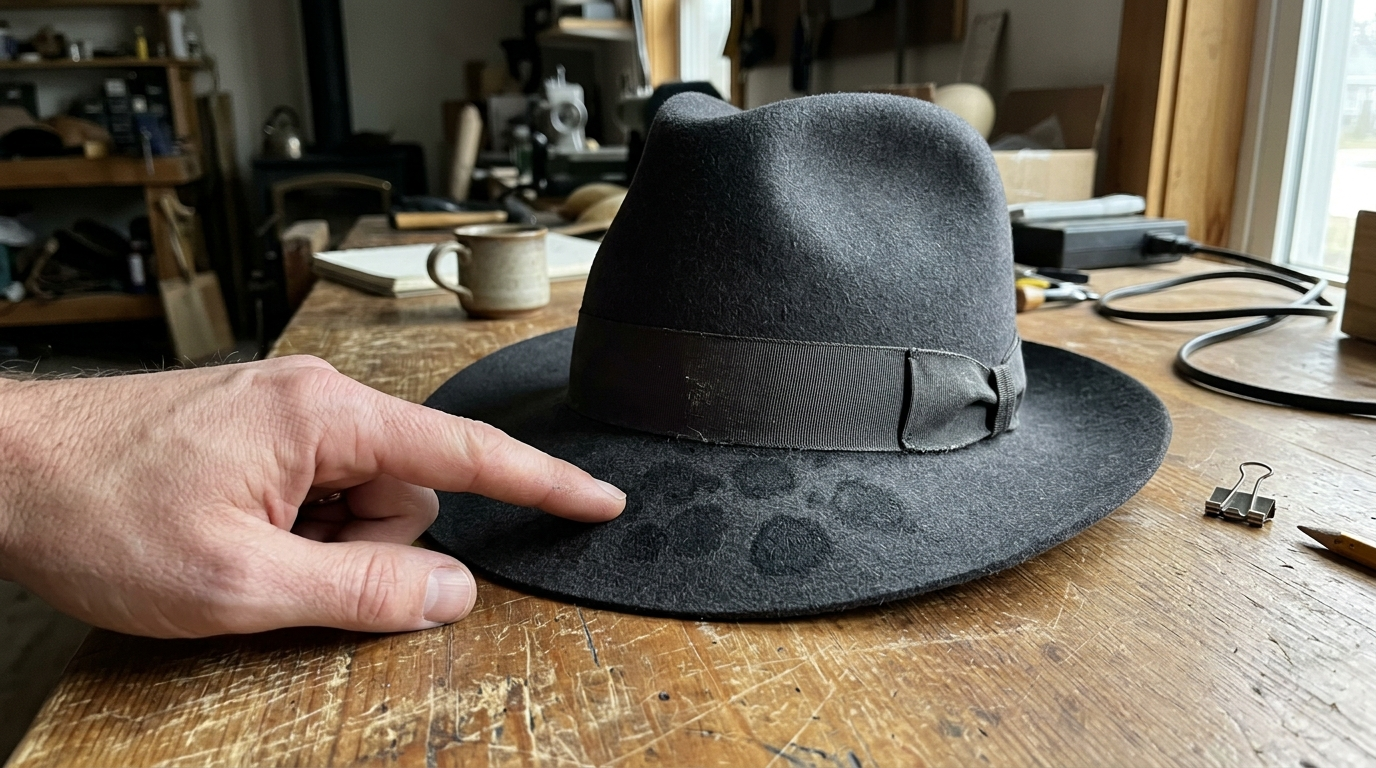
When something goes wrong, having the right vocabulary helps you diagnose the problem faster and communicate clearly with technical support. The hat steamer troubleshooting glossary covers additional diagnostic scenarios.
Sputtering / Spitting
The most common complaint: the steamer shoots water droplets instead of producing smooth, consistent steam. This is almost always caused by mineral deposits blocking internal steam pathways. The scale forces water through narrow gaps where it can’t fully vaporize before exiting the nozzle.
Working milliner MilliStarr warns to “clean regularly to avoid spitting hot water (burn risk)” source, highlighting that sputtering isn’t just a performance issue. It is a burn hazard for the operator and a damage risk for expensive hat bodies.
If your steamer starts sputtering, descale immediately. Don’t wait for your regular weekly schedule.
Wet Steam vs. Dry Steam
Dry steam is fully vaporized water with no liquid droplets. Wet steam carries tiny water droplets along with the vapor. Hat shaping requires dry steam. Wet steam on a felt hat causes water staining, material damage, and unpredictable shaping results. A properly maintained steamer at full operating pressure produces dry steam. A steamer with scale buildup, low pressure, or an overfilled tank produces wet steam.
Low Steam Output
When the steamer produces steam but without enough force or volume to do the job. Common causes include scale insulating the heating element (so the water heats more slowly), mineral deposits restricting the steam pathway, or a failing heating element. If descaling doesn’t restore full output, the heating element should be inspected.
Clogged Nozzle
A partial or complete blockage of the brass hat nozzle caused by mineral deposits. Symptoms include uneven steam flow, reduced pressure at the nozzle tip, or steam escaping from the sides of the nozzle rather than the center. Clear minor clogs with a pin and vinegar soak. For persistent blockages, replace the nozzle.
Element Failure
The death of the heating element, usually caused by prolonged exposure to mineral scale. Scale acts as insulation, trapping heat inside the element rather than transferring it to the water. The element overheats internally and eventually burns out. This is the most expensive repair on a commercial steamer and the ultimate consequence of neglected hat shop steamer maintenance.
One user on Reddit’s r/jewelers community reported using two Hoffman steamers over 30 years, with the first unit lasting 24 years before needing replacement. That kind of longevity is achievable, but only with consistent hat shop steamer maintenance throughout the equipment’s life.
If you’re dealing with a problem beyond DIY fixes, Hoffman’s technical support offers unlimited lifetime remote assistance.
Quick Reference Table
| Term | What It Means | Why Hat Shops Care | How Often to Address |
|---|---|---|---|
| Distilled water | Mineral free water | Prevents scale buildup entirely | Every fill |
| Descaling | Dissolving mineral deposits | Restores steam pressure and flow | Weekly (commercial use) |
| Blowdown | Draining concentrated water | Removes dissolved solids before they become scale | Daily (end of shift) |
| TDS | Dissolved mineral concentration | Determines how aggressively you need to descale | Test periodically |
| Sight glass | Water level indicator | Prevents dry firing the boiler | Check before each use |
| Gaskets/O-rings | Seals at connection points | Prevent steam leaks that reduce pressure | Inspect monthly, replace annually |
| Heating element | Heats water to make steam | Most expensive part; scale is its enemy | Inspect annually |
| Safety valve | Pressure relief mechanism | Prevents dangerous over pressurization | Test annually |
| Brass nozzle | Concentrated hat steam tip | Small clogs cause big performance drops | Clean weekly |
| Run dry protection | Auto shutoff at low water | Prevents element burnout from empty tank | Verify monthly |
| Filler cap seal | Pressurized tank closure | Worn seal causes leaks and burn hazards | Inspect monthly, replace annually |
| Hose and power cord | Steam delivery and electrical supply | Degradation causes burns and fire risk | Inspect weekly |
| Maintenance supplies kit | Pre assembled consumables | Ensures maintenance happens on schedule | Restock annually |
Maintenance is always cheaper than replacement. A well maintained commercial steamer can last decades. A neglected one might not last two years.
For hat shops looking to take the guesswork out of their hat shop steamer maintenance schedule, the Workhorse Protection Program automates consumable shipments, includes factory reconditioning, and provides compliance documentation so your records stay current without extra effort. And if you’re building out a new hat shop or upgrading equipment, Hoffman’s hat shaper bundles come ready to work with everything included.
Frequently Asked Questions
How often should I descale my hat shop steamer?
For commercial hat shop use with daily operation, descale at least once per week. Steamer manufacturer Fridja specifically recommends weekly descaling for commercial use, compared to every two months for home use. If you’re using tap water instead of distilled (which you shouldn’t be), you may need to descale even more frequently.
Can I use tap water in my hat shop steamer?
You can, but you shouldn’t. Roughly 85% of the U.S. has hard water, and those dissolved minerals are what cause scale buildup, sputtering, pressure loss, and eventual heating element failure. Distilled water costs about a dollar per gallon and can nearly eliminate descaling needs. It is the cheapest insurance policy for your equipment.
What is the best descaling solution for a commercial hat steamer?
A 50/50 mix of white vinegar and distilled water is the standard. Let it soak for 30 to 60 minutes for regular maintenance, or up to two to three hours for heavy buildup. Citric acid (one to two tablespoons per quart of warm water) works well for stubborn calcium deposits. If your manufacturer makes a proprietary cleaner, follow their specific instructions, as soak times and procedures vary.
Why is my steamer spitting water onto hats?
Sputtering is caused by mineral scale blocking internal steam pathways. Water gets forced through narrow gaps and can’t fully vaporize before reaching the nozzle. Descale immediately when this happens. Wet steam on a felt hat can cause water staining and material damage, so don’t continue using a sputtering steamer on merchandise.
How long should a commercial hat shop steamer last?
With consistent maintenance, decades. One Reddit user in the jewelry community reported 24 years of service from a single Hoffman unit before replacing it. The key factors are using distilled water, descaling on schedule, replacing consumable parts like gaskets and O-rings annually, and draining the tank after each use.
What does run dry protection do and does my steamer need it?
Run dry protection automatically shuts off the heating element when water drops below a safe level. Without it, an empty boiler keeps heating until the element burns out or the tank is damaged. For any hat shop running a steamer daily, this feature is essential. It protects the most expensive component in the system (the heating element) from a common operator oversight. When purchasing a steamer, confirm this feature is included.
What does ASME certification mean for my hat shop steamer?
ASME certification means the boiler was designed, manufactured, and tested to nationally recognized safety standards for pressure vessels. This matters for commercial insurance coverage, building inspections, and regulatory compliance. Not all commercial steamers carry ASME certification, so it is worth confirming when purchasing equipment for a business environment.
Should I drain my steamer every day?
Yes. Draining the tank at the end of each workday is the practical equivalent of a “blowdown” in industrial boiler terms. It removes water that has become concentrated with dissolved solids over the course of the day, preventing those minerals from settling and forming scale overnight. This five minute habit significantly extends the life of your equipment.
How often should I inspect my steam hose and power cord?
Weekly. Run your hands along the hose to feel for soft spots, bulges, or hardened sections. Check the power cord for frayed insulation, exposed wire, or burn marks. Pay special attention to connection points at both ends of the hose and where the cord enters the steamer body. Any damage means the steamer should come out of service until repairs are made.
What is the most expensive steamer repair to avoid?
Heating element replacement. Scale deposits insulate the element from the water, causing it to overheat internally and eventually burn out. Every other maintenance task, from using distilled water to weekly descaling to daily draining, exists primarily to protect this one component. Prevention is always cheaper than replacement.


