

The Complete Hat Steamer Accessories Guide: 17 Essentials for Professional Hat Shaping
TL;DR
A hat steamer without the right accessories is like a workbench without tools. This hat steamer accessories guide covers 17 must have items for anyone from hobbyist collectors to full time hat shop operators, including shaping heads, steam plates, brass nozzles, pressure gauges, auto fill reservoirs, safety gloves, cleaning kits, and maintenance supplies. If you want to skip the piecemeal approach, Hoffman’s hat shaping bundles ($2,149 to $4,895) package the most critical accessories together so you can start working on day one.
At a Glance: What are the Essential Hat Steamer Accessories?
To professionally shape and maintain hats, the five essential accessories are:
- Hat Shaping Head: Directs high pressure steam through the crown for uniform shaping.
- Brass Steam Nozzle: For precision spot treatment of creases and brims.
- Heat Resistant Gloves: Critical safety gear to prevent steam burns from 70 to 90 PSI output.
- Distilled Water: Prevents mineral buildup and extends boiler life.
- Hat Brushes (Light & Dark): To clean and set the nap of the felt post steaming.
Pro Tip: For commercial shops, a Foot Pedal Control is the best ROI upgrade, as it frees both hands for shaping.
Why Accessories Matter More Than the Steamer Itself
Something most people get wrong about hat steaming: they obsess over the steamer unit and ignore everything around it. The steamer produces steam. That’s it. The accessories are what control it, direct it, protect you from it, and turn raw steam into a finished hat.
Milliners historically used a tea kettle over a stovetop to produce steam for hat shaping, a method that was both impractical and imperfect. Modern hat steamers solved the “producing steam” problem. But the gap between owning a steamer and running an efficient hat shaping operation is filled entirely by accessories.
This hat steamer accessories guide covers every category of accessory you might need, whether you’re steaming a personal collection of cowboy hats or running a professional hat shaping business. Each item includes who actually needs it, what it costs, and honest tradeoffs.
For shops that want everything in one purchase, Hoffman offers industry specific bundles that eliminate the guesswork of building a setup piece by piece. Let’s walk through the full accessory ecosystem.
At a Glance: Hat Steamer Accessories Comparison
| Accessory | What It Does | Who Needs It | Price Range | Priority |
|---|---|---|---|---|
| Hat Shaping Head | Directs steam upward through crown | Pro hat shops | $499 standalone; $2,375+ in bundles | Essential for shops |
| Steam Head | Dedicated steam output head for hat work | All hat steaming users | $50 to $150 | Essential |
| Steam Plate Attachment | Broad, even steam distribution across brims | Milliners, brim workers | $40 to $120 | High (brim work) |
| Brass Steam Nozzle | Concentrates steam for targeted work | All users | $15 to $40 | Essential |
| Steam Gun / Spray Gun | Trigger controlled precision steam | Commercial operators | $150 to $200 | High (pros) |
| Foot Pedal Control | Hands free steam activation | Repetitive hat work | Included with many steamers or ~$50 | High |
| Steam Hose Extensions | Increases working range from boiler | Dedicated stations | $80 to $390 | Medium to High |
| Rolling Equipment Cart | Mobility for steamer unit | Shops, events, mobile services | $130 to $160 | Medium |
| Heat Resistant Gloves | Burn protection | Everyone | $15 to $40 | Essential (safety) |
| Hat Cleaning Kit | Pre/post steam hat care | Hat shops, collectors | $20 to $50 | High |
| Distilled Water / Descaling | Prevents mineral buildup | All steamer users | $5 to $15/gallon | Essential (maintenance) |
| Pressure Gauge | Monitors boiler output in real time | Commercial operators | $20 to $75 (aftermarket) | High (pros) |
| External Reservoir Auto Fill | Continuous water supply without manual refilling | High volume shops | $200 to $500+ | High (volume shops) |
| Steam Iron w/ Regulator | Flat pressing after shaping | Milliners, hat makers | $249 to $299 | Medium (specialized) |
| Hat Blocks & Forms | Holds shape during/after steaming | Professional milliners | $50 to $300+ per block | High (milliners) |
| Steam Brush Attachment | Combined steaming and brushing | Felt hat finishing | $249 | Medium |
| Brim Cutters & Specialty Tools | Trim and finish post steam | Western hat shops | $20 to $50 per tool | Medium |
Now let’s break down each accessory in this hat steamer accessories guide with the detail you need to make smart purchasing decisions.
1. Hat Shaping Head
Best for: Western hat shops and any professional hat shaping operation doing daily volume.
The hat shaping head is the single most important accessory for commercial hat shaping. It mounts on or connects to a commercial steamer and directs steam upward through the hat crown for even, consistent penetration. Without one, you’re holding hats over open steam, which is slower, less consistent, and significantly more dangerous.
Pricing and options:
- Hoffman Hat Shaper Accessory (standalone): $499, connects to JEL3 boiler
- JEL3 Hat Shaper Bundle: $2,375 to $2,575, includes JEL3 boiler plus hat shaper kit with all plumbing attachments
- Deluxe Hat Shaping Bundle: $2,649, includes ELG4 boiler, Pro Iron with built in regulator, Hat Shaper Kit, and Foot Pedal
- JEL11M Hat Shaper Bundle: $4,895, includes 6 gallon manual fill boiler for high volume shops
Key features:
- Controls steam pressure, temperature, and moisture level independently
- Also usable for boot fitting (dual purpose for western wear shops)
- Hoffman units develop 70 to 90 PSI steam, ASME/UL certified
- Complete plumbing attachments included in bundle configurations
Tradeoffs:
- Significant upfront investment for solo operators
- Standalone accessory requires owning a compatible Hoffman boiler
- Overkill for hobbyists steaming a few hats per month
Entry level alternatives exist (some toolkits pair a basic shaping head with a consumer grade steamer for around $379), but these systems operate at lower pressure and lack safety certification. For a shop doing daily work, the pressure difference is immediately noticeable in speed and felt penetration. For a deeper comparison of steamer types for hat shops, Hoffman’s buyer’s guide breaks down the options by volume and budget.
Pro tip: If you already own a Hoffman JEL3, the standalone hat shaper accessory at $499 converts your existing boiler into a full hat shaping station without buying a new unit.
Commercial vs. Consumer Accessory Performance
| Feature | Consumer/Travel Steamer | Professional Boiler System |
|---|---|---|
| Operating Pressure | 5 to 15 PSI | 70 to 90 PSI |
| Steam Temperature | ~212°F | 300°F+ (Dry Steam) |
| Accessory Material | Plastic / Thin Aluminum | Heavy Duty Brass / Cast Iron |
| Continuous Run Time | 10 to 15 Minutes | 4 to 8 Hours |
| Best Accessory For | Refreshing lining/surface | Deep felt penetration & shaping |
2. Steam Head
Best for: Every hat steaming setup, from personal use to commercial stations. The steam head is the component that actually delivers steam to the hat, and choosing the right one determines the quality and consistency of your results.
A steam head is the output point where steam exits the system and contacts the hat material. While the term overlaps with “hat shaping head” in some contexts, a steam head more broadly refers to any dedicated head attachment designed specifically for hat work, as opposed to general garment steaming heads. These come in various profiles: flat tops for placing hats crown down, domed versions that mimic head shapes, and open designs that allow maximum airflow through the felt.
Pricing: $50 to $150 for standalone steam heads, though many are included with hat shaping bundles.
Key features:
- Purpose built profile for hat crown steaming
- Allows even steam distribution through the full crown area
- Multiple head sizes available to match common hat dimensions
- Often integrated into complete hat shaper kits
Tradeoffs:
- Generic steam heads from consumer steamers lack the surface area for full crown coverage
- Size compatibility matters: a head too small leaves uneven steam penetration
- Higher end dedicated steam heads require compatible boiler connections
Practitioners on YouTube hat shaping channels consistently note that upgrading from a generic garment steamer head to a purpose built hat steam head was the single change that most improved their shaping consistency. The difference comes down to surface area coverage and steam flow direction. A garment head shoots steam outward; a hat steam head channels it upward through the crown interior, which is what you actually need for deep felt penetration.
3. Steam Plate Attachment
Best for: Brim work, flat pressing, and any hat shaping task that requires broad, even steam distribution across a wide surface area.
A steam plate attachment is a flat, perforated plate (usually brass or stainless steel) that mounts onto your steam output and disperses steam evenly across a wide area. Think of it as the opposite of a nozzle: where a nozzle concentrates steam into a tight jet, a steam plate spreads it across 4 to 8 inches of surface.
This accessory is particularly valuable for brim shaping. When you need to flatten, curl, or reshape a hat brim, you want consistent steam across the entire brim width simultaneously. Spot steaming with a nozzle creates uneven results because parts of the brim cool and re stiffen before you finish steaming the rest.
Pricing: $40 to $120 depending on size and material. Some are included in professional hat shaping bundles.
Key features:
- Even steam distribution across wide surfaces
- Ideal for brim flattening and reshaping
- Works well with hat blocks for crown blocking
- Reduces the “hot spot” problem of concentrated nozzle steam
Tradeoffs:
- Not useful for precision spot work (that’s what nozzles are for)
- Requires enough steam volume to maintain pressure across the full plate surface
- Consumer steamers often lack the output to fully supply a large steam plate
- Adds another attachment to manage and store
The steam plate is one of those accessories that separates adequate hat work from professional results, particularly on wide brim western hats and formal millinery. If you’re doing any brim work on felt or straw, a steam plate should be on your list.
4. Brass Steam Nozzle
Best for: Every hat steamer user, from beginners to professionals. This is the most basic essential accessory.
A brass steam nozzle screws onto the end of a steamer hose and concentrates the steam output into a focused jet. This lets you target specific areas of a hat (a dented crown, a stubborn crease) rather than flooding the entire piece with diffused steam.
Pricing: $15 to $40 depending on manufacturer and thread size.
Key features:
- Concentrates steam for precision spot work
- Available as add ons for most consumer and commercial steamers
- Brass construction resists corrosion from constant steam exposure
- Lightweight and easy to swap between different tip sizes
Tradeoffs:
- Consumer grade nozzles paired with low pressure steamers won’t match the penetration speed of commercial boiler fed nozzles
- Thread compatibility varies between brands, so check sizing before ordering
- Not a substitute for a full hat shaping head on heavy felt work
Practitioners on SteamerAdvice.com note that you can purchase a brass hat nozzle to convert a general purpose garment steamer into a hat steamer, though this approach works best for occasional use rather than commercial volume.
5. Steam Gun / Spray Gun
Best for: Commercial operators who need precise, trigger controlled steam delivery.
A steam gun gives you on/off control through a trigger mechanism. Press the trigger, steam flows. Release it, steam stops. This sounds simple, but it transforms the workflow. You’re not wasting steam between applications or fumbling with valve controls while holding a hat in position.
Pricing:
- Hoffman Steam Gun for PRO Boilers: $149.99 to $199.99 depending on hose length (6ft to 12ft options)
- Hoffman Steam Gun for Everyday steamer: $199
Key features:
- Trigger controlled for instant on/off
- Includes flat tip spray nozzle
- Multiple hose length options for different shop layouts
- Prevents over steaming of delicate felt
Tradeoffs:
- Not compatible with all Hoffman models (check compatibility before purchasing)
- Higher cost than passive nozzle setups
- Adds another component that may need occasional maintenance
Professional hat shapers emphasize that steam on demand, rather than continuous output, is what separates clean shaping work from over saturated felt that loses its body.
6. Foot Pedal Control
Best for: Anyone doing repetitive hat shaping where hands free steam activation increases both speed and safety.
A foot pedal lets you activate the steamer with your foot, keeping both hands free to manipulate the hat. This matters more than most beginners realize. When you’re shaping a crown or rolling a brim, you need two hands on the hat and zero time wasted reaching for controls.
Pricing: Included with several Hoffman models (the GEM III flash steamer, the EVD 1, and the Deluxe Hat Shaping Bundle). Standalone pedals typically run around $50.
Key features:
- Frees both hands for hat manipulation
- Reduces workflow interruptions
- Standard inclusion on Hoffman’s GEM III and several bundle configurations
- Simple mechanical design with minimal failure points
Tradeoffs:
- Floor space requirement (needs clear pedal placement)
- Some operators prefer trigger gun control instead
- Not all aftermarket pedals are compatible with all steamer brands
Hat shapers consistently cite foot pedal control as the upgrade that most improves workflow efficiency. It’s one of those accessories that seems optional until you use it, then becomes indispensable.
7. Steam Hose Extensions
Best for: Shops with dedicated stations where the boiler stays in a fixed location but the work area moves.
Longer steam hoses extend the reach between your boiler and the steam output point. This is particularly useful in shops where one boiler feeds multiple workstations, or where the steamer sits on a shelf or cart while you work at a separate table.
Pricing:
- Hoffman Steam Gun hoses: available in 6′, 8′, 10′, and 12′ lengths ($149.99 to $199.99 range)
- Hoffman Steam Wand: $279.95 to $389.95 depending on hose length
Key features:
- Multiple length options to match your shop layout
- Compatible with Hoffman’s modular accessory system
- Longer reach without moving heavy boiler equipment
- Steam wand option combines extended reach with a rigid applicator tip
Tradeoffs:
- Longer hoses mean slightly more heat loss between boiler and tip
- More hose length means more storage/management
- Must match hose fittings to your specific boiler model
Practicing milliner Amy Fowler notes that water capacity and refill frequency are real pain points during extended steaming sessions. A proper hose setup paired with a larger boiler tank solves both distance and uptime problems simultaneously. For more on optimizing your hat shop steam station layout, Hoffman’s layout guide covers workstation planning in detail.
8. Rolling Equipment Cart
Best for: Hat shops at events, trade shows, or businesses that move equipment between workstations.
Commercial steamers are heavy. A rolling cart turns a 40+ pound boiler into a mobile workstation you can wheel between rooms, bring to pop up events, or reposition during shop reconfiguration.
Pricing: Hoffman Wheeled Cart: $129.99 to $159.99, with options for 2 gallon and 6 gallon boilers (with or without handle).
Key features:
- Purpose built for Hoffman boiler dimensions and weight
- Locking casters for stability during operation
- Handle option for easier maneuvering
- Multiple size options for different boiler models
Tradeoffs:
- Not compatible with all models (specifically not the EVD 1)
- Adds to total setup cost
- Takes up floor space in small shops
If you do any mobile hat work or plan to bring your steamer to western wear events, a cart isn’t optional. It’s a safety and logistics necessity. For those considering portable hat shaping setups, the cart becomes even more important.
9. Heat Resistant Gloves
Best for: Everyone. No exceptions. This is the most overlooked essential in any hat steamer accessories guide.
Steam burns are more dangerous than most beginners expect. Commercial steamers can operate at 70 to 90 PSI, producing steam temperatures that cause immediate injury on unprotected skin. Even lower pressure consumer steamers produce enough heat to scald.
Pricing: $15 to $40 for quality heat resistant steaming gloves from millinery or industrial suppliers.
Key features:
- Protection from steam burns during hat manipulation
- Improved grip on damp, freshly steamed material
- Available in various lengths (wrist, forearm, elbow)
- Washable and durable for repeated use
Tradeoffs:
- Thicker gloves reduce tactile sensitivity
- Sizing matters (too loose and you lose dexterity)
- Need replacement after extended use as insulation degrades
SteamerAdvice.com explicitly warns users to “wear gloves, remember steam is hot and will cause scalding or burns if it comes in contact with your skin.” This isn’t overcautious advice. It’s practical reality, especially at commercial pressure levels. For a complete safety overview, Hoffman’s steam safety orientation guide covers operator protocols in depth.
Safety First: Professional Steam Standards
When selecting accessories, especially for commercial storefronts, ensure they meet these safety requirements:
- ASME Certification: Ensure your boiler and high pressure hoses meet the American Society of Mechanical Engineers standards.
- UL Listing: Look for Underwriters Laboratories (UL) marks on foot pedals and electronic components.
- PSI Rating: Ensure your steam gun and hoses are rated for at least 100 PSI to handle the 70 to 90 PSI output of commercial boilers.
- Thermal Barrier: Gloves should be rated for steam, not just dry heat (silicone coated or multi layer Nomex is preferred).
10. Hat Cleaning and Care Kit
Best for: Any hat shop offering cleaning and reshaping services, plus serious collectors maintaining their own pieces.
Most hat steamer accessories guides completely ignore the cleaning, steaming, and stiffening workflow. In practice, these steps happen together. You clean the hat before steaming (to remove dirt and oils that heat would set permanently), steam and shape it, then apply stiffener to lock the new shape.
Pricing: Individual items range from $5 to $50. Complete professional toolkits (bundled with a consumer grade steamer) run around $379 and include dark/light brushes, dark/light hat cleaners, orange sponges, spot remover, stiffener, and shaping tools.
Key features:
- Dark and light brushes (to match hat color and avoid transfer)
- Cleaning sponges for surface dirt removal
- Spot remover for stain treatment before steaming
- Hat stiffener for post steam shape setting
Tradeoffs:
- Cleaning products are consumables requiring regular replenishment
- Different hat materials (felt, straw, wool) need different cleaning approaches
- Quality varies significantly between budget and professional grade products
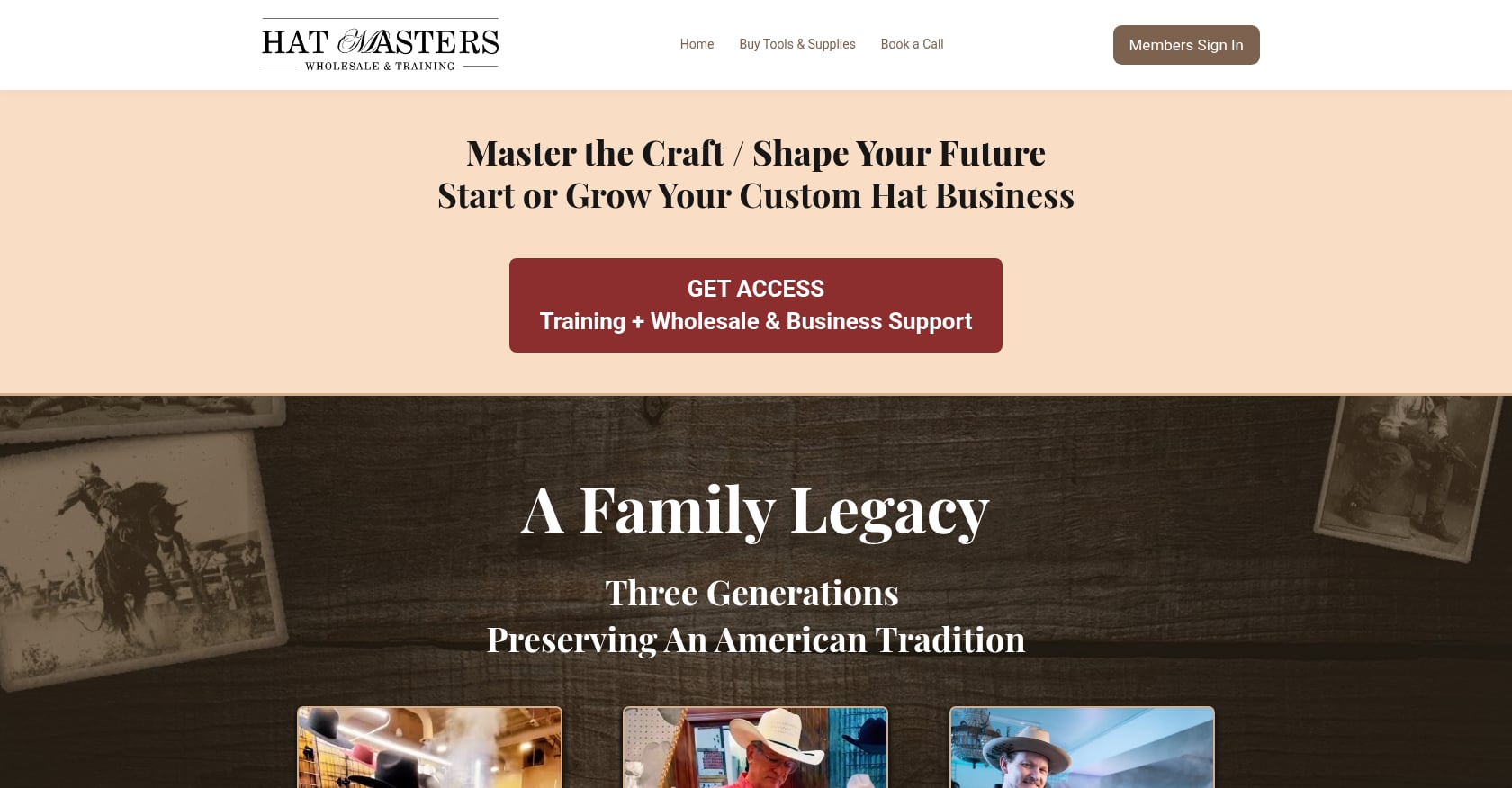
The Hat Masters professional toolkit reveals just how many accessory items working hat shapers actually use daily: two types of brushes, two colors of cleaner, sponges, stiffener, and spot remover, all alongside the steamer itself.
11. Distilled Water and Boiler Maintenance Supplies
Best for: All steamer users. This is the single most impactful maintenance habit you can develop.
Tap water contains minerals that accumulate inside boiler tanks over time. This buildup reduces heating efficiency, clogs nozzles, and eventually damages expensive equipment. Distilled water eliminates this problem almost entirely. Descaling solutions handle whatever buildup does occur.
Pricing: Distilled water runs $1 to $2 per gallon. Descaling solutions cost $10 to $20 per treatment.
Key features:
- Distilled water prevents mineral deposit formation
- Descaling solutions dissolve existing buildup
- Regular maintenance extends equipment life by years (sometimes decades)
- Low cost relative to equipment replacement
Tradeoffs:
- Requires consistent discipline (easy to get lazy and use tap water)
- Distilled water must be purchased or produced separately
- Descaling requires downtime while the solution works
One user on Reddit’s r/jewelers reported using two Hoffman steamers over 30 years, with the first lasting 24 years. That kind of longevity comes directly from proper maintenance habits. For a complete guide on water quality standards for steam boilers, Hoffman’s resource covers everything from mineral content to testing methods.
For shops that want maintenance handled automatically, Hoffman offers their Workhorse Protection Program, which includes automatic consumable shipments and factory reconditioning on a schedule. The Lite plan runs $216/year; the Essential plan is $280/year and adds full reconditioning every 24 months with a hot swap loaner so you never have downtime.
Technical Note on Steam Quality:
Using tap water creates “wet steam” due to mineral particles carrying water droplets. Professional hat shaping requires “dry steam” (high temperature, high pressure).
Mineral Buildup = Lower Temperature + Spitting Water = Damaged Felt
Distilled water ensures the steam remains a gas, preventing water spots on expensive beaver or rabbit fur felts.
12. Pressure Gauge
Best for: Commercial operators who need to verify and monitor steam output in real time, and anyone troubleshooting inconsistent shaping results.
A pressure gauge measures the PSI output of your boiler, giving you a precise reading of how much steam force is available at any given moment. Most commercial Hoffman boilers ship with an integrated pressure gauge on the boiler unit itself, but understanding what the gauge tells you (and when to add an aftermarket gauge at the point of delivery) separates competent operators from guesswork.
Why does this matter for hat steaming specifically? Different hat materials require different steam pressures. Heavy beaver felt needs sustained high pressure (70+ PSI) for deep penetration, while lighter wool felts or straw can be damaged by too much force. A pressure gauge lets you dial in the right output before touching felt to steam.
Pricing: Built into most Hoffman Pro line boilers. Aftermarket inline gauges run $20 to $75.
Key features:
- Real time PSI monitoring during operation
- Helps operators match steam pressure to material requirements
- Essential diagnostic tool when steam output feels weak or inconsistent
- Aftermarket inline gauges can be added at the hose or delivery point for more granular readings
Tradeoffs:
- Built in gauges show boiler pressure, not necessarily delivery pressure at the nozzle tip (heat loss through long hoses can reduce effective PSI)
- Aftermarket gauges require compatible fittings and some basic plumbing knowledge to install
- A gauge alone doesn’t fix pressure problems; it only identifies them
Practitioners on Reddit report that a sudden drop in gauge pressure is often the first sign of mineral buildup or a failing heating element. Catching this early, before steam quality degrades visibly, saves both felt and money. For shops experiencing low steam pressure issues, Hoffman’s troubleshooting checklist walks through the diagnostic steps.
13. External Reservoir Auto Fill
Best for: High volume hat shops running continuous steaming sessions, and any operation where stopping to refill the boiler tank costs real productivity.
An external reservoir auto fill system connects a larger water container (typically 5 to 15 gallons) to your boiler, automatically feeding water into the tank as it boils off. Instead of manually refilling every 30 to 60 minutes during heavy use, the boiler maintains its water level continuously, letting you work uninterrupted for hours.
This is particularly relevant for hat shops doing event work, where you might shape 20 to 40 hats in a single day. Manual fill boilers demand attention, and every refill pause means a customer waiting. Auto fill systems eliminate that bottleneck.
Pricing: Auto fill configurations range from roughly $200 to $500+ depending on reservoir size and pump system. Hoffman’s JEL11 model ($7,895) includes an automatic pump fill system built in, while the JEL11M ($4,495) uses manual fill. The price difference between these two models reflects the value of integrated auto fill at scale.
Key features:
- Continuous water supply without manual intervention
- Maintains consistent water level for stable steam pressure
- Significantly reduces downtime during high volume sessions
- Available as built in systems on Hoffman’s larger boilers or as aftermarket add ons for some models
Tradeoffs:
- Higher upfront cost compared to manual fill systems
- Requires a clean water source (still use distilled water in the reservoir)
- More plumbing connections mean more potential leak points
- Not all boiler models support external auto fill retrofitting
One hat shop owner shared in a YouTube walkthrough that switching from manual fill to auto fill cut their average reshaping time per hat by about 15%, not because the steaming was faster, but because they eliminated the refill interruptions that broke their rhythm. For shops considering the manual vs. auto fill decision more broadly, Hoffman’s guide on manual fill vs. auto fill boilers covers the full comparison.
14. Steam Iron with Built In Regulator
Best for: Milliners who need to combine steam with physical pressure, especially for brim work and blocking.
A steam iron connected to your boiler gives you hours of continuous pressing without the constant refilling that standalone irons demand. The built in regulator controls steam flow so you can press hat brims flat, crease crowns, and apply controlled heat and pressure simultaneously.
Pricing:
- Hoffman Iron for Everyday steamer: $299
- Hoffman Internally Regulated Iron Kit for PRO Boilers: $299
- Hoffman Iron Shoe (Teflon coated, non stick): $51.76 add on
Key features:
- Connects directly to boiler for continuous steam supply
- Built in regulator for adjustable steam flow
- Teflon shoe option prevents scorching on delicate materials
- Hours of blocking without refilling water
Tradeoffs:
- Specialized accessory that not all hat shapers need
- Higher cost than standalone household irons
- Requires a compatible Hoffman boiler to operate
- Learning curve for pressure and temperature control on different felt weights
Amy Fowler, a practicing milliner featured on HATalk, notes that a steam generator iron is “especially good when working with heavy or large hat blocks since you won’t have to hold them up over a steam source.” This is a real ergonomic advantage during long sessions.
15. Hat Blocks and Shaping Forms
Best for: Professional milliners making custom hats from scratch. Western hat shops typically shape by hand.
Hat blocks are wooden or aluminum forms that hold hat crowns and brims in a specific shape during and after steaming. They’re the foundation of custom millinery work, and the right collection of blocks determines what styles you can produce.
Pricing: $50 to $300+ per block depending on material, size, and shape. Specialty and vintage blocks can cost significantly more.
Key features:
- Define crown shape, brim curve, and overall hat profile
- Available in wood (traditional) and aluminum (durable, heat resistant)
- Hundreds of shapes available from specialty suppliers
- Reusable across thousands of hats
Tradeoffs:
- Significant investment to build a versatile collection
- Not manufactured by Hoffman (sourced from specialty millinery suppliers)
- Storage requirements grow as your block collection expands
- Western hat reshaping often doesn’t require blocks at all
HATalk lists hat blocks among the most important millinery tools, right alongside steam sources themselves. For a deeper look at how steamers compare to traditional blocking methods, Hoffman’s comparison guide is worth reading.
16. Steam Brush Attachment
Best for: Gently refreshing felt hat surfaces while simultaneously brushing the nap back into place.
A steam brush combines steam delivery with nylon bristles, letting you brush and steam in a single motion. This is particularly useful for felt hats where the nap (the directional texture of the felt surface) needs to be restored after shaping.
Pricing: Hoffman Steam Brush for Everyday steamer: $249. Compatible only with the Hoffman Everyday line.
Key features:
- Combines two steps (steaming and brushing) into one
- Gentle enough for finished hat surfaces
- Nylon bristles won’t damage felt
- Also useful for upholstery and garment finishing
Tradeoffs:
- Limited compatibility (Everyday line only, not Pro line)
- Premium price for a specialized attachment
- Not essential for hat reshaping, more of a finishing tool
- Manual brushing with a separate hat brush works fine for most operators
This accessory falls into the “nice to have” category for most hat shops. It’s more valuable in hybrid operations that also do garment or upholstery steaming alongside hat work.
17. Brim Cutters, Stiffener, and Specialty Tools
Best for: Western hat shapers doing full custom work, including reshaping, trimming, and finishing.
These are the final step tools that come after steaming. Brim cutters trim hat brim edges to a new width. Stiffener (applied by spray or brush) sets the hat’s shape after steaming. Specialty items like balloons (for crown shaping from the inside), foam fillers, sand blocks, and tape round out the professional toolkit.
Pricing: Individual tools typically run $10 to $50 each. Professional toolkits bundle them together.
Key features:
- Brim cutters available in multiple widths (1/8″ and 1/2″ are standard)
- Hat stiffener available for light and dark hats
- Balloons provide internal crown pressure during shaping
- Sand blocks smooth cut brim edges
Tradeoffs:
- Consumable items (stiffener, tape, sponges) need regular replacement
- Brim cutting is irreversible, so requires confidence and practice
- These tools assume you’re doing custom modification, not just reshaping
- Learning curve for clean brim cutting technique
The Hat Masters professional toolkit reveals the full scope: 1/8″ and 1/2″ brim cutters, hat retainer, balloons for crown shaping, foam filler, sand block, and tape. Most general hat steamer accessories guides miss these entirely, but they’re the tools that turn a freshly steamed hat into a finished product.
Build Your Setup: Three Recommended Loadouts
Not everyone needs every accessory on this list. Use this hat steamer accessories guide to match your setup to your actual workload. Here are three practical configurations for different levels of hat steaming work.
Hobbyist / Collector (~$200 total)
A basic consumer steamer with a brass nozzle, heat resistant gloves, distilled water, and a cleaning sponge. This covers personal hat maintenance: removing packing marks and nesting rings, reshaping crowns that have lost their form. One buyer profiled on SteamerAdvice.com noted they were paying $25 per cowboy hat for professional steaming, and with a collection of hats, even a basic steamer setup “quickly pays for itself.”
Side Business / Small Shop ($2,400 to $2,700 total)
The JEL3 Hat Shaper Bundle ($2,375 to $2,575) gives you the boiler, hat shaping head, and all plumbing attachments. Add gloves, a cleaning kit, and distilled water. Consider adding an aftermarket pressure gauge at the delivery point for more precise monitoring. This is a complete commercial hat shaping station that handles daily work with ASME/UL certification for safety compliance.
Full Professional Shop ($3,000+ total)
The Deluxe Hat Shaping Bundle ($2,649) includes the ELG4 boiler, Pro Iron, Hat Shaper Kit, and Foot Pedal. Add a rolling cart ($130 to $160), extra hose length, a steam plate attachment for brim work, a cleaning kit, and the Workhorse Protection Program ($216 to $280/year) for automated maintenance. For high volume operations, consider upgrading to the JEL11 with built in auto fill. This setup handles high volume hat shaping with mobility, precision, and long term reliability built in.
Browse all industry specific bundles to find the right starting point.
Maintenance: The Accessory Nobody Talks About
The least glamorous item in this hat steamer accessories guide is also the most important for long term equipment survival. Use distilled water. Descale on a regular schedule. Monitor your pressure gauge for early signs of mineral buildup. That’s it.
Mineral buildup is the number one killer of commercial steamers. It reduces heating efficiency gradually, so you don’t notice the degradation until performance has dropped significantly. A $2 gallon of distilled water prevents thousands of dollars in repairs or replacement.
For operators who want maintenance handled for them, Hoffman’s Workhorse Protection Program automates consumable shipments, provides factory reconditioning, and includes hot swap loaners so your shop never loses a working day to equipment service. For a step by step maintenance routine, Hoffman’s maintenance checklist covers daily, weekly, and quarterly tasks.
The Bottom Line
A complete hat steamer accessories guide comes down to three priorities: directing the steam (shaping heads, steam plates, nozzles, guns), protecting yourself (gloves, always), and maintaining the equipment (distilled water, pressure gauges, descaling, auto fill systems, protection plans). Everything else builds on that foundation.
No other page currently covers hat steamer accessories as a dedicated, comprehensive resource. Most guides focus on steamer units and ignore the ecosystem around them. The accessories are what turn a steam producing box into a hat shaping business.
If you’re ready to invest in a professional setup, the JEL3 Hat Shaper Bundle is the most popular starting point for commercial hat shops. It includes the boiler, hat shaper kit, and all connections you need. For shops wanting the complete package with a steam iron and foot pedal included, the Deluxe Hat Shaping Bundle eliminates every additional purchase except gloves and distilled water. Hoffman also offers financing options including 0% APR promotions for shops spreading the investment over time.
Frequently Asked Questions
What is the most important hat steamer accessory for a professional shop?
The hat shaping head. It directs steam upward through the hat crown for even, consistent penetration, which is impossible to replicate by holding a hat over open steam. For commercial operations, this single accessory transforms a general steamer into a dedicated hat shaping station.
Do I need a commercial steamer, or can I use a consumer steamer with accessories?
For occasional personal use, a consumer steamer with a brass nozzle works fine. For daily commercial work, you need a commercial boiler (ideally ASME/UL certified) that produces 70 to 90 PSI. The steam pressure difference directly affects how quickly and thoroughly steam penetrates heavy felt. Accessories can enhance a consumer steamer, but they can’t make it produce commercial grade pressure.
What does a pressure gauge tell me about my hat steaming setup?
A pressure gauge shows your boiler’s real time PSI output. This matters because different materials need different pressures: heavy beaver felt requires sustained high PSI, while lighter wool or straw can be damaged by excessive force. A gauge also serves as an early warning system for maintenance issues. If pressure drops over time, mineral buildup or a failing element is likely the cause.
How often should I descale my hat steamer?
It depends on usage volume and water quality. Shops using distilled water exclusively may only need descaling every few months. Shops accidentally using tap water may need monthly treatment. The simplest approach is to always use distilled water and descale on a quarterly schedule as preventive maintenance.
Are hat steamer accessories interchangeable between brands?
Generally, no. Hose fittings, nozzle threads, and electrical connections vary between manufacturers. Hoffman accessories are designed for Hoffman boilers, and specific compatibility notes exist for each product line (Everyday vs. Pro, for example). Always verify model compatibility before purchasing any accessory.
What safety gear do I need for hat steaming?
Heat resistant gloves are the absolute minimum. Commercial steam at 70 to 90 PSI causes immediate burns on contact with skin. Beyond gloves, ensure your workspace has adequate ventilation and that your steamer is ASME/UL certified if you’re operating in a commercial setting where safety inspections apply.
Is it cheaper to buy accessories individually or in a bundle?
Bundles almost always save money. Hoffman’s Deluxe Hat Shaping Bundle at $2,649 includes a boiler, hat shaper kit, steam iron, and foot pedal, which would cost significantly more purchased separately. Bundles also eliminate compatibility guesswork since everything is designed to work together out of the box.
Should I get a manual fill or auto fill boiler for hat shaping?
Manual fill works fine for shops doing fewer than 10 to 15 hats per day. Once you’re consistently doing more than that, or running all day events, auto fill pays for itself in saved time and uninterrupted workflow. The price jump from the JEL11M ($4,495 manual) to the JEL11 ($7,895 auto) is significant, but high volume shops recover that difference quickly in productivity gains.
Can I use a hat steamer for boot fitting too?
Yes. Hoffman’s hat shaper accessory is also usable for boot fitting, making it a dual purpose investment for western wear shops. The same steam control that reshapes felt hat crowns also softens leather for boot stretching and fitting.
What accessories does the Hat Masters toolkit include?
The Hat Masters professional toolkit (around $379 with a consumer grade steamer) includes brim cutters (1/8″ and 1/2″), dark and light brushes, dark and light hat cleaners, a hat retainer, 8oz stiffener, spot remover, sponges, balloons for crown shaping, tape, foam filler, and a sand block. It’s a solid reference for what a working hat shaper uses daily, though the included steamer operates at much lower pressure than commercial boiler systems.


