

TLDR
Most hat steamer troubleshooting problems come down to three things: mineral scale buildup inside the boiler, incorrect steaming technique, or a worn component like a sight glass or heating element. This glossary defines every technical term you’ll encounter when diagnosing issues with commercial hat steamers, from blowdown valves to pressurestats. Bookmark it as a reference for the next time your steamer spits water, loses pressure, or stops producing steam entirely..
Quick Fix: Common Hat Steamer Issues
Most hat steamer problems are caused by mineral scale buildup, incorrect working distance, or clogged solenoid valves. To fix a steamer that won’t produce steam, first check the water level and heating element continuity. If the steamer is spitting water, ensure the hose is not kinked and you are maintaining a 6–8 inch working distance from the hat. Regular weekly blowdowns and using distilled water are the best ways to prevent 90% of mechanical failures.
Why a Hat Steamer Troubleshooting Glossary Exists
When a commercial hat steamer stops working the way it should, most operators do the same thing: open the manual, search online, or call a forum friend. In every case, they run into terminology that assumes prior knowledge. What exactly is a blowdown? Why does the pressurestat matter? What’s the difference between a solenoid failing open versus failing closed?
The existing resources online are scattered. Manufacturer PDFs rank high but read like engineering documents. Social media clips show maintenance steps in 60 seconds without explaining why each step matters. Facebook group posts contain genuine practitioner wisdom but sit behind login walls and disappear over time.
This glossary fills that gap. It covers four categories of hat steamer troubleshooting vocabulary: equipment components, maintenance and water quality, the hat-shaping process itself, and safety compliance. Each term gets a plain definition, its connection to common problems, and a practical tip where relevant.
Whether you run a western hat shop, a millinery studio, or a retail location with a Hoffman hat shaping setup, these are the terms you need to speak fluently.
Equipment Component Terms
Hat Steamer Component Troubleshooting At-A-Glance
Symptom | Likely Component | Primary Fix |
No Steam Production | Heating Element | Test for continuity; replace if dead. |
Constant Steam Leak | Solenoid Valve | Clean or replace (failed open). |
Water Spitting | Steam Hose / Wand | Straighten kinks; drain condensate. |
Pressure Won’t Rise | Pressurestat | Recalibrate or replace switch. |
Erratic Water Levels | Sight Glass / Water Column | Flush sediment; replace seals. |
Safety Valve Hissing | Pressure Relief Valve | Replace immediately; do not repair. |
These are the parts inside and attached to your commercial hat steamer. When something goes wrong mechanically, the problem almost always traces back to one of these components.
Sight Glass (Gauge Glass)
A transparent tube mounted on the outside of the boiler that shows the water level inside. The sight glass is your primary visual indicator of whether the boiler has enough water to operate safely.
Troubleshooting context: A cloudy or cracked sight glass makes it impossible to monitor water level accurately. Practitioners on social media who maintain Hoffman equipment recommend replacing the sight glass and its rubber seals every six months. If your sight glass appears discolored or the water level reading seems off, that’s your starting point.
Tip: When replacing sight glass components, check Hoffman replacement parts for the correct glass diameter and seal kit for your model.
Sight Glass Shutoff Valves
Small isolation valves located above and below the sight glass. They allow you to shut off water flow to the glass for replacement or inspection without draining the entire boiler.
Troubleshooting context: These valves occasionally leak. A common mistake is wrapping the threads with Teflon tape. Practitioners on the Ganoksin jeweler forum (where many operators use the same commercial steamers found in hat shops) report that Teflon tape on packing nut threads does not work. The correct fix is tightening the valve stem packing nuts. One forum technician confirmed these valves exist specifically for ASME regulatory compliance, so removing them is not an option on certified equipment.
Blowdown Valve (Drain Valve)
A valve at the base of the boiler used to drain water and flush out accumulated sediment. This is different from normal water drainage because its purpose is specifically to expel concentrated mineral deposits that settle at the bottom of the tank.
Troubleshooting context: If this valve fails to open, trapped sediment accelerates scale buildup inside the boiler. If it fails to close completely, you lose water during operation and the low-water cutoff may trip repeatedly. A stiff or corroded blowdown valve usually means it hasn’t been used frequently enough.
Heating Element
The electric coil submerged inside the boiler that heats water to produce steam. Commercial hat steamers typically use elements rated between 1.5kW and 3kW depending on tank size and voltage.
Troubleshooting context: Heating element failure is one of the most common reasons a hat steamer stops producing steam. The two main causes are scale insulation (mineral deposits coat the element, reducing heat transfer until it overheats and burns out) and dry firing (the element activates without enough water covering it). You can test a suspected failed element with a multimeter for continuity. No continuity means the element needs replacement.
Solenoid Valve
An electrically actuated valve that controls steam flow from the boiler to the nozzle or hat shaper head. When you press the foot pedal, an electrical signal opens the solenoid to release steam.
Troubleshooting context: A solenoid can fail in two directions. Failing open means steam flows constantly, even without pressing the foot pedal. Failing closed means no steam reaches the nozzle regardless of what you do. If you hear a clicking sound when pressing the foot pedal but get no steam, the solenoid is receiving the signal but may be mechanically stuck. If there’s no click at all, the electrical circuit (wiring, foot pedal, or the solenoid coil itself) is the problem.
Foot Pedal (Foot Switch)
A floor-mounted switch that activates the solenoid valve to release steam. This hands-free control is standard on commercial hat steamers because operators need both hands for shaping work.
Troubleshooting context: A “dead” foot pedal is a frequent hat steamer troubleshooting complaint. Before assuming the pedal itself is broken, check three things in order: the power connection at the pedal plug, the wiring between the pedal and the solenoid, and the solenoid itself. The pedal is the simplest and cheapest component in that chain, but it’s often blamed for problems further upstream.
Pressure Relief Valve (Safety Valve)
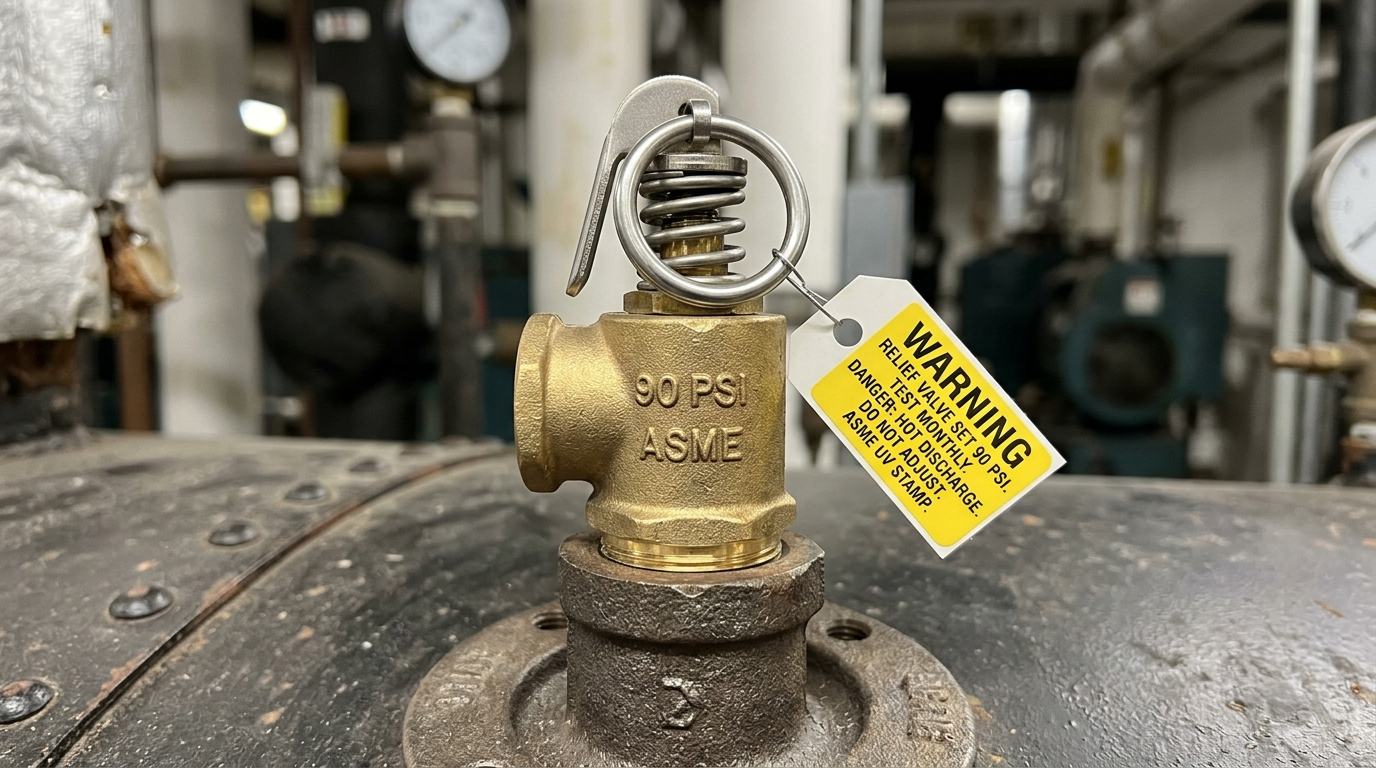
A spring-loaded valve that automatically opens to release steam if boiler pressure exceeds the maximum safe PSI. This is the most critical safety component on any pressurized steamer.
Troubleshooting context: A pressure relief valve that “weeps” (slowly drips or hisses during normal operation) needs replacement. It’s either worn or has mineral deposits preventing a clean seal. A pressure relief valve that appears stuck shut is a serious hazard, as it means the boiler has no automatic protection against overpressure. Never attempt to repair a pressure relief valve. Replace it. The Hoffman product documents library lists the correct valve specification for each model.
Pressurestat (Pressure Switch)
A switch that monitors boiler pressure and controls the heating element. When pressure reaches the target PSI, the pressurestat turns the heating element off. When pressure drops below a set point, it turns the element back on.
Troubleshooting context: A faulty pressurestat produces one of two symptoms. Either the boiler never reaches operating pressure (the element isn’t running long enough) or it exceeds the target pressure (the element doesn’t shut off when it should). The second scenario is more dangerous, though the pressure relief valve should catch it. If your steamer cycles on and off too frequently or won’t build pressure, the pressurestat is a prime suspect alongside scale buildup.
Low-Water Cutoff
A safety device that automatically shuts down the heating element if the water level inside the boiler drops below a safe minimum. This prevents dry firing, which can destroy the heating element and damage the tank.
Troubleshooting context: A tripped low-water cutoff simply means the boiler needs water. Refill according to your model’s procedure. But if the cutoff trips repeatedly even after refilling, check for leaks, a faulty water level sensor, or sediment buildup inside the water column that houses the sensor.
Flow Valve
An adjustable valve between the boiler and the steam nozzle or hat shaper head that controls steam volume. Unlike the solenoid (which is on/off), the flow valve lets you fine-tune how much steam reaches your work surface.
Troubleshooting context: Weak steam output at the nozzle while boiler pressure reads normal almost always points to a partially closed or clogged flow valve. Check the valve position before assuming there’s a boiler-side problem. Fully closed means zero output regardless of boiler pressure.
Steam Nozzle / Steam Wand
The tip or tube that directs steam onto the hat material or work surface. Nozzles come in various shapes depending on the application.
Troubleshooting context: Mineral deposits can clog the nozzle opening over time, reducing steam flow to a trickle even when the boiler is producing plenty of pressure. Regular cleaning with a descaling solution keeps the nozzle clear. If the nozzle is visibly corroded or pitted, replace it.
Hat Shaper Head
A specialized accessory that mounts on the steamer, designed specifically for directing steam into hat bodies during shaping. It’s distinct from a general-purpose nozzle because its shape and steam distribution pattern are optimized for hat work.
Troubleshooting context: Most hat shaper head issues are connection-related, not failures of the head itself. If steam leaks at the joint where the head meets the pipe, check the fitting and seal. For setup guidance specific to Hoffman hat shaper heads, the setup and maintenance video library walks through the installation step by step.
Maintenance and Water Quality Terms
More hat steamer troubleshooting problems trace back to water quality and maintenance habits than to any single broken part. Understanding these terms helps you prevent failures rather than just react to them.
Scale (Mineral Buildup)
Hard calcium and magnesium deposits that form inside the boiler when tap water evaporates and leaves minerals behind. Scale is the single biggest threat to commercial steamer performance.
Troubleshooting context: Scale buildup is the primary cause of boiler efficiency loss, according to industrial water treatment specialists. It insulates the heating element (forcing it to work harder and eventually burn out), clogs internal passages, fouls sensors, and reduces steam quality. If your steamer’s performance has gradually declined over weeks or months, scale is the most likely culprit.
Descaling
The process of chemically dissolving mineral scale deposits inside the boiler. This is the most important periodic maintenance task for any commercial hat steamer.
Troubleshooting context: Use only manufacturer-recommended cleaning solutions. Maintenance content from practitioners who service Hoffman equipment specifies CLR as an effective descaling agent, with a note that vinegar is not suitable for all units. One detailed protocol shared by a bench jeweler on social media: bring pressure down to approximately 5 PSI, power off, drain via the blowdown valve, then flush with cleaning solution (two capfuls, not more). For operators who want maintenance supplies shipped automatically on schedule, the Workhorse Protection Program includes consumable shipments alongside discounted parts and factory reconditioning.
Blowdown
The process of draining water from the bottom of the boiler to remove concentrated dissolved and suspended solids. Industry boiler references define blowdown as the primary method for controlling mineral concentrations inside steam equipment.
Troubleshooting context: Blowdown should be a weekly task for hat steamers in regular use. The procedure involves letting the water level fall to the refill mark or bottom of the sight glass, then draining the remaining water through the blowdown valve. Skipping blowdowns is the fastest way to accelerate scale buildup. One forum contributor described the boiler filling procedure that follows as “fairly complicated, involving releasing air from the boiler as water is added… opening and closing valves.” It gets easier with practice, but consult your model’s manual the first few times.
Feedwater
Water introduced into the boiler during operation to replace water lost through evaporation and blowdown.
Troubleshooting context: Feedwater quality determines how fast scale accumulates. Using distilled or demineralized water dramatically reduces mineral deposits. If you’ve been running tap water (especially hard water), expect to descale more frequently. Switching to distilled water is the single cheapest long-term investment in hat steamer reliability.
Condensate
Water that forms when steam cools and reverts to liquid. In hat steamers, condensate collects inside hoses, pipes, and at the nozzle.
Troubleshooting context: Condensate is the main reason steamers spit water at the hat instead of delivering dry steam. Kinked hoses trap condensate and create pools that get blasted out when you press the foot pedal. Keep hoses straight and slightly angled to drain back toward the boiler. If your steamer spits water at startup, let it warm up fully before working, as initial condensate is normal until the system reaches operating temperature.
PSI (Pounds Per Square Inch)
The unit measuring steam pressure inside the boiler. Higher PSI means hotter, drier steam with more penetrating power.
Troubleshooting context: Hat shaping typically requires consistent pressure in the 40 to 90 PSI range. Hoffman’s commercial boilers produce up to 70 to 90 PSI. If your pressure gauge reads low during operation, check for scale on the heating element, a malfunctioning pressurestat, or a steam leak somewhere in the system. Pressure that fluctuates wildly suggests the pressurestat is cycling incorrectly.
Flash Steamer
A non-pressurized steamer that generates steam on demand by passing water through a superheated chamber rather than storing pressurized steam in a boiler tank.
Troubleshooting context: Flash steamers like the Hoffman GEM-III portable steamer have a fundamentally different maintenance profile than pressurized boilers. Practitioners on the Ganoksin forum note that flash steamers have “few of the problems of a traditional ‘boiler’ type steamer” because there’s no pressurized tank to maintain, no ASME compliance to track, and no boiler permit required. The tradeoff is lower pressure, which limits their usefulness for heavy hat blocking but makes them practical for retail environments and lighter shaping work.
Pressurized Boiler
A sealed tank that builds and maintains steam pressure, delivering high-PSI output for demanding applications like hat blocking and heavy felt work.
Troubleshooting context: Pressurized boilers require more maintenance than flash steamers (regular blowdown, sight glass inspection, descaling, safety valve checks) but deliver the consistent high-pressure steam that serious hat work demands. If you’re running a high-volume hat shop, the JEL11M hat shaper bundle provides 6 gallons of capacity for sustained use without frequent refilling.
Recommended Maintenance Schedule (2026)
To avoid the troubleshooting steps listed in this glossary, follow this preventative maintenance cadence:
Daily: Check water levels via the Sight Glass before powering on.
Weekly: Perform a full Blowdown to eject sediment.
Monthly: Inspect the Pressure Relief Valve for weeping or corrosion.
Bi-Annually: Replace Sight Glass Seals and descale the boiler using a professional agent (not vinegar).
Annually: Conduct a “Dry Fire” safety check of the Low-Water Cutoff system.
Hat-Shaping Process Terms
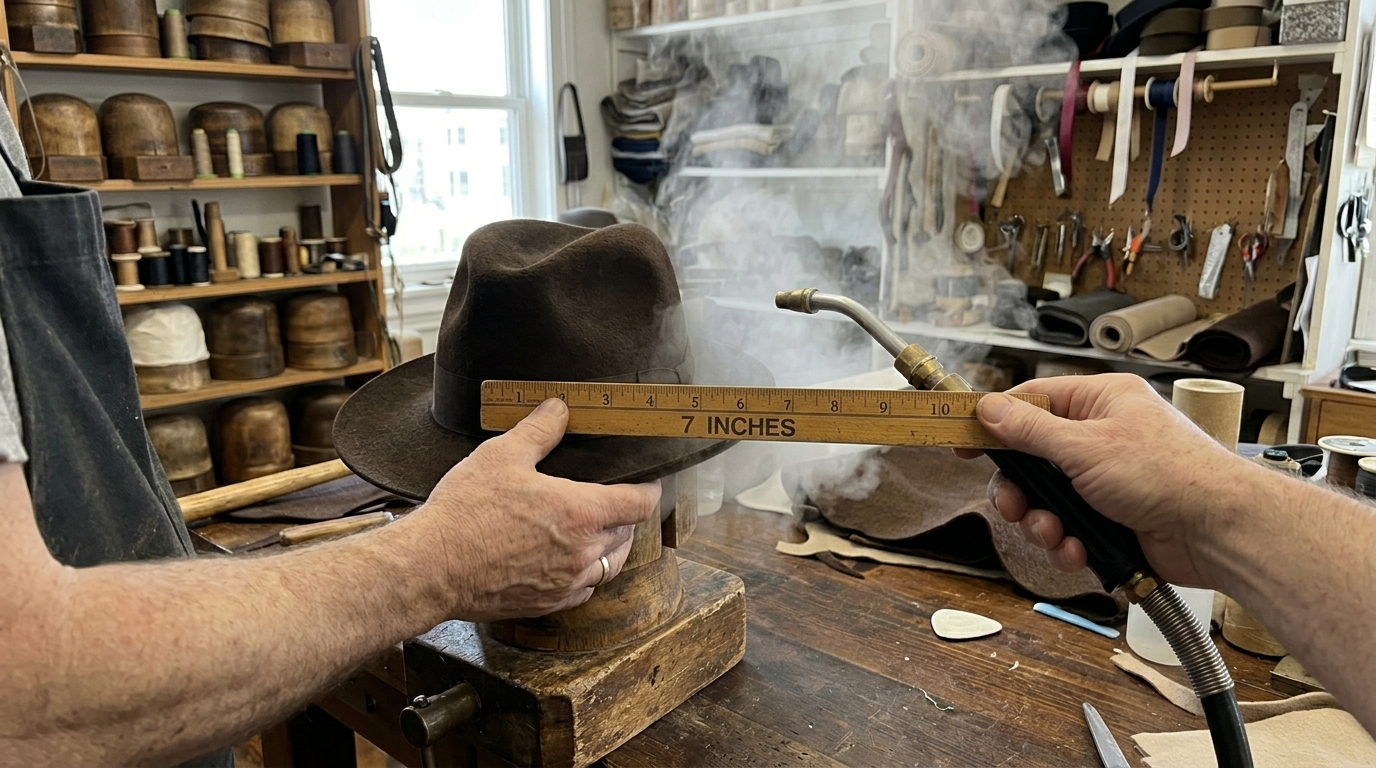
Not every hat steamer troubleshooting problem is mechanical. Sometimes the steamer works perfectly, but the results are wrong because of technique. These terms cover the process side of hat steaming.
Steam Relaxation
The effect steam has on natural fibers, temporarily loosening the molecular bonds that hold the material in its current shape. This allows the fiber to be repositioned and then re-set as it cools and dries.
Troubleshooting context: This is the most important conceptual distinction in hat steaming. A practitioner in a Facebook hat-making community put it clearly: “steam doesn’t soften, it relaxes.” If you expect steam to make hat material pliable like wet fabric, you’ll over-steam trying to get there. Steam relaxes the fiber structure just enough to allow reshaping. It does not dissolve stiffeners, and it should not soak the material. Understanding this distinction prevents the most common hat-shaping failures.
Over-Steaming
Applying too much steam for too long, saturating the hat material with moisture rather than just relaxing its fibers.
Troubleshooting context: Over-steaming waterloggs the material, loosens stiffeners that are supposed to remain intact, and can permanently warp a hat. As one hat care guide puts it, oversaturation can actually impede the reshaping process rather than help it. If you find yourself steaming the same area repeatedly without results, stop. The problem is likely technique (too close, too long) rather than insufficient steam.
Working Distance
The gap between the steam source and the hat material during steaming. This distance controls whether the hat receives steam or water.
Troubleshooting context: The recommended working distance is 6 to 8 inches. Closer than 6 inches, and the steam hasn’t had enough space to separate from water droplets, causing water damage instead of steam relaxation. Farther than about 10 inches, and the steam disperses too much to penetrate the material effectively. If your hats come out with wet spots or water stains, increase your distance before troubleshooting the equipment.
Felt Hat Steaming (Wool, Fur, Beaver)
Natural fiber hat materials that respond to steam by becoming temporarily pliable. Each fiber type has different characteristics.
Troubleshooting context: Beaver felt is the most responsive to steam, becoming pliable quickly and reshaping easily. Wool felt is stiffer and requires more sustained steam exposure. Fur felt falls in between. If you’re switching between materials and finding that your steaming technique suddenly doesn’t work, the material is likely the variable, not the equipment. Adjust your steam time rather than your pressure.
Straw Hat Steaming
Using steam on woven or pressed straw hat materials, which require a lighter touch than felt.
Troubleshooting context: Straw needs significantly less steam time than felt. Over-steaming straw breaks down the fibers rather than relaxing them, and the damage is often irreversible. Short bursts of steam at proper working distance, followed by quick hand-shaping, produce the best results on straw.
Hat Blocking
The process of shaping a hat body over a wooden or aluminum form (called a block) using steam to make the material conform to the block’s shape.
Troubleshooting context: Hat blocking requires sustained, consistent steam flow, which is why pressurized boilers are preferred over kettles or flash steamers for this work. If your blocking results are inconsistent, check that your boiler maintains steady pressure throughout the process. Pressure drops during extended steaming sessions usually indicate the boiler is undersized for the task or needs descaling. Purpose-built hat shaper bundles from Hoffman include the shaper head, foot pedal, and boiler matched for hat work.
Safety and Compliance Terms
Commercial hat steamers operate under pressure and at high temperatures. These terms relate to the regulatory and safety framework around that equipment.
ASME Certification
Certification from the American Society of Mechanical Engineers confirming that a pressure vessel (the boiler tank) meets structural and safety standards for pressurized operation.
Troubleshooting context: ASME certification matters for two practical reasons. First, it means the tank was built to withstand operating pressures with a defined safety margin. Second, some jurisdictions require ASME certification for commercial pressurized vessels. If your local inspector asks for documentation, Hoffman’s Pro line models carry ASME and UL certification.
UL Certification
Listing by Underwriters Laboratories confirming that the electrical components of the steamer meet safety standards. This covers the heating element, wiring, switches, and controls.
Troubleshooting context: UL certification becomes relevant when troubleshooting hat steamer electrical issues. If you’ve replaced a component (thermostat, element, switch), using UL-listed replacement parts maintains the unit’s safety certification. Non-certified parts may work electrically but void the certification and potentially your insurance coverage.
Boiler Permit
A local regulatory requirement in some jurisdictions for operating pressurized steam vessels above a certain capacity or pressure threshold.
Troubleshooting context: Flash steamers are generally exempt from boiler permits because they don’t store pressurized steam. Pressurized boilers may require permits depending on your city, county, or state regulations. Check with your local boiler inspector before installation. This isn’t a troubleshooting issue per se, but it comes up frequently when hat shop operators are choosing between equipment types.
Water Column
The vertical component connecting the boiler to the sight glass and safety controls (including the low-water cutoff). It serves as the measurement pathway for water level and pressure.
Troubleshooting context: The water column must remain clear of sediment to provide accurate readings to safety controls. If your low-water cutoff triggers when the sight glass shows adequate water, the water column may be partially blocked. Flushing the water column during regular blowdown prevents this.
Quick-Reference Troubleshooting Chart
For the most common hat steamer troubleshooting symptoms, here’s where to start:
Steamer not producing steam: Check water level in sight glass. Check heating element for continuity. Check for tripped low-water cutoff. Inspect for heavy scale buildup.
Weak steam at the nozzle: Check flow valve position. Check boiler pressure on gauge. Inspect nozzle for mineral clogging. Descale if pressure is low.
Steamer spitting water: Check hose for kinks (condensate pooling). Increase working distance. Let steamer fully warm up before use. Inspect steam head for cracks.
Pressure won’t build: Check heating element. Check pressurestat. Check for steam leaks at fittings, sight glass valves, or safety valve.
Steamer cycles on and off rapidly: Pressurestat may be set too narrow or malfunctioning. Scale may be insulating the element, causing rapid overheating at the element surface.
Sight glass leaking: Tighten packing nuts on shutoff valves. Replace glass and rubber seals if over six months old. Do not use Teflon tape on packing nut threads.
Hat material not responding to steam: Confirm you’re using a compatible natural fiber material. Check working distance (should be 6 to 8 inches). Remember: steam relaxes, it doesn’t soften. Shorter applications with repositioning work better than sustained blasting.
When to Call for Help
Self-diagnosis handles the majority of hat steamer troubleshooting situations. But some problems require professional support, particularly anything involving the pressure relief valve, electrical component replacement, or persistent symptoms after you’ve worked through the obvious causes.
Hoffman offers unlimited lifetime remote technical support on their equipment, meaning you can call their factory technicians in Dushore, Pennsylvania for guidance at any point during the life of the machine. That support line is the right call when you’ve exhausted what this glossary covers. You can reach the team through the Hoffman support page or contact Hoffman directly for model-specific guidance.
FAQ
How often should I blow down my hat steamer boiler?
Weekly, if the steamer is in regular use. Blowdown removes concentrated mineral sediment that settles at the bottom of the tank. Skipping this task is the fastest path to scale buildup, which degrades steam quality and shortens the life of the heating element.
Can I use tap water in my commercial hat steamer?
You can, but you’ll pay for it in maintenance. Tap water (especially hard water) introduces calcium and magnesium that form scale inside the boiler. Using distilled or demineralized water significantly reduces scale accumulation and extends the interval between descaling sessions.
Why is my hat steamer spitting water instead of steam?
Three common causes: kinked hoses that trap condensate, operating the steamer before it’s fully heated, or holding the nozzle too close to the hat material. Check hose routing first, then let the steamer reach full operating pressure before working. Maintain a working distance of 6 to 8 inches.
What’s the difference between a flash steamer and a pressurized boiler for hat work?
A flash steamer generates steam on demand without storing pressure, making it simpler to maintain and exempt from boiler permits. A pressurized boiler stores steam at 40 to 90 PSI, delivering the sustained high-pressure output needed for heavy hat blocking. Flash steamers work well for light shaping and retail settings. Pressurized boilers are the standard for dedicated hat shops doing production-level work.
How do I know if my heating element has failed?
If the boiler has water, power, and a functioning pressurestat but pressure won’t build, the heating element is the likely suspect. Test it with a multimeter set to continuity or resistance. No continuity means the element is burned out and needs replacement.
Why does steam seem to stop working on my hat material even though the steamer is functioning?
The equipment may be fine. Different natural fiber materials respond to steam differently, and over-steaming is counterproductive. Steam relaxes fibers rather than softening them like water would. If you’ve been steaming the same area for an extended period without results, you’ve likely already saturated the material. Let it dry, then try again with shorter applications.
Is Teflon tape the right fix for a leaking sight glass valve?
No. This is a common mistake that practitioners in steam equipment forums specifically warn against. The correct fix for a leaking sight glass shutoff valve is tightening the packing nuts on the valve stem. Teflon tape on packing nut threads does not create an effective seal for these components.
How often should the sight glass and seals be replaced?
Every six months for the rubber seals, and inspect the glass itself at the same interval. Cloudy, cracked, or discolored sight glass gives inaccurate water level readings, which can lead to dry firing or overfilling. Replacement glass and seals are available through your steamer’s manufacturer parts catalog.


