

TL;DR
Fabric shine happens when heat and pressure flatten fiber surfaces, creating unwanted glossy patches that catch light. Steam prevents shine by relaxing fibers through moisture and heat without the crushing contact of a hot iron soleplate. The key techniques include vertical steaming, using pressing cloths, and the lift-and-press method. For professionals finishing dozens of garments daily, commercial-grade steam equipment with consistent output is the most reliable way to prevent shine across every fabric type.
How to Prevent Shine When Steaming: Quick Takeaway
To prevent shine on fabric, use moisture and heat rather than pressure. Fabric shine is caused when a hot iron soleplate flattens or melts fibers. You can avoid this by:
Using Vertical Steam: Hold the steamer nozzle 1–2 inches away from the fabric without physical contact.
Applying a Pressing Cloth: Place a cotton or mesh barrier between the iron and the garment to diffuse heat.
The Lift-and-Press Method: Avoid sliding the iron; instead, lift it and press down briefly to allow steam to penetrate without dragging.
Turning Garments Inside Out: Iron on the “wrong side” so any compression remains invisible.
What “Prevent Shine with Steam” Actually Means
In garment and textile finishing, “prevent shine with steam” refers to a set of techniques that use steam’s moisture and heat to smooth wrinkles without flattening the natural texture of fabric fibers. The concept matters whether you’re pressing a wool suit at home, finishing garments in a dry cleaning operation, or reshaping felt hats in a professional hat shop.
The short version: steam relaxes fibers so they release wrinkles on their own. An iron’s hot soleplate crushes them flat. That crushing is what creates shine.
This distinction separates competent garment finishing from the kind that ruins a $1,200 suit jacket.
Why Fabric Shine Happens: The Fiber Science
Ironing vs. Steaming: Shine Risk Comparison
Feature | Traditional Ironing | Professional Steaming |
Mechanism | Conduction (Direct Heat) + Pressure | Convection (Moisture + Heat) |
Fiber Impact | Flattens/Crushes Cuticles | Relaxes and Plumps Fibers |
Shine Risk | High (Especially on Darks/Wool) | Low to Zero |
Best For | Sharp Creases, Cotton Shirts | Suits, Delicates, Felt Hats, Silks |
Texture Retention | Poor (Flattened) | Excellent (Natural Loft) |
Understanding what causes shine is the first step toward preventing it. The problem comes down to two mechanisms: compression and melting.
Compression Shine
At the microscopic level, shiny spots develop when heat and pressure flatten the natural texture of fibers, creating reflective surfaces that catch light differently from the surrounding fabric. Wool is particularly vulnerable because its fibers are covered in overlapping scales called cuticle cells. These scales give wool its characteristic matte appearance. When an iron crushes those scales flat, light bounces off the surface uniformly instead of scattering, and you get that telltale sheen.
Wool can absorb up to 30% of its weight in water, which is why it responds so well to steam. The moisture re-plumps flattened fibers without requiring contact pressure.
Melting Shine
Shine marks on polyester and other synthetics are a different problem entirely. Rather than compressed fibers, you’re often looking at partially melted ones. In these cases, the damage is permanent and impossible to reverse. This distinction matters enormously for professionals: compression shine on wool can often be fixed, but a melted polyester blend is done.
Where Shine Hits First
Shine marks are particularly obvious on black and dark clothing. The most common trouble spots are seams, collars, cuffs, and pockets, anywhere the ironing surface is uneven or where extra pressure gets applied to make things crisp and flat. Seams take a double hit because they require more time and pressure to get neat, which is exactly what causes the problem.
Different fabrics react uniquely to heat and pressure. Wool suits are especially vulnerable because their protein-based fibers can become permanently damaged when exposed to excessive temperature. A practitioner on the PatternReview sewing forum put it bluntly: “Temperature is important, just a little too hot and you get shine. Do some tests with small temp changes and don’t trust the words your iron’s dial necessarily.”
How Steam Prevents Shine: Core Mechanisms
The fundamental reason steam prevents shine is simple. Steaming uses hot vapor to relax fabric fibers, allowing wrinkles to release naturally. Unlike ironing, there is no direct contact with a hot plate, which makes steaming gentler on fabrics and far less likely to cause shine or scorch marks.
A steamer directs hot vapor at fabric to relax fibers and release surface wrinkles without any contact pressure. No pressing plate, no direct heat on the surface, no chemical solvents. The result is a light, surface-level refresh rather than a structural restoration.
Here are the specific techniques professionals and home users rely on to prevent shine with steam.
Vertical Steaming (No Contact)
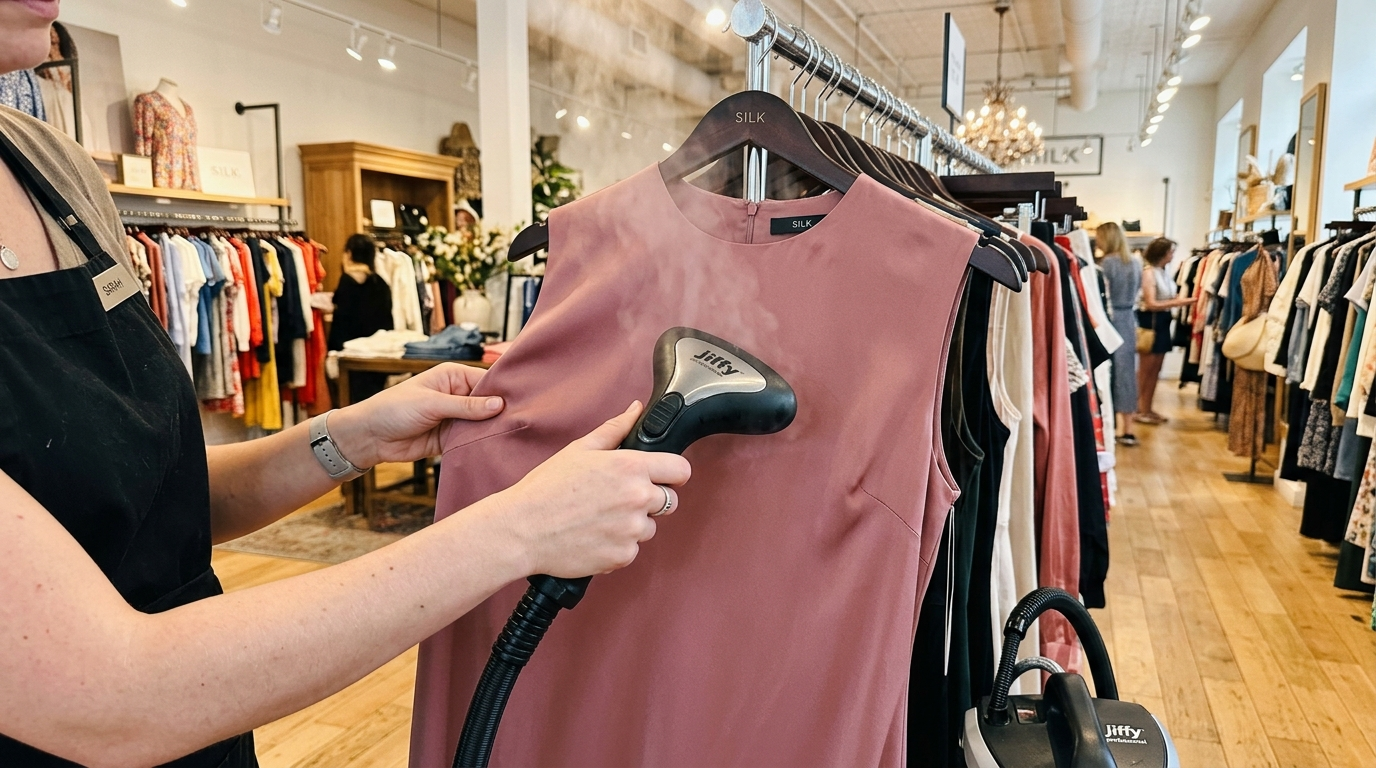
This is the safest approach for delicate or high-risk fabrics. Hang the garment and use a steamer or your iron’s vertical steam function without letting the soleplate touch the fabric. Run the steam along the material and let it relax the wrinkles on its own.
This technique is standard practice in retail environments, where portable flash steamers allow staff to refresh garments on the sales floor without risk of damage.
Pressing Cloth Plus Steam
A pressing cloth sits between the iron and the fabric, absorbing and diffusing heat so the soleplate never touches the garment directly. Combined with steam, this approach lets you get the crispness of pressing without the shine risk. On the AskAndyAboutClothes forum, users consistently recommended this method for wool suits, noting that a standalone steamer is better for daily touch-ups while a pressing cloth works when you need actual pressing.
The Lift-and-Press Method
This technique replaces the sliding motion of ironing with a controlled lift-and-lower movement. Hold the iron slightly above the pressing cloth and release bursts of steam, allowing the moisture and heat to relax wrinkles naturally. The weight of the iron provides sufficient pressure when combined with steam. Never drag the iron across the fabric, especially on wool or silk.
Professional garment finishers use this approach as standard operating procedure. They steam to relax the fabric fibers first, then carefully press the garment using a pressing cloth, always lifting rather than sliding.
Inside-Out Ironing with Steam
The simplest preventive measure is also the most effective: iron from the wrong side. This is especially important for dark or delicate fabrics. The soleplate contacts only the interior of the garment, so even if some compression occurs, it happens on a surface nobody sees.
Ironing Damp Fabric
Slightly damp fabric handles heat better than dry fabric. Steam softens fibers and helps prevent overheating and flattening. If a garment is completely dry, a quick pass with steam before pressing can provide the same protection.
Pressing Cloth Types: Your First Line of Defense
One of the most important tools for preventing shine with steam is the pressing cloth. It sits between the iron and the fabric, and different types serve different purposes.
Cotton or muslin cloths are the standard. A clean cotton cloth, slightly dampened, ensures the wool or suit fabric never comes directly in contact with the iron. These are inexpensive and widely available.
Mesh pressing cloths offer a useful advantage: you can see through them. They also allow more steam to pass through to the garment, making them effective when steam penetration matters more than moisture buffering.
Worsted wool cloths are the professional’s choice for pressing wool garments. A worsted wool cloth absorbs water without feeling damp, which means you can steam a wool garment without getting it wet. This cloth also helps prevent your wool clothes from becoming glossy or losing their texture.
Teflon iron shoes are worth mentioning here too. A practitioner on the PatternReview sewing forum recommended them enthusiastically: “I suggest you get a Teflon iron shoe for your iron. You’ll love it, and you will never have trouble with shine again, although I still take most of the usual precautions.”
Fabric-by-Fabric Quick Reference
Fabric | Shine Risk | How to Prevent Shine with Steam |
|---|---|---|
Wool / Wool Blends | Very High | Low to medium heat, pressing cloth required. Use steam generously but lift the iron instead of sliding. Never let the soleplate touch the fabric directly. |
Silk | High | Low heat with steam only. Press gently to avoid shine. Vertical steaming is the safest method for freshening silk without damage. |
Polyester / Synthetics | High (irreversible if melted) | Medium heat, gentle steam. A pressing cloth is essential. If fibers melt, the damage is permanent. |
Linen | Moderate | Iron inside out or use a pressing cloth. Linen tolerates higher heat but still develops shine on dark colors without protection. |
Rayon | High | Steam is often safer than direct ironing. Use a handheld steamer or vertical steam function, keeping the nozzle slightly away from the fabric. |
Felt (Hats) | Moderate | Hold approximately 6 to 8 inches from the steam nozzle, moving continuously for even heat distribution. Steaming the inside of the hat is preferable to protect the exterior finish. |
For hat shops working with felt, material identification is essential before applying any steam. Synthetic felts made from polyester or acrylic can warp or melt under direct heat, making this step non-negotiable. Our hat shaping steamer guide covers professional techniques and tools in detail.
How Steam Can Reverse Existing Shine
Prevention is always better than correction, but steam can sometimes undo shine that’s already appeared.
Direct Steam for Fresh Compression Shine
This is one of the quickest fixes when you spot shine early. Without letting the soleplate touch the fabric, apply steam directly to the shiny area. This can be enough to loosen compressed fibers. Follow up by running a clothing brush or dry towel over the area to help decompress and lift the fibers back into their natural position.
The Vinegar and Steam Method
For stubborn shine marks, dampen a pressing cloth with a solution of one part distilled white vinegar to two parts water. The cloth should be damp, not dripping. Place it over the shiny area and press lightly with an iron set to the wool setting, using plenty of steam. The acetic acid in the vinegar helps lift and separate flattened fibers.
When Shine Is Permanent
Some shine damage cannot be reversed. This is particularly true when fibers have been severely flattened or when synthetic materials have been overheated to the point of melting. A member of the Vintage Fashion Guild forum noted they “always use my steamer, but have had vintage items with iron shine and have never been successful in removing it.” Professional dry cleaners have specialized equipment and chemical treatments that go beyond home methods, but even they cannot always restore fabric to its original appearance.
The takeaway is clear: preventing shine with steam in the first place is far more reliable than trying to fix it after the fact.
Essential Tools for Shine-Free Finishing
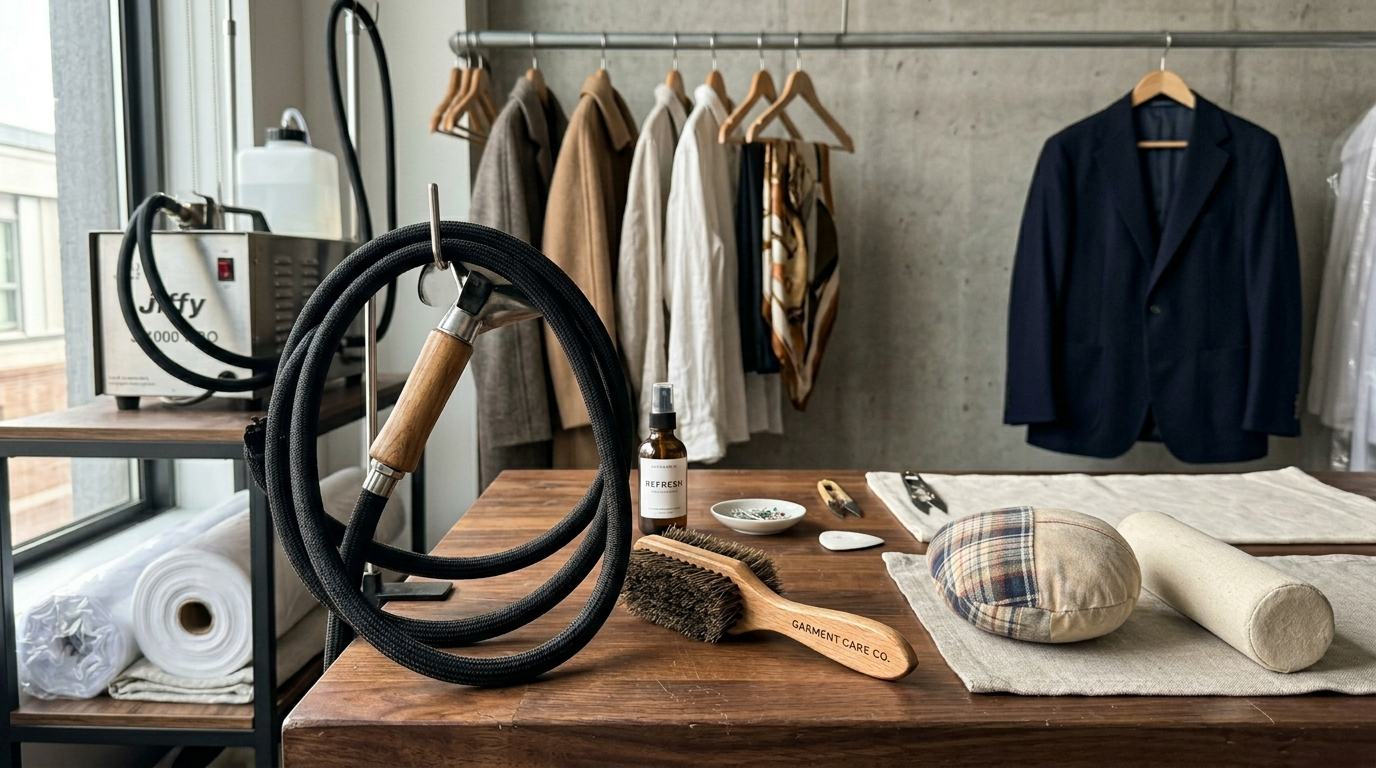
To achieve professional results without damaging high-end textiles, ensure your workstation includes:
High-Output Steamer: A unit with consistent PSI to ensure steam penetrates rather than just wetting the surface.
Worsted Wool Pressing Cloth: Specifically for tailoring; it mimics the garment’s texture to prevent “fusing.”
Tailor’s Ham or Sleeve Board: To steam curved areas (shoulders/sleeves) without creating flat-edge shine marks.
Natural Bristle Clothes Brush: Used immediately after steaming to “open” the fibers while they are still warm.
Distilled Water: To prevent mineral “spitting” which can leave permanent white spots on dark fabrics.
Commercial Context: Why Equipment Matters
For professionals finishing garments, hats, or upholstery all day, the difference between consumer irons and commercial steam equipment is not a matter of convenience. It’s a matter of quality control.
Consumer irons bundle heat, pressure, and contact into a single tool. This design makes shine almost inevitable on sensitive fabrics, because the operator has to fight against the tool’s basic function to avoid damage. Commercial steamers separate these variables. Consistent, controllable steam output lets professionals apply moisture and heat precisely, without the mechanical pressure that causes fiber compression.
On the AskAndyAboutClothes forum, one member reported: “I do have an electric steam press but don’t like the shine it causes on the pants.” Others in the thread recommended using a standalone steamer for wool suits and reserving irons for cotton dress shirts. Multiple members in the same discussion praised the Hoffman press specifically, with one stating emphatically: “But nothing beats a Hoffman press.”
This matters for businesses that handle volume. A dry cleaner pressing 50 garments per shift needs equipment that delivers the same steam quality on garment number 50 as it did on garment number 1. A hat shop reshaping felt needs pressure up to 70 to 90 PSI from a commercial steam boiler to get results without marring the felt surface.
Hoffman Steam builds factory-direct commercial electric steamers and steam boilers in Dushore, Pennsylvania, ranging from portable non-pressurized flash steamers for retail environments to ASME/UL-certified boilers in 1 to 6-gallon capacities. Their trade-specific bundles for hat shops, clothing stores, and upholstery businesses come with the accessories needed to be fully operational immediately, including steam nozzles, hoses, hat shaping heads, and spray guns.
As a Quora respondent on fabric care summarized it, steamers offer “gentler on fibers, reduces shine and scorch risk, reduces creasing at seams” as key advantages over ironing. For professionals, those advantages compound across every garment they touch.
Common Mistakes That Cause Fabric Shine
Even people who know how to prevent shine with steam sometimes make errors that undo their efforts. Here are the most frequent ones.
Pressing without a cloth. This is the number one cause of shine on wool and dark fabrics. It takes five seconds to place a pressing cloth, and it eliminates the most common source of the problem.
Iron too hot for the fabric. Shine is caused when your iron is too hot. The intense heat of the soleplate flattens or melts fibers, creating that shiny look. Always test on an inconspicuous area first, and trust thermometer readings over dial labels.
Leaving the iron stationary too long. Even with a pressing cloth, holding the iron in one spot concentrates heat and pressure on a small area. Use the lift-and-press technique and keep moving.
Using tap water. Mineral deposits from tap water can cause spotting on fabrics and clog steam vents over time. Use distilled water in both consumer irons and commercial equipment.
Not letting the garment cool before moving it. Fabric is most vulnerable to permanent deformation while still warm and moist. Let the garment cool on the pressing surface or hanger before handling it.
Skipping material identification. This is especially critical for hat shaping and work with synthetic blends. Polyester, acrylic, and other synthetics have melt points that are lower than many people assume. Applying the wrong steam temperature to an unidentified fabric can cause irreversible damage.
For professionals who want guidance on technique and equipment settings for specific applications, Hoffman offers unlimited lifetime technical support with every unit.
Choosing the Right Equipment for Shine-Free Results
If you’re a business owner evaluating steam equipment, the choice comes down to what you’re finishing and how much volume you handle.
For retail environments and light garment touch-ups, a portable flash steamer works well. For hat shops, tailors, dry cleaners, and upholstery businesses that need consistent pressure and volume, a commercial steam boiler provides the control necessary to prevent shine across every type of fabric.
Browse the full range of Hoffman commercial steamers to find equipment matched to your specific trade and volume requirements. Every unit ships with free contiguous U.S. shipping, a 30-day return policy, and a 3-year tank warranty.
Frequently Asked Questions
Why does my iron leave shiny marks on dark clothes?
The iron’s soleplate flattens fiber surfaces through direct heat and pressure. On dark fabrics, this creates a visible reflective patch where light catches the compressed fibers differently than the surrounding material. Using steam without soleplate contact, or with a pressing cloth between the iron and fabric, prevents this.
Can steam remove shine that’s already on a garment?
Sometimes. If the shine is caused by compression (common on wool), applying steam without contact and then brushing the area with a clothing brush can lift flattened fibers. For stubborn marks, a damp cloth soaked in a 2:1 water-to-vinegar solution pressed lightly with steam can help. If synthetic fibers have melted, the damage is permanent.
What’s the best pressing cloth to prevent shine on wool?
A worsted wool pressing cloth is ideal for wool garments because it absorbs moisture without feeling damp, allowing you to steam effectively while protecting the fabric’s texture. Cotton muslin works well as a general-purpose alternative. Mesh cloths let you see the garment underneath and allow more steam penetration.
Is steaming better than ironing for preventing shine?
For shine prevention specifically, yes. Steaming introduces moisture and heat without mechanical pressure, which is exactly what prevents fiber compression. Ironing is better when you need sharp creases or structural pressing, but it should always be done with a pressing cloth on shine-prone fabrics.
Does the type of steam equipment matter for shine prevention?
It matters significantly for professionals. Consumer irons have inconsistent steam output and combine heat with pressure by design. Commercial steam equipment delivers consistent, controllable steam that lets operators separate heat, moisture, and pressure as independent variables. This control is what makes shine prevention reliable at volume.
Can I prevent shine when steaming felt hats?
Yes. Hold the hat 6 to 8 inches from the steam nozzle and move continuously for even heat distribution. Steaming the interior of the hat protects the exterior finish. Always identify the material first, because synthetic felts can warp or melt under direct heat.
What temperature causes shine on wool?
There’s no single threshold, because it depends on the specific wool, its weave, and the moisture level. The general guidance is to use low to medium heat and rely on steam rather than temperature to do the work. Practitioners recommend testing with small temperature increments on an inconspicuous area rather than trusting iron dial markings.
Why do seams get shiny more easily than flat fabric areas?
Seams create an uneven ironing surface, which concentrates pressure on the raised area. They also require more time and firmer pressing to get flat, both of which increase shine risk. Using a pressing cloth and the lift-and-press technique at seams is especially important.


