

To read a steam boiler data plate, identify its key sections detailing manufacturer information, certifications like the ASME stamp, performance limits such as Maximum Allowable Working Pressure (MAWP), and safety test data. This small plate is the unit’s official birth certificate, containing critical information about the boiler’s construction, capabilities, and safety ratings. Understanding this plate is essential for safe operation, maintenance, and regulatory compliance.
That stamped metal plate on your boiler tells you everything from who built it to the maximum pressure it can safely handle. It also carries certification marks and registration numbers that inspectors, insurance adjusters, and maintenance techs rely on. The sections below decode each piece of information so you know exactly what your equipment is telling you.
How to Read a Steam Boiler Data Plate: Quick Summary
To read a steam boiler data plate, locate the ASME Certification Mark for the equipment type (e.g., “E” for Electric), identify the MAWP (Maximum Allowable Working Pressure) to set safety limits, and find the National Board (NB) Number to track the unit’s permanent manufacturing records. Also check for a UL Listing Mark to confirm electrical safety compliance. Key identifiers include the Serial Number for parts and service, and the Year Built to determine which regulatory code edition applies.
Common ASME Data Plate Designators
| Symbol | Meaning | Application |
|---|---|---|
| S | Power Boiler | High pressure steam (over 15 psi) |
| E | Electric Boiler | High pressure electric steam generators |
| H | Heating Boiler | Low pressure steam or hot water |
| U | Pressure Vessel | Unfired vessels (storage tanks/heat exchangers) |
| HLW | Water Heater | Potable water heaters |
The Basics: Who, What, and When
Every data plate starts with the fundamental identity of the boiler. These first few items help you trace the unit’s history and find the right support or parts.
Manufacturer Name
This is the name of the company that built and certified the boiler. It’s your go to for accountability, warranty claims, and technical support. You’ll usually see it listed next to a phrase like “Certified by” or “Manufactured by.” Knowing the manufacturer, for example Hoffman Steam, is the first step in getting service or ordering parts.
Manufacturer Serial Number
This is the boiler’s unique ID number, assigned by the builder. No two boilers from the same manufacturer will ever share a serial number. It’s crucial for tracking the unit’s history and is often required when you order spare parts or request a copy of the boiler’s official paperwork. You’ll see it labeled as “Ser. No.” or “Serial No.”
Year Built
Stamped as a four digit year (like 2023), this tells you when the boiler was constructed. The year built matters for several reasons:
- It determines which edition of the ASME Code the boiler was built to.
- It helps you assess the equipment’s age and potential service life.
- It can impact insurance and local inspection requirements, as some jurisdictions have stricter rules for older boilers.
Boiler Type and Model Number
The boiler type describes its fundamental design (like electric, firetube, or watertube), while the model number is the manufacturer’s specific product code. For instance, a Hoffman Steam RHPG 36 model tells an expert it’s a high power electric steam boiler from their industrial line. This information is key to finding the correct operating manual and ensuring you have the right machine for your application.
The Big Three: Certification, Registration, and Electrical Safety
These markings are your guarantee that the boiler was built to rigorous, internationally recognized safety standards. Understanding how to read steam boiler data plate certifications is non negotiable for compliance.
ASME Certification Mark and Designator
The ASME Certification Mark is a globally recognized symbol of safety. It looks like a cloverleaf or the ASME logo and confirms the boiler was built according to the ASME Boiler and Pressure Vessel Code. It’s always accompanied by a letter designator that specifies the type of equipment.
- S: A Section I power boiler (for high pressure steam).
- E: An electric boiler built under Section I rules.
- H: A Section IV heating boiler (for low pressure steam or hot water).
- U: A Section VIII unfired pressure vessel.
All of Hoffman Steam’s Pro Line electric steam boilers carry an ASME stamp with the “E” designator, assuring compliance and safety.
How to Verify ASME Certification on a Boiler
A stamp on the plate is a strong indicator, but verification goes further than a visual check. The ASME Certification Mark only appears on equipment built by a manufacturer that holds a valid ASME Certificate of Authorization. These certificates are audited and renewed on a regular cycle, so a stamp alone does not tell you whether the manufacturer’s authorization was active at the time of construction.
To confirm legitimacy, cross reference the boiler’s data plate against the Manufacturer’s Data Report filed with the National Board. The Data Report will list the ASME code section, the edition year, and the Authorized Inspector who witnessed construction and testing. If any of those details conflict with what’s stamped on the plate, that’s a red flag.
Practitioners on Reddit’s boiler operation communities report that insurance inspectors increasingly verify ASME certification by requesting the original Data Report rather than simply checking the plate. One boiler operator noted that a missing or inconsistent NB registration delayed their insurance renewal by weeks. For a deeper look at what ASME certification means and why it matters for commercial operations, see this ASME certification guide.
You can also search the National Board’s online database by NB number or manufacturer to confirm registration. If the boiler does not appear in the database, contact the manufacturer directly with the serial number.
UL Listing Mark
Many operators focus on the ASME stamp and overlook another critical marking: the UL Listing Mark. While ASME certifies the pressure vessel itself, UL (Underwriters Laboratories) certifies the boiler’s electrical components, controls, and wiring. For electric steam boilers, this distinction matters.
The UL mark confirms that the boiler’s electrical system was tested for fire, shock, and overheating risks. It appears as the familiar UL logo, sometimes accompanied by a file number and the relevant standard (commonly UL 834 for heating boilers or UL 2021 for fixed electric heating equipment).
Why should you care about both marks? Because most jurisdictions and insurance carriers require them separately. An ASME stamp without a UL listing can create problems during inspections or insurance audits. Conversely, a UL listed boiler without an ASME stamp may satisfy electrical code but fail pressure vessel requirements.
On Hoffman Steam’s Pro Line models, both ASME and UL certifications are standard. This dual certification simplifies the compliance process for small business owners who need to satisfy both their boiler inspector and their electrician. For a broader overview of the documentation you should have on file, check this compliance documentation guide.
National Board (NB) Number
Often stamped right next to the ASME mark, the National Board (NB) number is a unique registration number assigned when the boiler’s paperwork is filed with the National Board of Boiler and Pressure Vessel Inspectors. Think of it as the boiler’s permanent identity in a national registry. It links the physical boiler to a digital record called a Manufacturer’s Data Report, which contains all its construction and testing details. If you ever lose the original paperwork, you can retrieve a copy from the National Board using this number.
Digital Twins and QR Integration
In 2026, many manufacturers are supplementing physical plates with QR codes. Scanning these typically links directly to the Manufacturer’s Data Report (MDR) and security cleared maintenance logs. If your plate has a code, it provides an instant digital audit trail for insurance adjusters and inspectors.
Manufacturer’s Data Report: Form P 2a Explained
The Manufacturer’s Data Report is the official document that backs up everything stamped on your data plate. For electric boilers built under ASME Section I, the specific form used is the National Board Form P 2a, titled “Manufacturer’s Data Report for Electric Boilers.”
Form P 2a records details that go far beyond what fits on a nameplate. It includes:
- Complete material specifications for the shell, heads, and tubes
- Welding procedure qualification records
- Hydrostatic test pressure and results
- Safety valve settings and capacities
- The Authorized Inspector’s name, employer, and signature
- The ASME code edition and addenda used during construction
This form is signed by both the manufacturer and the independent Authorized Inspector (AI). The AI’s signature is the final word, confirming they witnessed the construction and testing and that the boiler fully complies with the ASME code.
Every boiler owner should have a copy of this report. It is the single most important document during insurance audits, jurisdictional inspections, and ownership transfers. If you purchased a used boiler and did not receive a copy, request one from the National Board using the NB number from the data plate. Some states will not register or permit a boiler without this document on file.
Knowing the difference between Form P 2a (electric boilers) and Form P 2 (fired boilers) helps when communicating with inspectors or searching records. If your boiler carries an “E” designator on the ASME stamp, the corresponding report is P 2a. For more on what inspectors look for, read this boiler inspection checklist.
Performance Specs: What Can It Do?
This section of the data plate tells you about the boiler’s operational limits and output capabilities. Knowing how to read steam boiler data plate performance specs helps you match the right boiler to your business needs.
Maximum Allowable Working Pressure (MAWP)
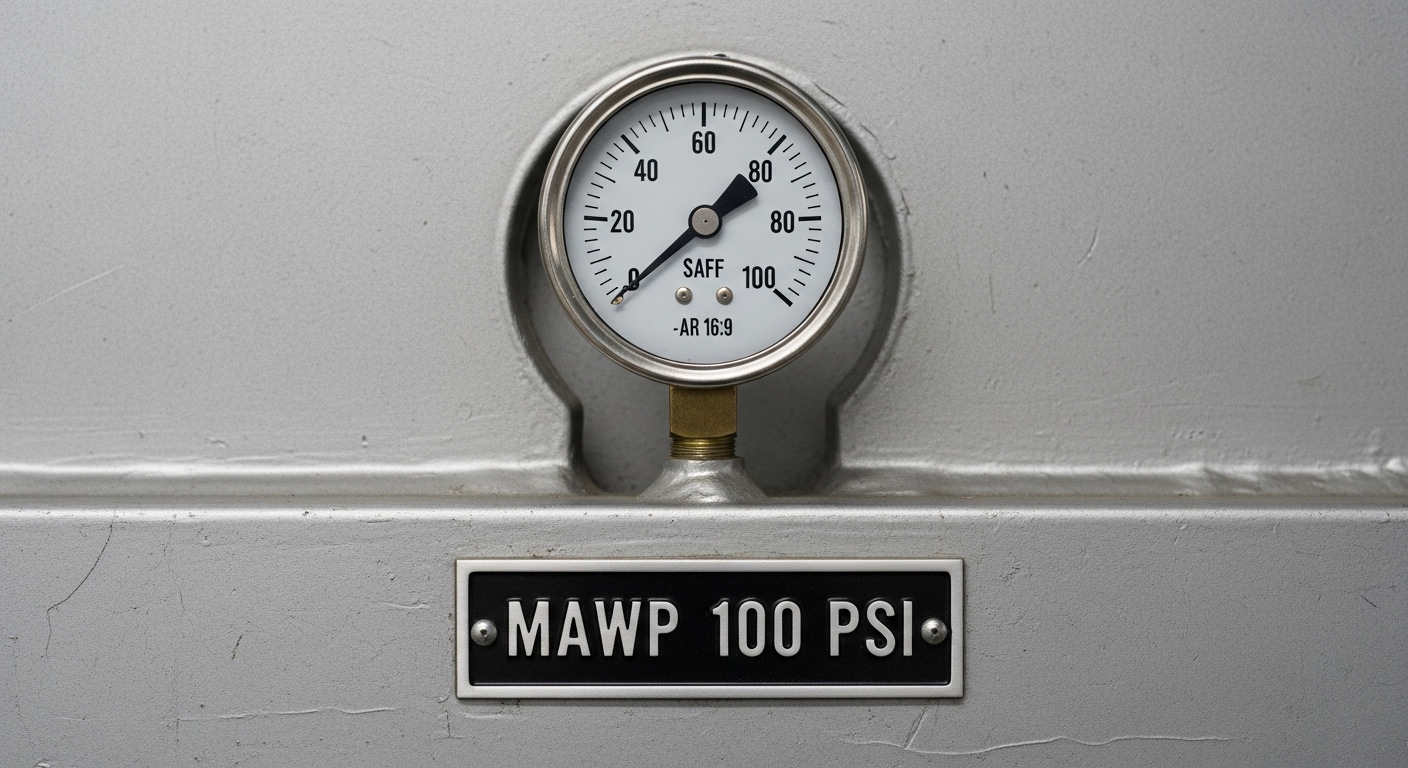
MAWP is one of the most important figures on the data plate. It’s the highest pressure (in psi) the boiler is designed to safely operate at. Your boiler’s safety valves are set at or below this pressure to prevent it from ever being exceeded. Never operate your boiler above its MAWP. A typical nameplate might read “MAWP = 100 PSI @ 338°F.”
Maximum Designed Steaming Capacity
This is the maximum rate of steam the boiler can produce, usually measured in pounds of steam per hour (lbs/hr). Sometimes it’s listed in Boiler Horsepower (BHP). One fact to remember: 1 BHP is equivalent to generating 34.5 lbs/hr of steam. This number helps you ensure the boiler can meet your process demands without being overworked. Sizing a boiler correctly means choosing one with a capacity slightly higher than your peak demand. For a quick walkthrough of sizing by application, read the steamer sizing guide.
Elements or Electrode Total Power Input (For Electric Boilers)
For an electric boiler, this is the total electrical power the heating elements consume, measured in kilowatts (kW). The kW rating directly relates to steam output, with approximately 1 kW producing about 3.5 pounds of steam per hour. This number is also vital for your electrician, as it determines the required voltage, amperage, and circuit breaker size for a safe installation. For more on power requirements, see this commercial steamer specs guide.
Boiler Capacity Conversion Table
Use this table to translate your data plate’s output into terms relevant to your facility requirements:
| To Convert From | To | Multiply By |
|---|---|---|
| Boiler Horsepower (BHP) | lbs/hr Steam | 34.5 |
| Kilowatts (kW) | lbs/hr Steam | ~3.5 |
| BTUs | lbs/hr Steam | 0.00103 |
| PSI | Bar | 0.0689 |
Safety and Testing Information
These items provide proof that the boiler was tested to withstand pressures far beyond its normal operating range.
Shop Hydrostatic Test Pressure
Before a boiler leaves the factory, it undergoes a hydrostatic test. It’s filled with water and pressurized to a level significantly higher than its MAWP to check for leaks or weak points. For power boilers, ASME code often requires a test pressure of 1.5 times the MAWP. While this pressure value isn’t always stamped on the nameplate, it is always recorded on the Manufacturer’s Data Report (Form P 2a for electric boilers) as proof of the vessel’s integrity.
Pressure Relief Valve Set Pressure and Capacity
Every boiler has at least one pressure relief valve (or safety valve) as a final line of defense against overpressure. The valve’s own tag will list two key numbers:
- Set Pressure: The pressure at which the valve will “pop” open. This is always set at or below the boiler’s MAWP.
- Capacity: The amount of steam (in lbs/hr) the valve can release. This capacity must be equal to or greater than the boiler’s maximum steaming capacity.
For a complete overview of how these safety features work together, read this guide on steam boiler safety features.
Frequently Asked Questions
What’s the most important information on a boiler data plate?
The Maximum Allowable Working Pressure (MAWP) is the most critical number for day to day safety. The ASME Certification Mark and UL Listing Mark are equally vital for confirming the boiler was built and wired to proper safety standards.
Where is the boiler data plate located?
The data plate is permanently attached to a visible and accessible part of the boiler’s shell or casing. Look for a small, stamped metal plate near the main controls or piping connections.
What if my boiler’s data plate is missing or unreadable?
A missing or illegible data plate is a serious problem. In many jurisdictions, it’s illegal to operate a pressure vessel without one. If the plate is gone, contact the manufacturer with the serial number (if you can find it stamped elsewhere on the boiler) to see if they can provide a replacement or documentation. You can also request the Manufacturer’s Data Report from the National Board using the NB number. Without proper identification, the boiler may be considered unsafe and unusable.
Does every steam boiler have an ASME stamp?
Not necessarily. Very small or low pressure boilers (like some portable flash steamers) may not require ASME certification. However, for most commercial and industrial high pressure steam boilers operating in the United States, an ASME stamp is mandatory for legal and insurance purposes. That’s why it’s standard on Hoffman Steam’s Pro models.
How to read steam boiler data plate information for an older unit?
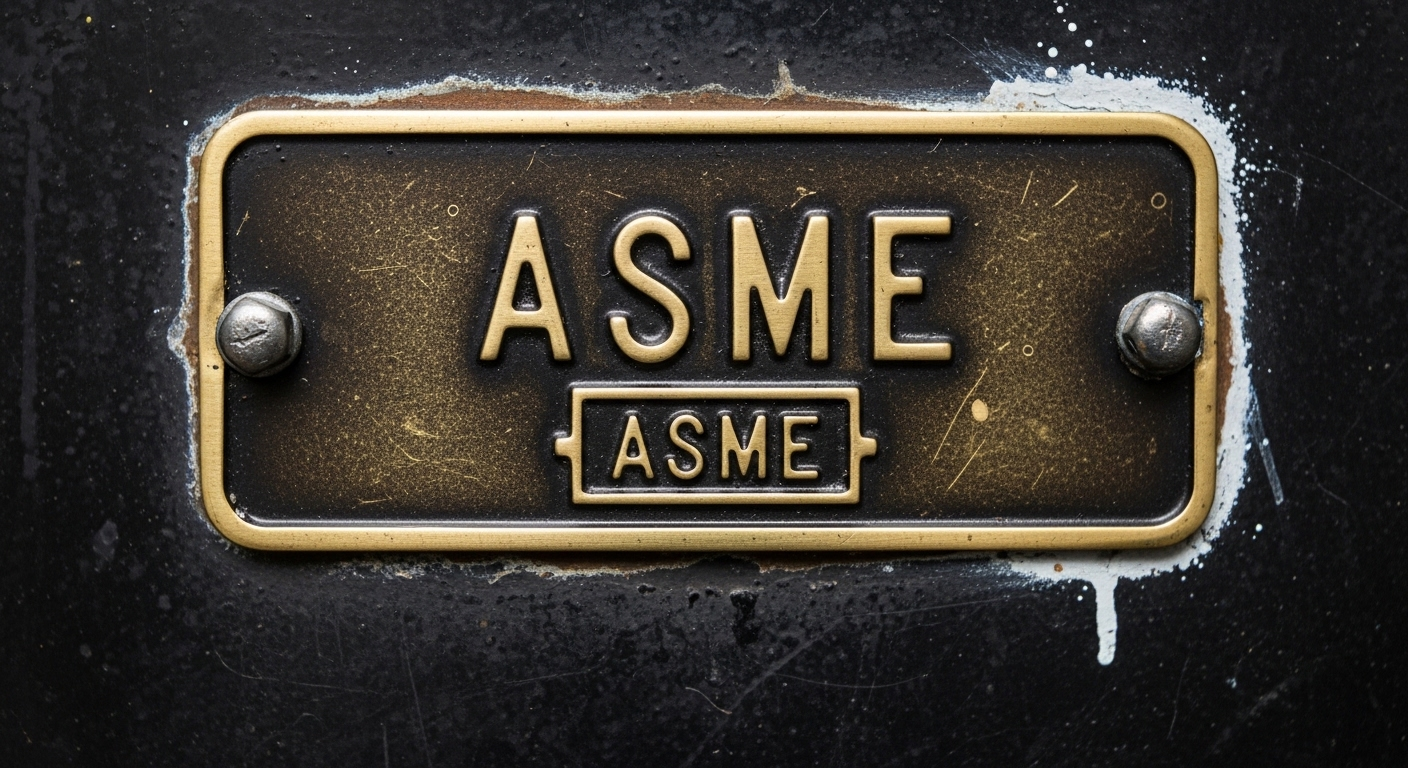
The principles are the same, but the formatting might differ. Older plates might have stamped symbols or less information. The key things to look for remain: an ASME stamp, an NB number, the manufacturer, serial number, year, and MAWP. Older units may not carry a UL mark if they predate that requirement, which is worth noting during inspections.
What is the difference between MAWP and operating pressure?
MAWP is the maximum pressure the boiler is certified to handle. Operating pressure is the actual pressure you run your process at, which should always be comfortably below the MAWP. For instance, you might operate a 100 psi MAWP boiler at 85 psi to leave a safe margin. For help deciding how much PSI you actually need, see this commercial steamer PSI guide.
What is Form P 2a and do I need a copy?
Form P 2a is the National Board’s Manufacturer’s Data Report specifically for electric boilers built under ASME Section I. It documents every construction detail, material specification, test result, and inspector signature. Yes, you should have a copy. Inspectors and insurance carriers will ask for it. If you don’t have one, request it from the National Board or your boiler’s manufacturer using the serial number and NB number from the data plate.
What does the UL mark mean on a boiler data plate?
The UL mark confirms the boiler’s electrical system (controls, wiring, heating elements) was independently tested for fire and shock safety. It’s separate from the ASME stamp, which covers the pressure vessel. Most jurisdictions and insurers require both for commercial electric boilers.
Steam On, Safely
Understanding how to read a steam boiler data plate empowers you to operate your equipment safely, meet compliance requirements, and perform maintenance correctly. Between the ASME stamp, the UL listing, the NB number, and the Manufacturer’s Data Report, every marking tells a story about how the boiler was built, tested, and certified.
When choosing new equipment, look for manufacturers who provide clear documentation and stand behind their certifications. Dual ASME and UL certification, transparent data reports, and accessible support make compliance straightforward rather than stressful. If you need a reliable steam solution backed by full documentation, explore Hoffman Steam’s lineup or request a live virtual demo to see a model up close and ask questions.


