

Your commercial jewelry steamer is the unsung hero of your workshop, but it requires regular care to perform safely and effectively. A complete jewelry steamer maintenance checklist involves tasks performed at different intervals to prevent common problems and extend the life of your equipment. Key responsibilities include:
Daily: Checking water levels and releasing pressure.
Weekly: Flushing the boiler to remove sediment.
Periodically: Cleaning the tank, lubricating valves, and performing full drains.
Arranging for professional factory service.
Following this routine will ensure you always have powerful, clean steam on demand. This guide breaks down each essential task in detail, but if you’re outfitting or upgrading a bench, see our solutions for jewelry shops for popular setups and accessories.
Quick Summary: Jewelry Steamer Maintenance at a Glance
To ensure safety and peak performance in 2026, follow this high-level maintenance schedule:
Daily: Check water levels via sight glass; release all steam pressure at end-of-day.
Weekly: Perform a boiler “blowdown” (flush) to remove sediment and minerals.
Monthly: Lubricate air release valve threads and inspect all gaskets.
Annually: Schedule professional factory service for pressure vessel inspection and descaling.
Pro Tip: Use distilled or deionized water only to prevent scale buildup and extend heating element life.
Table: Jewelry Steamer Service Intervals
Frequency | Task | Benefit |
Daily | Check Water & Bleed Pressure | Prevents vacuum damage & dry-firing |
Weekly | Boiler Flush (Blowdown) | Removes sediment & prevents mineral clogs |
Monthly | Valve Lubrication | Prevents “frozen” or corroded safety valves |
Bi-Monthly | Deep Tank Clean | Maintains steam purity and heating efficiency |
Annually | Professional Factory Tune-Up | Ensures safety compliance and resets unit to “like-new” |
Daily Steamer Care
These are the quick, non negotiable tasks you should perform every single day you use your steamer. A consistent daily routine is the foundation of a good jewelry steamer maintenance checklist.
The Daily Fill Procedure
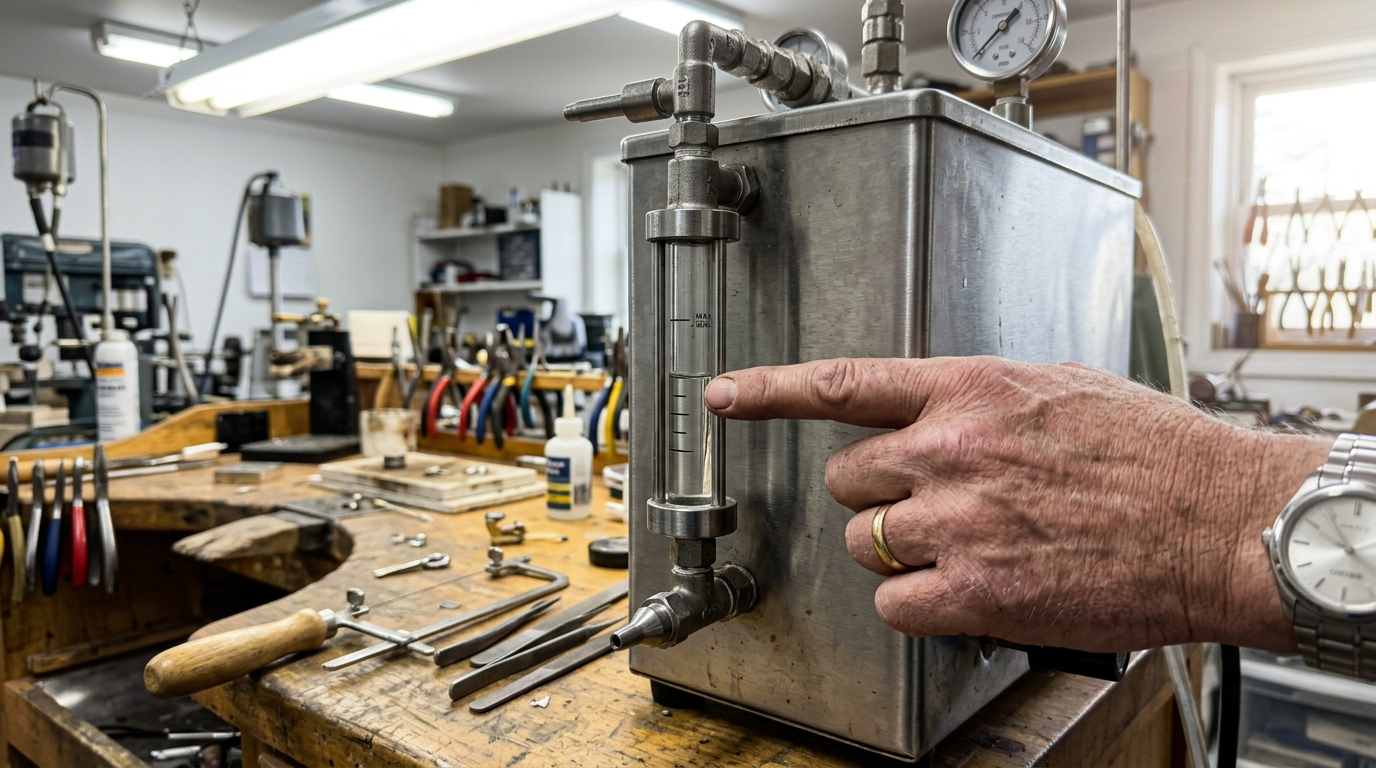
Before you start your day, take a moment to check the water level in your steamer’s boiler using the sight glass. The goal is to fill the tank to the “Full” line, which is typically about halfway up the glass. This ensures there’s enough water to generate steam without overfilling. If you’re deciding between manual-fill and auto-fill steam boilers, this step in your routine will differ slightly.
Check the Water Level: Look at the sight glass first thing.
Add Water if Needed: Top it up to the recommended level.
Inspect for Leaks: As you fill, take a quick look around the boiler and its plumbing for any drips or issues.
A quick daily check can prevent minor issues from turning into major shutdowns. Overfilling can cause “wet” steam, where water droplets spit out of the nozzle, potentially damaging delicate pieces.
End of Day Steam Pressure Release
At the end of the workday, it’s crucial to safely release any remaining pressure from the boiler. Once you turn off the heating element, carefully open a steam valve and let the pressure bleed off until the gauge reads zero.
This is a critical safety step on any jewelry steamer maintenance checklist for two reasons. First, it prevents the boiler from sitting under pressure unattended. Second, as the steam cools and condenses, it can create a vacuum that could potentially damage the tank. Venting the pressure ensures the boiler is in a safe, neutral state, ready for its morning fill.
Weekly and Biweekly Routines
These tasks tackle the gradual buildup of minerals and sediment that occurs with normal use.
Weekly Boiler Flush and Drain
At least once a week, you need to perform a boiler flush, also known as a blowdown. As water turns to steam, any minerals or impurities are left behind, concentrating in the tank. A weekly flush expels this sludge.
With the unit off and under low or no pressure, open the drain valve for a few seconds. The rush of water will carry out the sediment that has settled at the bottom. Many manufacturers recommend this as a minimum weekly task to prevent serious problems and costly repairs. For model-specific steps, consult your product documents and manuals.
Water Contamination Check
While you’re performing the weekly flush, pay attention to the water coming out. This is your water contamination check. Is it rusty, murky, or cloudy? If so, you may need to rinse until clear. This involves partially refilling the boiler and draining it again, repeating the process until the expelled water looks clean. A little rust color can be normal, but it should be flushed out rather than left to accumulate.
Weekly Tank Cleaning
For steamers under heavy use, a more thorough tank cleaning where the boiler should be drained every week is a great preventative measure. This goes beyond a simple flush. It involves completely draining the boiler and, if possible, wiping out the interior to remove any light scale that has started to form on the heating elements and tank walls. The ideal frequency depends on your water quality and usage, but that the boiler should be drained every week is a solid starting point for any jewelry steamer maintenance checklist.
Periodic and As Needed Maintenance
These tasks are performed less frequently but are just as important for long term reliability.
Air Release Valve Operation
The air release valve (or air bleeder) is a small but mighty component. Its job is to let trapped air escape the boiler. When filling the tank, you should crack this valve open to allow air to “breathe” out as the water level rises. This prevents the system from becoming “air bound”, which can hinder performance and prevent the boiler from reaching full pressure.
Air Release Valve Thread Lubrication
Over time, the threads on your air release valve can become corroded or “frozen” from the heat and steam. To prevent this, periodically apply a high temperature anti seize lubricant to the threads. This should be done when the boiler is cool and depressurized. This small step ensures the valve remains easy to operate when you need it. If your valve, gaskets, or sight-glass parts are worn, order replacement parts directly from Hoffman Steam.
Weekly Full Drain and Refill
Drain the boiler at least once a week. Unlike a weekly flush that only removes water from the bottom, a full drain empties the entire tank. This completely resets the boiler’s water, removing any and all accumulated impurities and ensuring your water chemistry stays in an optimal range.
Bimonthly Unit Clean
Think of the the boiler should be drained every week clean as a mini overhaul for your steamer. This is a good time to perform a more intensive descaling of the boiler, inspect all fittings and gaskets, and clean external components. It’s much easier to spend the Duration approx. 2.5 hours (including reaction time). on this deep clean than to deal with a major descale after a year of neglect.
The Big Picture: Best Practices and Annual Service
These are the overarching rules and major service milestones that ensure maximum longevity and safety.
Always Use Distilled or Deionized Water
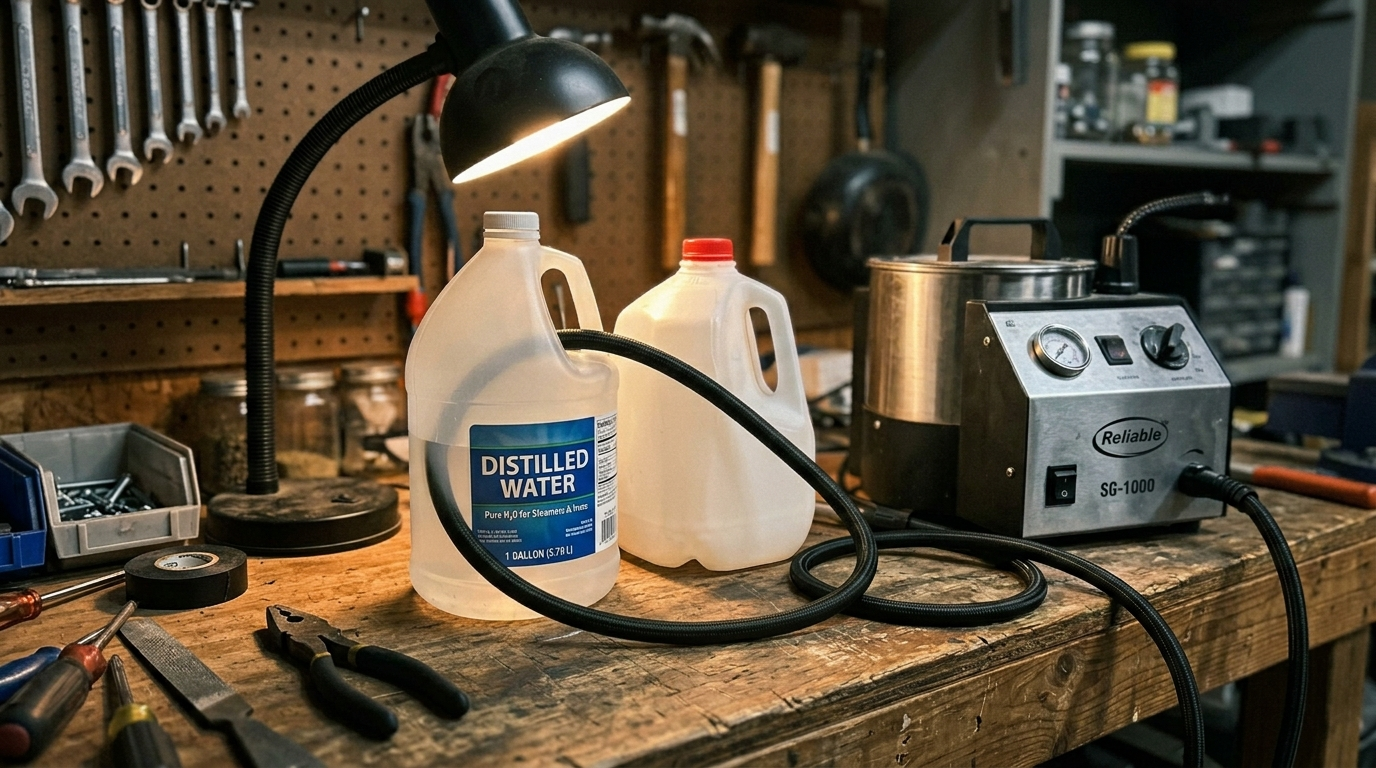
Mineral scale is the number one enemy of electric steam boilers. Tap water contains dissolved minerals like calcium and magnesium that, when heated, form a hard, insulating scale on heating elements and tank surfaces. This forces the unit to work harder and can cause elements to overheat and fail. Using distilled or deionized water dramatically reduces scale buildup, meaning less frequent cleaning and a longer life for your steamer.
Avoid Chemical Additives in the Tank
Unless explicitly recommended by the manufacturer, never add unauthorized chemicals, detergents, or descaling agents to your boiler water during operation. These additives can cause corrosion, create foaming that results in wet steam, or even damage sensors. Sticking to pure water and a regular cleaning schedule is the safest approach. Using the wrong additives is a common user mistake that can void your warranty.
Factory Service and Tune Up
It’s time for a professional checkup. A factory service is a comprehensive inspection and overhaul performed by a qualified technician. This service typically includes:
A full internal inspection of the pressure vessel.
Testing and calibration of all safety devices and controls.
Replacement of worn gaskets and seals.
A complete, deep descaling of the entire system.
This annual service resets your machine to like new condition and catches developing issues before they become failures. For a critical piece of equipment, professional servicing is a smart investment. If you want to ensure your machine gets the best care, request a call from our factory technicians to schedule a tune‑up or inspection.
Critical Safety Warnings
Safety should always be the top priority in your jewelry steamer maintenance checklist. Steam is powerful and can be dangerous if not handled with respect. For a deeper dive into codes and best practices, review our Commercial Steam Boiler Safety Requirements Guide.
Do Not Open Any Valve When Pressurized
This is an absolute rule. Never, ever attempt to open a fill cap, drain valve, or any other service port while the boiler is under pressure. The release of pressurized hot water and steam can be explosive, causing severe burns and injuries. At 90 psig, saturated steam temperature is 331°F (166°C). Always verify the pressure gauge reads zero before performing any maintenance.
Never Add Water to a Hot, Empty Steamer
If your steamer runs out of water while it’s hot, you must let it cool down completely before refilling. Adding cool water to an extremely hot, empty boiler can cause a dangerous event called flash steam. The water will boil instantly and violently, which can erupt from the fill opening or even crack the metal tank due to thermal shock. Remember that water expands about 1600 times in volume when it turns to steam, and you don’t want that happening uncontrollably. For context on how refill procedures differ, see the differences between pressurized and non-pressurized steamers.
A well maintained steamer is a reliable business partner. By incorporating this jewelry steamer maintenance checklist into your workshop’s routine, you’ll be rewarded with consistent performance and a safer work environment for years to come. For jewelers looking for equipment built to last and supported by experts, explore our U.S.-made professional jewelry steamers designed for professional use.
Troubleshooting Common Steamer Problems
If your maintenance routine reveals issues, use this quick guide to identify the cause:
Sputtering/Wet Steam: Usually caused by overfilling the boiler or high mineral content in the water. Check your sight glass level.
Slow Pressure Buildup: This often indicates heavy scale buildup on the heating element. It is time for a deep descale or element inspection.
Whistling or Leaking Valves: Likely a worn gasket or a valve that needs lubrication. Replace parts immediately to avoid pressure loss.
Murky/Brown Water: A sign of internal oxidation or severe sediment. Perform three consecutive full drains and refills.
Frequently Asked Questions
What is the most important daily task on a jewelry steamer maintenance checklist?
Checking the water level and performing the end of day pressure release are the two most critical daily tasks. Proper water level prevents damage from running dry or overfilling, and releasing pressure is a vital safety measure.
How often should I descale my jewelry steamer?
The frequency depends on your water quality and usage. If you exclusively use distilled water, you may only need a light descaling during your periodic or annual service. If you use tap water, you may need to perform a descaling as part of your biweekly or monthly tank cleaning.
Can I use tap water in my jewelry steamer?
It is strongly discouraged. Tap water contains minerals that create damaging scale buildup, which reduces efficiency and can lead to premature failure of heating elements. Using distilled or deionized water is the best practice for any jewelry steamer maintenance checklist.
What happens if I forget to release the steam pressure at the end of the day?
Leaving the unit pressurized can put unnecessary stress on gaskets and seals. More importantly, as the steam cools, it can create a strong vacuum inside the tank, which could potentially cause it to deform or collapse over time.
Is a professional service really necessary for my jewelry steamer?
Yes, it is highly recommended. A professional technician can spot wear and tear that you might miss, test critical safety components like the pressure relief valve, and perform a deep cleaning that restores the unit to peak efficiency. It’s a key part of a comprehensive jewelry steamer maintenance checklist.
How can I tell if my steamer has a water contamination problem?
During your weekly flush, observe the water being drained. If it is consistently brown, murky, or has visible flakes or particles in it even after a short rinse, you have a contamination issue that requires a more thorough tank cleaning and flushing.
Why is a good jewelry steamer maintenance checklist so important?
A consistent jewelry steamer maintenance checklist prevents the vast majority of common equipment failures, ensures the unit operates safely, extends its operational lifespan significantly, and guarantees you always have clean, high pressure steam to make your jewelry shine.


