

TL;DR
A manual fill steam boiler workflow is the full daily operating sequence for a boiler that requires you to add water by hand rather than through an automatic pump system. The cycle runs from pre-startup inspection through blowdown, filling with distilled water, safety device testing, pressurized steam work, mid-session refills, and proper shutdown. This workflow is standard for small commercial electric boilers (1 to 6 gallons) used in jewelry shops, hat stores, tailoring businesses, and upholstery operations. Mastering it keeps your equipment safe, your steam consistent, and your workday uninterrupted.
Small businesses that use steam for jewelry cleaning, hat shaping, garment pressing, and upholstery work often rely on compact electric steam boilers that require manual water filling. Unlike automatic-fill systems, these boilers require operators to monitor water levels and follow the correct procedures for startup, refilling, and shutdown.
This guide explains how a manual fill steam boiler workflow is organized, which checks matter during daily operation, how water quality affects maintenance, and when an automatic-fill system may be a better fit. Because boiler designs and safety requirements vary, always follow the operating manual for your specific equipment.
What Is a Manual Fill Steam Boiler Workflow?
A manual fill steam boiler workflow is the routine used to inspect, prepare, operate, refill, and shut down a steam boiler that requires water to be added manually. It typically includes checking the boiler’s condition and water level, following the manufacturer’s prescribed startup and safety checks, monitoring pressure during use, refilling only under approved conditions, and completing the required shutdown and maintenance procedures. The exact sequence depends on the boiler model, its safety controls, and the manufacturer’s instructions.
Explore Hoffman’s full lineup of manual fill and auto-fill boilers: browse all models here.
What “Manual Fill” Actually Means
A manual fill steam boiler has no automatic water feed system. Instead of a pump that monitors water level and replenishes it from a plumbed supply line, the boiler relies on you to open a fill valve, pour water through a fill funnel, or use a fill port to add water by hand.
This is the standard configuration on many small commercial electric boilers in the 1 to 6 gallon range. It keeps the unit portable, eliminates the need for a dedicated water line at the workstation, and reduces the purchase price compared to pump-fill models.
The trade-off is simple: every time the water level drops below the operating range, you stop work, depressurize if necessary, and refill. That’s the core reality the manual fill steam boiler workflow is built around.
Why This Workflow Exists
Manual fill boilers are common for a reason. A jeweler running short steam sessions to clean rings doesn’t need continuous water replenishment. A hatter shaping three or four hats in a morning can refill once and work through the batch. A tailor pressing alterations between fittings has natural pauses that line up with refill cycles.
These boilers show up in:
Jewelry stores and pawn shops
Western hat shops and custom millineries
Tailoring and alterations businesses
Upholstery and furniture restoration shops
Taxidermy studios
Dental and medical labs
Light manufacturing operations
The manual fill steam boiler workflow gives these operators a structured, repeatable routine that accounts for water consumption, safety device checks, and water quality management, all without requiring a boiler operator’s license or engineering background.
For shops that need steam running all day without interruption, auto-fill systems are a better fit. But for intermittent and short-session use, manual fill keeps things simple and affordable.
Manual Fill Steam Boiler Workflow at a Glance
A manual fill steam boiler workflow generally follows five operating phases. The exact tasks and their order must match the manufacturer’s instructions.
Phase | What It Covers | Main Purpose |
|---|---|---|
Pre-operation checks | Inspect the unit and review water level and equipment condition | Identify visible issues before use |
Startup preparation | Fill and prepare the boiler according to its operating manual | Establish the required starting conditions |
Safety verification | Check safety controls using approved procedures | Confirm required safeguards are functioning |
Operation and monitoring | Monitor water level, pressure, steam output, and warning indicators | Maintain operation within specified limits |
Shutdown and maintenance | Follow the shutdown, cooling, draining, and maintenance instructions | Leave the equipment in the required condition for its next use |
Important: This overview is a planning aid, not a substitute for the manufacturer’s operating procedure. Do not operate a boiler with a failed safety device, unexplained water loss, abnormal pressure, or signs of damage.
The Complete Daily Manual Fill Steam Boiler Workflow
A reliable manual fill steam boiler workflow combines equipment inspection, manufacturer-prescribed startup checks, safe operation, water-level monitoring, and proper shutdown. The sequence below explains what operators should verify, but it does not replace the instructions supplied with a specific boiler.
Step 1: Inspect the Boiler Before Use
Check the boiler exterior, power cord, hoses, fittings, visible connections, and surrounding work area for damage, leaks, corrosion, or other unusual conditions. Confirm that required guards and covers are in place.
Do not start a boiler with damaged electrical components, visible leaks, missing safety components, or other unresolved defects. Follow the manufacturer’s instructions for reporting and correcting problems.
Step 2: Verify the Water Level
Check the water-level indicator, sight glass, or other approved level-monitoring device, if fitted. Compare the indicated level with the operating range specified in the equipment manual.
Do not assume that a particular percentage of the sight glass is correct for every boiler. If the indicator is unclear, damaged, or inconsistent with other indications, follow the manufacturer’s troubleshooting procedure before operating the equipment.
Step 3: Review Blowdown and Water-Quality Requirements
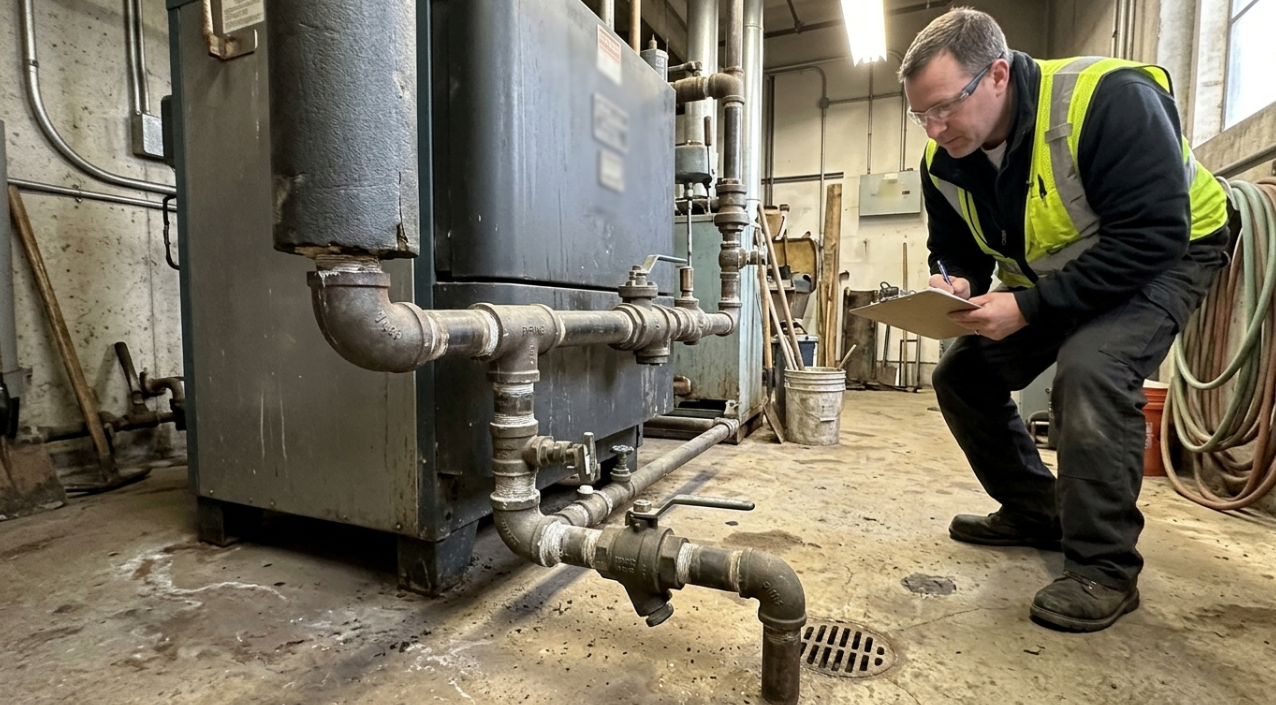
Determine whether the manufacturer requires a blowdown before startup, after operation, or at another specified interval. Follow the prescribed procedure and use the required protective measures.
Blowdown can help control accumulated dissolved solids and sediment, but its frequency and method depend on the boiler design and water-treatment requirements. Never open a drain or blowdown valve without understanding the associated pressure, temperature, and discharge hazards.
Step 4: Prepare the Water Supply and Fill the Boiler
Use water that meets the boiler manufacturer’s stated quality requirements. Confirm the approved filling method, required water level, and permitted temperature and pressure conditions before adding water.
Never open a pressurized boiler or improvise a refill procedure. If the unit must be shut down, depressurized, or cooled before filling, complete those steps exactly as instructed.
Step 5: Verify Required Safety Controls
Check the status of the low-water cutoff, pressure controls, alarms, and other safety devices according to the manufacturer’s inspection and testing schedule.
Do not assume that a light or indicator alone proves a safety control is functioning correctly. Tests that require draining, opening valves, or operating safety mechanisms must be performed only as specified for the model and by appropriately trained personnel.
If a safety device fails a required check, do not operate the boiler until the issue has been corrected.
Step 6: Complete the Prescribed Startup Sequence
Confirm that all required valves, vents, drains, covers, and connections are in their specified startup positions. Do not assume that every boiler uses the same venting arrangement.
Follow the manufacturer’s instructions for energizing the unit and preparing it for steam production. Keep clear of hot surfaces and discharge points.
Step 7: Monitor Pressure and Steam Output
Observe the pressure gauge, water-level indicator, status lights, and other required operating indicators. Keep pressure within the limits specified for the particular boiler and application.
Stop operation and follow the manufacturer’s troubleshooting procedure if pressure behaves abnormally, the water level becomes unreliable, steam output changes unexpectedly, or an alarm or safety control activates.
Step 8: Follow the Required Safety-Valve Inspection Schedule
Inspect the pressure-relief valve and associated discharge arrangements as directed by the manufacturer and applicable regulations. Do not assume that manually lifting the valve lever is required during every startup.
Relief-valve testing must follow the approved procedure because hot discharge can cause serious burns and a valve may fail to reseat correctly. If the valve leaks, appears damaged, or fails a prescribed test, remove the boiler from service and seek qualified assistance.
Step 9: Operate Within the Boiler’s Rated Limits
Use the boiler only for its intended application and within its specified pressure, water-level, electrical, and operating limits. Monitor the equipment throughout the work session.
Never bypass a safety control, ignore a low-water warning, or continue operating equipment that shows signs of a fault.
Step 10: Handle Water Replenishment According to the Manual
Monitor the water level during use and follow the specified refill procedure whenever replenishment is required. Some boilers must be shut down, depressurized, and cooled before they can be filled; other designs may have a different manufacturer-approved procedure.
Never open a pressurized fill port or add water using an improvised method. If water loss is unexpected or the cause is unclear, investigate the problem before resuming operation.
Step 11: Complete the Approved Shutdown Procedure
Stop using the steam output and follow the manufacturer’s shutdown sequence. Confirm the required power-switch position and wait for the equipment to reach the pressure and temperature conditions specified for the next maintenance or storage task.
Drain the boiler only when required by the manufacturer’s instructions or maintenance schedule. Follow the specified cooling, isolation, and discharge procedures before carrying out any draining or internal maintenance.
Record unusual readings, leaks, failed checks, or maintenance needs so they can be addressed before the next operating session.
Key Terms Within the Manual Fill Workflow
Understanding the vocabulary makes the workflow easier to follow and helps you communicate with technicians if something goes wrong.
Sight glass / water gauge: A vertical glass tube mounted on the boiler that shows the current water level. Your primary visual indicator.
Blowdown valve: A valve at the bottom of the boiler used to flush sediment and concentrated minerals. Opening it periodically prevents scale accumulation.
Low-water cutoff (LWCO): An automatic safety device that kills power to the heating elements when water drops below a safe level. Required by code on electric steam boilers.
Fill funnel / fill port: The opening where you pour water into the boiler by hand. Only access this when the boiler is depressurized.
Vent valve / air cock: A small valve used during startup to release trapped air before steam production begins.
Safety relief valve: A spring-loaded valve that opens automatically if pressure exceeds the boiler’s rated maximum. Prevents over-pressurization.
Pressuretrol: The pressure-activated switch that turns heating elements on and off to maintain operating pressure within a set range.
Scale: Mineral deposits (primarily calcium and magnesium) that form on heating elements and tank walls when untreated water is used. Reduces efficiency and shortens equipment life.
Water Quality: Why It Matters More for Manual Fill Boilers
Water quality affects scale formation, corrosion, maintenance requirements, and the long-term reliability of a steam boiler. In a manual-fill system, the operator has direct responsibility for using water that meets the equipment manufacturer’s specifications.
Which Water Should You Use?
The correct water depends on the boiler design, heating elements, operating conditions, and the manufacturer’s water-quality requirements.
Water Type | What to Consider |
|---|---|
Distilled water | May be required or recommended for certain compact steam boilers. Confirm that it meets the manufacturer’s specifications. |
Softened water | Reduces hardness minerals but does not necessarily remove all dissolved solids. Check the required water chemistry before using it. |
Untreated tap water | Mineral content varies by location and can contribute to scale or other water-related problems. Do not use it unless it meets the equipment’s stated requirements. |
Treated or filtered water | May be suitable when the treatment process produces water that meets the specified limits. Filtration alone does not necessarily remove dissolved minerals. |
Why Water Quality Matters
Dissolved minerals can accumulate as scale on heating surfaces. Depending on the water chemistry and equipment design, this can reduce heat transfer, impair performance, increase maintenance needs, and contribute to component failure.
Water that is too aggressive or outside the specified chemical limits can also contribute to corrosion. For this reason, the goal is not simply to use the purest water available; it is to use water that meets the boiler manufacturer’s requirements.
Check the equipment manual for any specified hardness, conductivity, total dissolved solids (TDS), pH, or treatment requirements. Do not assume that one water specification applies to every model.
For further guidance, see the water quality standards guide.
Manual Fill Steam Boiler Maintenance Schedule
A maintenance schedule helps operators distinguish routine observations from tasks that require specific procedures, qualified personnel, or regulatory compliance.
Frequency | Maintenance Focus | Important Consideration |
|---|---|---|
Before each operating session | Visual inspection, water-level verification, and required startup checks | Follow the manufacturer’s pre-operation checklist |
During operation | Monitor pressure, water level, alarms, and visible leaks | Stop if readings or equipment behavior become abnormal |
At the specified blowdown interval | Remove accumulated solids according to the approved procedure | Frequency depends on water quality, usage, and boiler design |
At the manufacturer’s prescribed testing interval | Test or inspect the low-water cutoff, pressure controls, and safety devices | Use the specified procedure and qualified personnel where required |
At the specified cleaning interval | Inspect for scale, sediment, or other deposits | Use only approved cleaning and descaling methods |
At scheduled service intervals | Inspect pressure components, electrical connections, controls, and other serviceable parts | Follow manufacturer requirements and applicable regulations |
Before extended storage or shutdown | Prepare, drain, or preserve the boiler as instructed | Do not assume daily draining or leaving water in the tank is universally correct |
Keep a maintenance log. Record inspection results, safety-control tests, cleaning, water-treatment information, faults, and service work. A written log makes recurring problems easier to identify and helps establish whether required maintenance has been completed.
Manual Fill vs. Auto-Fill: Which Boiler Is Right for Your Business?
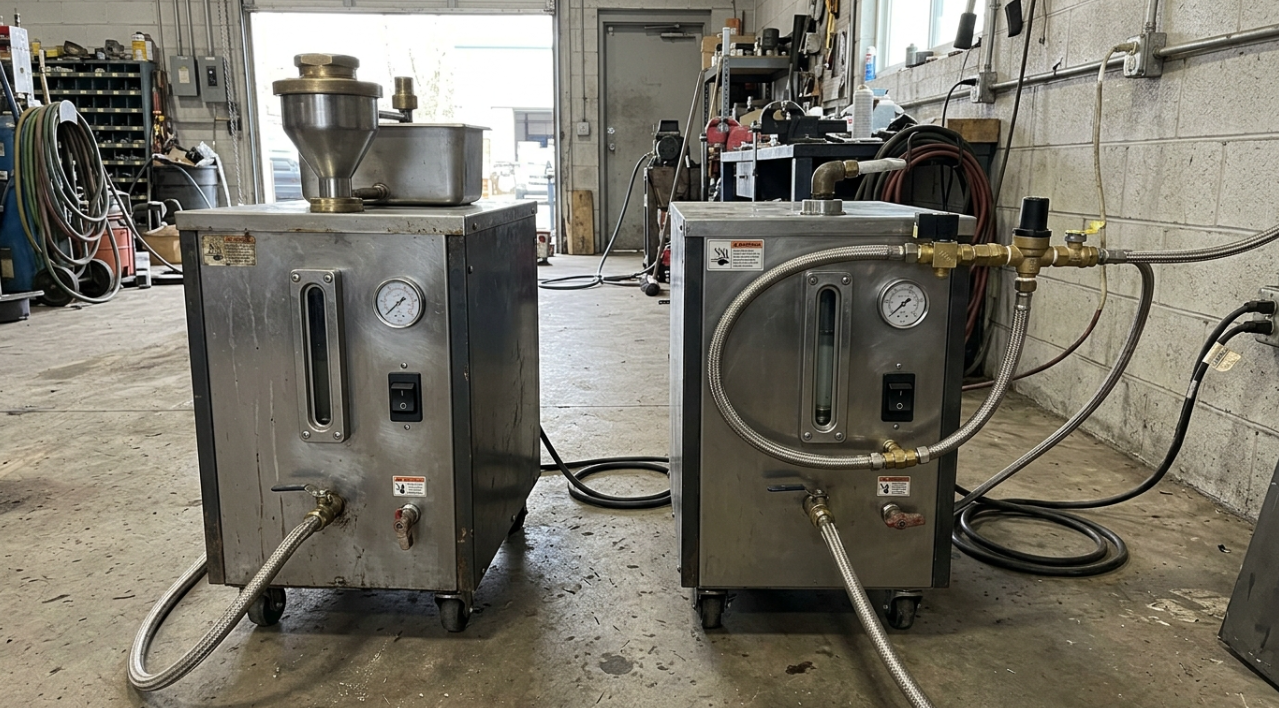
Manual-fill and auto-fill steam boilers differ mainly in how they receive water and how much operator attention water replenishment requires. The right option depends on steam demand, operating hours, installation requirements, and the specifications of the equipment.
Factor | Manual-Fill Boiler | Auto-Fill Boiler |
|---|---|---|
Water replenishment | Added by the operator | Managed by an automatic feed system |
Water supply | Depends on the model’s manual filling arrangement | Requires the specified water source or reservoir |
Operator involvement | Requires monitoring and planned refill interruptions | Reduces routine manual filling but still requires monitoring |
Installation | May be suitable where a permanent water connection is unavailable | May require plumbing or a compatible water supply |
Best-fit use | Intermittent work with suitable refill intervals | Applications requiring more continuous steam availability |
Maintenance | Water quality, level monitoring, and required maintenance remain essential | Water treatment, feed components, and safety checks remain essential |
Cost considerations | Compare purchase price, capacity, and labor for refilling | Compare equipment cost, installation, water treatment, and maintenance |
When Should You Choose Manual Fill?
A manual-fill boiler may suit a business that uses steam intermittently, has manageable water consumption, and can safely accommodate refill interruptions.
When Is Auto-Fill Worth Considering?
An auto-fill system may be more appropriate when steam demand is frequent, several workstations depend on the same supply, or manual refilling interrupts production. However, automatic water feeding does not eliminate the need to monitor the boiler or maintain its safety systems.
Compare the actual capacity, rated operating limits, electrical requirements, water requirements, and duty-cycle specifications of the models you are considering.
For a more detailed comparison, see manual-fill vs. auto-fill steam boilers and the small industrial steam boiler sizing guide.
Safety Checkpoints Built Into the Workflow
The manual fill steam boiler workflow isn’t just an operating procedure. It’s a safety routine with checks embedded at every stage. Here’s why each one matters:
LWCO testing (Step 5): Confirms the most critical automatic safety device is functional. A failed LWCO allows dry firing, which can destroy heating elements and compromise the boiler vessel. Testing it daily is the single most impactful safety habit.
Never open a pressurized boiler (Step 10): This cannot be overstated. The fill port, fill funnel, and any opening into the boiler tank must only be accessed when pressure reads zero on the gauge. Pressurized steam escaping through an open port causes severe burns instantly.
Cold shocking prevention (Step 10): When refilling a hot boiler that has been depressurized, add water slowly. A large, sudden influx of cold water into a hot cast iron or steel shell creates rapid thermal contraction that can cause hairline fractures. Open the fill valve gradually, allowing a controlled low-volume stream to enter the shell.
Blowdown as preventive maintenance (Step 3): Daily blowdown isn’t just about today’s water quality. It prevents the gradual concentration of dissolved solids that would otherwise reach levels where scale forms rapidly. This protects heating elements and extends the intervals between descaling procedures.
Safety relief valve test (Step 8): Confirms the last-resort over-pressure protection works. If this valve fails to open during a test, stop using the boiler immediately and contact a technician.
Common Manual Fill Workflow Mistakes
These are the errors that cause the most equipment damage and safety incidents in small commercial boiler operations:
Skipping the blowdown. It seems optional on any given day because nothing immediately goes wrong. But mineral concentrations build silently, and by the time you notice reduced steam output or element failures, the damage is done.
Using tap water. This is the most expensive mistake over time. Scale buildup from tap water reduces thermal efficiency, increases energy costs, shortens element life, and voids most warranties. Distilled water costs a few dollars per gallon. Heating element replacement costs hundreds.
Ignoring the LWCO test. The LWCO is a mechanical or electromechanical device. It can fail. Testing it takes under a minute and confirms the one device standing between normal operation and a dry-fire incident.
Overfilling the boiler. Water expands when heated. If you fill above the maximum line on the sight glass, expanding water can flood steam lines, carry water droplets into your steam output (called wet steam), and potentially damage downstream equipment or the work product.
Opening the fill port under pressure. This one causes injuries. Always confirm the pressure gauge reads zero before opening any access point into the boiler tank. If you’re in doubt, wait longer.
Filling too fast after extended operation. Dumping cold water into a hot boiler causes thermal shock. Go slowly, especially with larger-capacity units that hold more heat in their metal walls.
Manual Fill Steam Boiler Troubleshooting Guide
If a manual fill steam boiler does not behave as expected, identify the symptom before attempting corrective action. Never bypass a safety device or open a pressurized boiler to investigate a problem.
Symptom | Possible Causes | Recommended Response |
|---|---|---|
Boiler does not produce steam | Power supply issue, startup conditions not met, or heating-system fault | Follow the manufacturer’s troubleshooting instructions and verify the required operating conditions |
Pressure does not build normally | Electrical or heating fault, incorrect control settings, or steam leakage | Stop and investigate according to the equipment manual |
Water level appears too low | Water consumption, leakage, or an indicator problem | Follow the approved shutdown and refill procedure; investigate unexplained water loss |
Water level is difficult to read | Dirty, damaged, or obstructed level indicator | Do not rely on an uncertain reading; follow the manufacturer’s inspection procedure |
Steam output is inconsistent | Operating conditions, water quality, or equipment fault | Check the specified operating limits and arrange qualified inspection if the issue persists |
Boiler repeatedly activates a safety control | Low-water condition, abnormal pressure, or another fault | Stop operation and determine the cause before restarting |
Water leaks from a fitting or valve | Loose, worn, damaged, or incorrectly seated component | Stop using the boiler if the leak compromises safety; have the issue assessed by qualified personnel |
Scale or sediment accumulates | Water quality or treatment may not meet the equipment requirements | Review the water specification and approved maintenance procedure |
When to call a technician: Seek qualified service for persistent pressure problems, failed safety checks, unexplained water loss, electrical faults, damaged pressure components, or any condition the manufacturer’s manual identifies as requiring service.
When Manual Fill Makes Sense for Your Business
The manual fill steam boiler workflow fits a specific operational profile. If your business matches most of these criteria, manual fill is a sound choice:
You use steam in short bursts with natural pauses between sessions
You operate a single workstation
Your daily steam usage totals less than 2 to 3 hours
You don’t have a plumbed water line at the workstation
You want the lowest upfront equipment cost
You (or a designated person) are physically present and attentive during operation
If your situation looks different, say you’re running steam all day across multiple stations, or you can’t afford production interruptions for refills, an auto-fill boiler eliminates the mid-session refill problem entirely. The trade-off is higher cost and the need for a water connection.
Ready to match a boiler to your workflow? Explore Hoffman’s product catalog to compare manual fill and auto-fill models by capacity, voltage, and trade application.
Frequently Asked Questions
What is a manual fill steam boiler?
A manual-fill steam boiler is a boiler that requires an operator to add water using its designated filling arrangement rather than relying on an automatic water-feed system. It is often used in applications where steam demand is intermittent and manual refilling is practical.
How often should you refill a manual-fill steam boiler?
Refill frequency depends on boiler capacity, steam consumption, operating conditions, and the manufacturer’s instructions. Monitor the water level as directed and replenish water only using the approved procedure. Unexpected or excessive water loss should be investigated.
What type of water should you use in a manual-fill steam boiler?
Use water that meets the specific boiler manufacturer’s water-quality requirements. Depending on the model, this may be distilled, treated, or another specified type of water. Do not assume that distilled, softened, or untreated tap water is suitable for every boiler.
Can you refill a steam boiler while it is pressurized?
Never open a pressurized boiler or its fill port unless the equipment is specifically designed for that operation and the manufacturer explicitly permits the procedure. Follow the model-specific pressure, temperature, and filling requirements. Improvised refilling can expose operators to dangerous steam and hot water.
What safety checks should be performed before operating a steam boiler?
Perform the inspections and safety checks specified in the boiler’s operating manual. These may include checking visible equipment condition, verifying the water level, and inspecting or testing required safety controls. Testing methods and intervals vary by model and applicable regulations.
Should you choose a manual-fill or auto-fill steam boiler?
A manual-fill boiler may be appropriate for intermittent steam use when the operator can safely manage refills. An auto-fill model may suit operations that need more continuous steam availability. Compare capacity, duty cycle, installation requirements, water quality, maintenance, and total operating costs before choosing.


