

Quick Answer
For most commercial businesses, an auto fill steam boiler is the better choice because it automatically maintains the correct water level, reduces daily labor, and helps prevent dangerous low-water shutdowns. Manual fill boilers can still be a practical option for low-volume operations that have staff available to monitor water levels every day. The right choice depends on your steam demand, operating hours, maintenance capacity, and budget.
Manual Fill vs Auto Fill Steam Boiler: Commercial Buyer Guide
Choosing between a manual fill vs auto fill steam boiler is not just a question of convenience. The fill system you choose affects your daily workflow, equipment reliability, maintenance requirements, operating costs, and the risk of unexpected downtime.
For businesses that depend on steam every day, such as dry cleaners, garment manufacturers, tailoring shops, and industrial facilities, maintaining the correct boiler water level is essential. Too little water can trigger safety shutdowns or damage equipment, while too much water can reduce steam quality and create operating problems.
A manual fill system gives operators direct control by requiring employees to monitor and refill the boiler manually. An auto fill system uses an automatic water feeder connected to the boiler’s safety controls to maintain the proper water level without constant attention.
For many commercial buyers, the question is simple:
Do you want your employees spending time managing boiler water levels, or do you want the boiler handling routine adjustments automatically?
This guide compares manual fill and auto fill steam boilers, explains which industries benefit from each option, covers maintenance and operating costs, and helps you choose the right system for your business.
Manual Fill vs Auto Fill Steam Boiler: Quick Comparison
Feature | Manual Fill Steam Boiler | Auto Fill Steam Boiler |
|---|---|---|
Water Filling Method | Operator manually adds water | Automatic feeder maintains water level |
Daily Monitoring | Required | Minimal monitoring required |
Labor Requirement | Higher | Lower |
Initial Cost | Lower purchase price | Higher upfront investment |
Installation Complexity | Simple | Requires feeder and controls |
Risk of Human Error | Higher | Lower |
Leak Detection | Easier because water loss is noticeable | Requires water monitoring to detect hidden leaks |
Best For | Low-volume steam users | Daily commercial operations |
Maintenance Needs | Basic boiler checks | Requires LWCO and feeder maintenance |
Business Downtime Risk | Higher if staff forgets filling | Lower with proper maintenance |
The Bottom Line
For most commercial operations in 2026:
– Choose manual fill if: you operate a small business with limited steam demand and someone can check the boiler consistently.
– Choose auto fill if: your business relies on continuous steam production and downtime affects revenue.
An auto fill system usually provides better long-term value because it reduces labor requirements and improves operational consistency.
How Manual Fill Steam Boilers Work
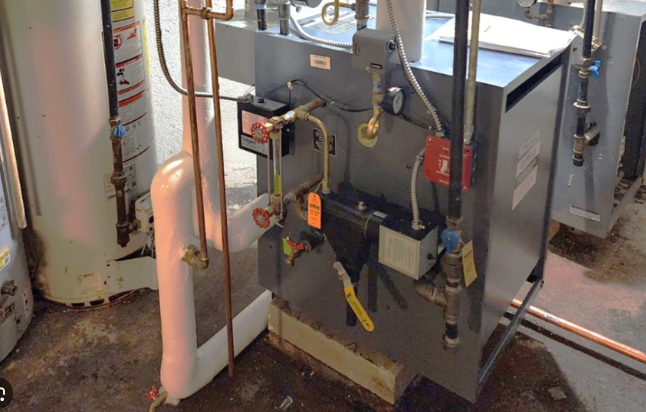
A manual fill steam boiler requires an operator to monitor the boiler water level through the sight glass and manually add water when the level drops.
This approach has been used for decades because it is simple, reliable, and requires fewer components than an automatic system.
For small operations using compact equipment, such as the Pro Line manual-fill boilers, manual filling can be an effective solution when steam demand is low and employees can perform regular checks.
The main advantage of manual filling is control.
Because employees interact directly with the boiler, they may notice problems earlier, including:
Unexpected water loss
Steam leaks
Changes in operating behavior
Unusual boiler cycling
A sudden increase in required refills can indicate a leak or another equipment issue.
However, manual filling also creates operational challenges.
Disadvantages of Manual Fill Boilers
Higher Labor Requirements
A manual boiler requires someone to:
Check the water level
Add water when needed
Monitor performance
Respond when water levels drop
For a business operating several hours per day, these small tasks can add up to significant labor costs.
Increased Risk of Human Error
The biggest weakness of a manual fill boiler is employee dependency.
If a worker forgets to refill the boiler, the system may eventually reach a low-water condition. The low water cutoff (LWCO) will normally shut the boiler down to protect the equipment, but the business may experience unexpected downtime.
For operations where steam production directly affects revenue, this interruption can be costly.
Limited Suitability for High-Volume Businesses
Manual filling works best when steam demand is predictable and relatively low.
A business using steam occasionally may not see much benefit from automation. However, companies running steam equipment throughout the day often need a more consistent water management system.
How Auto Fill Steam Boilers Work
An automatic fill steam boiler uses a water feeder that monitors boiler water levels and adds water when necessary.
The system works together with the boiler’s Low Water Cutoff (LWCO), one of the most important safety components in a steam boiler.
When the water level drops below a safe point:
The LWCO detects the lower water condition.
The automatic feeder receives a signal.
The feeder adds water until the proper level is restored.
The boiler continues operating safely.
This automation eliminates the need for employees to manually refill the boiler throughout the workday.
For commercial businesses, this provides a major operational advantage.
A system such as the Hoffman Steam JEL11 is designed for businesses that need dependable steam production with less daily supervision.
Why Commercial Businesses Prefer Auto Fill Steam Boilers
1. Reduced Daily Labor
The biggest advantage of auto fill is simple:
Your employees do not need to spend time managing boiler water levels.
Instead of checking and refilling equipment multiple times throughout the day, staff can focus on customer service, production, and revenue-generating activities.
For businesses operating every day, this convenience can quickly justify the additional upfront cost.
2. Better Protection Against Low Water Conditions
A boiler running without enough water can overheat and suffer serious damage.
The automatic feeder helps maintain a safe operating water level by responding before the boiler reaches a critical condition.
The LWCO remains the primary safety device because it shuts down the burner if water levels become unsafe, but the feeder helps prevent that shutdown from happening during normal operation.
3. More Consistent Steam Production
Steam businesses depend on reliability.
A boiler that frequently shuts down because of low water levels creates:
Production delays
Missed customer deadlines
Employee downtime
Emergency service calls
An auto fill system helps maintain consistent operation during busy periods.
Compare Hoffman Steam Boilers for Your Business
Choosing the right boiler fill system depends on your business size, steam demand, and operating requirements.
Whether you need a compact manual-fill boiler for occasional use or a larger automatic system for continuous operation, compare available options before investing.
Explore Hoffman Steam boiler solutions to find the right fit for your application:
Best Boiler Fill Type by Industry
The best choice between a manual fill vs auto fill steam boiler depends heavily on how your business uses steam. A small operation that runs a boiler occasionally has very different needs from a facility that depends on steam production all day.
Below are the most common commercial applications and the recommended fill type.
Industry | Recommended Fill Type | Why |
|---|---|---|
Dry Cleaners | Auto Fill | High daily steam demand makes automation valuable for productivity and reliability |
Tailoring Shops | Auto Fill or Manual Fill | Depends on number of steam irons and operating hours |
Garment Manufacturing | Auto Fill | Continuous steam production requires consistent water management |
Jewelry Cleaning | Manual Fill | Low-volume use often does not justify automation |
Alteration Shops | Manual Fill | Small operations may only need occasional steam |
Industrial Facilities | Auto Fill | Downtime prevention and safety are critical |
Training Schools | Auto Fill | Multiple users increase the risk of missed maintenance tasks |
Dry Cleaners: Auto Fill Is Usually the Better Choice
Dry cleaning businesses are among the most common commercial users of steam boilers.
Steam presses, finishing equipment, and garment processing machines often operate for several hours every day. Because steam demand changes throughout the workday, manually maintaining water levels can become an unnecessary operational burden.
For most dry cleaners, an auto fill steam boiler provides:
More consistent steam availability
Less employee involvement
Lower risk of mid-day shutdowns
Better workflow efficiency
Businesses that process hundreds of garments daily typically benefit from automation because a boiler interruption can immediately affect customer turnaround times.
Learn more about boiler solutions designed for dry cleaning applications through Hoffman Steam’s dry cleaning industry solutions.
Tailoring Shops: Depends on Steam Demand
Tailors and alteration shops fall into a middle category.
A small tailoring business with one steam iron used occasionally may operate efficiently with a manual fill boiler. The owner or operator is usually nearby and can easily monitor the equipment.
However, larger tailoring operations with multiple employees and continuous pressing requirements usually benefit from auto fill.
A good rule:
Low-volume tailoring: Manual fill may be sufficient.
Full-time pressing operation: Auto fill is recommended.
Jewelry Businesses: Manual Fill Can Be Practical
Jewelry cleaning businesses often use steam for short periods rather than continuous production.
For these applications, a manual fill boiler can make sense because:
Steam demand is low
Operators are usually close to the equipment
Refilling is less frequent
Lower upfront cost may be important
Small jewelry operations can explore manual fill options such as the Pro Line manual-fill boilers.
Industrial Applications: Auto Fill Is the Standard
Manufacturing facilities and industrial operations typically cannot afford inconsistent steam availability.
For these businesses, automation helps reduce:
Production interruptions
Employee monitoring time
Safety risks
Emergency maintenance situations
Industrial users should also consider water quality management, system monitoring, and professional maintenance plans when selecting a boiler system.
Manual Fill vs Auto Fill Steam Boiler Cost Comparison
The purchase price is only one part of choosing a commercial steam boiler.
Businesses should consider the total cost of ownership (TCO), including:
Labor costs
Maintenance
Downtime risk
Water waste
Equipment lifespan
Initial Equipment Cost
A manual fill boiler typically costs less upfront because it does not require an automatic feeder system.
An auto fill boiler costs more initially because it includes additional components such as:
Automatic water feeder
Additional controls
Installation requirements
However, the higher initial investment may provide long-term savings.
Labor Cost Difference
Consider a business that spends only 10 minutes per day checking and filling a manual boiler.
That may seem insignificant, but:
10 minutes daily
365 operating days per year
Approximately 60 hours annually
At a $20/hour labor cost, that equals roughly:
$1,200 per year in employee time
An auto fill system can reduce much of this routine labor.
Downtime Cost
For commercial businesses, the largest expense may not be labor. It may be lost production.
A boiler shutdown during peak business hours can create:
Delayed orders
Missed deadlines
Customer complaints
Emergency repair costs
An auto fill system helps reduce the chance of avoidable low-water interruptions.
Auto Fill Steam Boiler Maintenance Requirements
Automation reduces daily work, but it does not eliminate maintenance.
An auto fill boiler still requires regular inspections to ensure the feeder, LWCO, and water system operate correctly.
Steam Boiler Maintenance Schedule
Maintenance Task | Manual Fill Boiler | Auto Fill Boiler | Recommended Frequency |
|---|---|---|---|
Check Water Level | Required | Required | Daily |
Inspect for Leaks | Required | Required | Weekly |
Monitor Water Usage | Helpful | Critical | Weekly |
LWCO Blowdown | Required if installed | Required | Weekly or according to manufacturer instructions |
Clean Components | Recommended | Required | Scheduled maintenance |
Professional Inspection | Recommended | Recommended | Annually |
Low Water Cutoff (LWCO) Maintenance
The LWCO is one of the most important safety devices in any steam boiler.
It prevents dangerous operation by shutting down the boiler when the water level becomes too low.
For auto fill systems, the LWCO also communicates with the feeder and tells it when additional water is needed.
Because the feeder depends on accurate LWCO operation, regular maintenance is essential.
One important maintenance procedure is LWCO blowdown.
Blowing down the LWCO removes sediment and debris that can interfere with the float or sensor mechanism.
Businesses can learn more about proper maintenance procedures through Hoffman Steam’s LWCO blowdown video library.
Water Quality and Auto Fill Boiler Maintenance
One commonly overlooked issue with automatic feeders is increased makeup water.
Every time fresh water enters the boiler, it introduces:
Oxygen
Minerals
Dissolved solids
Over time, these can contribute to:
Scale buildup
Corrosion
Sediment accumulation
Feeder or LWCO problems
Hard water areas require additional attention because mineral deposits can shorten equipment life.
For businesses wanting to understand how water affects boiler performance, Hoffman Steam provides a Water 101 free ebook.
Common Auto Fill Steam Boiler Problems
Although automatic feeders improve reliability, they still require monitoring.
1. Hidden Water Leaks
The most common concern with auto fill systems is that they can hide leaks.
A manual boiler forces operators to notice when water disappears quickly.
An automatic feeder may quietly replace lost water, allowing a leak to continue unnoticed.
Signs of a possible leak include:
Increased water usage
More frequent feeder activation
Higher utility bills
Reduced steam performance
Installing a water meter can help track unusual consumption. Hoffman Steam offers boiler accessories that can help with monitoring through its accessories collection.
2. Faulty LWCO Operation
Because the LWCO controls feeder activation, a dirty or malfunctioning LWCO can create problems.
Possible symptoms include:
Feeder running continuously
Incorrect water levels
Boiler shutdowns
Excessive water consumption
Regular inspection helps prevent these issues.
3. Overfilling Problems
A malfunctioning feeder or control system can potentially add too much water.
Excess water can lead to:
Poor steam quality
Water carryover
Wet steam
Increased maintenance issues
Proper installation and regular inspections reduce these risks.
Manual Fill vs Auto Fill Steam Boiler: Product Recommendations
Different businesses need different boiler configurations.
Best Manual Fill Option for Small Businesses
Manual fill boilers are best suited for:
Jewelry shops
Small tailoring businesses
Low-volume steam users
Hoffman Steam’s Pro Line manual-fill boilers are designed for businesses that need dependable steam without automatic feeding.
Best Auto Fill Option for Commercial Operations
Auto fill boilers are recommended for:
Dry cleaners
Garment facilities
Busy tailoring shops
Industrial users
Businesses requiring consistent daily steam should consider Hoffman Steam’s automatic boiler options, including the Hoffman Steam JEL11.
Financing Options for Commercial Boiler Purchases
If upfront equipment costs are a concern, financing can make upgrading easier.
Businesses can explore available payment options through Hoffman Steam’s financing options.
Commercial buyers may also want to review potential tax advantages, including Hoffman Steam’s Guide to Section 179 Tax Benefit.
How to Choose Between a Manual Fill and Auto Fill Steam Boiler
The decision between a manual fill vs auto fill steam boiler ultimately comes down to how much steam your business needs and how much time your employees can dedicate to equipment monitoring.
Before purchasing a commercial steam boiler, ask these questions:
How Many Hours Per Day Does Your Boiler Run?
If your boiler operates only occasionally, manual filling may be enough.
If your boiler runs continuously throughout the workday, an auto fill system usually provides better reliability.
A business that depends on steam for daily operations should avoid creating unnecessary tasks that could interrupt workflow.
How Expensive Is Downtime for Your Business?
For some businesses, a boiler shutdown is a minor inconvenience.
For others, it can stop production.
Consider the impact of:
Delayed customer orders
Missed production schedules
Employee downtime
Emergency repair expenses
If a steam interruption affects revenue, an auto fill system is usually the safer investment.
Does Someone Always Monitor the Equipment?
Manual fill systems work best when:
The operator is nearby
Staff are trained
Water levels are checked consistently
Auto fill systems are better for businesses where employees have other priorities and cannot constantly monitor boiler operation.
Manual Fill vs Auto Fill Steam Boiler Decision Guide
Use this quick checklist to determine which system fits your business.
Question | Manual Fill Recommendation | Auto Fill Recommendation |
|---|---|---|
Boiler runs only a few hours weekly | ✓ | |
Boiler operates daily | ✓ | |
One person manages the equipment | ✓ | |
Multiple employees use steam equipment | ✓ | |
Downtime affects customers | ✓ | |
Lowest upfront cost is the priority | ✓ | |
Long-term labor savings matter | ✓ | |
Business operates unattended periods | ✓ |
The Future of Steam Boilers: Smart Monitoring and Automation
Commercial boiler technology continues moving toward smarter monitoring and improved efficiency.
Modern systems can integrate automation features that help businesses track:
Water consumption
Boiler performance
Maintenance requirements
Potential equipment issues
Smart monitoring is especially valuable for businesses using auto fill systems because it helps identify problems before they become expensive repairs.
For example, if a feeder begins adding water more frequently than normal, a monitoring system can alert operators that a leak or maintenance issue may exist.
Automation does not replace maintenance, but it gives business owners better visibility into their equipment.
Can You Upgrade a Manual Fill Boiler to Auto Fill?
Many businesses do not need to replace their entire boiler system to gain automation benefits.
A qualified technician can often retrofit an automatic feeder onto an existing manual fill boiler.
A retrofit may include:
Automatic water feeder installation
LWCO inspection or replacement
Plumbing modifications
Control upgrades
This option can be useful for businesses that already own a reliable boiler but want improved convenience and reduced daily labor.
Before upgrading, evaluate:
Boiler age
Current condition
Available replacement parts
Future business growth
In some cases, replacing an older boiler with a newer automatic system may provide better long-term value.
Manual Fill vs Auto Fill Steam Boiler: Final Recommendation
For most commercial steam users, an auto fill steam boiler is the better long-term investment.
The biggest advantages include:
Less employee involvement
More consistent steam availability
Reduced risk of low-water shutdowns
Better support for high-volume operations
However, manual fill boilers still have a place.
A manual fill system can be the right choice for businesses that:
Use steam occasionally
Have low production demands
Need the lowest upfront cost
Have employees available to monitor equipment
The right boiler is not the one with the most features. It is the one that matches your business workload.
A jewelry shop steaming items occasionally has different needs from a dry cleaner operating presses all day.
Compare Hoffman Steam Boilers for Your Application
Whether you need a compact manual fill system or a commercial auto fill boiler designed for continuous operation, selecting the right equipment can improve productivity and reduce maintenance headaches.
Hoffman Steam offers boiler solutions for businesses ranging from small specialty shops to demanding commercial operations.
Compare available models to find the right steam system for your workload:
Compare Hoffman steam boilers: https://buyhoffmansteamersnow.com/
FAQ: Manual Fill vs Auto Fill Steam Boiler
1. What is the difference between a manual fill and auto fill steam boiler?
A manual fill steam boiler requires an operator to add water when the boiler water level drops. An auto fill steam boiler uses an automatic water feeder to maintain the correct water level without constant manual adjustment.
Manual systems provide simplicity and lower upfront costs, while auto fill systems provide greater convenience and consistency.
2. Is an auto fill steam boiler better for commercial businesses?
For most commercial businesses, yes.
Operations that rely on daily steam production usually benefit from auto fill because it reduces labor requirements and lowers the risk of unexpected shutdowns caused by low water levels.
Industries such as dry cleaning, garment production, and industrial facilities typically benefit the most from automation.
3. Are manual fill steam boilers still a good option?
Yes.
Manual fill boilers remain practical for low-volume applications where an operator can regularly monitor water levels.
Examples include:
Small jewelry businesses
Occasional steam users
Small tailoring operations
The key requirement is consistent daily monitoring.
4. Does an automatic feeder eliminate boiler maintenance?
No.
An auto feeder reduces routine labor but does not eliminate maintenance.
Businesses still need to:
Check water levels
Monitor water usage
Inspect the feeder
Maintain the LWCO
Schedule professional servicing
Automation makes maintenance easier, not unnecessary.
5. How often should an auto fill steam boiler be checked?
Operators should visually inspect the boiler daily and monitor water usage regularly.
Weekly checks should include:
Looking for unusual water consumption
Checking for leaks
Confirming normal feeder operation
Professional maintenance should follow manufacturer recommendations and local requirements.
6. Can an automatic feeder hide boiler leaks?
Yes.
Because an automatic feeder replaces lost water, a leak may go unnoticed longer than it would with a manual system.
This is why businesses should monitor water consumption. A sudden increase in makeup water is often an early warning sign of:
Return line leaks
Valve problems
Boiler leaks
7. Is an automatic water feeder required by law?
Requirements vary depending on boiler size, location, and local codes.
Many commercial boilers use automatic feeders as a safety and convenience feature, but businesses should confirm requirements with local authorities and boiler professionals.
8. What happens if an auto fill feeder fails?
A feeder failure can result in incorrect water levels.
Possible issues include:
Boiler shutdown
Excess water usage
Poor steam quality
Regular LWCO maintenance and inspections help prevent these problems.
9. Which Hoffman Steam boiler should I choose?
The best model depends on your steam demand and industry.
Small businesses with occasional steam needs may prefer manual fill systems.
Businesses requiring reliable daily steam production should compare automatic boiler solutions designed for commercial workloads.
Explore Hoffman Steam options to find the right fit:
Compare Hoffman steam boilers: https://buyhoffmansteamersnow.com/
Final Takeaway: Choose the Boiler Fill System That Matches Your Business
The choice between a manual fill vs auto fill steam boiler is ultimately a decision between control and convenience.
Manual fill systems offer simplicity and lower upfront costs but require consistent employee attention.
Auto fill systems require a larger initial investment but provide the reliability, labor savings, and operational consistency that most commercial businesses need.
For businesses where steam is essential to daily operations, an automatic fill system is usually the smarter long-term choice.
Before purchasing, compare your workload, maintenance requirements, and downtime costs to select the boiler system that keeps your business running efficiently.
Compare Hoffman steam boilers today to find the right commercial steam solution for your operation.


