

Many hat shaping professionals do not need the biggest steam system available. They need a reliable way to reshape felt and straw hats in places where traditional boilers are difficult or impossible to install.
Portable hat shaping steamers are designed for situations such as:
Shopping malls
Pop-up hat bars
Western events
Trunk shows
Mobile hat businesses
Small retail counters
Venues with pressure vessel restrictions
Unlike full commercial boiler systems, portable steamers prioritize mobility, simple setup, and compliance-friendly operation.
However, portable does not always mean better. Shops shaping dozens of hats daily may need a dedicated commercial boiler system instead.
Quick Summary: What is the Best Portable Hat Steamer?
A portable hat shaping steamer is a specialized tool used to soften felt and straw for reshaping. If your venue allows a pressure vessel and you shape more than a handful of hats a day, you are not looking for a portable unit. See our hat steamer buying guide
What Is a Portable Hat Shaping Steamer?
A portable hat shaping steamer is a compact steam system designed to soften hat materials so they can be reshaped by hand, fitted over a block, or adjusted for customers.
The main purpose is not maximum steam output. It is flexibility.
Portable units are commonly used when:
Space is limited
The steamer must move between locations
The venue does not allow pressure boilers
Only a limited number of hats are shaped per day
A dedicated felt hat steamer differs from a household garment steamer because it provides:
More focused steam delivery
Better control around hat materials
Compatibility with hat shaping accessories
More repeatable results
Portable Hat Steamer vs Commercial Hat Steamer: Which One Do You Need?
Use Case | Recommended System |
|---|---|
Pop-up hat shaping | Portable flash steamer |
Mall kiosk | Non-pressurized portable unit |
Mobile hat bar | Portable flash steamer |
5–10 hats per day | Portable or small boiler |
Western wear store | Commercial boiler |
Custom hat shop | High-output commercial system |
Dozens of hats daily | Commercial hat steamer |
If your operation is growing beyond occasional shaping, a portable steamer may become a bottleneck. See our guide to the Best Commercial Hat Steamer for higher-volume applications.
Why Steam Matters for Hats
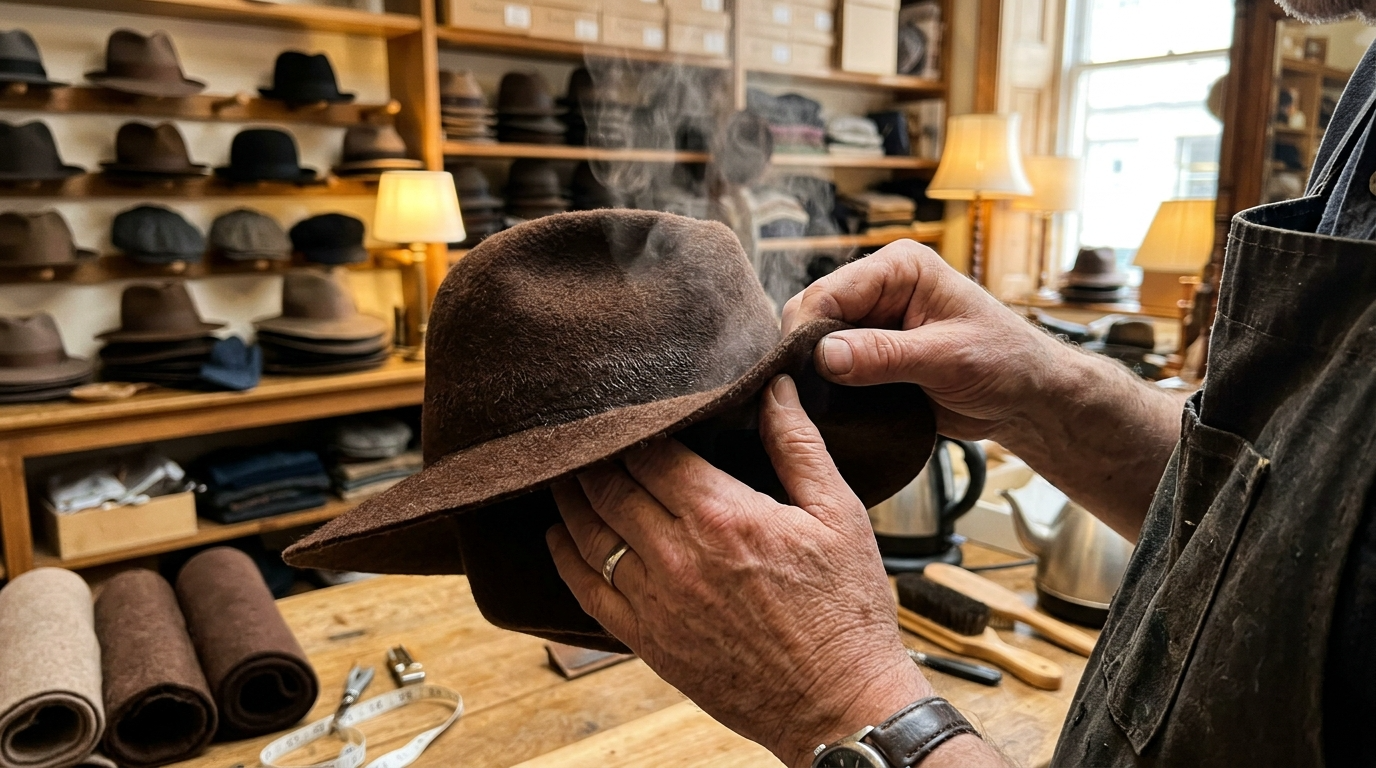
Steam relaxes the fibers in felt and straw, making them pliable enough to crease, block, stretch, or restore shape. Applied correctly, it does this without soaking the stiffener that holds the hat’s structure. That balance between heat, moisture, and control is why every serious hat shop, western wear store, and millinery studio treats a reliable steam source as a core tool.
Beginners and budget-conscious hobbyists often start with a tea kettle or a small garment steamer. Practitioners report that these workarounds do produce results, but the output is inconsistent and hard to direct. Stepping up to a dedicated portable hat steamer gives you repeatable control over where the steam goes, how much moisture hits the felt, and how quickly you can move through multiple hats.
Types of Portable Hat Shaping Steamers
Flash Steamer (Non-Pressurized)
For most portable hat shaping applications, a flash steamer is the preferred choice because it provides steam without storing water under pressure.
This makes it suitable for:
Retail environments
Temporary events
Mobile setups
Locations with boiler restrictions
The Hoffman GEM-III Commercial Steamer is designed for these situations, offering portable operation, foot-pedal control, and steam generation without a traditional pressure vessel.
Learn more about GEM-III portable hat shaping applications
Small Boilers: When Portable Is No Longer Enough
Portable does not always mean the right choice.
A small pressurized boiler becomes more practical when a business:
Shapes hats continuously throughout the day
Needs drier, higher-pressure steam
Uses multiple steam accessories
Serves a large customer volume
For those applications, see:
Best Commercial Hat Steamer Buying Guide
Portable Hat Steamer Comparison: Flash vs. Pressurized
Feature | Portable Flash Steamer | Commercial Boiler |
|---|---|---|
Best Use | Mobile shaping, retail, events | Full-time hat shops |
Pressure Vessel | No | Usually yes |
Setup Time | Minutes | Permanent/semi-permanent |
Mobility | Excellent | Limited |
Steam Output | Moderate | High |
Daily Volume | Low-medium | Medium-high |
Best For | Flexibility | Production |
Safety and Compliance Basics
For non-pressurized flash steamers, safety is straightforward: keep hands clear of the steam outlet, don’t leave the unit unattended while heated, and follow the manufacturer’s distance guidelines.
Pressurized boilers carry additional considerations. In professional settings, look for units with ASME certification on the pressure vessel, which indicates the manufacturer meets quality control standards for pressure equipment. UL or CSA listings confirm the unit has been independently tested for electrical and operational safety. These aren’t optional extras for a commercial shop; many jurisdictions require them.
Note the language here: ASME certification means the manufacturer’s quality system and vessel meet ASME’s Boiler and Pressure Vessel Code standards. It’s not the same as ASME “approving” a specific product. Hoffman’s Pro line models carry both ASME and UL certifications.
Choosing the Right Portable Hat Steamer Setup
Use this checklist to narrow your decision:
Can you have a pressure vessel on site? If not (malls, some retail leases), a flash steamer like the GEM-III is your answer.
How many hats per session? Low volume (under 5 per day) works fine on flash or entry boilers. High volume needs a larger tank and higher PSI.
What accessories do you need? Hat shaper heads, foot pedals, steam wands, and flow valves all affect how precisely and quickly you work.
Do you need compliance documentation? For commercial insurance and building inspectors, ASME/UL certifications on pressurized units simplify the paperwork.
Mobile or trunk show use.
The GEM-III flash steamer handles on-site shaping without boiler permits, plugs into a standard outlet, and sets up in minutes.
Browse all hat shaping bundles and accessories to compare what’s included at each price point.
Frequently Asked Questions
Do I need a pressurized boiler for hat shaping, or will a flash steamer work?
It depends on your volume and venue. Flash steamers handle lighter workloads and locations that prohibit pressure vessels. If you’re shaping more than a handful of hats daily, a pressurized boiler delivers steadier, hotter steam with longer duty cycles.
Can I use a regular garment steamer to shape hats?
Yes, for light reshaping. Garment steamers produce enough steam to soften felt for minor adjustments. But they lack the focused output, pressure, and accessories (hat shaper heads, foot pedals) that a purpose-built hat shaping steamer provides for consistent, repeatable results.
How do I get drier steam for cleaner creases?
Place a microfiber cloth over your hat shaper head. This filters excess moisture from the steam plume and gives you more precise surface control. Reducing exposure time also helps; don’t hold the hat in the steam longer than needed.
Will steam damage my hat’s sweatband?
Leather sweatbands shrink when exposed to steam. Keep the sweatband out of the steam plume while shaping. This is one of the most common mistakes beginners make, and it’s difficult to reverse.
What does ASME certification mean on a hat steamer?
ASME certification indicates the pressure vessel was manufactured under quality controls that meet the ASME Boiler and Pressure Vessel Code. It does not mean ASME tested or endorsed the specific product. For commercial hat shops using pressurized boilers, ASME and UL certifications are the standard compliance markers inspectors and insurers look for.
How far should I hold the hat from the steam?
Most retail tutorials recommend 6 to 8 inches between the hat and the steam outlet. This gives enough heat to soften fibers without scorching or oversaturating the material.
How long does it take for a shaped hat to set?
Let the hat cool completely after steaming and shaping. The cooling phase is what locks the new form in place. Some western hat shops have customers wear the hat while it cools so it conforms to their head shape naturally.


