

Shopping for a commercial steamer can feel overwhelming. You see terms like PSI, bar, and boiler pressure, but what do they really mean for your business? The most fundamental choice is between a pressurized vs non pressurized steamer. Pressurized steamers deliver high powered force for deep cleaning and sanitization. Non pressurized models provide a gentle, continuous flow ideal for delicate work like shaping fabrics or finishing garments.
Whether you’re shaping hats, cleaning jewelry, or restoring upholstery, one type of steamer will excel where the other falls short. This guide breaks down everything you need to know so you can invest in the right equipment.
Ready to see which model fits your workflow? Browse Hoffman’s steamer lineup to compare specs side by side.
Pressurized vs. Non Pressurized: Quick Comparison
| Feature | Non Pressurized (Flash) | Pressurized (Boiler) |
|---|---|---|
| Steam Velocity | Gentle, consistent flow | High velocity “jet” blast |
| Internal Pressure | 0 PSI (Atmospheric) | 50 to 150+ PSI (Commercial) |
| Moisture Level | Higher moisture (Wet) | Low moisture (Dry Steam) |
| Best For | Fabric shaping, hats, silk | Sanitizing, degreasing, grout |
| Heat Up Time | Near instant | 10 to 20 minutes |
| Cook Time / Throughput | Lower per hour volume | Higher per hour volume |
| Size / Footprint | Compact, portable | Larger, heavier boiler units |
| Altitude Sensitivity | Minimal impact | Requires pressure adjustments above 5,000 ft |
The Core Difference: How They Make Steam
The main distinction between a pressurized vs non pressurized steamer comes down to how each handles water and heat.
Non Pressurized Steamers: Often called “flash” steamers, these units heat a small amount of water very quickly to produce a continuous, gentle flow of steam. They don’t build up pressure internally. Think of them as specialists for finishing, shaping, and delicate tasks where you need consistent steam without aggressive force.
Pressurized Steamers: These machines use an enclosed boiler to heat water well past its normal boiling point, building up significant internal pressure. When you pull the trigger, this pressure is released as a powerful, high temperature jet of steam. This force is ideal for deep cleaning, sanitizing, and tackling tough grime.
If you’re still deciding which category suits your shop, the Which Steamer Is Right for Me guide walks through the decision step by step.
Understanding Steam Pressure: PSI and Bar Explained
When you see specs for a pressurized steamer, you’ll encounter PSI and bar. They are simply two units for measuring the same thing: pressure.
PSI (Pounds per Square Inch): The most common unit in the US. It measures the amount of force exerted over one square inch. Higher PSI means the steam hits the surface with more force.
Bar: The metric unit for pressure. For a quick conversion, 1 bar is roughly equal to 14.5 PSI.
So a professional steamer rated at 9 bar is pushing out about 130 PSI of pressure. For a deeper explanation of how much PSI matters in real world applications, that guide covers the math and the practical implications.
The Pressure Spectrum: Commercial vs. Home Steamers
There’s a massive gap in power between a home steamer and the equipment needed for a business. The debate over a pressurized vs non pressurized steamer often starts with understanding these power levels.
Home Steam Cleaners: Most household steam mops or garment steamers operate at low pressures, typically between 30 to 60 PSI (about 2 to 4 bar). They’re great for light tasks but lack the muscle for serious commercial jobs.
Commercial Steam Cleaners: True professional grade equipment starts around 50 to 75 PSI and goes way up from there. For heavy duty cleaning, machines can easily exceed 125 PSI.
This means a commercial steamer can have two to three times the pressure output of a typical home model, translating directly into faster and more effective cleaning. The gap between commercial and consumer steamers is not just about specs on paper; it shows up in throughput, durability, and daily uptime.
The Pro Grade Power Threshold
In the commercial world, many experts consider 9 bar (approximately 130 PSI) to be the threshold for truly professional performance. At this level, a steamer has enough force and heat to handle demanding tasks in auto detailing, upholstery cleaning, and commercial kitchens.
Operating at these pressures allows professional units to deliver incredibly high heat and force, making it possible to sanitize and deep clean in ways that low pressure or non pressurized models simply cannot.
Cook Time and Throughput: How Steamer Type Affects Productivity
One factor that doesn’t get enough attention in the pressurized vs non pressurized steamer discussion is throughput, which is the amount of work you can complete per hour.
Pressurized boiler steamers take longer to heat up (typically 10 to 20 minutes), but once they reach operating pressure, they process work significantly faster. The concentrated, high velocity jet softens materials or strips grime in seconds rather than minutes. For a jewelry store cleaning dozens of pieces before display, or a hat shop shaping hats back to back during a busy Saturday, this speed compounds quickly across a full shift.
Non pressurized flash steamers heat up almost instantly, which makes them ideal for intermittent use. A boutique that steams a garment every 20 minutes benefits from zero warm up time. But if you’re running a continuous workflow (cleaning trays of rings, shaping a stack of felt hats, or finishing garments on a rack) a pressurized unit’s throughput advantage becomes clear.
Practitioners on Reddit’s r/jewelers forum have noted that switching from a small handheld steamer to a boiler based unit cut their per piece cleaning time roughly in half, simply because the steam did the work instead of requiring multiple passes.
For shops running continuous workflows, explore continuous duty boilers that eliminate refill downtime entirely.
Which Steamer Does Your Industry Need?
Use Non Pressurized Steamers If You Are In:
- Millinery and Hat Making: To soften felt and straw without damaging fibers.
- High End Garment Care: For delicate silks and wedding dresses that can’t handle high pressure blasts. The guide to steaming delicate fabrics covers safe temperature ranges by fabric type.
- Upholstery Finishing: For removing “seat packing” marks without soaking the foam.
Use Pressurized Steamers If You Are In:
- Commercial Kitchens: To blast carbonized grease off stovetops and vents.
- Auto Detailing: For cleaning engines, rims, and deep cleaning floor mats.
- Healthcare and Hospitality: To sanitize surfaces, kill bed bugs, and eliminate viruses without chemicals.
- Jewelry Manufacturing: To remove polishing compounds from intricate crevices.
Typical Use Case by Volume
The right steamer also depends on daily volume. A small shop that steams five to ten items per day can often get by with a non pressurized flash steamer or a compact 1 gallon boiler. Businesses processing 30 or more items daily, or running steam for extended sessions, need the sustained output of a larger pressurized system with continuous fill capability.
For example, a western hat shop shaping 15 to 20 hats on a weekend needs uninterrupted steam, making a 2 gallon or 6 gallon boiler the practical choice. A clothing boutique that touches up a few garments between customers can work perfectly well with a portable unit. The key is matching machine capacity to your peak demand, not your average demand.
Food Suitability and Flavor Transfer Risk
Some buyers searching for steamers are coming from the food service world, where “pressurized vs non pressurized” also describes commercial food steamers (sometimes called combi ovens or compartment steamers). It’s worth addressing the distinction clearly.
Commercial food steamers operate on similar pressure principles but are designed specifically for cooking. Pressurized food steamers (typically operating at 5 to 15 PSI) cook faster because the elevated pressure raises the boiling point of water inside the cooking chamber, shortening cook times for vegetables, seafood, and proteins. Non pressurized (also called “connectionless” or atmospheric) food steamers cook more gently and are preferred for items like custards or delicate fish where texture matters.
A real concern with pressurized food steamers is flavor transfer. Because the chamber is sealed and recirculates steam under pressure, strong flavored items (fish, broccoli, onions) can impart their taste onto blander foods cooked simultaneously. Non pressurized food steamers vent continuously, which reduces this risk considerably. According to the Food Service Technology Center, pressurized compartment steamers are roughly 20% to 30% more energy efficient than their connectionless counterparts, but operators need to be thoughtful about what they cook together.
Important note: Hoffman Steam’s equipment is built for commercial cleaning, finishing, and light industrial applications, not food preparation. If you’re looking for cleaning and sanitization equipment for a commercial kitchen (degreasing hoods, sanitizing prep surfaces, cleaning grout), that’s squarely in pressurized steam cleaner territory.
Door Openability and Operational Workflow
Another distinction that matters in practice (particularly for food service steamers, but also relevant to enclosed steam chambers used in industrial applications) is door openability during operation.
Pressurized steamers cannot be opened mid cycle. The chamber is sealed to maintain pressure, and opening the door would release a dangerous burst of steam. You must wait for the pressure to equalize before accessing the contents. This adds cycle time and means you cannot check progress or add items partway through.
Non pressurized steamers operate at atmospheric pressure, so the door can be opened at any time without safety risk. This makes them far more flexible for workflows that require frequent loading and unloading.
For cleaning and finishing applications with commercial steam boilers (like those from Hoffman), the parallel concept is trigger control versus continuous output. A pressurized boiler releases steam on demand through a nozzle or wand, giving the operator precise control over when and where steam is applied. There’s no “door” to worry about, but the same underlying principle applies: pressurized systems require more deliberate handling.
How Pressure Supercharges Cleaning Power
Why does more pressure matter? It’s not just about force. In a pressurized steamer, pressure, temperature, and moisture content are all linked.
The Temperature and Pressure Connection
In a steam system, pressure and temperature are directly related. At normal atmospheric pressure, water boils at 212°F (100°C). But inside a sealed boiler, things get much hotter. At around 10 bar of pressure, steam temperature reaches roughly 180°C (356°F).
This superheated vapor carries a tremendous amount of thermal energy. It works by instantly softening and dissolving grease, oil, and caked on dirt, making it easy to wipe away.
Creating Low Moisture “Dry Steam”
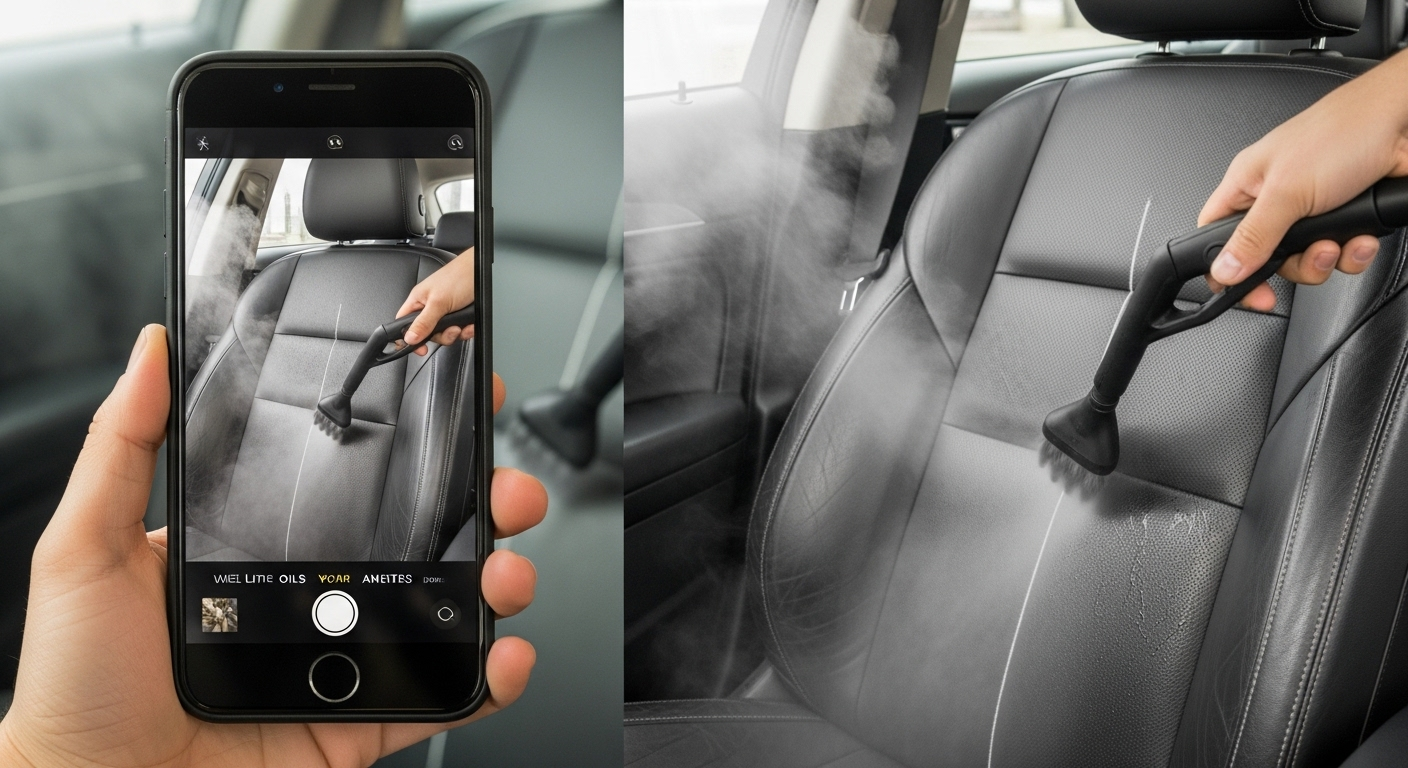
This combination of high pressure and high temperature produces what’s known as “dry steam.” This doesn’t mean the steam contains no water, but rather that it has very low moisture content. Professional vapor steam cleaners produce steam that is only about 5% to 6% liquid water.
The benefits are significant:
- No Soaking: Surfaces are left almost completely dry, requiring only a quick wipe. This prevents water damage on sensitive materials like upholstery, wood, or electronics.
- Better Sanitization: The high vapor content carries more heat, which is essential for killing microbes effectively without leaving behind chemical residues.
Deeper Penetration for Superior Sanitization
Higher pressure does more than just clean the surface. It forces that hot, dry steam into microscopic pores, cracks, and crevices. This deep penetration is crucial for true sanitization.
Pressurized steam can get into grout lines, fabric seams, and textured surfaces where bacteria, mold, and pests like to hide. The intense heat kills them on contact. Research shows that high temperature steam can eliminate 99.99% of common bacteria and viruses from hard surfaces. It’s also incredibly effective at killing dust mites, bed bugs, and their eggs without any pesticides.
This makes the choice between a pressurized vs non pressurized steamer clear for any application focused on hygiene.
Altitude Performance: A Factor Most Buyers Overlook
Here’s something almost no buyer’s guide mentions: altitude affects steamer performance.
At higher elevations, atmospheric pressure drops. Water boils at a lower temperature (roughly 203°F at 5,000 feet instead of 212°F at sea level, according to USGS data). For non pressurized steamers, this means the steam produced at altitude carries slightly less thermal energy. A flash steamer in Denver will produce noticeably cooler steam than the same unit in Miami.
Pressurized boiler steamers are far less affected. Because they generate steam inside a sealed system at a specific target pressure (say, 70 PSI), the internal conditions remain consistent regardless of elevation. The boiler doesn’t care whether it’s at sea level or 7,000 feet; it still builds to its rated pressure and temperature.
For businesses operating above 4,000 to 5,000 feet, this is a practical consideration. One upholstery shop owner in a YouTube walkthrough of their Colorado workspace mentioned that their atmospheric steamer “just didn’t have the same bite” after relocating from a lower elevation, which prompted a switch to a pressurized boiler.
If your shop is in a mountain or high desert region, a pressurized unit provides more predictable, consistent results.
Size and Build Requirements
The physical footprint and construction of a steamer matters, especially for small shops, mobile setups, or retail environments.
Non pressurized flash steamers are typically compact and lightweight. Hoffman’s GEM III, for example, is portable enough for a mall kiosk and requires no boiler permits. These units are quiet, easy to move, and take up minimal counter or floor space.
Pressurized boiler steamers are heavier and bulkier by necessity. A sealed boiler rated for 70+ PSI needs thick walls (often stainless steel), safety valves, and a pressure gauge. A 2 gallon boiler might weigh 30 to 50 pounds, and a 6 gallon industrial unit considerably more. They also need adequate ventilation and, depending on your jurisdiction, may require a boiler permit.
For mobile detailers or pop up shops, weight and portability are deciding factors. For a fixed workshop or jewelry store back room, the extra size of a pressurized unit is rarely a problem, and the performance gains justify the footprint.
Standard and Test Method Classification
Commercial steamers are not all built to the same standards, and understanding the relevant certifications helps separate professional equipment from consumer grade products.
ASME (American Society of Mechanical Engineers): The ASME Boiler and Pressure Vessel Code governs the design, fabrication, and inspection of pressure vessels. Any pressurized steam boiler used in a commercial setting should carry ASME certification. This ensures the tank has been built and tested to safely contain the pressures it’s rated for. The ASME certification guide explains what the stamps mean and why they matter for insurance and compliance.
UL (Underwriters Laboratories): UL certification covers the electrical safety of the unit. A UL listed steamer has been tested for electrical hazards, grounding, and thermal protection.
NSF International: For food service environments, NSF certification indicates that equipment meets public health and sanitation standards.
Non pressurized steamers generally fall outside ASME jurisdiction because they don’t operate under pressure. They still need UL or equivalent electrical safety certification, but the regulatory burden is lighter.
For businesses that need to pass health department inspections, carry commercial insurance, or meet landlord equipment requirements, ASME and UL certification is not optional. It’s the baseline.
Staying in Control: Gauges, Adjustments, and Safety
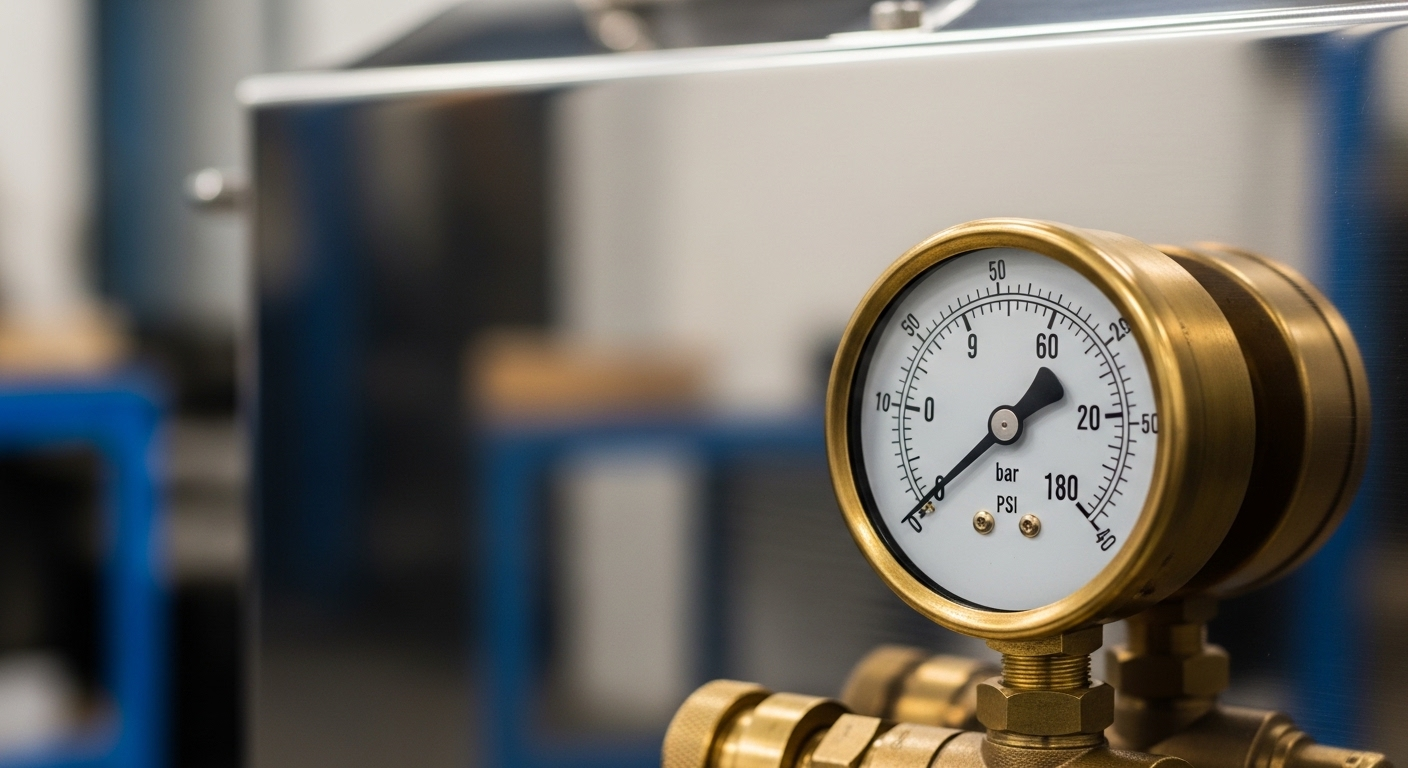
Because they operate under intense conditions, professional pressurized steamers are built with thorough controls and safety features.
Pressure Gauges and Controls
A pressure gauge on the boiler is essential. It’s a dial or digital display that shows the internal pressure in PSI and bar, letting you know when the machine is ready and operating in its optimal range.
Most commercial units also feature an adjustable steam control. This knob allows you to regulate the volume of steam being released, giving you the power to dial up the pressure for tough jobs or lower it for more delicate surfaces. For professional versatility, it’s a must have feature.
Built In Safety Features
Reputable manufacturers build their machines with multiple safety systems. Key features to look for include:
- Pressure Relief Valve: Automatically vents steam if the pressure exceeds a safe limit.
- Overheat Protection: A thermostat shuts off the heating element if the boiler gets too hot.
- Low Water Cutoff: Prevents the heater from running if the water level gets too low, protecting the machine from damage.
- Safety Cap: A specialized cap that cannot be opened while the boiler is under pressure, preventing accidental steam burns.
Quality commercial units, like the UL certified boilers from Hoffman Steam, incorporate these features to ensure safe, reliable operation day after day. For a deeper look at what to inspect, the steam boiler safety features guide covers each system in detail.
Keeping the Steam Flowing: Continuous Fill vs. Single Tank
For businesses, downtime is lost money. This is where the refilling mechanism of a pressurized steamer becomes a crucial factor.
Single Tank Steamers: These have a single boiler that you fill with water. Once it’s pressurized, you cannot add more water until you turn it off, let it cool down, and release the pressure. This can mean 15 to 20 minutes of waiting every time you run out of water.
Continuous Fill Steamers: These advanced systems have a separate, non pressurized water reservoir that automatically pumps water into the boiler as needed. You can add water to the reservoir at any time, even while the machine is running at full power.
For any business that requires long, uninterrupted sessions, a continuous fill system is a game changer. It eliminates the stop and start cycle, maximizing productivity. The manual fill vs auto fill comparison breaks down the cost and workflow tradeoffs in detail. If upfront cost is a concern, financing options are available.
Maintenance and Longevity: What to Expect
While the choice between a pressurized vs non pressurized steamer often comes down to power, maintenance is the hidden factor in your ROI.
Pressurized Units: Require regular “blow downs” (draining the boiler) to prevent mineral scale buildup. Because they operate under stress, using distilled or treated water is highly recommended. The water quality standards guide explains what water treatment prevents and what neglect costs over time.
Non Pressurized Units: Generally simpler to maintain but are more prone to “spitting” water if the heating element becomes scaled.
One Reddit user on r/jewelers reported using two Hoffman steamers over 30 years, with the first lasting 24 years. That kind of longevity only happens with proper maintenance, particularly regular descaling and use of clean water.
FAQ: Pressurized vs Non Pressurized Steamer
What is the main advantage of a pressurized steamer?
The primary advantage is power. A pressurized steamer delivers high temperature, high velocity steam that can deep clean grime, dissolve grease, and sanitize surfaces far more effectively than a non pressurized model.
Can a non pressurized steamer sanitize surfaces?
Generally, no. While the steam is hot at the nozzle, a non pressurized steamer lacks the force to drive that heat deep into surfaces. True sanitization requires the high temperatures (often above 250°F or 121°C) that are only reliably achieved and delivered by a pressurized boiler system.
Is higher PSI always better in a steam cleaner?
Not necessarily. While higher PSI provides more cleaning force, the ideal pressure depends on the task. Extremely high pressure can damage delicate surfaces. That’s why professional machines with adjustable controls are so valuable, allowing you to match the pressure to the job. The real power comes from the combination of pressure and high temperature.
What’s the difference between a pressurized vs non pressurized steamer for clothes?
A non pressurized garment steamer is perfect for relaxing wrinkles from delicate fabrics like silk or chiffon. A pressurized steamer with a garment attachment can work much faster and is better for heavy fabrics like denim, canvas, or thick coats, but care must be taken to avoid scorching.
How does altitude affect steamer performance?
At higher elevations, atmospheric pressure is lower, which means non pressurized steamers produce slightly cooler steam. Pressurized boilers are largely unaffected because they generate steam inside a sealed system at a set target pressure. For shops above 5,000 feet, a pressurized unit delivers more consistent results.
Do pressurized food steamers and pressurized cleaning steamers work the same way?
They share the same physics (sealed chamber, elevated pressure, higher boiling point) but are designed for completely different purposes. Food steamers are built with cooking chambers and NSF food safety ratings. Cleaning steamers deliver steam through nozzles and wands for surface cleaning and sanitization. Do not use one in place of the other.
How do I know if I need a commercial grade steamer?
If you rely on your steamer for daily business operations, need to remove tough stains or grease, or have to sanitize surfaces for health and safety, you need a commercial grade machine. Their durability, power, and efficiency are built for professional demands.
Are pressurized steamers safe to use?
Yes, when they are built by a reputable manufacturer and used correctly. Commercial steamers are equipped with multiple safety features like pressure relief valves, automatic shutoffs, and locking safety caps to ensure safe operation. Always follow the manufacturer’s instructions and verify that your unit carries ASME and UL certification.
Still not sure which steamer fits your shop? Request a virtual demo to see the equipment in action and get a recommendation based on your specific workflow.


