

Getting that brilliant, fresh from the showcase sparkle on your jewelry requires more than just a cloth and some polish. For a truly deep clean, professionals turn to specialized equipment. But when it comes to a professional jewelry cleaning machine vs steamer, which one is the right choice? The best option depends on your specific needs: ultrasonic cleaners excel at deep cleaning intricate pieces, while steamers deliver a powerful, sanitizing final shine. For professionals, the answer is often to use both.
This guide will walk you through the differences, benefits, and important cautions for each method to help you make an informed decision and keep your jewelry looking its absolute best.
At a Glance: Ultrasonic vs. Steamer
The main difference between a professional jewelry cleaning machine and a steamer is the cleaning method: Ultrasonic cleaners use high-frequency sound waves (cavitation) to lift deep-set grime from intricate gaps, while jewelry steamers use high-pressure steam to blast away surface oils and sanitize the piece. For the best professional results, use an ultrasonic cleaner first for deep cleaning, followed by a steamer for a spot-free, brilliant finish.
How Do These Jewelry Cleaning Machines Work?
While both machines get your jewelry sparkling clean, they use completely different scientific principles to do it. Understanding how they work is the first step in the professional jewelry cleaning machine vs steamer debate.
The Science of Ultrasonic Cleaners: Cavitation Explained
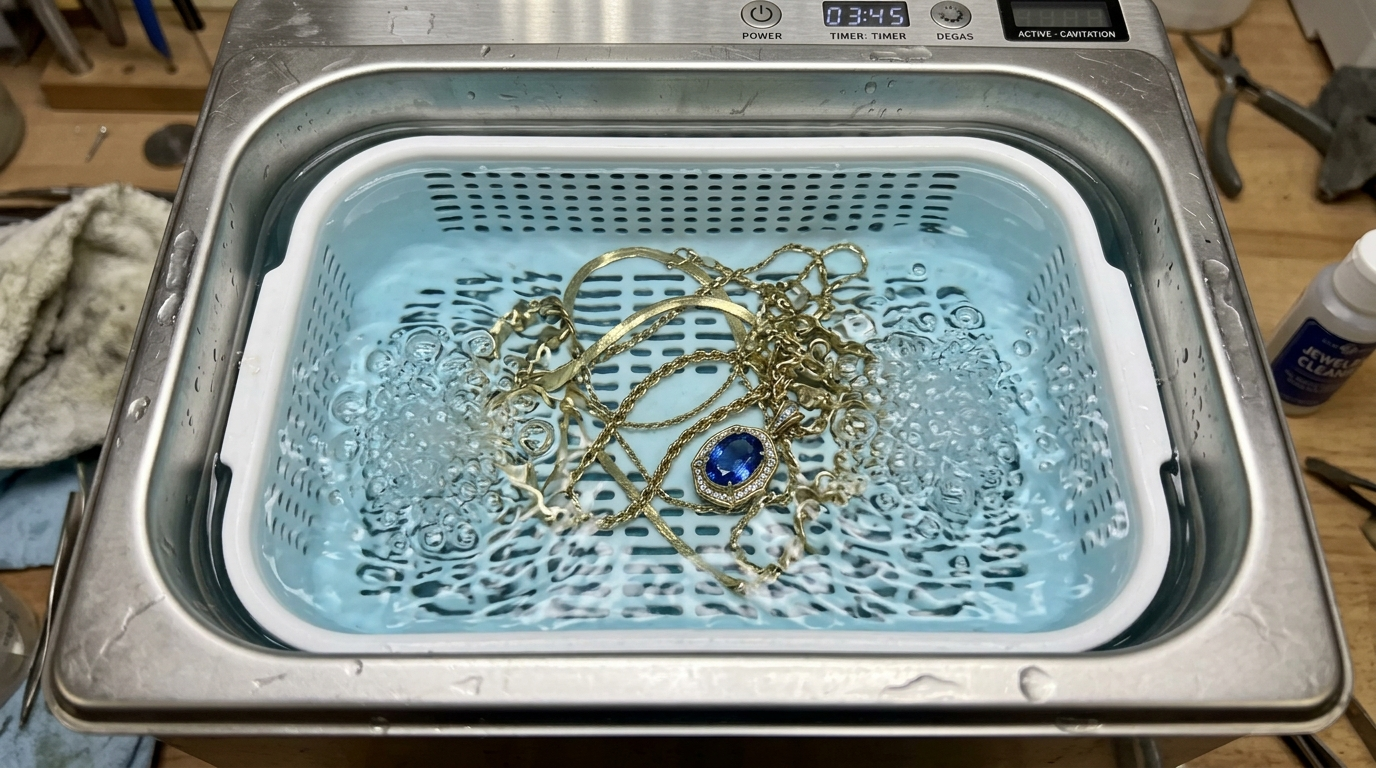
An ultrasonic jewelry cleaner uses high frequency sound waves to clean. The machine’s tank is filled with water or a cleaning solution. When you turn it on, a transducer creates sound waves (usually between 20 and 40 kHz) that travel through the liquid.
These waves cause a fascinating phenomenon called cavitation. This is the rapid formation and collapse of millions of microscopic bubbles. As these tiny bubbles implode, they create powerful but miniature shock waves that act like an army of microscopic scrub brushes. This process dislodges dirt, oil, and grime from every surface, including intricate settings and hard to reach crevices that manual cleaning could never touch. The entire process is non abrasive, lifting away contaminants without scratching the jewelry itself.
The Power of Jewelry Steamers: Pressurized Steam in Action
A steam jewelry cleaner, on the other hand, uses the simple but immense power of heat and pressure. The machine heats water in a sealed boiler, building up a reservoir of high pressure steam. If you’re weighing boilers against flash steamers, read our pressurized vs non-pressurized steamer buyer’s guide. When you activate the nozzle, a focused jet of hot steam (often at 50 to 60 PSI or more in commercial units) is released. Not sure how much pressure you need? See how much PSI you actually need for a commercial steamer.
This combination of intense heat, up to 221°F at the tip, and force does two things at once. The heat instantly melts and dissolves stubborn residues like body oils, lotions, and polishing compounds. The pressure then physically blasts the loosened debris away. It’s like a miniature pressure washer that cleans and sanitizes your jewelry, leaving behind nothing but a brilliant shine.
A Head to Head Comparison: Professional Jewelry Cleaning Machine vs Steamer
Now that you know the mechanics, let’s compare these two powerful tools across the factors that matter most.
Cleaning Performance and Benefits
Both machines deliver a superior clean, but they have different strengths.
Ultrasonic Cleaner Benefits: The main advantage is its ability to perform a deep, thorough cleaning on complex pieces. The cavitation process reaches into every tiny nook and cranny of detailed filigree, chain links, and pavé settings. It’s incredibly efficient at lifting away months or even years of buildup, all while you can step away and let the machine work.
Steam Cleaner Benefits: Steam provides a chemical free cleaning and sanitization. The high heat kills bacteria, which is a huge plus for earrings and body jewelry. It excels at removing greasy films, restoring an incredible luster to metals and a fiery brilliance to gemstones. Plus, because the steam is very hot, jewelry dries almost instantly with no water spots or residue.
Speed, Convenience, and Workflow
When it comes to speed, the answer depends on how much you’re cleaning.
Ultrasonic cleaners are the king of batch cleaning. You can place multiple pieces of jewelry into the basket and clean them all simultaneously in a single 3 to 5 minute cycle. This makes them extremely time efficient for stores or individuals with many items to maintain.
Steam cleaners are faster for a single item. A quick blast of steam can have a ring sparkling and ready to wear in literally seconds.
Interestingly, most professional jewelers don’t see it as a professional jewelry cleaning machine vs steamer choice. They use both. The standard industry workflow is to first place jewelry in an ultrasonic cleaner to loosen and lift all the deep set grime. Then, they use a steam cleaner to blast away the debris and cleaning solution, providing a final, perfect, and dry finish. See real-world jewelry industry applications for steamers.
The Professional 3-Step Cleaning Workflow
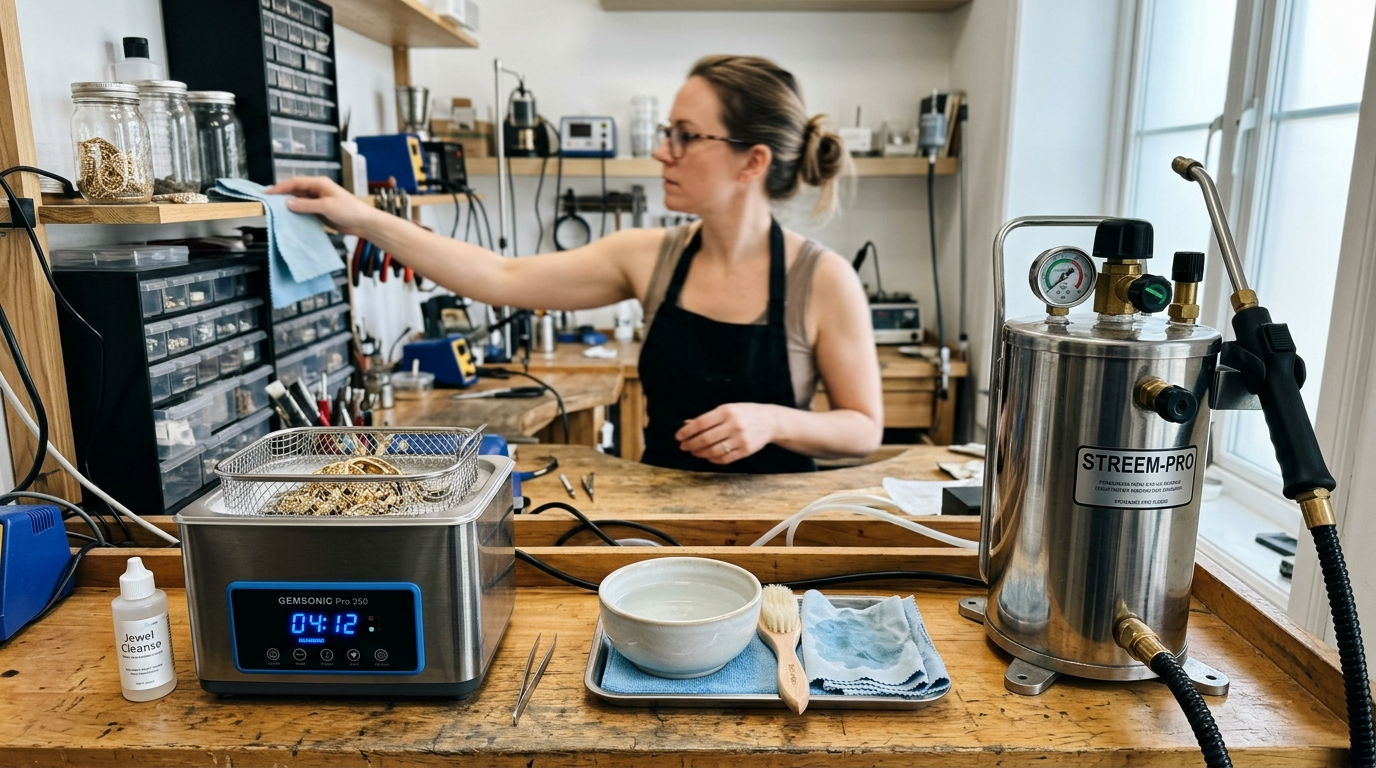
To achieve a “showroom” finish in 2026, professional jewelers rarely choose one over the other. They follow this sequence:
Ultrasonic Bath: 3–5 minutes to loosen lotions, skin oils, and polishing compounds from under stones.
Rinse: A quick dip in room-temperature distilled water to remove the cleaning chemicals.
Steam Finish: A 10-second blast with a pressurized steamer to remove residual films and flash-dry the metal, preventing water spots.
Jewelry Compatibility: What Can You Safely Clean?
This is the most critical part of the discussion. Not all jewelry can handle these powerful cleaning methods.
Safe for Both: Hard, durable gemstones and precious metals are generally safe. This includes diamonds, sapphires, and rubies (as long as they aren’t heavily included or fracture filled). Solid gold, platinum, and titanium jewelry also clean beautifully with either method.
Unsafe for Both: You should never place soft, porous, or organic gems in either machine. This list includes opals, pearls, emeralds, turquoise, coral, and amber. The vibrations from an ultrasonic cleaner or the high heat and pressure from a steamer can cause irreversible damage like cracking, discoloration, or loss of luster. The golden rule is simple: when in doubt, leave it out.
A Word of Caution for Treated and Delicate Gemstones
Many gemstones are treated to enhance their beauty, but these treatments make them vulnerable.
Fracture Filled or Oiled Gems: Emeralds are almost always treated with oil to fill tiny internal fractures and improve clarity. Ultrasonic vibrations and steam can remove this oil, making the fractures more visible and potentially weakening the stone. Likewise, fracture filled diamonds can have their filler material damaged or removed.
Heat Sensitive Gems: Some gemstones, like tanzanite, can be sensitive to the thermal shock of a steam cleaner. The rapid change in temperature could cause them to crack.
Glued or Inlaid Pieces: Costume jewelry or pieces with glued in stones should avoid both methods, as the vibrations or heat can easily loosen the adhesive.
Always know what your jewelry is made of before attempting to clean it with a professional machine.
Quick Compatibility Guide
Before placing your items in a machine, check this safety list:
Safe for Both: Diamonds, Rubies, Sapphires, Gold, Platinum, Titanium.
Ultrasonic Only: Harder synthetics (Cubic Zirconia), most Gold-filled items (check for loose stones first).
Steamer Only: Heavily soiled diamonds (to avoid vibrating dirt deeper into a fracture).
Hand Clean Only: Pearls, Opals, Emeralds, Turquoise, Amber, Tanzanite, and Costume Jewelry.
Feature | Ultrasonic Cleaning Machine | Professional Jewelry Steamer |
Best For | Deep cleaning intricate settings & crevices | Polishing, sanitizing & spot-free drying |
Action | Microscopic “cavitation” bubbles | High-pressure (50-80 PSI) steam jet |
Batching | Cleans multiple pieces at once | Best for single-item finishing |
Chemicals | Requires cleaning solution/detergent | Chemical-free (uses distilled water) |
Risk Level | Low (except for loose or porous stones) | Moderate (Heat/pressure can damage gems) |
Time | 3 to 5 minute cycles | 5 to 15 seconds per piece |
Practical Considerations: Cost, Safety, and Maintenance
Your budget and willingness to perform routine upkeep are also big factors in the professional jewelry cleaning machine vs steamer decision. If cost is a concern, explore equipment financing options.
Ease of Use and Safety
Ultrasonic Cleaner: These are incredibly user friendly. You fill the tank, add your jewelry, and press a button. They are very safe for the user, with the main risk being to the jewelry itself if a stone is already loose in its setting. In fact, many jewelers use them to check for loose stones.
Steam Cleaner: Steamers require more hands on attention. You must hold the jewelry with tweezers to protect your hands from the hot, high pressure steam, which can cause serious burns. You also need to be careful not to blow a loose stone right out of its setting. While highly effective, they demand more caution and proper technique. Watch short operation and safety videos to learn best practices.
Investment and Upkeep: Cost and Maintenance
Ultrasonic Cleaner: These machines are generally more affordable, with high quality home units and even professional grade models available for under a few hundred dollars. Maintenance is simple and consists mainly of changing the cleaning solution regularly.
Steam Cleaner: Professional jewelry steamers are a more significant investment, often costing several hundred to several thousand dollars. Also consider electrical requirements—here’s a quick guide to 110V vs 220V for commercial steamers. They also require more diligent maintenance. It is crucial to use distilled water to prevent mineral buildup (scale) inside the boiler. Regular descaling is necessary to keep the machine running safely and efficiently.
For businesses that rely on providing a perfect finish every time, the investment in a high quality steamer is often a necessity. That’s why many top jewelers choose American made equipment with strong warranties and support, like the professional jewelry steamers from Hoffman Steam. Compare models and transparent pricing. Their machines are built to withstand daily use and deliver consistent, high pressure steam for years.
So, Which Professional Jewelry Cleaning Machine Is Better?
There is no single “better” option. The best choice depends entirely on your specific needs.
Choose an ultrasonic cleaner if: Your budget is limited, you prefer a simple set it and forget it process, you need to clean multiple pieces at once, or your jewelry collection consists of many intricate designs.
Choose a steam cleaner if: You prioritize a chemical free, sanitizing clean, you want the absolute fastest results for single items, you primarily own durable jewelry like diamonds and platinum, and you are comfortable with a higher initial investment and routine maintenance.
Choose both if: You are a professional or a serious enthusiast who demands the best possible results. The two step professional process of using an ultrasonic cleaner followed by a steam cleaner is the undisputed gold standard for a reason.
If you’re a professional looking to deliver that “wow” factor, having a reliable steamer is non negotiable. Exploring a commercial jewelry steamer from Hoffman Steam can be a game changer for your business, providing the power and reliability needed for a flawless finish. Prefer to see it live? Request a virtual demo.
Frequently Asked Questions about Professional Jewelry Cleaning Machines
What’s the main difference in a professional jewelry cleaning machine vs steamer?
The main difference is the method. An ultrasonic cleaner uses high frequency sound waves and cavitation bubbles in a liquid bath to dislodge dirt. A steamer uses high pressure, high temperature steam to melt grime and blast it away.
Why do jewelers use both an ultrasonic and a steamer?
Jewelers use a two step process for the ultimate clean. The ultrasonic machine does the heavy lifting, deep cleaning crevices and removing caked on dirt. The steamer then provides the final touch, blasting away any remaining residue and solution to leave the piece perfectly clean, sanitized, and brilliantly sparkling.
Can a steam cleaner damage a diamond?
A high quality, clean diamond is one of the most durable materials and can typically handle steam cleaning without any problem. However, if a diamond has significant internal flaws (inclusions) or has been fracture filled to improve its clarity, the high heat and pressure could potentially cause damage.
Is an ultrasonic cleaner better than a steamer for silver?
For cleaning tarnished silver, neither machine is the complete solution. An ultrasonic cleaner will remove dirt and grime from sterling silver, but it won’t remove heavy tarnish, which requires a chemical dip or polish. A steamer can brighten silver but also won’t remove significant tarnish.
Can I use a steamer on all my jewelry?
No, absolutely not. Steam is only safe for hard, non porous gemstones and durable metals. It can permanently damage soft or organic gems like pearls, opals, emeralds, and turquoise.
Are home jewelry steamers as good as professional ones?
While some home steamers can be effective, professional grade units deliver much higher pressure and temperature for a faster, more effective clean. Professional models like those from Hoffman Steam are also built with heavy duty components, like stainless steel tanks and certified boilers, to withstand continuous daily use in a commercial environment.


