

TLDR
A pump-fill steam boiler automatically replenishes its water supply using a feedwater pump and level controls, reducing the need for operators to stop and refill the system manually. For businesses that depend on steam throughout the workday, this can improve workflow and reduce interruptions.
However, pump-fill is not necessary for every application. The right choice depends on steam demand, operating pressure, boiler design, water quality requirements, maintenance capacity, and budget. Understanding how pump-fill works—and how it differs from manual-fill boilers and other automatic feeders—can help you choose the right equipment for your operation.
Quick Answer: What Is a Pump-Fill Steam Boiler?
A pump-fill steam boiler is a steam boiler that uses a feedwater pump and water-level controls to replenish water automatically during operation. It is best suited to businesses with frequent or sustained steam demand because it reduces manual refilling and production interruptions. However, it still requires proper water treatment, routine maintenance, and a functioning low-water cutoff. For light or occasional steam use, a manual-fill boiler may be more economical.
Pump-Fill vs. Manual-Fill: Which Is Right for Your Business?
The best steam boiler fill system depends on how often you use steam, how costly refill interruptions are, and whether the equipment is designed for manual or automatic feeding.
Your Operating Situation | Recommended Starting Point | Why |
|---|---|---|
Occasional steam use with long breaks between tasks | Manual-fill | Lower system complexity may be sufficient |
Short steam sessions throughout the day | Manual-fill or pump-fill | Compare refill interruptions with the additional equipment cost |
Continuous production or long operating shifts | Pump-fill | Automatic feeding can reduce interruptions |
Multiple operators using steam equipment | Pump-fill, if supported by the boiler design | Helps maintain water supply during shared use |
Steam demand varies significantly throughout the day | Pump-fill, if correctly sized and controlled | Reduces the need for manual monitoring and refilling |
Boiler operates at a pressure that available water pressure cannot overcome | Properly engineered pump-feed system | The feed pump must overcome boiler pressure and system losses |
Before choosing: Confirm that the boiler is designed for the intended fill method and operating pressure. An automatic feeder is not a substitute for the correct pump, level controls, water treatment, or safety devices.
What Does “Pump-Fill Steam Boiler” Mean?
A pump-fill steam boiler is a steam boiler equipped with a feedwater pump that adds water automatically when the water level drops below a set point. As the boiler produces steam, water leaves as vapor and the internal level falls. A level sensor detects the drop, a controller activates the pump, and the pump pushes water back into the boiler. Once water reaches the correct operating level, the controller stops the pump.
This is different from walking over to the boiler, unscrewing a cap, and pouring water in manually. The pump handles refilling while the boiler stays in service.
A separate low-water cutoff acts as the safety backstop. If the pump fails to deliver water and the level keeps falling, the low-water cutoff shuts down the heat source to prevent dry firing. OSHA’s technical manual warns that dry boilers can overheat and fail, while excess water can carry over into the steam distribution system and damage downstream equipment.
One important detail: the feedwater pump is not a simple transfer pump. It must push water into the boiler against operating pressure. Shipco’s sizing guidance states that pump discharge pressure must overcome the boiler safety relief valve setting plus a margin for system losses. For commercial electric steam boilers running at 40 to 90 PSI, that pump is doing real work.
Compare manual and auto fill options to see which setup fits your shop.
How a Pump-Fill Steam Boiler Works
The pump-fill cycle follows a predictable sequence:
The boiler produces steam. Water converts to steam and exits the boiler, causing the internal water level to drop.
A level sensor detects the drop. The sensor may be a probe, float, or electronic level control integrated into the boiler’s controller.
The controller starts the feedwater pump. In most commercial electric steam boilers, this is a simple on/off system: pump on at the low level, pump off at the high level.
The pump pushes water into the boiler. The pump overcomes boiler pressure, friction losses, and any valves or check devices in the feed line.
Water reaches the normal operating level. The controller stops the pump.
If feeding fails, the low-water cutoff activates. A Columbia steam boiler manual describes this layered logic: the low probe starts the feed pump, and if water keeps falling below the low-level cutoff probe, the control shuts down the burner and signals low water.
The critical point here is separation of duties. The pump control maintains normal operating level. The low-water cutoff is a safety device that only fires if the pump control fails. These are not the same thing, and treating them as interchangeable is a design error.
For a broader look at the mechanics, see how commercial steamers work.
Pump-Fill vs. Manual-Fill Steam Boilers
Both systems can work well when matched to the right workload. The main difference is how water is replenished and how much operator attention the boiler requires.
Comparison Factor | Manual-Fill Boiler | Pump-Fill Boiler |
|---|---|---|
Water replenishment | Operator adds water manually according to the manufacturer’s procedure | A pump replenishes water under automatic level control |
Operator involvement | Requires monitoring and manual refilling | Reduces routine refill involvement |
Production interruptions | Refilling may interrupt work | Can reduce interruptions associated with refilling |
Equipment complexity | Generally simpler | Includes additional pump and control components |
Maintenance | Boiler maintenance and manual-fill components | Boiler maintenance plus pump, feed line, and level-control maintenance |
Water-loss monitoring | Operator may notice frequent refilling | Feedwater use should be tracked to identify abnormal water loss |
Typical use case | Light or intermittent steam demand | Frequent or sustained steam demand |
Purchase decision | Consider when simplicity and initial cost matter most | Consider when reduced interruptions justify the additional system cost |
Neither system is automatically more reliable in every situation. Actual performance depends on equipment quality, correct installation, operating conditions, water treatment, and maintenance.
Pump-Fill vs. Other Automatic Water Feeders
An automatic water feeder replenishes a boiler’s water supply without requiring an operator to add water manually. However, automatic feeding does not always mean that a pump is used.
Feature | Pump-Fill System | Pressure-Fed Automatic Feeder |
|---|---|---|
How water enters | A feedwater pump pushes water into the boiler | A control valve admits water using an adequate pressurized supply |
Main requirement | Pump pressure and flow must match system requirements | Available supply pressure must be sufficient for the boiler and feeder arrangement |
Typical components | Pump, level controls, feed line, and associated valves | Automatic valve, level control, and associated safety devices |
Key consideration | Pump sizing, inlet conditions, and maintenance | Pressure compatibility, valve operation, and protection against overfilling |
The correct arrangement depends on the boiler’s design, operating pressure, water source, and manufacturer’s requirements. Some systems use a feed tank or receiver, while others use a different approved feedwater arrangement.
When comparing equipment, ask whether the boiler uses a dedicated feedwater pump, a pressure-fed valve, or another automatic feeding design. Do not assume that all systems marketed as “auto-fill” have the same components or operating limits.
Main Parts of a Pump-Fill System
A pump-fill steam boiler includes several components beyond the boiler vessel itself:
Feedwater source, a tank, reservoir, or water line depending on the boiler design
Feedwater pump, moves water into the boiler against operating pressure
Check valve, prevents backflow from the boiler into the feed line
Strainer or filter, protects the pump and valves from debris
Water-level sensor, a float, probe, or electronic control that monitors water level
Pump controller, starts and stops the pump based on level signals
Low-water cutoff, shuts down the heat source if the water level drops below the safe minimum
Sight glass, allows the operator to visually verify the water level
Pressure relief valve, protects against overpressure
Each of these components can fail. A clogged strainer starves the pump. A stuck check valve prevents water from entering. A fouled level probe gives false readings. Understanding what makes up the system helps diagnose problems when they arise.
For more on safety controls, read the boiler safety features guide.
Why Pump-Fill Matters for Commercial Steam Work
For commercial steam users, pump-fill is an uptime feature. The value is not “fewer trips to the basement.” It is uninterrupted production.
Consider a jewelry shop cleaning pieces all day. Steam demand is repeated and somewhat unpredictable, and pausing between customers to refill a boiler breaks the workflow. Practitioners on Reddit’s r/jewelers report that well-maintained Hoffman steamers last decades, with one user describing 30 years of use across two machines and the first lasting 24 years after a single repair. That kind of longevity only matters if the boiler can keep producing steam without constant manual attention.
The same logic applies across trades. A western hat shop shaping hats during peak season, an upholstery business running long stripping sessions, a shrink-packaging line with repeated cycles, a dental lab cleaning instruments throughout the day: all of these benefit from automatic pump-fill steam boilers because stopping to refill costs productive time.
Common applications for pump-fill commercial steam boilers include:
Jewelry cleaning and finishing
Western hat shaping and renovation
Garment finishing and pressing
Upholstery restoration
Shrink packaging
Dental and medical equipment cleaning
Taxidermy
Light manufacturing processes
The common thread is sustained steam demand where interruptions have a real cost.
Explore continuous-duty steam boilers to see which models match high-volume workflows.
When to Choose Pump-Fill Instead of Manual-Fill
Choose a pump-fill steam boiler when:
The boiler runs for long shifts or full workdays
Steam demand is continuous or unpredictable
Multiple operators or tools draw from the same boiler
Stopping to refill disrupts revenue-generating work
The boiler is central to your daily production workflow
You want a more production-grade setup
Manual-fill may be enough when:
Use is intermittent or light-duty
One operator monitors the boiler closely
Budget is the primary constraint
The work involves short, infrequent steam bursts
You prefer simpler equipment and accept refill pauses
Neither choice is wrong. A single-operator jewelry counter doing light cleaning may never need pump-fill. A multi-station hat shop running eight hours a day almost certainly does.
How to Choose a Pump-Fill Steam Boiler
Choosing a pump-fill steam boiler involves more than deciding whether automatic refilling is convenient. The boiler must match the required steam output, operating pressure, available water supply, and expected workload.
1. Determine Your Steam Demand
Estimate how frequently the boiler will produce steam, how long it will operate each day, and whether several tools or operators will use it simultaneously. Frequent or sustained demand makes automatic feeding more valuable.
2. Verify Operating Pressure and Pump Capacity
The feedwater pump must deliver water at a pressure sufficient to overcome the boiler’s operating pressure and the resistance of the feed piping, valves, and other components. Confirm the required discharge pressure, flow rate, and operating conditions with the boiler manufacturer or a qualified technician.
3. Check Water Supply and Treatment Requirements
Determine whether the system draws water from a supply line, reservoir, or feed tank. Confirm the required inlet conditions, water quality limits, treatment procedure, and filtration requirements before installation.
4. Review the Level Controls and Safety Devices
Confirm that the system has the appropriate operating-level controls and independent low-water protection as required by its design and applicable codes. Ask how the boiler behaves if the pump, sensor, or water supply fails.
5. Compare Total Ownership Costs
Consider the purchase price, installation, water treatment, routine maintenance, replacement parts, and the potential cost of production interruptions. A higher initial price may be justified when refill interruptions significantly affect daily operations.
6. Confirm Service and Replacement-Part Availability
Check whether qualified technicians and replacement pumps, sensors, valves, and other components are available. Access to support can affect downtime and long-term maintenance costs.
Before purchasing: Request the manufacturer’s specification sheet, installation requirements, maintenance schedule, and documentation of applicable certifications. Compare models based on verified operating requirements rather than fill method alone.
What a Pump-Fill Steam Boiler Does Not Solve
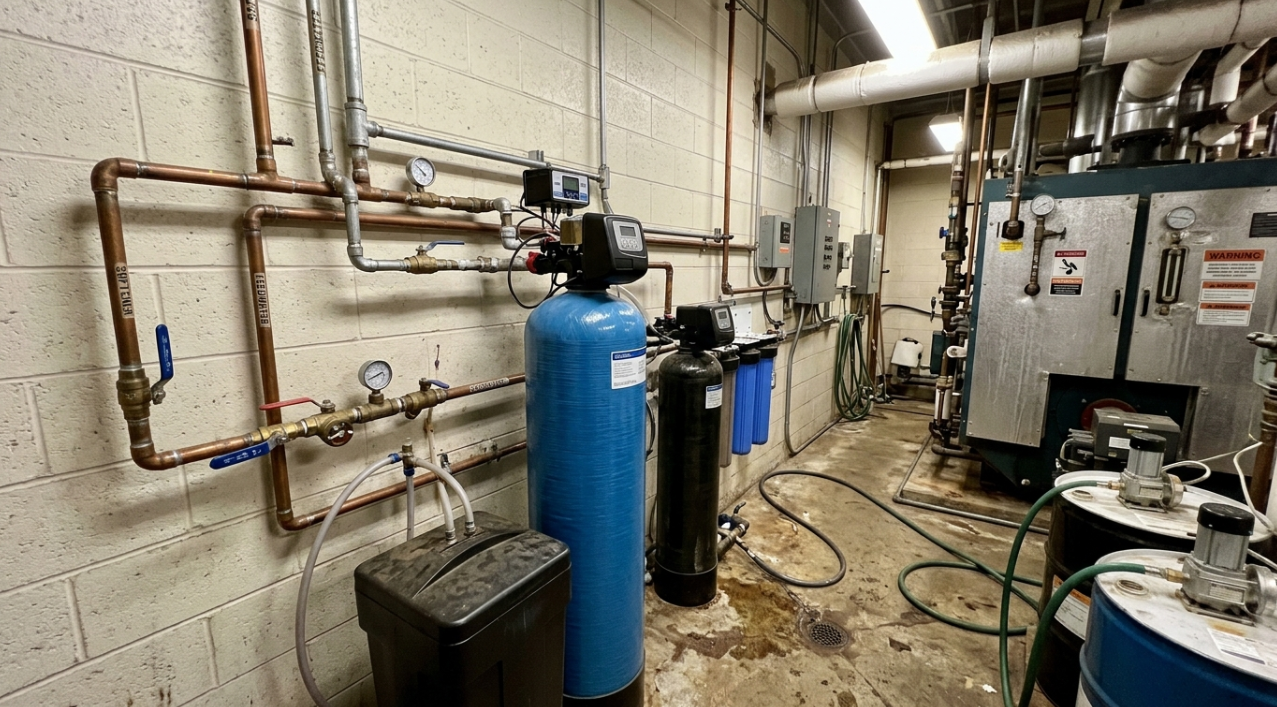
Automatic water feeding reduces the need for manual refilling, but it does not eliminate the underlying causes of boiler problems.
Poor water quality: Makeup water can introduce dissolved minerals and oxygen that contribute to scale and corrosion. Follow the boiler manufacturer’s water-quality and treatment requirements.
Water leaks or excessive water loss: Automatic feeding can compensate for abnormal water loss without revealing its cause. Track feedwater consumption and investigate unexplained increases.
Low-water safety risks: The feed pump maintains the operating water level, while low-water protection shuts down the heat source when the level falls to an unsafe point. The required control arrangement depends on the boiler design and applicable codes.
Overfilling: A failed sensor, stuck valve, incorrect control setting, or other malfunction can cause excess water to enter the boiler.
Routine maintenance: Pumps, strainers, valves, sensors, electrical components, and water-level indicators still need inspection and servicing.
The practical takeaway is that automatic feeding should make boiler operation more convenient—not make it less monitored. Unexpected changes in feedwater use, water level, or pump behavior deserve investigation.
For guidance on treatment practices, see the water quality for steam boilers guide.
Common Pump-Fill Steam Boiler Problems
Pump-fill problems can involve the water supply, feed pump, level controls, valves, or boiler operating conditions. The following table lists possible causes and appropriate next steps; it is not a substitute for model-specific troubleshooting instructions.
Symptom | Possible Causes | Recommended Next Step |
|---|---|---|
Pump runs, but the water level does not rise | Empty supply tank, closed valve, blocked strainer, pump failure, or feed pressure too low | Stop operation if the water level is unsafe. Have the feedwater supply and pump checked |
Boiler appears to overfill | Faulty level control, stuck valve, incorrect settings, or unexpected condensate return | Stop and assess the condition according to the manufacturer’s instructions; have the controls inspected |
Pump cycles unusually often | Water loss, changing steam demand, faulty level sensing, or an incorrectly configured control | Compare feed frequency with normal operation and investigate abnormal water use |
Low-water cutoff activates repeatedly | Inadequate feedwater supply, pump malfunction, blocked line, or level-control problem | Do not bypass the cutoff. Investigate the cause before restarting |
Sight-glass level fluctuates or appears unclear | Contamination, unstable operating conditions, or a level-indication problem | Follow the manufacturer’s procedure for checking the level indicator |
Pump makes unusual noise | Restricted inlet, inadequate supply conditions, air entering the suction line, or pump wear | Stop and arrange inspection if noise persists or feedwater delivery is affected |
Safety reminder: Never bypass a low-water cutoff, open a pressurized boiler, or dismantle hot feedwater equipment to diagnose a problem. Follow the manufacturer’s shutdown and isolation procedures, and use a qualified boiler technician for repairs.
For related diagnostic steps, the low steam pressure checklist covers complementary troubleshooting workflows.
Pump-Fill Steam Boiler Maintenance Checklist
Pump-fill systems need regular maintenance to ensure reliable feeding, accurate level control, and safe operation. The exact schedule depends on the boiler model, operating conditions, water quality, and applicable requirements.
Check | What to Look For | Frequency |
|---|---|---|
Water level and sight glass | Correct indicated level and any signs of an unreliable reading | Before operation and as specified by the manufacturer |
Feedwater supply | Adequate supply and no obvious leaks or obstructions | Before operation |
Pump and feed line | Unusual noise, leakage, vibration, or reduced feeding performance | At the manufacturer’s recommended intervals |
Strainer and valves | Debris, restrictions, leakage, or abnormal operation | According to the maintenance schedule |
Level controls | Correct operation and signs of fouling or damage | At the prescribed inspection intervals |
Low-water cutoff | Successful testing according to the manufacturer’s procedure and applicable code | At the prescribed intervals |
Water quality | Compliance with specified treatment and water chemistry limits | According to the water-treatment program |
Feedwater consumption | Unexpected increases in refill frequency or total water use | Monitor routinely and record changes |
Why Feedwater Tracking Matters
An increase in makeup-water consumption can indicate a leak, steam loss, excessive blowdown, a condensate-return problem, or another change in operating conditions. A feedwater counter or water meter can help establish a baseline and identify unusual consumption.
Do not use a generic maintenance schedule in place of the manufacturer’s instructions. Boiler inspection, testing, and servicing should be performed by appropriately qualified personnel where required.
For a complete maintenance workflow, see the boiler maintenance checklist.
Safety and Compliance Context
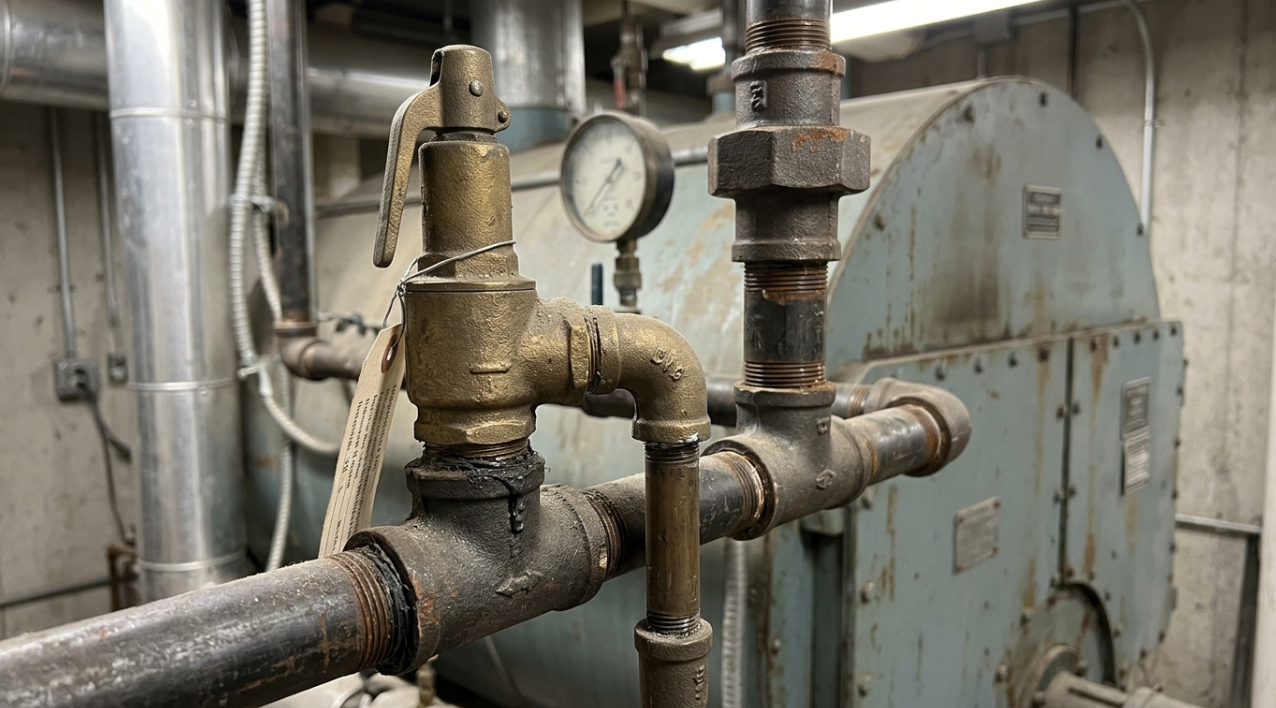
Steam boilers, including pump-fill models, fall under established safety codes. ASME’s Boiler and Pressure Vessel Code (BPVC) Section IV covers requirements for the design, fabrication, installation, and inspection of low-pressure steam boilers directly fired by electricity and other fuels. ASME’s CSD-1 standard addresses controls and safety devices for automatically operated boilers.
For commercial electric steam boilers, ASME and UL certification indicates that the equipment has been designed and tested to meet recognized safety standards. This matters for insurance, inspections, and building code compliance. Hoffman’s Pro Line models carry ASME and UL certification.
The water-level control and the low-water cutoff serve different purposes, even when they share a housing. Bell & Gossett’s steam heating manual describes systems with separate switches: one starts and stops the boiler feed pump, while another serves as the low-water cutoff and alarm. Running a pump-fill steam boiler with the pump control set at the same point as the low-water cutoff defeats the purpose of having both.
Related Terms
Feedwater: Water supplied to a boiler to replace water converted to steam.
Makeup water: New water added to replace losses from steam use, leaks, or blowdown.
Condensate: Steam that has condensed back to liquid water, sometimes returned to the boiler.
Boiler feed pump: A pump that moves feedwater into the boiler against operating pressure.
Automatic water feeder: A device that adds water automatically, sometimes using a solenoid valve rather than a pump.
Low-water cutoff (LWCO): A safety control that shuts down the heat source when water drops below the safe minimum.
Sight glass: A visual water-level indicator mounted on the boiler.
Normal water level: The manufacturer-specified target level during operation.
Carryover: Water entering the steam piping, creating wet steam or equipment damage downstream.
For a broader reference, the commercial steam glossary covers additional industry terms.
Choosing the Right Pump-Fill Steam Boiler
For small businesses evaluating pump-fill steam boilers, the decision comes down to workload and workflow. Manual-fill boilers offer lower purchase cost and simpler operation for intermittent use. Pump-fill boilers reduce interruptions and support longer, more demanding production schedules.
Hoffman Steam’s product line reflects this range clearly. Manual-fill models like the ELG4 and JEL3 serve smaller shops with moderate steam needs. The JEL11 with automatic pump-fill and the RHPG Series of industrial boilers are built for continuous-duty environments where steam uptime directly affects revenue. The RHPG series, starting at $6,999 for the RHPG-17 and scaling to $9,499 for the RHPG-36, all include automatic pump-fill as standard equipment.
Across Reddit forums, experienced users consistently emphasize that maintenance habits determine equipment longevity more than the fill method alone. Whether manual-fill or pump-fill, the operators who track water usage, follow blowdown procedures, and address problems early get the longest service life from their equipment.
See current pricing and models to compare Hoffman’s manual-fill and pump-fill options.
FAQs
Is pump-fill the same as auto-fill?
Not exactly. “Auto-fill” can refer to any automatic water-feeding method, including a solenoid valve using building water pressure. “Pump-fill” specifically means a feedwater pump moves water into the boiler. Every pump-fill system is automatic, but not every automatic feeder uses a pump.
Does every steam boiler need a pump-fill system?
No. Small or intermittent-use boilers work fine with manual filling. Some low-pressure systems use automatic feeders without a pump. Pump-fill is most useful when steam demand is continuous, refill interruptions are costly, or the boiler operates at pressures that require pumped feedwater.
Can pump-fill hide a leak?
Yes. Automatic feed keeps the boiler running while silently compensating for abnormal water loss. Track makeup-water usage. Rising feed frequency is often the first sign that a system is leaking steam, losing condensate, or developing a valve problem.
What happens if the feed pump fails?
The water level continues to drop as steam is produced. A properly functioning low-water cutoff will shut down the boiler before conditions become dangerous. Never bypass or disable the low-water cutoff, and always diagnose the pump failure before restarting.
Can a pump-fill boiler overfill?
Yes. Overfill can happen if a valve sticks open, a sensor fails, feed settings are wrong, or condensate returns after the feeder has already added water. Excess water in a steam boiler can carry over into steam piping and damage equipment or reduce steam quality.
What is the difference between pump control and low-water cutoff?
Pump control starts and stops the feed pump to maintain normal operating level. The low-water cutoff is a safety device that shuts down the heat source if water falls below the minimum safe level. They should operate at different set points. The pump-on level should always be above the low-water cutoff level.
Is fresh makeup water bad for a steam boiler?
Excessive fresh makeup water introduces oxygen and minerals that accelerate corrosion and scale. The National Board notes that proper feedwater treatment is necessary to prevent these problems. Any pump-fill system that feeds frequently should have appropriate water quality management in place.
What kind of business should consider a pump-fill steam boiler?
Businesses with sustained or repeated steam use benefit most. Jewelry shops, hat shops, garment finishers, upholstery businesses, dental labs, shrink-packaging operations, and light manufacturers should all consider pump-fill when manual refilling interrupts productive work. If the boiler runs for long shifts or serves multiple operators, pump-fill is worth the investment.


