

TL;DR
Small industrial steam boiler maintenance is the single most important factor in keeping your electric steam equipment running safely and efficiently. This glossary covers 40+ terms specific to small commercial electric boilers (1 to 6 gallons) used in jewelry stores, hat shops, dry cleaners, dental labs, and other trade applications. Understanding these terms helps prevent the equipment failures that cause 83% of all reported boiler accidents, saves you 25 to 30% compared to reactive repair costs, and can extend your boiler’s working life well beyond 20 years.
Small industrial steam boiler maintenance means routinely inspecting, cleaning, testing, and servicing compact electric steam boilers to prevent failures and extend equipment life. The most important maintenance tasks include:
– Using distilled water
– Performing regular descaling
– Checking the water level before every use
– Testing low-water safety devices
– Monitoring operating pressure
– Keeping a maintenance log
– Replacing wear components before failure
For most small commercial electric boilers, preventive maintenance reduces repair costs by 25–30%, improves energy efficiency, and can extend service life beyond 20 years.
Why Maintenance Literacy Matters for Small Boiler Owners
Most boiler maintenance guides assume you’re running a gas-fired system in a building basement. That’s not your world. You’re a jeweler, a hat shaper, a tailor, or a dental technician working with a compact electric steam boiler that sits next to your bench. Your boiler might hold two gallons, not two hundred. But the physics of pressurized steam don’t care about size.
According to the National Board of Boiler and Pressure Vessel Inspectors, 83% of all reported boiler accidents over a ten-year period resulted directly from human oversight or lack of knowledge. That includes low-water conditions, improper installation, and poor maintenance. Separately, nearly 40% of all boiler-related deaths and injuries trace back to human error or inadequate upkeep.
These numbers don’t discriminate by boiler size. A 2-gallon electric boiler operating at 70 PSI is still a pressure vessel. Knowing the vocabulary of maintenance is the first step toward keeping yourself, your employees, and your equipment safe.
This glossary is designed for owners of small electric steam boilers who don’t have an engineer on staff. Every term gets a plain definition, why it matters to your shop, and what to do about it. If you’re researching before buying, our jewelry steamer buyer’s guide and hat shop steamer guide cover model selection and pricing.
Use this page as a reference when reading your equipment manual, preparing for an inspection, or deciding whether a maintenance program makes sense for your business.
At-a-Glance Maintenance Schedule
Maintenance Task | Frequency | DIY or Professional |
|---|---|---|
Check water level | Before every use | DIY |
Check pressure gauge | Daily | DIY |
Inspect gauge glass | Daily | DIY |
Blowdown | Weekly | DIY |
Flush boiler | Monthly | DIY |
Descale | Quarterly (minimum) | DIY / Professional |
Replace consumables | As needed | DIY |
Test LWCO | Daily or Weekly (depending on pressure) | Professional recommended |
Inspect relief valve | Annually | Professional |
Factory inspection | Every 1–2 years | Professional |
Common Signs Your Boiler Needs Maintenance
Watch for these warning signs before a minor issue becomes an expensive repair.
Slow Heat-Up Time
Usually indicates heating element scale buildup.
Weak Steam Pressure
May indicate:
Scale
Steam leaks
Worn heating element
Faulty pressure controls
Water Around the Boiler
Often caused by:
Worn gaskets
Loose fittings
Damaged gauge glass
Relief valve problems
Steam Sputtering
Usually caused by:
Wet steam
Excess minerals
Overfilled boiler
Carryover
Frequent Heating Element Failure
Often points to poor water quality rather than defective parts.
Section A: Core Equipment Terms
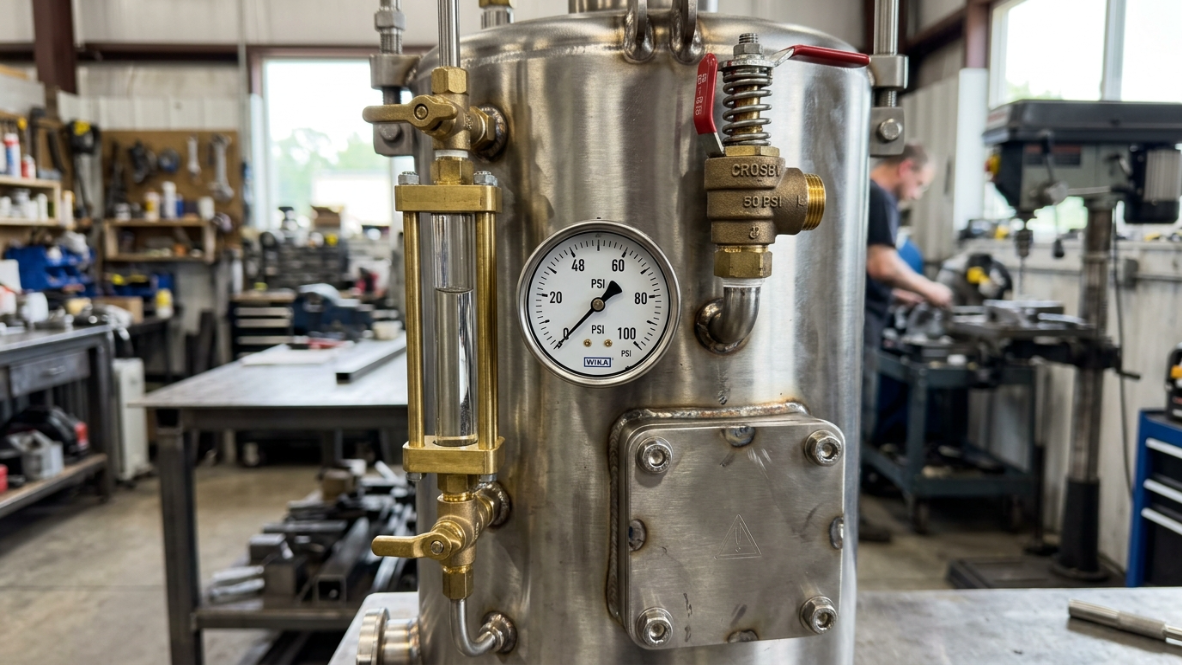
Boiler (Pressure Vessel)
A sealed container that heats water to produce steam under pressure. In the context of small industrial steam boiler maintenance, this means a compact electric unit holding 1 to 6 gallons of water, operating between 40 and 90 PSI. Unlike building-scale gas boilers, these units plug into standard or 220V outlets and sit on a countertop or rolling cart.
Why it matters: Your boiler is a pressure vessel. That designation carries legal, safety, and maintenance obligations regardless of its size.
What to do: Know your boiler’s capacity, operating pressure, and certification status. This information appears on the data plate riveted to the unit.
Heating Element
The electrical component that converts electricity into heat inside the boiler tank. Small electric boilers use immersion-style heating elements submerged directly in the water, similar in concept to a large water heater element.
Why it matters: The heating element is the part most directly damaged by scale buildup and poor water quality. Mineral deposits insulate the element from the water, forcing it to work harder, run hotter, and fail sooner.
What to do: Use distilled water to minimize scale formation on the element. Descale on schedule. If your boiler starts taking noticeably longer to reach operating pressure, the element may be coated or failing.
Gauge Glass (Sight Glass)
A transparent tube mounted on the side of the boiler that shows the water level inside the tank. On small commercial boilers, this is your primary visual indicator of how much water is in the system.
Why it matters: Running a boiler with insufficient water is the leading cause of catastrophic failures. The gauge glass lets you verify water level at a glance before and during operation.
What to do: Check the gauge glass every time you power up. If it appears cloudy, stained, or cracked, replace it. A gauge glass you can’t read is a gauge glass that’s useless.
Pressure Gauge
A dial-type instrument that displays the steam pressure inside the boiler, measured in PSI. Small commercial electric boilers typically operate between 40 and 90 PSI depending on the model and application.
Why it matters: Operating pressure tells you whether the boiler is performing correctly. Pressure that’s too low means weak steam. Pressure that won’t build could indicate a failed element, a leak, or heavy scale. For detailed guidance on pressure settings, the jewelry steamer PSI guide covers this topic in depth.
What to do: Know your boiler’s rated operating pressure and watch for deviations from normal readings. If the gauge needle doesn’t move or seems stuck, the gauge itself may need replacement.
Pressure Relief Valve (Safety Valve)
A spring-loaded valve designed to open automatically if internal pressure exceeds a safe threshold. This is your boiler’s last line of defense against overpressurization.
Why it matters: If every other control fails, the safety valve prevents a potential explosion by venting excess steam. Tampering with, blocking, or removing this valve is dangerous and illegal.
What to do: Never adjust, plug, or place anything on top of the relief valve. During annual inspections, a qualified inspector will test it. If it weeps or drips during normal operation, it may need professional replacement.
Solenoid Valve
An electrically controlled valve that opens and closes the steam pathway. When you press a foot pedal or trigger on a steam wand, the solenoid valve is what actually releases the steam.
Why it matters: Solenoid valves are among the most common replacement parts on small commercial boilers. Mineral deposits, debris, and normal wear can cause them to stick open (constant steam leak) or stick closed (no steam output).
What to do: If your steam output becomes inconsistent, sputters, or doesn’t shut off cleanly, the solenoid valve is a likely suspect. Keep a spare on hand if your shop depends on daily steam.
Fill System (Manual Fill vs. Auto-Fill)
The method by which water enters the boiler. Manual-fill systems require the operator to add water through a funnel or port. Auto-fill (pump-fill) systems use an electric pump to maintain water level automatically. For a deeper comparison, see the manual fill vs. auto fill guide.
Why it matters: Manual-fill boilers require more operator attention but have fewer components that can fail. Auto-fill systems reduce the risk of running dry but add pump and float mechanisms that need their own maintenance.
What to do: For manual-fill units, establish a habit of checking water level before each use. For pump-fill units, inspect the pump strainer and supply line periodically. Both system types benefit from using distilled water.
Low Water Cutoff (LWCO)
A safety device that automatically shuts off the boiler’s heating element if the water level drops below a safe minimum. This prevents dry firing, which can destroy the heating element and damage the pressure vessel.
Why it matters: The National Board reports that 79% of all boiler accidents involve either low-water cutoff failure or operator error. The LWCO is the single most critical safety device on your boiler. As one National Board representative put it, “the problem of low water cutoff device failure is due to either lack of maintenance, incorrect maintenance, or tweaking and doing things to them.”
What to do: According to McDonnell & Miller guidelines, LWCOs on boilers operating above 15 PSI should be tested daily. Below 15 PSI, weekly testing is sufficient. Most LWCO switches have roughly a ten-year lifespan when properly maintained. Never bypass this device.
Section B: Water Quality and Chemistry Terms
Hard Water
Water containing high concentrations of dissolved calcium, magnesium, and other minerals. Hard water is the primary maintenance enemy for small electric steam boilers. Practitioners and technicians consistently identify it as the single biggest maintenance issue for commercial garment steamers and steam equipment across all trades.
Why it matters: Every mineral dissolved in your water supply will eventually deposit itself inside your boiler as scale. Hard water accelerates every maintenance problem: element failure, valve fouling, reduced steam pressure, and shortened equipment life.
What to do: Test your water hardness. If it’s above 3 grains per gallon (about 50 ppm), use distilled water or install a water softener.
Scale (Limescale)
Hard mineral deposits that accumulate on internal boiler surfaces, particularly on the heating element. Scale acts as an insulator between the element and the water, dramatically reducing heat transfer.
Why it matters: Scale buildup reduces heat transfer efficiency by up to 12% for every 1/8 inch of deposit thickness. That means your boiler uses more electricity, takes longer to heat, and produces weaker steam. One real-world case study documented how neglecting a $2,000 water softener led to over $150,000 in parts, labor, and lost productivity.
What to do: Descale your boiler on a regular schedule (see Descaling below). Use distilled water to prevent new scale from forming.
Descaling
The process of removing mineral scale from inside the boiler using a chemical solution (typically citric acid or an inhibited acid product). This is the most important maintenance action for small electric boilers.
Why it matters: Without regular descaling, scale accumulation compounds over time, eventually causing sputtering steam, reduced pressure, element burnout, and premature boiler failure.
Practitioners on heating forums describe using inhibited hydrochloric acid products for heavily neglected boilers, noting that the “inhibited” part of the product name means it won’t attack the boiler metal for a given period, usually about 8 hours. For routine maintenance on small commercial units, milder citric acid solutions are standard.
What to do: Heavy-use shops should descale monthly to quarterly. Light-use shops should descale at minimum once per year. Industrial boiler experts recommend semi-annual or quarterly cleaning for facilities with challenging water conditions.
Blowdown
The controlled release of water from the bottom of the boiler to remove accumulated dissolved solids, sludge, and sediment. On small electric boilers, this is typically done by opening a drain valve at the base of the tank.
Why it matters: Even with good water quality, dissolved solids concentrate over time as water evaporates into steam but the minerals stay behind. Regular blowdown prevents sludge buildup that contributes to scale and corrosion.
What to do: Perform a partial blowdown weekly for daily-use boilers. Drain a small amount of water from the bottom valve, then refill with fresh distilled water. This is simpler than a full descale but helps between scheduled cleanings.
Distilled Water
Water that has been boiled into steam and condensed back into liquid, removing virtually all dissolved minerals, chemicals, and impurities. It is strongly recommended for all small commercial electric boilers.
Why it matters: Tap water contains calcium, magnesium, and other minerals that build up inside the boiler and internal lines. Over time, this reduces steam pressure, causes sputtering, and shortens the life of heating elements and seals. If you must use tap water, expect to descale significantly more often. The dental lab steam setup guide covers water quality decisions during installation in detail.
What to do: Use distilled water from day one. A gallon of distilled water costs about a dollar. Replacing a scaled-up heating element costs considerably more.
TDS (Total Dissolved Solids)
A measurement of all dissolved minerals, salts, and organic matter in water, expressed in parts per million (ppm). A TDS meter is an inexpensive handheld tool that gives you a number in seconds.
Why it matters: TDS tells you how “clean” your water actually is. Distilled water typically reads 0 to 10 ppm. Tap water ranges from 100 to 500+ ppm depending on your location. Higher TDS means faster scale buildup.
What to do: Buy a TDS meter (under $20) and test your water supply. If your distilled water source reads above 10 ppm, find a better source. Some “purified” or “drinking” water still contains enough minerals to cause problems.
Feedwater
Any water that enters the boiler, whether added manually or pumped in automatically. The quality of your feedwater determines your entire maintenance burden.
Why it matters: As Clayton Industries notes, poor water quality is the primary cause of overall deterioration in industrial steam boilers. Scaling, corrosion, sludge, and related problems all trace back to what’s in the feedwater.
What to do: Control your feedwater quality. Use distilled water, or at minimum filtered and softened water. Never add untreated well water or municipal water without testing it first.
Water Treatment
Any method used to improve feedwater quality before it enters the boiler. For small electric boilers, this typically means using distilled water, installing a point-of-use softener, or using a demineralization cartridge.
Why it matters: Proper water treatment is cheaper than any repair. It extends the life of every component that contacts water: heating elements, seals, valves, and the tank itself.
What to do: At minimum, use distilled water. For shops with auto-fill systems drawing from a water line, install a water softener or inline filter. Shops running boilers all day, like dry cleaners and hat shops, benefit most from dedicated water treatment.
Water Quality Comparison
Water Type | Recommended | Scale Risk | Maintenance Frequency |
|---|---|---|---|
Distilled water | Yes | Very Low | Lowest |
Demineralized water | Yes | Low | Low |
Softened water | Acceptable | Medium | Moderate |
Filtered tap water | Limited | Medium-High | High |
Untreated tap water | Not recommended | High | Very High |
Well water | Avoid unless tested | Very High | Very High |
Section C: Maintenance Action Terms
Preventive Maintenance (PM)
Scheduled inspections, cleaning, and parts replacement performed on a regular calendar, before problems develop. This is the foundation of responsible small industrial steam boiler maintenance.
Why it matters: Preventive maintenance programs cost 25 to 30% less than reactive approaches, reduce operating expenses by 12 to 18%, and deliver approximately 400% ROI through fewer emergencies, lower energy costs, and extended equipment life. Research from maintenance engineering sources shows that transitioning from reactive to preventive maintenance reduces repair expenditures by 40%.
What to do: Create a maintenance calendar. Even a simple schedule covering daily water checks, weekly blowdowns, monthly visual inspections, and quarterly descaling puts you ahead of most small boiler operators. To understand how this impacts equipment longevity, see how long a commercial steam boiler lasts.
Reactive Maintenance (Run-to-Failure)
The approach of operating equipment until it breaks, then fixing it. This is the default strategy for shops that don’t have a maintenance plan, and it’s the most expensive way to own a boiler.
Why it matters: Unplanned failures cost 25 to 30% more in emergency labor alone, not counting lost business during downtime. Practitioners on HVAC forums point out that daily cycling isn’t gentle on small boilers. One experienced technician recalled seeing a six-year-old boiler that looked ancient because of the punishment from daily use without proper care.
What to do: If you’re currently running to failure, start small. Even adding weekly water level checks and monthly drain cycles dramatically reduces your risk.
Factor | Preventive Maintenance | Reactive Maintenance |
|---|---|---|
Annual cost pattern | Steady, predictable | Low, then catastrophic spikes |
Repair costs | 25-30% lower overall | 40% higher long-term |
Downtime | Planned, minimal | Unplanned, days to weeks |
Equipment lifespan | 20-30+ years | 8-15 years |
Safety risk | Minimized | Elevated |
Estimated Lifetime Maintenance Costs
Example for a typical small commercial electric boiler over 10 years.
Expense | Preventive Maintenance | Reactive Maintenance |
|---|---|---|
Descaling | Regular | Infrequent |
Heating element replacements | Few | Multiple |
Valve repairs | Occasional | Frequent |
Downtime | Minimal | High |
Emergency service | Rare | Common |
Total ownership cost | Lower | Significantly higher |
Predictive Maintenance (PdM)
An advanced approach that uses sensors, data logging, and trend analysis to predict failures before they happen. Less common for small electric boilers but increasingly available through smart controls and monitoring systems.
Why it matters: For shops running multiple boilers or continuous-duty operations, PdM can catch developing problems (like a heating element losing efficiency) before they cause downtime.
What to do: At minimum, track your own data. Log operating pressure, heat-up time, and water consumption weekly. If heat-up time gradually increases, that’s a predictive indicator of scale buildup.
Descaling Schedule
The planned frequency of chemical descaling based on water quality, usage intensity, and boiler size.
Why it matters: There’s no universal answer to “how often should I descale?” A jewelry store using distilled water for 4 hours a day has very different needs than a dry cleaner running tap water for 10 hours.
What to do: Start with quarterly descaling if you use distilled water and operate daily. Monthly if you use tap water or softened water. Annually at minimum regardless of usage. Adjust based on what you observe during each descale (heavy buildup means more frequent cleaning).
Blowdown Procedure
The specific steps for safely draining water and sediment from the bottom of the boiler.
Why it matters: Done correctly, blowdown removes concentrated minerals and sludge before they bake onto surfaces. Done incorrectly (opening a valve on a pressurized boiler without following proper sequence), it can cause burns.
What to do: Power off the boiler and let pressure drop to zero. Open the bottom drain valve slowly over a bucket. Drain approximately 10 to 20% of the water volume. Close the valve, refill with distilled water, and resume operation.
Flush
A lighter maintenance step than descaling. Flushing involves draining and refilling the boiler with clean water to remove loose sediment without using chemicals.
Why it matters: Flushing is quick and can be done weekly or between descaling sessions. It removes suspended particles that haven’t yet bonded to surfaces.
What to do: Power down, drain completely, refill with distilled water, drain again. Repeat if the water comes out discolored. This takes about 15 minutes on a small boiler.
Dry-Fire Protection
Any system or procedure that prevents the boiler from operating without sufficient water. The LWCO is the primary dry-fire protection device. Some boilers also include thermal fuses as backup.
Why it matters: Dry firing destroys heating elements almost instantly. In a pressure vessel, it can also warp or crack the tank. This is the scenario the LWCO exists to prevent.
What to do: Never override or bypass the LWCO. Always verify water level before startup. If your boiler has a manual fill system, build a pre-startup water check into your daily routine.
Reconditioning (Factory Service)
A professional teardown, cleaning, inspection, and rebuild performed by the original manufacturer or an authorized service center. This restores a boiler to like-new condition.
Why it matters: Reconditioning extends useful life by years, costs a fraction of replacement, and includes testing and recertification. One Reddit user in r/jewelers reported using two Hoffman steamers over 30 years, with the first unit lasting 24 years before replacement.
What to do: Consider factory reconditioning when your boiler is 5 or more years old and showing signs of declining performance. Hoffman’s Workhorse Essential plan includes factory reconditioning every 24 months with a 47-point inspection, parts and labor coverage, and ASME/UL recertification.
Consumables
Parts designed to wear out and be replaced periodically: gaskets, seals, heating elements, sight glass tubes, and valve components. These are the normal cost of small industrial steam boiler maintenance.
Why it matters: Consumables are inexpensive individually, but neglecting them leads to leaks, inefficiency, and eventually major failures. A $5 gasket ignored becomes a $500 repair.
What to do: Keep common consumables on hand. Know what your specific model requires and establish replacement intervals. The Workhorse Lite plan from Hoffman ships consumables automatically, which removes the guesswork.
Maintenance Log (Boiler Log)
A written or digital record of all maintenance activities, inspections, repairs, and observations for each boiler.
Why it matters: Inspectors in many jurisdictions want to see a maintenance log. Beyond compliance, a log helps you spot patterns (increasing descale frequency, recurring valve replacements) that indicate larger issues.
What to do: Start a simple log. Date, action taken, observations. Note water quality readings, descaling results, and any parts replaced. Keep it near the boiler or in a digital file.
Boiler Maintenance Checklist
Daily
Check water level
Verify pressure
Inspect gauge glass
Look for leaks
Weekly
Blowdown
Inspect hoses
Clean exterior
Monthly
Flush boiler
Inspect fittings
Check steam output
Quarterly
Descale
Replace worn seals
Inspect valves
Annually
Professional inspection
Relief valve testing
Internal inspection
Replace worn components
Section D: Safety and Compliance Terms
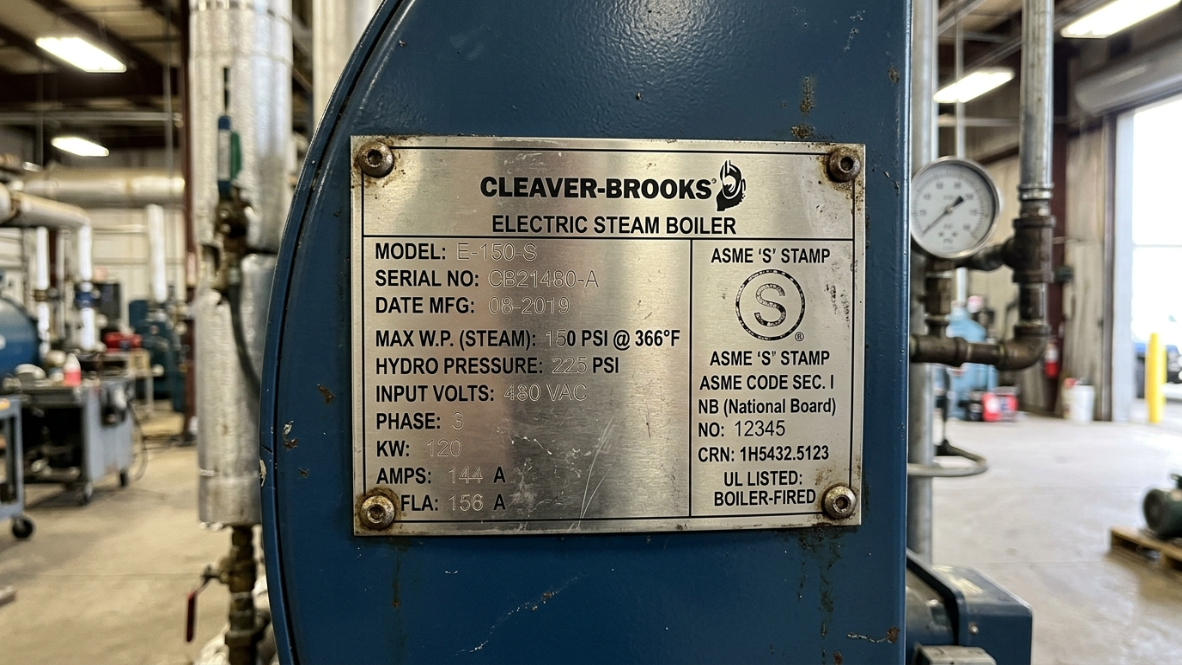
ASME (American Society of Mechanical Engineers)
The organization that sets the construction and safety standards for pressure vessels, including steam boilers. ASME codes dictate how a boiler must be designed, built, welded, and tested.
Why it matters: An ASME-certified boiler has been built to withstand its rated pressure with a significant safety margin. Non-certified units may not meet the same structural standards. For a full breakdown of safety and compliance requirements, read the commercial steam boiler safety guide.
What to do: Verify that your boiler carries an ASME stamp before purchase. If your jurisdiction requires ASME certification, operating a non-certified unit can result in fines or insurance denial.
ASME Stamp (“S” or “H”)
A mark physically stamped on the boiler’s nameplate indicating it was manufactured in compliance with ASME Boiler and Pressure Vessel Code. “S” stamps apply to power boilers; “H” stamps apply to heating boilers.
Why it matters: The ASME stamp is what inspectors look for first. Without it, your boiler may not pass inspection and may not be legally operable in your state.
What to do: Locate the data plate on your boiler. It should show the ASME stamp, the National Board registration number, serial number, rated pressure, and date of manufacture.
National Board Registration
A tracking system maintained by the National Board of Boiler and Pressure Vessel Inspectors that catalogs every ASME-stamped pressure vessel. Each registered boiler receives a unique number.
Why it matters: Registration provides traceability. If an inspector needs to verify your boiler’s construction history or certification, the National Board number makes that possible.
What to do: Know your boiler’s National Board number (found on the data plate). Keep it in your records.
UL Certification
A product safety certification issued by Underwriters Laboratories confirming that the boiler’s electrical components meet safety standards. This is separate from ASME (which covers the pressure vessel) and addresses wiring, grounding, and electrical controls.
Why it matters: UL certification matters for insurance, building code compliance, and basic electrical safety. Some landlords and insurance carriers require it.
What to do: Check for the UL mark on the boiler and in the product documentation. Hoffman’s Pro line boilers carry both ASME and UL certification.
Certificate of Inspection (Operating Permit)
A document issued by a state or jurisdictional authority after a qualified inspector examines your boiler and confirms it meets safety requirements. Some states require this certificate to be displayed near the equipment.
Why it matters: Operating without a valid certificate where one is required can result in fines, insurance issues, or forced shutdown.
What to do: Contact your state’s boiler inspection division to determine whether your boiler size and operating pressure require a permit. High-pressure boilers (above 15 PSI) typically require annual inspection. Low-pressure boilers usually need inspection every two years, though this varies by state.
LOTO (Lockout/Tagout)
A safety procedure requiring that all energy sources (electrical power, residual steam pressure) be disconnected and locked before any maintenance work begins. A physical lock is placed on the power disconnect and a tag identifies who locked it and why.
Why it matters: LOTO prevents someone from accidentally powering up the boiler while you’re working on it. Steam burns and electrical shock are both serious hazards.
What to do: Before any internal maintenance, unplug the boiler or turn off the circuit breaker. Let pressure drop to zero. On larger installations, use a physical lock. Never assume someone else won’t flip the switch.
Exempt Boilers
Small, low-pressure boilers that fall below the threshold for mandatory state inspection in certain jurisdictions. Exemption thresholds vary but often apply to boilers under a certain gallon capacity or below 15 PSI.
Why it matters: Electric boilers must still meet all ASME pressure vessel construction and inspection requirements, but they are exempt from combustion safety codes like ASME CSD-1 and NFPA 85 because they don’t have a flame or burn fuel. However, even exempt boilers still benefit from voluntary maintenance and inspection.
What to do: Check your state’s specific exemption thresholds. Even if your boiler is technically exempt from mandatory inspection, following the same maintenance practices protects your investment and your people.
Typical Operating Specifications
Specification | Typical Range |
|---|---|
Water Capacity | 1–6 gallons |
Operating Pressure | 40–90 PSI |
Heat Source | Electric |
Voltage | 120V or 220V |
Steam Output | Depends on model |
Water Type | Distilled recommended |
Section E: Performance and Efficiency Terms
PSI (Pounds per Square Inch)
The unit of measurement for steam pressure inside the boiler. Small commercial electric boilers typically operate between 40 and 90 PSI, depending on the model and application requirements.
Why it matters: Different applications require different pressures. Jewelry cleaning typically needs 60 to 80 PSI. Hat shaping might use 40 to 60 PSI. Knowing your target PSI helps you select the right model and identify performance problems.
What to do: Set your operating pressure according to your application. If your boiler can’t reach its rated pressure, that’s a symptom of scale buildup, a failing element, or a steam leak.
Wet Steam
Steam that carries water droplets along with it, rather than being purely gaseous. Wet steam is less effective for cleaning, shaping, and finishing because the water droplets reduce the steam’s energy and can leave water spots.
Why it matters: Wet steam is often a symptom of problems: an overloaded boiler, excessive water level, carryover from dissolved solids, or a dirty interior. If your steam leaves surfaces damp or spotted, you may be getting wet steam.
What to do: Check water level (too high causes carryover). Descale the boiler. Verify that you’re not exceeding the boiler’s steam demand capacity.
Dry Steam (Steam Quality)
High-quality steam that contains minimal moisture. Dry steam is what a well-maintained boiler produces and what every steam application works best with.
Why it matters: Clean, dry steam means better jewelry cleaning, crisper garment finishing, more effective hat shaping, and faster work overall. This is what good small industrial steam boiler maintenance delivers.
What to do: Maintain your boiler. Use distilled water. Descale on schedule. The result is consistently dry, powerful steam.
Carryover
Water and dissolved contaminants that leave the boiler along with the steam. Carryover contaminates the steam and deposits minerals on whatever surface the steam contacts.
Why it matters: For jewelers, carryover means mineral spots on finished pieces. For garment professionals, it means water marks on fabric. For dental labs, it means contaminated surfaces.
What to do: Reduce TDS in your feedwater. Don’t overfill the boiler. Perform regular blowdowns to remove concentrated dissolved solids.
Short Cycling
A pattern where the boiler turns on and off rapidly, failing to maintain a stable operating temperature and pressure. This stresses electrical components and heating elements.
Why it matters: Short cycling wastes energy, reduces steam output, and accelerates wear on every component. Common causes include dirty water, malfunctioning controls, or an undersized boiler for the demand being placed on it.
What to do: If your boiler is short cycling, check water quality first. Scale on the element or tank walls can cause erratic temperature readings. If the problem persists with clean water, have a technician inspect the controls and pressure switch.
Thermal Efficiency
The percentage of electrical energy input that actually converts to useful steam output. A clean, well-maintained boiler operates at peak thermal efficiency. A scaled-up boiler wastes energy heating mineral deposits instead of water.
Why it matters: Every fraction of an inch of scale on the heating element forces the boiler to work harder. With 12% efficiency loss per 1/8 inch of scale, a moderately neglected boiler can waste 25% or more of its electrical input.
What to do: Descale regularly. Monitor heat-up time as a simple proxy for efficiency. If it takes noticeably longer to reach operating pressure than it did six months ago, scale is the likely culprit.
Section F: When to Call a Pro vs. DIY
Small industrial steam boiler maintenance divides neatly into things you can handle yourself and things that need a professional.
What Shop Owners Can Do
Daily visual inspection of the gauge glass and pressure gauge. Checking water level before each use. Weekly blowdowns to drain sediment. Monthly visual inspections of all external connections, hoses, and fittings. Maintaining a written maintenance log. Using distilled water consistently. Basic flushing between descale sessions.
What Requires a Professional
Chemical descaling with acid-based products (especially on neglected boilers). LWCO testing and calibration. Safety valve testing and replacement. Internal inspections of the pressure vessel. Heating element replacement. Electrical troubleshooting. Compliance documentation and inspection preparation. Factory reconditioning.
When a Maintenance Plan Makes Sense
If you lack in-house expertise, don’t want to track consumable schedules yourself, or simply want peace of mind, a structured maintenance program removes the guesswork. Hoffman’s Workhorse Protection Program offers two tiers. The Workhorse Lite plan covers automatic consumable shipments, VIP support, compliance documentation, and discounted parts. The Workhorse Essential plan adds factory reconditioning every 24 months, a 47-point inspection, and a loaner unit so you never lose a day of work.
For shops that depend on steam daily, a maintenance plan isn’t an expense. It’s insurance against the kind of unplanned downtime that costs far more than the plan itself.
Common Boiler Maintenance Mistakes
Avoid these common problems.
Using Tap Water
The fastest way to create scale buildup.
Ignoring Slow Heat-Up Times
Usually the first warning sign of scale.
Skipping Blowdowns
Allows dissolved solids to accumulate.
Waiting Until Something Breaks
Reactive maintenance almost always costs more.
Ignoring Small Leaks
Minor leaks often become major repairs.
Frequently Asked Questions
How often should I descale my small electric steam boiler?
It depends on your water quality and usage intensity. If you use distilled water and operate daily, quarterly descaling is a good starting point. If you use tap water or softened water, monthly is safer. At minimum, every boiler should be descaled once per year. Heavy-use environments like dry cleaners or continuous-duty shops may need it more frequently.
What’s the difference between a blowdown and a flush?
A blowdown drains a portion of the water from the bottom of the boiler to remove concentrated dissolved solids and sludge, then you top off with fresh water. A flush drains the boiler completely, refills with clean water, and drains again to rinse loose sediment. Blowdowns are routine weekly maintenance; flushing is a slightly deeper cleaning step done between full descaling sessions.
Do small electric boilers need ASME inspection?
It depends on your state’s regulations and your boiler’s operating pressure. High-pressure boilers operating above 15 PSI typically require annual inspection. Low-pressure units (15 PSI and below) usually need inspection every two years. Some very small boilers may be exempt from mandatory inspection under your state’s specific thresholds, but voluntary maintenance and inspection is always recommended. For the full regulatory picture, see the boiler safety requirements guide.
Can I use tap water in my steam boiler?
You can, but you’ll pay for it in maintenance. Tap water contains calcium, magnesium, and other minerals that deposit inside the boiler as scale. This reduces efficiency, causes sputtering, and shortens the life of heating elements, seals, and valves. Distilled water is strongly recommended. If you must use tap water, expect to descale far more frequently and replace components sooner.
What does a maintenance plan typically cover?
Plans vary, but a good one covers automatic consumable shipments (gaskets, seals, sight glass), priority technical support, compliance documentation, parts discounts, and scheduled factory service. Hoffman’s Workhorse Essential plan includes factory reconditioning with a 47-point inspection every 24 months, ASME/UL recertification, and a loaner unit during service.
How long will my boiler last with proper maintenance?
With consistent small industrial steam boiler maintenance, including regular descaling, distilled water use, and timely replacement of consumables, it’s not unusual to get 20 to 30 years from a quality electric boiler. One user on Reddit’s r/jewelers reported getting 24 years from a Hoffman steamer before replacing it. Without maintenance, that same boiler might last 8 to 15 years and perform poorly for much of that time. Read more about commercial steam boiler lifespan and the factors that affect it.
What’s the most common cause of small boiler failure?
Poor water quality. Scale buildup from hard water or untreated tap water is the root cause of most heating element failures, valve malfunctions, and performance decline. The second most common cause is neglecting the low water cutoff, which leads to dry firing. Both are completely preventable with basic maintenance practices.
Is there a difference between maintaining a flash steamer and a boiler?
Yes. Flash steamers (non-pressurized units that heat water on demand) have simpler maintenance needs because they don’t store pressurized water. Boiler-based systems hold water under pressure and require attention to safety valves, pressure controls, LWCOs, and pressure vessel compliance that flash steamers don’t. For a detailed comparison, the flash steamer vs. boiler guide covers the differences.


