

TL;DR
Your building’s electrical service determines which electric steam boiler you can install. Entry-level units plug into standard 120V outlets, mid-range boilers need a dedicated 240V circuit, and industrial models require three-phase power. Every installation needs a dedicated circuit, properly sized wiring, a fused disconnect switch, and compliance with NEC codes. Get these details right before you buy, not after.
Buying a commercial electric steam boiler is straightforward. Installing one can get complicated fast, and the complications are almost always electrical. The boiler itself might arrive in a week, but if your building doesn’t have the right electrical service, you could be looking at weeks of electrician visits, panel upgrades, and permit applications before you can produce a single puff of steam.
This guide breaks down every steam boiler electrical requirement that matters for small business owners, from voltage basics to NEC code compliance. The goal is simple: help you figure out what your building can support right now, what it might need, and what to tell your electrician when you call.
If you’re still deciding which boiler fits your shop, the electric steam boiler buyer’s guide covers sizing and model selection in detail.
What Are the Electrical Requirements for an Electric Steam Boiler?
An electric steam boiler requires an electrical supply that matches the manufacturer’s specified voltage, phase, and amperage. Depending on the model, this may be 120V, 208V, 240V, or 480V power, with single-phase or three-phase service. Larger units may require a dedicated branch circuit, correctly sized conductors and overcurrent protection, an approved disconnect, proper grounding, and a separate control-power supply.
The National Electrical Code (NEC), the boiler’s listing and installation instructions, and local electrical requirements determine the final installation specifications. Before purchasing a boiler, have a licensed electrician verify the building’s available voltage, electrical panel capacity, circuit requirements, and permit obligations.
Electric Steam Boiler Electrical Requirements at a Glance
The electrical service required for a commercial electric steam boiler depends primarily on its heating capacity and manufacturer specifications. Use the following table as an initial screening guide, not as a substitute for equipment-specific installation instructions.
Electrical requirement | What to check | Why it matters |
|---|---|---|
Voltage | 120V, 208V, 240V, or 480V, as specified by the manufacturer | The wrong supply voltage can reduce performance or damage equipment |
Phase | Single-phase or three-phase | The building must supply the phase configuration required by the boiler |
Power rating | Boiler wattage or kilowatt rating | Determines the approximate electrical load |
Circuit and breaker | Nameplate current, applicable code rules, and manufacturer instructions | Protects the wiring and equipment from excessive current |
Wire size | Required conductor ampacity, insulation temperature rating, and installation conditions | Helps prevent overheating and electrical failure |
Disconnect | Required type, rating, location, and accessibility | Allows safe isolation of power for maintenance |
Grounding | Equipment grounding and bonding requirements | Reduces the risk of electric shock |
Panel capacity | Existing loads and available electrical service capacity | Determines whether the building needs electrical upgrades |
Permits and inspections | Local electrical and mechanical requirements | Helps ensure the installation meets applicable regulations |
Before ordering: Ask the manufacturer for the exact electrical specification sheet for your intended boiler model. Have a licensed electrician confirm that your building can support it before committing to the purchase.
Voltage Standards: Matching Your Power to Your Boiler
Voltage is the starting point for every electrical decision you’ll make. Get this wrong, and nothing else matters.
110V/120V (Single-Phase)
This is the standard wall outlet in every U.S. building. A typical 120V circuit on a 15-amp breaker delivers roughly 1,500 watts of heating power. That’s enough for portable flash steamers and entry-level commercial boilers, but it’s the ceiling, not the floor, for serious commercial work.
Portable units and smaller boilers designed for jewelry stores, small boutiques, and mobile applications run well on 120V. If your needs are modest (one steam wand, intermittent use), this may be all you need.
220V/240V (Single-Phase)
A 240V circuit opens up 3,000 watts or more, which is where real commercial steam production begins. Most mid-range commercial boilers require 240V single-phase power. If your building has an electric dryer or oven, you already have 240V service in the panel; you just need a dedicated circuit run to the boiler location.
For a deeper comparison of what each voltage tier means for daily operations, see this 110V vs. 220V steamer guide.
208V (Commercial Single-Phase)
Here’s where many business owners get tripped up. Older commercial buildings often supply 208V rather than 240V. These numbers sound close, but the performance difference is real and significant.
A 240V heating element operating at 208V performs at only 75% capacity. Conversely, a 208V element running on 240V operates at 133% of its rated capacity, which is hazardous to the wiring and the element itself. Always check your building’s actual voltage with a multimeter or have your electrician verify it before ordering a boiler. Specifying the wrong voltage is one of the most common and most preventable mistakes.
Three-Phase Power (208V/240V/480V)
Three-phase power supports continuous-duty industrial boilers at 17 kW and above. It delivers power more efficiently and with less stress on individual circuits, which is why heavy industrial operations require it.
Most small retail shops and boutiques won’t have three-phase power. If your boiler needs exceed what single-phase 240V can deliver, an electrician can assess whether your building’s service supports a three-phase upgrade, though this often involves coordination with your utility company and can be costly.
Circuit and Wiring Requirements
Dedicated Circuit
Just like an electric oven, your electric boiler needs a dedicated electrical circuit. No sharing the breaker with other appliances, lights, or outlets. This isn’t optional guidance. The NEC classifies electric boilers as continuous-load appliances, and continuous loads require dedicated circuits.
Sharing a circuit creates two problems: nuisance tripping when combined loads exceed the breaker rating, and potential overheating of wires that weren’t sized for the total draw.
The 125% Continuous Load Rule
This is the single most important electrical rule for boiler installations. The NEC (Article 424-3) requires that feeders be sized for 125% of the boiler’s full load amperage. If your boiler draws 50 amps, the wiring and breaker must handle at least 62.5 amps.
Why 125%? Because a boiler runs continuously for extended periods, and sustained current generates more heat in wiring than intermittent loads do. The 25% buffer prevents overheating.
Practitioners on electrician forums reinforce how seriously this rule applies in practice. One electrician calculating specs for a large industrial installation noted that a nameplate rating of 441 amps required a minimum conductor ampacity of 551 amps after applying the 125% rule. The math scales the same way whether you’re wiring a 6 kW shop boiler or a 36 kW industrial unit.
Wire Gauge (AWG)
AWG stands for American Wire Gauge. Lower numbers mean thicker wire capable of carrying more current. All boiler manufacturers require copper wire only, with insulation rated for at least 75°C (167°F). Larger industrial boilers may require insulation rated to 105°C (220°F) and wire no smaller than 8 AWG.
The right wire gauge depends on the amperage your boiler draws after applying the 125% rule. Using undersized wire is a fire hazard, and it will fail inspection.
Electric Steam Boiler Amperage and Circuit Sizing
Electrical current can be estimated from the boiler’s rated power and supply voltage. For a single-phase resistive heating load, the basic calculation is:
Amps = Watts ÷ Volts
For example, a 6,000W resistive heating load supplied at 240V draws approximately 25A under rated conditions. A continuous-load sizing factor may apply, but the final circuit design must follow the applicable NEC provisions, equipment listing, and manufacturer instructions.
Rated heating power | Supply voltage | Approximate current for a single-phase resistive load |
|---|---|---|
1,500W | 120V | 12.5A |
3,000W | 240V | 12.5A |
6,000W | 240V | 25A |
9,000W | 240V | 37.5A |
12,000W | 240V | 50A |
These values are estimates of operating current, not final breaker or conductor specifications. Actual requirements may differ depending on the boiler’s nameplate, control loads, rated voltage, applicable code provisions, conductor material and temperature rating, installation conditions, and overcurrent protection requirements.
Important: Do not select a breaker or wire gauge using this table alone. Have a licensed electrician determine the final circuit rating and conductor size from the equipment documentation and the electrical code adopted in your jurisdiction.
Fused Disconnect Switch
Every boiler manufacturer and every applicable code requires a fused disconnect switch installed within line of sight of the boiler. This switch lets an electrician or maintenance technician cut power to the boiler without walking to a distant electrical panel, which is a basic safety requirement for any equipment that heats water under pressure.
The disconnect must be fused to match the rating on the boiler’s nameplate. This is not a place for guesswork.
For related installation details, the commercial steamer installation guide walks through the full physical setup process.
Plug and Connector Types
Not all boilers are hardwired. Smaller units use standard plugs, and knowing which type you need helps you verify whether your building is ready.
NEMA 5-15
This is the standard three-prong outlet found in every room of every building in America. Two flat prongs and a round ground prong, rated for 15 amps and 125 volts. Entry-level commercial steamers and portable flash steamers use this plug type.
NEMA 6-20
Designed for higher power applications, with a maximum rating of 250V and 20 amps. This is the most common plug type for mid-range 220V commercial boilers. If your building has 240V service, an electrician can install a NEMA 6-20 receptacle relatively quickly.
NEMA L6-30
A twist-lock plug rated for 250 volts and 30 amps. The locking mechanism prevents accidental disconnection, which matters in a busy shop environment. Used for larger commercial and light industrial boilers.
Hardwired Connections
Boilers above approximately 30 amps are typically hardwired directly to the disconnect switch rather than using a plug and receptacle. This provides a more secure connection for high-current installations and is often required by code for larger equipment.
Grounding and Safety
Equipment Grounding
Grounding is non-negotiable. Every manufacturer requires it, and every code demands it. An electrical ground must be connected to all steamers, and the grounding cable must be at least as large as the incoming power lines to the boiler.
Several state codes are quite specific on this point. Pennsylvania code (relevant because it’s where many U.S. boiler manufacturers operate) requires that a grounding cable be permanently connected to the boiler shell and grounded in an approved manner. Minnesota’s administrative rules contain identical language. This is consistent across jurisdictions.
Ground Fault Protection
Ground fault protection detects current leaking outside the intended circuit path (for example, through water or a person) and trips the circuit before injury occurs. Given that steam boilers involve both electricity and water, ground fault protection is especially important. Your electrician will know whether GFCI protection is required for your specific installation based on local amendments to the NEC.
NEC Hazardous Location Classification (Electric Boilers Are Exempt)
Good news for electric boiler owners: electric boilers do not require NEC hazardous area classification. Standard wiring methods apply throughout the installation.
This is a meaningful advantage over gas-fired boilers, which require Class I, Division 1 or 2 hazardous classification near burner assemblies, adding complexity and cost to wiring. For more on this distinction, the electric vs. gas boiler comparison covers the practical differences in detail.
UL 834 Certification
UL 834 is the Underwriters Laboratories standard covering electric heating, water supply, and power boilers rated at 15,000 volts or less for commercial or industrial applications. Per the International Mechanical Code, packaged electric boilers must be listed and labeled in accordance with UL 834.
A UL listing means the boiler’s wiring, controls, and overall construction have been independently tested and certified for electrical safety. When shopping for a boiler, always verify UL certification. It’s not just a nice-to-have; many jurisdictions require it for permitting.
For more on how UL and ASME certifications work together (ASME covers the pressure vessel, UL covers the electrical systems), see the ASME and UL compliance documentation guide.
Which NEC Requirements Apply to Electric Steam Boilers?
Electric steam boiler installations must comply with the electrical code adopted by the local jurisdiction, the equipment manufacturer’s installation instructions, and any applicable mechanical and boiler safety regulations.
The National Electrical Code (NFPA 70) provides requirements for electrical equipment, conductors, overcurrent protection, grounding, and disconnecting means. The applicable provisions depend on the boiler’s construction, intended use, electrical configuration, and listing.
NEC Article 424: Fixed Electric Heating Equipment
Article 424 addresses fixed electric space-heating equipment. Determine whether its specific provisions apply to the boiler and installation in question rather than assuming that every electric steam boiler is governed by the same requirements.
NEC Article 425: Fixed Industrial Process Heating Equipment
Article 425 addresses fixed industrial process heating equipment. It may be relevant to equipment used in industrial processes, depending on the boiler’s design and application. Have the electrician or code professional identify the applicable provisions for the specific installation.
Overcurrent Protection and Circuit Sizing
The required breaker or fuse rating must be determined from the equipment nameplate, applicable NEC requirements, manufacturer instructions, and the characteristics of the installation. Heating elements, control circuits, and equipment with multiple elements may have different requirements.
Do not apply one breaker-sizing formula to every boiler. The final design must account for the specific equipment and the code provisions that govern it.
Local Code Adoption, Permits, and Inspections
The latest published NEC edition is not automatically the enforceable edition in every jurisdiction. Confirm the locally adopted edition, amendments, permit requirements, and inspection process before beginning electrical work.
Ask the local building department and the licensed electrical contractor to verify which provisions apply to the proposed installation.
For a broader look at compliance requirements, the commercial steam compliance checklist covers permits, inspections, and documentation.
Control Circuit Requirements
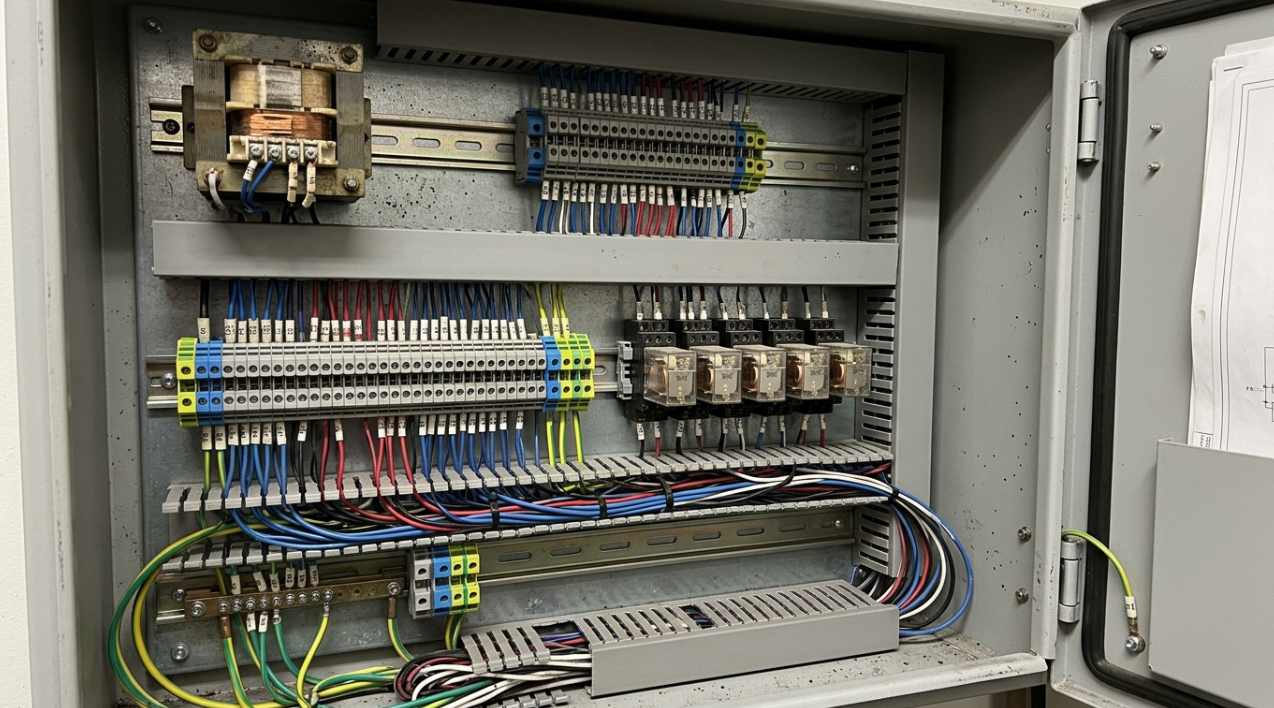
Larger boilers often require a separate control voltage circuit in addition to the main power supply. Models operating on 208V or 240V typically need a 14 AWG neutral wire for the generator controls circuit. Models running on 480V require an entirely separate 120V service (14 AWG) dedicated to controls.
Inside the boiler’s power panel, a stepdown transformer reduces the main voltage to 120V single-phase for operating and limit control circuits. This separation protects sensitive electronic controls from the high-amperage power supply.
Experienced heating professionals on the Heating Help forum recommend using isolation relays when connecting modern thermostats or external controls to steam boilers. One practitioner described wiring an isolation relay to separate thermostat power from the boiler’s stock wiring, noting that this “makes things a lot less complicated, and runs less chance of confusing someone who is looking at the boiler’s wiring diagram.” This is worth mentioning to your electrician if you plan to integrate external controls.
Electrical Panel Capacity: Will Your Building Handle It?
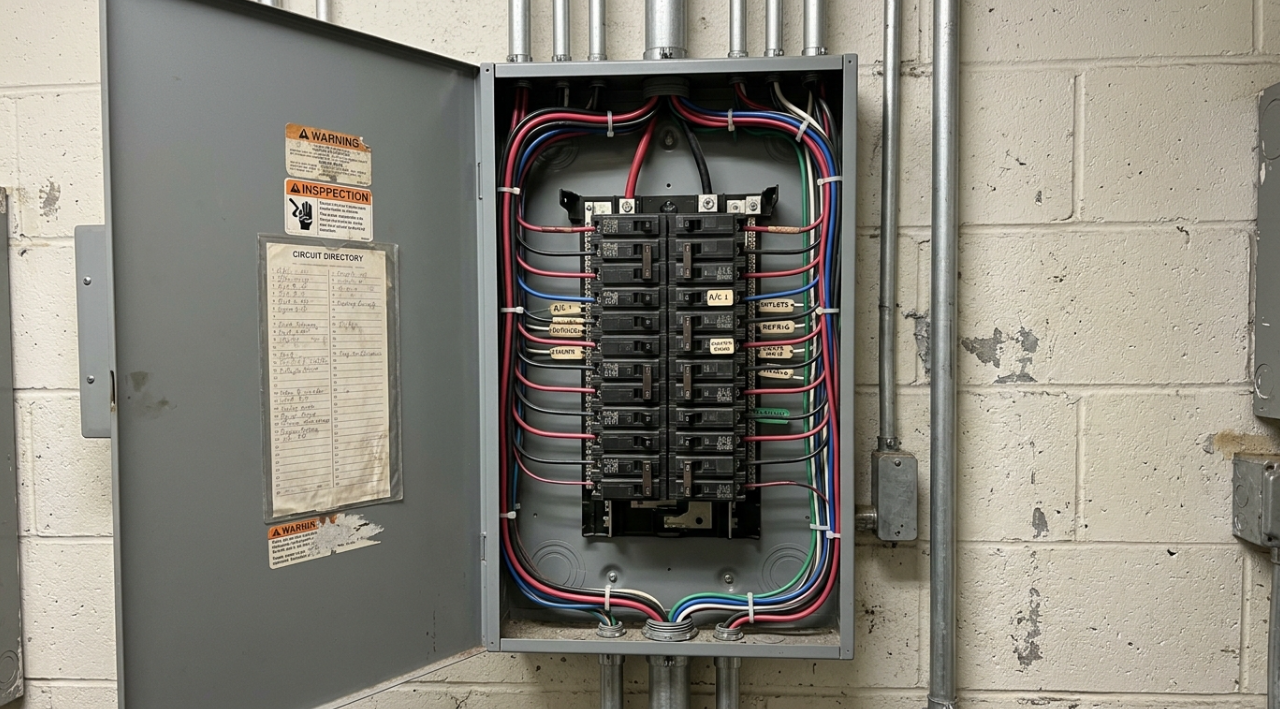
This is the question that catches small business owners off guard. Your building’s main electrical panel has a total capacity (measured in amps), and every circuit you add draws from that capacity.
A forum user on a popular electrician community flagged that adding a 12 kW boiler to a building with 100-amp service is “really pushing it” alongside a water heater, stove, and dryer. This is directly relevant to small shops in older commercial buildings, where the electrical panel may already be near capacity.
Before purchasing a boiler, have your electrician perform a load calculation on your existing panel. If the panel is at or near capacity, you may need a service upgrade (from 100A to 200A, for example) before the boiler can be installed. Service upgrades involve your utility company and can cost several thousand dollars, so it’s better to know this upfront.
For shops still evaluating their options, the small industrial steam boiler sizing guide helps match boiler capacity to your actual production needs, which directly determines the electrical load you’ll be adding.
How to Check Whether Your Electrical Panel Can Support a Steam Boiler
A building may have the correct voltage available and still lack sufficient electrical capacity for a new steam boiler. Panel capacity, existing electrical loads, and the building’s overall service rating must all be considered.
Use these steps to evaluate whether your building may need electrical upgrades.
1. Find the boiler’s electrical rating.
Obtain the manufacturer’s specification sheet and record the rated voltage, phase, kilowatt rating, and full-load current. Do not rely on a product description alone when the installation manual provides more precise requirements.
2. Identify your existing electrical service.
Ask your electrician to verify the service rating, panel rating, supply voltage, phase configuration, and available circuit positions.
3. Review the existing electrical loads.
Consider other equipment that operates in the building, including air conditioning, water heaters, ovens, compressors, production machinery, and other high-power appliances.
4. Request a load calculation.
A licensed electrician should evaluate the building’s existing and proposed loads using the applicable code requirements. The number of unused breaker spaces does not establish that the panel has enough electrical capacity.
5. Determine whether an upgrade is necessary.
Depending on the results, the project may require a new branch circuit, panel modifications, a larger electrical service, or coordination with the utility company.
6. Confirm costs and approvals before ordering.
Obtain an installation quote that identifies any electrical upgrades, permits, inspections, and additional work required to bring the boiler online.
The goal is to establish the full installation cost before purchasing equipment, not to discover an electrical service limitation after the boiler arrives.
What to Tell Your Electrician: A Handoff Checklist
Most small business owners aren’t electricians, and they shouldn’t have to be. But you do need to communicate clearly with the electrician you hire. Bring this information to your first conversation:
Boiler model and nameplate specs. Provide the exact voltage, wattage, and amperage from the manufacturer’s spec sheet or data plate. Don’t estimate.
Voltage type. Specify whether the boiler requires 120V, 208V, 240V, or 480V, and whether it needs single-phase or three-phase power.
Dedicated circuit. Confirm that the boiler needs its own breaker with no shared loads.
125% sizing rule. Mention that NEC requires wiring and breakers sized to 125% of the boiler’s full load amperage.
Fused disconnect switch. The boiler needs a fused disconnect installed within line of sight.
Grounding. A grounding cable at least as large as the incoming power lines must be permanently connected to the boiler shell.
Control circuit. If the boiler operates on 208V+ and requires a separate control circuit, note that on the spec sheet.
Copper wire only. All wiring must be copper with insulation rated 75°C or higher.
NEMA plug type or hardwired. Specify whether the boiler uses a plug (and which type) or requires hardwiring.
Permit requirements. Ask whether a permit is needed for the new circuit in your jurisdiction.
Understanding how to read the boiler data plate will make this conversation much easier.
Common Electrical Mistakes to Avoid
Using a shared circuit. Plugging a boiler into a circuit shared with other equipment causes tripped breakers at best and overheated wiring at worst. Always use a dedicated circuit.
Ignoring the 208V vs. 240V difference. Assuming your building supplies 240V when it actually supplies 208V means your boiler will underperform by 25%. Going the other direction (running a 208V-rated element on 240V) is a fire risk. Verify before you order.
Undersizing the breaker or wire. The 125% rule exists for a reason. A boiler drawing 50 amps needs a breaker rated for at least 62.5 amps and wire to match. Cutting it close is cutting it wrong.
Skipping the disconnect switch. It’s required by code and by every manufacturer. Skipping it will fail inspection and creates a genuine safety hazard during maintenance.
Not checking panel capacity. Adding a large boiler to an undersized panel can overload your entire building’s electrical service. A load calculation costs far less than an emergency panel upgrade.
Hiring an unlicensed electrician. All boiler manufacturer manuals and all applicable codes require installation by a licensed electrical contractor. Unlicensed work voids warranties, fails inspections, and puts your business at risk.
Frequently Asked Questions
Can I plug a commercial steam boiler into a regular wall outlet?
Some entry-level models are designed for standard 120V/15A outlets (NEMA 5-15). But these are limited to about 1,500 watts, which suits portable flash steamers and small shop units. Anything larger requires a 240V dedicated circuit or higher.
Do I need an electrician to install a steam boiler?
Yes. Every manufacturer requires installation by a licensed electrical contractor, and the NEC mandates that all field wiring comply with national and local electrical codes. This is not a DIY project, even for a simple plug-in unit that needs a new dedicated circuit.
What’s the difference between 208V and 240V?
They sound similar but produce very different results. A 240V element running on 208V operates at only 75% of its rated output. A 208V element on 240V runs 33% over capacity, which is dangerous. Older commercial buildings often supply 208V. Always verify your building’s actual voltage before purchasing.
How much does it cost to add a 220V circuit?
Costs vary by region and by how far the circuit needs to run from the panel. A straightforward 240V circuit installation typically runs $300 to $800. If your panel needs an upgrade to handle the additional load, expect $1,500 to $4,000 or more for a service upgrade. Get quotes from licensed electricians before committing.
Does an electric boiler need a special permit for the wiring?
In most jurisdictions, yes. Adding a new 240V circuit typically requires an electrical permit and inspection. Some areas also require a separate boiler operating permit. Check with your local building department, and review the boiler permit requirements guide for more detail.
What NEC articles apply to electric steam boilers?
NEC Article 424 covers fixed electric heating equipment including boilers, and NEC Article 425 (added in 2017) covers fixed industrial process heating. Together, these articles establish the requirements for circuit sizing, overcurrent protection, wiring methods, and disconnect switches.
Do electric boilers require hazardous location wiring?
No. Electric boilers are exempt from NEC hazardous area classification. Standard wiring methods apply. This is a significant advantage over gas-fired boilers, which require costly hazardous-rated wiring near burner assemblies.
What is UL 834 and why does it matter?
UL 834 is the Underwriters Laboratories safety standard for electric boilers rated at 15,000 volts or less. The International Mechanical Code requires commercial electric boilers to be UL 834 listed. Without this certification, you may not be able to get a permit or pass inspection.
Getting your steam boiler electrical requirements sorted out before you buy saves time, money, and frustration. The electrical infrastructure is the foundation that everything else depends on. Once you know your building’s voltage, panel capacity, and circuit availability, choosing the right boiler becomes a much simpler decision.
Ready to match your electrical setup to the right equipment? Browse the best commercial steamers for small business to find models that fit your building’s capabilities and your production needs.


