

TL;DR
A steam boiler for furniture cleaning is the right foundation when the job calls for controlled, low-moisture steam in upholstery restoration, fabric relaxation, and shop-based commercial steaming. It is not a substitute for an extractor when you need to pull deep soil, pet residue, or detergent out of cushion foam. This guide compares seven options across commercial boilers, vapor steamers, steam-vac combos, and heated extractors, so you can match equipment to your actual workflow rather than guessing based on PSI alone.
If you only remember one thing from this article, remember this: steam loosens and sanitizes; extraction removes.
That distinction matters because “steam boiler for furniture cleaning” can mean three different things depending on who’s searching. An upholstery restorer needs continuous, low-moisture steam from a commercial boiler to relax fabric and shape materials. A cleaning contractor needs an extractor (or steam-vac combo) to pull dirty water and soil out of cushions. A facility manager might want a vapor steam cleaner for surface refresh between deeper cleanings.
Most buying guides skip this entirely. They rank commercial steam cleaners by PSI and temperature, then leave you to figure out whether the machine actually fits your furniture work. This guide takes a different approach: it starts with what you’re trying to accomplish, then matches you to the right class of equipment.
Explore Hoffman’s commercial steam equipment to see which boiler class fits your shop.
Quick Answer: What Is the Best Steam Boiler for Furniture Cleaning?
If your goal is upholstery restoration, fabric relaxation, wrinkle removal, and controlled low-moisture steam, a commercial steam boiler is usually the best fit.
If your goal is removing stains, spills, pet urine, and embedded soil, choose a heated upholstery extractor instead.
For most professional furniture-cleaning businesses:
Use Case | Best Equipment |
|---|---|
Fabric steaming and restoration | Commercial steam boiler |
Deep cleaning and stain removal | Heated extractor |
Surface sanitizing and refresh | Vapor steam cleaner |
One-machine workflow | Steam-vac combo |
At-a-Glance Comparison
Option | Best For | Starting Price | Equipment Type | Extraction Included? | Best Business Fit | Main Tradeoff |
|---|---|---|---|---|---|---|
Hoffman Steam Upholstery Shop Bundle | Upholstery restoration and shop steam | $2,329 | Commercial electric steam boiler | No | Upholstery shops, restorers, dry cleaners | Not an extractor; pair with one for deep soil |
US STEAM Eagle Plus class | Steam plus vacuum recovery | ~$4,300–$5,000 | Commercial steam-vac | Yes (integrated wet/dry vacuum) | Cleaning businesses, hospitality | Expensive, heavy, more maintenance |
US STEAM Seahawk class | Portable steam-vac | ~$1,995 | Compact steam-vac | Yes (integrated vacuum) | Mobile cleaners, mattress refresh | Smaller capacity, combo compromises |
Vapamore MR-1000 Forza | Budget commercial vapor steam | ~$1,600–$1,800 | Commercial vapor steamer | No | Small cleaning businesses, detail work | No extraction; loosens soil but can’t remove it |
Dupray Hill Injection | Continuous-fill with detergent | ~$2,000 | Vapor steamer with detergent tank | No | Mixed hard-surface and upholstery refresh | Mixed reliability reports; no extraction |
Mytee S-300H Tempo | Deep stain and soil removal | ~$900 | Heated upholstery extractor | Yes (heated extraction) | Mobile furniture cleaners, auto detailers | Not a steam boiler; small tanks limit big jobs |
Bissell Commercial Little Green Pro | Light-duty spot cleaning | ~$180 | Portable spot extractor | Yes (basic suction) | Offices, occasional spot work | No heater, small capacity, not commercial-grade |
Steam Boiler vs Steam Cleaner vs Upholstery Extractor
This is where most buyers get confused, and where most product pages fail them.
A steam boiler is a pressure vessel that heats water into steam and delivers it through hoses, nozzles, and attachments. In furniture work, it provides continuous, controllable steam for fabric relaxation, wrinkle removal, shaping, spot treatment, and surface sanitation. Commercial electric boilers produce 40 to 90 PSI and are built for trade use, not occasional home cleaning.
A vapor steam cleaner is a self-contained unit that produces low-moisture steam vapor. It works well for surface cleaning, detail work, crevices, and sanitizing. Many commercial vapor cleaners operate between 65 and 90 PSI.
A steam-vac combines steam generation with wet/dry vacuum recovery. The US STEAM Seahawk manual puts it simply: use steam for sanitizing a surface area and use extraction for deep cleaning upholstery. That’s a practical rule worth following.
A hot-water extractor injects heated water (and sometimes cleaning solution) into fabric, then vacuums the dirty water back out. This is what most people mean when they say “steam cleaning,” even though no actual steam vapor is involved. Crypton’s upholstery care documentation defines extraction as injecting hot water and cleaning solution into fabric pile and extracting dirt with powerful wet vacuums.
Practitioners on Reddit surface this confusion regularly. In r/CleaningTips, one user asked how upholstery steam cleaning works without a vacuum, since there’s no way to pull dirty water and loosened soil out of the fabric. The practical answer: steam alone may refresh fabric, but real grime and odor removal usually requires suction. In r/AutoDetailing, users repeatedly note that steam can loosen dirt and help with stubborn stains, but an extractor is still needed for deep cleaning seats and floors.
For a detailed comparison, see this guide on steamers vs carpet extractors.
The bottom line: if your furniture-cleaning work is primarily restoration, fabric treatment, and surface refresh, a steam boiler is the right foundation. If your work is primarily pulling embedded dirt, pet urine, or spills out of cushion foam, you need extraction. Many shops need both.
Check the Upholstery Code Before You Buy Anything
Before spending money on any steam boiler for furniture cleaning, learn the care codes on the fabrics you work with most. These codes are printed on tags and dictate what cleaning methods the manufacturer considers safe.
Code | Meaning | Steam Safe? |
|---|---|---|
W | Water-based cleaning allowed | Generally yes, with pre-testing |
S | Solvent only; avoid water and steam | No |
W/S or SW | Water or solvent methods, test first | Possibly, with caution |
X | Vacuum or brush only; no liquids | No |
Clad Home explains that Code W fabrics can use water and mild soap, while Code S fabrics are sensitive to water and may shrink or leave water rings. Keck Furniture specifically warns against steam cleaning S or X code fabrics.
This matters because a $2,000+ steam boiler is the wrong investment if you’re mostly working on fabrics that can’t tolerate moisture. Leather, velvet, rayon, some linen blends, and many natural fibers all carry risk. Pre-test in a hidden area. Every time.
What to Look for in a Steam Boiler for Furniture Cleaning
Not every commercial steamer is suited to furniture work. Here’s what matters most when choosing equipment for upholstery and fabric applications.
Low-moisture steam control. Furniture is not tile. You need the ability to regulate steam output so you don’t oversaturate fabric. Oversaturation causes water rings, browning, shrinkage, mildew, and wicking (stains that reappear as moisture draws soil back to the surface during drying).
Pressure matched to fabric work. Commercial steam guides often cite 65 to 85 PSI as the useful commercial range, with nozzle temperature mattering more than boiler temperature because steam loses heat between the boiler and the surface. For more on pressure selection, read this PSI guide for commercial steamers.
Continuous duty and fill style. If you’re steaming furniture all day, a manual-fill boiler requires planned pauses for refilling and reheat. Automatic pump-fill systems eliminate that downtime but cost more. Learn the tradeoffs in this manual vs auto-fill comparison.
Boiler construction and certification. For commercial use, stainless steel boilers outlast aluminum. ASME certification on the pressure vessel and UL listing on the electrical components reduce procurement friction, especially for shops that need to satisfy insurance or inspection requirements. ASME’s Boiler and Pressure Vessel Code is the foundational standard for commercial pressure-vessel safety.
Accessory ecosystem. Upholstery work requires the right nozzles, brushes, and attachments. A boiler with a broad accessory range (steam nozzles, spray guns, irons, extended hoses) gives you more flexibility across furniture types and job requirements.
Serviceability and support. Parts availability, technical support, maintenance programs, and warranty terms matter more for a commercial boiler than for a consumer appliance. When a boiler goes down in a production shop, downtime costs real money.
Whether you also need extraction. Be honest about this. If more than half your furniture work involves deep soil removal, budget for an extractor alongside your boiler.
Furniture Cleaning Equipment Decision Matrix
Priority | Boiler | Vapor Steamer | Steam-Vac | Extractor |
|---|---|---|---|---|
Deep stain removal | Low | Low | Medium | Excellent |
Fabric restoration | Excellent | Good | Good | Low |
Low moisture | Excellent | Excellent | Medium | Low |
Surface sanitizing | Excellent | Excellent | Good | Medium |
Productivity | Excellent | Good | Good | Medium |
Initial cost | Medium | Medium | High | Low |
Which Type of Furniture Cleaner Should You Buy?
Not every buyer searching “steam boiler for furniture cleaning” needs a boiler.
Choose a Steam Boiler If:
You restore upholstery
You steam fabric daily
You need continuous low-moisture output
You run a production shop
Choose an Extractor If:
You remove stains
You clean pet accidents
You deal with spills
You need fast visible cleaning results
Choose a Steam-Vac If:
You want one machine
You clean varied environments
You accept higher maintenance
This guide compares all three categories so you avoid buying the wrong equipment.
The 7 Best Options for Furniture Cleaning
1. Hoffman Steam Upholstery Shop Bundle
Best for: Upholstery restoration shops, furniture repair businesses, and commercial operators who need a dedicated steam boiler for fabric work.
Starting price: $2,329 for the upholstery shop bundle. Hoffman’s full range runs from $995 for the GEM-III portable flash steamer to $9,499 for RHPG industrial series units.
Key features:
Factory-direct commercial electric steam boiler made in Pennsylvania
Pro models carry ASME and UL certification
Steam output up to 70 to 90 PSI across applicable models
Upholstery shop bundle arrives with relevant accessories, ready to use
3-year tank warranty plus 1-year components warranty
Unlimited lifetime remote technical support
30-day money-back return policy
Free shipping in contiguous U.S.
Financing options including 0% APR promotions
Workhorse Protection Program available ($216/year for Lite, $280/year for Essential) covering consumable shipments, compliance documentation, factory reconditioning, parts discounts, and loaner machines
Tradeoffs:
Not a consumer couch cleaner or steam mop
Not an all-in-one vacuum extractor; pair with an extractor for deep soil jobs
Manual-fill models require workflow planning; automatic pump-fill models cost more
Best value comes from trade and shop use, not occasional home cleaning
User perspective: Reddit communities including r/jewelers and r/BenchJewelers have mentioned long service life for Hoffman equipment, with one user reportedly running two Hoffman steamers over 30 years (the first lasting 24 years). While that discussion centered on jewelry use, it speaks to the build quality and factory support that upholstery shops also depend on.
Bottom line: If you searched for a steam boiler for furniture cleaning because you run a restoration shop or commercial steaming operation, this is the right starting point. Hoffman builds actual commercial boilers with real certifications, not repackaged consumer appliances. The upholstery bundle gives you a complete steam source out of the box, and the protection programs keep it running.
Use this vendor checklist to evaluate which Hoffman boiler size and configuration fits your workflow.
How We Evaluated These Steam Boilers
We scored each option using six factors that matter specifically for furniture work:
Factor | Weight |
|---|---|
Steam control | 25% |
Furniture suitability | 25% |
Continuous operation | 15% |
Service & warranty | 15% |
Certification & safety | 10% |
Overall value | 10% |
2. US STEAM Eagle Plus
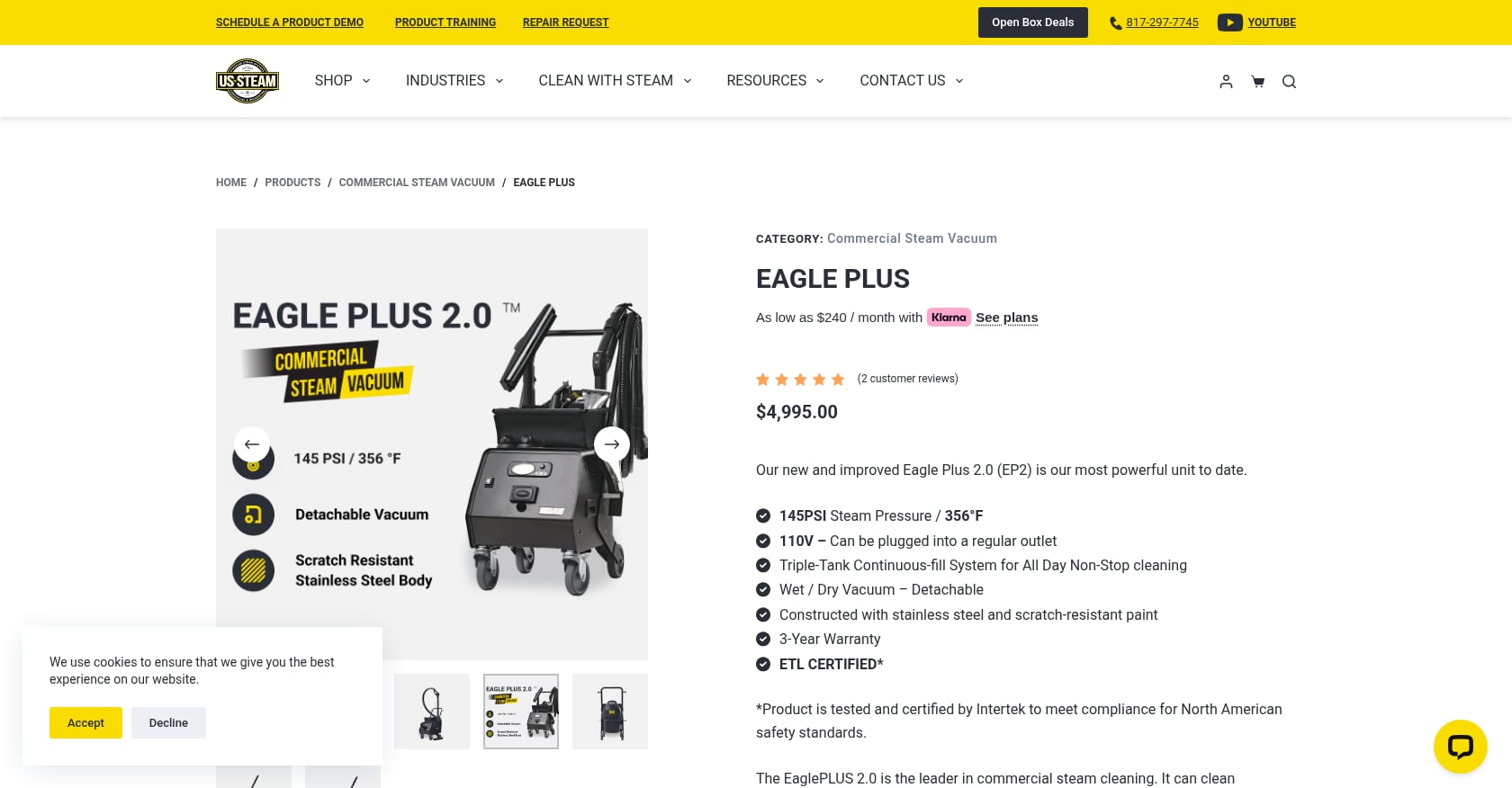
Best for: Cleaning businesses that need steam generation and vacuum recovery in a single commercial machine.
Starting price: Around $4,300 to $5,000 depending on version and seller.
Key features:
145 PSI, up to 356 degrees F steam temperature
Integrated wet/dry vacuum with 2.2-gallon recovery tank
Automatic refill boiler (half-gallon boiler, half-gallon water tank, half-gallon detergent tank)
19-piece tool kit
10-minute ready time
120V power, 61.7 lb net weight
Tradeoffs:
Significantly more expensive than a steam-only boiler
Heavier and more complex than dedicated steam or dedicated extraction machines
More parts to maintain: vacuum filters, recovery tank, hoses, O-rings, and descaling
May be overkill for a shop that primarily needs a reliable steam source
User perspective: One customer review described the Eagle Plus as more machine and capital expense than small office use justified, but said they were glad they bought it after struggling with smaller equipment first.
Bottom line: If you want one machine that steams and vacuums, the Eagle Plus class delivers both. But the price and complexity make it a better fit for cleaning contractors than for upholstery shops that mainly need a steam boiler for furniture cleaning workflows.
3. US STEAM Seahawk
Best for: Mobile cleaners who need a compact, portable steam-vac for furniture, mattress, and curtain work.
Starting price: Around $1,995.
Key features:
70 PSI, 325 degrees F steam temperature
Integrated vacuum and extraction nozzle
8-minute ready time
23 lb weight (genuinely portable)
Can inject water or detergent into steam for combined extraction work
Maintenance schedule: descale boiler every 6 months, replace O-rings yearly
Tradeoffs:
Smaller capacity than larger commercial steam-vac systems
Combo machines may compromise on both steam power and vacuum power
Not a primary dry vacuum
For high-volume furniture cleaning, a dedicated boiler plus dedicated extractor may work better
User perspective: Practitioners on r/VacuumCleaners were skeptical of the steam-vac category at this price point. One commenter questioned whether extraction gets enough suction when the steamer isn’t putting much water down. Another said they’d rather invest in a good extractor and use a cheaper tool for steam. This reflects a real industry tradeoff: combo machines are convenient, but separate tools can perform better individually in high-volume shops.
Bottom line: A solid portable option for mobile cleaning. Not the best choice if you specifically need a commercial steam boiler for shop-based restoration work.
4. Vapamore MR-1000 Forza
Best for: Small cleaning businesses that want commercial-grade vapor steam without steam-vac pricing.
Starting price: About $1,600 to $1,800 depending on seller.
Key features:
90 PSI peak steam pressure, 320 degrees F boiler temperature, 284 degrees F peak tip temperature
2.1-gallon tank, 1.06-gallon boiler
15 to 20 minute heat-up time
50-piece accessory kit including fabric and detail tools
Lifetime limited warranty on boiler tank, heating element, and internal electronics (accessories and housing carry 1-year warranty)
62 lb gross weight
Tradeoffs:
No built-in vacuum or extraction
Steam loosens soil but cannot remove embedded contamination from cushion foam
Heavy for some users
Using additives in the water can void the warranty; water quality and calcium buildup matter
User perspective: Retail reviewers describe the Forza as a “work horse” and praise its adjustable pressure and continuous feed for daily professional use. Review counts are small, so expectations should be calibrated accordingly.
Bottom line: A decent entry point for commercial vapor steam at a lower price than full steam-vac systems. For furniture cleaning specifically, the lack of extraction limits what it can accomplish on heavily soiled pieces. It refreshes; it doesn’t deep clean.
5. Dupray Hill Injection
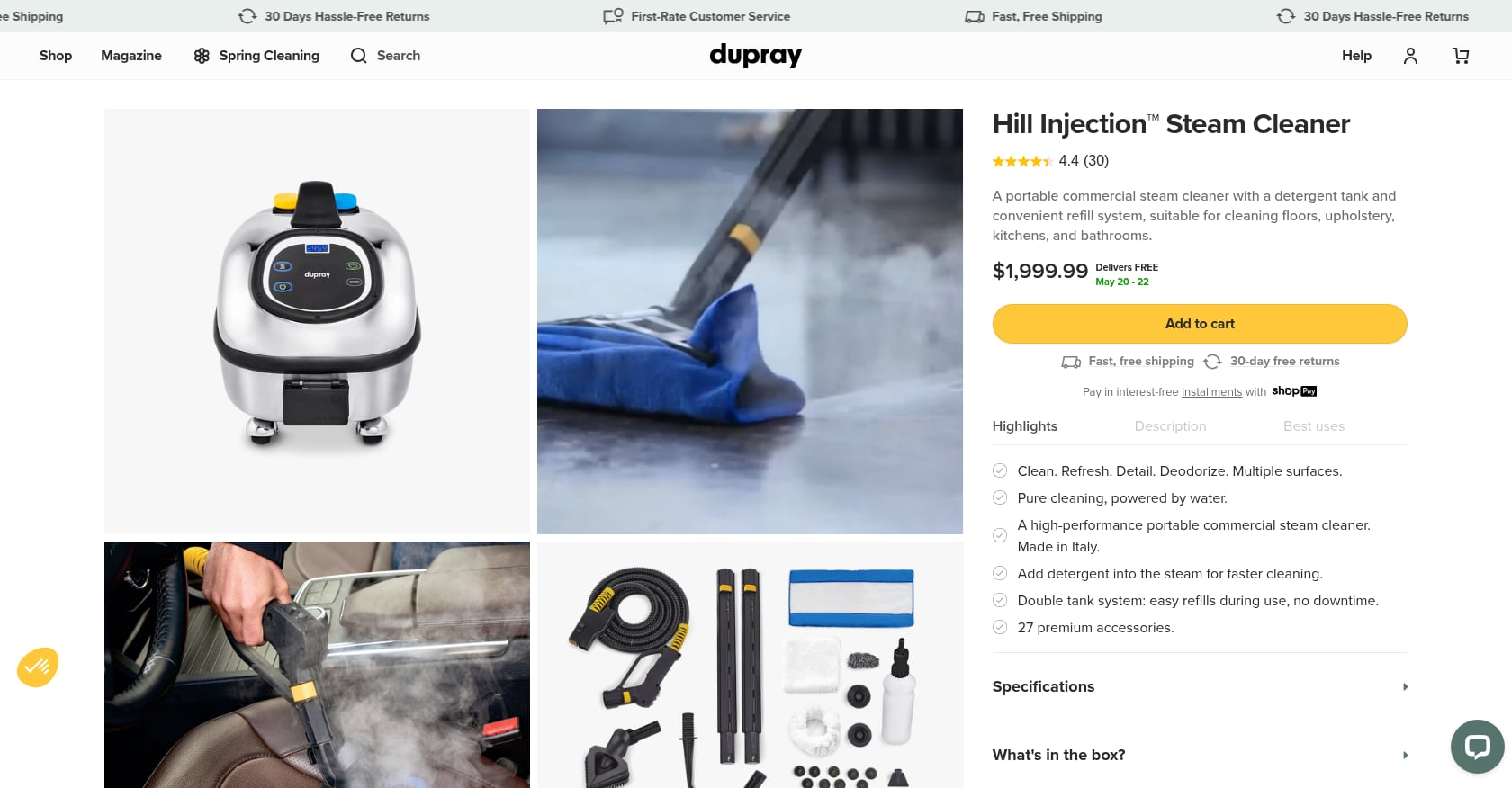
Best for: Buyers who want continuous-fill vapor steam with built-in detergent injection for mixed cleaning tasks.
Starting price: Around $2,000.
Key features:
Dual tank system, refill while running
Integrated 20 oz detergent tank for on-demand injection
Up to 347 degrees F superheated steam
Quick heat-up under 8 minutes
Digital interface showing temperature, pressure, and maintenance reminders
27-piece accessory kit
Tradeoffs:
No built-in extraction
Mixed long-term reliability reports from real users
Dupray’s consumer Neat model was subject to a 2026 CPSC recall due to boiler rupture risk under overfill and corrosion conditions (a different product line, but it underscores why pressure-vessel safety and manufacturer support matter)
User perspective: One r/CleaningTips commenter liked the Hill Injection because it can be refilled while running and has an on-demand detergent container. But a r/BuyItForLife user described a love-hate relationship, praising performance when it works but complaining about multiple replacements and service frustrations.
Bottom line: Continuous fill is genuinely valuable for productivity. But service support and long-term reliability matter as much as specs on paper. If you’re buying for a business, ask about warranty claims processes before you commit.
6. Mytee S-300H Tempo
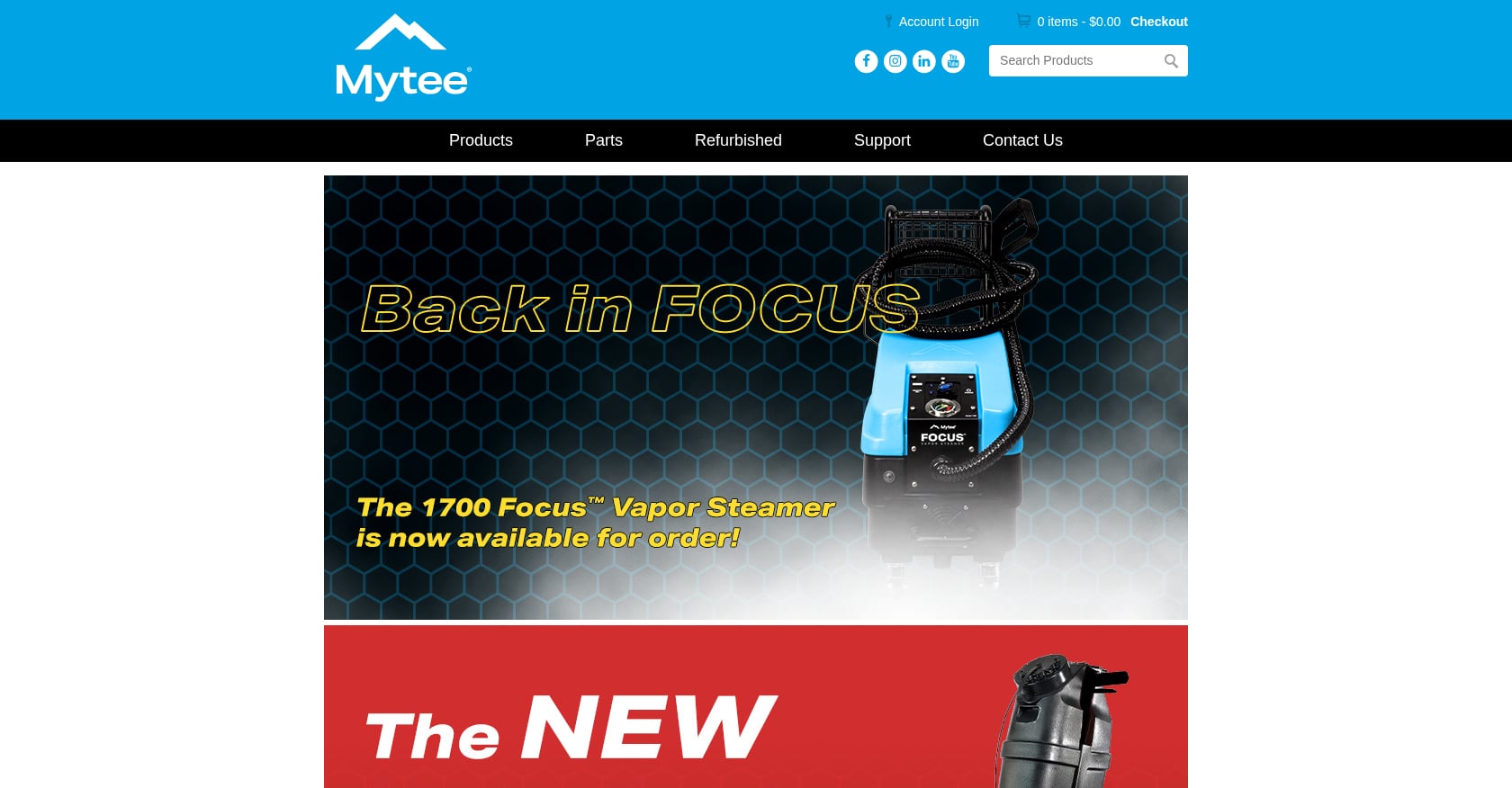
Best for: Deep stain and soil removal from fabric furniture, dining chairs, office chairs, and auto upholstery.
Starting price: Around $900 USD depending on seller and kit.
Key features:
Heated spotter/upholstery extractor (not a steam boiler)
1-gallon solution tank, 1-gallon recovery tank
55 PSI pump, 97 CFM, 85 inches water lift
600W heater
12 amps at 115V (runs on a standard household outlet)
30 lb machine weight
Manufacturer recommends one wet pass followed by two dry passes to avoid over-soaking
Tradeoffs:
Not a steam boiler; does not produce vapor steam for fabric relaxation or restoration
Small 1-gallon tanks limit runtime on large jobs
Requires cleaning solution and rinsing discipline to avoid detergent residue
Not built for continuous all-day duty like a commercial boiler
User perspective: A r/AutoDetailing user liked that the S-300H is heated and runs on a regular 15-amp home outlet, making it practical for offsite furniture jobs. Another called it “a really nice machine.” This is the tool detailers and mobile furniture cleaners reach for when the job is soil removal, not steam generation.
Bottom line: If you’re reading this article because you need to remove stains, pet urine, or embedded dirt from couch cushions, this is probably a better first purchase than a steam boiler. For shops that do both restoration and deep cleaning, the Mytee pairs well with a commercial steam boiler as a two-tool system.
7. Bissell Commercial Little Green Pro BGSS1481
Best for: Light-duty spot cleaning and occasional furniture maintenance on a tight budget.
Starting price: Around $180.
Key features:
Portable spot extractor combining vacuum suction, brushing action, and cleaning solution
3/4-gallon tank
5.7 amps, 20 ft power cord
6-inch stair tool included
1-year commercial warranty
Tradeoffs:
No heater
No steam generation of any kind
Very limited tank capacity
Not appropriate for high-volume commercial upholstery cleaning
More of a spot cleaner than a professional furniture-cleaning system
User perspective: A r/VacuumCleaners user praised the commercial version for its thicker cord and heavier-duty upholstery tool compared to the residential model. Another reported using one to clean 50 to 60 office chairs over about two months with a fairly good experience. Others in Reddit cleaning communities criticize the broader Little Green line for limited suction and slow drying.
Bottom line: Don’t buy a commercial steam boiler for furniture cleaning if this is all you actually need. The Little Green Pro handles light spot work on office chairs, waiting-room furniture, and occasional couch stains. It won’t restore upholstery or power a cleaning business, but it costs less than a tenth of the other options on this list.
Real Cost of Owning Furniture Cleaning Equipment
Purchase price is only part of operating cost.
Equipment | Typical Maintenance | Downtime Risk |
|---|---|---|
Steam boiler | Descaling, seals | Low |
Steam-vac | Vacuum service, boiler maintenance | Medium |
Extractor | Pumps, hoses | Medium |
Consumer spot cleaner | Replacement over repair | High |
When to Choose a Hoffman Steam Boiler
Buy a Hoffman steam boiler if:
You run an upholstery restoration shop, furniture repair business, or dry cleaning operation
You need reliable, continuous steam output for fabric work
You want ASME and UL certification on Pro models for safety and compliance
You value factory-direct pricing, lifetime technical support, and a real maintenance program
You need a bundled solution that arrives ready to work
You care about U.S. manufacturing and long-term serviceability
Don’t buy only a boiler if:
Your primary job is removing pet urine, drink spills, or deep soil from cushion foam (add an extractor)
You only need to clean one couch at home (hire a professional or use a spot cleaner)
You clean S-code or X-code fabrics without professional testing
You want a consumer steam mop
The strongest shops understand that a steam boiler handles one part of the furniture-cleaning workflow, and extraction handles another. Understanding the difference between flash steamers and boilers helps you pick the right Hoffman model for your specific application.
Practical Furniture-Cleaning Workflow
Here’s how experienced operators use a steam boiler for furniture cleaning on W or W/S synthetic upholstery:
Inspect the tag. Identify fiber content and care code. Stop here if the fabric is S-code or X-code.
Dry vacuum thoroughly. Remove loose soil, pet hair, and debris before introducing any moisture.
Pre-test in a hidden area. Check for color bleeding, shrinkage, or water marking.
Pre-treat spots if the fabric code allows water-based treatment.
Apply steam. Use controlled, low-moisture steam from your boiler to loosen soil, relax fabric, and surface-sanitize. Keep the nozzle moving. Don’t dwell in one spot.
Extract or towel. For light soil, blot with clean microfiber towels. For heavier contamination, follow with an upholstery extractor. Mytee’s manual recommends one wet pass followed by two dry passes to avoid over-soaking.
Speed dry with airflow. Fans, open windows, or dehumidifiers. Residual moisture causes wicking, mildew, and odor.
Re-check after drying. Stains that disappear when wet can reappear as moisture wicks soil back to the surface. If wicking occurs, re-extract and dry again.
Professional cleaning operators sell outcomes (deep cleaning, stain removal, fast drying), not just “steam.” Equipment selection should follow that same logic.
Safety and Maintenance
Commercial steam boilers are not consumer gadgets. They operate under pressure and produce steam hot enough to cause serious burns.
Safety basics:
Never aim steam at skin or toward other people
Do not bypass pressure caps, safety valves, or relief switches
Use the correct power circuit for your boiler’s voltage and amperage (understanding 110V vs 220V requirements is essential for safe installation)
Keep the machine as the only appliance on its circuit during operation
Do not use chemical additives unless the manufacturer specifically allows them
Maintenance essentials:
Drain and refill tanks as recommended by the manufacturer
Descale the boiler according to water hardness and usage frequency
Clean nozzles, brushes, and hoses after each use
Inspect and replace O-rings on the manufacturer’s recommended schedule
Store equipment dry when not in use
For a complete overview of boiler safety requirements in commercial settings, including ASME and UL compliance context, read the linked guide.
A note on sanitization claims. Many steam cleaner marketing pages claim steam “kills 99.9% of germs.” Steam can support sanitizing when heat, contact, and dwell time are adequate. But furniture steaming is not medical sterilization. The CDC’s guidance specifies that effective steam sterilization depends on direct steam contact, pressure, temperature, and time in controlled sterilizers. Don’t overstate what a furniture steaming pass accomplishes.
Frequently Asked Questions
Is a steam boiler good for furniture cleaning?
Yes, for commercial low-moisture steam applications: upholstery restoration, fabric relaxation, wrinkle removal, surface sanitizing, and shop-based trade work. A steam boiler is not always sufficient for deep soil extraction on its own. If you need to remove embedded dirt, pet contamination, or detergent residue from cushion foam, pair your boiler with a heated extractor.
Can I steam clean every couch?
No. Check the upholstery care code first. Code W fabrics generally tolerate water-based methods including steam. Code S fabrics are solvent-only and should not be steamed. Code X fabrics should only be vacuumed or brushed. Always pre-test in a hidden area, even on W-code fabric.
What PSI do I need for a steam boiler used on furniture?
Control matters more than maximum PSI for upholstery work. Commercial vapor steam guides often cite 65 to 85 PSI as a useful range, but delicate fabric requires lower, controlled application with the right nozzle attachments. High PSI without proper control can damage fabric or force moisture deep into cushion foam.
Is hot-water extraction the same as steam cleaning?
No. Hot-water extraction injects heated water and cleaning solution into fabric, then vacuums it back out. True vapor steam uses heated water vapor with minimal moisture. Many cleaning companies call extraction “steam cleaning,” which creates real confusion for equipment buyers. They are different processes requiring different machines.
Do I need a vacuum with a steam cleaner for furniture?
If the goal is deep cleaning, usually yes. Steam loosens soil and can sanitize surfaces, but it does not extract contamination from inside fabric. For heavily soiled furniture, practitioners consistently recommend extraction as the tool that actually removes the dirt.
Can steam damage furniture fabric?
Yes. Steam can cause shrinkage, water rings, color bleeding, and heat damage on sensitive materials including leather, velvet, rayon, and any fabric with an S or X care code. The risk increases with oversaturation, excessive dwell time, and high pressure applied too close to the surface.
Should a small upholstery shop buy a boiler or extractor first?
It depends on the work. If the shop does restoration, shaping, fabric steaming, and trade work, start with a commercial steam boiler and add extraction later. If the shop mostly removes deep stains and soil from customer furniture, start with a heated extractor and add steam later. Many shops eventually run both.
What certifications should a commercial steam boiler have?
For commercial and light industrial use, look for ASME certification on the pressure vessel and UL listing on the electrical components. These certifications reduce safety risk, simplify insurance and inspection processes, and signal that the manufacturer builds to recognized engineering standards rather than consumer-appliance minimums. Hoffman’s Pro models carry both.
Can steam remove pet urine from furniture?
Steam may loosen residue and reduce odor, but extraction is usually required to remove contamination from inside cushions.
What temperature is safe for upholstery steaming?
Temperature at the fabric surface matters more than boiler temperature. Always pre-test and keep the nozzle moving.
Is a steam boiler worth it for a small upholstery shop?
If steaming is part of daily production, a boiler often pays for itself through consistency and speed.
Can steam cleaning cause mold in couches?
Yes, if excess moisture remains trapped and drying is inadequate.
Compare Hoffman steam boiler specs to find the right model for your furniture-cleaning operation.


