

TL;DR
Office chairs harbor roughly 21,000 germs per square inch, yet most businesses never deep clean their furniture. Steam cleaning office furniture kills bacteria, neutralizes odors, and extends the life of your investment without harsh chemicals. Before steaming anything, check the upholstery cleaning code: W and WS fabrics are safe to steam, while S and X codes should never see moisture. This guide walks through eight types of office furniture you can steam clean, the right technique for each (including how to work seams and high touch zones), equipment recommendations, and a cleaning schedule that keeps your workplace hygienic year round.
Quick Answer: Can You Steam Clean Office Furniture?
Yes, most office furniture can be safely steam cleaned if the upholstery code is W or WS. Steam cleaning office furniture removes bacteria, allergens, odors, and surface grime using high temperature low moisture vapor. It works best on upholstered task chairs, lobby seating, cubicle walls, couches, and hard surfaces like desks and file cabinets. Avoid steam on S code fabrics, bonded leather, unfinished leather, and untreated wood.
For most office upholstery:
- Use 45 to 65 PSI for standard fabric chairs
- Use 65 to 90 PSI for heavy commercial seating
- Allow 4 to 8 hours drying time
- Pre treat stains before steaming
- Use a crevice tool or brush attachment for seams and tight areas
- Focus extra attention on high touch upholstered surfaces (armrests, headrests, seat edges)
- Use quarterly cleaning for daily use seating
Why Office Furniture Is Dirtier Than You Think
The average office desk harbors around 10 million bacteria, making it roughly 400 times dirtier than a toilet seat. Office chairs aren’t much better, with an alarming 21,000 germs per square inch on surfaces people touch constantly throughout the day. Research sampling offices in New York, San Francisco, and Tucson found that chairs actually carried more bacteria than keyboards or mice.
This isn’t just a hygiene curiosity. It hits the bottom line. ISSA research shows that 88% of employees say workplace cleanliness directly affects their productivity, and companies that maintain high cleanliness standards can reduce absenteeism by up to 46%. Princeton University research found that dirty environments reduce cognitive focus by up to 40%.
Most offices have a janitorial crew wiping desks and vacuuming floors. Almost none have a systematic plan for deep cleaning the chairs, couches, and cubicle panels where people actually sit, lean, and sweat for eight hours a day. That’s where steam cleaning office furniture becomes essential.
→ Already know you need commercial steam equipment? Compare steam boilers for furniture cleaning work.
How Dirty Office Furniture Affects Indoor Air Quality
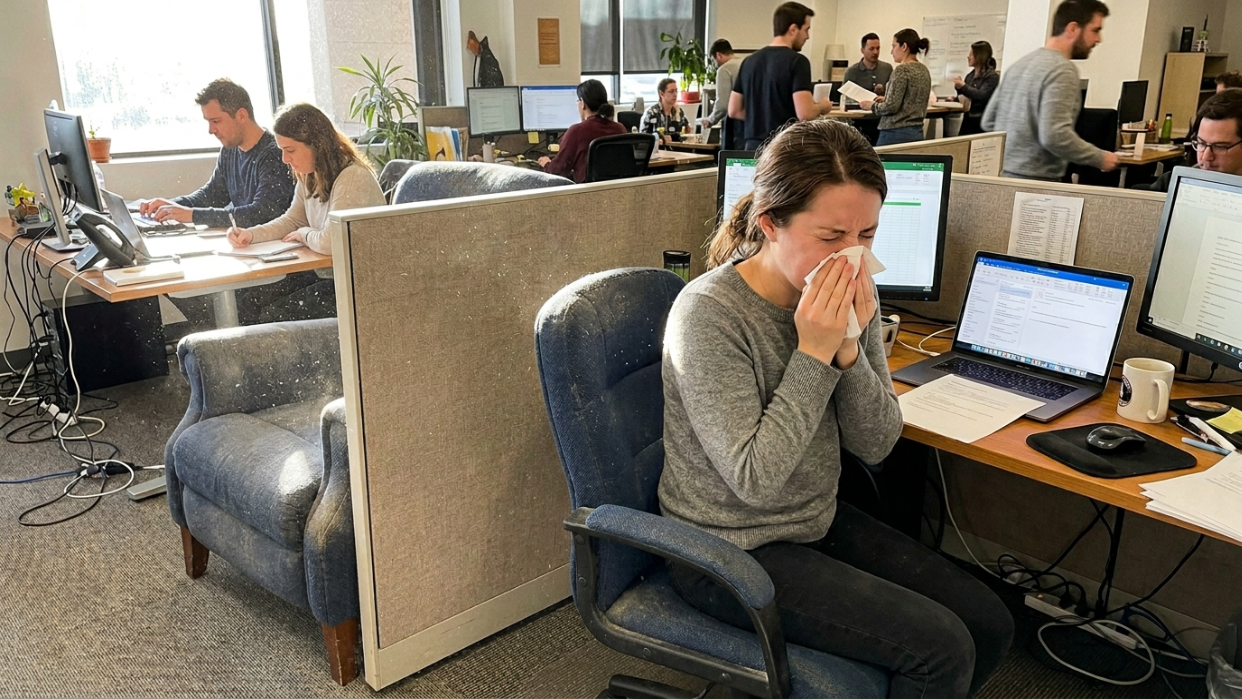
Office furniture doesn’t just collect visible dirt. Upholstered chairs, cubicle walls, and reception seating trap airborne contaminants that circulate throughout the workspace.
Over time, office furniture accumulates:
- Dust mites
- Skin cells
- Food particles
- Mold spores
- Pollen
- VOC residue
- Bacteria from hands and clothing
Soft surfaces act like air filters. Every time someone sits down, particles trapped inside cushions and fabric become airborne again.
This affects:
- Allergy sufferers
- Asthma sensitivity
- Workplace odors
- HVAC efficiency
- Employee comfort and concentration
Steam cleaning office furniture helps reduce these contaminants without introducing chemical residues that may worsen indoor air quality.
A regular upholstery steam cleaning schedule is especially important in open offices, medical offices, call centers, schools, coworking spaces, and offices with shared seating.
Why High Touch Upholstered Areas Deserve Extra Attention
Not every square inch of office furniture gets equally dirty. The spots people touch most often concentrate the highest levels of bacteria, body oil, and grime. Armrests on task chairs are a perfect example. People grip them dozens of times a day when sitting down, standing up, or shifting position. Headrests on executive chairs absorb hair oils and sweat. The front edge of a seat cushion, where thighs press and hands occasionally brace, collects far more soil than the center of the backrest.
Practitioners on Reddit’s cleaning communities frequently note that armrests and headrests are the first areas to show visible discoloration, and the last areas most people think to clean. One office manager shared that after steam cleaning only the seat cushions for a year, switching to a protocol that included armrests and headrests made a dramatic difference in how long chairs stayed looking fresh.
When steam cleaning office furniture, build your workflow around these high touch zones:
- Armrests: Steam slowly in overlapping passes, then blot. Fabric armrests absorb more body oil than any other chair surface.
- Headrests: Pre treat with a degreasing spotter before steaming. Hair product residue builds up fast.
- Seat front edges: This is where most body weight shifts. Focus extra steam time here.
- Adjustment levers and tilt knobs: Use a detail nozzle or small brush to clean the mechanisms people grab with oily hands.
Focusing on these areas first, rather than treating every surface equally, produces better results in less time. It also extends the useful life of the upholstery, because the spots that wear out fastest are the spots that get the dirtiest.
The Safety Gate: Upholstery Cleaning Codes You Must Check First
Before you point a steam nozzle at anything, flip the furniture over or check underneath for a cleaning code tag. This single step prevents the most common (and expensive) mistake in office furniture care.
- W (Water): Safe for steam cleaning and water based solutions.
- WS (Water/Solvent): Safe for steam cleaning or solvent based cleaning.
- S (Solvent Only): Never use water or steam. Solvent cleaning only.
- X (No Cleaning): Vacuum only. No liquid, no steam, no solvent.
Office furniture professionals at BTOD.com warn that using the wrong method, especially water on an S coded fabric, “can cause permanent damage.” This applies to steam too. S coded upholstery exposed to steam can shrink, watermark, or delaminate. Every furniture type discussed below assumes you’ve confirmed a W or WS code first.
True Steam vs. Hot Water Extraction: A Critical Distinction
Here’s something that confuses even experienced facility managers. “Steam cleaning” in the cleaning industry often doesn’t mean actual steam.
Stanley Steemer, one of the largest cleaning companies in the country, openly states: “We do not actually steam clean carpet. At Stanley Steemer, we use a process called hot water extraction, often referred to as steam cleaning because of the steam you see.” This naming confusion runs through the entire industry.
The differences matter:
| True Dry Vapor Steam | Hot Water Extraction | |
|---|---|---|
| Temperature | 200°F+ (water converted to gas) | 150 to 200°F (hot water, not vapor) |
| Moisture Level | Low (5 to 6% water content) | High (saturates fabric) |
| Best For | Sanitization, odor removal, allergen reduction | Deep stain removal, heavily soiled fabric |
| Drying Time | 1 to 4 hours | 6 to 24 hours |
| Risk | Minimal if PSI is controlled | Over wetting, mold growth, rust on metal frames |
Practitioners on Reddit’s r/CleaningTips community consistently report that steam alone excels at sanitization and odor removal but won’t pull out set in coffee or wine stains. The consensus: pre treat stains with an appropriate spotter before steaming. Many businesses benefit from having both capabilities, using true dry vapor steam for regular maintenance and calling in hot water extraction for annual deep cleans.
For a deeper comparison of these methods, see this guide on steamers vs. carpet extractors.
At a Glance: Steam Cleaning Office Furniture by Type
| Office Furniture Type | Steam Safe? | Recommended PSI | Cleaning Frequency | Key Attachment | Drying Time |
|---|---|---|---|---|---|
| Upholstered Task Chairs | Yes (W/WS only) | 45 to 65 PSI | Quarterly | Upholstery nozzle | 4 to 6 hours |
| Waiting Room/Lobby Seating | Yes (W/WS only) | 65 to 90 PSI | Monthly (spot), Quarterly (full) | Wide upholstery head | 4 to 8 hours |
| Conference Room Chairs | Depends on material | 45 to 65 PSI | Quarterly | Upholstery nozzle or cloth | 2 to 6 hours |
| Reception Couches & Sofas | Yes (W/WS only) | 45 to 65 PSI | Quarterly | Upholstery nozzle | 6 to 8 hours |
| Cubicle Partition Walls | Yes (most are W) | 40 to 55 PSI | Semi annually | Detail nozzle | 2 to 4 hours |
| Executive Leather Chairs | Yes (finished leather only) | 40 to 55 PSI | Semi annually | Cloth wrapped nozzle | 1 to 2 hours |
| Desks, Tables & File Cabinets | Yes | Any | Weekly (spot), Monthly (full) | Small jet nozzle | Minutes |
| Breakroom & Cafeteria Seating | Yes (W/WS only) | 65 to 90 PSI | Weekly (spot), Monthly (full) | Upholstery nozzle | 4 to 6 hours |
Now let’s walk through each type with specific technique, common mistakes, and equipment guidance.
1. Upholstered Task Chairs (Fabric)
Best for starting with: The most used furniture in any office and the highest priority target for steam cleaning.
Task chairs are where employees spend 6 to 10 hours daily. Body oils, sweat, skin cells, coffee drips, and lunch crumbs accumulate in the fabric weave. Research confirms these chairs rank as the second biggest germ hotspot in the office, right after phones.
How to Steam Clean Task Chairs
- Check the code. Most standard office task chairs carry a W or WS label. If yours says S or X, stop here.
- Vacuum thoroughly. Use an upholstery attachment to remove loose debris from the seat, back, and armrests. This step prevents you from pushing surface dirt deeper into the fabric.
- Pre treat stains. Apply an appropriate fabric spotter to visible stains and let it dwell for 5 to 10 minutes. Reddit users in cleaning communities consistently emphasize that skipping this step is why people complain steam “doesn’t work” on stains.
- Work the seams and crevices first. Switch to a crevice tool or small brush attachment and run along every seam, piping line, and tuck point on the chair. These tight areas trap crumbs, hair, and dead skin that a flat upholstery nozzle can’t reach. Ignoring them means the dirtiest parts of the chair stay dirty.
- Steam in overlapping passes. Using an upholstery nozzle at 45 to 65 PSI, work across the fabric in slow, overlapping strokes. Start at the top of the backrest and work down to the seat. Spend extra time on high touch zones like armrests and the seat front edge.
- Blot excess moisture. Press a clean microfiber cloth into the fabric after each section.
- Air dry completely. Position the chair near airflow (open window or fan) and allow 4 to 6 hours before use.
Watch Out For
- Mesh chairs: These need a different approach. Steam passes through mesh rather than cleaning the surface. Use a damp microfiber cloth wrapped around the nozzle and dab rather than scrub. Never apply high pressure directly to mesh.
- Over wetting: Soaking a fabric chair can cause the metal mechanism underneath to rust and the foam cushion to grow mold. Controlled dry vapor from a commercial steamer avoids this problem.
- Frequency: Quarterly for chairs used daily. Semi annually for guest or secondary workstation chairs.
Understanding PSI settings for commercial steamers helps you dial in the right pressure for fabric weight.
2. Waiting Room and Lobby Seating
Best for: Client facing areas where appearance and hygiene both carry business consequences.
Lobby furniture sees a parade of strangers daily. Unlike employee chairs that build up one person’s body chemistry, waiting room seats accumulate bacteria from dozens of different people, including visitors who may be sick (it’s a waiting room, after all). These seats are also the first thing clients notice about your business.
How to Steam Clean Lobby Seating
The process mirrors task chairs, with a few key differences:
- Higher PSI tolerance. Waiting room furniture typically uses heavier commercial grade upholstery rated for high traffic. You can work at 65 to 90 PSI for deeper penetration.
- Wider cleaning heads. Use a broad upholstery attachment to cover large seat surfaces efficiently, especially if you’re cleaning a row of connected chairs.
- Crevice work between connected seats. Ganged lobby chairs have seams and joints between each seat unit. Switch to a crevice tool or stiff bristle brush attachment to clean between these connection points, where spilled drinks and crumbs collect out of sight.
- Apply fabric protectant after cleaning. A spray on fabric guard creates a barrier against future stains. This is especially worthwhile for client facing furniture where appearance directly affects perception.
Watch Out For
- Vinyl covered waiting room chairs don’t need steam extraction, just a wipe down with the steam nozzle and a microfiber cloth.
- Schedule cleanings for after hours. These areas need to be dry before the next business day.
- Monthly spot steam high traffic seats. Full steam cleaning quarterly.
3. Conference Room Chairs
Best for: Multi user furniture with high exposure to food and beverage spills.
Conference chairs get shared by multiple people daily. They endure coffee, pastry crumbs, and the occasional lunch meeting disaster. The cleaning approach depends heavily on the chair material.
Material Specific Approach
- Fabric conference chairs (W/WS): Follow the same method as task chairs. Pay extra attention to armrests, where hands grip during long meetings.
- Vinyl or faux leather: Wipe with a steam nozzle held 4 to 6 inches from the surface, then immediately wipe dry with a microfiber cloth. No extraction needed.
- Bonded leather: Do not steam clean. Bonded leather is made from leather scraps glued to a fabric backing. Steam causes the layers to delaminate and peel. This is one of the most common and costly mistakes in steam cleaning office furniture.
Watch Out For
- Stacking conference chairs should be separated before cleaning. Stacked wet chairs trap moisture between surfaces.
- Rolling casters collect hair and debris. Steam the caster housing while you have the equipment out. A crevice tool works well here, directing a focused stream of vapor into the tight wheel housing where hair wraps around the axle.
- Frequency: Quarterly, or monthly if your conference room doubles as a lunch space.
4. Reception Couches and Sofas
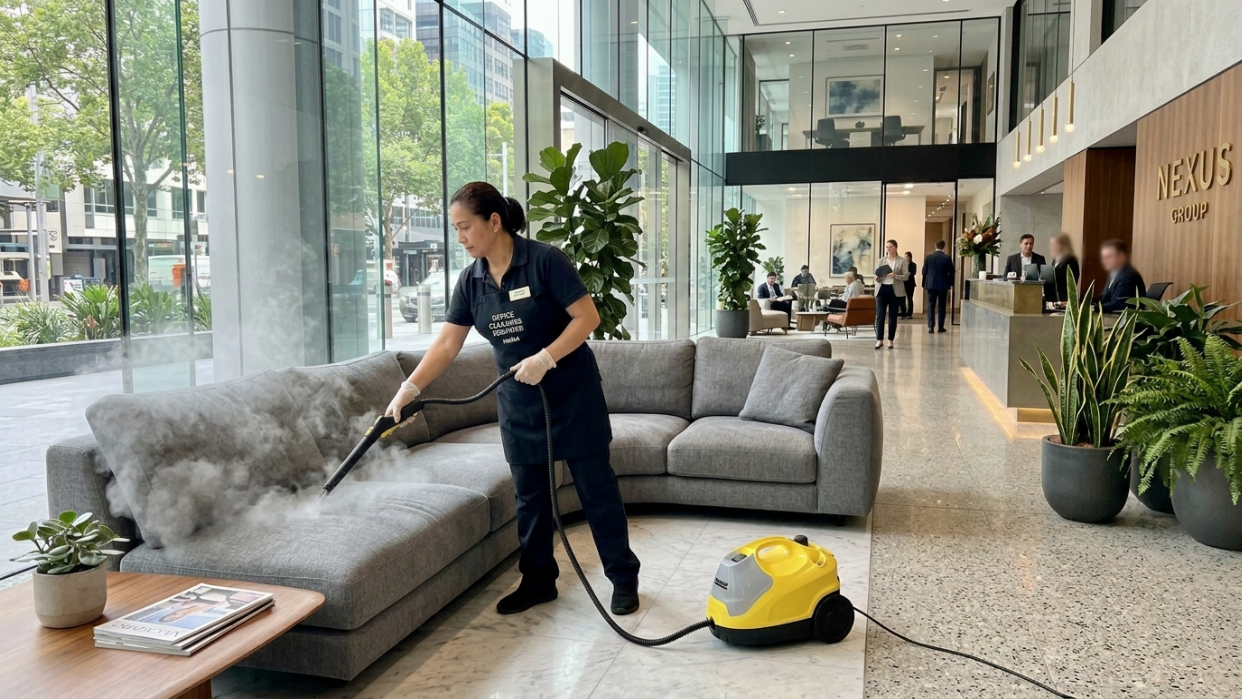
Best for: High value furniture pieces that need careful, controlled cleaning to protect the investment.
Reception sofas represent some of the most expensive furniture in an office. They’re also substantial pieces with thick foam cores, deep cushions, and potentially delicate fabric. This combination makes them the furniture type most vulnerable to damage from improper cleaning.
How to Steam Clean Reception Sofas
- Remove cushions if possible. Clean them separately for better access to all surfaces.
- Vacuum every crevice. Coins, pens, and food debris hide in sofa seams and accelerate wear. Use a crevice attachment to get into the deep channels between the seat base and backrest, along piping, and around decorative tufting or buttons. These tight spots are magnets for allergens and crumbs that a standard vacuum head misses.
- Pre treat visible stains with an appropriate spotter.
- Use controlled dry vapor at 45 to 65 PSI. The critical difference here is moisture control. A true dry vapor steamer produces only about 5% water content, which prevents foam saturation. Hot water extraction on a thick sofa cushion can leave moisture trapped inside for days, creating a mold risk.
- Work one section at a time. Steam a small area, blot, move on. Concentrate on the high touch zones: the armrest tops, the front cushion edges where people sit down, and any headrest areas.
- Plan for drying time. Sofas take 6 to 8 hours to dry fully. Schedule cleanings for Friday afternoon or weekends.
Watch Out For
- Professional steam cleaning is preferred for genuinely high value pieces (designer reception furniture, custom upholstery). The ROI calculation favors protecting a $3,000 sofa with proper equipment over risking it with a consumer grade steamer.
- Never flip cushions to “speed dry.” This traps moisture against the sofa frame.
For businesses doing regular upholstery work, the commercial upholstery steamer guide covers equipment selection in detail.
5. Cubicle Partition Walls
Best for: The most overlooked item in any office cleaning protocol.
Fabric wrapped cubicle panels act as giant dust and allergen traps. They’re rarely cleaned because they don’t look dirty in the way a stained chair does. But run your hand across a cubicle wall that hasn’t been cleaned in six months and you’ll feel the grime.
How to Steam Clean Cubicle Walls
- Hold the steamer 4 to 6 inches from the surface. Direct contact at high pressure can warp the fabric or loosen it from the panel frame.
- Work in vertical, overlapping strokes from top to bottom.
- Use low PSI (40 to 55). Cubicle fabric is stretched over a rigid panel, and excessive pressure pushes moisture into the core material where it can’t dry.
- Use a brush attachment along the bottom edge and seams. The lower 12 inches of cubicle walls collect the most kicked up dirt and scuff marks. A stiff bristle brush attachment loosens embedded grime before the steam lifts it away.
- Wipe with a microfiber cloth immediately after each pass.
Watch Out For
- Test a hidden spot first. Some cubicle fabrics are adhesive bonded and can bubble under steam.
- Don’t forget the top rail. The horizontal surface at the top of each panel collects dust that falls onto workers below.
- Frequency: Semi annually is sufficient for most offices. Quarterly if the office is in a high pollen or high dust environment.
6. Executive Leather Chairs
Best for: Expensive leather furniture that needs sanitization without chemical exposure.
Genuine leather responds well to steam cleaning, but only under specific conditions. Steam sanitizes the surface, opens the leather pores, and removes body oils that accumulate on headrests and armrests. The key is what you do afterward.
How to Steam Clean Leather Office Chairs
- Confirm the leather type. Steam only finished (pigmented) leather. Never steam suede, nubuck, or aniline leather. These unfinished leathers absorb moisture and stain permanently.
- Check the cleaning code. If it says S, use a leather specific solvent cleaner instead.
- Wrap the nozzle in a microfiber cloth. This prevents direct concentrated steam from hitting one spot too long.
- Work in quick, sweeping motions at 40 to 55 PSI. Don’t linger on any area. Focus your passes on the high touch zones: armrest tops, headrest, and the seat front edge where body oils accumulate fastest.
- Clean seams with a detail brush. Leather chair seams trap body oils and dirt that create dark lines over time. A small brush attachment directs steam precisely along stitching without oversaturating the surrounding leather.
- Apply leather conditioner within 24 hours. Steam opens the pores and strips some natural oils. Conditioning replenishes them and prevents cracking.
Watch Out For
- Bonded leather chairs (common in mid range office furniture) should not be steamed. If the tag says “bonded leather” or “leather match,” treat it as faux leather and wipe clean instead.
- Color transfer risk exists on dyed leather. Test a hidden area first.
- Frequency: Semi annually. Wipe leather chairs with a damp cloth weekly for maintenance.
For guidance on steaming delicate materials at controlled temperatures, this technique guide covers the principles.
7. Hard Surface Office Furniture (Desks, Laminate Tables, File Cabinets)
Best for: Quick sanitization of bacteria laden surfaces without chemical residue.
Hard surfaces are the simplest furniture to steam clean. Desks, conference tables, laminate shelving, and metal file cabinets all respond well to a quick hit of steam followed by a microfiber wipe. No extraction is needed. No drying time beyond a minute or two.
How to Steam Clean Hard Surfaces
- Use a small jet nozzle or detail attachment.
- Quick pass, immediate wipe. Steam the surface in one direction, then wipe dry with a clean microfiber cloth.
- Focus on high touch zones: keyboard trays, drawer pulls, phone cradles, mouse pads, armrest tops.
- Use a crevice tool for keyboard trays and drawer edges. The tracks on keyboard trays, the lip around drawer openings, and the gap where a desk meets a modesty panel all collect grime that a flat pass misses. A crevice tool pushes steam into these narrow spaces and loosens buildup that a wipe alone won’t touch.
Watch Out For
- Avoid prolonged steam on veneer or particle board. These materials can swell if saturated. Quick passes are fine; holding the nozzle in one spot is not.
- Skip untreated wood. Raw or unfinished wood surfaces absorb steam like a sponge.
- Don’t steam electronics. Obvious, but worth stating. Keep the nozzle away from monitors, keyboards, and power strips.
A portable flash steamer is ideal for this type of work. The Hoffman GEM III portable steamer is a non pressurized unit that works well for spot sanitization in retail and office environments without requiring boiler permits.
8. Breakroom and Cafeteria Seating
Best for: High contamination zones where food spillage is constant.
Breakroom chairs live hard lives. They endure ketchup, soup splashes, soda spills, and whatever leftovers didn’t make it to someone’s mouth. These chairs need the most aggressive and frequent cleaning schedule of any office furniture type.
How to Steam Clean Breakroom Seating
- Use commercial grade equipment. If you’re cleaning 20 to 40 breakroom chairs, you need a steamer with enough tank capacity and continuous duty capability to handle the volume without constant refilling.
- Pre treat food stains aggressively. Protein based stains (milk, meat drippings) set when heated, so blot and apply an enzyme based spotter before steaming.
- Steam at 65 to 90 PSI for heavier commercial upholstery. Breakroom furniture is typically built for durability and can handle more pressure than office task chairs.
- Clean chair legs and bases too. Food debris collects at the floor level. A crevice tool is the fastest way to blast dried food and sticky residue from the joints where legs meet the seat frame.
- Hit the underside of armrests. People grip breakroom chair armrests with food on their fingers. The underside (where fingers curl) is the part nobody sees and nobody cleans, yet it’s often the grimiest surface on the entire chair.
Watch Out For
- Plastic or molded chairs need only a steam wipe. Don’t overthink it.
- Fabric breakroom chairs are often the worst maintained furniture in the office. If they’re beyond saving, steam cleaning won’t resurrect them. Sometimes replacement is the honest answer.
- Frequency: Weekly spot steaming of visible stains. Monthly full treatment. These chairs get dirtier faster than anything else in the office.
Using Crevice Tools and Brush Attachments Effectively
Most of the grime hiding in office furniture isn’t on flat, open surfaces. It’s wedged into seams, tucked under piping, packed around button tufts, and caked into the channel where an armrest meets the chair back. A standard upholstery nozzle glides right over these areas without making contact.
This is why crevice tools and brush attachments matter. They’re not optional accessories; they’re essential for thorough results.
When to Use a Crevice Tool
A crevice tool concentrates steam into a narrow, focused stream. Use it for:
- Seams and piping on chair cushions
- Gaps between connected lobby chairs
- Keyboard tray tracks and drawer edges on desks
- Caster housings on rolling chairs
- The junction where armrests meet the seat or backrest
- Tuck points on tufted sofas
When to Use a Brush Attachment
A brush attachment (usually a small round head with nylon or natural bristles) adds physical agitation to the steam. This combination loosens embedded dirt that steam alone can’t dislodge. Use it for:
- Heavily soiled seams on breakroom chairs
- The bottom edge of cubicle panels where scuff marks accumulate
- Leather chair stitching that has darkened from trapped body oils
- Textured fabric weaves that hold onto particulate matter
One upholstery professional in a YouTube walkthrough demonstrated that spending just 30 extra seconds per chair working seams with a crevice tool cut the number of repeat cleanings needed in half. The logic is straightforward: if you leave the dirtiest spots untouched, the surrounding fabric re soils faster as trapped grime migrates outward.
For a breakdown of common upholstery steaming mistakes including skipping crevice work, this guide is worth reading.
Choosing the Right Equipment for Steam Cleaning Office Furniture
Not every steamer suits every job. The right equipment depends on how many pieces you’re cleaning and how often.
| Equipment Class | Price Range | PSI | Tank Capacity | Best For |
|---|---|---|---|---|
| Portable Flash Steamer | ~$995 | Non pressurized | Flash fill | Spot jobs, hard surfaces, small offices |
| Small Shop Boiler | ~$1,199 | 40 PSI | 1 gallon | Light duty office cleaning, small businesses |
| Pro Boiler (2 gallon) | ~$1,999 to $2,599 | Up to 70 to 90 PSI | 2 gallons | Multi chair sessions, upholstery businesses |
| Large Capacity Boiler | ~$4,495 to $7,895 | Up to 70 to 90 PSI | 6 gallons | Facility wide cleaning, commercial services |
For office managers doing periodic in house cleaning, a portable or small boiler handles most needs. Upholstery businesses and cleaning companies serving multiple clients need continuous duty capability and higher PSI.
Businesses considering their first commercial steamer should understand the difference between flash steamers and boiler systems before buying.
→ Ready to compare specific models? See the JEL3 commercial steamer, the most popular Hoffman boiler for upholstery and furniture work.
Office Furniture Cleaning Schedule Template
Consistency matters more than intensity. A regular schedule prevents buildup from reaching the point where you need expensive professional intervention.
| Frequency | Task |
|---|---|
| Daily | Wipe hard surfaces (desks, tables, door handles) with microfiber |
| Weekly | Vacuum all upholstered furniture; spot steam breakroom chairs and high touch armrests |
| Monthly | Spot steam high traffic chairs and breakroom seating; full steam of hard surfaces; crevice tool work on seams |
| Quarterly | Full steam cleaning of all upholstered task chairs, conference chairs, and lobby seating |
| Semi Annually | Steam clean cubicle partition walls, leather chairs, and low use guest seating |
| Annually | Professional deep clean with hot water extraction for heavily soiled fabric furniture |
This schedule aligns with industry recommendations that suggest monthly furniture cleaning for maintenance, quarterly deep steaming, and annual professional extraction for heavily used upholstery.
Should Businesses Buy or Rent Steam Cleaning Equipment?
For businesses cleaning office furniture more than 3 to 4 times per year, purchasing commercial steam equipment is usually more cost effective than renting or outsourcing.
When Renting Makes Sense
Renting may work for:
- One time deep cleaning
- Small offices under 10 chairs
- Occasional spill recovery
- Businesses testing steam cleaning before buying equipment
When Buying Makes Sense
Buying commercial steam equipment is better for:
- Offices with 20+ chairs
- Janitorial companies
- Facility management teams
- Schools and medical offices
- Businesses cleaning furniture quarterly
Cost Comparison
| Option | Estimated Annual Cost | Best For |
|---|---|---|
| Professional outsourcing | $2,000 to $6,000 | Hands off maintenance |
| Equipment rental | $300 to $1,200 | Occasional cleaning |
| Commercial steamer purchase | $1,200 to $2,600 upfront | Long term savings |
Most offices recover the cost of a commercial steam cleaner within the first year compared to quarterly outsourcing. For a detailed financial breakdown, the ROI calculator guide walks through exact payback timelines.
The Business Case: Steam Cleaning vs. Outsourcing
A commercial steam cleaner pays for itself faster than most office managers expect. A single professional upholstery cleaning visit for a mid sized office (30 to 50 chairs plus lobby furniture) typically costs $500 to $1,500. Quarterly service runs $2,000 to $6,000 annually.
A commercial steamer in the $1,200 to $2,600 range, combined with staff training, replaces the ongoing outsourcing cost within the first year. Beyond cost savings, in house equipment lets you address spills and stains immediately rather than waiting for the next scheduled service visit.
There’s also the productivity angle. Illness related absenteeism costs U.S. employers over $225 billion annually. A cleaner office directly reduces sick days, and steam cleaning office furniture is one of the most effective ways to sanitize the surfaces people touch most.
Common Steam Cleaning Mistakes That Damage Office Furniture
Many office furniture problems happen because steam is used incorrectly rather than because steam itself is unsafe.
Using Too Much Moisture
Over wetting upholstery can lead to mold growth, foam breakdown, rusted chair mechanisms, and long drying times. Dry vapor steam systems reduce this risk by using very low water content.
Ignoring Upholstery Codes
Steam should never be used on S code fabrics, X code fabrics, bonded leather, untreated suede, or aniline leather. Always verify the cleaning tag before steaming.
Using Excessive PSI
High pressure can stretch fabric, delaminate bonded materials, warp cubicle panels, and push stains deeper into foam. Most office upholstery cleans safely between 45 and 65 PSI.
Skipping Vacuuming
Steam is not a substitute for debris removal. Dirt left on the surface turns into mud when moisture is applied. Vacuum first, then steam.
Neglecting Seams and Crevices
Using only a wide upholstery nozzle and skipping tight areas leaves the dirtiest parts of the furniture untreated. Seams, piping, button tufts, and the gaps between cushions harbor the most concentrated grime. Always follow up with a crevice tool or brush attachment on these spots.
Frequently Asked Questions
Can you steam clean all types of office chairs?
No. Only chairs with W (water) or WS (water/solvent) cleaning codes are safe to steam. Chairs labeled S (solvent only) or X (vacuum only) should never be steamed. Bonded leather and unfinished leather (suede, nubuck, aniline) should also be kept away from steam. Always check the tag under the seat or on the chair frame before cleaning.
Does steam cleaning actually remove stains from office furniture?
Steam excels at sanitization, odor removal, and loosening surface grime, but it’s not a stain removal powerhouse on its own. Set in stains from coffee, ink, or food need pre treatment with an appropriate spotter before steaming. One practitioner in the cleaning community noted that steam “disinfects the material but does not lift stains. It actually may set stains in as it could shoot the dirt, oil, and stains farther into the fabric.” Pre treat first, then steam.
How long does office furniture take to dry after steam cleaning?
Drying time depends on the fabric weight, room humidity, and airflow. Most upholstered office chairs dry in 4 to 6 hours. Thick sofa cushions can take 6 to 8 hours. Hard surfaces dry in minutes. Position fans near cleaned furniture and, when possible, schedule steam cleaning for Friday afternoons so furniture dries over the weekend.
How often should you steam clean office furniture?
For high use task chairs: quarterly. For waiting room and lobby seating: monthly spot steaming with quarterly full cleaning. For breakroom chairs: weekly spot treatment, monthly full steam. Cubicle walls and leather chairs can go semi annually. These benchmarks shift upward if your office allows food at desks or has high foot traffic.
What PSI is safe for office upholstery?
Lower pressure between 45 and 65 PSI suits most delicate office fabrics. Heavier commercial upholstery (waiting room seating, breakroom chairs) handles 65 to 90 PSI. Cubicle wall panels should stay at the low end, 40 to 55 PSI, to prevent warping the stretched fabric. Never exceed 90 PSI on any upholstered office furniture.
Is steam cleaning better than chemical cleaning for office furniture?
Steam cleaning avoids chemical residue, which matters in enclosed office environments where employees sit on treated surfaces for hours. It kills bacteria and dust mites through heat alone. Chemical cleaners can be more effective on specific stains but leave residue that attracts new soil and may trigger allergic reactions. Many offices use steam for routine maintenance and reserve chemical treatments for specific stain incidents.
Can I use a consumer handheld steamer on office furniture?
Consumer steamers lack the PSI, tank capacity, and continuous duty capability needed for commercial office cleaning. They work in a pinch for a single chair, but they’ll overheat, run dry, or simply take too long if you’re cleaning a full office. Commercial equipment designed for sustained upholstery work is the practical choice for any business with more than a handful of chairs.
Do I need separate equipment for leather and fabric office chairs?
Not necessarily. The same commercial steamer handles both, but you’ll use different techniques and attachments. Fabric chairs get direct nozzle contact with an upholstery head. Leather chairs need a cloth wrapped nozzle with quicker passes and lower dwell time, followed by leather conditioner. The steamer itself doesn’t change; the approach does.
What attachments do I need for steam cleaning office furniture?
At minimum, you need an upholstery nozzle for flat surfaces, a crevice tool for seams and tight areas, and microfiber cloths for wiping. A brush attachment adds physical agitation for heavily soiled spots. For leather, wrap the nozzle in a cloth rather than using a separate attachment. Most commercial steamers ship with these accessories, or they’re available as add on bundles.
Is steam cleaning office furniture safe?
Steam cleaning is safe for most office furniture labeled W or WS. It sanitizes upholstery using heat rather than harsh chemicals. However, S code fabrics, bonded leather, and unfinished leather should not be steamed.
Does steam cleaning remove bacteria from office chairs?
Yes. Commercial steam systems operating above 200°F can kill many bacteria, dust mites, and allergens on office upholstery surfaces. Focusing on high touch areas like armrests and headrests maximizes the sanitization benefit.
Can steam damage office chairs?
Steam can damage office furniture if excessive pressure or moisture is used. Problems typically occur when users ignore upholstery codes or oversaturate cushions. Using controlled dry vapor at the recommended PSI range and blotting after each pass keeps the process safe.


