

TL;DR
Steam cleaning wheels brake dust works by using high-temperature dry vapor to break down the petroleum binders and static charge that lock iron particles onto wheel surfaces. It’s safe on powder-coated, clear-coated, and ceramic-coated wheels when the nozzle is kept moving. Steam excels as a maintenance cleaning method, though severely neglected wheels with months of baked-on contamination may still need a mild iron fallout remover as backup. For professional results, you need a commercial-grade steam unit producing at least 55 PSI and 240°F or higher at the nozzle tip.
Quick Answer: Does Steam Cleaning Remove Brake Dust?
Yes. Steam cleaning removes brake dust by using high-temperature dry vapor and pressure to soften petroleum binders, loosen iron particles, and lift contamination from wheel surfaces. For regularly maintained wheels, steam alone is usually enough. For heavily neglected wheels with embedded iron contamination, steam works best when combined with a dedicated iron fallout remover. Commercial steam cleaners producing at least 55 PSI and 240°F at the nozzle deliver the most effective results.
What Is Steam Cleaning Wheels for Brake Dust?
Steam cleaning wheels for brake dust is the process of using pressurized dry vapor (typically under 5% moisture content) to dissolve, loosen, and blow away the iron-rich residue that accumulates on wheels from normal braking. Unlike chemical wheel cleaners or acid-based iron removers, steam relies solely on heat and pressure to do the work. No detergents, no solvents, no chemical runoff.
The method has gained traction among professional detailers and automotive shops because it reaches tight spaces between multi-spoke rims that brushes and spray bottles struggle with. Practitioners on Reddit’s r/cardetailingtips confirm steam works especially well on intricate wheel designs, saving considerable time reaching every groove compared to traditional hand-scrubbing methods.
For shops considering commercial steam equipment for wheel cleaning and other applications, the upfront investment replaces ongoing chemical costs while expanding service capabilities.
What Is Brake Dust and Why Is It So Hard to Remove?
Composition
Brake dust is the gray-black or reddish residue that coats wheels after driving. It forms when brake pads press against cast iron rotors, grinding both surfaces and releasing fine particles. The composition depends on your brake pad type, but most modern semi-metallic pads contain steel fibers making up roughly 30% of the pad material. The resulting dust is a cocktail of iron particles, carbon, copper, brass, graphite, glass, rubber, and various binding agents.
Darker, almost black dust typically comes from high-performing non-metallic NAO compounds. Reddish-brown dust signals a higher concentration of iron particles from metallic and semi-metallic friction materials. Either way, the stuff is corrosive and persistent.
Why It Bonds So Stubbornly to Wheels
Two mechanisms make brake dust uniquely difficult to wash off.
First, heat. When brake pads generate friction, the metallic particles that wear off acquire a static electrical charge. This charge causes the fine dust to cling to wheel surfaces like iron filings to a magnet. Regular car wash soap, which works by dissolving grease and lifting dirt through surfactant action, has no ability to neutralize this electrostatic bond.
Second, petroleum adhesives. Brake pads contain petroleum-based binding agents that hold the pad materials together. When these binders burn off during braking, they create a thin, sticky film on the wheel surface that traps iron particles in place. Over time, this film hardens into a baked-on layer that resists conventional washing entirely.
The Damage It Causes
Leaving brake dust on wheels is not just a cosmetic problem. The metallic compounds are harsh corrosives that can tarnish painted or clear-coated wheels and permanently etch alloy surfaces. As brake dust mixes with rainwater and road salts, it can corrode wheel stud threads. In severe cases, iron contamination from brake dust can even interfere with wheel speed sensors that your anti-lock braking system depends on.
Understanding how commercial steamers work helps explain why heat and pressure succeed where soap fails.
Brake Dust Removal Methods Compared
Method | Fresh Dust | Embedded Dust | Chemical-Free | Water Usage | Wheel Safety |
|---|---|---|---|---|---|
Steam Cleaning | Excellent | Good | Yes | Very Low | Excellent |
Wheel Cleaner | Excellent | Good | No | Moderate | Varies by formula |
Iron Remover | Good | Excellent | No | Moderate | Generally safe |
Pressure Washer | Fair | Poor | Yes | High | Good |
Hand Washing | Fair | Poor | Yes | High | Excellent |
Why Steam Works on Brake Dust: The Science
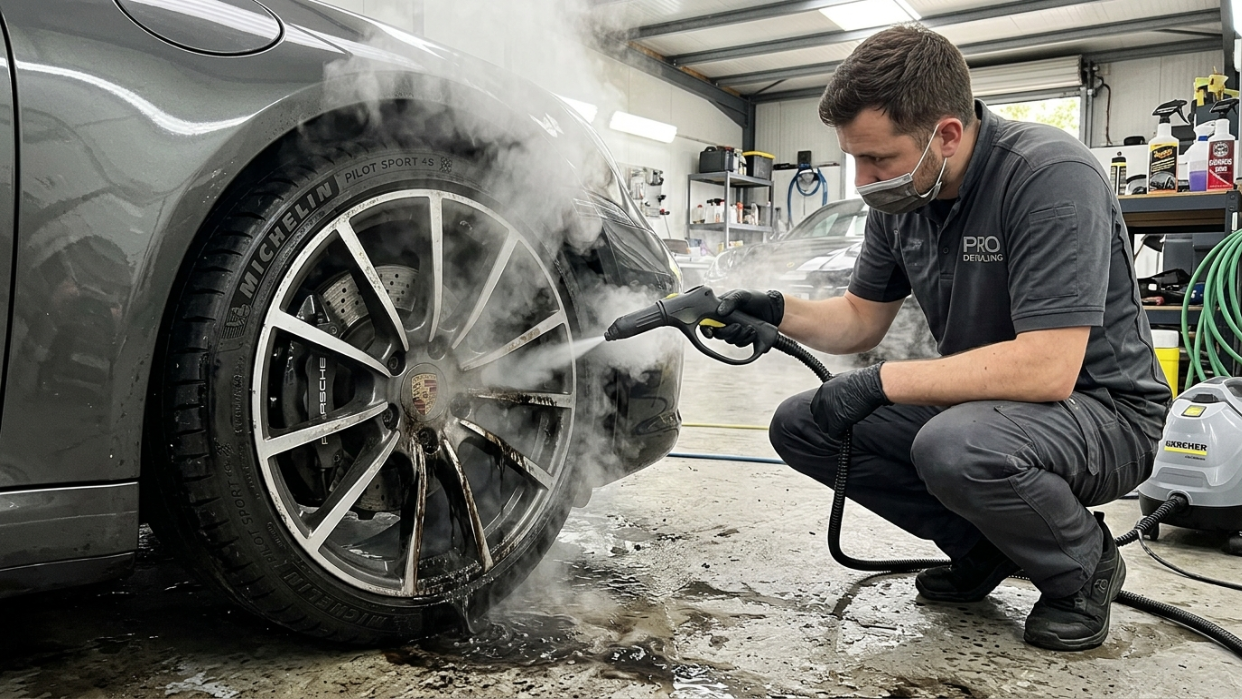
Steam cleaning wheels brake dust is effective because of three specific mechanisms working together.
1. Thermal Emulsification of Petroleum Binders
The petroleum adhesives that lock brake dust onto your wheels have a weakness: heat. Steam at 212°F and above softens and emulsifies these binders, turning a rigid, baked-on film into a loose slurry that separates from the wheel surface. This is the same principle that makes steam effective at removing road tar. Chemical wheel cleaners attack this layer through acid reactions. Steam does it through pure thermal energy.
2. Pressure Dislodges Embedded Particles
Once the binder film breaks down, the iron particles it was trapping need physical force to remove them. Commercial steam cleaners operating at 55 to 121 PSI provide that force, pushing loosened particles out of spoke crevices, lug nut recesses, and the tiny pores of textured wheel finishes. This combination of heat-then-force is what makes steam cleaning wheels brake dust more effective than either hot water or cold pressure alone.
3. Low Moisture Prevents Re-Deposition
Here is where dry vapor differs from a standard pressure washer. Commercial steam units produce vapor with under 5% moisture content. Particles are blown away rather than suspended in a puddle of standing water where they can settle back onto the wheel surface. Less water also means faster drying and reduced water spots on polished or chrome finishes.
The Specs That Matter
Not all steamers are created equal for this application. For professional-grade brake dust removal, the numbers that matter are:
Boiler temperature: 290 to 320°F
Nozzle tip temperature: 240 to 280°F
Operating pressure: 55 to 75 PSI minimum (up to 121 PSI for heavy-duty commercial work)
Moisture content: Under 5% (dry vapor)
Consumer-grade steamers in the $100 to $150 range, like the Karcher SC 2, get mixed reviews for brake dust specifically. Several experienced detailers on forums note that these units lack the sustained pressure needed for baked-on contamination. The difference between a flash steamer and a boiler matters significantly here. A pressurized boiler sustains output over continuous use, while flash steamers lose power as demand increases.
For shops exploring the right PSI for commercial steam applications, wheel cleaning falls squarely in the mid-to-high pressure range.
Steam Cleaning Different Wheel Types
Not all wheels react the same way to contamination or cleaning methods. Understanding wheel construction helps determine the safest steam cleaning approach.
Alloy Wheels
Alloy wheels are the most common application for steam cleaning. The combination of heat and pressure effectively removes brake dust from intricate spoke patterns without requiring aggressive scrubbing.
Chrome Wheels
Chrome wheels benefit from steam because the low moisture content reduces water spotting. Always wipe dry immediately after cleaning to maintain maximum shine.
Matte and Satin Wheels
Matte and satin finishes should never be polished aggressively. Steam provides a safe alternative because it loosens contamination without introducing abrasive polishing compounds.
Forged Wheels
Premium forged wheels often feature specialized coatings. Steam is generally safe, but maintaining nozzle movement and avoiding prolonged heat concentration is recommended.
Is Steam Safe on Wheels?
This is the question that comes up most in enthusiast forums, and the answer is reassuring.
Powder-Coated Wheels
Most factory wheels are powder coated, and powder coat cures at 350 to 400°F part metal temperature. Steam at atmospheric pressure maxes out around 212°F. As one Corvette Forum member put it, steam at its hottest isn’t going to exceed 212°F, and even if it’s paint, you’d have to deliberately hold the steamer in one spot for a while to do damage. The thermal safety margin is substantial.
Clear-Coated and Painted Wheels
Steam is safe on clear-coated wheels with one caveat: keep the nozzle moving. If there are existing chips or scratches in the coating, concentrated steam pressure could lift the coating at the damaged edge. A user on the Auto Geek forum advised testing in a hidden spot first and keeping the nozzle in constant motion, which is sound advice for any coated surface.
Ceramic-Coated Wheels
Steam is fully compatible with ceramic wheel coatings. In fact, Facebook detailing groups show users reporting excellent results steam cleaning ceramic-coated satin wheels as a monthly maintenance approach. The ceramic layer is chemically inert and heat-resistant, so steam neither degrades the coating nor reduces its hydrophobic properties.
The One Real Caution
Severely damaged finishes with exposed bare metal or deep chips deserve care. A VW owners club member noted that for wheels with nicks and cuts, a chemical iron remover might actually be less invasive than steam pressure directed at the damaged area. This is a fair point. If your wheels already have compromised coatings, gentle chemical treatment may be the safer first step before switching to steam for ongoing maintenance.
Steam Cleaning vs. Chemical Wheel Cleaners
The comparison between steam and chemical cleaning methods applies across industries, and wheel care is no exception. Here is how they stack up.
Factor | Steam Cleaning | Chemical Cleaners |
|---|---|---|
Chemical exposure | None (water only) | Acid or iron-remover formulas |
Fresh brake dust removal | Excellent | Excellent |
Baked-on brake dust removal | Good (may need follow-up) | Excellent with iron removers |
Multi-spoke accessibility | Superior, reaches tight spaces | Requires brushes and agitation |
Ongoing cost | Equipment upfront, minimal per-use | $15 to $30 per bottle, consumed regularly |
Finish safety | Safe when kept moving | Risk of stripping coatings if acidic |
Environmental impact | Minimal water, zero chemical runoff | Chemical disposal concerns |
Speed per wheel | 2 to 5 minutes (commercial unit) | Moderate (spray, dwell, agitate, rinse) |
When Steam Alone Is Enough
For weekly or biweekly maintenance on regularly driven vehicles, steam cleaning wheels brake dust handles the job completely. Fresh dust that hasn’t had time to bake on responds quickly to heat and pressure. This is where steam really shines as a standalone method.
When You Need Chemical Backup
If wheels have gone months without cleaning, or if you see a purple-bleeding reaction when you spray iron remover (indicating heavily embedded iron particles), steam alone won’t be sufficient. Regular washing with shampoo cannot fully remove embedded iron particles, and the same applies to steam. Iron that has bonded into the clear coat at a molecular level requires iron-reactive chemistry to dissolve.
The professional approach, used by detailers who shared their workflows on forums and Facebook groups, is to combine methods: steam first to remove the bulk of loose contamination, then a mild iron fallout remover for residual embedded particles, followed by an IPA wipe-down before applying ceramic coating or sealant.
Practical Tips for Steam Cleaning Wheels
Step-by-Step Process
Cool the wheels first. Never steam a hot wheel fresh from driving. The same thermal shock rule that applies to chemical cleaners applies here. Let wheels reach ambient temperature.
Work one wheel at a time. This keeps your process controlled and prevents loosened contamination from drying back onto the surface before you can wipe it away.
Start from the top. Gravity is your friend. Steam and loosened debris flow downward, so beginning at twelve o’clock and working around prevents re-contamination of already-cleaned areas.
Use a detail nozzle. A narrow attachment concentrates steam into spoke interiors, behind lug nuts, and into the barrel of the wheel where brake dust accumulates heaviest. This is where steam’s advantage over spray bottles becomes most obvious.
Keep the nozzle moving. No dwelling in one spot. Steady, overlapping passes maintain even heat distribution and prevent any risk to coatings.
Wipe with microfiber immediately. Follow the steam with a clean microfiber towel to capture loosened particles before they can re-settle. Some detailers use two towels, one damp for initial wipe-down and one dry for final buffing.
Apply protection. After cleaning, apply a wheel wax, sealant, or ceramic coating. This creates a barrier that makes future brake dust removal dramatically easier.
Equipment Considerations for Shops
Automotive detailing shops handling wheel cleaning as part of their service need equipment that can sustain output across multiple vehicles per day. Consumer-grade units overheat, lose pressure, and slow down your workflow. The difference between a pressurized and non-pressurized steamer determines whether you can clean four wheels in 15 minutes or spend an hour fighting inconsistent output.
Brake Pad Types and Dust Production
Not all brake dust is created equal, and the type of brake pads installed on a vehicle directly affects how much dust ends up on the wheels.
Semi-metallic pads are the most common OEM fitment. With steel fibers comprising up to 30% of the pad, they produce heavy, dark, iron-rich dust that sticks aggressively. These pads are the primary reason steam cleaning wheels brake dust has become such a popular topic.
Low-metallic NAO pads use less metal but still generate noticeable dust, often with a darker appearance from the organic compounds.
Ceramic pads produce significantly less dust, and what they do produce is lighter in color and easier to wash off. Switching to ceramic pads is arguably the single most effective way to reduce brake dust at the source, though they come at a higher price point and may feel different under braking.
For customers who ask about reducing wheel cleaning frequency, recommending ceramic brake pads alongside regular steam maintenance is practical advice that addresses the root cause.
Brake Dust Prevention After Steam Cleaning
Steam cleaning removes existing contamination, but prevention keeps wheels cleaner between sessions.
Ceramic Wheel Coatings
A ceramic coating creates a semi-permanent barrier that repels brake dust, road grime, and water. Dust still lands on the surface, but it sits on top of the coating rather than bonding to the wheel’s clear coat. This makes each subsequent cleaning faster and less aggressive. Professional-grade coatings can last one to three years depending on the product and conditions.
Regular Cleaning Schedule
The single biggest factor in brake dust damage is time. Fresh dust washes off easily. Dust that sits for weeks bakes on. Dust that sits for months embeds into the clear coat permanently. A weekly or biweekly steam cleaning schedule prevents the accumulation cycle entirely.
Brake Dust Shields
Aftermarket brake dust shields mount behind the wheel and deflect some dust away from the wheel face. They work, but they also reduce airflow around the brakes, which can increase brake temperatures. For daily drivers this trade-off is usually acceptable. For performance vehicles or track use, it’s worth considering carefully.
The Health and Environmental Case for Steam
There is a dimension to steam cleaning wheels brake dust that goes beyond cosmetics. Research published in the journal Metallomics found that brake dust accounts for roughly 20% of PM2.5 traffic pollution at roadside locations. Separate analysis found that only 7% of PM2.5 from traffic actually comes from tailpipe exhaust. The rest comes from tire wear, clutch wear, brake wear, and road dust re-suspension.
This matters for the cleaning process itself. Dry brushing wheels sends fine iron-rich particles airborne. Pressure washing creates contaminated runoff. Chemical cleaners add their own environmental burden.
Steam cleaning addresses all three concerns. The moisture content is too low to create significant runoff but high enough to capture particles rather than scatter them. There are no chemicals to dispose of. And steam reduces water usage by up to 95% compared to traditional hose-and-bucket methods.
For automotive shops managing equipment maintenance routines, steam cleaning’s minimal consumable requirements mean fewer supply orders and less hazardous waste handling.
Water Consumption Comparison
Cleaning Method | Average Water Usage Per Vehicle |
|---|---|
Garden Hose Washing | 80–140 gallons |
Pressure Washing | 20–40 gallons |
Commercial Steam Cleaning | 1–3 gallons |
Consumer vs. Commercial Steamers: A Critical Distinction
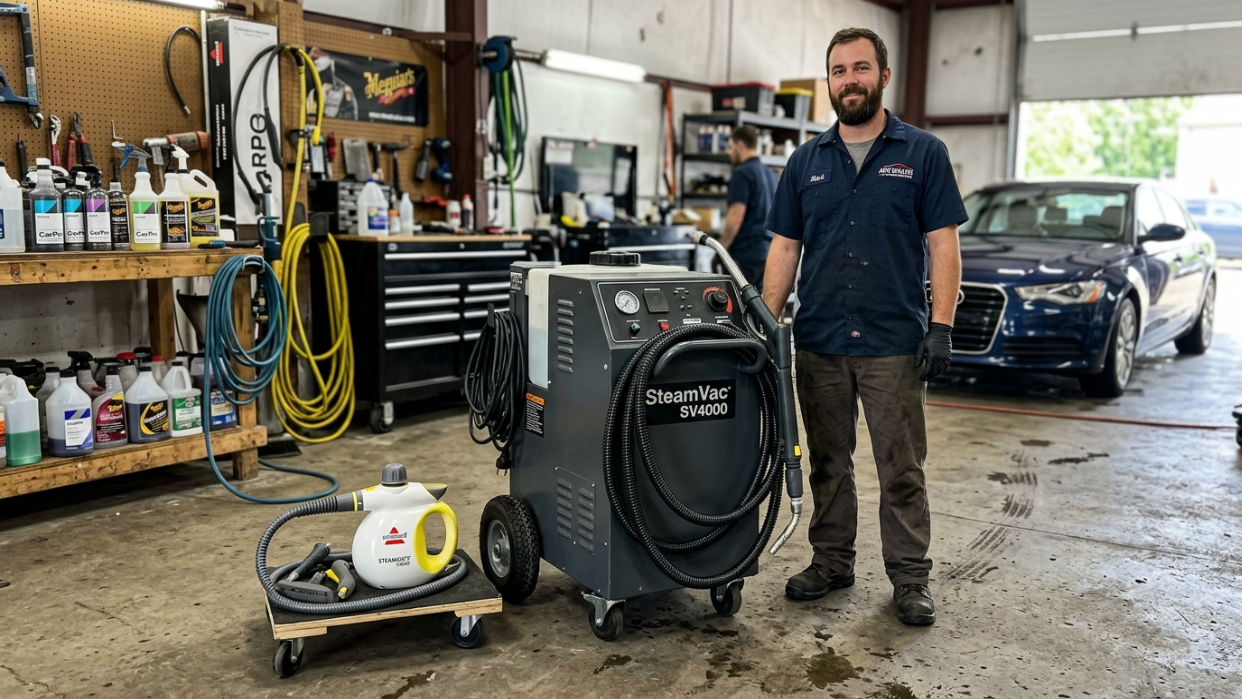
This is a point most ranking articles gloss over, but it matters enormously for anyone considering steam cleaning wheels brake dust as a regular service or serious maintenance practice.
Consumer steamers ($100 to $200) typically produce 30 to 45 PSI with boiler temperatures around 212°F. They work for light surface dust on smooth wheels. They struggle with baked-on contamination, complex spoke patterns, and sustained use across multiple wheels. Several forum users report disappointing results with these units on brake dust specifically.
Commercial steamers ($1,000+) sustain 55 to 90 PSI with boiler temperatures of 290 to 320°F and deliver 240 to 280°F at the nozzle. They produce genuinely dry vapor under 5% moisture. They handle continuous duty across a full day of vehicle work without losing output. One Auto Geek forum member who uses a commercial unit for underbody cleaning noted “nothing else will get it that clean.”
The investment gap is real, but so is the performance gap. A shop offering wheel cleaning services will burn through bottles of chemical cleaner at $15 to $30 each while a commercial steamer’s per-use cost is essentially just water and electricity.
Explore Hoffman Steam’s equipment lineup to compare models suited for automotive shop applications.
What to Look for in a Steam Cleaner for Wheel Cleaning
Whether you are a professional detailer or an enthusiast, several specifications determine how well a steam cleaner performs on brake dust.
Minimum Recommended Specifications
Specification | Recommended Minimum |
|---|---|
Boiler Temperature | 290°F |
Nozzle Temperature | 240°F |
Pressure | 55 PSI |
Water Tank Capacity | 1 Liter |
Moisture Content | Under 5% |
Continuous Refill | Preferred |
Features Worth Paying For
Continuous-fill boiler systems
Stainless steel construction
Adjustable pressure settings
Detail nozzle attachments
Long steam hose
Commercial-duty heating elements
Why Steam Cleaning Sometimes Fails to Remove Brake Dust
If steam cleaning is not delivering the expected results, one of these factors is usually responsible.
The Dust Has Become Embedded
Iron particles can bond into the wheel’s clear coat over time. Once embedded, heat and pressure alone may not fully remove contamination.
Steam Temperature Is Too Low
Consumer-grade machines often produce insufficient heat at the nozzle, reducing their ability to soften brake dust binders.
Pressure Output Is Inadequate
Low-pressure units may loosen contamination without generating enough force to evacuate particles from wheel crevices.
The Wheel Has Not Been Maintained
Steam performs best as a maintenance method rather than a restoration method. Years of accumulated brake dust often require a decontamination process before steam becomes effective for ongoing maintenance.
Frequently Asked Questions
Does steam cleaning actually remove brake dust completely?
Steam cleaning removes fresh and moderately accumulated brake dust effectively. For wheels maintained on a weekly or biweekly schedule, steam alone handles the job. However, if brake dust has been left for months and become chemically embedded in the clear coat, you may need a mild iron fallout remover in addition to steam. Think of steam as an excellent maintenance tool and a good first step for restoration, but not always a complete solution for severe neglect.
Will steam damage my alloy wheels?
No, under normal use. Powder coat cures at 350 to 400°F, and steam at atmospheric pressure tops out around 212°F. Clear-coated, painted, and ceramic-coated wheels are all safe as long as you keep the nozzle moving. The only real risk is directing concentrated steam pressure at areas where the coating is already chipped, which could lift the damaged edge further.
What PSI do I need to steam clean wheels effectively?
For light maintenance cleaning, 40 to 50 PSI can work. For baked-on brake dust and professional detailing results, aim for 55 to 75 PSI minimum. Some commercial units reach 121 PSI for heavy-duty wheel work. The temperature matters just as much as pressure, so look for units delivering at least 240°F at the nozzle tip.
Can I use a household steam cleaner on my car’s wheels?
You can, but results will be limited. Consumer-grade steamers under $200 typically lack the sustained pressure and temperature needed for stubborn brake dust. They work acceptably for light surface dust on smooth wheel designs. For multi-spoke wheels with heavy contamination, experienced detailers consistently recommend commercial-grade equipment.
How often should I steam clean my wheels?
Every one to two weeks is ideal for vehicles driven daily. This frequency prevents brake dust from baking on and becoming embedded. Combined with a ceramic wheel coating, biweekly steam cleaning keeps wheels looking nearly new with minimal effort per session.
Is steam cleaning wheels better for the environment than chemical cleaners?
Significantly. Steam uses up to 95% less water than traditional washing, produces zero chemical runoff, and doesn’t release acid-based or solvent-based compounds into storm drains. Given that brake dust itself contributes roughly 20% of roadside fine particle pollution, minimizing additional chemical exposure during cleaning is a meaningful environmental benefit.
Does steam work on all types of brake dust?
Steam works well on dust from all brake pad types, but results vary by severity. Dust from semi-metallic pads (high iron content, dark color) bonds more aggressively and may need higher temperatures and pressures. Dust from ceramic pads is lighter, less adhesive, and responds to steam very easily. The key variable is how long the dust has been sitting, not which pad produced it.
Can I combine steam cleaning with chemical iron removers?
Yes, and many professional detailers do exactly this. The recommended workflow is to steam first (removing the bulk of loose contamination), then apply a mild iron fallout remover to address any remaining embedded particles, followed by a rinse and protective coating. This combined approach gives the best results while minimizing chemical usage.


