

TL;DR
Steam is the safest way to remove wrinkles from delicate fabrics because it relaxes fibers without direct contact, preventing crush marks and scorching. Different delicate materials require different temperatures, distances, and techniques. Silk needs steam below 120°C at 1 to 2 inches of distance, cashmere responds best to low output steam on a medium setting, and velvet should only be steamed from the back to protect its pile. This steam delicate fabrics guide covers every major delicate fabric, the materials you should never steam, specialized techniques for tulle, wedding dresses, and veils, essential safety precautions, and the methods that separate a clean finish from a ruined garment.
Can You Steam Delicate Fabrics?
Yes. Most delicate fabrics can be safely steamed when you use the correct temperature, steam distance, and moisture level for the material.
Steam is generally safer than ironing for delicate fabrics because it removes wrinkles without direct contact pressure that can scorch, flatten, or shine sensitive fibers.
Here are the safest steaming settings for common delicate fabrics:
| Fabric | Max Temperature | Distance | Best Technique |
|---|---|---|---|
| Silk | 120°C / 248°F | 1 to 2 inches | Light downward passes |
| Cashmere | 120°C / 248°F | 2 to 3 inches | Hover steam, avoid stretching |
| Velvet | 130°C / 266°F | 2 inches | Steam from reverse side only |
| Chiffon | 110°C / 230°F | 4 to 6 inches | Quick sweeping motions |
| Satin | Low to medium | 1 to 2 inches | Steam inside out |
| Fine Wool | 150°C / 302°F | 2 to 3 inches | Use low steam output |
| Tulle | 110°C / 230°F | 6 to 8 inches | Gentle vertical passes |
Never steam leather, suede, vinyl, waxed fabrics, or adhesive bonded athletic wear because heat and moisture can cause permanent damage.
The safest approach for blended fabrics is to use the settings recommended for the most delicate fiber in the blend.
Why You Need a Dedicated Steam Delicate Fabrics Guide
Cotton and denim are forgiving. Crank up the heat, press firmly, and wrinkles disappear. Delicate fabrics punish that approach. Silk scorches at temperatures cotton barely notices. Velvet crushes flat under an iron’s weight. Chiffon warps if you hold a steamer too close for too long.
The difference between a flawless finish and a ruined garment often comes down to knowing three things: the right temperature, the right distance, and the right technique for each specific fabric. A proper steam delicate fabrics guide serves as a quick reference for anyone who works with fine materials, whether you run a boutique preparing garments for the floor, an alterations shop finishing customer pieces, a bridal salon prepping wedding dresses, or you simply own clothes worth protecting.
For commercial operators handling customer garments daily, the stakes are higher. A water spotted silk blouse or a crushed velvet blazer means a lost customer and a potential claim. Commercial equipment with adjustable pressure gives operators the fine control that delicate work demands.
Browse commercial steamer bundles built for clothing store and boutique environments.
What Makes a Fabric “Delicate”
Not every thin fabric is delicate, and not every delicate fabric is thin. Any useful steam delicate fabrics guide needs to distinguish between three categories, because understanding them changes how you approach steaming.
Fine natural fibers like silk, cashmere, and merino wool have thinner, softer filaments than everyday materials. They can shrink, stretch, or lose shape when exposed to excess heat or moisture.
Lightweight or open weaves like lace, chiffon, tulle, and organza are fragile because of their construction, not necessarily their fiber content. Even when made from a strong fiber, the airy weave can snag, tear, or distort under friction or pulling.
Sensitive dyes and finishes found on rayon, acetate, and many blended fabrics can fade, spot, or weaken when they encounter water, heat, or friction. A fabric might survive the steam temperature just fine but develop water marks from condensation droplets.
Decoding Care Label Symbols
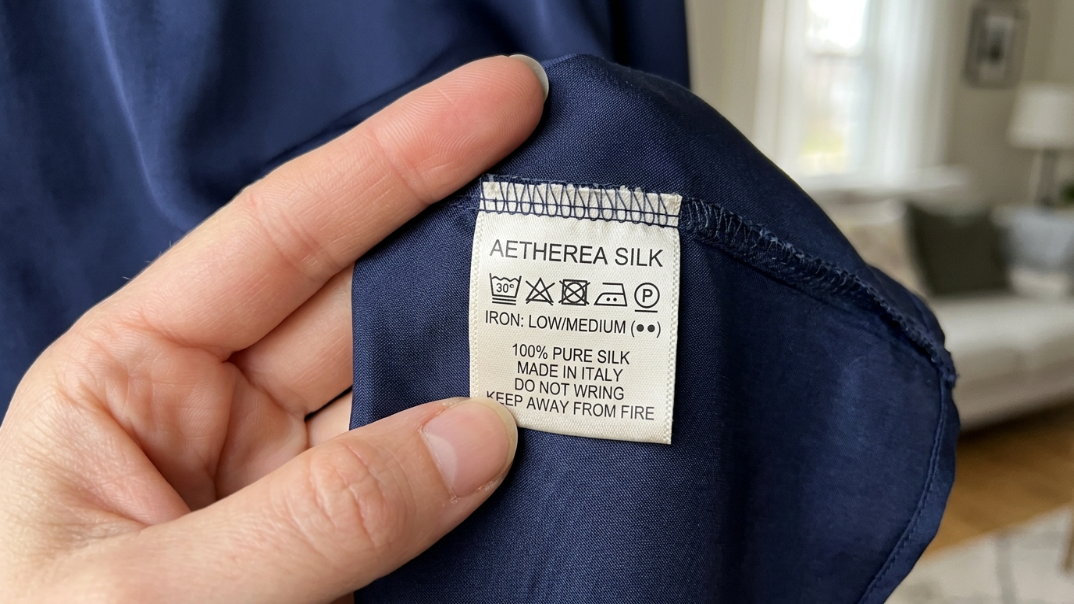
Before steaming any garment, check the care label. The iron symbol with dots tells you the maximum safe temperature:
- One dot = 110°C (230°F), suitable for synthetics like nylon and acetate
- Two dots = 150°C (302°F), suitable for wool and silk
- Three dots = 200°C (392°F), suitable for cotton and linen
If the label shows an iron with an X through it, do not steam or iron. If it shows an iron with lines crossed out beneath it, ironing is allowed but steam is not.
How Steam Works on Fabric Fibers
Steam relaxes the hydrogen bonds between polymer chains in textile fibers. As steam penetrates the fabric, fibers swell and return to their natural shape, releasing wrinkles without mechanical pressure. This is fundamentally different from ironing, which uses heat plus physical force to flatten fibers into place.
That distinction matters enormously for delicates. An iron’s hot soleplate crushes the raised pile on velvet, leaves shiny pressure marks on wool, and can scorch silk in seconds. Steam avoids all three problems because there is no direct surface contact.
Over 80% of textile care experts prefer steaming over ironing for pile fabrics like velvet, specifically because steam removes wrinkles without damaging texture. For anyone following this steam delicate fabrics guide, the core principle is simple: let the steam do the work, not contact pressure.
That said, ironing still has a place. Crisp creases on cotton dress shirts or sharp pleats in linen trousers require the direct pressure only an iron delivers. For delicates, steam wins almost every time.
For a deeper comparison of these two methods in a professional setting, see this steam iron vs. steam boiler guide for tailoring applications.
Preheat Your Steamer and Clear Residual Water
This step deserves its own section because skipping it causes more damage to delicate fabrics than almost any other mistake.
Every steamer, whether consumer handheld or commercial boiler, accumulates condensation in the hose and steam head between uses. When you turn the unit on and immediately point it at a silk blouse, you are not delivering steam. You are spitting cold, mineral laden water droplets directly onto the fabric. The result is visible water spots that may never come out.
The correct preheat process:
- Fill the tank with distilled water
- Turn the steamer on and let it reach full operating temperature (most units take 2 to 5 minutes; commercial boilers may take longer)
- Point the steam head away from all garments, into a sink or toward a towel
- Release steam for 10 to 15 seconds to flush any residual water from the hose and head
- Wait until the steam flows consistently and visibly dry before approaching any fabric
Practitioners on Reddit’s sewing communities frequently cite “steamer spitting” as the number one cause of ruined silk garments. The fix is always the same: patience during warm up. Several experienced users recommend keeping a dedicated hand towel near their steamer station for exactly this clearing step.
For commercial operators running steamers all day, the first garment of the morning is always the most vulnerable. Build the clearing step into your opening routine.
Steam the Lining First
This is a technique most home users never learn, but professionals treat it as standard practice.
Lined garments (blazers, suit jackets, structured dresses, and many formal pieces) should always be steamed starting from the lining side. There are two reasons for this.
First, the lining is typically made from a more durable synthetic like polyester or acetate, which gives you a buffer zone. Steam penetrating through the lining reaches the outer fabric at lower intensity, reducing the risk of water spots or shine marks on the visible surface.
Second, wrinkles in the lining can pull the outer fabric out of shape. By relaxing the lining first, the outer shell hangs more naturally, often requiring less direct steaming.
How to do it:
- Turn the garment inside out or open it so the lining faces you
- Steam the lining in slow, even passes from top to bottom
- Flip the garment right side out and address any remaining wrinkles on the outer shell
- Use a lower steam setting and greater distance when moving to the outer layer, especially if the outer fabric is silk, satin, or fine wool
This approach is especially important for preventing shine on dark wool suits and polyester blends. The lining absorbs the initial burst of moisture, protecting the outer fabric’s finish.
Best Steamer Settings by Fabric
Use this quick reference chart from our steam delicate fabrics guide if you need fast settings before steaming a garment.
| Fabric | Steam Safe? | Temperature | Distance | Steam Level |
|---|---|---|---|---|
| Silk | Yes | Low (120°C max) | 1 to 2 inches | Low |
| Cashmere | Yes | Low to medium | 2 to 3 inches | Low |
| Velvet | Yes | Low to medium | 2 inches | Low to medium |
| Chiffon | Yes | Low | 4 to 6 inches | Low |
| Satin | Yes | Low to medium | 1 to 2 inches | Low |
| Rayon | Yes | Low | 2 to 3 inches | Low |
| Tulle | Yes | Low | 6 to 8 inches | Minimal |
| Polyester | Yes | Medium | 2 to 3 inches | Medium |
| Nylon | Yes | Low | 3 to 4 inches | Low |
| Organza | Conditional | Very low | 4 to 6 inches | Minimal |
| Acetate | Usually no | Lowest only | Avoid direct steam | Minimal |
| Leather/Suede | No | N/A | N/A | N/A |
If you are unsure, always start at the lowest steam setting and test an inside seam first.
Fabric by Fabric Steam Glossary
This is the core of the steam delicate fabrics guide. Each entry covers whether you can steam the fabric, what settings to use, the right technique, and the pitfalls that cause damage. Entries are organized alphabetically for quick reference.
Acetate
Can you steam it? No, or with extreme caution only. Acetate is one of the most heat sensitive fibers in common use. It softens and melts at relatively low temperatures and reacts poorly to moisture.
If you must: Iron on reverse at the lowest setting with a pressing cloth. Steaming risks warping or melting the fiber. When in doubt, send acetate garments to a professional dry cleaner.
Cashmere and Fine Wool
Can you steam it? Yes, and it is the preferred professional method for refreshing cashmere between washes.
Recommended settings: Medium temperature mode with low steam output. Wool has reasonable heat resistance, but too much temperature or steam volume will cause the fabric to deform and lose elasticity.
Technique: Hold the steamer 2 to 3 inches from the surface. Steam in downward strokes. For knits, lay the garment flat and hover the steamer above it rather than pulling the fabric taut vertically.
Pitfalls: Blended cashmere requires extra care. Industry data from 2025 suggests that up to 30% of cashmere damage claims stemmed from improper steaming of blends, where one fiber in the blend tolerates heat that the other does not.
Practitioners on Quora with decades of knitting experience report that steam can actually restore ribbing at the waist and cuffs to its original springiness, making it a tool for refreshing shape rather than just removing wrinkles.
Chiffon
Can you steam it? Yes, on a gentle or low setting only.
Recommended settings: Low steam output, 6 to 8 inches of distance for sheer chiffon. Reduce distance to 3 to 4 inches for heavier chiffon blends.
Technique: Hang the garment freely and let gravity do part of the work. Do not pull or stretch the fabric, as chiffon’s open weave distorts easily. Steam in light, quick passes.
Pitfalls: Because chiffon is so sheer, water droplets from an improperly heated steamer show immediately and can leave marks. Always let your steamer reach full operating temperature before starting.
Cotton (Fine and Pima)
Can you steam it? Absolutely. Cotton handles generous steam and higher temperatures (up to 200°C for standard cotton).
Recommended settings: Fine pima cotton or cotton voile can tolerate full steam but benefits from moderate distance to avoid over wetting. Standard cotton can take direct steam contact.
Technique: For fine cotton blouses or dress shirts, steam from the inside out for the smoothest finish. Cotton responds well to steam while slightly damp.
Embellished and Beaded Fabrics
Can you steam it? Conditionally. The base fabric usually tolerates steam, but beads, sequins, adhesive backed embellishments, and embroidery can loosen, deform, or melt under direct steam.
Recommended settings: Low steam output. Always place a pressing cloth between the steamer and the embellished surface.
Technique: Steam from the reverse side whenever possible. If you must steam the face, maintain at least 3 inches of distance and keep the steamer moving continuously.
Pitfalls: Adhesive backed embellishments are the biggest risk. Heat softens the glue, and the embellishment can shift or detach entirely. This is particularly relevant for wedding dresses with beaded bodices.
Lace
Can you steam it? Yes, but with care. Delicate lace and embroidery can loosen or deform under steam if the settings are too aggressive.
Recommended settings: Low steam output, 3 to 4 inches of distance. Use a barrier cloth (a clean cotton muslin works well) between the steamer and the lace.
Technique: Support the lace from behind with your free hand or a padded surface. Never pull lace taut, as the open weave can distort permanently.
Linen
Can you steam it? Yes. Linen tolerates the highest heat of any natural fiber, up to 230°C (450°F).
Recommended settings: Full steam output. Linen responds best when steamed while slightly damp.
Technique: For a crisp finish, combine steam with light pressing. For a relaxed look, hang and steam freely. Linen wrinkles aggressively, so steam just before wearing or displaying.
Nylon
Can you steam it? Yes, at low heat only. Nylon can melt or warp at moderate temperatures.
Recommended settings: Lowest temperature setting, equivalent to the one dot care label symbol (110°C / 230°F). Keep steam output low.
Technique: Maintain 3 to 4 inches of distance. Steam in quick passes. Never let the steamer head contact nylon directly.
Organza
Can you steam it? Conditionally. Organza is sheer and heat sensitive, particularly silk organza.
Recommended settings: Minimal steam at maximum distance (4 to 6 inches). Polyester organza tolerates slightly more heat than silk organza.
Technique: Hang freely and steam in very light, sweeping motions. Test an inside seam first because organza varies significantly by blend.
Polyester
Can you steam it? Yes, at moderate temperature. Polyester can be safely steamed provided you do not exceed 110°C (230°F). Polyester begins to develop shine well below its melting point of roughly 250°C.
Recommended settings: Medium temperature, low to medium steam output. Polyester wrinkles less than natural fibers, so lighter treatment is usually sufficient.
Technique: Steam from the reverse side to prevent shine marks. Keep the steamer moving.
Pitfalls: Avoid daily steaming of polyester garments. Repeated heat exposure causes long term fiber degradation even at safe temperatures.
Rayon and Viscose
Can you steam it? Yes, but rayon is highly sensitive to water spotting. This makes technique more important than temperature.
Recommended settings: Low steam output. Distance of 2 to 3 inches. Never spray water directly onto rayon.
Technique: Steam from the inside out. If water drops land on the face of the fabric, they can leave visible rings. Let the steamer reach full temperature before starting to avoid spitting.
Satin
Can you steam it? Yes. Satin’s smooth surface shows every mark, so technique is critical.
Recommended settings: Low to medium temperature depending on whether the satin is silk based (lower) or polyester based (moderate). Steam from the wrong side.
Technique: Turn the garment inside out and steam the reverse. Water droplets on satin’s face create obvious marks. Never touch the satin surface with the steamer head.
Silk
Can you steam it? Yes, and steam is strongly preferred over ironing for silk.
Recommended settings: Temperature must not exceed 120°C. Keep the steamer head 1 to 2 inches away from the fabric surface.
Technique: Hang the garment and steam in light downward strokes. Keep the steamer moving and do not focus on one spot for more than a few seconds. Silk can weaken if saturated with too much steam.
Pitfalls: Never spray water directly on silk. Drops leave visible marks that may not come out. A silk brand owner notes that water spots are almost always caused by starting to steam before the unit is fully heated or by holding the steamer too close to the fabric. Most silk manufacturers recommend using distilled water exclusively.
Tulle
Can you steam it? Yes, but tulle demands the gentlest approach of any fabric in this steam delicate fabrics guide.
Tulle is a fine netting fabric made from silk, nylon, or polyester. It is used extensively in bridal veils, wedding dress overlays, ballet tutus, and formal skirts. Its open mesh structure means it has almost no weight to resist distortion, and heat can cause synthetic tulle to shrink, curl, or melt at the edges.
Recommended settings: Low steam, minimal output. Temperature should not exceed 110°C (230°F) for nylon or polyester tulle. Silk tulle can handle slightly more heat but is more prone to water spots.
Distance: 6 to 8 inches minimum. This is the greatest standoff distance of any fabric in this guide, and it is not optional. Closer proximity concentrates moisture on the mesh and can cause visible warping.
Technique: Hang the tulle vertically and let gravity pull the wrinkles downward naturally. Hold the steamer at a distance and pass it in slow, vertical sweeps. Do not touch the tulle with the steam head or your hands while it is warm. Let it cool completely before handling.
Practitioners on Reddit’s sewing forums recommend starting at the bottom of a tulle layer and working upward, because the rising steam gently relaxes the fabric above as you go. Several experienced sewists note that for stubborn wrinkles in stiff tulle, hanging the garment in a steamy bathroom overnight works better than aggressive steaming.
Pitfalls: Synthetic tulle (especially nylon) can curl at cut edges when exposed to direct steam. If you see any edge curling, increase your distance immediately.
Velvet
Can you steam it? Yes, steam is the only safe method for de wrinkling velvet. Never iron velvet, as ironing will crush or flatten the natural pile.
Recommended settings: Low to medium steam. Silk velvet needs gentle steam from at least 2 inches away. Synthetic velvet can tolerate slightly more heat but will melt above 275°F.
Technique: Steam from the back of the garment. Experienced vintage dealers on the Vintage Fashion Guild forums recommend always steaming velvet from the reverse, noting that pressing from the front (even with a needleboard) risks flattening the pile. After steaming, use a soft brush to lift the pile back to its full height.
For those working with felt and pile fabrics in a hat shop context, the hat shaping steamer guide covers related techniques for managing texture sensitive materials.
Wool (Fine)
Can you steam it? Yes. Steam works well on fine wool, but direct iron contact can cause shine marks.
Recommended settings: Medium temperature, low steam output. Use a pressing cloth between the steamer and the fabric for added protection.
Technique: For suits and tailored wool garments, steam while the garment hangs on a sturdy hanger. For flat knits, hover the steamer above the laid out garment. Never press a hot steamer head against fine wool directly.
Steaming Blended Fabrics
No competing guide covers blends well, yet blends are everywhere. A cashmere silk scarf, a wool polyester suit, a cotton rayon blouse: each blend requires you to default to the more delicate fiber’s settings.
The rule: Always steam a blend at the temperature and distance appropriate for its most sensitive component. A cashmere silk blend gets treated like silk (120°C max, 1 to 2 inches distance). A wool polyester blend gets treated like polyester (110°C, moderate distance).
A cashmere silk scarf can develop unwanted shine if steam is too intense or too close, even though pure cashmere would tolerate that same setting.
Fabrics You Should Never Steam
Some materials cannot handle the combination of heat and moisture that steam introduces. Steaming these fabrics causes irreversible damage:
- Leather and suede: Heat and humidity cause warping, hardening, and permanent staining
- Waxed jackets and waxed cotton: Steam melts the wax coating and redistributes it unevenly
- Vinyl, pleather, and plastic coated fabrics: Heat melts or bubbles the surface coating
- Adhesive bonded seams found in many athletic wear garments: steam weakens the glue layers holding seams together
- Electronic integrated smart garments: moisture damages embedded sensors and wiring
When you are unsure about a fabric’s composition, professional dry cleaning is always the safer choice.
Universal Steaming Techniques for Delicates
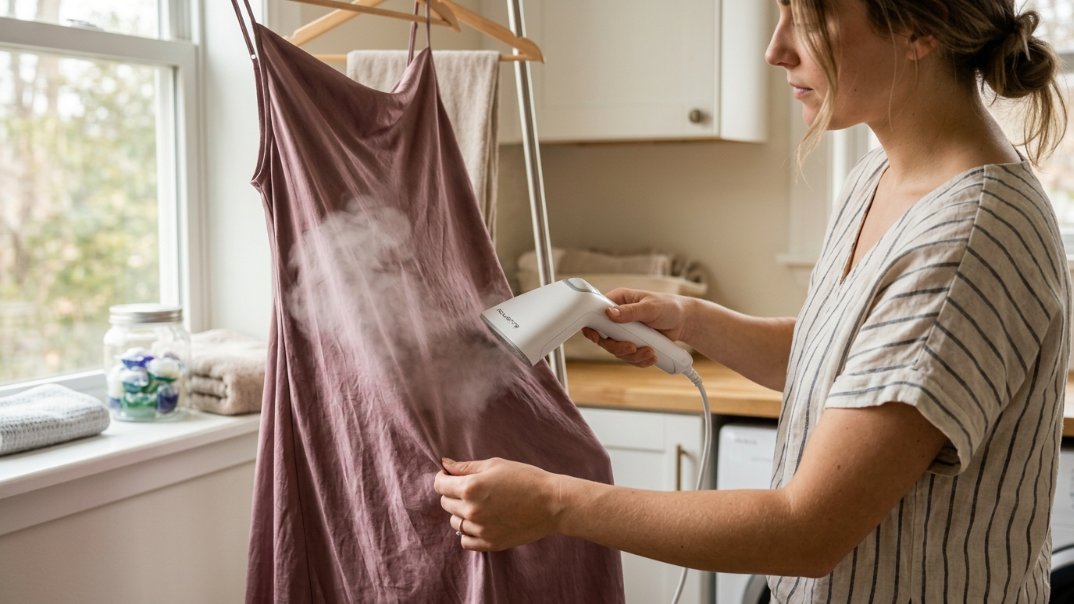
Regardless of fabric type, these core techniques from this steam delicate fabrics guide apply every time you steam something delicate.
Spot test first. Try steaming an inconspicuous area, like an inside seam allowance, before working on visible surfaces. This takes 10 seconds and can save a garment.
Let the steamer reach full operating temperature. Starting too early is one of the most common causes of water spots. An insufficiently heated steamer spits liquid water droplets instead of producing dry steam. Wait until the steam flows consistently before touching a garment.
Use distilled or filtered water. Tap water contains minerals that build up inside your steamer and can spit mineral laden droplets onto fabric. Most silk manufacturers specifically recommend distilled water.
Hold the fabric taut, gently. Use your free hand to pull the bottom hem slightly, creating a smooth surface for the steam to work against. Do not stretch the fabric, just keep it from sagging.
Keep the steamer moving. Never park the steam head in one spot. Continuous, even passes distribute steam without saturating any single area. For silk, do not focus on one spot for more than two to three seconds.
Steam from the inside out for any fabric prone to shine marks or water spotting. This includes silk, satin, polyester, and fine wool.
Use a pressing cloth for embellished items. A clean cotton muslin barrier protects beads, sequins, and embroidery from direct steam contact.
Allow 5 to 10 minutes of air dry time after steaming before wearing or packaging the garment. Freshly steamed fabric retains moisture that will re wrinkle if compressed immediately.
For alterations professionals applying these techniques to customer garments, the steam for alterations guide covers additional professional finishing methods.
How to Steam Delicate Fabrics Safely
Follow this steam delicate fabrics guide process to safely steam most delicate garments without scorching, spotting, or stretching the fabric.
Step 1: Read the care label
Check for:
- Maximum temperature dots
- “No steam” symbols
- Blend percentages
- Specialty finishes or coatings
When in doubt, use the settings for the most delicate fiber in the garment.
Step 2: Fill the steamer with distilled water and preheat fully
Distilled water prevents:
- Mineral buildup
- White residue
- Water spotting
- Internal scaling
Allow the steamer to fully heat. Then, before approaching any garment, point the steam head toward a towel or sink and release steam for 10 to 15 seconds. This clears any condensation or cold water trapped in the hose.
Step 3: Test an inside seam
Before steaming visible areas:
- Test the steam on a hidden seam
- Watch for spotting, shine, shrinking, or distortion
- Adjust distance if needed
Step 4: Hang the garment properly
Use a sturdy hanger and let gravity help pull wrinkles downward naturally.
For knitwear like cashmere:
- Lay flat instead of hanging
- Hover steam above the surface
For lined garments:
- Steam the lining first, then flip to the outer fabric
- Use lower intensity on the visible side
Step 5: Steam in slow downward passes
Keep the steamer moving continuously.
Do not:
- Hold steam in one spot
- Press the steam head against the fabric
- Saturate delicate fibers
Step 6: Let the garment dry fully
Allow 5 to 10 minutes of drying time before:
- Wearing
- Folding
- Packaging
- Storing
Freshly steamed fabric can re wrinkle if compressed too soon.
Wedding Dress Steaming Guidelines
No steam delicate fabrics guide would be complete without covering wedding dresses. These are the highest stakes garments most people will ever steam. They combine multiple delicate fabrics (often silk, satin, tulle, lace, and beading on a single gown), they are expensive, and they are almost always needed on a specific day with no room for error.
Why Wedding Dresses Need Special Attention
A typical wedding gown arrives from shipping or storage with deep fold creases in the skirt, compressed tulle layers, and wrinkled lace overlays. The instinct to steam aggressively to remove those creases quickly leads to damage. Every fabric layer requires different settings, and many gowns combine materials that react differently to heat and moisture.
Bridal salon professionals on YouTube walkthroughs consistently emphasize one thing: work from the inside out and from bottom to top. Start with the innermost layers (typically the lining and petticoat), move to the mid layers (tulle or organza), and finish with the outermost fabric last.
Step by Step Wedding Dress Steaming
Hang the dress on a strong, padded hanger in an open area with room to access all sides. Clip the loop sewn into the waistband to the hanger hook if one is present, as this distributes weight better than shoulder straps alone.
Preheat the steamer completely and clear residual water away from the dress. This step is non negotiable for bridal gowns.
Steam the lining first. If the dress has a built in petticoat or inner structure, address those layers before touching the outer shell.
Address tulle layers next. Hold the steamer 6 to 8 inches away. Work in vertical passes from bottom to top, letting the rising steam gently relax the layers above. Do not bunch or grab tulle while it is warm.
Steam the outer shell last. Match your settings to whatever fabric the outer layer is made from (silk, satin, lace, polyester). For beaded or embellished sections, use a pressing cloth or skip steaming those areas entirely and focus on the fabric between embellishments.
Allow at least 20 to 30 minutes of drying time before the dress is worn or placed in a garment bag. Wedding gowns have more fabric layers than everyday garments, so they retain moisture longer.
Pitfalls specific to wedding dresses:
- Beaded bodices with adhesive backed crystals can lose stones under direct steam
- Horsehair braid trim along hems can curl if steamed too aggressively
- Train sections need separate attention because they wrinkle from dragging
For bridal shops handling multiple gowns daily, a commercial garment steamer with adjustable pressure makes this work dramatically easier, since you can dial pressure down for tulle and up for heavier satin sections without switching equipment.
Veil Steaming Guidelines
Bridal veils present a unique challenge because they are almost always made from tulle or illusion netting, which is among the most fragile and heat sensitive fabrics to steam. A veil with visible creases from packaging is a common problem, and an aggressive approach will make it worse.
How to Steam a Veil Safely
Hang the veil from its comb or clip on a hook or hanger. Let gravity straighten it for 15 to 20 minutes before you start steaming. Some light creases will fall out on their own.
Set the steamer to the lowest possible output. If your steamer has a variable control, use the minimum setting. If not, compensate by increasing your distance.
Hold the steamer 8 to 10 inches away. This is further than for any other fabric. The veil’s extremely low weight means even moderate steam pressure can push and distort the netting.
Work from the bottom of the veil upward. Pass the steamer slowly underneath the veil, allowing rising steam to relax the fabric above. Avoid directing the steam head at the veil from the front, where concentrated moisture can cause spotting.
Do not touch the veil while it is warm. Tulle holds heat briefly, and handling it during this window can leave fingerprint impressions or cause the mesh to stick to itself.
For cathedral length veils, work in sections. Clip the bottom section at waist height, steam it, let it cool, then release and move to the next section.
Practitioners on Reddit report that the bathroom steam trick (hanging the veil in a bathroom while running a hot shower) works surprisingly well for light creases. This is the gentlest possible approach and worth trying before using a steamer directly, especially for veils with delicate lace edging or embroidered details.
Safety Precautions When Steaming
Steam is water heated past 100°C (212°F). It causes burns faster than boiling water because the phase change from vapor to liquid releases additional energy when it contacts skin. Treating a steamer casually leads to injuries.
Personal Safety
- Never direct steam at your hands, arms, or face. When pulling fabric taut with your free hand, position that hand behind and below the steaming zone, not directly behind the steam head.
- Wear heat resistant gloves when steaming for extended sessions, especially with commercial equipment that produces higher pressure steam.
- Keep the steam hose away from your body. Commercial steamer hoses carry high temperature steam and can cause burns through clothing if they contact skin.
- Watch your feet. Spilled water from the steamer tank creates slip hazards, particularly on tile or hardwood floors. Keep towels on the floor near your steaming station.
Equipment Safety
- Never overfill the water tank. Overfilling can cause boiling water to spit from the steam head, especially during the initial heating phase.
- Unplug the steamer before refilling. Adding water to a hot, pressurized unit can cause dangerous steam release.
- Inspect hoses and connections regularly. Cracked or loose hose fittings on commercial boilers can release steam unexpectedly. For detailed inspection protocols, the steam safety orientation guide covers what to check and when.
- Never leave a heated steamer unattended. If you step away, turn the unit off. Some commercial boilers maintain pressure for extended periods and can cause damage or injury if a hose disconnects while the unit is still pressurized.
Environment Safety
- Steam in a well ventilated area. Prolonged steaming in a small, closed room raises humidity levels that can damage walls, promote mold growth, and make the floor slippery.
- Keep the steamer on a stable, level surface. A tipped steamer spills boiling water.
- Position the steaming station away from electrical outlets and electronics. Steam drifts, and moisture can damage nearby equipment.
Commercial operators steaming more than a dozen garments daily should treat their steaming station with the same safety planning as any other heat generating equipment in the shop. Written safety protocols reduce incidents and protect both staff and customer garments.
Common Steaming Mistakes That Ruin Delicate Garments
These errors, all addressed throughout this steam delicate fabrics guide, account for most steaming damage, and every one is preventable.
Steaming stained or dirty clothes. Heat sets stains. Always clean a garment before steaming it. What was a removable coffee spot becomes a permanent mark after steam treatment.
Starting before the steamer is fully heated. This produces water droplets instead of steam, leaving spots on silk, satin, and rayon that are difficult or impossible to remove.
Holding too close on silk and satin. Even at the right temperature, excessive proximity concentrates moisture on the fabric surface. Maintain the recommended 1 to 2 inch distance for silk and satin.
Using tap water. Mineral deposits build up inside the steamer tank and eventually get expelled onto garments. They also shorten equipment life and reduce steam quality. Distilled water solves both problems. For more on water quality and equipment longevity, see the water quality for steam boiler guide.
Over steaming blended fabrics. Blends are responsible for a disproportionate share of steaming damage. The instinct to treat a garment by its dominant fiber rather than its most sensitive one leads to scorching, spotting, or fiber distortion.
Steaming materials on the “never steam” list. It sounds obvious, but practitioners report that leather trim on an otherwise steamable garment is a frequent source of accidental damage. Mask or avoid any leather, suede, or waxed portions of a garment when steaming the rest.
Skipping the preheat and clear step. This single omission is responsible for more silk and satin water spots than any other cause.
Hoffman equipment owners who run into questions about technique or settings can access unlimited lifetime technical support at no extra cost.
Signs You Are Over Steaming Fabric
Over steaming can weaken fibers even when the temperature is technically safe.
Watch for these warning signs:
| Symptom | Likely Cause |
|---|---|
| Shine marks | Steam too close or too hot |
| Water spots | Steamer not fully heated |
| Fabric stretching | Excess moisture saturation |
| Loss of texture | Too much heat on pile fabrics |
| Waviness or distortion | Overhandling chiffon or lace |
| Fiber stiffness | Mineral deposits from tap water |
| Flattened velvet pile | Steam from the front side |
| Edge curling on tulle | Steamer too close to mesh netting |
If any of these appear, stop immediately and allow the fabric to cool completely before attempting additional steaming.
Consumer vs. Commercial Steam Equipment for Delicates
Not all steamers are equal, and the differences matter most when working with delicates.
Consumer handheld steamers typically operate at fixed, lower temperatures between 140°F and 180°F. They are designed for occasional home use and lack precise pressure or temperature controls. For a silk blouse or two per week, they work fine.
Commercial steam equipment is built for continuous daily operation with larger water tanks, higher steam output, and (critically for delicate work) adjustable pressure controls. In a boutique or alterations shop where you might steam 30 to 50 garments a day across every fabric type, the ability to dial pressure up for heavy linen and down for silk chiffon is not a luxury. It is the difference between consistent results and unpredictable damage.
Adjustable pressure commercial boilers allow operators to reduce PSI for delicates while maintaining the steam volume needed for efficiency. A one speed consumer device forces compromises: either the steam is too aggressive for silk or too weak for wool suiting.
For commercial operators deciding between equipment types, the commercial vs. consumer steamer guide breaks down the full range of differences.
Steaming Frequency Recommendations by Fabric
Frequency matters because repeated heat exposure degrades fibers over time, even at safe temperatures.
| Fabric | Safe Steaming Frequency | Notes |
|---|---|---|
| Silk | As needed, but avoid daily steaming of the same garment | Each session slightly weakens fibers |
| Cashmere | 1 to 2 times between washes | Steam refreshes without the fiber loss of washing |
| Velvet | As needed before wearing | Velvet recovers well from steaming |
| Chiffon | Sparingly, only when visibly wrinkled | The open weave distorts with repeated heat |
| Tulle | Only when creased from storage or shipping | The mesh structure is cumulative heat sensitive |
| Polyester | Occasionally | Repeated steaming causes gradual degradation |
| Linen | Freely, as often as needed | Linen is highly heat tolerant |
| Wool suiting | Before each wearing if needed | Standard professional practice |
Quick Reference Temperature Chart
| Fabric | Max Steam Temperature | Minimum Distance | Steam Output |
|---|---|---|---|
| Silk | 120°C (248°F) | 1 to 2 inches | Low |
| Cashmere | 120°C (248°F) | 2 to 3 inches | Low |
| Velvet (silk) | 130°C (266°F) | 2 inches | Low to medium |
| Velvet (synthetic) | 130°C (266°F) | 2 inches | Low to medium |
| Tulle (synthetic) | 110°C (230°F) | 6 to 8 inches | Minimal |
| Tulle (silk) | 120°C (248°F) | 6 to 8 inches | Minimal |
| Chiffon | 110°C (230°F) | 4 to 6 inches | Low |
| Polyester | 110°C (230°F) | 2 to 3 inches | Medium |
| Nylon | 110°C (230°F) | 3 to 4 inches | Low |
| Lace | 120°C (248°F) | 3 to 4 inches | Low |
| Rayon | 110°C (230°F) | 2 to 3 inches | Low |
| Wool (fine) | 150°C (302°F) | 2 to 3 inches | Low to medium |
| Linen | 230°C (446°F) | Direct OK | High |
| Cotton | 200°C (392°F) | Direct OK | High |
Professional Steaming Tips From Garment Finishers
Professional garment finishers and alteration shops follow a few consistent rules when steaming delicate fabrics:
- Always preheat and clear residual water before touching any garment
- Steam linings and inner layers before outer shells
- Always steam silk and satin after the unit reaches full pressure
- Reduce PSI before working on chiffon, organza, or tulle
- Steam velvet only from the reverse side
- Use distilled water exclusively for luxury fabrics
- Let garments rest before packaging to avoid re wrinkling
- Treat blended fabrics according to the most heat sensitive fiber
- Keep burn first aid supplies at the steaming station
In commercial garment finishing environments, consistency matters more than speed. Most steaming damage occurs from excess moisture, incorrect distance, or rushing before the steamer reaches stable temperature. Bookmark this steam delicate fabrics guide as a quick reference to keep at your steaming station.
Final Takeaway
Steaming is the safest wrinkle removal method for most delicate fabrics when temperature, steam distance, and moisture level are properly controlled.
Silk, cashmere, velvet, chiffon, satin, tulle, and fine wool all require different handling techniques, but the core principles in this steam delicate fabrics guide stay consistent:
- Use the lowest effective steam setting
- Preheat fully and clear residual water before starting
- Steam linings and inner layers first
- Keep the steamer moving
- Avoid over saturating the fabric
- Always test first on hidden areas
- Follow basic safety precautions to protect both the garment and yourself
For professional garment finishing, adjustable steam pressure and consistent dry steam output make the biggest difference in preventing damage and achieving repeatable results.
Explore Hoffman’s full commercial steamer lineup to find the right match for your operation.
Frequently Asked Questions
Can you steam silk without damaging it?
Yes. Silk is one of the best candidates for steaming because steam relaxes the fibers without the crushing contact of an iron. Keep the temperature below 120°C, maintain 1 to 2 inches of distance, keep the steamer moving, and never spray water directly on the fabric. Use distilled water to prevent mineral spots.
Is steaming better than ironing for delicate fabrics?
For almost all delicate fabrics, steaming is safer and more effective. Steam works by relaxing fibers with moisture and heat, while ironing applies direct contact pressure that can crush pile, create shine marks, and scorch sensitive fibers. The main exception is when you need a sharp crease, which requires the mechanical pressure of an iron.
What fabrics should you never steam?
Leather, suede, waxed cotton, vinyl, pleather, and any plastic coated fabric should never be steamed. Heat and moisture cause irreversible warping, melting, or staining. Adhesive bonded seams in athletic wear can also come apart under steam. When in doubt, take the garment to a professional dry cleaner.
How do you prevent water spots when steaming?
Water spots are caused by liquid water droplets, not steam itself. Always let your steamer reach full operating temperature before starting. Flush residual water from the hose by pointing the steam head at a towel for 10 to 15 seconds. Use distilled water instead of tap water. Maintain the recommended distance for each fabric type. If you see drips coming from the steamer head, stop and let it heat further before continuing.
Can you steam velvet?
Steam is the only recommended method for de wrinkling velvet. Never iron velvet, as the pressure crushes and flattens the pile permanently. Always steam from the back of the garment and use a soft brush afterward to restore the pile’s height and direction.
Can you steam a wedding dress at home?
You can, but proceed with extreme caution. Wedding dresses combine multiple fabric types that each need different settings. Start with the lining, move to tulle layers (6 to 8 inches distance), and finish with the outer shell. Steam beaded sections from the reverse or skip them entirely. If the gown is very expensive or has extensive beadwork, a professional bridal steaming service is worth the cost.
How do you steam a veil without ruining it?
Hang the veil and let gravity work for 15 to 20 minutes first. Then use the lowest steam setting at 8 to 10 inches of distance, working from the bottom up. Do not touch the veil while it is warm. For very light creases, hanging the veil in a steamy bathroom may be sufficient without using a steamer at all.
How far should you hold a steamer from delicate fabric?
It varies by fabric. Silk and satin need 1 to 2 inches. Cashmere and fine wool need 2 to 3 inches. Chiffon and organza need 4 to 6 inches. Tulle and veils need 6 to 10 inches. When working with a fabric you have not steamed before, start at maximum distance and move closer gradually. Consult the tables in this steam delicate fabrics guide for exact distances by material.
Does the type of water in your steamer matter?
Yes. Tap water contains minerals that accumulate inside the steamer and eventually get expelled onto garments as white residue or spots. Distilled water prevents mineral buildup, extends equipment life, and produces cleaner steam. This is especially important when steaming silk, satin, and other fabrics where water marks are visible.
What is the difference between a consumer steamer and a commercial steamer for delicate work?
Consumer steamers operate at fixed, lower temperatures and are designed for occasional use. Commercial steamers offer adjustable pressure controls, higher steam output, larger water tanks, and continuous duty operation. For anyone steaming delicate customer garments professionally, adjustable pressure is the key feature, as it lets you dial down for silk and up for wool suiting without changing equipment.
Why should you steam the lining of a garment first?
The lining acts as a buffer. Steam that passes through the lining reaches the outer fabric at reduced intensity, lowering the risk of water spots or shine marks on the visible surface. Relaxing the lining first also lets the outer shell hang more naturally, often reducing the amount of direct steaming the outer fabric needs.
What safety precautions should you follow when steaming?
Keep your hands behind and below the steam head, never directly behind it. Wear heat resistant gloves for extended sessions. Never overfill the water tank or refill while the unit is plugged in. Steam in a ventilated area to prevent moisture buildup. Keep the steamer on a stable surface and inspect hoses regularly for cracks or loose fittings.


