

TL;DR
Steam for alterations is the controlled application of hot water vapor to fabric during garment modification, serving three functions: pressing seams, shaping fabric, and finishing the altered garment. Professional tailors consider pressing “half of sewing” because even expert stitching looks amateur without proper steam work. The distinction between steaming, pressing, and ironing matters enormously, and using the wrong technique on structured garments like suit jackets can cause permanent damage. Commercial boiler-fed steam systems deliver the consistent, pressurized output that alterations shops need, while consumer irons fall short.
What “Steam for Alterations” Means
Steam for alterations refers to every instance where hot water vapor is applied to fabric during the process of changing a garment’s fit, structure, or appearance. This includes the moment a tailor presses open a freshly sewn seam, the careful reshaping of a wool blazer’s shoulder after taking in the body, and the final finishing pass that makes an altered dress look like it was made that way from the start.
In the alterations trade, steam serves three distinct functions:
Pressing sets seams, darts, hems, and edges flat during and after sewing.
Shaping reshapes fabric (especially wool) to conform to new contours.
Finishing removes wrinkles and gives the completed alteration a professional appearance.
Professionals treat steam not as an afterthought but as an integral part of construction. As one sewing instructor put it, “Pressing is half of sewing. Pressing in sewing is the act of applying heat, steam, and pressure to an area of fabric to make it lie flatter and smoother, as well as make it conform to a specific shape.” Another experienced seamstress reinforced this: “You can be the best sewing enthusiast, but if the garment isn’t pressed well, no one will notice the amount of work you’ve put into it.”
That principle applies doubly to alterations, where the goal is making modified garments look unmodified.
How Steam Works on Fabric (The Science)
Understanding why steam works on fabric explains why it’s non-negotiable in professional alterations.
When steam contacts textile fibers, it breaks the hydrogen bonds between fiber molecules, making them temporarily malleable. This is especially pronounced in wool, which “will assume practically any shape you want while warm and moist.” Wool’s natural crimp and elasticity allow fibers to be completely reshaped with steam and pressure.
The mechanism differs from dry heat in an important way. As textile researchers have noted, “The hot steam allows the textile fibers to swell and regain their natural shape, which is more forgiving than the scorching hot surface of a traditional iron which tends to flatten down the textile fibers.”
The Role of Cooling
Steam alone doesn’t finish the job. Fibers must cool and dry in their new position for the shape to hold. This is why professional alterations shops use techniques like clappers (wooden blocks pressed onto steamed fabric to absorb moisture while maintaining pressure) and vacuum pressing tables. As one practitioner on Styleforum explained, “Moisture and heat make the fibers malleable, pressure either flattens or creases the fiber in a new position, the vacuum dries the fibers quickly while the pressure is still being applied. If you move the garment before it is completely dry, your crease will not quite be set.”
Removing Old Crease Lines
One of the most valuable applications of steam in alterations is erasing evidence of previous construction. When a hem is let down or a sleeve lengthened, the old fold line remains visible. Steam can often eliminate it. A technique shared in Threads Magazine: “It sometimes works to use your fingernail to scratch the fabric along the original seamline and then steam before pressing. Natural fabrics give better results than synthetics.”
Old stitch lines from let-out seams can also be made to disappear with careful steam iron application, which is critical when alterations need to look invisible.
Steaming vs. Pressing vs. Ironing: Critical Distinctions
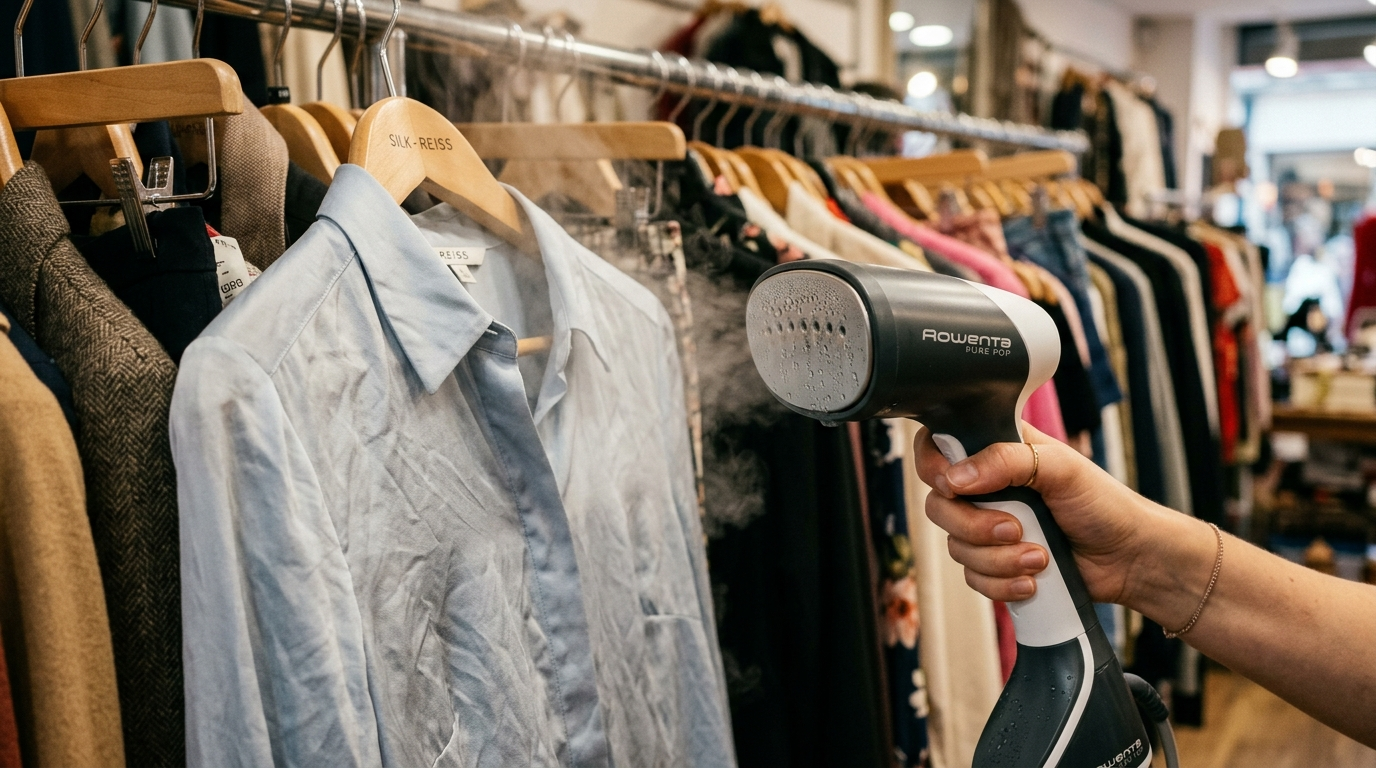
These three terms get used interchangeably in everyday conversation, but they describe fundamentally different processes. Getting them confused in an alterations context can ruin a garment.
Practitioners on Styleforum define them clearly: “Steaming is the application of steam without any other contact with the material. Pressing is placing the iron onto the fabric and applying pressure, without moving it across the material and with or without steam. Ironing is moving the iron across the fabric, with or without the addition of steam.”
The practical implications are serious: “Ironing is what is done to shirts. Pressing is what is done to suits. A suit should never be ironed, as it can stretch or shine the fabric.”
Technique | Motion | Contact | Best For |
|---|---|---|---|
Steaming | Hover, no contact | None | Wrinkle removal, delicate fabrics, finishing |
Pressing | Lift and lower | Direct, stationary | Seams, darts, construction details |
Ironing | Sliding across fabric | Direct, moving | Flat garments like shirts, cotton items |
The “Press As You Go” Rule
Every professional alterations worker follows one cardinal rule: press every seam as it is sewn, before it crosses another seam. This is the only way to create truly professional results. Pressing is not something done at the end of an alteration. It happens continuously throughout the process, and steam is what makes each press effective.
Steam Applications in Common Alterations
Steam for alterations shows up in nearly every type of garment modification. Here are the most common applications.
Seam Work (Taking In and Letting Out)
After taking in or letting out a seam, the new seam allowance must be pressed flat or open. Without steam, the seam sits up and creates a ridge visible from the outside of the garment. Steam makes the fabric fibers relax and conform to their new position.
Dart Pressing
Darts create three-dimensional shape from flat fabric. After sewing a dart (common when altering bodice fit), the tailor presses it over a curved surface called a tailor’s ham. Steam is what allows the fabric to mold smoothly around the curve rather than creating a point or pucker.
Hemming and Hem Lengthening
Shortening a hem requires pressing the new fold line crisp and clean. Lengthening a hem requires the opposite: removing the old fold line entirely. Both tasks depend on steam. Natural fibers respond better than synthetics to crease removal, which is why letting down a polyester blend hem often leaves a permanent mark while wool responds beautifully.
Sleeve Head Shaping
When altering the shoulder area of a jacket or structured garment, steam reshapes the sleeve cap to sit smoothly over the shoulder. This is precision work. The bespoke tailoring tradition illustrates just how responsive wool is to steam: on PatternReview, one user described how London tailoring apprentices are trained to take an 8-inch square of 100% wool and, using only a dry iron and damp dauber, form the square into a circle without grain distortion. That level of reshaping is what makes wool alterations possible.
Tailor Chalk Removal
Alterations workers mark garments with tailor chalk during fitting. These marks vanish instantly when steam is applied, leaving no trace on the finished garment. As Articles of Style notes, “Tailor chalk, if you’re wondering, comes off instantly when steam is applied and does not impact the garment.”
Pre-Shrinking
Before cutting into fabric for an alteration, professional tailors may steam the material to pre-shrink it. This prevents the altered section from shrinking differently than the rest of the garment after the first wash or dry cleaning.
Wedding Gown Finishing
Post-alteration steaming is standard practice at bridal shops. Wedding gowns involve delicate fabrics like silk, tulle, lace, and crepe that respond best to steam rather than direct iron contact. According to The Knot, professional steaming for a wedding gown after alterations typically costs between $75 and $250, which gives some sense of the commercial value of skilled steam work.
Fabric-Specific Steam Guidelines
Different fabrics demand different steam approaches. Applying the wrong combination of heat, moisture, and pressure is one of the fastest ways to damage a garment during alterations.
Cotton and Linen
Cotton can withstand high heat and generous steam. Press seams open on both sides for crisp edges. These are the most forgiving fabrics for steam work.
Wool
Wool requires medium heat, a press cloth to prevent shine, and a lift-and-press motion (never sliding). Steam is essential for wool alterations, but direct contact between a hot iron and wool fabric without a press cloth will create an irreversible sheen. Practitioners on Styleforum warn extensively about this, particularly with suit fabrics.
Silk and Delicates
Steamers work especially well for heat-sensitive materials like silk, as well as delicate textures like cashmere, velvet, and corduroy. The key is hovering the steam source without making contact. These fabrics benefit from a commercial-grade steamer that delivers consistent, controllable output rather than unpredictable bursts from a home iron.
Synthetics
Low heat, minimal steam, and always test on a hidden area first. Synthetic fibers don’t respond to steam the way natural fibers do. They lack the hydrogen bonding structure that makes wool and cotton so reshapeable, which is why old crease lines in synthetic blends are notoriously difficult to remove.
Common Mistakes
The most frequent errors in steam for alterations work include:
Shine on wool from sliding an iron without a press cloth
Scorching silk by using too much heat or holding steam too close
Distorting structured garments by steaming areas that rely on internal construction
That last point deserves its own discussion.
The Danger Zones: What Not to Steam
One of the most important pieces of practitioner knowledge, frequently discussed on Styleforum but rarely mentioned in commercial content, involves the areas of tailored garments that should never be hit with an uncontrolled steamer.
A veteran forum member explained it this way: “For minor wrinkles in the elbows of a jacket or the crotch of a trouser, a steamer might relax the wool fibers and cause those wrinkles to become less pronounced. The problem arises when the steam emitted by the head of the steamer is applied directly to areas THAT SHOULD BE OUT-OF-BOUNDS TO ALL STEAMERS, the collar, lapels, shoulders, upper sleeves and front of a jacket. That could result in the bursting of seams, puckering of the fabric and internal construction of the garment, and distortion of the shaping and moulding.”
Another practitioner added that tailors understand garment construction in ways that dry cleaners often don’t: “If the shoulder area, sleeve head or collar needs attention the tailor will do better. Those areas aren’t usually pressed by cleaners and if they do they tend to flatten things rather than shape them.”
The takeaway: steam is powerful, and in alterations work, knowing where not to apply it matters as much as knowing where to apply it.
Essential Steam Equipment for Alterations Shops
The gap between consumer-grade and commercial-grade steam equipment is enormous, and it directly affects alterations quality.
The Core Problem with Consumer Irons
Equipment Type | Best For | Steam Pressure | Key Benefit for Alterations |
Consumer Iron | Occasional home repairs | Low/Intermittent | Low cost; portable. |
Gravity-Feed Iron | Small shops/Individual tailors | Consistent Flow | Constant steam without a bulky boiler. |
Boiler-Fed System | High-volume professional shops | 40 – 90 PSI | High-pressure penetration for heavy fabrics. |
Upright Steamer | Bridal & Finishing work | Gentle/Surface | No fabric contact; ideal for silk and tulle. |
Vacuum Table | Tailored suits & Structure | N/A (Suction) | Instant cooling to “lock” fiber shapes. |
Home irons produce intermittent, low-pressure bursts of steam. As one sewing professional noted, “The main benefit of pressurized steam is consistency. You push a button and steam comes out, always in the same amount. Home irons give little bursts of steam and it is never consistent.”
For occasional home sewing, a consumer iron works. For an alterations business handling dozens of garments daily across every fabric type, inconsistent steam means inconsistent results.
Gravity-Feed and Boiler-Fed Irons
Professional alterations workers consistently choose gravity-feed or boiler-fed irons over consumer models. A contributor on Threads Magazine’s forum shared simply, “You need steam. I use my gravity feed (Naomoto) for all of my pressing.” These systems separate the water reservoir from the iron itself, delivering continuous pressurized steam through a lightweight iron head.
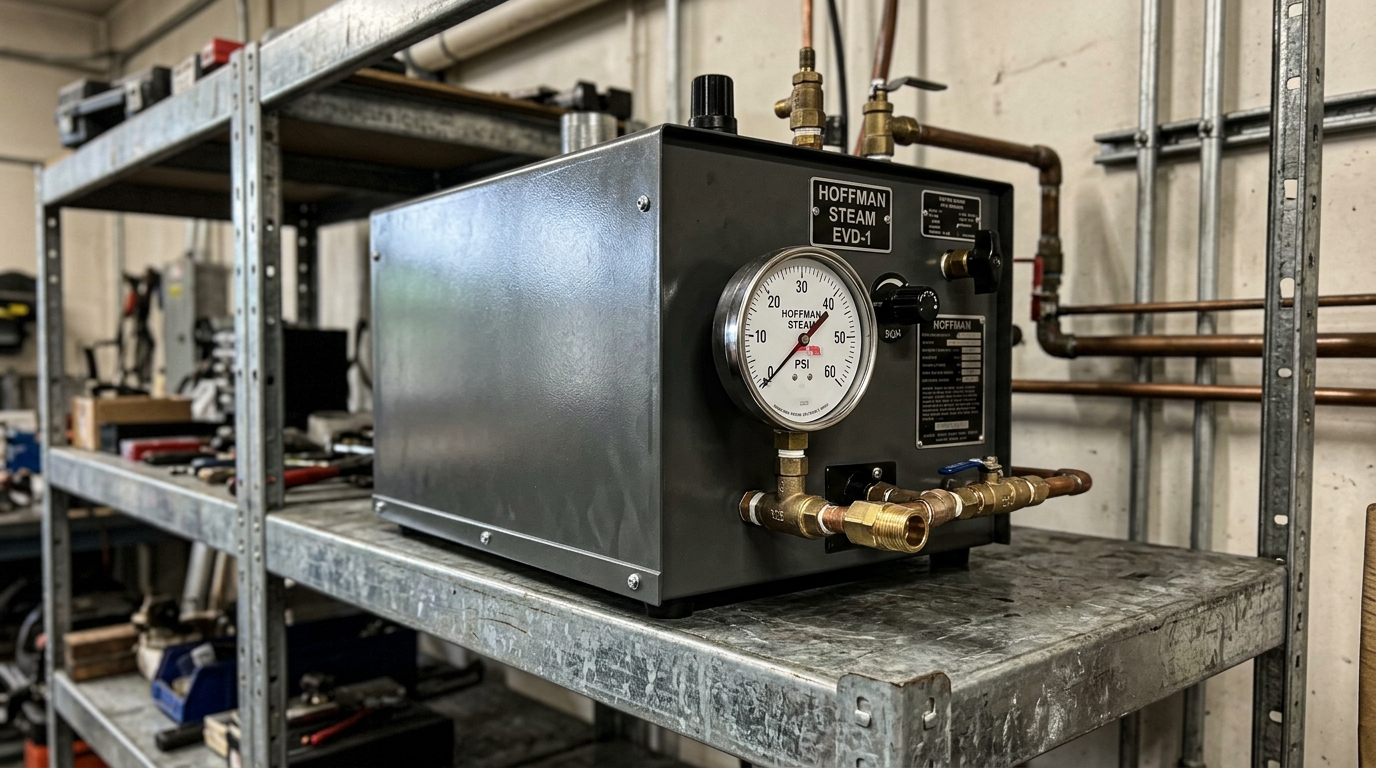
For alterations shops looking for commercial-grade steam equipment, Hoffman Steam manufactures boiler-fed systems ranging from the EVD-1 (a 1-gallon, 40 PSI entry-level boiler) to continuous-duty industrial boilers capable of 70 to 90 PSI. Their clothing store bundles pair boilers with steam irons and accessories, giving new alterations businesses a ready-to-use setup.
Commercial Upright Steamers
Upright steamers are primarily finishing tools. They’re ideal for the final pass on an altered garment, removing transport wrinkles, and preparing wedding gowns. They don’t replace a pressing iron for construction work, but they’re essential for the finishing stage of alterations.
Pressing Accessories
Steam equipment alone isn’t enough. Alterations professionals rely on a suite of pressing tools:
Tailor’s ham: A curved, firmly stuffed cushion for pressing darts and shaped seams
Seam roll: A cylindrical cushion that prevents seam allowances from leaving impressions on the right side of fabric
Clapper: A wooden block pressed onto freshly steamed fabric to absorb moisture and set creases
Press cloth: A barrier between the iron and fabric surface, essential for wool and delicates
Sleeve board: A miniature ironing board for pressing sleeves and other narrow garment areas
Vacuum Pressing Tables
The highest tier of professional pressing equipment combines steam with vacuum suction. The vacuum pulls moisture through the fabric and dries it while pressure is still applied, locking the new shape in place. This is what separates a dry cleaner’s mediocre press from a tailor’s flawless one.
Choosing the Right Equipment for Your Alterations Shop
The right steam setup depends on volume, garment types, and budget. Here’s a practical framework.
Shop Type | Recommended Setup | Why |
|---|---|---|
Home-based alterations | Quality gravity-feed iron + pressing tools | Consistent steam without commercial space requirements |
Small alterations shop | 1-2 gallon boiler + steam iron + upright steamer | Covers both construction pressing and finishing |
High-volume tailor or bridal shop | 2-6 gallon boiler + vacuum table + upright steamer | Handles continuous duty and delicate fabrics |
Dry cleaner with alterations department | Industrial boiler + multiple pressing stations | Supports simultaneous pressing and finishing workflows |
For small to mid-size alterations shops, Hoffman Steam’s Pro Line boilers offer ASME and UL certification, which matters for insurance and code compliance in commercial spaces. Their systems are manufactured in Pennsylvania and come with a 3-year tank warranty, 1-year component warranty, and unlimited lifetime remote technical support. You can explore their full equipment range and transparent pricing to find the right fit for your operation.
FAQ
Can a steamer replace an iron for alterations?
No. Steamers and irons serve different purposes. A steamer applies steam without pressure or contact, which is good for wrinkle removal and finishing. An iron (used in a pressing motion) applies heat, steam, and pressure simultaneously, which is necessary for setting seams, flattening darts, and shaping fabric during construction. Every alterations shop needs both.
Does steam shrink fabric?
It can, if the fabric hasn’t been pre-shrunk. This is why professional tailors often steam fabric before cutting or sewing alterations. Once fabric has been properly pre-shrunk, subsequent steaming during pressing won’t cause further shrinkage.
Why does my tailor charge extra for steaming a wedding gown?
Wedding gown steaming after alterations is skilled, time-intensive work involving delicate fabrics like silk, tulle, and lace. The cost (typically $75 to $250) reflects the care required and the risk involved. One wrong move with too much heat or direct contact can damage irreplaceable fabric.
What PSI do alterations shops need from a steam boiler?
Most professional alterations work requires at least 40 PSI for consistent steam delivery through a pressing iron. Higher-volume shops or those working with heavy fabrics benefit from systems delivering 70 to 90 PSI. The key factor is consistency rather than raw power, because intermittent steam bursts make precision pressing impossible.
Will steam remove the crease line when I let down a hem?
On natural fibers like wool and cotton, steam can often fully remove old crease lines. Scratching the fold line gently with a fingernail, then steaming and pressing, improves results. Synthetic fibers are much less responsive, and some blends retain a permanent mark no matter how much steam you apply.
Can I steam a suit jacket at home after alterations?
You can carefully steam the body and trouser areas to remove light wrinkles. But avoid steaming the collar, lapels, shoulders, upper sleeves, or chest of a structured jacket. These areas contain internal construction (canvas, padding, shaping) that steam can distort permanently. If those areas need attention, take the garment to a tailor who understands the internal structure.
What’s the difference between a consumer steamer and a commercial boiler for alterations?
Consumer steamers produce low-pressure, intermittent steam. Commercial boiler-fed systems deliver continuous, pressurized steam at a consistent rate. For alterations work where precise control over moisture, heat, and pressure determines whether a seam looks professional or homemade, the difference is night and day. The investment in commercial equipment pays for itself in quality and speed.
How often should I descale or maintain a steam boiler used for alterations?
Mineral buildup from water reduces steam quality and can eventually damage heating elements. Most commercial boilers need descaling every few weeks to months depending on water hardness and usage volume. Hoffman Steam offers Workhorse Protection Plans that include automatic consumable shipments and factory reconditioning, which takes the guesswork out of maintenance scheduling.


