

TL;DR
Steam for dental lab wax removal uses pressurized wet steam at 200–221°F to melt and flush wax residues from dental workpieces like crowns, bridges, dentures, and casting molds. It works because dental waxes have melting ranges well below the temperatures commercial steamers produce, and the combination of heat plus physical flushing force removes wax without leaving chemical residues. There are two distinct applications: everyday surface cleaning and investment dewaxing for lost-wax casting. Choosing the right equipment depends on lab size, daily throughput, and whether you need wet or dry steam output.
Looking to outfit your lab with the right steam equipment? Check out our dental lab steamer buyer’s guide for model comparisons and sizing recommendations.
What is Steam for Dental Lab Wax Removal?
Steam for dental lab wax removal is a high-pressure wet steam cleaning process (typically 40–90 PSI at 200–221°F) used to melt and flush dental wax from crowns, bridges, dentures, and casting molds without chemicals.
It works because dental waxes soften below steam temperatures, allowing pressurized steam to both melt and physically remove residue in a single step.
What Is Steam for Dental Lab Wax Removal?
Steam for dental lab wax removal is the practice of directing pressurized wet steam onto dental workpieces to melt, loosen, and flush away wax residues during prosthesis fabrication. The targets include crowns, bridges, dentures, castings, stone models, articulators, and instruments. Hot steam removes wax residues, polishing agents, and other contaminants from impressions, models, and dental prosthetics without leaving chemical residues behind.
This term actually covers two distinct processes that people often conflate:
Surface cleaning (the everyday use): A technician uses a steam gun or nozzle to blast wax, polishing compound, and debris off finished or in-progress dental work. This happens dozens of times a day in a busy lab.
Dewaxing for lost-wax casting: Steam melts and evacuates wax patterns from investment molds before metal casting. In steam dewaxers, temperatures of 120–150°C melt the wax so it runs from the mold and is completely expelled when the steam releases. This is a specific step in the casting workflow, not general cleaning.
Understanding this distinction matters because the equipment requirements, temperatures, and techniques differ between the two applications.
Why Steam Removes Dental Wax So Effectively
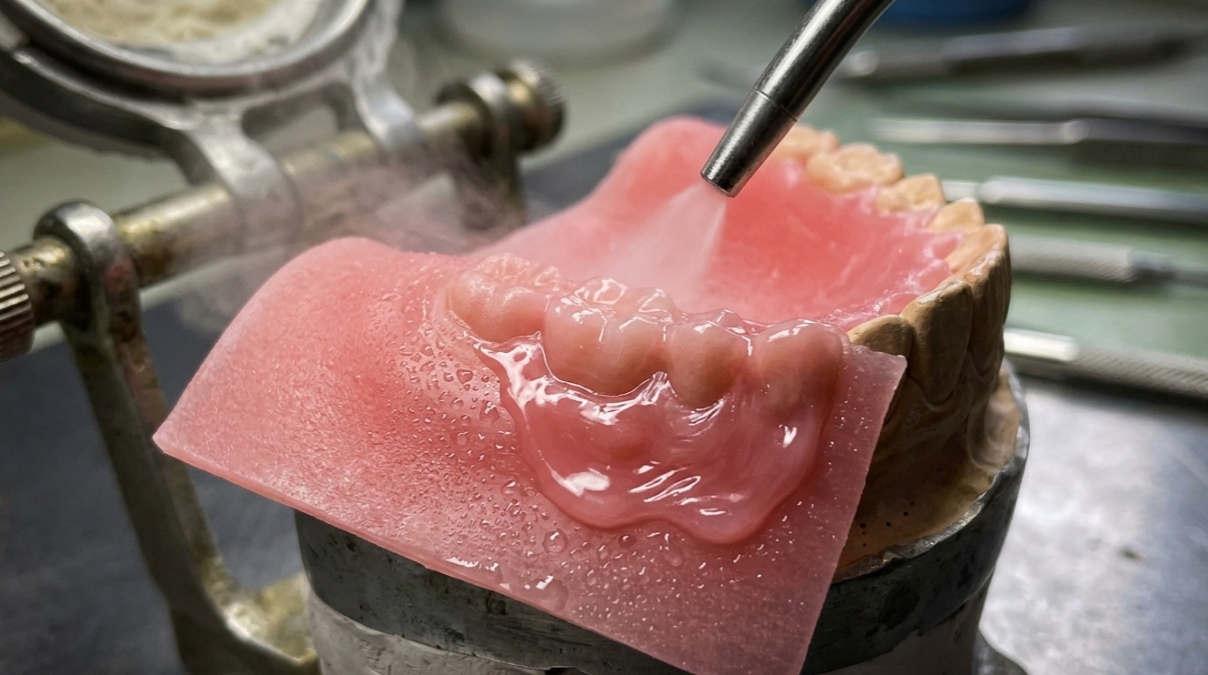
The science is straightforward. Dental waxes are thermoplastic materials with defined melting ranges, not single melting points. As temperature increases, wax flow increases progressively near the melting range. Here are typical melting temperatures for common dental waxes:
Wax Type | Approximate Melting Temperature |
|---|---|
Sticky wax | 158°F (70°C) |
Carving wax | 165°F ± 10°F |
Margin wax | 165°F ± 5°F |
Block-out wax | 205°F ± 5°F |
Commercial dental lab steamers operate at 200–221°F at the tip. A unit producing 50 PSI reaches about 200°F, while a 70 PSI unit reaches up to 221°F. That range exceeds the melting threshold of virtually every dental wax in use.
Steam brings three things to the job simultaneously. First, thermal energy to soften and melt the wax. Second, kinetic force from the pressurized jet to physically dislodge softened material. Third, water as a flushing medium that carries melted wax away from the workpiece. No chemical solvents are involved, which is critical for maintaining the biocompatibility of dental prosthetics.
If you’re unfamiliar with how pressurized steam systems generate and deliver that energy, our overview of how commercial steamers work covers the fundamentals.
Dental Lab Steamer Wax Removal Specs (Quick Reference)
Factor | Recommended Range | Why It Matters |
|---|---|---|
Temperature | 200–221°F (93–105°C) | Ensures full wax melting |
Pressure (PSI) | 40–90 PSI | Controls cleaning strength |
Steam Type | Wet steam preferred | Better wax flushing |
Tank Size | 0.5–6+ gallons | Impacts workload capacity |
Power | 110V–220V | Determines lab compatibility |
Wet Steam vs. Dry Steam: Which One for Wax Removal?
This distinction is one that most guides skip entirely, but it matters for dental lab work.
Wet steam contains entrained water droplets mixed with the vapor. It carries more thermal mass per unit volume and delivers superior physical flushing force. For most dental laboratory work, including removing wax, polishing residue, and disclosing media, wet steam works best.
Dry steam has minimal moisture content. It’s better suited for final finishing steps or situations where leaving moisture residue on the workpiece is a concern.
The ability to adjust steam pressure matters too. When cleaning restorations such as porcelain veneers, lower pressure reduces the risk of damage to fragile ceramic surfaces. Since dental prosthetics are often made from delicate materials like ceramics, plastics, or metal alloys, gentle cleaning is essential for certain applications.
A practical guideline: use full-pressure wet steam for wax removal from metal castings and stone models. Dial the pressure down for porcelain and delicate restorations. Reserve dry steam for final cleaning where a moisture-free surface is needed.
For a deeper comparison of steam types and pressure ratings, our guide on PSI requirements for commercial steamers breaks down what different pressure levels actually accomplish.
How Steam Fits Into the Dental Lab Workflow
Steam for dental lab wax removal isn’t a single event. It appears at multiple stages throughout the fabrication process.
Everyday Surface Cleaning
This is the most common use. Technicians steam clean:
Wax patterns on dies before investing, to remove surface oils and debris that could compromise the investment bond
Finished castings after divesting, to strip residual investment and wax
Stone models and casts after wax-up removal
Articulators between cases, preventing cross-contamination
Instruments and tools after each use
Orthodontic appliances to remove wax and flux residues
A typical lab technician might use the steamer 20 to 50 times per day. That volume is why reliability and ease of use are so important.
Dewaxing for Lost-Wax Casting
In the lost-wax (investment) casting process, the wax pattern must be completely eliminated from the investment mold before molten metal is introduced. Steam dewaxing uses autoclave-level steam at approximately 170°C (338°F) to melt and expel the wax from the ceramic shell, leaving a hollow cavity.
After steam dewaxing, the mold typically goes through a burnout cycle in a furnace at 845–1100°C. Burnout eliminates any residual wax and carbon that the steam didn’t fully remove. Steam dewaxing reduces the thermal shock the mold experiences during burnout, which lowers the risk of mold cracking.
Post-Fabrication Cleanup
Before final finishing and polishing, steam removes polishing compounds, adhesives, pickling agents, and other contaminants from castings and instruments. This step ensures a clean surface for subsequent procedures like porcelain application or cementation.
Equipment Specifications That Matter
Not all steamers perform equally in a dental lab setting. Here are the specifications that determine whether a unit can handle wax removal effectively.
Pressure (PSI)
Most dental wax removal happens comfortably in the 40–70 PSI range. Budget units produce 30–40 PSI, which works for light cleaning but may struggle with stubborn block-out wax. Mid-range units at 50–65 PSI handle the vast majority of dental lab tasks. High-production labs sometimes use units rated at 70–90+ PSI.
Temperature at the Tip
The steam temperature at the nozzle tip needs to exceed the melting range of the waxes being removed. At minimum, look for 200°F at the tip. Higher-pressure units typically deliver 221°F or more.
Tank Capacity
Tank size determines how long you can steam before refilling. Units with a water reservoir capacity of half a gallon or less work well in laboratories with fewer than six people. Units with a capacity over 1.5 gallons, or ones with a continuous water-feed feature, work better in high-production environments.
Lab Size | Recommended Tank | Typical PSI |
|---|---|---|
1–3 person lab | 0.5–1 gallon | 40–50 PSI |
4–8 person lab | 1–2.5 gallons | 50–65 PSI |
High-production lab | 4–6+ gallons | 70–90 PSI |
Power Requirements
Smaller units run on standard 110V outlets, making them easy to set up in any lab. Larger, higher-output units require 220V circuits and draw 3kW or more. If your lab doesn’t have 220V service, factor in the cost of electrical work when sizing your equipment.
Our guide to 110V vs. 220V commercial steamers covers the tradeoffs in detail.
Safety Features
Look for a pressure switch, thermostat, low-water indicator, safety cap with pressure release valve, and ideally a foot pedal for hands-free operation. ASME and UL certification provides an additional layer of assurance that the pressure vessel meets recognized safety standards.
How to Choose the Right Dental Lab Steamer
Use this decision framework:
Step 1: Determine Lab Size
Small lab (1–3 people): 40–50 PSI, 1 gallon tank
Mid lab (4–8 people): 50–65 PSI, 2+ gallon tank
Large lab: 70–90 PSI, 4–6+ gallon tank
Step 2: Identify Workflow Type
Light cleaning → standard steam gun unit
Heavy wax removal → high-pressure boiler system
Casting production → dewaxing-capable system
Step 3: Check Power Availability
110V = entry-level systems
220V = industrial continuous use systems
Rule of thumb: Higher PSI is not always better—control and consistency matter more in dental labs.
Water Quality and Boiler Longevity
This is one of the most debated topics in dental lab forums, and the answer isn’t as clean as most manufacturers suggest.
The case for distilled water: It prevents mineral scale buildup inside the boiler, which is the leading cause of heating element failure and reduced steam output over time. Reliable Corporation and several other manufacturers recommend distilled water to extend boiler lifetime.
The case against distilled water: Some units have water-level sensors that rely on mineral conductivity in the water to function. Practitioners on the Dental Lab Network forums report that “there is a sensor in there that works off of the minerals in the water,” which means pure distilled water can cause the sensor to malfunction. Additionally, distilled water can be slightly more corrosive to certain metals over long periods.
Tap water problems: In hard-water areas, tap water causes rapid mineral buildup that coats heating elements, clogs steam lines, and eventually kills the boiler.
The practical approach: Follow the manufacturer’s specific recommendation for your unit. Regardless of water type, drain the boiler weekly to flush sediment. Descale on a regular schedule (monthly in hard-water areas). Stainless steel boiler construction holds up better than brass or copper regardless of water quality.
Managing Wax Overspray in the Workspace
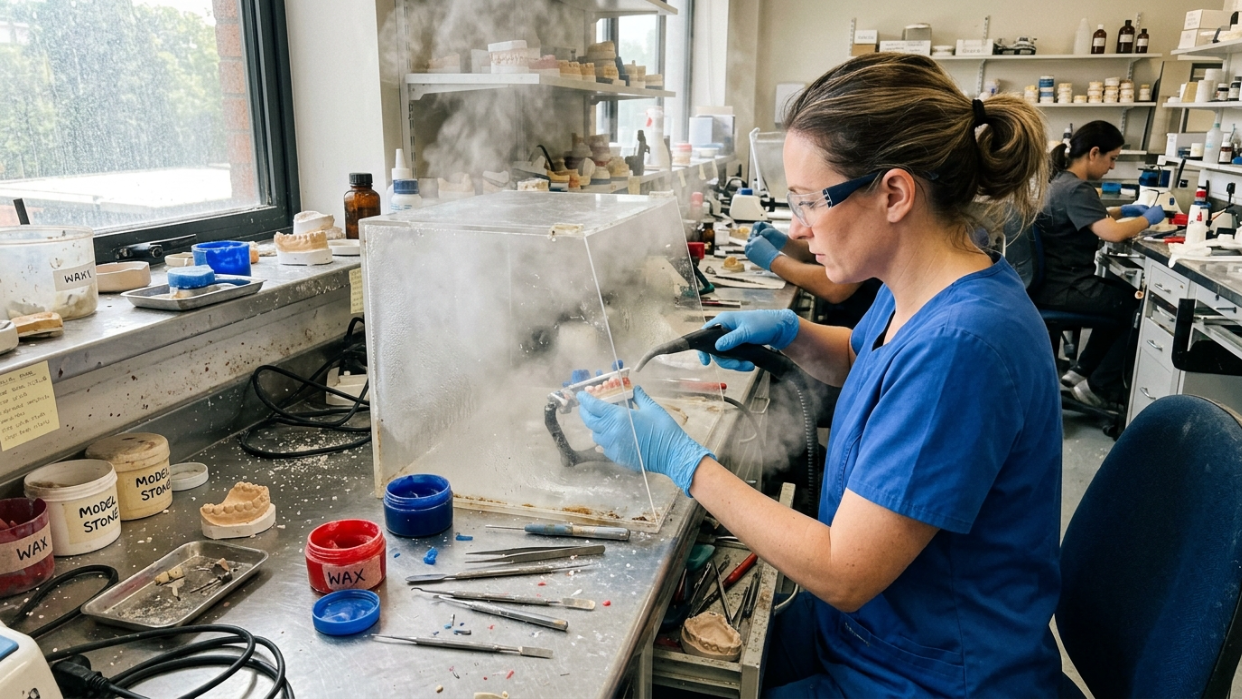
Here’s a concern that almost no published guide addresses, but practitioners deal with daily. When steam hits wax at pressure, it doesn’t just melt neatly into a puddle. It creates a spray of tiny wax particles that go airborne.
One technician on the Dental Lab Network described being concerned about “small particles that go airborne when steam cleaning” inside makeshift containment boxes. This overspray coats nearby surfaces, contaminates adjacent workpieces, and creates an ongoing cleanup burden.
Practical solutions:
Steam cabinets: Enclosed units with a built-in workspace that captures overspray and channels it to a drain. This is the gold standard for high-volume labs.
DIY containment boxes: Many small labs build simple three-sided acrylic or metal shields around the steam area. Not perfect, but a big improvement over open-bench steaming.
Extraction systems: A small vacuum or exhaust fan positioned near the steam area pulls airborne particles away from the technician’s breathing zone and the general workspace.
Foot-pedal operation: Keeps both hands on the workpiece and the steam gun, giving better control over where the spray goes.
Steamer Maintenance: What Labs Actually Experience
Manufacturer marketing tends to emphasize years of trouble-free operation. Forum discussions tell a more nuanced story. Both perspectives are useful.
Seals and Gaskets Fail on Every Unit
This isn’t a defect. It’s the nature of pressurized steam equipment. One Dental Lab Network forum member put it plainly: “the seals go on em all after a while, no matter what you pay.” Heat and pressure cycles inevitably degrade rubber and silicone seals. Budget for periodic seal replacement as a normal operating cost, not an emergency repair.
Pressure Caps Need Regular Attention
One lab user reported that “the pressure cap seems to need replacing about every 6–8 months.” Not every lab will see this frequency, but checking the pressure cap regularly should be part of your maintenance routine.
Longevity Is Real With Good Maintenance
On the other end of the spectrum, one lab owner on the Dental Lab Network reported that their Reimers steamer is “at least 20 years old,” needing only a handpiece replacement while running 8 hours a day, 5 days a week. Units built for commercial duty with stainless steel construction can last a decade or two when properly maintained.
Our broader guide on commercial steam boiler lifespan covers what determines whether a unit lasts 3 years or 20.
A Basic Maintenance Schedule
Daily: Wipe down the steam tip and check water level
Weekly: Drain residual water from the boiler to flush sediment
Monthly: Inspect seals, gaskets, and the pressure cap; descale if using tap water
Quarterly: Check heating element performance and steam output consistency
Annually: Full inspection of all safety components; replace worn seals
A Note on Budget Alternatives
One of the top-ranking YouTube results for this topic is a test of a $139 Amazon steamer for dental and orthodontic labs. Budget-conscious labs are clearly searching for affordable alternatives to dental-branded units.
Multiple Dental Lab Network forum members report successfully using jewelry-grade steamers for dental work. One lab owner noted that regarding pressure, “anything more than what this unit will produce will degrade dies. This unit was designed for jewelry which obviously will take more abuse than a stone die.”
The tradeoff is predictable. Budget units often lack the build quality for all-day, every-day use. Lab owners report they “can’t seem to find a steam cleaner with any degree of reliability” and end up replacing cheap units almost annually. When you factor in replacement costs, downtime, and frustration, a commercial-grade unit often costs less over five years than a series of disposable ones.
Choosing the Right Equipment for Your Dental Lab
The right steamer depends on three factors: lab size, daily throughput, and power availability.
Solo practitioner or small lab (1–3 people): A 110V manual-fill unit with at least 1-gallon capacity and 40+ PSI handles routine wax removal without requiring special electrical work. Look for foot-pedal control and a spray gun attachment.
Mid-size lab (4–8 people): Step up to 50–65 PSI with 2+ gallon capacity. Consider 220V for faster heat-up and stronger continuous output. At this size, multiple technicians sharing one steamer means it needs to produce steam on demand without long recovery times.
High-production or institutional lab: Pump-fill continuous-duty units with 4–6+ gallon capacity and 70–90 PSI. These environments can’t tolerate downtime for refilling or waiting for pressure to build.
For a closer look at what’s available across these tiers, you can browse dental-ready steamers to compare specifications and pricing.
Related Terms
Lost-wax casting (investment casting): The dental fabrication process where wax patterns are encased in investment material, then eliminated by heat or steam, leaving a mold cavity for metal casting.
Burnout: The furnace step following steam dewaxing. The mold is heated to 845–1100°C to eliminate residual wax and carbon before molten metal is introduced.
Wet steam: Steam containing entrained water droplets. Preferred for dental wax removal because of its higher thermal mass and flushing capability.
Dry steam: Steam with minimal moisture content. Better for final cleaning and sanitizing where a dry surface is needed.
PSI (pounds per square inch): The measure of steam pressure. Dental lab units typically range from 40–90 PSI.
Flash steamer: A non-pressurized unit that converts water to steam on demand without a pressure tank. Suitable for light-duty work but lacks the pressure needed for aggressive wax removal. Learn the differences between flash and boiler steamers.
Dewaxer (steam autoclave): A specialized pressure vessel designed specifically for eliminating wax from investment molds in the lost-wax casting process.
Common Mistakes When Using Dental Lab Steamers
1. Using too much pressure on ceramics
High PSI can damage porcelain surfaces or fragile dies.
2. Using untreated tap water in hard-water areas
This leads to scale buildup and premature boiler failure.
3. Skipping maintenance cycles
Failing to drain and descale reduces steamer lifespan significantly.
4. Confusing dewaxing with surface cleaning
These are different processes requiring different equipment settings.
5. Poor workspace containment
Steam overspray can contaminate nearby workpieces and surfaces.
Professional Insight: Why Dental Labs Still Use Steam Cleaning
Despite advances in chemical cleaners and ultrasonic systems, steam remains the industry standard because it:
Requires no chemical residues
Works instantly without drying time
Prevents cross-contamination in prosthetics
Is compatible with metals, ceramics, and stone models
Steam cleaning is widely used in dental laboratories because it balances efficiency, safety, and material compatibility better than most alternative cleaning methods.
Frequently Asked Questions
What temperature does a dental lab steamer need to reach for wax removal?
At minimum, the steam should reach 200°F at the tip to reliably melt all common dental waxes. Most commercial dental lab steamers produce 200–221°F, which exceeds the melting range of even high-melting block-out wax (around 205°F).
Is wet or dry steam better for removing wax in a dental lab?
Wet steam is better for wax removal. It carries more thermal energy through its entrained water droplets and provides physical flushing force that lifts melted wax off the workpiece. Dry steam is better suited for final finishing where you want a moisture-free surface.
How often do dental lab steamer seals need replacing?
It varies by usage intensity and model, but seals and gaskets are wear items on all pressurized steamers. Some labs report replacing pressure caps every 6–8 months under heavy daily use. Other components may last a year or more. Budget for periodic seal replacement as a normal operating cost.
Should I use distilled or tap water in my dental lab steamer?
Follow your manufacturer’s recommendation. Distilled water prevents mineral buildup but can interfere with certain water-level sensors and may be slightly more corrosive. Tap water is convenient but causes scale in hard-water areas. Regardless of water type, drain your boiler weekly and descale regularly.
Can I use a jewelry steamer for dental lab wax removal?
Yes. Multiple practitioners on dental lab forums report successfully using jewelry-grade steamers for dental work. The key is ensuring the unit produces enough pressure (at least 40 PSI) and temperature (200°F+) to melt dental waxes. Some technicians actually prefer the moderate pressure of jewelry units because higher pressure can degrade stone dies.
What’s the difference between steam cleaning and steam dewaxing?
Steam cleaning is the everyday process of using a hand-held steam gun to remove wax, polishing compounds, and debris from dental workpieces. Steam dewaxing is a specific step in lost-wax casting where steam under autoclave conditions (around 170°C) melts and evacuates wax patterns from investment molds before metal casting.
How do I manage wax overspray when steam cleaning?
Use a steam cabinet or build a containment box around your steam cleaning area. Position a small extraction fan to pull airborne wax particles away from your workspace. Foot-pedal operation helps because it keeps both hands free for precise control of the workpiece and steam gun, reducing stray spray.
How long should a good dental lab steamer last?
With proper maintenance, commercial-grade steamers built with stainless steel construction can last 10–20+ years. One lab reported running the same unit for over 20 years at 8 hours a day, 5 days a week, with only minor repairs. Budget units may last only 1–2 years under similar conditions.


