

TLDR
A steam iron and a steam boiler are not competing versions of the same tool. A steam iron is the handheld tool that applies heat, pressure, and steam directly to fabric. A steam boiler is a separate steam-generation system that supplies continuous pressurized steam to an iron, spray gun, or finishing equipment.
For home sewing, small alterations, and low-volume tailoring, a professional steam iron or gravity-feed iron is usually enough. For clothing boutiques, busy tailoring shops, bridal studios, and garment businesses pressing multiple items daily, a boiler-fed system provides faster recovery, more consistent steam, and better workflow efficiency.
The right choice depends on:
How many garments you press each day
Whether customers see your finishing area
The fabrics you work with
Whether steam interruptions slow production
Whether you need accessories like spray guns or multiple pressing tools
Quick answer: Steam iron vs steam boiler for tailoring
A steam iron is best for small-scale garment work where control and affordability matter. A steam boiler is best for professional tailoring businesses that need continuous steam, faster pressing, and commercial reliability. Many growing tailoring shops start with a gravity-feed iron and upgrade to a boiler system when daily pressing volume increases.
Steam Iron vs Steam Boiler: The Difference Tailors Need to Understand
Many people searching for steam iron vs steam boiler tailoring are not looking for a household appliance comparison. They are trying to decide what equipment belongs in a professional workspace.
A clothing boutique, alterations shop, or tailoring business does not use steam the same way a homeowner does.
Tailors are not simply removing wrinkles. They are shaping garments.
Steam helps relax fibers so fabric can be molded. Pressure creates structure. Drying locks that shape into place.
This means the steam equipment you choose affects:
Pressing speed
Fabric control
Operator fatigue
Customer turnaround times
The professional appearance of your workspace
The biggest mistake buyers make is treating a steam iron and steam boiler as interchangeable products.
They are not.
A steam iron is the application tool.
A steam boiler is the steam supply system.
A professional pressing station combines both.
Steam Iron vs Steam Boiler: Quick Comparison
Feature | Steam Iron | Steam Boiler System |
|---|---|---|
Main function | Applies heat and steam to fabric | Generates and supplies steam |
Steam source | Internal tank or gravity-feed supply | Separate pressurized boiler |
Best for | Home sewing, alterations, small boutiques | Tailoring shops, production, garment finishing |
Steam consistency | Limited by iron capacity | Continuous steam supply |
Startup cost | Lower | Higher |
Space required | Minimal | Requires dedicated setup |
Daily workload | Light to moderate | Moderate to heavy |
Multiple tools | Usually one iron | Can support irons, brushes, spray guns, presses |
Maintenance | Simple cleaning and descaling | Boiler draining, valves, pressure checks |
Growth potential | Limited | Designed for expansion |
What Is a Steam Iron?
A steam iron is the handheld tool a tailor uses to press fabric.
It combines:
Heated soleplate
Steam output
Pressure from the operator’s hand
Direct fabric contact
Consumer steam irons generate steam inside the iron using a small internal water reservoir.
Professional steam irons may include:
Heavier soleplates
Better heat retention
Larger water capacity
Replaceable parts
More durable construction
For many small tailoring operations, a quality professional steam iron is enough.
A steam iron works well for:
Minor alterations
Home-based tailoring
Sample making
Costume work
Small boutique repairs
Occasional pressing
The limitation is usually steam capacity.
A small internal reservoir must repeatedly refill and recover, which becomes inefficient during long pressing sessions.
What Is a Steam Boiler?
A steam boiler is a separate machine that produces pressurized steam and sends it through a hose to a boiler iron or other finishing tools.
Instead of creating steam inside the iron, the boiler creates steam in a dedicated chamber.
A boiler system typically includes:
Steam generator
Pressure tank
Hose connection
Professional boiler iron
Optional accessories
Commercial systems can support:
Multiple irons
Steam brushes
Spray guns
Pressing tables
Finishing stations
Industrial apparel steam generators from manufacturers such as Naomoto list operating pressures around 0.2 to 0.3 MPa (approximately 29 to 44 PSI) on commercial units, with evaporation capacities ranging from compact shop systems to larger production equipment.
Source:
https://www.naomoto.com/english/apparel/steam_generator/nbc.html
For a busy tailoring business, the advantage is not simply “more steam.”
The advantage is consistent steam availability.
Gravity Feed Iron vs Steam Boiler: The Confusion Explained
One of the most common buying mistakes is assuming a gravity-feed iron is a steam boiler.
It is not.
A gravity-feed iron uses an elevated water bottle or tank positioned above the iron. Water flows downward into the iron, where the hot soleplate creates steam.
A steam boiler system creates steam separately inside a pressurized vessel.
The difference:
Gravity Feed Iron | Steam Boiler | |
|---|---|---|
Where steam is created | Inside the iron | Inside the boiler |
Pressure | Gravity-fed | Pressurized |
Water supply | External tank | Boiler reservoir |
Best advantage | Larger water capacity | Continuous professional steam |
Ideal user | Serious hobbyist, small tailor | Commercial tailoring operation |
Gravity-feed systems are popular because they solve many problems found in household irons:
Less frequent refilling
No small internal tank limitation
Better durability
More professional workflow
However, when a shop requires all-day pressing or multiple tools, a boiler becomes the logical upgrade.
Steam Iron vs Steam Boiler for Tailoring: Which One Gives Better Results?
The answer depends on what you mean by “better.”
A steam boiler can provide:
Stronger steam delivery
Faster recovery
Longer working sessions
More consistent output
However, equipment alone does not create professional finishing.
A skilled tailor using a gravity-feed iron can produce better results than an inexperienced operator using an expensive boiler.
Professional pressing depends on four factors:
Steam
Relaxes fibers and allows reshaping.
Pressure
Creates structure and defines seams.
Support
Tools like tailor’s hams, sleeve boards, and pressing blocks control garment shape.
Drying
Removes moisture and locks the final finish.
As garment construction programs explain, pressing is not simply ironing. Pressing involves controlled application of heat, moisture, and pressure to shape garments.
Source: https://ocr.lib.ncsu.edu/ocr/ua/ua102_200-002-bx0009-001-019/ua102_200-002-bx0009-001-019.pdf
Steam Iron vs Steam Boiler: Choosing Based on Business Size
The right choice depends less on the equipment itself and more on your workflow.
Home Tailor or Beginner Sewing Business
Recommended: Professional steam iron
A steam iron is usually enough if you:
Press a few garments weekly
Work from home
Have limited workspace
Are still building your customer base
Your first investments should usually be:
Quality iron
Stable pressing board
Press cloth
Tailor’s ham
Sleeve board
Clapper
A boiler may provide more power, but it will not replace pressing skill.
Small Boutique or Alterations Shop
Recommended: Gravity-feed iron or compact boiler
Boutiques often have different needs from production factories.
The equipment must handle:
Customer fittings
Last-minute alterations
New inventory preparation
Premium garments
Visible customer-facing work
A gravity-feed iron is often the first professional upgrade.
A compact boiler becomes attractive when:
Pressing delays customer orders
Staff spend too much time waiting for steam
Garments require consistent finishing
The shop wants a more professional setup
Professional Tailoring Shop
Recommended: Steam boiler system
A boiler-fed system makes sense when:
Multiple garments are pressed daily
Several employees use the equipment
Turnaround time affects revenue
The shop handles suits, formalwear, bridal garments, or uniforms
The benefit is workflow efficiency.
Instead of stopping to refill, wait for recovery, or manage inconsistent steam, the operator gets a continuous professional supply.
Garment Production or Dry Cleaning Operation
Recommended: Commercial boiler system
Large operations usually need:
High steam output
Multiple stations
Automatic water feed
Pressing tables
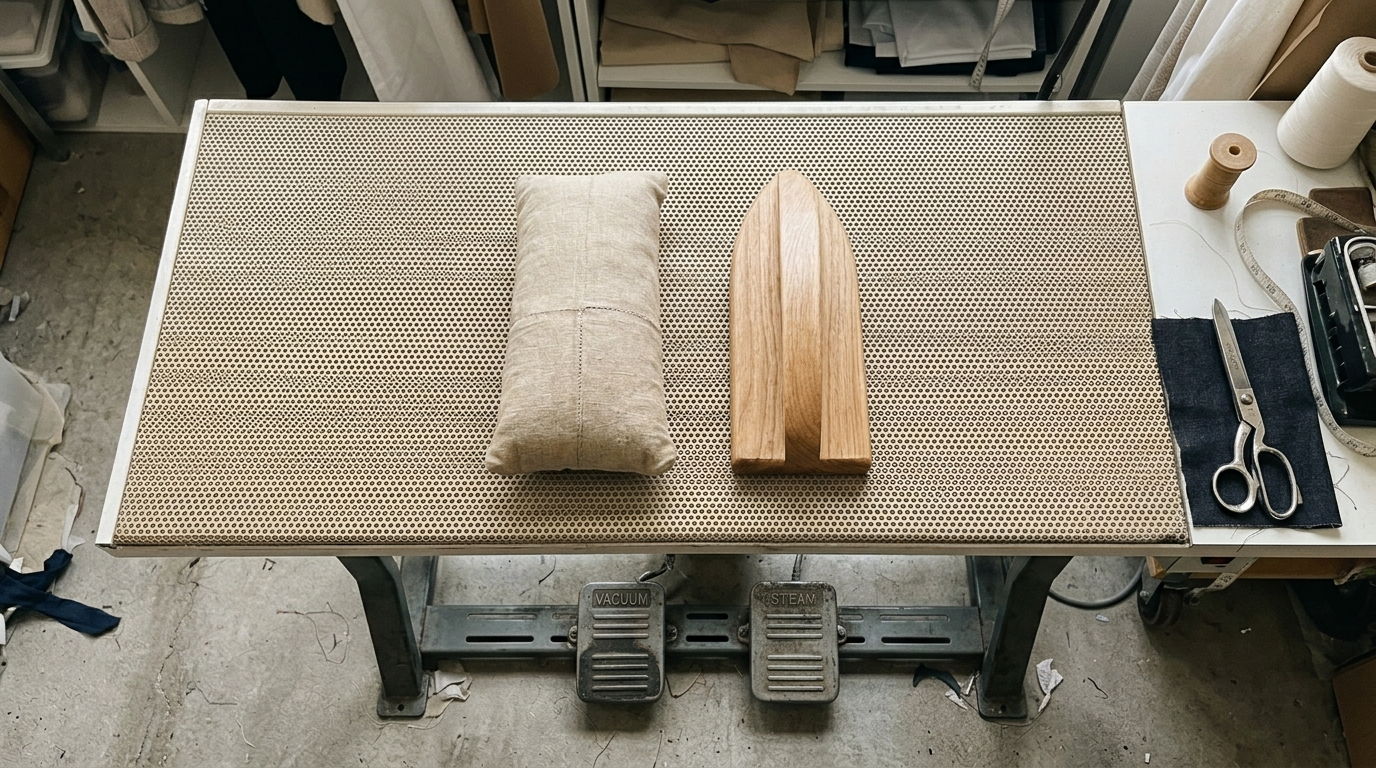
Vacuum systems
At this level, the steam source becomes part of a complete garment-finishing system.
Boutique and Tailoring Shop Use Cases: Choosing the Right Steam Setup
The best answer to steam iron vs steam boiler for tailoring depends on the type of garments your business handles.
A wedding dress boutique, a men’s tailoring shop, and a clothing alteration counter may all work with fabric, but their steam requirements are very different.
A useful way to choose equipment is to match your steam system to your daily pressing workload, garment type, and customer expectations.
Steam Equipment Recommendations by Business Type
Business Type | Recommended Setup | Why |
|---|---|---|
Home tailor | Professional steam iron | Affordable, compact, enough for occasional pressing |
Sewing studio | Gravity-feed iron | Longer sessions with better water capacity |
Clothing boutique | Gravity-feed iron or compact boiler | Handles inventory preparation and customer alterations |
Tailoring shop | Boiler-fed iron system | Faster workflow and consistent steam |
Bridal/formalwear specialist | Boiler + professional pressing tools | Better control for delicate and structured garments |
Uniform supplier | Commercial boiler system | High-volume daily pressing |
Garment factory | Industrial steam system | Multiple stations and continuous operation |
Best Steam Setup for Clothing Boutiques
Clothing boutiques often have different priorities from traditional tailoring shops.
The equipment is not only used for production. It is also part of the customer experience.
A boutique may need to:
Remove shipping wrinkles from new inventory
Prepare garments before display
Perform quick alterations
Refresh expensive fabrics
Deliver a premium fitting experience
For a small boutique, a professional steam iron or gravity-feed iron may be enough.
For a growing boutique selling higher-value clothing, a compact boiler system can become worthwhile because it provides:
Faster garment preparation
More consistent finishing
Less waiting between pieces
A more professional back-room setup
Customers may never see the boiler itself, but they notice the final result:
Cleaner seams
Sharper pleats
Better garment shape
More polished presentation
Best Steam Setup for Tailors and Alteration Shops
Tailoring shops typically place more demands on equipment because garments require shaping rather than simple wrinkle removal.
Common tailoring tasks include:
Jacket shaping
Sleeve adjustments
Trouser alterations
Collar reshaping
Seam finishing
Suit pressing
A professional tailor often needs controlled steam rather than maximum steam.
For a small alterations shop:
Gravity-feed iron advantages
Lower investment
Reliable daily operation
Large water supply
Good control
Easier maintenance
For a busy tailoring business:
Steam boiler advantages
Faster recovery
Continuous steam supply
Less downtime
Ability to connect accessories
Better support for multiple employees
The upgrade point usually arrives when the operator spends more time managing the equipment than pressing garments.
Best Steam Setup for Bridal and Formalwear Businesses
Bridal gowns, tuxedos, and formalwear require special attention because fabrics are often expensive and difficult to replace.
Common materials include:
Silk
Satin
Lace
Velvet
Wool blends
Structured fabrics
These garments often require:
Gentle steam application
Controlled moisture
Careful drying
Specialized pressing tools
A powerful boiler is useful, but too much moisture can create problems.
Excess steam can contribute to:
Water marks
Fabric distortion
Loss of structure
Seam puckering
For premium garments, the goal is not maximum steam output.
The goal is controlled finishing.
A boiler system paired with proper pressing tools gives experienced operators more control during demanding work.
When a Tailoring Shop Should Upgrade From Iron to Boiler
Many businesses do not need a boiler immediately.
A common growth path looks like this:
Stage 1: Professional Steam Iron
Best for:
New businesses
Side businesses
Low order volume
Upgrade when:
Refilling becomes frequent
Steam consistency becomes frustrating
Pressing takes too long
Stage 2: Gravity-Feed Iron
Best for:
Dedicated sewing rooms
Boutique alterations
Serious tailoring work
Upgrade when:
Daily pressing volume increases
Multiple garments require finishing every day
Steam recovery becomes a bottleneck
Stage 3: Mini Boiler System
Best for:
Growing tailoring businesses
Bridal studios
Clothing boutiques
Upgrade when:
Employees share equipment
Customer deadlines require faster turnaround
Accessories are needed
Stage 4: Commercial Boiler System
Best for:
Production environments
Uniform companies
Dry cleaners
Large tailoring operations
At this stage, steam equipment becomes part of the production workflow.
Product Bundle Recommendations for Tailors and Boutiques
Many buyers make the mistake of purchasing only the iron.
A professional pressing setup is a system.
The best results usually come from combining:
Steam source
Professional iron
Pressing surface
Fabric protection tools
Maintenance accessories
Starter Garment Care Bundle
Best for: New tailors, small boutiques, home studios
Includes:
Professional steam iron
Quality ironing board
Press cloth
Tailor’s ham
Sleeve board
Water treatment supplies
Best for businesses building professional pressing habits before upgrading equipment.
Boutique Finishing Bundle
Best for: Clothing boutiques and alteration counters
Includes:
Gravity-feed iron
Dedicated pressing station
Garment steamer
Sleeve board
Pressing accessories
Cleaning and maintenance supplies
Ideal for preparing inventory and handling customer adjustments.
Professional Tailoring Bundle
Best for: Busy tailoring shops
Includes:
Boiler-fed steam iron
Commercial steam boiler
Spray gun attachment
Professional pressing table
Vacuum capability
Replacement maintenance parts
This setup supports daily garment finishing and improves workflow consistency.
Production Garment Care Bundle
Best for: High-volume operations
Includes:
Commercial steam boiler
Multiple iron stations
Industrial pressing equipment
Automatic water feed
Finishing accessories
Designed for businesses where pressing speed directly affects revenue.
Why Buying a Complete Garment Care Bundle Makes Sense
A common mistake is upgrading one piece of equipment without considering the rest of the pressing system.
For example:
A powerful boiler paired with a poor pressing surface may not improve results.
A high-quality iron without proper support tools limits what the operator can achieve.
Professional finishing requires:
Steam + Pressure + Support + Drying
A complete garment care bundle helps ensure every part of the process works together.
For tailoring businesses ready to upgrade from consumer equipment, shop professional garment care bundles that combine steam boilers, irons, and finishing accessories for business use.
Commercial CTA: Shop garment care bundles
Steam Boiler Buying Guide for Tailoring Businesses
Before purchasing a steam boiler, evaluate these factors.
1. Steam Output
Steam output determines how quickly the system can support pressing work.
Look at:
Steam pressure
Evaporation rate
Recovery time
A small boutique may only need a compact system.
A production shop requires significantly higher output.
2. Manual Fill vs Automatic Fill
Manual Fill Boilers
Advantages:
Lower cost
Simple operation
Easier installation
Disadvantages:
Requires downtime for refilling
Less suitable for continuous work
Automatic Fill Boilers
Advantages:
Continuous operation
Less interruption
Better for busy shops
Disadvantages:
Higher cost
More components to maintain
3. Number of Operators
A single tailor may only need one iron.
A larger shop may need:
Multiple pressing stations
Multiple operators
Shared steam supply
A boiler system allows easier expansion.
4. Fabric Types
Different fabrics require different steam approaches.
Fabric | Steam Consideration |
|---|---|
Wool | Controlled steam and careful drying |
Cotton | Handles stronger pressing |
Linen | Benefits from moisture and heat |
Silk | Requires gentle control |
Velvet | Needs specialized pressing techniques |
Synthetic fabrics | Lower heat requirements |
5. Workspace Requirements
Steam boilers require more planning than a standard iron.
Consider:
Floor space
Electrical requirements
Hose routing
Ventilation
Customer visibility
Maintenance access
A compact boutique may need a smaller unit, while a production shop may require a dedicated pressing area.
Common Mistakes When Buying Steam Equipment
Buying More Steam Than You Need
More power does not automatically mean better results.
A beginner with an industrial boiler can still damage garments.
Skill and control matter.
Choosing Based Only on Price
The cheapest equipment often creates hidden costs:
Downtime
Replacement purchases
Poor finishing results
Slower workflow
Commercial users should consider total operating cost, not only purchase price.
Ignoring Maintenance
Steam equipment requires regular care.
Maintenance includes:
Descaling
Cleaning water pathways
Checking hoses
Inspecting valves
Replacing worn components
Poor maintenance can cause:
Water spitting
Reduced steam output
Fabric damage
Equipment failure
Forgetting the Pressing Table
A steam system cannot compensate for a poor work surface.
Professional pressing often requires:
Stable table
Vacuum capability
Heat-resistant cover
Correct garment support tools
The table is part of the finishing system.
Commercial Steam Boiler Safety and Compliance for Tailoring Shops
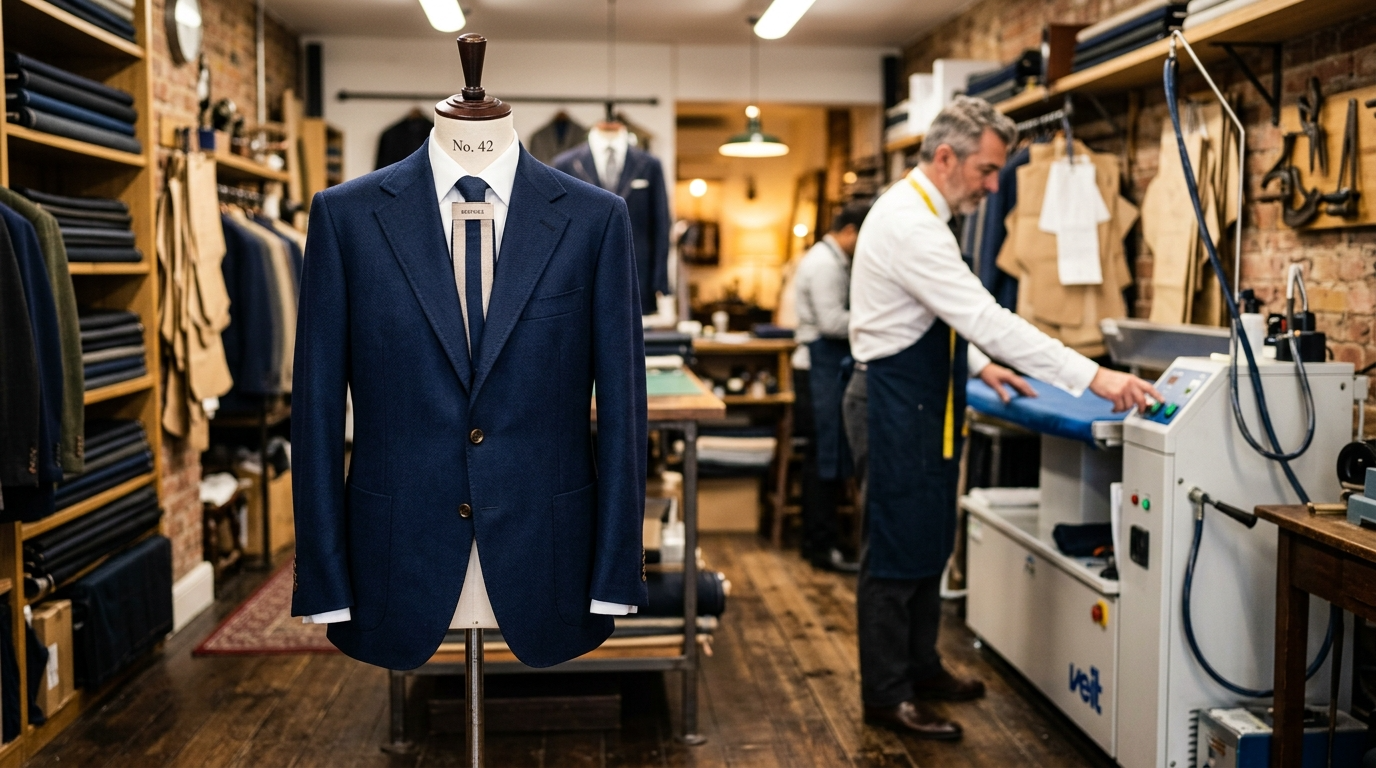
When a tailoring business moves from a standard steam iron to a commercial steam boiler, the equipment category changes.
A basic iron is an appliance.
A steam boiler is pressure equipment.
That means commercial buyers should consider not only steam output and price, but also safety, certifications, maintenance requirements, and service availability.
Before purchasing a commercial steam boiler, check:
Pressure vessel certification
Electrical safety certification
Pressure relief systems
Manufacturer support
Replacement part availability
Local workplace requirements
ASME’s Boiler and Pressure Vessel Certification Program covers standards for the design, fabrication, assembly, and inspection of boiler and pressure vessel components.
Source: https://www.asme.org/certification-accreditation/Boiler-and-Pressure-Vessel-Certification
For commercial tailoring operations, certification helps confirm that equipment is designed for professional use rather than occasional household operation.
Important Safety Features for Commercial Steam Boilers
Pressure Relief Valve
A professional boiler should include appropriate safety systems that prevent dangerous pressure buildup.
Always verify:
Relief valve installation
Correct pressure rating
Maintenance schedule
Electrical Protection
Commercial steam equipment requires proper electrical installation.
Check:
Voltage requirements
Grounding
Circuit capacity
Installation instructions
Electrical requirements vary depending on the boiler size and location.
Water Quality Management
Water quality affects both performance and equipment lifespan.
Mineral buildup can cause:
Reduced steam output
Clogged components
Water spitting
Shorter equipment life
Many commercial operators use treated or filtered water to reduce scale buildup.
Steam Iron vs Steam Boiler: Final Recommendation
The best choice between a steam iron vs steam boiler depends on the size and needs of your tailoring business.
There is no single “best” option for every buyer.
The correct equipment is the one that matches your workflow.
Choose a Steam Iron If:
A professional steam iron is usually the right choice if you:
Work from home
Press only a few garments per week
Run a small sewing business
Need a low-cost professional upgrade
Have limited workspace
A quality iron combined with good pressing tools can produce excellent results.
Choose a Gravity-Feed Iron If:
A gravity-feed iron is a strong middle option if you:
Press garments regularly
Want better water capacity
Need a dedicated pressing station
Want professional performance without a full boiler investment
Many serious tailors use gravity-feed systems successfully for years.
Choose a Steam Boiler If:
A boiler system is worth the investment when you:
Press garments every day
Have customer deadlines
Need faster turnaround
Have multiple employees
Want accessory compatibility
Are losing time waiting for steam recovery
For a growing tailoring business, the biggest benefit is not simply stronger steam.
It is improved workflow.
Choose a Commercial Steam System If:
Large operations should consider a complete finishing setup with:
Commercial boiler
Professional irons
Pressing tables
Vacuum systems
Multiple stations
At this level, the equipment becomes part of the production process.
The Best Steam Setup Is a Complete Pressing System
The biggest lesson in the steam iron vs steam boiler tailoring debate is that the steam source is only one part of garment finishing.
Professional results come from combining:
Controlled steam
Relaxes fibers without oversaturating fabric.
Correct pressure
Creates shape and structure.
Proper support tools
Controls collars, sleeves, curves, and seams.
Drying
Locks the final garment shape.
A powerful boiler cannot replace pressing technique.
A skilled tailor with the right tools will outperform expensive equipment used incorrectly.
Frequently Asked Questions About Steam Iron vs Steam Boiler
Is a steam boiler the same as a steam iron?
No.
A steam iron is the handheld tool that touches the garment. A steam boiler is the machine that produces steam and sends it to the iron through a hose.
In a boiler system, the iron and boiler work together, but they perform different jobs.
Source: https://www.goldstartool.com/irons-steam-press-machines/
Do professional tailors use steam irons or steam boilers?
Both.
Small tailoring businesses often use professional steam irons or gravity-feed irons.
Busy tailoring shops, bridal businesses, dry cleaners, and garment production facilities typically use boiler-fed systems because they need consistent steam output and faster workflow.
Is a gravity-feed iron a steam boiler?
No.
A gravity-feed iron has an external water tank positioned above the iron. Water flows into the iron, where steam is generated.
A boiler system creates steam separately in a pressurized tank and delivers it through a hose.
This difference affects steam pressure, recovery, and commercial capability.
Source: https://www.wawak.com/497e4a/globalassets/documents/waw_pim/irn1/irn17_pa/irn17_parent/instructions
Which gives a better finish: steam iron or steam boiler?
A steam boiler can provide better performance for high-volume businesses because it delivers more consistent steam.
However, final garment quality depends on:
Operator skill
Fabric knowledge
Pressing technique
Support tools
Drying process
A skilled tailor can achieve excellent results with a gravity-feed iron.
Can too much steam damage clothes?
Yes.
Excess moisture can cause:
Fabric distortion
Shrinkage
Water marks
Seam puckering
Loss of garment structure
This is especially important for:
Wool suits
Luxury fabrics
Bridal gowns
Structured jackets
More steam is not always better.
Controlled steam is better.
What should a new tailoring shop buy first?
A new shop should usually start with:
Professional steam iron
Quality pressing board
Press cloth
Tailor’s ham
Sleeve board
Clapper
Upgrade to a gravity-feed iron or boiler system when pressing volume becomes the limitation.
How much does a commercial steam boiler for tailoring cost?
Commercial steam boiler pricing varies based on:
Capacity
Pressure rating
Certification
Features
Included accessories
Small commercial systems may start around the low thousands of dollars, while larger continuous-duty systems can cost significantly more.
For businesses comparing equipment, consider the complete package rather than only the boiler price.
A garment care bundle that includes the boiler, iron, accessories, and support equipment may provide better value than purchasing individual components.
What certifications should I look for in a commercial steam boiler?
Commercial buyers should look for:
ASME boiler and pressure vessel certification where applicable
Electrical safety certifications
Manufacturer documentation
Proper installation guidance
Certification requirements vary by location, so businesses should confirm local regulations before installation.
Source: https://www.asme.org/certification-accreditation/Boiler-and-Pressure-Vessel-Certification
Upgrade Your Tailoring Business With the Right Garment Care Equipment
Choosing between a steam iron and a steam boiler is ultimately a business decision.
A small boutique may need reliable finishing without unnecessary complexity.
A growing tailoring shop may need faster steam recovery and professional workflow.
A production business may need a complete commercial pressing system.
The right setup improves:
Garment quality
Employee efficiency
Customer turnaround times
Professional presentation
If your shop is ready to move beyond consumer equipment, explore professional garment care solutions designed for boutiques, tailoring businesses, and commercial garment finishing.
Shop garment care bundles for steam boilers, professional irons, and tailoring accessories.


