

TL;DR
Steam odor removal for cars uses high-temperature dry vapor (290°F to 320°F) to kill odor-causing bacteria, open material pores, and lift embedded contaminants from seats, carpets, headliners, and vents. It works well for most odors but rarely solves severe cases alone. The best results come from combining steam with enzyme cleaners, hot-water extraction, and sometimes ozone treatment. For detailing shops and service businesses, adding steam-based odor removal to the service menu commands premium pricing and differentiates your operation from competitors relying on chemicals alone.
Direct Answer: Does Steam Remove Odors From Cars?
Steam removes most car odors by killing odor-causing bacteria and breaking down organic residue using high-temperature dry vapor (around 290°F–320°F). It is highly effective for smoke, pet, mildew, and food smells, but it is not a complete standalone solution for severe contamination like deep urine saturation or heavy smoke damage. The best results come from combining steam with enzyme cleaners, hot-water extraction, and ozone treatment.
Steam Odor Removal Effectiveness Overview
Odor Type | Steam Effectiveness | Best Add-On Method |
|---|---|---|
Cigarette smoke | High (surface-level) | Ozone + enzyme |
Pet urine | Medium | Hot-water extraction |
Mildew / mold | High | Proper drying + ventilation |
Food spills | High | Steam alone or enzyme |
Deep padding contamination | Low | Extraction required |
What Is Steam Odor Removal for Cars?
Steam odor removal for cars is the process of applying pressurized, high-temperature steam to a vehicle’s interior surfaces to neutralize smells at their source. Rather than masking odors with fragrances, steam kills the bacteria, mold spores, and organic residues that actually produce them.
The process targets every interior surface: fabric and leather seats, carpet, headliners, door panels, cup holders, dashboard crevices, and HVAC vents. A commercial-grade steam cleaner heats water in a pressurized boiler to produce dry vapor, typically between 290°F and 320°F, with moisture content below 5%. That vapor exits through specialized nozzles and brush attachments at pressures ranging from 50 to 90 PSI.
This matters because temperatures above 200°F kill odor-causing bacteria on contact. The combination of heat, pressure, and minimal moisture makes steam uniquely suited to car interiors, where excess water can cause more problems than it solves.
For shop owners evaluating high-pressure steam equipment for automotive applications, understanding these specifications is the starting point for making an informed equipment investment.
How Steam Eliminates Car Odors
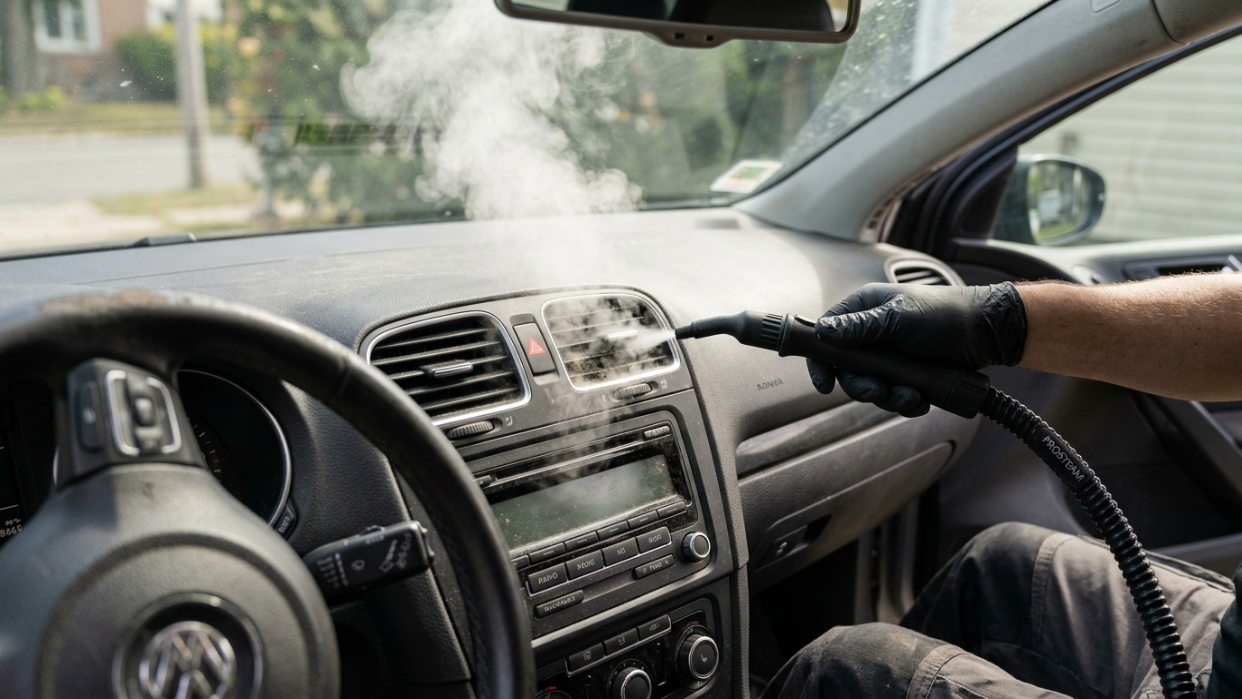
Steam doesn’t just clean surfaces. It works through several mechanisms simultaneously.
Heat kills microorganisms. At 200°F and above, steam destroys bacteria, mold, and mildew on contact. These are the biological agents responsible for most persistent vehicle odors.
Heat opens material pores. The high temperature of steam opens the pores of plastics, leathers, vinyls, and fabrics, releasing trapped particles. Smoke residue bonded to vinyl dashboards, nicotine embedded in seat foam, pet dander woven into carpet fibers: steam loosens all of it so it can be wiped or extracted away.
Steam oxidizes odor molecules. Whether it’s pet smells, cigarette smoke, or mildew, steam oxidizes the organic compounds that produce odors. This is chemical breakdown, not masking.
Low moisture prevents secondary problems. Unlike shampooing or hot-water extraction, steam cleaning leaves significantly less moisture behind. This greatly reduces the chances of creating a new mildew or musty smell, which is a real risk when cleaning vehicle interiors with water-heavy methods.
The result is a sanitized, deodorized interior achieved without harsh chemicals. Practitioners on auto detailing forums note that steamers leave fabrics smelling fresher because they kill bacteria that cause odors, and that many customers respond positively to the chemical-free approach, a selling point that shops can use in their marketing.
How Steam Odor Removal Works in Cars
Step 1: Heat Penetration
Steam at 290°F–320°F penetrates fabric and plastic surfaces.
Step 2: Bacteria Destruction
High heat kills odor-causing bacteria and mold spores instantly.
Step 3: Pore Expansion
Heat opens material pores, releasing embedded contaminants.
Step 4: Contaminant Lift
Residues are loosened for wiping or extraction.
Step 5: Optional Neutralization
Enzyme cleaners or ozone eliminate remaining odor molecules.
Dry Vapor vs. Wet Steam: Why the Distinction Matters for Your Shop
This is one of the most misunderstood aspects of steam odor removal for cars, and getting it wrong can damage a customer’s vehicle and your reputation.
Dry Vapor Steam
A dry vapor steam cleaner (sometimes called a steam vapor system) produces steam with less than 5% moisture content. The boiler temperature typically reaches 290°F to 320°F. What exits the nozzle is mostly gas, not liquid water. This is what professional operations need inside vehicles because it sanitizes and deodorizes without saturating materials.
Wet Steam
Lower-grade steam cleaners with boiler temperatures between 250°F and 290°F produce noticeably wetter output. The moisture content climbs above 5 to 6%, and in consumer-grade handheld units, it can be much higher. This extra water soaks into seat foam and carpet padding.
Why This Matters in a Car
Using too-wet steam inside a vehicle can create a new mold problem, which means a callback from an unhappy customer. Seat cushion foam and carpet underlayment trap moisture, and in a closed vehicle interior (especially in warm climates), that moisture becomes a breeding ground for mildew.
The practical takeaway: when selecting equipment for your shop, prioritize boiler temperature and moisture content. Anything producing dry vapor at 290°F or above with under 5% moisture is in the right range. Understanding the differences between steamer types helps clarify which systems deliver true dry vapor versus machines that are essentially spraying hot water.
Common Car Odors Steam Can Address
Cigarette and Smoke Odor
Cigarette smoke odor is widely considered the hardest smell to remove from a vehicle. It doesn’t just sit on the surface. It embeds deep into fabrics, plastics, and the entire interior environment. The headliner absorbs the worst of it because smoke rises, and that material is constantly fighting gravity with adhesive backing.
One professional detailer described the process on a forum: carefully using steam along with a brush attachment to agitate the headliner surface, then following with a heated carpet extractor while the material remained warm. The result was about a 90% transformation, dramatic improvement but not perfection.
For cars with light or occasional smoke exposure, steam combined with an enzyme-based odor treatment is usually enough to eliminate the smell completely. Heavy smoker vehicles almost always need ozone treatment as well. Shops that can offer the full stack of treatments (steam, enzyme, extraction, ozone) capture the most revenue per ticket.
Pet Odors
Pet hair, urine, and dander are common sources of car odor. Steam handles the surface-level contamination effectively, killing bacteria in fabric and lifting dander from carpet fibers. But steam does not extract liquid from deep padding. If pet urine has soaked through carpet into the underlayment, you need to pair steam with a carpet extractor to pull that contamination out.
Mildew and Mold
Steam sanitizes hard surfaces and kills mold spores at high temperatures without chemicals. This makes it ideal for treating dashboard vents, plastic trim, and rubber seals where mold colonies form. The critical caveat: allow thorough drying after treatment. Closing up a vehicle while surfaces are still damp recreates the conditions that caused the mold in the first place.
Food Spills and Organic Matter
Coffee spills, fast food residue, milk that found its way under a car seat three months ago. These organic materials respond well to steam cleaning. High-temperature steam breaks down these substances at a molecular level, making them easy to wipe or extract. Cup holders, seat tracks, and the gaps between center console components are notorious hiding spots for decomposing food, and steam nozzles reach these areas effectively.
Body Odor and General Staleness
Older vehicles and daily drivers accumulate a general staleness from sweat, skin oils, and everyday use. Steam refreshes these interiors quickly. It’s often the simplest odor category to address, which makes it an easy upsell for shops already performing interior details. The contamination is primarily surface-level, so the turnaround time is fast and the results are immediately noticeable.
What Steam Can’t Do Alone
Honesty matters here, both for building trust with your customers and for setting realistic expectations. Most vendor pages oversell steam as a complete solution. Practitioners consistently report that steam alone isn’t enough for severe cases.
Deep padding contamination. Steam sanitizes surfaces and loosens embedded particles, but it doesn’t extract liquids or dissolved contaminants from deep within seat foam or carpet padding. As one detailer on a UK forum noted, steam cleaners will kill bacteria and blast out dirt, but unless the ingrained dirt is extracted, they can’t match what a wet/vac does. For deep contamination, steam and extraction work together as complementary tools in a well-equipped shop.
HVAC duct interiors. Steam can be introduced through vents to treat portions of the ductwork, but it can’t reach every surface inside a complex HVAC system. Ozone generators, which fill the entire system as a gas, handle this better.
Inaccessible areas. No matter how thoroughly you clean a vehicle’s interior, odors can seep into areas that are physically unreachable, behind panels, inside structural cavities, within wiring harnesses. The goal with thorough cleaning is to minimize the smell to a tolerable level until it can fully dissipate naturally. That’s an honest assessment from a working detailer, and it’s one worth conveying to customers upfront.
The cabin air filter. One of the most overlooked sources of persistent odor is the cabin air filter. A contaminated filter holds odor particles and continues circulating them throughout the vehicle every time the fan runs. Replacing it costs $15 to $40 and takes about 15 minutes. Many detailers call this the single cheapest fix for car odors, and reminding customers about it builds credibility.
Steam vs. Other Odor Removal Methods
No single method handles every situation. A well-rounded shop stocks multiple tools. Here’s how the main approaches compare.
Method | Best For | Limitations |
|---|---|---|
Steam cleaning | Killing surface bacteria, loosening embedded residues, chemical-free treatment of fabric/leather/plastic/vents | Cannot extract deep liquids from padding; limited reach into HVAC ductwork |
Hot-water extraction | Deep removal of liquid contamination from carpet padding and seat foam | Long dry times; can cause mold if not extracted fully |
Enzyme cleaners | Breaking down organic compounds (nicotine, urine, vomit) at a molecular level | Require 10 to 15+ minutes of dwell time; can over-saturate foam |
Ozone treatment | Severe and persistent odors; reaching inaccessible areas inside HVAC, behind panels | Harmful to breathe at high concentrations; requires professional equipment and safety protocols |
Baking soda/charcoal | Mild surface-level odor absorption | Can absorb some airborne odor but can’t pull nicotine residue from foam cushions or clean duct interiors |
Air fresheners | Temporary masking | Quick solutions like sprays or air fresheners never work long-term. They cover the odor temporarily without addressing the root cause. |
The professional consensus across detailing forums and training materials is clear: a commercial steam cleaner combined with an enzyme cleaner will most likely remove all the sources of odor stuck within a car’s materials. For severe cases (heavy smoke, fire damage), ozone is what makes the difference. Shops that can offer the full range of treatments handle any job that walks through the door.
Which Method Should You Use?
Use Steam when:
Odor is surface-level or moderate
You want chemical-free cleaning
You need fast interior refresh
Use Extraction when:
Liquids have soaked into carpet or foam
Urine or beverage spills are deep-set
Use Enzymes when:
Organic odors persist after cleaning
You need molecular breakdown of contaminants
Use Ozone when:
Smoke damage is severe
Odors are coming from inaccessible areas
The Professional Car Odor Removal Process
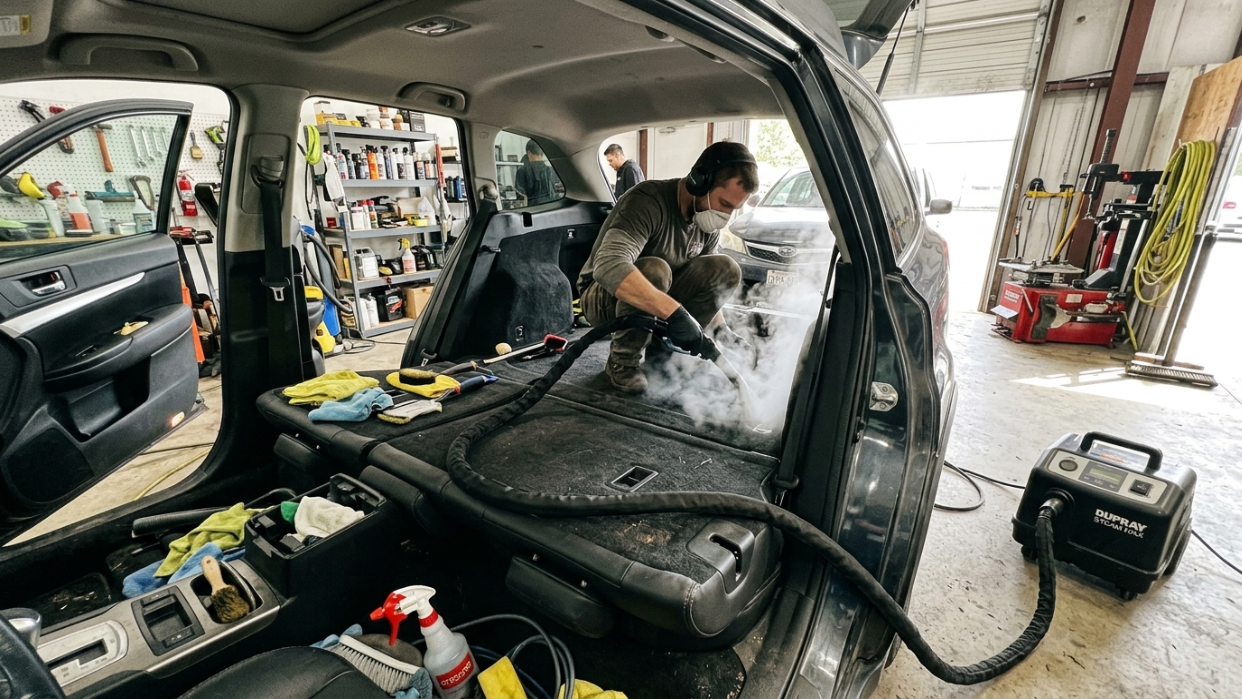
Across professional detailing communities, a consistent multi-step workflow has emerged. Steam plays a central role, but it’s one part of a larger system. Standardizing this workflow in your shop ensures consistent results and lets you train new technicians efficiently.
Step 1: Inspect and identify the odor source. This sounds obvious, but skipping it leads to wasted effort. Is it surface-level staleness or deep urine contamination? The answer determines the entire treatment plan, and it determines how you should price the job.
Step 2: Vacuum thoroughly. Remove loose debris from seats, carpet, floor mats, the headliner, and under the seats. You can’t steam-clean effectively through a layer of crumbs and pet hair.
Step 3: Replace the cabin air filter. If the filter is contaminated, every other step is undermined because the HVAC system keeps recirculating odor particles.
Step 4: Steam clean all surfaces. Work through seats, carpets, headliner (carefully, with controlled steam and light pressure), door panels, vents, and cup holders. Use brush attachments to agitate fabric. For leather, wrap the cleaning tool with a microfiber towel rather than applying steam directly, as concentrated heat can damage coatings.
Understanding proper PSI settings matters here. At least 50 PSI is needed for effective cleaning, with commercial-grade units delivering 290°F at the boiler and 240°F at the nozzle tip. Units capable of 70 to 90 PSI give technicians more flexibility when working stubborn contamination.
Step 5: Apply enzyme treatment. After steaming, spray an enzyme-based odor eliminator on all fabric surfaces. Enzyme cleaners contain biological compounds that break down the organic molecules in nicotine, tar residue, urine, and other organic matter.
Step 6: Treat the HVAC system. The most effective way to get deep into air vents and remove embedded odor is to introduce steam through the intake or one of the vents, allowing it to flow through the system while removing residue.
Step 7: Extract if necessary. For deep-pad contamination (urine, water damage, heavy spills), follow with a hot-water extractor while materials are still warm from steaming.
Step 8: Ozone treatment if needed. For severe cases, run an ozone generator inside the closed vehicle for 2 to 4 hours with doors and windows sealed. This keeps the concentration high enough to penetrate duct interiors, foam cushion cavities, and gaps between panels.
Step 9: Dry thoroughly. Leave windows cracked or use fans to ensure complete drying. This prevents the mold cycle from starting over.
Equipment Specs That Matter for Shop Owners
When selecting commercial steam equipment for odor removal work, these specifications determine whether the investment will actually deliver results across multiple vehicles per day.
Boiler temperature. Minimum 290°F for effective odor work. Below that threshold, steam is too wet and too cool to kill bacteria reliably or open material pores. Commercial units reach 290°F to 320°F at the boiler.
Nozzle tip temperature. Heat is lost between the boiler and the nozzle. Look for at least 240°F at the tip for sustained odor removal performance.
Pressure (PSI). At least 50 PSI is the baseline for effective cleaning. Professional detailers using steam for odor work typically use equipment in the 50 to 75 PSI range, with some commercial units pushing up to 90 PSI for heavy-duty applications.
Moisture content. Under 5% for dry vapor. This is non-negotiable for car interiors.
Boiler capacity and continuous duty. Larger boilers (2+ gallons) allow continuous work without stopping to refill. A typical steam detail uses only 1 to 2 gallons of water, but shops processing multiple vehicles per day need equipment that can keep up. Running dry mid-job disrupts workflow and drops temperature. For high-volume operations, automatic pump-fill systems eliminate manual refilling entirely.
Build quality and certification. ASME and UL certification matters for commercial environments, both for safety compliance and insurance purposes. Equipment built for continuous commercial duty pays for itself faster than consumer-grade units that overheat or fail under sustained use. One user on r/BenchJewelers reported running Hoffman equipment for over 24 years, a testament to the durability gap between commercial and consumer builds.
What to avoid. Consumer handheld steamers don’t produce enough continuous steam or heat for odor work. They might loosen some surface grime, but they won’t reach the temperatures needed to kill bacteria or break down odor compounds. Shops that try to cut corners on equipment end up with inconsistent results and frustrated customers. Investing in commercial-grade equipment that delivers sustained high-temperature, high-pressure output is fundamental to offering odor removal as a reliable, repeatable service.
What to Look for Before Buying a Steam Cleaner for Cars
Not all steam machines are suitable for automotive odor removal. Consumer units often fail because they cannot maintain dry vapor output or consistent temperature under load.
Minimum requirements for professional use:
290°F+ boiler temperature
<5% moisture output (dry vapor)
50+ PSI continuous pressure
Continuous refill or large boiler capacity
ASME or UL certification
Avoid:
Handheld consumer steamers
Low-pressure garment steamers
Units without temperature specs
Building Odor Removal Into Your Service Menu
Adding steam-based odor removal creates a high-margin service line that few competitors can match with chemicals alone. Here’s how successful shops structure their offerings.
Tiered Service Packages
Most detailing businesses that have added steam find success with tiered pricing:
Basic steam refresh (surface odors, general staleness): Steam clean all interior surfaces with enzyme follow-up. Typical turnaround: 45 to 60 minutes per vehicle.
Deep odor treatment (moderate smoke, pet contamination): Steam, enzyme treatment, extraction on affected areas, cabin filter replacement. Turnaround: 2 to 3 hours.
Full odor restoration (heavy smoke, flood damage, severe biological contamination): Complete multi-step process including steam, enzyme, extraction, HVAC treatment, and ozone. Turnaround: 4 to 6 hours.
One detailer shared their pricing structure: $175 for an interior, extra $50 for steam, extra $75 for extraction. Severe multi-surface contamination starts at $400. The steam add-on alone often pays for itself within months of equipment purchase.
Why Steam Odor Removal Is a High-Profit Detailing Service
Steam odor removal is one of the highest-margin interior services in automotive detailing because:
Customers cannot DIY effectively
It solves urgent odor problems
It supports tiered pricing models
It increases upsell opportunities (enzyme, ozone, extraction)
Shops that offer steam-based odor removal often position it as a premium “odor restoration service” rather than a basic cleaning add-on.
Equipment ROI
For shop owners evaluating the ROI of adding steam to their service menu, the math often works out favorably. Odor removal commands premium pricing because customers have a problem they can’t solve themselves. A commercial steamer that runs reliably across multiple jobs per day, backed by warranties and technical support, is a production tool, not an expense.
The global steam cleaner market is projected to reach $6.2 billion by 2030, growing at 8.1% annually, reflecting increasing adoption across industries including automotive detailing. Shops that invest now position themselves ahead of growing demand for chemical-free, eco-conscious cleaning services.
Safety Precautions for Steam Cleaning Car Interiors
Steam is powerful, and misuse causes real damage. Every technician in your shop should understand these guidelines.
Headliner adhesive. The headliner is the most sensitive part of any car interior. Too much steam or too-wet steam softens the adhesive, causing the headliner to sag. Multiple practitioners on detailing forums warn about this. Use light, controlled passes. Keep the nozzle moving. Never soak the headliner.
Electronics. Keep steam away from airbag sensors, infotainment screens, gauge clusters, and any visible electronic components. Moisture can damage sensitive parts or trigger fault codes that require dealer-level diagnostic tools to clear, creating liability for your shop.
Leather care. Use light steam to open leather pores, then follow immediately with a leather cleaner and conditioner. Direct, prolonged steam exposure can dry leather and damage protective coatings. Always wrap the cleaning tool in a microfiber towel when working on leather.
Distance technique. Distance from the surface matters: 6 to 8 inches for most surfaces, 10 to 12 inches for leather and delicate materials, 4 to 6 inches for stubborn stains. These are guidelines that experienced detailers have converged on through practice. Review a broader list of common upholstery steam mistakes before putting a new technician on their first vehicle.
Setting customer expectations. Any service promising complete odor elimination in every case is setting itself up for complaints. Odors can seep into areas that are physically inaccessible. The realistic goal is thorough enough cleaning to minimize the smell to a tolerable level, with remaining traces dissipating naturally over time. Communicating this upfront protects your shop and builds trust.
Common Mistakes in Steam Car Odor Removal
Over-wetting surfaces
Using wet steam instead of dry vapor can saturate seats and cause mold growth.
Ignoring HVAC system
Failing to treat air vents allows odors to continuously recirculate.
Skipping cabin filter replacement
A dirty filter reintroduces odor immediately after cleaning.
Overheating headliners
Excess steam can weaken adhesive and cause sagging.
Not drying properly
Trapped moisture can recreate mildew odors within 24–48 hours.
Key Takeaway
Steam odor removal is most effective as a system, not a standalone method. It works best when combined with enzyme cleaners for organic breakdown, extraction for deep contamination, and ozone for inaccessible odor sources. Businesses that position steam as part of a full odor restoration workflow achieve higher success rates and higher service pricing.
Frequently Asked Questions
Does steam completely remove cigarette smell from a car?
For light to moderate smoke exposure, steam combined with enzyme cleaners usually eliminates the smell entirely. Heavy smoker vehicles (years of daily smoking) typically need the full treatment: steam, enzyme cleaners, extraction, cabin air filter replacement, and ozone. Even then, some residual odor may persist in inaccessible cavities. Practitioners report about 90% improvement on heavily contaminated headliners as a realistic benchmark. Setting this expectation with the customer before starting the job prevents disputes later.
What kind of steamer do I need for car odor removal in a shop setting?
Consumer and hobby-grade steamers don’t produce enough heat or pressure for reliable results. For meaningful odor removal, you need commercial equipment that reaches at least 290°F at the boiler with under 5% moisture content and at least 50 PSI. Equally important for a shop environment is continuous-duty capability, because you can’t afford 30-minute cooldown periods between vehicles. ASME and UL certification adds a layer of safety compliance that matters for commercial insurance.
How long does steam odor removal take for a car?
A basic steam treatment of the full interior takes 30 to 60 minutes. A complete odor removal process (vacuum, steam, enzyme treatment, HVAC treatment, extraction, and ozone) can take 3 to 6 hours or more, with ozone treatment alone requiring 2 to 4 hours of sealed vehicle time. Add drying time on top of that. Building accurate time estimates into your pricing is essential for keeping your shop schedule on track.
Is steam safe for leather car seats?
Yes, with proper technique. Use light steam at 10 to 12 inches distance, keep the nozzle wrapped in a microfiber towel, and never linger in one spot. Follow immediately with a leather conditioner to restore moisture and protect the coating. Direct, concentrated steam applied too close or for too long will dry and potentially crack leather. This is a common training point for new technicians.
What’s better for car odors, steam or ozone?
They serve different purposes and work best together. Steam physically removes contaminants from accessible surfaces. Ozone is a gas that penetrates everywhere, including inside HVAC ducts, behind panels, and into foam cores that steam can’t reach. For mild odors, steam alone may suffice. For severe or persistent odors, the professional approach is steam first (to remove what you can), then ozone (to neutralize what you can’t reach). Shops that offer both capture higher-value jobs.
Does steam cleaning a car use a lot of water?
No. A typical steam detail uses only 1 to 2 gallons of water, far less than traditional shampooing or extraction methods. This is a practical advantage for mobile detailing operations and shops in water-restricted areas. It also means less drying time, faster vehicle turnaround, and fewer callbacks for residual moisture issues.
How often should detailing shops recommend steam cleaning for odor prevention?
For most vehicles, steam cleaning the interior once or twice a year prevents odor buildup. Cars with pets, children, or heavy daily use benefit from quarterly treatments. Offering steam-based maintenance packages gives customers a reason to return regularly rather than waiting until odors become severe, creating a steady recurring revenue stream for your shop.


