

TL;DR
Steam safety in light manufacturing covers the standards, devices, maintenance practices, and regulatory requirements that prevent accidents when using steam equipment in small commercial settings like jewelry shops, hat stores, garment businesses, and dental labs. Key elements include ASME/UL certification, safety valves, low-water cutoffs, OSHA compliance, and routine inspections. Roughly 80% of boiler incidents trace back to low-water conditions and operator error, both preventable with proper equipment and training. Understanding these requirements protects your workers, your customers, and your business.
Steam Safety in Light Manufacturing: Quick Answer
Steam safety in light manufacturing means operating commercial steam equipment in compliance with safety regulations while preventing burns, pressure failures, and equipment damage. Safe operation depends on using certified equipment, installing required safety devices, maintaining proper water levels, performing regular inspections, and training operators.
The five most important safety requirements are:
– Use ASME and UL-certified steam equipment.
– Test the low-water cutoff and safety valve regularly.
– Follow OSHA requirements for guarding hot surfaces.
– Complete required inspections based on local boiler laws.
– Train every operator before allowing independent equipment use.
Businesses that follow these practices significantly reduce accident risk while remaining compliant with state and federal regulations.
What “Steam Safety in Light Manufacturing” Actually Means
Steam safety in light manufacturing is the complete system of standards, safety devices, operating practices, and certifications designed to prevent accidents when using steam-generating equipment in small commercial environments. This includes jewelry steamers, hat shaping stations, garment finishing setups, dental lab cleaners, upholstery steamers, shrink packaging systems, and similar trade applications.
The phrase is important to parse correctly. “Light manufacturing” distinguishes these operations from heavy industry (power plants, refineries, large-scale factories). The equipment is smaller, the capacities are lower, and the systems are simpler. But the physics of steam are identical regardless of scale. Water at 212°F becomes a gas that expands to roughly 1,700 times its liquid volume. That expansion carries enormous energy, and it doesn’t care whether it’s happening inside a 200-gallon industrial boiler or a 2-gallon shop unit.
For a deeper look at the types of equipment used across these trades, the commercial steam equipment guide covers the full range of systems and their applications.
If you’re looking for equipment that already meets safety certification standards, you can browse certified commercial steamers built specifically for light manufacturing use.
Steam Safety Requirements at a Glance
Area | Minimum Requirement |
|---|---|
Boiler Construction | ASME Certified |
Electrical Safety | UL 834 Listed |
Pressure Protection | Safety Relief Valve |
Water Protection | Low-Water Cutoff |
Monitoring | Pressure Gauge + Sight Glass |
OSHA | Guard exposed hot piping |
Inspection | Annual (varies by state) |
Operator | Safety Training |
Maintenance | Scheduled inspections |
Why Steam Safety Matters: The Real Risks
Steam Burns Are Uniquely Dangerous
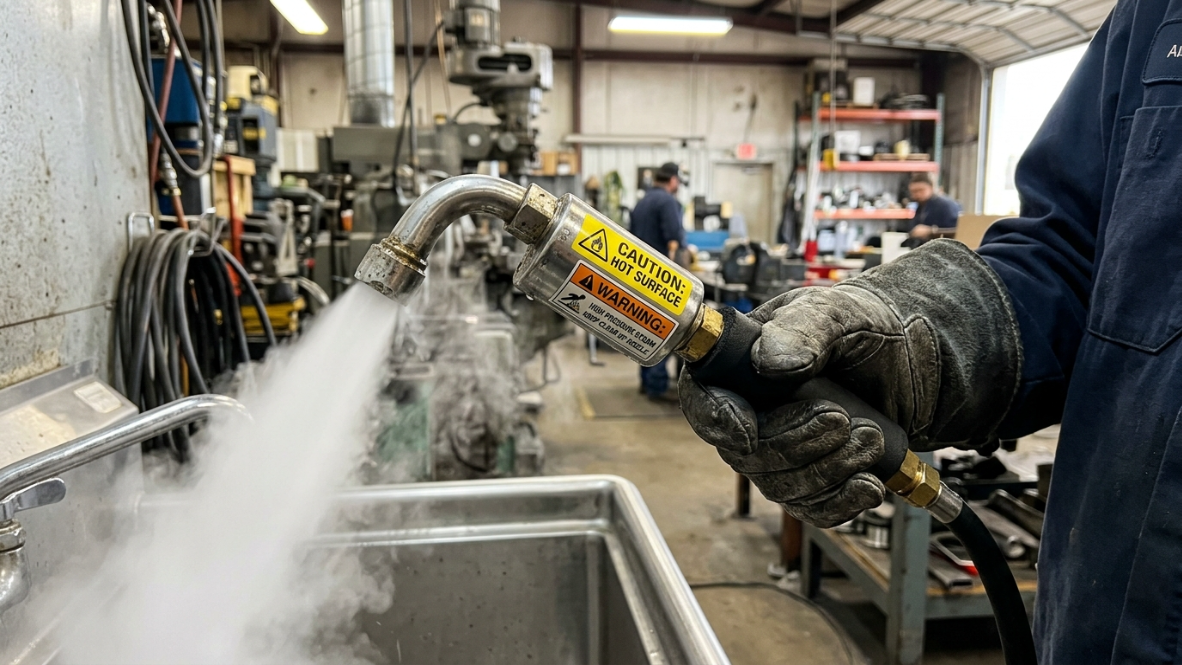
Steam at atmospheric pressure is 212°F. Pressurized steam at 70 to 90 PSI reaches significantly higher temperatures. Unlike hot water, steam releases latent heat when it contacts skin, meaning it delivers far more thermal energy per unit than boiling water. Burns from steam are fast, deep, and serious.
The Numbers Tell the Story
Data from the National Board of Boiler and Pressure Vessel Inspectors shows that roughly 80% of reported industrial boiler accidents trace back to two root causes: low-water conditions and operator error. These aren’t exotic failure modes. They’re preventable problems that happen when operators skip routine checks or don’t understand their equipment.
In 2024, OSHA reported 3 boiler accident fatalities. Technical Safety BC documented 61 incident reports related to boilers, pressure vessels, and refrigeration technology in the same year. These numbers are small compared to other workplace hazards, but each incident represents a catastrophic event that was almost certainly avoidable.
The “It Can’t Happen to Me” Problem
Small business operators often assume that steam safety concerns apply only to massive industrial facilities. This is wrong. Even a small electric boiler contains stored energy. A 2-gallon vessel at 70 PSI holds enough force to cause serious injury if a safety valve fails or if the tank is allowed to run dry and overheat.
Many operators also believe that electric boilers are “maintenance free.” This misconception, widely noted by technicians and repair professionals, leads to accumulated breakdowns, unexpected downtime, and in worst cases, safety incidents. Maintenance isn’t optional. It’s the frontline of steam safety in light manufacturing.
For a practical breakdown of what maintenance actually looks like, the jewelry steamer maintenance checklist provides a clear model applicable to most small steam setups.
Most Common Steam Safety Mistakes Small Businesses Make
Many steam-related incidents are not caused by equipment failure but by avoidable operational mistakes.
Common mistakes include:
Ignoring Low Water Levels
Operating with insufficient water is one of the leading causes of boiler damage and accidents.
Skipping Weekly Safety Tests
Low-water cutoffs and relief valves should be tested according to manufacturer recommendations.
Using Hard Water
Mineral buildup reduces efficiency, shortens equipment life, and may interfere with safety controls.
Blocking Safety Relief Valves
Never plug, cap, or modify a safety valve.
Delaying Repairs
Leaks, unusual noises, or inaccurate gauges should never be ignored.
Assuming Electric Boilers Require No Maintenance
Electric boilers eliminate combustion hazards but still require routine inspection, descaling, and testing.
Steam Equipment Types and Their Safety Requirements
Equipment Type | Pressurized | Permit Required | Typical Uses |
|---|---|---|---|
Electric Steam Boiler | Yes | Usually Yes | Jewelry, garment finishing |
Gas Steam Boiler | Yes | Yes | Larger production |
Flash Steamer | No | Usually No | Retail steaming |
Atmospheric Steamer | No | Usually No | Small commercial work |
Key Safety Standards and Certifications
The regulatory framework for steam safety in light manufacturing involves several overlapping standards. Here’s what each one means in plain language.
ASME Boiler and Pressure Vessel Code (BPVC)
The ASME Boiler and Pressure Vessel Code was developed between 1911 and 1914 to address boiler explosions that were, at the time, nearly a daily occurrence in the United States. It remains the foundational safety standard for pressure vessels.
Key sections for light manufacturing:
Section I covers power boilers (construction standards for pressurized steam boilers)
Section IV covers heating boilers (lower pressure applications)
CSD-1 covers controls and safety devices for automatically fired boilers
When you see an “ASME stamp” on a boiler, it means the vessel was built to these standards and inspected during manufacturing. The most common stamps you’ll encounter are the S stamp (power boilers) and H stamp (heating boilers).
For a detailed guide on reading the data plate on your equipment, see the guide on reading steam boiler data plates.
UL 834 (Electric Boilers)
UL 834 is the specific safety standard for electric heating, water supply, and power boilers rated at 15,000 volts or less. It covers commercial and industrial applications utilizing hot water or steam. If your electric steam boiler carries UL 834 certification, it has been tested and verified for electrical safety, pressure containment, and control system reliability.
OSHA Regulations
Two OSHA standards come up most often in light manufacturing steam safety:
29 CFR 1910.169 addresses air receivers and boiler systems, including requirements for safety relief valves, water gauges, and pressure limits.
29 CFR 1910.262 requires that all exposed steam and hot-water pipes within 7 feet of the floor (or within 15 inches of stairways, ramps, or fixed ladders) must be covered with insulating material or guarded to prevent contact.
National Board Registration
The National Board of Boiler and Pressure Vessel Inspectors maintains a registry of boilers and pressure vessels. A National Board number on your equipment means it has a traceable manufacturing and inspection history. Many states and insurance companies require National Board registration.
The 15 PSI Threshold
This is a critical number for light manufacturing operators. Many U.S. jurisdictions apply stricter code requirements (typically ASME Section I, the Power Boiler code) to any pressurized device operating above 15 psig. Below that threshold, some jurisdictions apply the less restrictive Section IV heating boiler rules. Your state’s specific cutoff determines which inspection and certification requirements apply.
The commercial steam boiler safety requirements guide goes deeper into how these thresholds affect compliance obligations.
Exemptions for Non-Pressurized Equipment
Not every piece of steam equipment falls under the full regulatory framework. States typically exempt certain equipment that poses minimal risk. Non-pressurized flash steamers that operate at atmospheric pressure generally require no boiler permits or inspections, making them practical for mall-based retailers and mobile operators who can’t accommodate the permitting process. This is a significant compliance advantage that many small business operators don’t know about.
To understand the difference between these equipment categories, the flash steamer vs. boiler guide explains what each type can and can’t do.
Essential Safety Devices Every Operator Should Know
Steam safety in light manufacturing depends on specific mechanical and electrical devices built into the equipment. Here’s what each one does and why it matters.
Safety Valve (Pressure Relief Valve)
The safety valve is the single most important valve on any steam boiler. It’s the last line of defense against dangerous overpressurization. If all other pressure controls fail, the safety valve opens automatically to release excess pressure before the vessel reaches a dangerous point. Under ASME Section I, safety valves must open within 3% overpressure of the set point.
Steam boilers are legally required to have a safety valve under the International Mechanical Code. This is non-negotiable regardless of boiler size.
Low-Water Cutoff (LWCO)
The low-water cutoff is the most important electrical/mechanical safety device on a steam boiler. Born out of necessity in the 1920s, this device interrupts boiler operation if the water level drops below a safe minimum. Running a boiler with insufficient water is one of the two leading causes of accidents (alongside operator error), so the LWCO is essentially your equipment’s survival instinct.
Testing the LWCO should be part of your weekly routine. A failed LWCO that goes undetected is a ticking clock.
Pressure Gauge
The pressure gauge provides real-time pressure readings so the operator can verify that the boiler is operating within its designed range. A gauge that reads erratically, sticks, or doesn’t return to zero when depressurized needs immediate replacement.
Sight Glass / Water Level Indicator
The sight glass gives operators a direct visual confirmation of the water level inside the boiler. It’s simple, analog, and critically important. Checking the sight glass should be the first thing an operator does at the start of every shift.
Safety Interlocks
Interlocks prevent the boiler from operating under unsafe conditions. For example, a door interlock might prevent the boiler from firing if an access panel is open. A pressure interlock might shut down the heating element if pressure exceeds a preset limit. These are passive safety systems that work without requiring operator intervention.
Temperature Controls
Temperature controls prevent overheating by regulating or shutting down the heating element when temperatures exceed safe limits. In electric boilers, these typically include thermostats and high-limit switches.
Indicator Lights and Alarms
Indicator lights tell you at a glance whether the boiler is firing, has reached operating pressure, or has triggered a safety condition. Alarms provide audible warnings for conditions that need immediate attention. Testing these during routine maintenance is a standard best practice. If a warning light burns out, you lose your first signal that something is wrong.
What Happens if a Steam Safety Device Fails?
Each safety component protects against a different hazard.
Safety Device | Failure Risk |
|---|---|
Safety Valve | Dangerous overpressure |
Low Water Cutoff | Boiler overheating |
Pressure Gauge | Operator unaware of unsafe pressure |
Sight Glass | Incorrect water level |
Temperature Control | Overheating |
Interlocks | Unsafe operation |
Inspection and Compliance Obligations
Inspection Cycles
Most states require power boilers to be inspected internally and externally every 12 months while not under pressure. Some states allow biennial inspections for lower-risk equipment. Pennsylvania, for example, requires annual inspections for power boilers and process boilers.
Who Performs Inspections
Inspections are conducted by commissioned inspectors, which usually means state-employed inspectors or insurance company inspectors authorized by the state. You cannot self-inspect for compliance purposes.
Certificate of Inspection
After a successful inspection, the inspector issues a Certificate of Inspection. The most common requirements include having an ASME-stamped and National Board-registered boiler, completing periodic inspections, and maintaining a valid, publicly displayed Certificate of Inspection. “Publicly displayed” means posted near the equipment where inspectors and authorities can see it.
Red-Tagging
If an inspector finds a safety violation, they have the authority to red-tag your equipment, which means you cannot operate it until the problem is corrected and the equipment passes reinspection. This can shut down steam-dependent operations immediately.
State Variation
Boiler laws vary significantly by state. Some states exempt small electric boilers below certain thresholds. Others require full compliance regardless of size. Check with your state’s boiler inspection division before assuming any exemptions apply.
If you have questions about how these requirements apply to your specific setup, Hoffman’s technical support team provides unlimited lifetime remote support and can help clarify compliance questions.
Steam Safety Risk Assessment Matrix
Hazard | Likelihood | Severity | Prevention |
|---|---|---|---|
Steam Burns | High | High | PPE and training |
Low Water | Medium | Critical | LWCO |
Overpressure | Low | Critical | Safety valve |
Scale Buildup | High | Medium | Water treatment |
Electrical Fault | Low | High | UL equipment |
Slip Hazard | Medium | Medium | Good drainage |
Practical Steam Safety Checklist for Light Manufacturing Operators
Daily
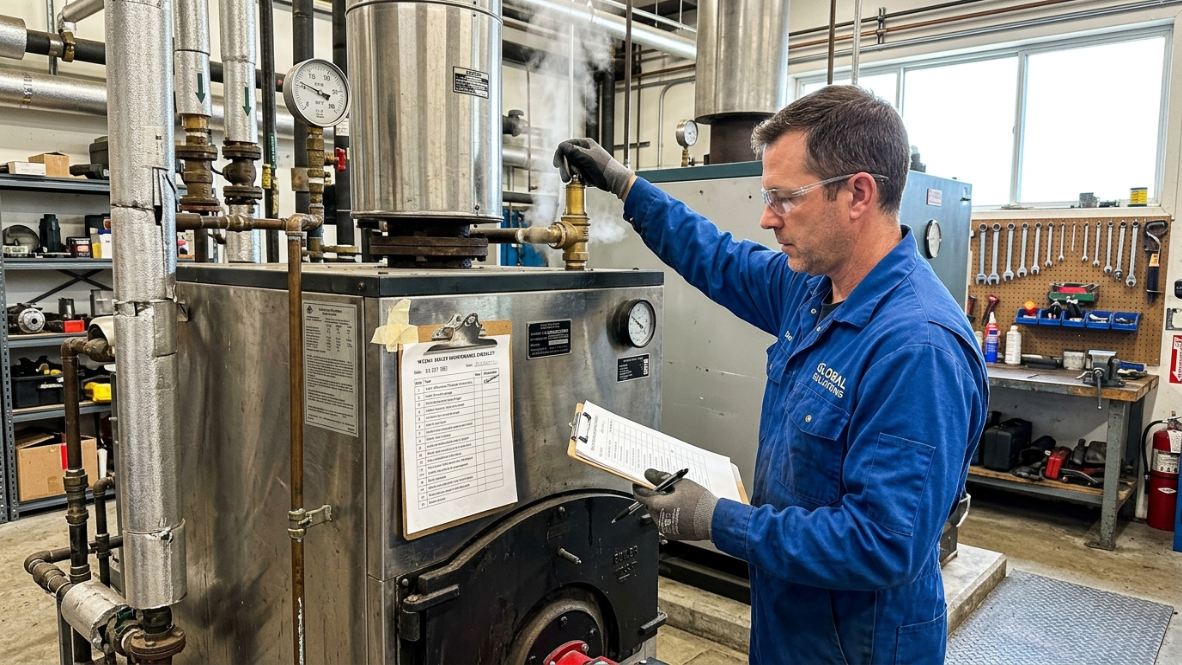
Visual inspection of the boiler exterior for leaks, corrosion, or damage
Check the sight glass to confirm proper water level
Listen for abnormal sounds (knocking, hissing, excessive vibration)
Verify that indicator lights are functioning
Confirm the workspace is clear of obstructions around the steam path
Weekly
Test the safety valve by lifting the lever briefly (follow manufacturer instructions)
Blow down the low-water cutoff to verify it triggers correctly
Inspect hoses and connections for wear, cracks, or loose fittings
Check for mineral buildup around fittings and valves
Monthly
Inspect the heating element (on electric boilers) for scale buildup
Review and clean the water supply system
Test all alarms and safety interlocks
Check electrical connections for signs of deterioration
Annually
Schedule a professional inspection
Verify that your Certificate of Inspection is current and displayed
Flush and descale the tank (or more frequently depending on water quality)
Replace gaskets, seals, and consumables as recommended by the manufacturer
Water Quality
Using distilled or deionized water is one of the simplest and most effective steam safety practices in light manufacturing. Hard water causes scale buildup, which reduces heating efficiency, can block safety devices, and shortens equipment life. One practitioner on Reddit reported using two commercial steamers over 30 years, with the first lasting 24 years, a testament to what proper maintenance and water quality can achieve.
For trade-specific maintenance routines, the hat shop steamer maintenance guide provides a detailed breakdown tailored to that application.
PPE and Workspace Safety
Personal Protective Equipment
Workers handling high-pressure steam boilers in heavy industrial settings must wear flame-resistant clothing, steel-toed boots, gloves, and protective eyewear. For light manufacturing, the PPE requirements scale to the actual risk:
Heat-resistant gloves: Mandatory for all steam operations. Steam wands, nozzles, and hoses get hot enough to cause burns on contact.
Safety glasses or goggles: Protect against unexpected steam release and splashing condensate.
Closed-toe shoes: Basic but important, especially when handling hot water for refilling.
Workspace Setup
Ensure proper ventilation. Steam adds heat and humidity to enclosed spaces, which can create slip hazards from condensation and discomfort for workers.
Maintain clear steam path zones so bystanders and customers aren’t exposed to accidental steam contact.
Keep the area around the boiler free of flammable materials, clutter, and obstructions that could block access during an emergency.
Training
Every person who operates steam equipment needs training on the specific unit they’ll be using. Generic “boiler safety” knowledge isn’t enough. Operators should understand how to start up and shut down the equipment, what the indicator lights mean, when and how to test the safety valve and LWCO, and what to do if something goes wrong. Boiler start-up is statistically the most dangerous operating phase, so procedures for that step deserve particular attention.
How Certification Simplifies Compliance for Small Businesses
Understanding steam safety in light manufacturing can feel overwhelming when you’re reading through ASME codes, OSHA standards, and state boiler laws for the first time. The practical shortcut is choosing equipment that already meets the relevant standards.
Buy Certified, Reduce Your Burden
When you purchase an ASME/UL-certified steam boiler, much of the compliance work has already been done at the factory. The vessel was built to code, inspected during manufacturing, registered with the National Board, and tested to UL safety standards. You still need to maintain the equipment and schedule inspections, but you’re starting from a position of compliance rather than trying to retrofit it.
Electric Boilers Eliminate Combustion Codes
Electric steam boilers remove an entire category of safety regulations from the equation. There are no gas lines to install and inspect, no combustion air requirements to calculate, no flame safeguard systems to maintain, and no carbon monoxide risks. For small businesses operating in retail spaces, shared buildings, or locations where gas infrastructure would be impractical, this simplification is significant.
Non-Pressurized Flash Steamers Avoid Permitting Entirely
For businesses that don’t need high-pressure steam, non-pressurized flash steamers offer the simplest compliance path. Operating at atmospheric pressure, these units generally require no boiler permits or inspections in most jurisdictions. This makes them suitable for mall environments, pop-up shops, and businesses that need to be operational quickly without navigating permit applications.
Maintenance Programs as Compliance Tools
Structured maintenance programs that include automatic consumable shipments, scheduled inspections, compliance documentation, and factory reconditioning help small businesses maintain both safety and regulatory standing without relying on in-house expertise.
Ready to find equipment that fits your compliance needs? Explore Hoffman’s full product line including ASME/UL-certified boilers and non-pressurized flash steamers built for light manufacturing applications.
Steam Safety Regulations by Business Type
Business | Typical Steam Equipment | Key Safety Focus |
|---|---|---|
Jewelry Shops | Electric Boiler | Burn prevention |
Hat Shops | Flash Steamer | Water quality |
Garment Manufacturers | Steam Boiler | Pressure safety |
Upholstery Shops | Steam Cleaner | Hose inspection |
Dental Labs | Steam Cleaner | Operator training |
Packaging | Steam Tunnel | Temperature control |
Frequently Asked Questions
What does steam safety in light manufacturing cover?
It covers the full set of standards, safety devices, maintenance practices, inspection requirements, and operator training needed to safely use steam-generating equipment in small commercial settings. This includes everything from ASME certification of the boiler vessel itself to daily checks like verifying the water level in the sight glass.
Do I need a boiler permit for a small commercial steamer?
It depends on the equipment type and your state’s regulations. Pressurized steam boilers typically require permits and periodic inspections. Non-pressurized flash steamers that operate at atmospheric pressure are generally exempt from boiler permitting in most jurisdictions. Check with your state’s boiler inspection division for specific requirements.
What is the most common cause of steam boiler accidents?
According to National Board data, approximately 80% of reported boiler incidents are caused by low-water conditions and operator error. Both are preventable through proper maintenance routines (testing the low-water cutoff weekly) and adequate operator training.
What does ASME certification mean on a steam boiler?
An ASME stamp means the boiler was designed and built according to the ASME Boiler and Pressure Vessel Code, which has been the foundational safety standard for pressure vessels in the United States since the early 1900s. The stamp indicates the vessel passed inspection during manufacturing and meets construction standards for safe operation at its rated pressure.
How often does a commercial steam boiler need to be inspected?
Most states require annual inspections for power boilers, conducted by a commissioned inspector while the boiler is not under pressure. Some states allow longer intervals for lower-risk equipment. After inspection, a Certificate of Inspection must be publicly displayed near the equipment.
Is an electric steam boiler safer than a gas-fired boiler?
Electric boilers eliminate combustion-related hazards including gas leaks, carbon monoxide, flame failure, and combustion air deficiency. They still require all the same pressure-related safety devices (safety valves, low-water cutoffs, pressure gauges), but the overall compliance and safety surface area is smaller. They are not maintenance-free, though, and still need regular descaling, component inspection, and LWCO testing.
What PPE do I need for operating a commercial steamer?
At minimum, heat-resistant gloves and safety glasses for all steam operations. The specific requirements scale with the risk level of your equipment and application. Heavy industrial steam operations require additional gear, but most light manufacturing settings can operate safely with gloves, eye protection, closed-toe shoes, and proper training.
What is the 15 PSI threshold and why does it matter?
Many U.S. jurisdictions apply stricter regulatory requirements (typically ASME Section I, the Power Boiler code) to any pressurized steam device operating above 15 psig. Below that threshold, less restrictive rules may apply. Knowing where your equipment falls relative to this threshold determines which codes, inspection schedules, and certification requirements govern your operation.


