

TL;DR
Steam hat cleaning uses heat and water vapor to soften fibers, loosen light dirt, and reshape crowns and brims. Chemical hat cleaning uses detergents, solvents, foams, or powders to dissolve and remove stains, oils, and embedded soil. Steam is the safer first line tool for shape recovery on felt hats, while chemicals should be targeted, tested, and matched to the specific material. The right choice depends on what the hat is made of, what you are trying to remove, and what you can afford to damage.
Steam vs. chemical hat cleaning is not a question with one right answer. It is a question with a right sequence: identify the hat material, identify the soil, and choose the least aggressive method that actually solves the problem.
Steam cleaning uses hot water vapor to soften hat fibers and stiffeners, loosen surface dirt, revive the nap, and reshape crowns or brims. Chemical cleaning uses a cleaning agent (detergent, solvent, foam, powder, or dry cleaning fluid) to dissolve, lift, or absorb stains and oils. The simplest way to think about it: steam is a shape care tool, and chemistry is a stain care tool.
That distinction matters more than most hat care guides acknowledge. Too many articles treat steam as a cure all or warn vaguely to “avoid harsh chemicals” without explaining which chemicals, on which materials, for which problems. This guide draws that line clearly.
| Factor | Steam Hat Cleaning | Chemical Hat Cleaning |
|---|---|---|
| Primary job | Refresh, reshape, loosen light dirt | Remove stains, oils, sweat, embedded soil |
| Best uses | Felt reshaping, brim tuning, nap revival, light odor refresh | Spot cleaning, sweatband cleaning, grease removal, deep cleaning |
| Water exposure | Low to moderate moisture | Varies: dry solvent, detergent water, foam, wipes, powders |
| Shape impact | Preserves or restores shape when controlled | Can distort shape if hat is soaked, agitated, or machine processed |
| Best materials | Fur felt, many western hats, some straw reshaping | Cotton/synthetic caps, sweatbands, stains on leather/suede with correct products |
| Key risks | Shrinkage, sweatband damage, loosened glue, water marks | Dye bleeding, tide marks, residue, fiber damage, stiffener failure |
| Professional value | High for hat shops and shaping stations | High for stain specialists and restoration work |
| Best default | Brush first, steam second | Test first, spot clean only where needed |
Quick Verdict: Which Method Should You Choose?
Use Steam Cleaning if your hat needs reshaping, brim adjustment, or a light surface refresh (best for fur felt and western hats). Use Chemical Cleaning if your hat has oil based stains, deep sweat salt buildup, or grease (best for cotton caps and targeted spot treatments). Generally, steam is a structural tool, while chemicals are a restorative tool. Always avoid steaming leather sweatbands to prevent shrinkage.
What Is Steam Hat Cleaning?
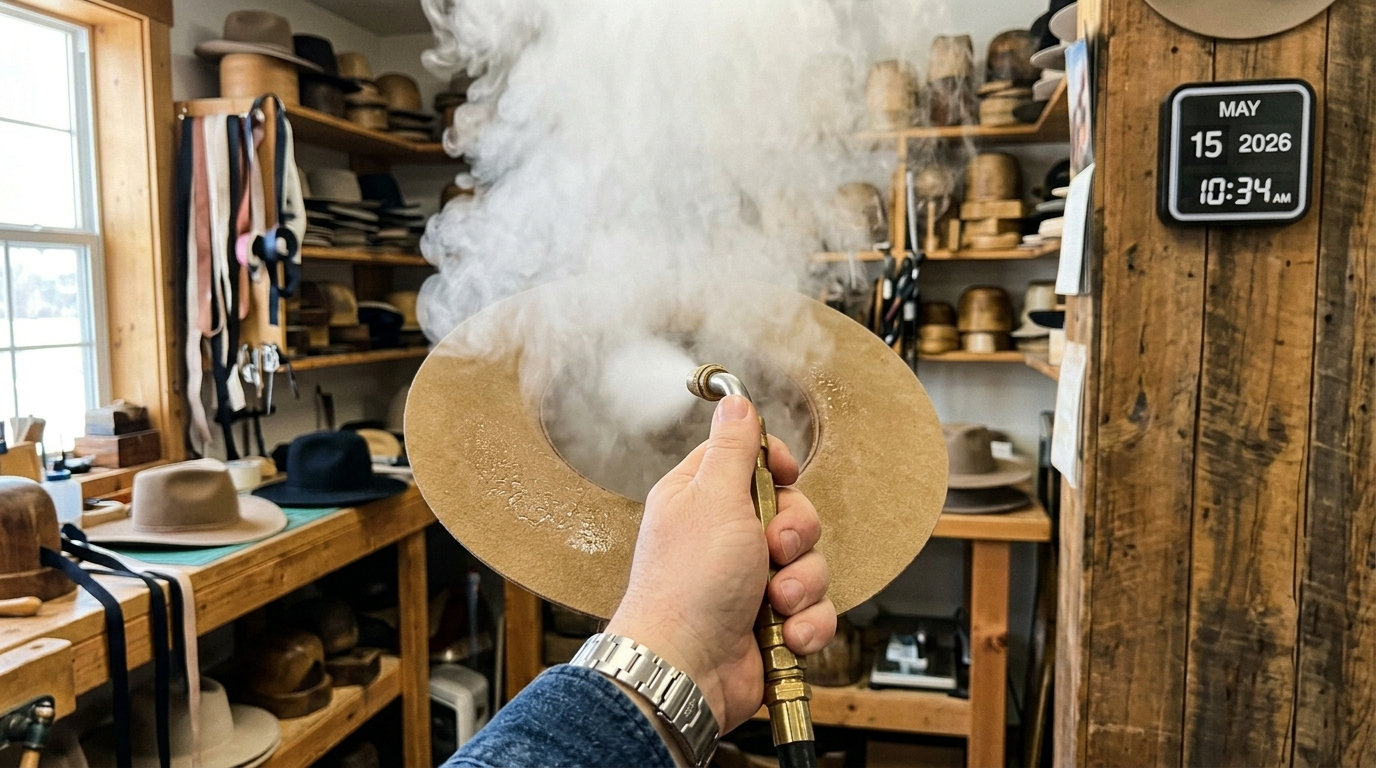
Steam hat cleaning introduces moisture and heat without soaking the hat. A controlled burst of steam softens the fibers and stiffeners in felt, making the material pliable enough to reshape by hand. Once you achieve the desired shape, you let the hat cool and dry to set it.
Akubra, the Australian felt hat manufacturer, describes the process simply: steam softens fur felt in seconds so the hat can be reshaped by hand, then cooled and dried completely. That is the core of what steam does for hats. It is closer to “refresh and reshape” than “deep clean.”
For shops doing this work every day, having the right equipment matters. A portable hat shaping steamer provides consistent, repeatable steam output without the guesswork of improvised setups.
What steam is good at
- Shape recovery. Crushed crowns, bent brims, and lost creases all respond well to controlled steam.
- Nap revival. Steam opens up the fibers on felt surfaces, making brushing more effective and restoring that smooth, finished look.
- Light surface dirt. Steam loosens dust and surface grime so brushing can carry it away.
- Packing marks and travel damage. A quick steam session can undo what a suitcase did to a hat.
What steam is not good at
Steam will not dissolve grease, break down sweat salts, remove ink, lift makeup stains, or eliminate deep oily grime. Those problems need chemistry, not vapor.
The sweatband warning
This is one of the most important practical insights for anyone comparing steam vs. chemical hat cleaning methods, and it comes up repeatedly among experienced hatters.
A master hatter featured in a LinkedIn walkthrough explained that while steam makes felt malleable, they avoid directing steam inside the hat because it can essentially “cook” the leather sweatband. Contributors on the Fedora Lounge forum echo this caution consistently, warning that steam can shrink, warp, or ruin leather sweatbands.
David Morgan’s Akubra hat manual puts it bluntly: never apply steam to the leather sweatband or hat band, and use steam for only a few seconds at a time, because too much steam can shrink felt and ruin the sweatband.
The rule: Steam the hat body, not the leather sweatband.
What Is Chemical Hat Cleaning?
“Chemical hat cleaning” sounds like one thing, but it is actually several different methods with different risk profiles.
The spectrum of chemical cleaning
- Mild detergent spot cleaning. A small amount of diluted soap applied to a specific stain. Common for baseball caps and sweatbands.
- Foam or spray hat cleaner. Purpose made products designed for felt or fabric hats.
- Absorbent powders. Talcum powder, cornstarch, or baking soda applied to grease or water spots to absorb oil. Stetson specifically recommends baby talc or cornstarch for light colored felt hats with water or grease spots, not liquid cleanser.
- Leather or suede cleaners. Formulated for specific leather types. General hat cleaners should not be used on leather.
- Dry cleaning solvents. Professional grade liquids like perchloroethylene (PERC) or hydrocarbons used in commercial dry cleaning equipment. According to CINET, the international textile care association, dry cleaning immerses garments in liquid solvent rather than water, so the name “dry cleaning” is misleading.
- Naphtha or white gas solvent baths. Used by some vintage hat restorers for heavily soiled fur felt. This is advanced, risky work, not a consumer recommendation.
- Disinfectant products. Sanitizing wipes or sprays used on sweatbands.
“Chemical” does not automatically mean bad
Many hat care articles warn against “harsh chemicals” without defining what that means. The better approach: use the least aggressive compatible cleaner, test it on an inconspicuous area first, and keep it targeted. The Drycleaning and Laundry Institute (DLI) recommends testing caps for colorfastness by applying detergent and water to a hidden area and blotting with a white cloth. If dye transfers to the cloth, cleaning may be unsafe.
Chemical cleaning does carry real risks
Akubra’s official care guidance warns against using cleaners or solvents on their felt hats because these products can damage felt and shorten hat life. The risks include dye bleeding, tide marks (visible rings left when liquid spreads soil or dye outward and dries unevenly), residue buildup, fiber damage, and stiffener or adhesive failure.
For shops handling solvents professionally, there are also worker safety considerations. OSHA identifies perchloroethylene as the most commonly used dry cleaning solvent and a potential human carcinogen, with exposure possible through skin absorption, eye contact, or inhalation. Anyone operating a hat shop should review their steam safety orientation protocols and treat solvent handling with equal seriousness.
Steam vs. Chemical Hat Cleaning: Main Differences
The core difference between steam and chemical hat cleaning comes down to what each method actually does to the hat.
Steam adds heat and moisture. It makes fibers pliable. It does not dissolve anything. Chemical cleaning adds a reactive agent that breaks down or absorbs soil. It changes the hat at a chemical level, which is why it is both more effective on stains and more risky when misapplied.
| Steam Cleaning | Chemical Cleaning | |
|---|---|---|
| Mechanism | Heat + moisture soften fibers | Cleaning agent dissolves or absorbs soil |
| Cleaning depth | Surface level | Can reach embedded stains and oils |
| Shape effect | Restores or adjusts shape | Can distort shape if hat gets wet or agitated |
| Drying | Quick air dry / cool set | May require extended drying, risking tide marks |
| Skill required | Moderate (timing, distance, direction) | Higher (product selection, testing, application technique) |
| Equipment | Steam source, brushes, hat blocks or forms | Cleaning products, cloths, ventilation, sometimes professional equipment |
| Repeatability | High for daily hat shop use | Should be minimized to reduce cumulative material stress |
Which Method Should You Use by Hat Material?
The choice between steam vs. chemical hat cleaning depends heavily on what the hat is made of. Here is a material by material breakdown.
Fur Felt and Western Hats
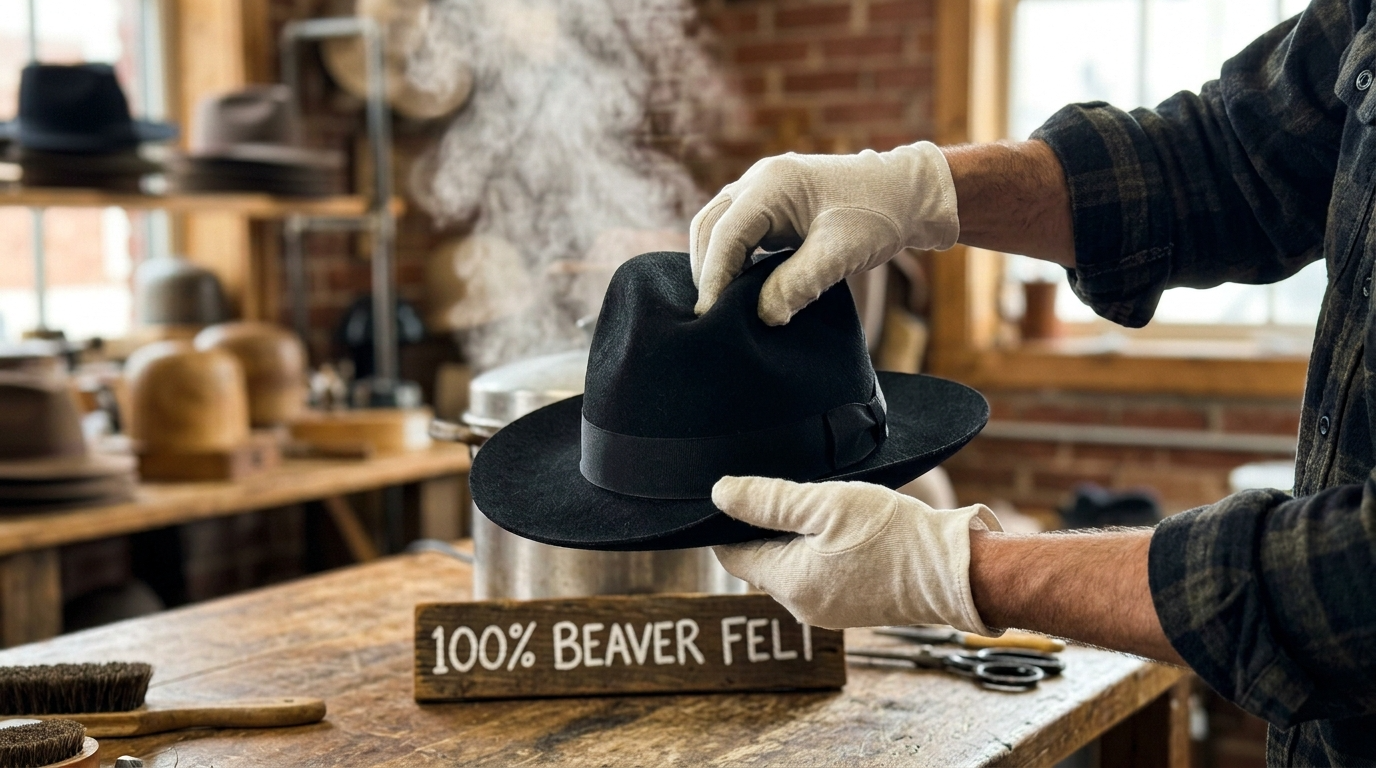
Best default: Brush first, steam second, spot clean only if needed.
Fur felt (beaver, rabbit, or blends) is the material most compatible with steam. Stetson recommends removing dust from fur felt with a soft brush, brushing counter clockwise, and drying wet hats naturally away from heat.
Practitioners on Reddit’s r/CowboyHats community reinforce this approach. In one thread, a user with over 25 years of hat experience stated that most felt hats can be cleaned with a sponge and brush, and that they do not use cleaner on their own hats. Experienced hat owners often start drier than beginners expect.
Steam role: Strong. Steam softens fur felt for reshaping and makes brushing more effective. Use controlled bursts and keep steam away from the sweatband. Understanding the right steam settings for felt vs. straw hats prevents overcooking the material.
Chemical role: Targeted only. Absorbent powders for grease or water spots on light felt, felt sponges for surface cleaning, or professional stain treatment for stubborn marks. Avoid broad solvent application.
Wool Felt Hats
Best default: More cautious than fur felt. Dry brush and spot clean first, steam lightly.
Wool is vulnerable to felting shrinkage when moisture, heat, and agitation combine. Textile science references describe wool felting as fibers interlocking under these conditions, often irreversibly. Over steaming a wool felt hat risks permanent distortion.
Steam role: Limited and careful. Short, controlled bursts for minor shape adjustments.
Chemical role: Mild, tested spot cleaning only. Avoid soaking and agitation.
Straw Hats
Best default: Dry brush or lightly wipe, depending on straw type.
Straw varies widely by weave, fiber, and finish. Some straw hats tolerate light steam for reshaping. Coarse woven straws are more forgiving than fine or delicate weaves.
Steam role: Reshaping only, not cleaning. Protect the straw from saturation.
Chemical role: Very cautious. For light soiling on durable straw weaves, a cloth dampened with mild soap and water can lift surface grime. Wring the cloth nearly dry, wipe gently in the direction of the weave, and blot with a clean towel. Never soak a straw hat or use hot water, as heat can warp and weaken the fibers. Use products intended for straw and spot test first.
Panama and Toquilla Straw Hats
Best default: Avoid water and alcohol.
Panama Hatters warns that unsuitable chemicals can ruin toquilla straw and that prolonged water or humidity can deform and damage Panama hats. They recommend a pencil eraser for dirt and stains.
Steam role: Minimal corrective shaping at most. Not a cleaning method for this material.
Chemical role: Avoid unless the product is specifically designed for toquilla straw and tested.
Cotton and Synthetic Baseball Caps
Best default: Spot clean or hand wash with mild detergent if the cap is colorfast and the construction allows it.
The DLI considers hand washing with mild dish detergent, rinsing, and air drying the preferred care method for baseball caps. Machine washing is rough on brims, especially those containing cardboard, which can bend, distort, or tear.
Steam role: Limited. Useful for a light refresh or minor shape touch up, but insufficient for sweat stains.
Chemical role: Mild detergent or cap cleaner. Avoid bleach and harsh products.
Vintage or Structured Caps
Best default: Do not soak. Spot clean only or use a cap specialist.
The biggest risk here is structural, not fabric. Cardboard brims, buckram, and old adhesives cannot survive immersion or heavy moisture. Practitioners on Reddit’s r/neweracaps warn that dry cleaning may make older wool fitteds look cleaner while damaging the underlying structure. The advice: find a cap cleaner or haberdashery with cap pressing and steaming experience, not a general dry cleaner.
Leather and Suede Hats
Best default: Use leather specific or suede specific products only.
San Diego Hat Company advises against using water on leather hats and recommends a leather cleaner compatible with the specific type of leather.
Steam role: Avoid. Leather and suede do not respond well to heat and moisture.
Chemical role: Only correct, material matched cleaners.
Hats with Feathers, Glued Trim, or Decorative Elements
Best default: Professional evaluation before any cleaning attempt.
NotchGear warns that hats with plastic inner bands, delicate stitching, glued elements, feathers, leather bands, and decorative embroidery may be poor candidates for dry cleaning. These components each carry their own risk when exposed to heat, moisture, or solvent.
Which Method Should You Use by Stain or Problem?
When evaluating steam vs. chemical hat cleaning for a specific issue, match the method to the soil.
| Problem | Best First Step | When Steam Helps | When Chemicals Help | When to Call a Pro |
|---|---|---|---|---|
| Dust or lint | Dry brush or lint roller | Revives nap before brushing | Usually unnecessary | Embedded dust in vintage felt |
| Crushed crown | Steam + hand shaping | Primary method | Not needed | Severe crease or valuable hat |
| Bent brim | Steam + hand shaping | Primary method | Not needed | Brim needs reblocking |
| Light odor | Air out + steam refresh | May help freshen | Sweatband wipe can help more | Persistent smoke or mildew smell |
| Sweatband grime | Wipe sweatband only | Avoid steaming leather sweatband | Targeted sweatband cleaner | Old leather, cracked band |
| Grease or oil on felt | Absorbent powder | Not the primary tool | Powder, felt cleaner, or solvent by a pro | Valuable or light colored felt |
| Water spots on felt | Brush, absorbent powder | Helps reshape nap afterward | Stetson suggests talc or cornstarch | Persistent spots |
| Makeup | Spot clean | Not the primary tool | Mild cleaner, tested | Delicate fabrics |
| Sweat stains (yellowing) | Spot treat with peroxide solution | Not effective alone | Hydrogen peroxide paste or mild detergent | Set in stains on valuable hats |
| Ink or dye transfer | Do not steam first | May set or spread the problem | Specialist solvent work | Almost always |
| Mold or mildew | Isolate and assess | Do not rely on steam alone | Specialist cleaning or vinegar solution | Valuable hats or any health concern |
Practitioners on r/CowboyHats warn specifically about liquid solvent cleaners on felt. One discussion cautioned that liquid solvent can leave tide marks or damage the felt surface, reinforcing why felt hats should never be randomly spot wetted without testing and feathering the edges.
Household Chemicals That Work (and When They Don’t)
Several common household products come up repeatedly in hat cleaning discussions. Some are genuinely useful. Others create more problems than they solve. Here is a clear breakdown.
Baking Soda for Deodorizing
Baking soda is one of the safest and most effective options for absorbing odors from hats without any liquid contact. Sprinkle a generous layer of baking soda inside the hat (or on the exterior for odor trapped in felt), let it sit for several hours or overnight, then brush or vacuum it out thoroughly.
This works well for general mustiness, light sweat odor, and storage smells. Practitioners on Reddit frequently recommend baking soda as a first step before considering anything wet. It adds no moisture, leaves no residue when fully removed, and costs almost nothing. For felt hats, follow up with a soft brush to clear any powder from the nap.
Baking soda also functions as a mild absorbent for fresh grease spots on light colored felt. Apply it immediately after the spill, let it sit to draw out the oil, then brush away. This is essentially the same approach Stetson recommends with cornstarch or baby talc.
Vinegar for Odor and Mold
White vinegar (distilled, not apple cider) is a mild acid that can help neutralize persistent odors and address surface mold on certain hat materials. The key word is “diluted.” Mix equal parts white vinegar and water, dampen a clean cloth (not soaking wet), and gently wipe the affected area. For interior sweatbands made of fabric (not leather), this approach can cut through sweat buildup and kill surface mold spores.
Never pour vinegar directly onto felt or straw. The goal is a barely damp application, not saturation. After wiping, blot with a dry cloth and let the hat air dry completely away from direct heat.
For mold specifically, brush off any visible mold spores outdoors first to avoid spreading them. Then apply the diluted vinegar with a cloth. Practitioners on hat forums note that vinegar’s smell dissipates as it dries, leaving the hat smelling neutral rather than acidic.
Limitations: Vinegar should not be used on leather sweatbands (it can dry and crack leather), dyed materials that haven’t been tested for colorfastness, or delicate straw like toquilla. If mold is extensive or the hat is valuable, professional cleaning is the safer path.
Hydrogen Peroxide for Sweat Stain Oxidation
Sweat stains on hats are not just dirt. The yellowing that builds up along the sweatband line and crown interior is caused by the oxidation of proteins and salts in sweat. Steam alone cannot reverse this chemical discoloration. Brushing cannot remove it. This is where hydrogen peroxide earns its place in the hat cleaning toolkit.
A 3% hydrogen peroxide solution (the standard drugstore concentration) can lighten oxidized sweat stains through a gentle bleaching action. Apply a small amount to a white cloth and dab the stained area, working from the outside of the stain inward to prevent spreading. Let it sit for 10 to 15 minutes, then blot with a clean, damp cloth to remove the peroxide.
This method works well on white or light colored cotton and synthetic cap interiors. Some hat owners mix hydrogen peroxide with baking soda into a paste for heavier stains, applying the paste to the affected area, letting it sit, and then gently brushing it away once dry.
Critical cautions: Always spot test first. Hydrogen peroxide can bleach dyed fabrics. Never use it on dark colored hats, fur felt, or leather. On colored materials, even 3% peroxide can leave a lighter spot that is worse than the original stain. For felt cowboy hats and western hats, stick with the absorbent powder approach or send it to a professional.
Blending Water Spots on Felt with Light Steam
Water spots on felt hats are among the most common complaints, and the instinct to “clean” them with more liquid usually makes them worse. A water spot is really a tide mark: minerals and loosened soil carried to the edge of the wet area as it dries, leaving a visible ring.
The correct approach is counterintuitive. Rather than adding cleaner, you blend the spot by lightly steaming the area and brushing while the felt is still slightly damp. Hold the steam source several inches from the surface and apply a brief pass across the entire affected zone (not just the spot itself). While the felt is pliable, brush with a soft hat brush in a consistent direction to redistribute the fibers evenly. Let the hat cool and dry on a form.
This works because you are re softening the fibers that dried in a disrupted pattern and giving them a chance to reset. It does not remove stains. It resets the nap so the spot becomes invisible. For hats with a water spot layered on top of a grease stain, start with absorbent powder for the grease, then steam and brush the remaining water mark.
This is exactly the kind of precision work where having a consistent, controllable steam source matters. A commercial hat steamer with adjustable output gives you the control to apply just enough steam without oversaturating the felt.
Is Steam Safer Than Chemical Cleaning?
This is the question most people are really asking when they search for steam vs. chemical hat cleaning. The answer is nuanced.
Steam is generally safer for shape work on compatible felt hats. It does not introduce foreign chemicals, does not leave residue, and does not risk dye bleeding. When used with controlled technique (short bursts, proper distance, avoiding the sweatband), steam is the lowest risk way to refresh and reshape fur felt.
Chemical cleaning is safer for stain removal when the chemical matches the material and is tested first. Steam alone will not remove grease, sweat salts, ink, or makeup. Trying to steam out an oil stain is a waste of time and may set the stain further.
Neither method is safe when used blindly.
The safest approach is what could be called the “least aggressive method ladder”:
- Air out the hat.
- Dry brush or lint roll.
- Hat sponge.
- Baking soda for odor or fresh grease absorption.
- Controlled steam plus brushing.
- Absorbent powder for grease or water spots.
- Diluted vinegar wipe for odor or surface mold (fabric sweatbands only).
- Spot clean with a tested, mild cleaner (hydrogen peroxide for sweat yellowing on light fabrics).
- Professional hatter or cap specialist.
- Full restoration or reblocking.
Start at the top and move down only as needed.
Environmental and Fiber Longevity Impact
Choosing between steam and chemicals also impacts the lifespan of the hat’s fibers:
- Eco Friendly Edge: Steam is a “zero residue” method. It uses only water vapor, making it the most sustainable choice for sensitive skin and indoor environments.
- Chemical Precautions: Many chemical cleaners contain VOCs. If using solvents, always work in a well ventilated area.
- Fiber Integrity: Over cleansing with chemicals can strip the natural oils (lanolin) from fur felt, making it brittle over time. Steam, conversely, rehydrates the fibers, which can actually extend the life of a high quality felt hat.
Can Steam Sanitize a Hat?
This misconception comes up often enough that it deserves a direct answer: ordinary hat steaming is not sterilization.
Steam can freshen a hat and may reduce some surface microbes, but the process does not replicate validated sterilization. CDC steam sterilization guidance describes autoclave sterilization requiring direct steam contact at controlled pressure, temperature (121°C for 30 minutes or 132°C for 4 minutes in specific equipment types), and exposure time. Passing a hat over a steam nozzle for a few seconds does not come close to those parameters.
The responsible position: steam can freshen and help clean hats, but do not market routine hat steaming as sterilization unless the process is validated for time, temperature, contact, and material compatibility.
The 4 Risk Test: A Framework for Choosing Your Method
Before deciding between steam and chemical hat cleaning, assess four risks. This framework is more useful than memorizing material charts because it forces you to think about the specific hat in front of you.
1. Fiber Risk
What is the hat made of? Fur felt usually tolerates controlled steam. Wool felt is more prone to felting shrinkage. Panama straw is moisture sensitive. Leather dislikes both water and heat. Cotton and synthetic caps may tolerate mild washing if the construction allows it.
2. Structure Risk
What gives the hat its shape? Leather sweatbands, buckram liners, cardboard brims, stiffeners, glue, wire, and decorative trim all have their own failure modes. Many cleaning disasters are structural failures, not fiber failures. The cloth survives, but the brim warps, the sweatband curls, or the stiffener dissolves. Understanding the relationship between steam and traditional hat blocks helps clarify why structure matters as much as fabric.
3. Soil Risk
What are you trying to remove? Dust calls for brushing. Crushed shapes call for steam. Oil calls for absorbent powder or professional cleaning. Sweat yellowing on light caps may respond to hydrogen peroxide. Persistent odor may need baking soda or diluted vinegar before escalating. Ink calls for a specialist. Match the method to the problem.
4. Value Risk
How bad is failure? A $20 cap is low risk. A customer’s heirloom Stetson is high risk. An expensive custom beaver felt is high risk. A hat shop customer job carries professional liability.
The higher the value risk, the more the method should move from DIY to professional hatter workflow.
Professional Hat Shop Workflow
Professional hat shops do not treat “hat cleaning” as one service. They tier the work by risk and depth.
Eclipse Hat Shop, for example, lists a basic steam clean at $45, wet cleaning with reblocking at $150, and complete restoration at $200. Tim Cooper Custom Hats separates reshaping with steam, surface cleaning plus brim work, clean/stiffen/reshape, and complete renovation including new liner and leather sweatband. This tiered approach reflects reality: different hats with different problems need different interventions.
A solid professional workflow looks like this:
- Identify the material. Fur felt, wool felt, straw, cotton, synthetic, leather, suede.
- Inspect the construction. Sweatband condition, trim attachments, brim material, liner, stiffener integrity, age.
- Identify the soil. Dust, shape loss, sweat, grease, stains, odor, mildew.
- Brush and vacuum. Remove loose dirt before adding any moisture or product.
- Deodorize if needed. Baking soda overnight for odor, brushed or vacuumed out before proceeding.
- Spot test if using any liquid or chemical. White cloth, inconspicuous area.
- Steam compatible areas only. Hat body and brim, not the sweatband or delicate trim.
- Brush and shape. Work the hat while the felt is pliable.
- Let the hat cool and dry on a form. This sets the shape.
- Apply targeted chemical cleaning only when steam and brushing are not enough.
- Escalate to reblocking or full restoration for heavy jobs.
For hat shops running this workflow daily, repeatable steam matters. A western hat shop steam setup provides consistent pressure and output for customer facing reshaping and refreshing work without turning every job into a chemical cleaning project.
Thinking about building out a dedicated steam station? The hat shop steam station layout guide covers everything from equipment placement to workflow optimization.
Common Mistakes to Avoid
These errors come up constantly in practitioner discussions and professional hat care forums:
Soaking a structured cap. Cardboard brims, buckram, and adhesives cannot survive immersion. New Era specifically warns against soaking caps because they lose shape.
Steaming the sweatband. This is the single most common steam mistake. Leather sweatbands shrink, warp, and crack when exposed to steam. Keep the steam on the outside of the hat body.
Using dry cleaning solvents casually. Professional solvents require proper equipment, ventilation, and handling. They are not spray and wipe products.
Using water or alcohol on Panama straw. Panama Hatters is explicit about this: water and alcohol can deform and damage toquilla straw.
Assuming steam sterilizes. It freshens. It does not sterilize under normal hat care conditions.
Scrubbing wool felt with heat and water. The combination of moisture, heat, and friction is exactly what causes irreversible felting shrinkage.
Drying hats on radiators or with hair dryers. Heat sources can shrink felt, warp brims, and crack leather. Always air dry.
Using hydrogen peroxide on dark or dyed hats. Even drugstore strength peroxide will bleach colored fabric. Reserve it for white or very light materials, and always test first.
Applying vinegar to leather. Vinegar’s acidity can dry out and crack leather sweatbands. Restrict vinegar use to fabric interiors only.
Treating a vintage hat like a modern synthetic cap. Vintage hats have aged materials, degraded stiffeners, and fragile construction. They need gentler handling, not harsher cleaning.
Spot cleaning without testing colorfastness. The DLI’s advice to test with a white cloth on a hidden area applies to every hat, every time.
Using a general dry cleaner instead of a hatter or cap specialist. General dry cleaners process thousands of garments but may not understand hat construction. Practitioners on Reddit’s r/neweracaps warn that dry cleaning can make wool caps look clean while ruining the structure underneath.
A Note on Naphtha Baths
Some vintage hat restoration communities discuss naphtha (white gas) baths for deeply soiled fur felt. This deserves mention because it comes up in online research, but it requires strong caution.
Fedora Lounge threads show both success stories and serious failures: ruined sweatbands, dye transfer, red skin welts, flammability hazards, and toxic vapor exposure. On r/CowboyHats, users occasionally mention naphtha as an option for really oily, stained hats, but frame it as essentially dry cleaning for fur felt, not a casual weekend project.
Naphtha cleaning belongs in a professional restoration context with proper ventilation, safety equipment, and experience. It is not a consumer recommendation.
Bottom Line
For most hats, the safest cleaning path starts dry: brush, sponge, inspect, and only then add steam or a cleaning agent. Steam is the better choice when the hat needs reshaping, nap revival, or a light refresh. Chemical cleaning is the better choice when the hat has sweat, oil, grease, makeup, ink, or embedded stains. Household options like baking soda, diluted vinegar, and hydrogen peroxide fill useful middle ground roles for specific problems, but each has clear material limitations. The mistake is treating any single method as universal.
A good hatter chooses the least aggressive method that solves the problem without risking the fiber, brim, sweatband, or trim. When steam is the right tool, having consistent, commercial grade steam makes the work repeatable and reliable. Hoffman Steam offers factory direct commercial steamers and hat shaping bundles built for professional hat shops that do this work every day.
Final Summary: Choosing the Best Hat Cleaning Method
In the debate of Steam vs. Chemical Hat Cleaning, the winner depends on the goal. Steam is the undisputed king of maintenance and shaping, particularly for fur felt hats. Chemical cleaning remains necessary for stain removal and deep cleaning synthetics. Household staples (baking soda for odor, vinegar for mold, peroxide for sweat yellowing) offer targeted solutions when matched correctly to the material. The trend in hat care is moving toward “Minimal Intervention,” using the least aggressive method possible to preserve the structural integrity and natural beauty of the headwear.
Frequently Asked Questions
Is steam cleaning better than chemical hat cleaning?
Not always. Steam is usually better for reshaping felt hats, reviving the nap, and refreshing light surface soil. Chemical cleaning is better for sweat, grease, oil, makeup, ink, and embedded stains. The best method depends on the hat material and the specific problem.
Does steam actually clean a hat?
Yes, but in a limited way. Steam loosens light dirt and makes brushing more effective. It is not a substitute for stain treatment or deep cleaning. Think of it as refreshing and reshaping, not degreasing.
Can steam shrink a hat?
Yes. David Morgan’s Akubra hat manual warns that too much steam can shrink felt and ruin leather sweatbands. Use short, controlled bursts and keep steam away from the sweatband. If you run into fit problems after steaming, the hat steamer troubleshooting guide covers common causes and fixes.
Can I steam the inside of a hat?
Avoid it, especially if the hat has a leather sweatband. Hatters and experienced practitioners consistently warn that steam directed inside the hat can shrink, warp, or cook the leather sweatband.
Can hats be dry cleaned?
Sometimes, but not always safely. Hats with cardboard brims, glued parts, leather bands, feathers, delicate stitching, or embroidery may be poor candidates for dry cleaning. Consult a hatter or cap specialist rather than a general dry cleaner.
Is dry cleaning actually dry?
No. Dry cleaning uses liquid solvent instead of water. The garments are immersed in solvent, drained, filtered, and dried. The name is misleading.
Can steam sanitize hats?
Ordinary hat steaming should not be presented as sterilization. CDC steam sterilization guidelines require controlled steam contact at specific pressure, temperature, and exposure time that far exceed what a hat steaming session provides. Steam can freshen, but it does not sterilize under normal hat care conditions.
Does baking soda actually remove hat odor?
Yes. Baking soda is an effective odor absorber that works without adding moisture. Sprinkle it generously inside the hat or on the exterior, let it sit for several hours (overnight is better), then brush or vacuum it out. It is one of the safest first steps for any hat that smells musty or sweaty.
Can vinegar damage a hat?
Diluted white vinegar (equal parts vinegar and water) is generally safe on fabric hat interiors for odor or surface mold, but it should never be applied to leather, untested dyed materials, or delicate straw. Always use a barely damp cloth rather than pouring vinegar directly on the hat.
Will hydrogen peroxide bleach my hat?
It can. Even 3% hydrogen peroxide has a mild bleaching action. This makes it useful for lifting sweat yellowing on white or light colored cotton caps, but it will lighten dyed or dark fabrics. Always spot test in a hidden area first, and never use it on fur felt, leather, or dark colored materials.
How do you remove water spots from a felt hat?
Rather than adding more liquid, lightly steam the spotted area and brush the nap in a consistent direction while the felt is still slightly damp. The steam softens the fibers disrupted by the water spot, and brushing redistributes them evenly. Let the hat cool and dry on a form. For stubborn spots, apply absorbent powder first, then steam and brush.
What is the safest method for a felt cowboy hat?
Start with a soft brush or hat sponge. Use baking soda for odor if needed. Use controlled steam for reshaping and light refresh. Reserve chemical cleaning for targeted stains only, and send valuable or heavily soiled hats to a professional hatter.


