

TL;DR
Steam and chemical methods in taxidermy serve fundamentally different purposes. Steam is a physical tool for loosening tissue, relaxing hides, and finishing mounts without toxic fumes. Chemical methods handle actual preservation, including pickling, tanning, degreasing, and whitening. Most professional workflows combine both. This guide defines each method, compares them side by side, and explains where each one fits in the taxidermy process.
The phrase “steam vs chemical taxidermy” comes up frequently among hunters preparing European mounts, hobbyists learning skull cleaning, and working taxidermists evaluating their shop workflow. But the comparison isn’t as straightforward as picking one over the other. Steam and chemicals do different things, and understanding where each method applies (and where they overlap) is the key to better results, safer working conditions, and longer-lasting specimens.
This glossary guide covers both sides of the steam vs chemical taxidermy debate across every major application: skull cleaning, hide preservation, mount finishing, and workplace safety.
If you’re exploring steam equipment for your taxidermy work, our taxidermy steamer guide covers the fundamentals of steam skull cleaning in detail.
Steam vs Chemical Taxidermy: Quick Answer
If your goal is simply removing tissue, steam is the better option because it loosens meat, connective tissue, and dried hides without introducing additional chemicals.
If your goal is preserving a hide or producing a finished European mount, chemical treatments remain essential. Steam cannot replace tanning, degreasing, or hydrogen peroxide whitening.
For most taxidermists, the best workflow combines both methods:
Goal | Best Method |
|---|---|
Remove tissue from skull | Steam |
Relax dried hide | Steam |
Preserve hide | Chemical tanning |
Degrease bone | Chemical |
Whiten skull | Hydrogen peroxide |
Final mount adjustments | Steam |
Long-term preservation | Chemical |
Bottom line: Steam is a preparation tool, while chemicals perform the actual preservation. Most professional taxidermy workflows use both.
Steam vs Chemical Taxidermy at a Glance
Feature | Steam | Chemical |
|---|---|---|
Cleans tissue | ✔ | ✔ |
Preserves hide | ✘ | ✔ |
Whitens bone | ✘ | ✔ |
Removes grease | Limited | ✔ |
Toxic fumes | No | Sometimes |
Burn hazard | Yes | No |
Chemical exposure | None | Moderate to High |
Reusable equipment | Yes | N/A |
Ongoing consumables | Low | High |
What Steam Does in Taxidermy
Steam is a physical tool, not a preservative. That distinction matters more than anything else in the steam vs chemical taxidermy conversation. Steam doesn’t stabilize proteins, stop bacterial decay, or convert raw skin into leather. What it does is apply targeted heat and moisture to loosen tissue, soften dried materials, and clean surfaces without leaving chemical residue behind.
Steam Skull Cleaning
For European mount preparation, steam directed at bone loosens connective tissue and muscle so it can be removed mechanically. Practitioners on hunting forums report strong results with this approach. One user on the Stalking Directory forum noted that a “steam cleaner works well for me straight from the boiler on with the steam jet,” while another recommended simply visiting a local garage with a steam cleaner for quick skull work.
Steam sits in a useful middle ground for skull cleaning. Cold water maceration (soaking the skull in warm water for weeks while bacteria consume tissue) is effective but slow and foul-smelling. Boiling is fast but risky. Practitioners on ArcheryTalk consistently warn against full boiling, with one experienced user stating that “boiling is really not a good idea” because it can force fat into the bone structure, creating long-term odor and discoloration problems. Steam offers faster tissue removal than maceration with more precision than immersion boiling.
The critical caveat: steam alone does not whiten bone. After steam cleaning, a separate chemical step (typically hydrogen peroxide) is still required for a finished European mount.
Steam Hide Relaxing
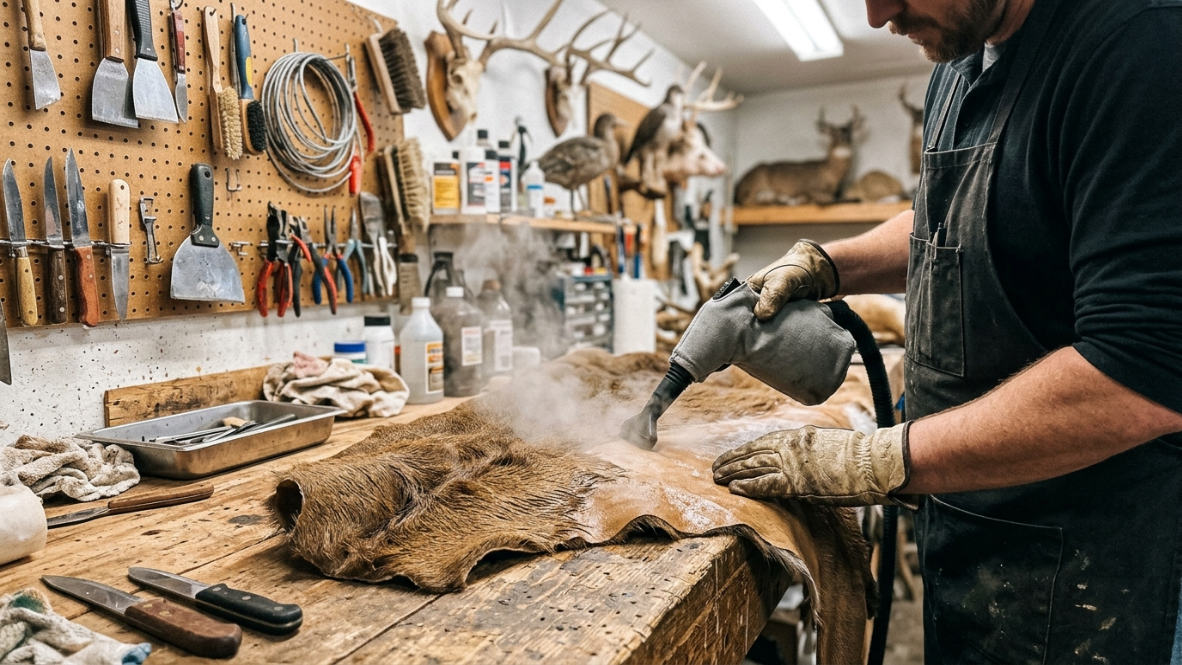
Taxidermists use steam to rehydrate dried hides and soften tanned leather before fitting it to a form. This process, called “relaxing,” involves controlled moisture that gradually penetrates fur or skin without waterlogging or damaging the material. For smaller specimens, a brief steam application can make stiff leather workable again in minutes rather than the hours required by soaking.
Steam Mount Finishing
During final assembly, light steam application helps position hides on forms. The moisture and heat make the material pliable enough to stretch, tuck, and smooth into place. Once the hide cools and dries, it conforms tightly to the form’s contours.
For taxidermists comparing commercial steamers vs pressure washers, it’s worth noting that pressure washers can damage delicate bone structures while steam provides gentler, more controllable force.
Explore taxidermy-specific steam bundles at the shop bundles page to see equipment configured for skull work and hide preparation.
What Chemical Methods Do in Taxidermy
Chemical methods in taxidermy handle the actual preservation. Where steam loosens and cleans, chemicals stabilize, transform, and protect biological materials from decay. The steam vs chemical taxidermy distinction comes down to this: steam prepares materials for the next step, while chemicals make preservation permanent.
Pickling
Pickling is the first major chemical step in hide preservation. The hide is submerged in an acid bath (formic acid, citric acid, or a commercial safety acid blend) that stabilizes skin proteins and halts bacterial decomposition. A successful pickling solution maintains a pH of 2 or below. This step typically runs at least 72 hours for a thorough result. Skipping pickling or getting the pH wrong leads to slippage, where hair literally falls out of the skin.
Tanning
The word “tanning” comes from tannins, the compounds that penetrate deep into the skin and bond with structural proteins to create a permanently stable material. This chemical bonding is what converts raw, perishable skin into something that can last decades or centuries. Common tanning agents include Lutan-F (a synthetic chrome tan widely used in modern taxidermy), alum, chrome salts, and vegetable tannins.
Without tanning, a hide is just dried tissue waiting to rehydrate and rot. One museum taxidermist writing for Prey Taxidermy puts it bluntly: a dried, untanned skin held together with borax is not genuinely preserved, and it won’t survive long-term without proper chemical treatment.
Degreasing
Grease left in bone or hide causes yellowing, odor, and eventual breakdown. Chemical degreasing uses solvents to dissolve and extract these fats. Common degreasing agents include benzine (affordable and widely available), acetone (excellent but expensive), and trichloroethylene (considered by some practitioners to be the most effective option). The process is not quick. Depending on how greasy the specimen is, degreasing takes a minimum of 14 days.
Whitening and Bleaching
For bone work, the whitening step gives European mounts their clean, finished appearance. The right chemical matters enormously here. Twelve percent hydrogen peroxide or 40-volume hair developer whitens bone effectively without damaging its structure. Household bleach, on the other hand, deteriorates bone integrity. One museum professional on ArcheryTalk argued that any chemicals used on a skull for whitening purposes are potentially harmful to the bone, and recommended sun exposure as the most preservation-friendly alternative.
Dry Preservatives: The Borax Debate
Borax is one of the most controversial substances in taxidermy forums. Some practitioners describe it as “one of the worst things you can put on a skin to ‘preserve’ it,” arguing that it merely dries the hide without creating any chemical bonds to prevent long-term decay. According to this view, borax-preserved specimens are on borrowed time.
But the debate is species-dependent. Experienced bird taxidermists on Refuge Forums counter that for birds, if you’ve done proper fleshing and degreasing, dry preservative is all that’s needed. Bird skin is thinner and less fatty than mammal hide, so the demands on the preservative are different.
The practical takeaway: for mammals, borax is not a substitute for proper tanning. For birds, the experienced community is split, but many successful practitioners rely on borax alone.
Steam vs Chemical Taxidermy: Side-by-Side Comparison
This table maps the key differences across the factors that matter most in practice.
Factor | Steam Methods | Chemical Methods |
|---|---|---|
Primary function | Tissue loosening, cleaning, softening | Preservation, stabilization, whitening |
Bone damage risk | Low with controlled application | Varies: bleach is high risk, H₂O₂ is low |
Health hazard | Burn risk only, no toxic fumes | Fumes, skin irritation, potential carcinogens |
Processing time | Minutes per session | Hours to weeks depending on step |
Skill required | Moderate | High (pH monitoring, timing, chemical ratios) |
Can it work alone? | No, needs chemical finishing steps | Yes, provides complete preservation |
Residue | None | Varies by chemical |
Cost profile | Equipment investment upfront | Ongoing consumable costs |
The comparison makes clear that steam vs chemical taxidermy is not really an either/or decision. Steam reduces the need for chemicals at certain stages (especially tissue removal and surface cleaning), but chemical processes remain essential for actual preservation.
If you’re evaluating steam equipment for your shop and need to understand electrical requirements, the guide on choosing between 110V and 220V steamers covers the practical considerations.
Which Method Should You Choose?
Choosing between steam and chemical methods depends on the type of taxidermy work you’re doing rather than which method is “better.”
Choose steam if you:
Clean European mount skulls
Want less exposure to solvents
Need to soften dried hides
Perform final mount adjustments
Prefer reusable equipment over recurring chemical purchases
Choose chemical methods if you:
Preserve mammal hides
Tan skins
Degrease bone
Whiten skulls
Need long-term preservation
Choose both if you operate a professional taxidermy shop. Steam speeds up preparation while chemicals complete the preservation process.
The Chemical Tanning Pipeline: Step by Step
Understanding the full tanning workflow helps clarify exactly where steam can substitute for chemicals and where it cannot.
1. Salting. Sodium chloride or borax removes initial moisture from the fresh hide. This is a field step, done as soon as possible after skinning.
2. Rehydration. Salted or dried hides are soaked to bring them back to a workable state. Steam can assist here by softening the material without full immersion.
3. Fleshing. Mechanical removal of fat, membrane, and remaining tissue from the skin. Steam can loosen stubborn tissue before fleshing.
4. Pickling. The acid bath (pH of 2 or below) that stabilizes proteins. No steam substitute exists for this step.
5. Neutralizing. The hide is brought back to a workable pH before tanning. Purely chemical.
6. Tanning. Lutan-F, alum, or chrome salts create permanent chemical bonds in the skin proteins. This is the irreplaceable core of chemical preservation.
7. Oiling. Tanning oils restore softness and flexibility to the finished leather. Chemical only.
8. Mounting. The tanned hide is fitted to the form. Steam is valuable here for softening and positioning.
9. Finishing. Final adjustments, tucking, and smoothing. Light steam application helps with precise positioning.
The pattern is clear. Steam contributes meaningfully at steps 2, 3, 8, and 9. Steps 4 through 7 require chemical processes with no physical substitute.
Typical Professional Taxidermy Workflow
Step | Steam | Chemical |
|---|---|---|
Initial fleshing | Optional | No |
Tissue removal | ✔ | Optional |
Degreasing | No | ✔ |
Whitening | No | ✔ |
Pickling | No | ✔ |
Tanning | No | ✔ |
Hide mounting | ✔ | No |
Final finishing | ✔ | No |
Dermestid Beetles: The Third Method
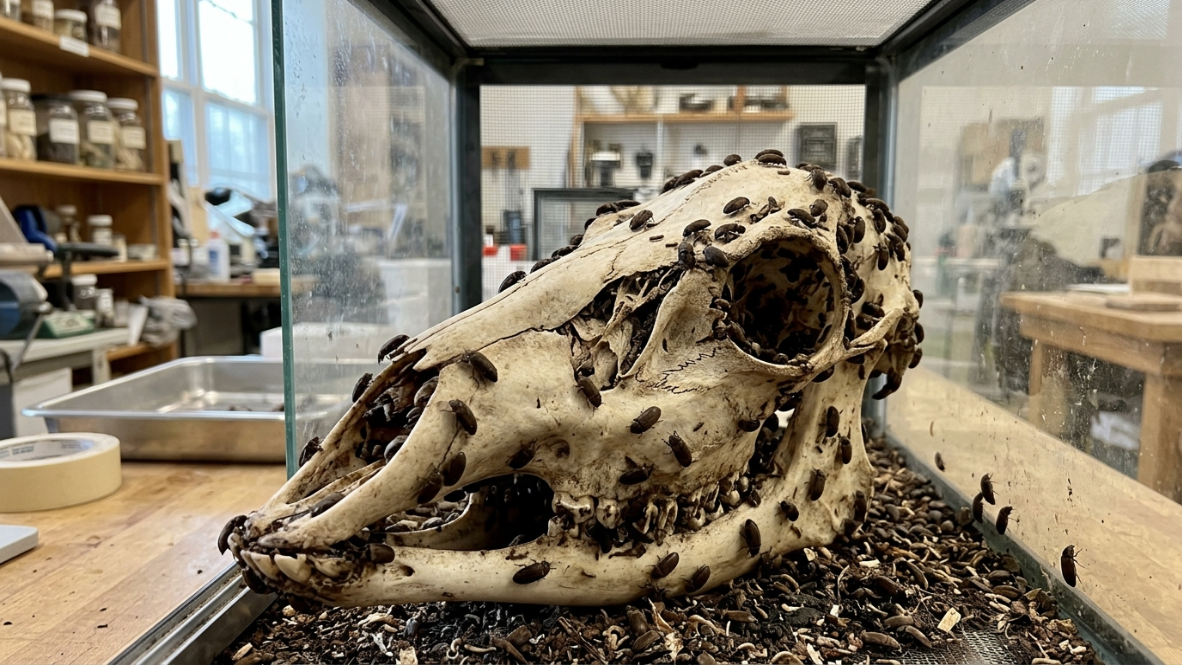
Any honest comparison of steam vs chemical taxidermy for skull cleaning should acknowledge dermestid beetles. These flesh-eating beetles are the gold standard in professional taxidermy studios for European mount preparation. They completely clean bone while preserving delicate nasal bones, turbinates, and other structures that heat or water might damage.
Beetles work naturally and methodically, consuming soft tissue while leaving bone untouched. Processing takes 5 to 21 days depending on specimen size and colony health.
The tradeoffs are real, though. A starter colony costs $100 to $300 with ongoing maintenance of $50 or more per month. The colony requires temperature control between 70 and 75°F and humidity between 60 and 70 percent. Colony collapse from improper care is common among beginners, and several states restrict beetle colonies without permits.
Steam sits between beetles and boiling on the accessibility spectrum. Beetles produce the cleanest results. Steam is more practical for taxidermists who process skulls occasionally rather than continuously. Boiling is the cheapest option but carries the highest risk of bone damage.
Cost Comparison
Method | Typical Initial Cost | Ongoing Cost |
|---|---|---|
Steam Equipment | High | Very Low |
Chemical Processing | Low | Moderate |
Dermestid Colony | Moderate | Moderate |
Boiling | Very Low | Low |
Although steam equipment requires a larger upfront investment, it generally reduces recurring chemical purchases over time. Chemical workflows have lower startup costs but require ongoing purchases of acids, peroxide, degreasers, tanning agents, gloves, and disposal supplies.
Common Confusion Points
Steam vs. Boiling
These are not the same thing. Boiling submerges the entire skull in water at 212°F, which forces fat into porous bone and can literally disintegrate delicate structures over time. Steam applies controlled heat to specific areas. The temperature is similar, but the delivery method, duration, and fat absorption risk are fundamentally different.
Borax vs. Proper Tanning
Borax dries a hide. Tanning chemically transforms it. A borax-treated mammal skin may look fine for a year or two, then begin to crack, lose hair, or attract insects. Tanning creates permanent protein bonds that keep the hide stable for decades. For birds, the equation is different (as discussed above), but for mammal taxidermy, tanning is not optional.
Bleach vs. Hydrogen Peroxide
Standard household bleach (sodium hypochlorite) breaks down bone structure. Hydrogen peroxide at 12% concentration or 40-volume developer whitens bone safely. This is not a minor distinction. Using bleach on a skull you spent days cleaning will compromise its structural integrity.
“Chemical-Free” Taxidermy
Steam reduces chemical dependency in several workflow stages, but “chemical-free taxidermy” is mostly a misnomer. Even the most steam-heavy workflow still needs hydrogen peroxide for whitening and some form of tanning chemistry for hide preservation. Steam minimizes chemical exposure, which is a significant practical benefit, but it doesn’t eliminate chemistry from the process entirely.
For a parallel comparison in another trade, the steam vs chemical hat cleaning guide shows how the same steam-vs-chemical framework applies to hat restoration.
Safety and Workplace Considerations
This is where the steam vs chemical taxidermy comparison becomes most consequential. The health risks of taxidermy chemicals are well documented and, in some cases, severe.
Chemical Exposure Risks
Formaldehyde, used for wet preservation and bacterial control, is classified as a known human carcinogen. OSHA restricts workplace exposure to 0.75 ppm over an 8-hour period, with a short-term ceiling of 2 ppm. NIOSH recommends a much stricter limit of just 0.016 ppm over an 8-hour workday. The gap between those two numbers reflects how seriously respiratory health experts view formaldehyde exposure.
Acetone, widely used for degreasing, causes irritation to eyes and mucous membranes. NIOSH recommends an exposure limit of 250 ppm, while OSHA permits up to 1,000 ppm.
Older taxidermy collections present additional hazards. Arsenic, mercury, naphthalene, para-dichlorobenzene, and even DDT have been found in museum specimens, remnants of historical preservation practices that predated modern safety standards.
One professional taxidermist recounted discovering that brush-on tanning products she’d been using for years contained harmful chemicals she had never been warned about. This kind of gradual, uninformed exposure is common in small shops without formal safety training.
Steam’s Safety Advantage
Steam produces no toxic fumes, requires no hazmat disposal, and poses minimal respiratory risk. The primary hazard is burns from high-temperature vapor, which proper technique and equipment design address effectively. For taxidermists working in enclosed shop spaces, reducing chemical fume exposure by using steam for tissue loosening and hide relaxing instead of chemical alternatives is a meaningful health improvement.
For anyone setting up a commercial steam station, understanding how commercial steamers differ from extraction machines helps avoid purchasing the wrong equipment category.
PPE Requirements
Chemical tanning requires acid-resistant gloves, splash-proof eye protection, and adequate ventilation (ideally a fume hood or downdraft table). Formaldehyde work demands a respirator with organic vapor cartridges. Steam work requires heat-resistant gloves and basic eye protection, but no respiratory protection.
Where Steam Fits in Your Taxidermy Workflow
Think of steam as a chemical dependency reducer, not a chemical replacement. Here’s where it earns its place:
Replaces or reduces chemicals: Tissue loosening on skulls (replaces extended maceration or risky boiling), hide rehydration (reduces soaking time and chemical relaxing agents), surface cleaning during mount finishing (no solvent residue).
Cannot replace chemicals: Pickling, tanning, degreasing of bone or hide, whitening. These steps require specific chemical reactions that steam cannot trigger.
Works alongside chemicals: Steam prep before chemical degreasing shortens overall processing time. Steam finishing after tanning improves the fit and appearance of the mounted hide.
The practical benefit for most taxidermists is a cleaner, safer shop with fewer hours spent handling acids and solvents, even though those substances remain part of the process.
See the full range of Hoffman steamer models for taxidermy and other commercial applications.
Frequently Asked Questions
Can steam alone clean a skull for a European mount?
Steam can remove the bulk of soft tissue from a skull, but it won’t whiten the bone. After steam cleaning, you’ll still need a hydrogen peroxide bath (12% solution or 40-volume developer) for whitening. Steam handles the physical cleaning; chemistry handles the cosmetic finishing.
Do I still need hydrogen peroxide if I use steam?
Yes. Steam removes tissue but leaves bone its natural yellowish color. Hydrogen peroxide is the standard whitening agent for European mounts. Avoid household bleach, which degrades bone structure.
Is steam safe to use on antlers?
Caution is needed. Steam from simmering water can damage velvet on antlers, and excessive heat can crack or discolor antler material. Direct the steam at bone tissue while keeping it away from antlers, or protect antlers with foil or wrap during the cleaning process.
What PSI do taxidermists need for skull work?
Most skull cleaning benefits from moderate to high pressure steam that can be directed precisely at tissue. Commercial steam units in the 40 to 90 PSI range provide enough force for effective tissue removal without the saturation issues of lower-pressure equipment. The Hoffman steam gun is one example of a directed steam tool designed for this kind of precision work.
How long does chemical degreasing take?
A minimum of 14 days for moderately greasy specimens, and potentially longer for bear, pig, or other high-fat skulls. This is one area where there’s no shortcut. Incomplete degreasing leads to yellowing and odor over time.
Are dermestid beetles better than both steam and chemicals for skull cleaning?
For skull cleaning specifically, beetles produce the cleanest results with the least bone damage. But they require ongoing colony maintenance ($50 or more per month), climate-controlled housing, and regulatory compliance in some states. Steam is the practical alternative for taxidermists who clean skulls occasionally rather than running a continuous processing operation.
Is borax enough to preserve a bird mount?
Many experienced bird taxidermists say yes, provided the skin is thoroughly fleshed and degreased first. Bird skin is thin enough that borax drying can produce long-lasting results. For mammals, borax alone is not sufficient, and proper chemical tanning is necessary for durability measured in decades.
What’s the biggest safety difference between steam and chemical taxidermy methods?
Chemical tanning involves acids, solvents, and (in some cases) formaldehyde, all of which produce fumes requiring ventilation and respiratory protection. OSHA limits formaldehyde exposure to 0.75 ppm over eight hours. Steam generates no toxic fumes. The only hazard is thermal burns, which proper technique and equipment minimize effectively.


