

TL;DR
Tailoring steam boiler maintenance refers to both maintaining steam boilers used in the garment trade and customizing a maintenance program for your specific equipment. Small electric boilers in tailor shops, dry cleaners, and garment finishing operations have different maintenance needs than large gas-fired industrial systems. This glossary defines every key term you’ll encounter, explains why each one matters for your pressing and finishing work, and provides a practical maintenance schedule built for boilers in the 1 to 6 gallon range.
What “Tailoring Steam Boiler Maintenance” Actually Means
The phrase carries a useful double meaning. First, it describes the act of maintaining steam boilers that serve tailoring, pressing, and garment finishing operations. Second, it means tailoring your maintenance approach to fit your specific boiler type, shop size, and usage patterns. Both readings matter, and this guide addresses both.
If you run a tailor shop, dry cleaning operation, hat shaping business, or clothing boutique, your steam boiler is probably electric, holds between 1 and 6 gallons of water, and operates without combustion. That puts you in a completely different maintenance category than the building HVAC and gas-fired industrial boilers covered by most online guides. The terms are the same, but how they apply to your equipment differs significantly.
This glossary explains the core vocabulary of steam boiler maintenance in plain language, with specific context for the garment and pressing trades. If you want to understand how commercial steamers work at a foundational level before reading further, start there.
Water Management Terms
Blowdown
Draining a measured volume of water from the bottom of the boiler to flush accumulated minerals, sediment, and sludge. In large industrial systems, blowdown is an automated or semi-automated process. In small manual-fill electric boilers, it’s often as simple as opening a drain valve at the end of each work shift.
Why it matters for tailoring: A dry cleaning boiler specialist at CFB Boilers recommends performing blowdown two or three times a day for optimal performance and longevity in garment trade applications. Minerals settle fast in small tanks. Skipping blowdown allows them to bake onto heating elements and tank walls.
Related terms: Feedwater, Scale, Water Hardness
Feedwater
The water that enters the boiler to be converted into steam. In automatic pump-fill systems, feedwater is drawn from a connected water line. In manual-fill units, it’s the water you pour into the tank yourself.
Feedwater quality is the single most controllable factor in your boiler’s maintenance life. Poor feedwater creates scale. Good feedwater prevents it. The difference between a boiler lasting 10 years and one lasting 25 years often comes down to what’s dissolved in the water going in.
Related terms: Water Hardness, Water Treatment
Water Hardness
A measurement of dissolved calcium and magnesium in your water supply, usually expressed in parts per million (ppm) or grains per gallon (gpg). Water hardness varies enormously by U.S. region. Parts of the Southwest and Midwest have extremely hard water, while the Pacific Northwest tends to be softer.
The National Board of Boiler and Pressure Vessel Inspectors identifies calcium and magnesium as the most common cause of overheating and failure of boiler tubes and heating surfaces. For a small electric boiler in a tailoring shop, hard water is the primary enemy.
Related terms: Scale, Water Treatment, Feedwater
Water Treatment and Softening
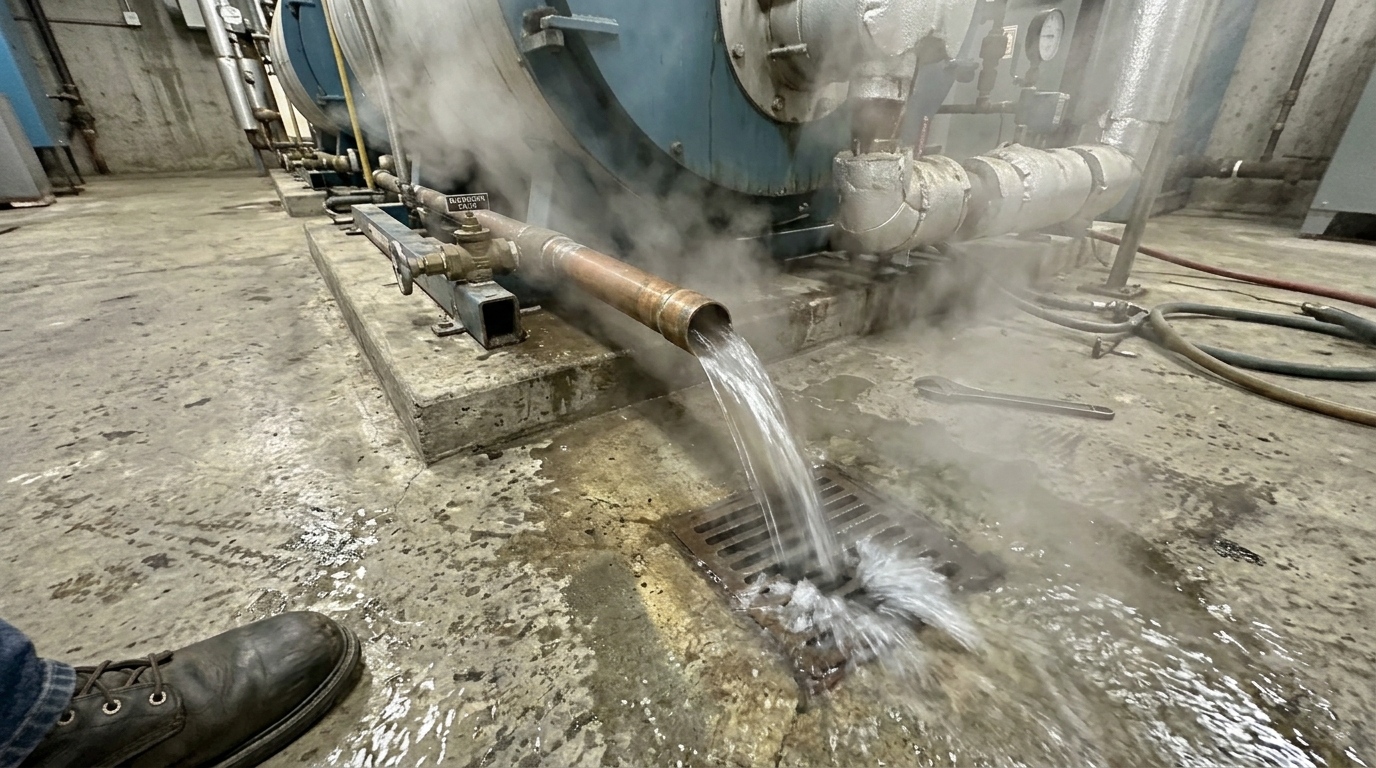
The process of removing dissolved minerals from water before they enter the boiler. Options for small commercial operations range from inline water softeners (connected to your water supply) to simply using distilled or demineralized water in manual-fill units.
Using distilled water in a manual-fill boiler is the easiest, most reliable form of water treatment available. It costs a few dollars per week and eliminates the mineral problem entirely. One telling case study from Powerhouse Combustion describes how replacing a $2,000 water softener would have saved more than $150,000 in parts, labor, and nearly a month of unplanned downtime on a larger system. The principle scales down: prevention is always cheaper than repair.
The difference between manual fill vs. auto fill steam boilers affects your water treatment strategy directly. Manual-fill units give you complete control over what goes into the tank. Auto-fill units need inline treatment because they draw from your building’s water supply.
Related terms: Feedwater, Water Hardness, Descaling
Low-Water Cutoff (LWCO)
A safety device that automatically shuts down the heating element when the water level drops below a safe minimum. Without enough water covering the heating element or boiler surfaces, extreme overheating occurs within minutes. The element burns out, and in pressurized systems, the consequences can be far worse.
The National Board reports that failure of the low-water cutoff system is the number one cause of boiler incidents. Testing your LWCO monthly takes about two minutes and is the single most important safety check you can perform.
Related terms: Sight Glass, Pressure Relief Valve, Daily Check
Sight Glass (Gauge Glass)
A transparent tube mounted on the side of the boiler that shows the current water level. Checking the sight glass before each use is the fastest way to confirm your boiler has enough water and that the water level is behaving normally.
A cloudy or discolored sight glass can indicate mineral contamination in the water. Cracks or leaks around the sight glass fittings are common signs of gasket wear. Both are worth catching early.
Related terms: Low-Water Cutoff, Daily Check, Consumables
Scale and Cleaning Terms
Scale (Limescale)
The Real Cost of Scale Buildup (2026 Data)
Scale Thickness | Efficiency Loss | Annual Energy Cost Increase* | Impact on Pressing Quality |
1/32 inch | 2% – 7% | $150 – $450 | Minor: Slightly wetter steam |
1/16 inch | 10% – 12% | $750 – $1,100 | Moderate: Spitting irons, fabric spots |
1/8 inch | 20% – 25% | $1,800+ | Severe: 2x recovery time, high liability |
Mineral deposits, primarily calcium carbonate, that coat heating elements, tank walls, and internal boiler surfaces as water evaporates into steam. Scale is the most common and most destructive maintenance problem in steam boilers of every size.
The numbers are striking. According to data from Miura Boiler, a layer of scale just one-eighth of an inch thick can cause 20 to 25% efficiency loss. Water treatment research from Chem-Aqua shows that even 1/32 of an inch of normal scale reduces heat transfer efficiency by 2%, while high-iron or high-silica scale at the same thickness reduces it by 7%.
For a small electric boiler in a tailoring shop, scale buildup means longer heat-up times, weaker steam pressure, higher electricity bills, and a heating element working much harder than it should be. It also degrades steam quality, which directly affects your pressing results.
Tailoring context: Scale-contaminated boilers produce lower quality steam. When steam isn’t hot and dry enough, it condenses on fabric surfaces rather than penetrating fibers. Pressing quality drops, and you spend more time per garment getting acceptable results.
Related terms: Descaling, Heating Element, Water Treatment, Recovery Time
Descaling
Removing scale from internal boiler surfaces. Methods include mechanical cleaning (physically scrubbing accessible surfaces), chemical treatment (using descaling solutions), and prevention through water treatment.
Practitioners on the HeatingHelp forum report that descaling neglected steamers often requires an inhibited hydrochloric acid product. The “inhibited” designation means the acid won’t attack the boiler metal for a given period, usually about eight hours, giving it time to dissolve mineral deposits without damaging the tank. For small electric boilers, manufacturers typically recommend gentler solutions like citric acid or proprietary descaling products.
Another practitioner on the same forum advocates for trisodium phosphate (TSP) as a simple, effective cleaner for addressing surging and unstable water lines, both symptoms of internal scale buildup.
The best descaling strategy is to avoid needing it. Regular blowdown and good water quality keep scale from accumulating in the first place.
Related terms: Scale, Water Treatment, Annual Service
Heating Element
In electric boilers, the immersion element that heats water to produce steam. This is the functional equivalent of a burner in a gas-fired boiler, but without combustion, flame, or fuel.
Scale buildup on heating elements forces them to work harder and run hotter to transfer the same amount of energy into the water. This shortens their lifespan significantly. A clean element in good water conditions can last years. A scaled element in hard water might fail in months. Understanding your boiler’s power requirements helps you recognize when an element is underperforming.
Heating elements are consumable parts. Planning for their eventual replacement, rather than waiting for them to fail during a busy shift, is a core principle of tailoring steam boiler maintenance to your specific operation.
Related terms: Scale, Descaling, Consumables, Recovery Time
Safety and Compliance Terms
ASME Certification (ASME Stamp)
The American Society of Mechanical Engineers code stamp certifying that a boiler was designed and built to nationally recognized safety standards. On a pressure vessel, look for the “S” stamp (power boilers) or “H” stamp (heating boilers). This certification means the tank was constructed, tested, and inspected according to strict engineering criteria.
ASME certification matters for insurance, for building code compliance, and for your own safety. Learning to read your boiler’s data plate tells you exactly what your equipment is rated for.
While electric boilers must meet all ASME pressure vessel construction and inspection requirements, they are exempt from combustion safety codes like ASME CSD-1 and NFPA 85 because they don’t have a flame or burn fuel. This simplifies compliance for small electric boiler owners.
Related terms: UL Listing, Certificate of Inspection, PSI
UL Listing
Underwriters Laboratories certification for electrical safety. A UL listing means the product has been tested and meets safety standards for its electrical components, wiring, and controls. For electric steam boilers, UL listing covers the electrical side of the equation while ASME covers the pressure vessel side.
Related terms: ASME Certification, Certificate of Inspection
Pressure Relief Valve (Safety Valve)
A spring-loaded valve that opens automatically to release steam if internal pressure exceeds the boiler’s safe operating limit. This is the last line of defense against overpressure. Never block, plug, or tamper with a pressure relief valve. Test it according to your manufacturer’s instructions, and replace it if it leaks, sticks, or fails to reseat properly.
For a full overview of commercial steam boiler safety requirements, including inspection intervals and compliance documentation, see the linked guide.
Related terms: PSI, ASME Certification, Low-Water Cutoff
Certificate of Inspection
The permit or document showing your boiler passed its most recent inspection by a licensed inspector or jurisdictional authority. Most states require a current certificate for any pressurized boiler installation. Posting it near the boiler is common practice and sometimes legally required.
Related terms: ASME Certification, PSI, Maintenance Log
PSI (Pounds per Square Inch)
The standard unit of pressure measurement for steam boilers in the United States. Commercial boilers for tailoring and garment finishing typically operate between 15 and 90 PSI, depending on the application.
This number carries regulatory weight. High-pressure boilers (above 15 PSI) typically require annual inspection. Low-pressure boilers (15 PSI and below) usually need inspection every two years, though this varies by state. Understanding how much PSI your commercial steamer needs helps you choose the right equipment and understand your inspection obligations.
Related terms: Pressure Relief Valve, Certificate of Inspection, ASME Certification
Performance Terms
Dry Steam vs. Wet Steam
Dry steam contains no suspended water droplets. It’s pure vapor at or above the boiling point. Wet steam carries tiny water droplets along with the vapor, making it less effective for pressing and potentially harmful to fabrics.
Tailoring context: Dry steam penetrates fabric fibers, relaxes them, and allows precise pressing and shaping. Wet steam deposits water on the fabric surface, which can cause water spots, shine marks, or, on delicate materials, outright damage. If your steam iron is spitting or leaving wet marks, the boiler is likely producing wet steam due to contamination, overfilling, or poor maintenance.
Related terms: Steam Quality, Boiler Carryover
Steam Quality
A measure of the purity and dryness of steam output. High-quality steam is dry, clean, and free of contaminants. Low-quality steam is wet, may carry dissolved minerals or rust particles, and performs poorly for pressing and finishing.
Steam quality is directly affected by water treatment, boiler cleanliness, operating pressure, and how well the boiler is maintained. A well-maintained boiler produces consistently high-quality steam. A neglected one doesn’t.
Related terms: Dry Steam, Boiler Carryover, Scale
Boiler Carryover
When water or dissolved contaminants travel with the steam out of the boiler and into the steam line. Carryover happens when the boiler is overfilled, when the water is heavily contaminated with dissolved solids, or when sudden pressure drops cause violent boiling.
Tailoring context: Carryover is the maintenance problem that hits tailoring businesses hardest. Mineral-laden water droplets reaching the steam iron or nozzle deposit directly onto the fabric. On a customer’s wedding dress or a bespoke suit jacket, that’s not just a quality issue, it’s a liability. Preventing carryover through proper water treatment, correct fill levels, and regular blowdown is essential for any garment finishing operation.
Related terms: Steam Quality, Water Treatment, Blowdown
Recovery Time
How quickly the boiler returns to full operating pressure after a heavy draw of steam. When you’re pressing garment after garment during a rush, recovery time determines your throughput.
As scale accumulates on heating elements, recovery time increases because heat transfer slows down. A boiler that used to recover in three minutes might take five or six. Over a full work day, those extra minutes add up to significant lost productivity.
Related terms: Scale, Heating Element, Steam Quality
Maintenance Schedule Terms
Preventive Maintenance (PM)
Scheduled upkeep performed at fixed intervals to prevent breakdowns rather than reacting to them. Preventive maintenance is the core philosophy behind any effective tailoring steam boiler maintenance program. Data from industry sources suggests that neglected maintenance causes 5 to 10% efficiency loss, higher emissions, and significantly more downtime.
The general lifespan of a well-maintained steam boiler is 15 to 25 years, and practitioners on Reddit in communities like r/jewelers have reported using Hoffman equipment for over 24 years with consistent care. The difference between the low end and the high end of that range is almost entirely about maintenance.
For deeper perspective on boiler longevity, see this guide on how long a commercial steam boiler lasts.
Related terms: Daily Check, Periodic Maintenance, Annual Service
Daily Check
A quick visual inspection performed before each use. Takes two to three minutes. Check the water level in the sight glass, verify the pressure gauge is reading correctly, look for leaks around fittings and valves, and listen for unusual sounds during startup.
This is the simplest and most effective habit in any maintenance program. Most problems start small. Daily checks catch them while they’re still small.
Related terms: Sight Glass, Low-Water Cutoff, Preventive Maintenance
Periodic Maintenance
Deeper tasks performed on a weekly, monthly, or quarterly cycle. These include performing blowdown, testing the low-water cutoff, inspecting gaskets and seals, and cleaning external surfaces and vent areas.
Garment trade businesses should pay particular attention to cleaning vent areas and external surfaces. Practitioners at CFB Boilers note that lint and fluff buildup is a common problem in laundry and dry cleaning environments. Even on electric boilers without burners, fluff can obstruct ventilation, insulate surfaces that need to dissipate heat, and create general cleanliness problems.
Related terms: Blowdown, Low-Water Cutoff, Consumables
Annual Service and Reconditioning
A comprehensive inspection, cleaning, and testing event performed once per year (or at manufacturer-recommended intervals). Includes descaling, element inspection, valve testing, safety device verification, and replacement of worn consumables.
Annual service often determines whether your warranty remains valid. As noted by EPCB Boiler, most boiler warranty and insurance policies require users to carry out annual maintenance on time. Faults discovered during the warranty period may not be covered if routine maintenance was skipped.
Factory reconditioning goes a step further, returning equipment to the manufacturer for a professional overhaul including cleaning, parts replacement, inspection, and recertification.
Related terms: Preventive Maintenance, Consumables, Maintenance Log
Maintenance Log (Logbook)
A written record of all checks, findings, services, and repairs performed on your boiler. Inspectors look for consistent logs as proof of responsible operation. Insurance adjusters reference them when evaluating claims. And from a practical standpoint, a log helps you spot patterns: if you’re replacing the same gasket every three months, that tells you something about operating conditions.
Keep it simple. Date, what you checked, what you found, what you did. A spiral notebook next to the boiler works as well as any app.
Related terms: Certificate of Inspection, Annual Service, Preventive Maintenance
Protection and Support Terms
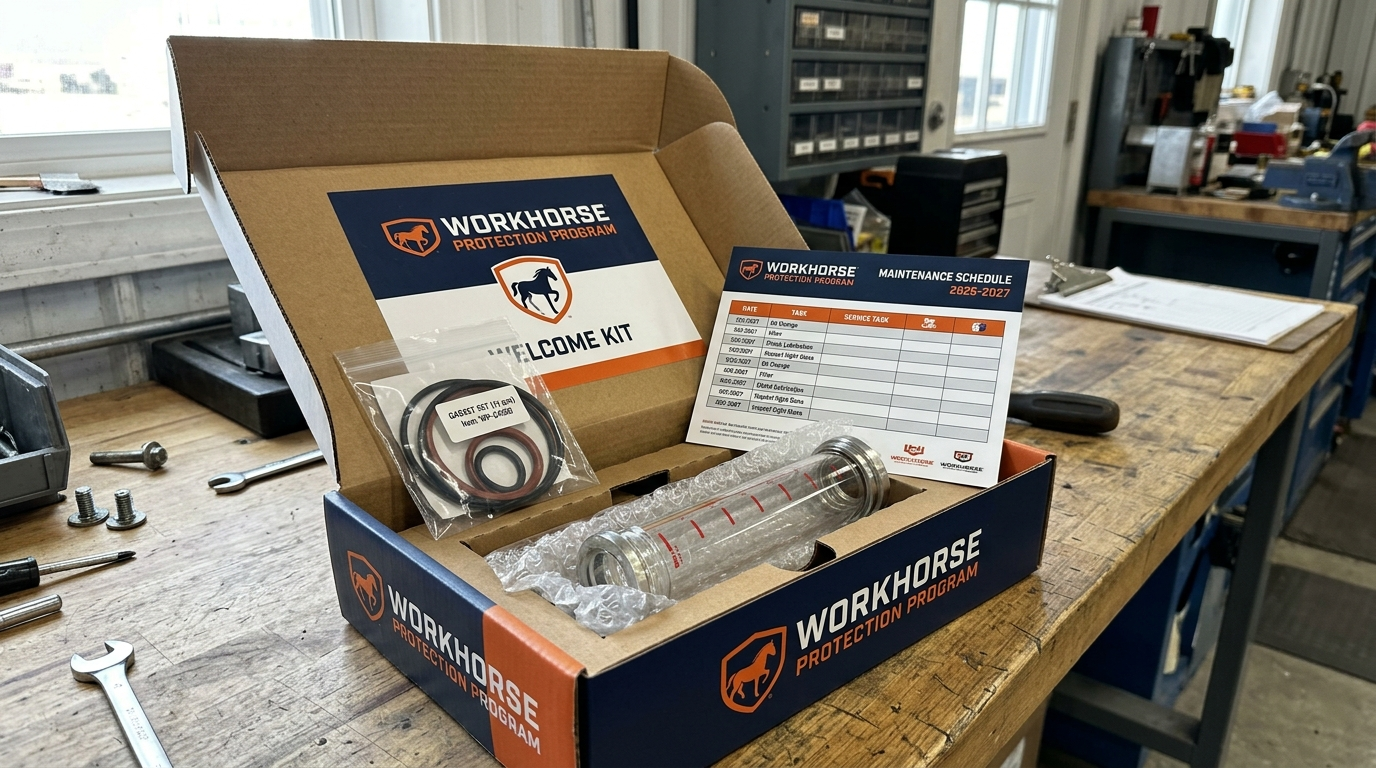
Workhorse Protection Program
A maintenance subscription offered by Hoffman Steam that addresses the “I don’t have a boiler engineer on staff” problem common among small businesses. The Workhorse Lite plan covers automatic consumable shipments, VIP support, compliance documentation, a 20% parts discount, and a loaner unit after 12 months. The Workhorse Essential plan adds full factory reconditioning every 24 months, a 47-point inspection, parts and labor coverage, ASME/UL recertification, and an immediate hot-swap loaner.
These programs exist because most small-business operators are experts at tailoring, not at steam boiler maintenance. Having consumables arrive automatically and reconditioning scheduled on a fixed cycle removes the guesswork.
Related terms: Factory Reconditioning, Consumables, Annual Service
Factory Reconditioning
Returning equipment to the manufacturer for professional overhaul. A factory reconditioning typically includes complete disassembly, cleaning, inspection of all components, replacement of worn parts, reassembly, testing, and recertification. This extends equipment life substantially and restores performance to original specifications.
Related terms: Annual Service, Workhorse Protection Program, Consumables
Consumables
Parts that wear out through normal use and require planned replacement: gaskets, heating elements, sight glass tubes, seals, O-rings. Ordering replacement parts before they fail, rather than after, prevents emergency downtime during your busiest periods.
A well-maintained tailoring steam boiler maintenance program includes tracking consumable life and stocking spares for critical items.
Related terms: Heating Element, Sight Glass, Workhorse Protection Program
2026 Regulatory & Safety Compliance Checklist
To ensure your shop meets current ASME and jurisdictional safety standards:
[ ] Visible Certificate: Is your current Certificate of Inspection posted near the unit?
[ ] ASME Stamp: Locate the “S” or “H” stamp on the data plate for insurance validation.
[ ] Safety Valve Tag: Check the date on your Pressure Relief Valve; these typically require replacement or testing every 12–24 months.
[ ] Logbook Maintenance: Ensure your maintenance log shows a consistent 12-month history to satisfy OSHA and insurance audits.
How Maintenance Differs for Small Electric Boilers
Every top-ranking guide on steam boiler maintenance is written for gas-fired systems serving building HVAC or heavy industry. If you own a small electric boiler in the 1 to 6 gallon range, much of that advice doesn’t apply.
No combustion system to maintain. Electric boilers don’t have burners, pilot lights, flame scanners, or fuel lines. That eliminates an entire category of maintenance: burner tuning, air-to-fuel ratio adjustment, flame inspection, gas leak checks, and combustion air supply monitoring. For small-business owners, this is a significant simplification.
Smaller water volume means faster mineral concentration. A 6-gallon boiler converting water to steam all day concentrates dissolved minerals much faster per gallon of makeup water than a 500-gallon system. Scale buildup can become a problem in weeks rather than months if you’re using hard tap water.
Manual-fill units demand water quality discipline. Without an automatic treatment system inline, you control what goes into the tank. That’s actually an advantage, if you use it. Filling with distilled water eliminates the mineral problem at the source.
Heating elements are the primary wear item. In gas-fired boilers, maintenance focuses on tubes, refractory, and burner components. In electric boilers, the immersion heating element is the component that takes the most abuse. Scale accelerates element wear. Clean water extends element life.
Pressurized vs. non-pressurized changes the scope. A flash steamer operates without internal pressure, which eliminates pressure vessel inspection requirements, safety valve testing, and ASME compliance. A pressurized boiler requires all of those. Understanding which type you have determines your full maintenance scope.
Why Maintenance Matters for Tailoring Businesses
Steam boiler neglect has consequences for every industry, but the garment trade faces a specific and immediate one: damaged customer work.
When a poorly maintained boiler produces wet steam or allows carryover, mineral-laden water reaches the fabric. Water spots on a silk blouse. Mineral deposits on a freshly pressed suit. Shine marks on wool. These aren’t just quality complaints. They’re potentially expensive claims.
The National Board of Boiler and Pressure Vessel Inspectors has specifically called out dry cleaning operations for boiler neglect, noting that boilers are “sometimes neglected for years, possibly decades, with no apparent maintenance” and warning that this neglect “can have terrible consequences.”
Downtime matters too. A boiler failure during wedding season, holiday rush, or a major client deadline means garments don’t get finished. Revenue stops. Customers go elsewhere.
Consistent steam quality produces consistent pressing results. When your boiler is clean and well-maintained, you get dry, hot, powerful steam every time you step on the foot pedal. The pressing results are predictable, the work flows faster, and your equipment lasts longer. Industry data suggests a typical boiler life cycle of 15 to 25 years with proper care.
Quick-Reference Maintenance Schedule for Small Electric Boilers
Frequency | Task | Why |
|---|---|---|
Before each use | Check water level in sight glass | Prevents low-water damage to heating elements |
Before each use | Verify pressure gauge reads correctly | Catches stuck or drifting gauges early |
End of each shift | Blowdown (if applicable to your model) | Flushes minerals before they settle and harden |
Weekly | Inspect for leaks around fittings and valves | Small leaks never get smaller on their own |
Monthly | Test low-water cutoff | NBBI’s number one recommended safety check |
Monthly | Clean external surfaces and vent areas | Prevents lint and fluff buildup, especially in garment shops |
Quarterly | Inspect gaskets and seals | Prevents steam loss and water damage to surroundings |
Annually | Full descale, element inspection, valve testing | Preserves efficiency and protects warranty coverage |
Every 24 months | Professional reconditioning (if available) | Full inspection, parts replacement, and recertification |
Frequently Asked Questions
How often should I descale my steam boiler in a tailoring shop?
Frequency depends on your water quality. If you use distilled water consistently, you may only need to descale during annual service. If you use tap water in a hard-water area, quarterly descaling may be necessary. Check your heating elements for visible white or gray buildup as a practical indicator.
Can I use tap water in a manual-fill electric boiler?
You can, but you probably shouldn’t in areas with moderate to hard water. Tap water contains dissolved minerals that form scale on heating elements and tank walls. Using distilled or demineralized water is the simplest and cheapest way to prevent scale and extend your boiler’s life.
What happens if I skip annual maintenance on my steam boiler?
Three things. First, scale accumulates and reduces efficiency by up to 20 to 25% at just one-eighth of an inch of buildup. Second, safety devices like the low-water cutoff may fail without testing, creating a hazard. Third, most manufacturers’ warranty and insurance policies require annual maintenance. Skipping it can void your coverage.
Do electric steam boilers require the same inspections as gas-fired boilers?
Electric boilers must meet ASME pressure vessel requirements and are subject to jurisdictional inspection based on their operating pressure. However, they are exempt from combustion safety codes (ASME CSD-1 and NFPA 85) because they don’t burn fuel. High-pressure electric boilers (above 15 PSI) typically require annual inspection, while low-pressure units may need inspection only every two years, depending on your state.
What is boiler carryover and why is it a problem for tailors?
Carryover occurs when water droplets, along with dissolved minerals, travel out of the boiler with the steam. In tailoring, this means contaminated water can reach the steam iron or nozzle and deposit directly onto fabric. The result is water spots, mineral stains, or finish damage on customer garments. Preventing carryover through proper water treatment, correct fill levels, and regular blowdown is essential.
How long should a commercial electric steam boiler last?
With proper tailoring steam boiler maintenance, 15 to 25 years is typical. Some users report even longer service life. Practitioners on Reddit have shared accounts of using Hoffman steam equipment for over 24 years. The key variables are water quality, descaling frequency, and whether safety devices and consumable parts are maintained on schedule.
What’s the difference between a flash steamer and a pressurized boiler for maintenance purposes?
A flash steamer heats water on demand without building internal pressure, which means no pressure vessel inspection requirements, no safety valve testing, and no ASME compliance obligations. A pressurized boiler stores hot water and steam under pressure, requiring all of those checks. The differences between flash steamers and boilers affect both your maintenance program and your regulatory obligations.
Do I really need a maintenance log for a small boiler?
Yes. Inspectors look for it. Insurance companies ask about it. And practically, a log helps you track patterns and plan ahead. It doesn’t need to be complex: a notebook with the date, what you checked, what you found, and what you did is sufficient.
Building a Maintenance Program That Fits Your Operation
Tailoring steam boiler maintenance isn’t about following a generic checklist written for a 500-horsepower gas-fired system in a hospital basement. It’s about understanding the specific terms, tasks, and risks that apply to your equipment and your trade.
For small-business operators who want maintenance support built into their equipment ownership, Hoffman Steam’s Workhorse Protection Program provides automatic consumable shipments, factory reconditioning, and unlimited lifetime remote technical support. You can learn more on the support page or request a virtual demo to see how maintenance-friendly design works in practice.
The best maintenance program is one you’ll actually follow. Start with daily checks, use clean water, keep a logbook, and schedule your annual service before you need it. Your boiler, your garments, and your bottom line will all benefit.


