

TL;DR
A taxidermy steam station setup combines a steam generator (flash steamer or electric boiler), delivery tools like wands and nozzles, and hands-free controls into a dedicated workstation for skull cleaning, feather restoration, and hide work. Steam is gentler than boiling, faster than maceration, and requires no colony maintenance like dermestid beetles. With 41 states now regulating cervid skull transport due to CWD, reliable steam equipment has become essential for compliance. This glossary covers every term you need to understand before building or upgrading your taxidermy steam workflow.
Whether you’re a working taxidermist evaluating new equipment, a DIY hunter who saw the steaming method trending on Instagram, or someone building out a new shop from scratch, the terminology around steam equipment can be confusing. PSI ratings, flash steamers versus boilers, ASME certifications, pump-fill systems. These terms matter because choosing the wrong equipment means either underpowered cleaning or overspending on capacity you don’t need.
This glossary bridges two worlds that rarely overlap in a single resource: commercial steam equipment terminology and practical taxidermy process terms. Every definition includes context about why it matters in a real taxidermy shop.
For a broader look at gear selection and skull cleaning workflow, see the companion taxidermy steamer guide on the Hoffman Steam blog.
A taxidermy steam station setup is a dedicated workstation that uses commercial steam equipment to clean animal skulls, restore feathers, soften hides, and maintain finished taxidermy mounts. A complete setup typically includes a steam generator (flash steamer or electric boiler), steam wand, foot pedal, hose, and work surface with proper drainage. For most taxidermists cleaning deer skulls, a 40 PSI commercial steamer is sufficient, while higher-volume shops benefit from 60–90 PSI continuous-duty boiler systems.
Quick Takeaways
Question | Short Answer |
|---|---|
Best steam pressure? | 40 PSI for most deer skulls |
Flash steamer or boiler? | Flash for occasional use, boiler for daily work |
Better than boiling? | Usually yes, because steam reduces grease penetration and protects delicate bone |
Better than beetles? | Faster but not as museum-perfect |
Can steam help with CWD compliance? | Yes, by helping remove soft tissue and brain matter before transport |
Average deer skull cleaning time | About 60–90 minutes |
Is degreasing still required? | Yes |
Why Steam Matters in Taxidermy Right Now
The taxidermy industry includes 3,877 businesses in the US as of 2024, a market worth roughly $1 billion and growing at 4.4% annually over the past five years. Hunting and fishing license sales hit all-time highs after the pandemic, which feeds directly into demand for taxidermy services and equipment.
At the same time, Chronic Wasting Disease regulations have transformed how hunters and taxidermists handle cervid skulls. Currently 41 states and 8 Canadian provinces regulate the transportation of cervid body parts, requiring that skulls be completely free of brain matter, spinal column tissue, and soft tissue before crossing state lines. This regulatory pressure makes reliable, thorough skull cleaning a compliance issue, not just a quality preference.
Steam has emerged as a preferred method because it solves problems that plague other approaches. It won’t force fat into bone the way boiling does. It won’t loosen teeth and dissolve cartilage the way extended maceration can. And it doesn’t require maintaining a live beetle colony.
Practitioners on forums like Saddlehunter.com confirm this advantage: one user reported that “the biggest advantage to this method is you can’t overcook the skulls with the steam.” Another on the Rokslide hunting forum described steaming a moose skull for two hours, pressure washing for twenty minutes, then doing two rounds of bleach. Done.
Exploring steam equipment for your taxidermy operation? Browse Hoffman’s taxidermy bundles ranging from portable setups to continuous-duty systems.
How to Choose the Right Taxidermy Steam Station
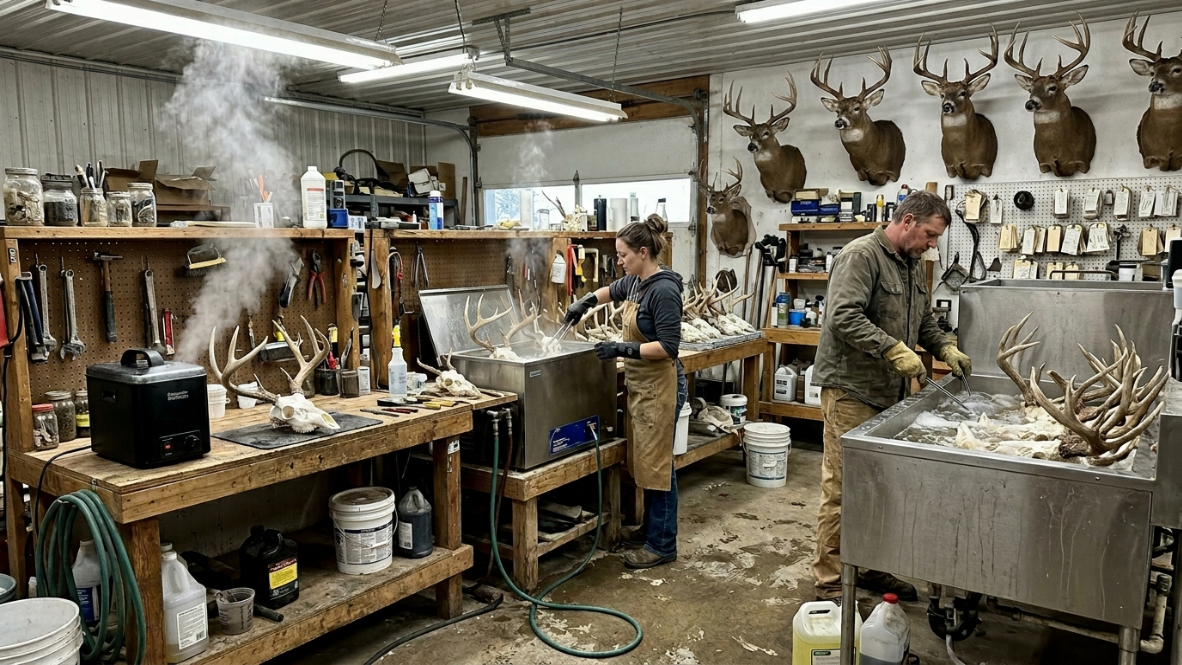
Choosing equipment depends more on workload than budget. Buying too small creates bottlenecks during hunting season, while oversized boilers cost thousands more than many shops need.
Hobby Taxidermists
Fewer than 20 skulls per year
Flash steamer
Manual fill
35–40 PSI
Seasonal Shops
20–100 skulls annually
Electric boiler
40–60 PSI
Manual fill
Full-Time Commercial Shops
Hundreds of skulls
Pump-fill boiler
Continuous duty
60–90 PSI
Restoration Specialists
Prioritize:
precise steam control
adjustable wand
foot pedal
lower pressure options
Taxidermy Steam Station Components
Most commercial steam stations include:
Steam generator
Boiler or flash heater
Steam hose
Steam wand
Foot pedal
Pressure gauge
Safety valve
Water reservoir
Drain tray
Work table
Section 1: Steam Equipment Terms
These are the terms that describe what you’re buying, what it does, and how it performs. Understanding them prevents the most common mistake: confusing a hobby-grade steamer with commercial equipment built for sustained taxidermy work.
Steam Station
A dedicated steam-generating workstation used in taxidermy for skull cleaning, feather repair, and hide work. A complete taxidermy steam station setup encompasses the boiler or steamer unit, a steam delivery tool (wand or nozzle), a foot pedal for hands-free operation, hoses, and often a rolling cart. Think of it as the central hub of your cleaning workflow, comparable to a fleshing station or tanning station in a traditional shop layout.
Why it matters: A properly configured steam station lets you clean skulls, restore bird feathers, and relax hides from a single workstation. Without dedicated setup, taxidermists waste time cobbling together DIY rigs that lack consistent pressure and temperature.
Flash Steamer
A non-pressurized, portable steam generator that heats water on demand rather than storing pressurized steam in a tank. Flash steamers require no boiler permits, making them suitable for smaller shops or retail-adjacent environments. Hoffman’s GEM-III, for example, is a portable flash steamer at $995 that includes foot pedal control and dual heating elements.
Why it matters: If your taxidermy steam station setup is for occasional euro mounts or seasonal work, a flash steamer gives you steam without the complexity of a pressurized system. For high-volume shops, though, you’ll want to understand the differences between flash steamers and boilers.
Steam Boiler (Electric)
A pressurized vessel that generates and stores steam at elevated pressure, typically 40 to 90 PSI for commercial taxidermy applications. Electric steam boilers plug into standard or 220V outlets and deliver consistent, high-pressure steam for extended periods. They range from compact 1-gallon units like the EVD-1 ($1,199, 40 PSI) to 6-gallon manual-fill systems like the JEL11M ($4,495).
Why it matters: The boiler is the engine of any serious taxidermy steam station setup. Higher capacity means longer run times without refilling, which matters during the fall hunting rush when you might be processing multiple skulls per day.
PSI (Pounds Per Square Inch)
The measurement of steam pressure output. Higher PSI delivers more force at the nozzle, which translates directly to cleaning power against stubborn tissue, grease, and dried-on material. Commercial taxidermy steamers typically operate between 40 and 90 PSI.
Why it matters: A 40 PSI unit handles most euro mount cleaning well. If you’re working with heavily greased bear skulls or doing high-volume commercial work, the higher end of the PSI range cuts processing time significantly. For a deeper breakdown, see this guide on how much PSI commercial steamers need.
Steam Wand / Nozzle
The handheld delivery tool that directs concentrated steam onto the work surface. Wands are typically longer for reaching inside skull cavities through the foramen magnum, while nozzles offer more focused output for precision work like feather restoration. Some setups include interchangeable tips for different applications.
Why it matters: The wand is what you actually hold during cleaning. Its length, angle, and tip design determine whether you can effectively reach brain matter deep inside a skull cavity or gently steam individual tail feathers on a bird mount.
Foot Pedal Control
A floor-mounted switch that activates steam flow, keeping both hands free to hold and manipulate specimens. Standard on most commercial steam stations including Hoffman’s GEM-III and EVD-1 models.
Why it matters: You need both hands when positioning a delicate bird mount over steam or angling a skull for interior cleaning. Reaching for a switch on the machine breaks your workflow and risks dropping specimens.
Continuous-Duty
A rating indicating that steam equipment can run for extended, uninterrupted periods without overheating or requiring cooldown cycles. Critical during hunting season when taxidermy shops may process dozens of skulls in a single week.
Why it matters: Seasonal volume is the reality of taxidermy. A steam unit that needs a 30-minute cooldown after every 20 minutes of operation will bottleneck your entire shop during the busiest weeks of the year. Continuous-duty ratings exist on Hoffman’s industrial RHPG series boilers, which start at $6,999 with automatic pump-fill systems.
ASME Certification
American Society of Mechanical Engineers safety standard for pressurized vessels. ASME-certified boilers have been inspected and meet structural standards for safe pressure containment. Some jurisdictions require ASME certification for any pressurized commercial equipment.
Why it matters: Beyond legal compliance, ASME certification means the tank has been built to withstand its rated pressure with a safety margin. This matters in a taxidermy shop where the steam boiler might run for hours and sit near chemicals, hides, and other flammable materials.
Manual-Fill vs. Pump-Fill
Two methods of replenishing water in a steam boiler. Manual-fill boilers require you to shut down, depressurize, and physically add water through a funnel. Pump-fill (also called auto-fill) systems draw from a connected water source and replenish automatically during operation.
Why it matters: Manual-fill works fine for shops running a few skulls per session. But if your taxidermy steam station setup handles high volume, every refill cycle means downtime. Pump-fill systems like the JEL11 ($7,895) eliminate those interruptions entirely. For more detail, read this comparison of manual-fill vs. auto-fill boilers.
Spray Gun
An accessory that mixes steam with water or cleaning solution and delivers it as a pressurized spray. In taxidermy, spray guns help flush loosened tissue from skull cavities and can apply degreasing agents during the cleaning process. Available on select Hoffman models like the JEL3S ($2,399 to $2,599).
Why it matters: A spray gun extends what your steam station can do. Instead of steam-only cleaning, you can integrate rinsing and chemical application into the same workstation, reducing the need to move skulls between stations.
Flash Steamer vs Boiler
Feature | Flash Steamer | Electric Boiler |
|---|---|---|
Portability | Excellent | Moderate |
Warm-up | Fast | Moderate |
Pressure | Lower | Higher |
Continuous Use | Limited | Excellent |
Price | Lower | Higher |
Best For | Hobby Shops | Commercial Shops |
Section 2: Skull Cleaning and Preparation Terms
Skull cleaning is the primary reason taxidermists invest in steam equipment. These terms cover the major cleaning methods, the anatomy you need to protect, and the finishing steps that produce display-quality results.
European Mount (Euro Mount)
A style of trophy display featuring a cleaned, whitened animal skull with antlers or horns intact, displayed without skin, cape, or artificial form. Euro mounts have surged in popularity due to their clean aesthetic and lower cost compared to full shoulder mounts.
Why it matters: The euro mount is the most common application for steam in taxidermy. Every skull cleaning term below feeds into producing a quality euro mount. Steam’s ability to clean without overcooking bone makes it particularly well-suited to this display style.
Skull Cleaning
The process of removing all soft tissue, including muscle, connective tissue, brain matter, and membrane, from an animal skull for display or scientific preparation. Five primary methods exist: steaming, simmering, boiling, maceration, and dermestid beetles. Each has distinct tradeoffs in speed, quality, and equipment requirements.
Why it matters: The method you choose determines both the quality of the finished skull and the equipment your shop needs. Steam is gaining ground because it occupies a middle position: faster than maceration, gentler than boiling, and simpler than maintaining a beetle colony.
Steam Cleaning Workflow
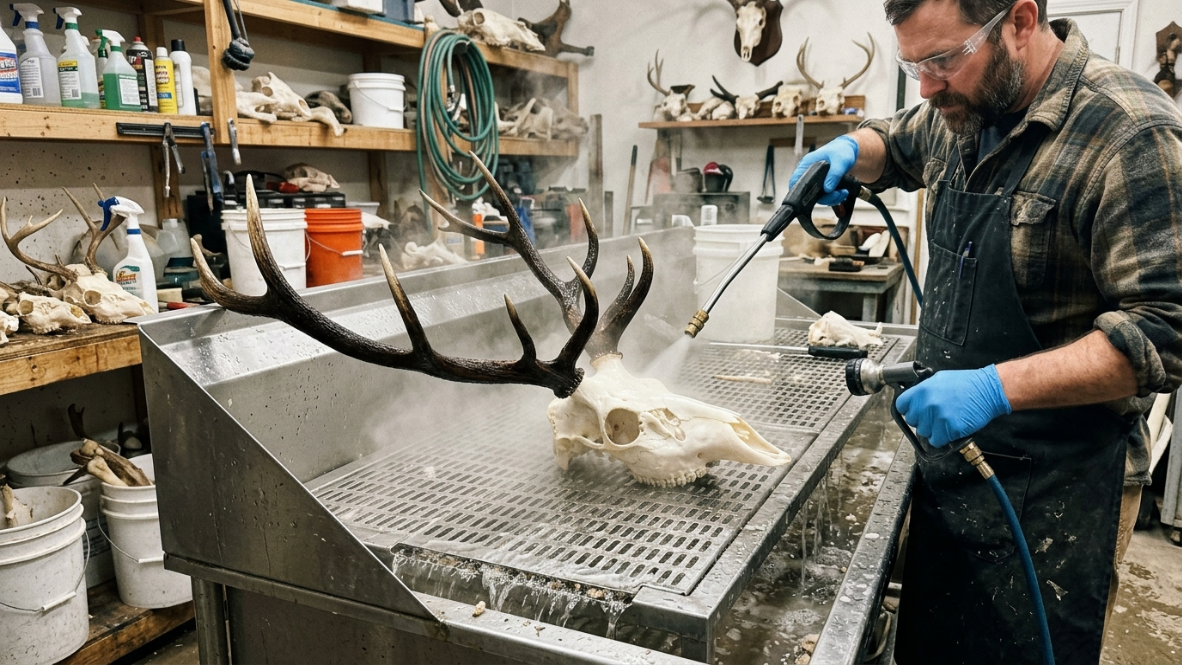
Remove large tissue manually.
Steam skull.
Flush brain cavity.
Pressure rinse.
Degrease.
Dry completely.
Whiten with hydrogen peroxide.
Seal if desired.
Simmering
Heating water with detergent to approximately 200°F (just below boiling) to loosen soft tissue from bone. Simmering is distinct from a full rolling boil, which can damage bone structure and force grease into the skull.
Why it matters: Many practitioners who say they “boil” skulls actually mean simmering, and the distinction matters. True boiling at 212°F forces melted fat deep into bone, producing greasy yellow skulls that resist whitening. Simmering reduces this risk but still requires careful temperature monitoring, something steam sidesteps entirely.
Dermestid Beetles
A colony of flesh-eating beetles (Dermestes maculatus) used for museum-quality skull cleaning. The beetles consume soft tissue without any heat exposure, leaving bone pristine. Museums, universities, and high-end taxidermists have used them for decades.
Why it matters: Beetles produce arguably the cleanest results, but they require climate-controlled housing, feeding schedules during off-season, and weeks of processing time per skull. For shops that need faster turnaround or lack space for a colony, a taxidermy steam station setup offers a practical alternative.
Maceration
Soaking a skull in warm water (approximately 95°F) for days or weeks, allowing naturally occurring bacteria to break down soft tissue. Often considered the gentlest chemical-free method.
Why it matters: Maceration works well for large skulls and complete skeletons, but the process can take weeks. It also dissolves cartilage, which makes it a poor choice for small animals where you want to preserve nasal structures. One practitioner on the Hunt Talk forum noted that macerated skulls sometimes get “too clean,” with bones loosening and teeth falling out.
Degreasing
The process of extracting fat from cleaned bone using solvents, detergents, or extended soaking in warm water. Degreasing is a separate step that happens after the initial tissue removal, regardless of which cleaning method you use.
Why it matters: Animal brains are roughly 60% fat, and those oils will stain bone yellow if not removed. Even with steam cleaning, which doesn’t force fat into bone the way boiling does, degreasing is still necessary. Expect a minimum of 14 days for thorough degreasing on most cervid skulls.
Skull Cap / Skull Plate
The top portion of the skull cut to preserve antlers or horns with minimal skull bone. A skull cap includes the pedicles (where antlers attach) and enough surrounding bone for a clean mount, but removes the lower skull, jaw, and nasal cavity.
Why it matters: Many states explicitly define “cleaned skull plates” as acceptable for CWD-compliant transport. If you’re setting up a steam station specifically for field or trailhead use, you may only need enough capacity to clean skull plates rather than full skulls.
Whitening / Bleaching
A post-cleaning process that brightens bone to a display-ready white. The standard method uses hydrogen peroxide (typically 3% to 12% concentration), not household chlorine bleach. Chlorine bleach degrades bone structure and creates a chalky, brittle surface.
Why it matters: This is one of the most misunderstood steps. “Bleaching” in taxidermy almost never means actual bleach. Hydrogen peroxide oxidizes organic staining compounds without damaging the calcium phosphate structure of bone. Steam cleaning as a first step produces a cleaner starting point for peroxide whitening because less grease has been forced into the bone.
Foramen Magnum
The large opening at the base of the skull where the spinal cord exits. In skull cleaning, this is the primary access point for removing brain matter, either by flushing with steam, scooping manually, or allowing beetles/bacteria to enter.
Why it matters: The foramen magnum’s size varies by species. On a whitetail deer, it’s large enough to direct a steam wand inside for effective brain removal. On smaller species, you may need thinner nozzle tips. Understanding this anatomy helps you choose the right steam delivery attachments.
Nasal Septum
The delicate cartilage wall dividing the nasal cavity. Intact nasal structures significantly improve the appearance and value of a euro mount, but they’re extremely fragile and easily damaged by aggressive cleaning methods.
Why it matters: This is where steam shows its clearest advantage over boiling. The lower, more controllable temperature of steam cleaning reduces thermal shock to thin cartilage and bone. Practitioners consistently report better nasal septum preservation with steam compared to simmering or boiling methods.
Section 3: Mounting and Finishing Terms Where Steam Applies
Steam’s role in taxidermy extends well beyond skull cleaning. These applications are poorly documented online, which means most taxidermists don’t realize their steam station can handle these tasks too.
Feather Steaming
Using directed steam to restore bent, frayed, or separated feather barbs on bird mounts to their natural, interlocking state. Each feather’s barbs have tiny hooklets (barbules) that zip together like velcro. Steam relaxes these structures and allows them to re-engage.
Why it matters: Feather damage is one of the most common issues in bird taxidermy, both during initial mounting and years later during restoration. At taxidermy conventions, practitioners have discussed using steam to remove feather “fray” from wing and tail tips. One restoration specialist noted using steam specifically to “join the missing parts together” on damaged wing feathers. A duck hunting forum contributor shared a practical technique: holding the mount over a pot of boiling water and letting the steam re-zip the barbs. A dedicated steam station with a wand gives you far more precision and control than a pot of boiling water.
Hide Relaxing
Softening dried, salted, or frozen animal skins using steam, moisture, or chemical agents to make them pliable enough for mounting on a form. Steam relaxing is faster than water-soaking and gives the taxidermist more control over which areas get softened.
Why it matters: Consistent hide flexibility determines how well a mount drapes and tucks around a form. Uneven relaxing creates lumps, wrinkles, and poor adhesion. A taxidermy steam station setup with adjustable pressure lets you target stiff areas without over-saturating the entire hide.
Mount Restoration / Steam Cleaning
Using steam to clean, refresh, and maintain finished taxidermy mounts. Dust, smoke, and environmental grime accumulate on displayed mounts over years. Steam lifts dirt without chemical residue and can revive matted fur or compressed feather areas.
Why it matters: Restoration work is a growing revenue stream for taxidermy shops, and it requires gentle cleaning that won’t damage decades-old mounts. A commercial steamer already in the shop serves double duty for restoration without additional equipment investment.
Section 4: Compliance and Regulatory Terms
Regulations are reshaping how taxidermists and hunters handle animal remains, particularly cervid skulls. These terms explain the compliance framework that makes reliable steam cleaning a business necessity.
CWD (Chronic Wasting Disease)
A fatal prion disease affecting cervids (deer, elk, moose, caribou). CWD prions are found in brain tissue, spinal cord, lymph nodes, and other soft tissues. Unlike bacteria or viruses, prions cannot be destroyed by standard cooking temperatures or disinfection methods.
Why it matters: CWD is the single biggest regulatory driver for steam cleaning equipment in the taxidermy industry. Because prions concentrate in brain and nerve tissue, regulations focus on removing these materials before transport. A complete taxidermy steam station setup, especially a portable one, allows thorough cleaning at point of harvest.
Carcass Transport Regulations
State and provincial laws governing how animal remains can be moved across jurisdictional boundaries. For cervids in CWD-affected areas, regulations typically require that skulls and skull plates be “free from all spinal column, brain matter and soft tissues” before transport.
Why it matters: Violations carry real penalties, including confiscation of trophy and equipment. A taxidermist who offers field-cleaning services using portable steam equipment adds value for hunting clients who need compliant skulls for transport across state lines.
Cleaned Skull (Legal Definition)
For regulatory purposes, a “cleaned skull” typically means one where no meat, brain matter, or soft tissue remains attached. The specific language varies by state, but the standard is stricter than most hunters realize. Visible tissue remnants, even small amounts, can result in confiscation at check stations.
Why it matters: Steam cleaning reaches areas that manual scraping misses, particularly inside the brain case accessed through the foramen magnum. This thoroughness is what makes steam a compliance tool, not just a quality tool.
Taxidermy Steam Station Maintenance Checklist
Task | Frequency |
|---|---|
Drain boiler | Daily |
Descale tank | Monthly |
Inspect hose | Weekly |
Check safety valve | Monthly |
Clean nozzle | After every session |
Replace worn seals | As needed |
How a Taxidermy Steam Station Setup Fits Your Shop
A well-organized taxidermy shop functions like an assembly line, with each section serving a defined purpose. Your steam station belongs in the cleaning zone, ideally near a drain, ventilation, and your degreasing setup to minimize carrying wet, greasy skulls across the shop.
For seasonal or low-volume operations (fewer than 20 skulls per year), a portable flash steamer or entry-level boiler provides adequate steam without major investment. Medium-volume shops processing skulls weekly during hunting season benefit from a manual-fill boiler in the 1 to 2-gallon range, which balances run time with simplicity. High-volume commercial operations running multiple skulls daily need continuous-duty, pump-fill systems that won’t interrupt workflow for refilling.
The right taxidermy steam station setup also depends on what else you do with it. If you mount birds, restore older pieces, and relax hides in addition to cleaning skulls, you’re using the equipment year-round rather than just during hunting season. That changes the ROI calculation considerably.
Ready to match equipment to your shop’s volume? See Hoffman’s complete product catalog with transparent pricing on every steamer and boiler tier.
Taxidermy Steam Station at a Glance
Category | Recommendation |
|---|---|
Ideal PSI | 40–60 PSI |
Best Water | Distilled |
Best Cleaning Method | Steam + Degreasing |
Best Whitening Agent | Hydrogen Peroxide |
Typical Cleaning Time | 60–90 minutes |
Best for Beginners | Flash Steamer |
Best for Commercial Shops | Continuous-Duty Boiler |
Frequently Asked Questions
What PSI do I need for steam skull cleaning?
Most taxidermists find 40 PSI sufficient for standard cervid skull cleaning. At this pressure, steam effectively loosens soft tissue, membrane, and brain matter without the bone damage associated with boiling. Higher PSI (60 to 90) speeds up the process on heavily greased skulls like bear or boar, where fat deposits are more stubborn.
Can I use a household steamer for taxidermy?
Consumer garment steamers and steam mops lack the pressure, temperature consistency, and duty cycle for skull cleaning. They typically produce low-pressure steam below 15 PSI and overheat after short run times. A proper taxidermy steam station setup requires commercial-grade equipment rated for sustained operation.
How long does it take to steam clean a deer skull?
Practitioners report 60 to 90 minutes for a whitetail deer skull. One user on Saddlehunter.com described steaming for 90 minutes, after which “everything peeled off like butter.” Larger skulls like moose or elk take closer to two hours. The key advantage is that you cannot overcook a skull with steam, so erring on the longer side carries no penalty.
Is steam cleaning better than dermestid beetles?
They solve different problems. Beetles produce museum-quality results with zero heat exposure to bone but require colony maintenance, climate control, and weeks of processing time. Steam is faster (hours instead of weeks), needs no living organisms, and works on demand. Many taxidermists use steam as their primary method and keep a small beetle colony for specialty or museum-grade work.
Do I still need to degrease after steam cleaning?
Yes. Degreasing is a separate and essential step regardless of cleaning method. While steam doesn’t force fat into bone the way boiling does, animal skulls still contain significant natural oils, especially from the brain (roughly 60% fat). Plan for a minimum of two weeks of degreasing in warm water with dish soap or a dedicated degreasing agent.
Can steam equipment help with CWD compliance?
Absolutely. Steam effectively removes the brain matter, spinal cord tissue, and soft tissue that CWD regulations target. Portable steam setups can even be used at trailheads or field camps, allowing hunters to clean skulls before transporting them across jurisdictional boundaries. This is one of the strongest practical arguments for investing in a taxidermy steam station setup.
What’s the difference between a flash steamer and a boiler for taxidermy?
A flash steamer heats water on demand without storing pressurized steam. It’s lighter, more portable, and requires no boiler permits. A boiler stores pressurized steam (40 to 90 PSI), delivering more consistent power for extended sessions. For occasional use, a flash steamer works. For regular skull cleaning during hunting season, a boiler’s sustained output makes a noticeable difference. This flash steamer vs. boiler comparison covers the technical details.
How do I use steam on bird feathers without damaging the mount?
Hold the steam wand 6 to 12 inches from the feathers and use short, sweeping passes. The goal is to warm and humidify the barbs just enough for them to re-zip naturally. Never hold steam on one spot for extended periods, and work from the base of the feather toward the tip. A foot pedal gives you precise control over steam duration while keeping both hands free to position the mount.


