

TL;DR
Steam is rapidly gaining ground as a skull cleaning method in taxidermy because it loosens tissue without the bone damage caused by boiling. This taxidermy steamer guide covers every term you need to know, from European mounts and dermestid beetles to PSI ratings and flash steamers versus pressure boilers. Whether you are a hunter doing a DIY euro mount or a professional taxidermist running a shop, understanding steam equipment vocabulary will help you choose the right tool and get better results.
Steam has always played supporting roles in taxidermy. It relaxes hides, restores feathers, and loosens stubborn tissue. But in the last couple of years, steaming has broken out of the background and into the spotlight as a primary skull cleaning method, fueled almost entirely by hunters and taxidermists sharing results on forums and social media.
The problem? There is no single resource that defines the terms, explains the equipment, and connects the dots between what taxidermists actually do and what steam equipment actually does. That is what this taxidermy steamer guide is for.
If you are already considering commercial steam equipment for your taxidermy work, browse taxidermy steamer bundles to see what a complete, ready to use setup looks like.
Quick Answer: What Is a Taxidermy Steamer?
A taxidermy steamer is a steam generating system used to clean skulls, relax hides, restore feathers, and remove tissue without fully immersing specimens in boiling water. Modern commercial steamers typically produce between 65 and 90 PSI, allowing taxidermists to soften tissue while reducing the risk of bone damage associated with boiling.
For most hunters and taxidermists, this taxidermy steamer guide recommends the following pressure ranges:
| Task | Recommended Steam Pressure |
|---|---|
| Feather restoration | 40 PSI |
| Hide relaxing | 40 to 65 PSI |
| Skull cleaning | 65 to 90 PSI |
| Commercial volume work | 90 PSI continuous duty boiler |
Steam has become popular because it combines faster cleaning with lower odor and better bone preservation than traditional boiling methods.
Why Steam Matters in Taxidermy
Steam touches more parts of the taxidermy workflow than most people realize. It is used for:
- Skull cleaning (the dominant use case driving search interest right now)
- Hide relaxing and rehydration before tanning
- Feather restoration on bird mounts
- Degreasing bone and antler surfaces
- Spot cleaning finished mounts and display pieces
For decades, taxidermists relied on simmering pots, chemical baths, and beetle colonies. Steam was a minor tool. That changed when DIY hunters discovered you could clean a skull with a propane tank, a dishwasher hose, and a garbage bag. The results were surprisingly good, and the method spread fast through hunting forums.
The distinction that matters now is between these makeshift steam setups and purpose built commercial steam equipment. A garbage bag rig works for one or two skulls a year. A professional taxidermist processing dozens of skulls per season needs consistent output, reliable pressure, and equipment that will not break down mid job.
Typical Skull Cleaning Process
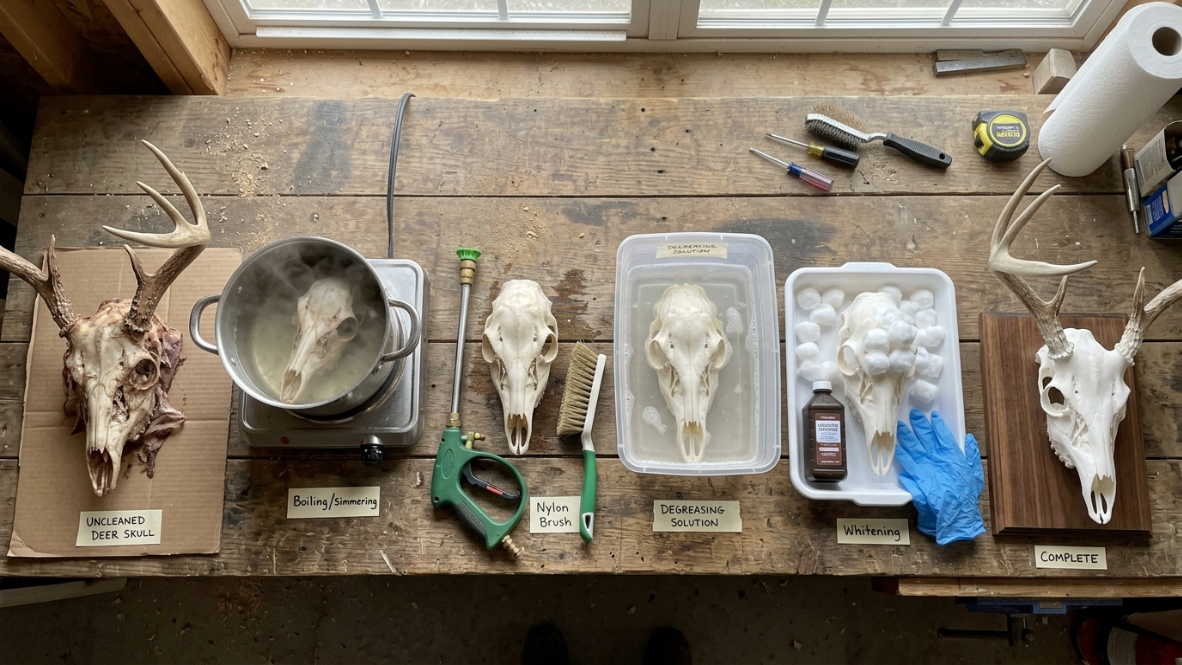
Although every taxidermist develops their own process, a typical workflow looks like this:
- Remove excess flesh with a knife.
- Steam the skull for 1 to 3 hours depending on size.
- Pressure wash loosened tissue.
- Degrease using warm water and dish soap.
- Allow the skull to dry.
- Whiten with hydrogen peroxide.
- Allow final curing before mounting.
Following a consistent workflow helps minimize bone damage while producing cleaner, more consistent European mounts.
Glossary of Skull Cleaning Terms
Skull cleaning, specifically for European mounts, is the reason most people search for a taxidermy steamer guide. Here are the terms you will encounter.
European Mount (Euro Mount)
A skull only trophy display where the cleaned, whitened skull is mounted with antlers or horns intact. No skin, no form, no glass eyes. Just bone. Euro mounts have surged in popularity because they are cheaper than full mounts, look striking on a wall, and can be done at home.
Simmering vs. Boiling
This distinction is critical. The word “boiling” gets thrown around constantly, but actual boiling (water at a rolling 212°F) damages bone. It causes brittleness, warping, and separation of skull plates. What experienced taxidermists actually mean is simmering: maintaining water just below boiling, around 180 to 200°F, to render fat and loosen tissue.
The problem is that simmering requires constant monitoring. Practitioners on the SaddleHunter forum report that using a turkey fryer pot leads to impatience and accidental boiling, which sends loose bones and teeth flying during power washing. Hard boiling can cause skull bones to separate entirely, and it tends to shrink the skull and break down the cartilage in the nasal cavity.
Steam Cleaning (Skull)
The emerging method that this guide centers on. Instead of immersing a skull in hot water, you enclose it in a sealed space and pump in steam. The tissue softens and loosens just like simmering, but the biggest advantage is that you cannot overcook the skulls with steam. There is no water level to maintain, no temperature to babysit.
The DIY version involves filling a propane tank halfway with water, attaching a braided steel dishwasher hose, placing the skull in a heavy duty contractor bag with the hose inside, taping everything tight, lighting the flame, and once the bag fills with steam, poking a small hole at the bottom so pressure can escape. Most practitioners report steaming for one to three hours depending on skull size.
One user on Rokslide described steaming a moose for two hours, pressure washing for 20 minutes, then two rounds of peroxide, and the job was done. The same user steamed a neglected musk ox skull for about three hours, followed by 20 minutes with a pressure washer, with the all in cost less than a tank of propane.
A practitioner on HuntTalk put it simply: “I actually mainly use a steamer for the entire process. Works real slick, no boiling required and great for elk if you don’t have a means for a burner and big enough pot.”
Maceration
A passive cleaning method where the skull soaks in warm water (about 95°F) and bacteria break down the tissue over weeks or months. Maceration works well for larger skulls and full skeletons because it is gentle on bone. The tradeoff is time and smell. All cartilage dissolves during the process, so you lose nasal structures entirely. Patient hobbyists favor this method, but it is impractical for anyone working on a deadline.
Dermestid Beetles
Flesh eating beetles from the Dermestidae family that consume soft tissue while leaving bone completely intact. Dermestid beetle cleaning is widely considered the most effective skull cleaning method because the skull stays intact, including nasal cartilage, unlike simmering or maceration.
The catch is maintaining a live beetle colony. You need a climate controlled enclosure, consistent feeding, and patience. A colony takes days to weeks to clean a single skull depending on its size and the colony’s population. Professional taxidermy studios often run beetle operations, but it is not realistic for most DIY hunters.
Degreasing
Removing lipids (fats and oils) trapped inside bone. Even after all tissue is removed, skulls can turn yellow over time if they are not degreased. The standard approach uses Dawn dish soap in warm water over several days, sometimes weeks. Some taxidermists use acetone for stubborn grease. Steam can assist degreasing by heating bone and driving oils to the surface where they can be washed away.
For a broader look at how commercial steamers work, including the principles behind heat transfer and cleaning power, that resource covers the fundamentals.
Whitening (Not Bleaching)
After cleaning and degreasing, skulls are whitened using hydrogen peroxide, typically 3 to 12% concentration. Experienced taxidermists are emphatic about one point: never use household bleach. One practitioner stated plainly, “I NEVER use bleach nor would recommend anyone does. Peroxide, hair whitener, oxy clean, toothpaste, dish soap all fine if used right but never use bleach.” Bleach weakens bone structure and causes long term deterioration.
Nasal Cartilage
The thin, fragile structure inside the nose cavity. This is often the first casualty of aggressive cleaning methods. Boiling destroys it almost every time. Beetles preserve it best. Steam falls somewhere in between. Practitioners on forums are still developing better techniques for keeping nasal cartilage intact while steaming, though some hunters prefer the look without it.
Pedicle
The bony base where antlers attach to the skull. Pedicles can be difficult to clean because tissue wraps tightly around them and immersion methods do not always reach the crevices. Directed steam from a wand or nozzle is particularly effective here because you can aim pressurized vapor exactly where it is needed.
Steam Cleaning vs Every Major Skull Cleaning Method
Any thorough taxidermy steamer guide needs a side by side comparison of cleaning methods. The table below puts steam in context against every major alternative.
| Method | Time | Bone Safety | Smell | Maintenance | Best For |
|---|---|---|---|---|---|
| Steam | 2 to 3 hours | Excellent | Low | Low | Most hunters and shops |
| Simmering | 2 to 4 hours | Moderate | High | Low | Occasional DIY |
| Dermestid Beetles | Days to Weeks | Excellent | Moderate | High | Museums |
| Maceration | Weeks | Excellent | Very High | Low | Skeletons |
| Chemical Cleaning | Hours | Moderate | Moderate | Moderate | Spot cleaning |
Steam vs. Chemical Cleaning: A Closer Look
The comparison table above gives a quick snapshot, but the choice between steam and chemical cleaning deserves more detail because it is one of the most common decisions taxidermists face.
Chemical cleaning typically involves soaking skulls in solutions like sodium carbonate (washing soda), enzymatic cleaners, or commercial degreasing agents. These products work, but they come with real downsides. Prolonged chemical exposure can weaken bone over time, especially on thinner skull structures like those found in small game or predators. Chemical baths also require disposal, and depending on the product, local wastewater regulations may apply.
Steam sidesteps most of these issues. There is no chemical residue left on the bone, no solution to dispose of, and no risk of over soaking. Practitioners on Reddit’s taxidermy communities report switching from chemical baths to steam primarily because the results are cleaner and the process is simpler. One user noted that chemical soaks left a “soapy film” deep in the bone that took multiple rinse cycles to remove, while steam left the bone ready for whitening after a single pressure wash.
That said, chemicals still have a place. For stubborn grease deposits deep inside dense bone (bear skulls are notorious for this), an acetone soak after steaming can pull out oils that steam alone cannot reach. The practical approach for most shops is to use steam as the primary cleaning method and reserve chemical treatments for targeted degreasing on problem skulls.
For a detailed breakdown, the steam vs. chemical methods comparison covers specific scenarios and outcomes.
Reducing Chemical Exposure with Steam
Beyond cleaning results, there is a health argument for steam. Taxidermists who process dozens of skulls per season accumulate significant chemical exposure over time. Enzymatic cleaners, degreasers, and even peroxide at higher concentrations can irritate skin and airways. Steam replaces the chemical soak step entirely for tissue removal, cutting exposure roughly in half for a typical euro mount workflow.
Shops that have made the switch report fewer complaints about skin irritation and headaches during peak season. This matters especially in smaller shops with limited ventilation, where chemical fumes concentrate quickly.
CWD Prion Decontamination: What Steam Can and Cannot Do
Chronic wasting disease (CWD) is spreading through deer and elk populations across North America, and taxidermists increasingly encounter skulls from CWD positive zones. The question of whether steam can decontaminate prions deserves a straight answer.
Standard steaming temperatures (around 212 to 320°F depending on pressure) do not destroy CWD prions. Prions are misfolded proteins, not living organisms, and they resist temperatures that kill bacteria and viruses. Research from Colorado State University and other institutions has shown that prion decontamination requires extreme conditions: sustained exposure to temperatures above 900°F, or chemical treatment with concentrated sodium hydroxide or sodium hypochlorite solutions.
What this means in practice: steam cleaning a skull from a CWD positive animal will clean the tissue off, but it will not make the skull “safe” in a prion decontamination sense. The USGS Wildlife Health Center recommends that hunters in CWD zones have animals tested before processing, and that taxidermists handling suspect specimens use dedicated tools, disposable PPE, and decontaminate work surfaces with a 40% bleach solution (one of the few cases where bleach is actually appropriate).
Some state wildlife agencies prohibit the transport of whole skulls from CWD management zones entirely. Taxidermists working in affected areas should check state regulations before accepting skull cleaning jobs. Steam is excellent for the mechanical cleaning step, but it is not a prion sterilization tool. This is a critical safety distinction that every taxidermy steamer guide should make clear.
Pressure Washer vs. Steam for Skull Cleaning
This is a common point of confusion because both tools appear in most skull cleaning workflows. They are not interchangeable. They do different jobs.
Steam is the tissue loosening step. It softens connective tissue, renders fat, and makes everything easier to remove. It works through heat penetration over time. Steam does not blast material off the skull.
Pressure washing is the removal step. After steaming has loosened everything, a pressure washer (typically 1,500 to 2,500 PSI with a 25 or 40 degree nozzle) physically strips the softened tissue away. Without prior steaming or simmering, pressure washing alone tears at tissue that is still firmly attached, which risks damaging bone, dislodging teeth, and leaving stubborn bits in crevices.
The sequence matters. Steam first, then pressure wash. Most practitioners report 15 to 30 minutes of pressure washing after a 2 hour steaming session is enough for a clean skull.
One important note for cold climate operators: pressure washers require outdoor use (or a very well drained indoor setup) and water lines that are not frozen. As one practitioner noted on a hunting forum, “Montana winters and pressure washers don’t mix well.” A steam setup works indoors year round, which is a significant practical advantage. The pressure washing step can then happen on any above freezing day, or inside a shop with proper drainage.
For a broader comparison of these tools across industries, the steamer vs. pressure washer guide explains the fundamental differences in how they clean.
Steam Equipment Terms
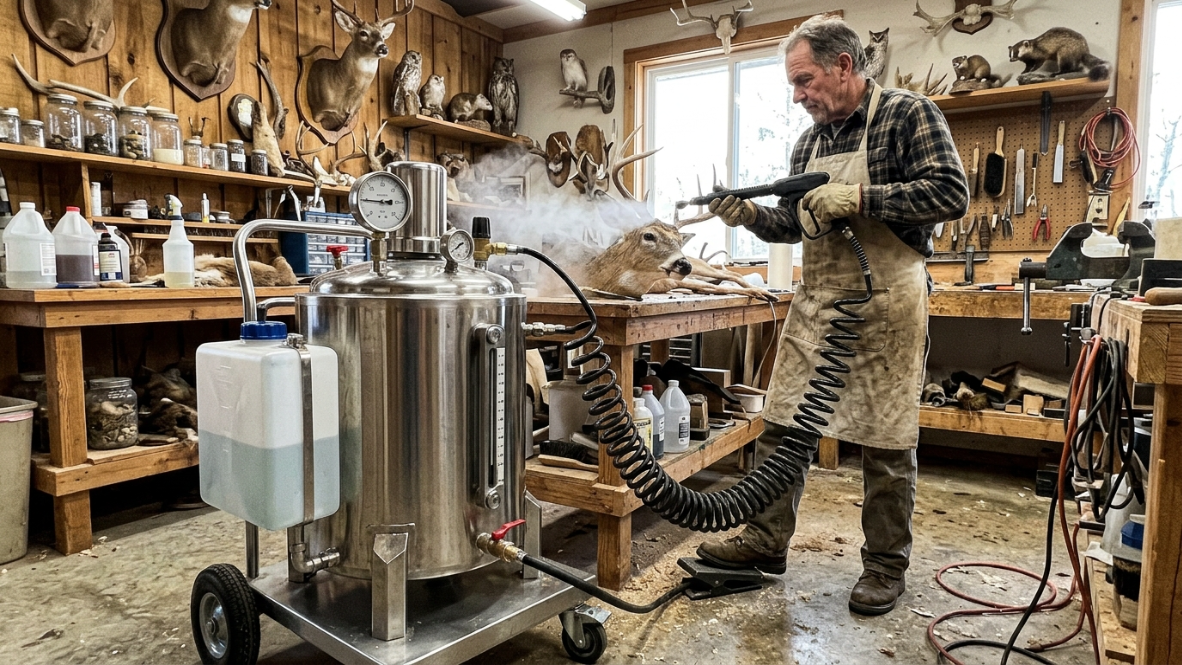
If you are shopping for a steamer, or trying to understand product specs, these are the terms that matter. This section of the taxidermy steamer guide translates equipment language into practical meaning.
PSI (Pounds per Square Inch)
The measure of steam pressure. PSI tells you how forcefully steam exits the nozzle, which directly affects cleaning power. An occasional use steamer generates about 40 PSI. A professional grade steamer generates 90 PSI. For taxidermy skull cleaning, higher PSI means drier, hotter steam that penetrates tissue faster.
At 65 PSI (around 4.5 bar), steam reaches approximately 311°F, creating a very dry vapor that transfers heat efficiently without soaking surfaces. For a deeper explanation of pressure ranges, the PSI settings guide breaks it down across different applications.
Flash Steamer
A non pressurized steamer that produces steam on demand without a pressurized boiler tank. Flash steamers heat water and convert it into steam instantly. They are portable, require no boiler permits, and work well for lighter taxidermy tasks like feather restoration, spot cleaning mounts, and hide relaxing. They are not ideal for heavy duty skull steaming sessions that demand sustained output over hours.
If you are trying to decide between the two main equipment categories, the comparison of flash steamers vs. boilers explains the performance differences clearly.
Steam Boiler (Commercial)
A pressurized tank system that heats water under pressure to produce continuous, high PSI steam. Commercial boilers are what professional taxidermy shops need for volume work. They run for hours without interruption, deliver consistent pressure, and handle the extended steaming sessions that skull cleaning requires.
ASME Certification
A stamp from the American Society of Mechanical Engineers verifying that a pressure vessel meets rigorous design and construction standards. If you are running a commercial steam boiler in a shop environment, ASME certification is not optional. It is a safety and compliance requirement. Hoffman steamers that carry this certification are manufactured in Pennsylvania to meet these standards.
UL Certification
Underwriters Laboratories certification for electrical safety. This covers wiring, heating elements, controls, and overall electrical design. Combined with ASME certification, UL listing means the equipment meets both pressure vessel and electrical safety standards.
Manual Fill vs. Pump Fill
Two ways to add water to a steam boiler. Manual fill units require you to turn off the boiler, release pressure, and add water by hand. Pump fill (auto fill) units connect to a water line and refill automatically, allowing truly continuous operation. For taxidermists processing multiple skulls in a session, auto fill eliminates downtime. The tradeoffs between these systems are covered in the manual fill vs. auto fill guide.
Steam Wand / Steam Gun
A handheld nozzle attached to the boiler via a hose. The steam gun allows directed, precise steam application. For taxidermy, this is essential for cleaning around pedicles, inside nasal cavities, along jawlines, and anywhere immersion methods cannot reach. It is also the primary tool for feather restoration and hide relaxing.
Continuous Duty
An equipment rating indicating the steamer can operate for extended periods (hours, not minutes) without overheating or needing to cool down. Skull steaming sessions run two to three hours minimum. A steamer without a continuous duty rating will struggle or fail during a long session.
Dry Steam vs. Wet Steam
Higher PSI produces drier steam. Dry steam carries more heat energy and less surface moisture, which means it penetrates tissue effectively without waterlogging the bone. Wet steam (low pressure, high moisture) is useful for hide relaxing but less effective for skull cleaning. For skull work, you want the driest steam your equipment can produce.
Commercial Steamer Buying Checklist
Before purchasing a commercial taxidermy steamer, consider:
- Adjustable pressure control
- Continuous duty operation
- ASME certified boiler
- UL electrical certification
- Foot pedal control
- Auto fill water system
- Large water capacity
- Replaceable heating elements
- Long steam hose
- Availability of replacement parts
- Manufacturer support
- Warranty coverage
Hide and Mount Terms Related to Steam
Steam in taxidermy goes well beyond skulls. This part of the taxidermy steamer guide covers the key terms for hide work and mount finishing.
Hide Relaxing (Rehydration)
The process of rewetting and softening dry, salt cured hides before tanning. Rehydration opens up the pores so the hide can accept pickle solutions. It also washes off salt and cleans the hide surface. Steam can accelerate rehydration by delivering controlled moisture and heat directly to stiff areas without over soaking the entire hide.
Tanning
Stabilizing hide proteins using chemical agents (chromium salts, vegetable tannins, or synthetic compounds) to prevent decomposition and create durable leather. Steam does not replace tanning, but it supports the process by softening hides before and after chemical treatment.
Fleshing
Removing meat, fat, and membrane from the flesh side of a hide. This is physical work done with fleshing knives or machines. Steam can loosen stubborn fat deposits before fleshing, making the job faster and cleaner.
Feather Restoration
One of the most elegant uses of steam in taxidermy. Steam has the remarkable ability to restore feathers that have become twisted, wavy, or bent. By applying controlled steam, the barbs on a feather can be coaxed back to their original zipped together state. A directed steam wand is the ideal tool here because you need precision, not volume. However, steam cannot fix feathers that are significantly worn down or have missing sections.
Steam Mount Finishing
Beyond skull cleaning and hide work, steam plays a finishing role that many newer taxidermists overlook. After a mount is assembled, steam is used to smooth out wrinkles in the hide, set ear positions, adjust lip lines, and blend seams. A quick pass of directed steam on a finished mount can relax small imperfections that would otherwise require disassembly and repositioning.
Bird taxidermists use steam finishing extensively. After mounting, feathers often need to be realigned, fluffed, or smoothed. A steam wand at low pressure (around 40 PSI) lets you work individual feather groups back into position without touching them with your hands. This prevents oil transfer from fingers and avoids the physical damage that comes from manually adjusting barbs.
For fish mounts, steam can soften paint preparation surfaces and help adhesives bond more evenly. The common thread across all mount finishing applications is precision: you want controlled, directed steam from a wand, not a flood of vapor from an open chamber.
Softening / Breaking
The post tanning process of making leather pliable. After a hide is tanned and dried, it stiffens. Softening (sometimes called “breaking”) involves physically working the hide and sometimes applying oil or steam to restore flexibility. Steam helps by relaxing fibers without adding chemical residue.
Velvet Antlers (A Caution)
If you are working with antlers still in velvet, steam is a hazard. The moisture and heat from steam can damage the velvet covering. One source specifically warns not to simmer or steam skulls with velvet antlers attached. Work the skull first, protect the velvet.
When Not to Use Steam
Steam is versatile, but it is not the right tool for every taxidermy situation. Knowing when to put the steamer down saves time and prevents damage.
Velvet antlers were already mentioned, but the point bears repeating. Any steam contact with velvet will cause the hair to mat, discolor, or separate from the skin beneath. If you must clean a skull with velvet antlers attached, use maceration or beetles instead.
Fragile or juvenile skulls from small game (squirrels, rabbits, small birds) can lose structural integrity under sustained steam exposure. These thin bones respond better to maceration or careful beetle cleaning. Steam is best suited for medium to large skulls where bone density can handle the heat.
Finished or painted mounts should not receive high pressure steam. While low pressure steam is useful for minor finishing adjustments, hitting a painted fish mount or an airbrushed mammal mount with 65+ PSI steam will strip paint, loosen adhesives, and ruin weeks of finishing work.
Specimens intended for scientific measurement (like Boone and Crockett scoring) should be cleaned with methods that minimize any risk of skull shrinkage. While steam causes far less shrinkage than boiling, some trophy scoring organizations have specific guidelines about cleaning methods. Check the relevant scoring body’s requirements before processing a potential record class skull.
Antler bases during the shedding period can be loosened by heat. If antlers are not fully hardened or are near the shedding stage, steam can weaken the connection at the pedicle, causing antlers to separate from the skull plate.
Ventilation Requirements for Steam Work
Steam itself is just water vapor, but steaming animal tissue produces fumes that are far less pleasant. A proper ventilation setup is not optional, especially during skull cleaning sessions that run two to three hours. No taxidermy steamer guide would be complete without addressing airflow and fume management.
Minimum Ventilation Standards
For a home garage or small shop, an exhaust fan rated at 200 to 400 CFM (cubic feet per minute) positioned near the steaming station will clear most fumes. The fan should vent to the outdoors, not recirculate air within the building.
For commercial taxidermy shops processing multiple skulls, consider a dedicated hood or canopy system above the steaming area. Restaurant style exhaust hoods designed for commercial kitchens work well here because they are built to handle heat and moisture.
Practitioners on taxidermy forums consistently mention that the smell from steaming, while much less intense than simmering or maceration, is still enough to draw complaints from neighbors or family members if done in an attached garage without ventilation. One Rokslide user recommended “doing it outside or with the garage door open at minimum” for the first few sessions until you understand how much odor your setup produces.
Propane Safety
If you are running a propane powered DIY steaming rig, ventilation becomes a safety critical issue beyond just odor. Propane combustion produces carbon monoxide, and running a propane burner in an enclosed space without ventilation is dangerous. An enclosed garage with a propane burner requires a CO detector and active air exchange. Electric commercial steamers eliminate this risk entirely since there is no combustion involved.
Shop Layout for Steam Safety
For taxidermists setting up a permanent steam station, layout decisions affect both safety and workflow efficiency.
Placement Principles
Position the steamer on a non flammable surface (concrete floor, metal table) away from stored hides, chemicals, and finished mounts. Steam produces heat and moisture, both of which can damage materials stored too close.
Keep the steaming station near a floor drain if possible. Condensation runs off skulls during steaming and pressure washing, and having drainage prevents puddles that create slip hazards. If a floor drain is not available, use containment trays under the work area.
Route steam hoses along walls or overhead to prevent trip hazards. A ceiling mounted hose reel keeps the steam line accessible without crossing walkways.
Electrical Considerations
Commercial electric steamers draw significant power. A 220V unit on a 3kW heating element needs a dedicated circuit. Running a steamer on a shared circuit with other shop equipment risks tripped breakers mid session, which is both a workflow problem and a potential safety issue if the boiler restarts unexpectedly.
Fire Extinguisher and First Aid
Keep a fire extinguisher rated for electrical fires (Class C) within reach of the steam station. Burns from steam are the most common shop injury. A first aid kit with burn treatment supplies should be mounted at the steaming station, not across the shop.
For a comprehensive safety walkthrough, the steam safety orientation guide covers procedures for commercial operators in detail.
Choosing the Right Steamer for Taxidermy Work
This is where the taxidermy steamer guide gets practical. Knowing the terms is only useful if it helps you pick the right equipment.
What PSI Range Do You Need?
It depends on the task:
- Feather restoration and spot cleaning: 40 PSI is sufficient. A portable flash steamer handles this well.
- Hide relaxing and softening: 40 to 65 PSI. You need moderate steam volume more than raw pressure.
- Skull cleaning: 65 to 90 PSI is ideal. Higher pressure produces drier, hotter steam that breaks down tissue faster and penetrates bone crevices.
Flash Steamer vs. Boiler: Which Fits Your Work?
A flash steamer is right if you do occasional taxidermy work, focus on bird mounts and feather restoration, need portability (moving between shop and show floor), or work in a retail or mall environment where boiler permits are impractical.
A boiler based steamer is right if you process multiple skulls per season, run a professional taxidermy shop, need continuous operation for two to three hour steaming sessions, or want consistent high pressure output for heavy duty cleaning.
Key Features to Look For
- Steam wand attachments for directed work on skulls and feathers
- Foot pedal control so both hands stay free
- Tank capacity sufficient for extended sessions (1.5 gallons minimum for skull work, 6 gallons for high volume shops)
- ASME and UL certification for shop safety and insurance compliance
- Continuous duty rating for long steaming sessions
For professional taxidermists running a shop, industrial grade steam equipment with adjustable pressure control and safety certification is the baseline. The investment pays for itself in consistency and throughput.
Which Type of User Needs Which Steamer?
| User | Recommended Equipment |
|---|---|
| Hunter cleaning one deer annually | DIY steam setup |
| Hunter processing several animals | Entry level boiler |
| Small taxidermy shop | Mid sized commercial boiler |
| High volume commercial shop | Continuous duty boiler with auto fill |
| Museum or university | Steam plus dermestid beetle colony |
Steam vs. Other Skull Cleaning Methods: Quick Comparison
| Method | Bone Safety | Speed | Smell | Equipment Cost | Best For |
|---|---|---|---|---|---|
| Steam | High (cannot overcook) | 2 to 3 hours | Low | Moderate to high | All skull sizes, cold climates, volume work |
| Simmering | Moderate (risk of over cooking) | 2 to 4 hours | High | Low (turkey fryer) | Small skulls, occasional use |
| Dermestid Beetles | Highest | Days to weeks | Moderate | Colony maintenance | Professional studios, museum quality work |
| Maceration | High | Weeks to months | Extreme | Minimal | Patient hobbyists, large skeletons |
| Pressure Washing | N/A (follow up step) | 15 to 30 minutes | None | Moderate | Final cleaning after any primary method |
Steam’s sweet spot is clear: it is faster than beetles or maceration, safer for bone than simmering, and produces far less smell than any wet method. The only real disadvantage is equipment cost, which is why many DIY hunters start with the garbage bag method and upgrade later.
The DIY Steam Method (and When to Upgrade)
The garage built steam rig deserves its own section in this taxidermy steamer guide because it is the gateway that brings most people to this topic.
The basic setup: a propane tank filled halfway with water, a braided steel dishwasher hose fitted to the top, a heavy duty contractor bag enclosing the skull with the hose end inside, taped tight. Light the flame, wait for steam to fill the bag, poke a small hole at the bottom to release pressure, and steam for one to one and a half hours for a deer skull (longer for elk or moose).
This works. Forum after forum confirms it. But it has limits:
- No pressure control. You get whatever steam the propane setup produces.
- No temperature consistency. Output varies with ambient temperature, water level, and flame intensity.
- Safety concerns. A sealed bag with pressurized steam and an open flame requires careful attention.
- Not scalable. One skull at a time, with significant setup and teardown.
For hunters cleaning one or two skulls a year, the DIY method is fine. For taxidermists doing ten, twenty, or fifty skulls a season, a commercial steamer with consistent PSI, a steam wand for precision work, and continuous duty operation turns skull cleaning from an all day ordeal into a repeatable process.
Explore taxidermy specific bundles that include the boiler, steam gun, hoses, and accessories needed to start processing skulls immediately.
Steam Cleaning Safety Tips
Commercial steam equipment operates under high temperature and pressure. Follow these safety practices:
- Wear insulated gloves.
- Use eye protection.
- Never block steam vents.
- Allow boilers to cool before refilling manual fill models.
- Inspect hoses regularly.
- Replace damaged fittings immediately.
- Never modify pressure relief valves.
- Operate propane powered systems only with proper ventilation.
- Keep burn treatment supplies at the steam station.
- Ensure electrical connections are on dedicated circuits.
For shops with employees, a formal safety orientation before anyone operates steam equipment is a smart liability measure.
Frequently Asked Questions
What kind of steamer do I need for taxidermy skull cleaning?
For occasional DIY work, a small boiler producing 40 PSI will work for deer sized skulls. For professional or high volume work, a commercial boiler in the 65 to 90 PSI range with continuous duty rating is the right choice. The key features are a steam wand for directed application, a foot pedal for hands free control, and enough tank capacity (1.5 to 6 gallons) for extended sessions. Refer back to the equipment section of this taxidermy steamer guide for a full buying checklist.
Is steaming better than boiling for euro mounts?
Steaming is better than boiling in almost every measurable way. You cannot overcook a skull with steam, which eliminates the risk of bone separation, brittleness, and nasal cartilage destruction that actual boiling causes. Simmering (not boiling) remains a viable method for small skulls, but it demands constant temperature monitoring that steaming does not require.
How long does it take to steam clean a skull?
Deer skulls typically need one to one and a half hours of steaming. Elk skulls need about two hours. Moose and other large skulls need two to three hours. After steaming, most practitioners follow up with 15 to 30 minutes of pressure washing and then a hydrogen peroxide whitening treatment.
Can I use a household garment steamer for taxidermy?
No. Household garment steamers produce very low pressure, wet steam at volumes too small for taxidermy work. They cannot sustain the output needed for a multi hour skull cleaning session, and they lack the directed steam wands required for precision work around pedicles and nasal cavities.
Should I use bleach to whiten a skull after steam cleaning?
Never use household bleach on a skull. It weakens bone structure and causes long term deterioration. Use hydrogen peroxide (3 to 12% concentration), cream based hair developer, or oxygen based cleaners like OxiClean. These whiten the bone without damaging it.
What is the difference between dry steam and wet steam in taxidermy?
Dry steam is produced at higher PSI and contains less surface moisture. It penetrates tissue faster and does not waterlog bone. Wet steam (lower pressure, higher moisture content) is better suited for hide relaxing and feather restoration where you want to add moisture rather than strip tissue. For skull cleaning, dry steam at 65+ PSI is the goal.
Can steam damage velvet antlers?
Yes. Steam and heat will damage velvet. If you are cleaning a skull with antlers still in velvet, you need to protect the velvet from any steam exposure. Some taxidermists remove antlers before cleaning and reattach them afterward, or they wrap the velvet in protective material and work carefully with directed steam only on the skull surface.
How does steam compare to dermestid beetles for professional taxidermy?
Beetles produce the cleanest results with zero bone damage, which is why museums and high end taxidermists prefer them. But beetles are slow (days to weeks per skull), require a maintained colony, and do not scale easily. Steam is faster, more controllable, and requires no living organisms. Many professional taxidermists use steam as their primary method and reserve beetles for museum quality specimens or delicate skulls where every piece of nasal cartilage matters.
Does steam kill CWD prions on skulls?
No. Standard steaming temperatures do not destroy CWD prions. Prion decontamination requires sustained exposure above 900°F or treatment with concentrated chemical solutions. Steam is effective for tissue removal but should not be considered a prion sterilization method. Taxidermists in CWD zones should follow state wildlife agency guidelines and use dedicated tools and PPE when handling suspect specimens.
Can I use a pressure washer instead of a steamer for skull cleaning?
They serve different purposes and work best together. Steam loosens tissue through sustained heat penetration over one to three hours. A pressure washer then blasts the softened tissue off in 15 to 30 minutes. Using a pressure washer without prior steaming or simmering is far less effective and risks bone damage from the mechanical force required to strip firmly attached tissue.
Do I need special ventilation for steaming skulls?
Yes. While steaming produces less odor than simmering or maceration, the fumes from steaming animal tissue are still unpleasant and can be irritating over long sessions. An exhaust fan rated at 200 to 400 CFM venting outdoors is the minimum for a home setup. Commercial shops should consider a dedicated exhaust hood above the steaming station.


