

TL;DR
Taxidermy steamer maintenance covers everything from descaling and blowdown procedures to managing the unique organic contamination that comes with skull cleaning and hide work. Scale buildup from hard water is the number one equipment killer, and 85% of American homes (including most taxidermy shops) have hard water. Using distilled water, descaling monthly during heavy use, and following a seasonal maintenance schedule can double your boiler’s lifespan. This glossary defines every maintenance term relevant to running a commercial steamer in a taxidermy shop.
Quick Answer: Taxidermy Steamer Maintenance
Taxidermy steamers require more maintenance than most commercial steamers because they are exposed to both mineral scale and organic contamination from skull cleaning and hide work.
Proper maintenance includes:
– Use distilled water instead of tap water
– Descale every month (or every 15–20 uses with hard water)
– Perform weekly blowdown on pressurized boilers
– Clean steam nozzles after every skull cleaning session
– Drain the boiler before long-term storage
– Inspect gaskets, hoses, and safety valves quarterly
Most commercial electric steamers can last 20–25 years when maintained correctly, while neglected units often fail years earlier due to scale buildup, overheating, and internal corrosion.
Taxidermy Steamer Maintenance Checklist
Maintenance Task | Frequency |
|---|---|
Clean nozzle | After every use |
Drain boiler if unused for 24+ hours | After use |
Blowdown | Weekly |
Descale | Monthly |
Inspect hoses and gaskets | Monthly |
Test pressure relief valve | Quarterly |
Check LWCO | Quarterly |
Replace worn seals | Annually |
Full inspection | Annually |
Winterize for storage | End of season |
Why Taxidermy Steamer Maintenance Deserves Its Own Vocabulary
Commercial steamers used in taxidermy shops face conditions that no other trade quite replicates. A jewelry store steamer handles metal and stone. A hat shop steamer shapes felt. A taxidermy steamer processes skulls full of tissue, fat, and protein, then pivots to shaping hides and finishing mounts. That combination of organic contamination and mineral-laden water creates maintenance challenges you won’t find in a generic equipment manual.
If you’re still choosing equipment, start with our taxidermy steamer guide for skull cleaning and equipment selection. This page picks up where that one leaves off, focusing exclusively on keeping your steamer running season after season.
The terms below are organized into categories so you can scan for what you need. Each entry includes a plain definition, why it matters in a taxidermy context, and a practical guideline.
Browse taxidermy steamer bundles to see what’s included with each setup.
Why Taxidermy Steamers Fail
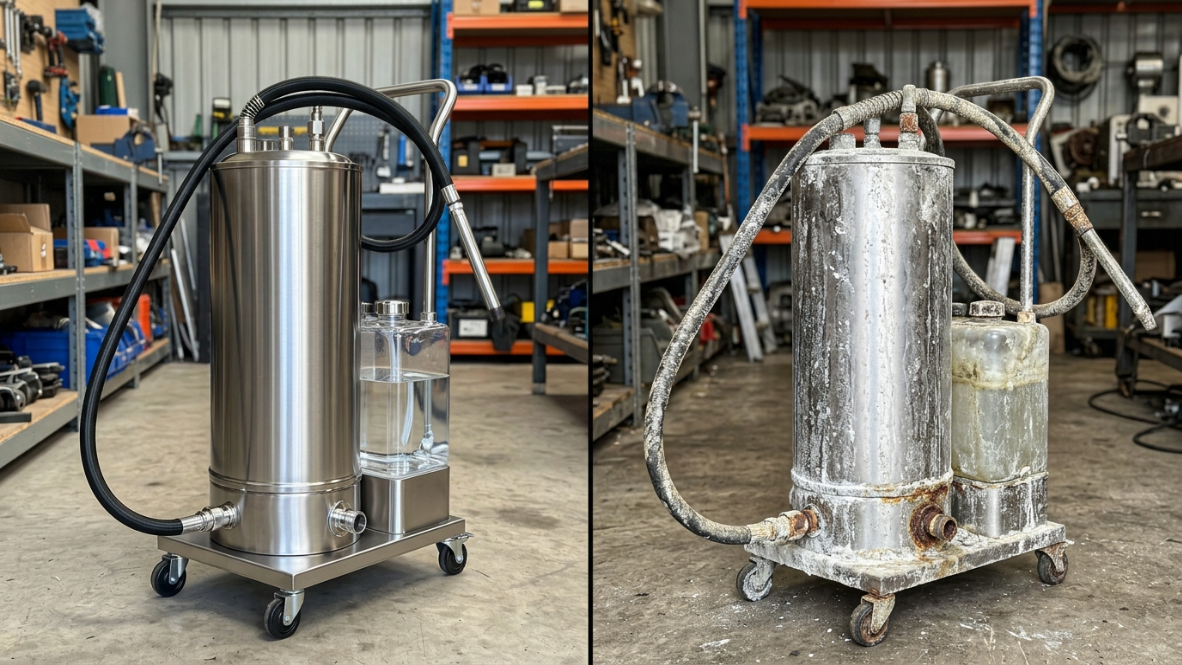
Most commercial steamers do not fail because of defective boilers. They fail because maintenance is delayed until performance drops.
The four most common causes of failure are:
Hard water scale inside the boiler
Organic grease contamination from skull cleaning
Running the boiler with low water
Ignoring worn gaskets, hoses, and safety valves
Fortunately, all four issues are largely preventable with a consistent maintenance schedule.
Water Quality Terms
Water quality is the single biggest factor in taxidermy steamer maintenance. Get this wrong and nothing else matters.
Hard Water and Soft Water
Hard water contains high concentrations of dissolved calcium and magnesium. Soft water has had those minerals removed or was naturally low in them to begin with. Hard water affects 85% of American homes, and the problem is worse in the Midwest, Texas, and the Southwest, where limestone geology and arid climates concentrate minerals. Many taxidermy shops sit in rural areas with well water, making hard water nearly unavoidable without intervention.
Why it matters: hard water, if not dealt with, can fill a steamer’s boiler, pipes, and valves with mineral deposits until the unit stops producing steam entirely.
Water Hardness (PPM and GPG)
Water hardness is measured in parts per million (PPM) or grains per gallon (GPG). Soft water falls below 60 PPM. Moderately hard water runs 61 to 120 PPM. Anything above 180 PPM is very hard. If your shop water tests above 100 PPM, you should descale based on usage count (every 15 to 20 uses) rather than sticking to a monthly calendar.
Practical tip: Buy inexpensive TDS test strips online. Test your shop water once. That single number dictates your entire maintenance schedule.
Scale, Limescale, and Mineral Deposits
Scale is the chalky, calcium-rich buildup that forms inside a boiler once water evaporates into steam and leaves dissolved solids behind. The two most common compounds are calcium carbonate (CaCO₃) and magnesium carbonate (MgCO₃). Scale acts as insulation on heating elements, forcing them to work harder and run hotter, which can eventually cause overheating and cracks.
Practitioners on forums frequently describe scale as “the silent killer of small appliances.” Most users ignore maintenance until their steamer starts sputtering or stops producing steam, and the culprit is almost always calcium buildup.
Distilled Water
Water that has been boiled into vapor and condensed back into liquid, leaving minerals behind. Using distilled water is the single most effective way to prevent scale. One user on the Auto Geek forum reported running distilled water exclusively and performing periodic vinegar descales, keeping a commercial steamer problem-free for four years straight.
Rule of thumb: Tap water is for drinking. Distilled water is for steaming. A gallon costs about a dollar at any grocery store. That’s cheap insurance on equipment that can run for 20 to 25 years with proper care.
Total Dissolved Solids (TDS)
The total concentration of all dissolved substances in water, measured in PPM. TDS includes minerals, salts, metals, and organic matter. A TDS meter gives you a more complete picture than a hardness test alone, because it captures contaminants that hardness strips miss. For steamer use, TDS below 50 PPM is ideal.
Water Softener (and the Sodium Caveat)
Water softeners use ion exchange to replace calcium and magnesium with sodium. This sounds like a solution, but sodium in a steam system can significantly shorten boiler lifespan and damage internal components. A water softener is not a substitute for distilled water in your steamer. Use it for your shop sink, not your boiler fill.
How to Descale a Taxidermy Steamer (Step-by-Step)
Turn the steamer off and allow pressure to drop completely.
Drain the boiler.
Mix the recommended descaling solution.
Fill the boiler.
Heat the unit according to manufacturer instructions.
Allow the solution to work.
Drain completely.
Flush twice with distilled water.
Run fresh distilled water for 10–15 minutes.
Resume normal operation.
Cleaning and Descaling Terms
Descaling is the core maintenance task for any commercial steamer. Everything else is secondary.
Descaling (Deliming)
The process of removing mineral scale from inside a boiler, heating element, and internal passages using an acidic solution. Common descaling agents include white vinegar (5% acetic acid), citric acid, and commercial descaling products.
Research published in ACS Sustainable Chemistry & Engineering found that citric acid outperforms vinegar at neutralizing magnesium-based scale, making it the better choice in areas with magnesium-heavy water. For accessibility, a 50/50 vinegar and distilled water solution works for routine maintenance. For deeper cleaning, dissolve 10 grams of citric acid powder per 500 mL of warm water.
Descaling Frequency
How often you descale depends on three factors: water hardness, usage volume, and what you’re steaming. General benchmarks:
Water Hardness | Usage Level | Recommended Frequency |
|---|---|---|
Below 60 PPM (soft) | Light | Every 3 months |
60 to 100 PPM (moderate) | Regular | Monthly |
Above 100 PPM (hard) | Heavy/commercial | Every 15 to 20 uses |
During hunting season, when a taxidermy shop may run a steamer daily for skull cleaning, monthly descaling is the minimum. Industrial steamer manufacturers recommend descaling every 3 months even when using soft water.
For more on how descaling frequency connects to equipment lifespan, consistent proactive maintenance can double a boiler’s useful life, while skipping it can cut that life short by 30% to 50%.
Blowdown
For pressurized boilers operating in the 40 to 90 PSI range, blowdown means draining the unit under low pressure to eject accumulated sediment from the bottom of the tank. This is distinct from a standard drain because the residual pressure helps flush material that gravity alone won’t move.
Practitioners on HeatingHelp.com note an inherent tension with blowdown: fresh water contains minerals that cause buildup, so flushing and refilling creates a cycle. The solution is to refill with distilled water after every blowdown.
Recommended frequency: Once per week during periods of daily use. See our hat shop steamer maintenance guide for a parallel walkthrough of the blowdown process.
Flushing
Running clean water through the boiler, hoses, and nozzles to remove loosened scale and residue after a descaling cycle. Always flush with distilled water, not tap. Run the steamer for 10 to 15 minutes after flushing to ensure no descaling solution remains in the system.
Drain Valve
The valve at the base of the boiler used to empty water and sediment. Check this valve for leaks during every descaling session. A corroded or stuck drain valve is one of the earliest signs that maintenance has been neglected too long.
Sediment
Solid particles that settle at the bottom of a boiler tank. In a taxidermy shop, sediment includes mineral scale, fine tissue particles, and grease residue. Blowdown and flushing target sediment specifically.
Boiler Maintenance Mistakes to Avoid
Avoid these common mistakes:
Using tap water because it is “only temporary”
Waiting until steam pressure drops before descaling
Forgetting weekly blowdown
Leaving water inside during storage
Using harsh acids not approved by the manufacturer
Ignoring small gasket leaks
Overfilling the boiler
Skipping annual inspections
Boiler and Heating Terms
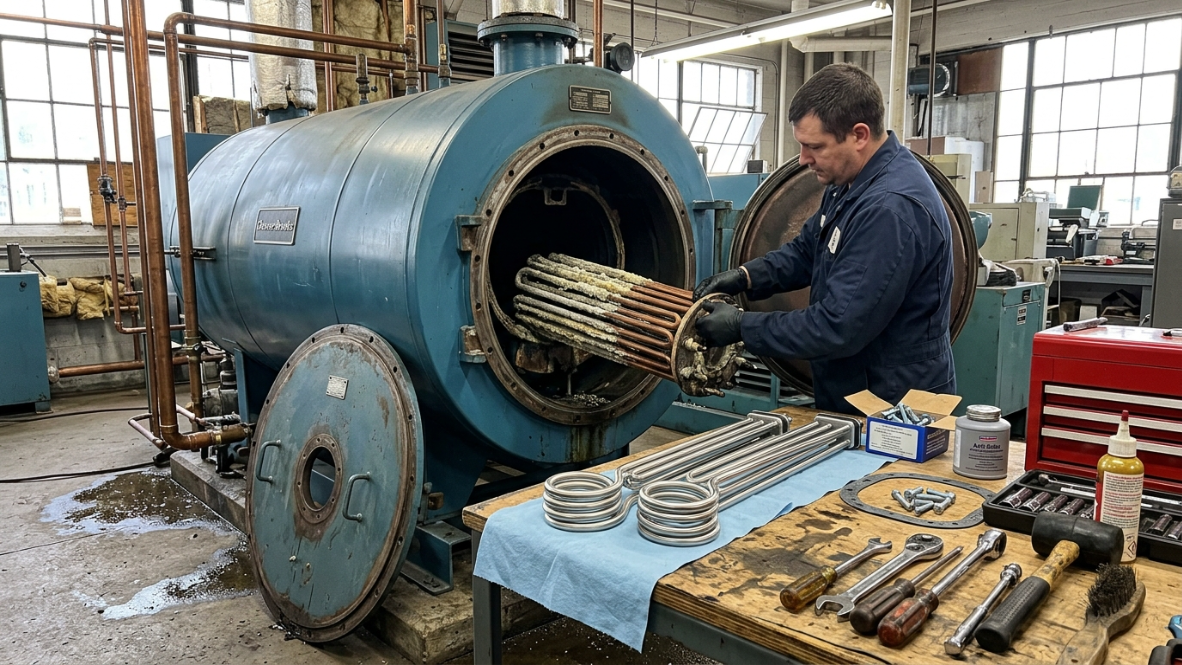
Understanding your boiler’s components makes taxidermy steamer maintenance less intimidating and more precise.
Heating Element
The electric component that converts electrical energy into heat, boiling water into steam. Immersion heating elements typically last 3 to 5 years, though high-quality elements in ideal conditions can last longer. Signs of failure include water not heating properly, tripping electrics, or popping and hissing noises that indicate limescale buildup on the element surface.
Electric boilers avoid the corrosive byproducts of gas combustion, which is why they often last 20 to 25 years or more when maintained.
PSI (Pounds Per Square Inch)
The measure of steam pressure output. Taxidermy skull cleaning typically requires steam in the 40 to 90 PSI range to effectively loosen tissue and debone. Declining PSI is often the first symptom of internal scale buildup restricting flow. If you’re getting less pressure than usual and haven’t changed your water or nozzle, descale before assuming the boiler is failing. For more context on pressure requirements, that guide breaks down PSI needs by application.
Pressure Relief Valve (Safety Valve)
A spring-loaded valve that opens automatically if boiler pressure exceeds safe limits, venting excess steam to prevent rupture. This valve must be tested periodically (pull the test lever and confirm it vents freely, then reseats). One important but overlooked detail: during descaling, safety valves, probes, and pressure sensors may not get fully cleared of limescale, creating a maintenance hazard. Manually inspect these components during every quarterly descale.
Pressurestat and Thermostat
The pressurestat controls boiler pressure by cycling the heating element on and off. The thermostat monitors temperature. Together they maintain consistent steam output. If your steamer cycles erratically (short-cycling or running continuously without reaching pressure), one of these controls may need calibration or replacement.
Low-Water Cutoff (LWCO)
A safety device that shuts off the heating element if water drops below a minimum level, preventing the element from firing dry and burning out. In manual-fill boilers, the LWCO is your last line of defense against distraction. If you walk away during skull steaming and forget to check water level, the LWCO saves your equipment (and possibly your shop). Test it monthly by allowing the water level to drop below the probe while monitoring the cutoff response.
Gauge Glass (Sight Glass)
A transparent tube mounted on the side of the boiler that shows the current water level. Keep this clean. Scale and mineral film can obscure the glass, making it hard to read. Wipe the outside regularly and verify the water level matches expected fill during each use.
Flash Steamer vs. Boiler
A flash steamer heats water on demand as it passes over a heating element, producing steam almost instantly without storing pressurized water. A boiler heats and stores a reservoir of water under pressure, providing sustained, high-volume steam. Flash steamers require less maintenance (no pressurized tank, no blowdown) but produce lower-pressure steam. For skull cleaning, most taxidermists need a boiler. For lighter tasks like hide shaping or mount finishing, a flash steamer may suffice. Learn more about flash steamer vs. boiler differences.
Flash Steamer vs Boiler Maintenance
Maintenance Item | Flash Steamer | Boiler |
|---|---|---|
Descaling | Moderate | High |
Blowdown | No | Yes |
Water Storage | None | Yes |
Pressure Vessel | No | Yes |
Boiler Inspection | No | Sometimes |
Organic Contamination Risk | Moderate | High |
Manual Fill vs. Auto-Fill (Pump Feed)
Manual fill boilers require the operator to add water by hand through a fill funnel or port. Auto-fill systems use a pump to maintain water level automatically. Auto-fill reduces the risk of running dry but adds pump components that require their own maintenance (check valves, pump diaphragms, water lines). For a detailed comparison, see the manual fill vs. auto-fill guide.
Continuous Duty
A rating indicating the boiler can produce steam indefinitely without overheating or requiring cool-down periods. This matters during heavy skull processing sessions that may run for hours. Not all boilers carry this rating.
Wearable and Replaceable Parts
These are the components that wear out through normal use. Checking them during every descaling session prevents mid-job failures.
Steam Nozzle (Steam Wand)
The output tip that directs steam onto the work surface. In taxidermy, nozzles encounter tissue residue, grease, and bone fragments. Protein buildup inside a nozzle restricts steam flow and creates the “spitting” effect taxidermists dread. Clean nozzle tips after every skull session with a pin or small wire brush, then flush with steam.
Gasket
Rubber or silicone seals at connection points between the boiler, hoses, and nozzle. Gaskets degrade from heat cycling, mineral exposure, and age. A weeping gasket wastes steam pressure and can drip scalding water. Inspect gaskets visually during every quarterly descale and replace at the first sign of cracking or hardening.
Steam Hose
The flexible tubing that carries steam from the boiler to the nozzle. During periodic descales, steam-line tubing and connection points should be checked for cracks or frays. The same applies to water lines, which can crack and deteriorate over time. In a taxidermy shop, hoses may also pick up grease residue that hardens inside the tube, gradually narrowing the internal diameter.
Foot Pedal (Foot Switch)
An electrical switch activated by foot pressure that controls steam flow. This frees both hands for positioning skulls or hides. Foot pedals are exposed to shop floor debris, water, and chemical splashes. Wipe them down weekly and check the cord connection for wear.
Consumables
Replacement items expected to be used up over time: gaskets, nozzle tips, water filters, and descaling solution. Planning for consumable replacement is part of responsible taxidermy steamer maintenance. Protection programs that automatically ship consumables on schedule (like the Workhorse Protection Program from Hoffman Steam) remove the guesswork.
See refurbished steamer bundles that include built-in maintenance coverage.
Safety and Compliance Terms
Pressurized steam equipment carries real risk. These terms relate to the regulatory and safety side of taxidermy steamer maintenance.
ASME Certification
Certification from the American Society of Mechanical Engineers confirming that a pressure vessel meets safety standards for design, materials, and construction. ASME certification, pressure relief valves, and local boiler codes become relevant for any pressurized boiler equipment operating in a commercial setting. Some jurisdictions require ASME certification for boilers above certain pressure thresholds.
UL Certification
Underwriters Laboratories testing and certification for electrical safety. A UL-certified steamer has been tested for fire, shock, and overheating hazards. For taxidermists working in shops with flammable chemicals (tanning solutions, adhesives), electrical safety certification is not optional.
Boiler Inspection
A periodic examination of the boiler’s tank, fittings, valves, and electrical components. Some states and municipalities require annual boiler inspections by licensed inspectors. Even where not legally required, annual self-inspection catches problems before they become failures.
Factory Reconditioning
Returning a boiler to the manufacturer for professional overhaul. This typically includes disassembly, deep cleaning, descaling, component replacement, pressure testing, and recertification. Hoffman Steam’s Workhorse Essential plan includes factory reconditioning every 24 months with a 47-point inspection, ASME/UL recertification, parts and labor coverage, and a hot-swap loaner machine so your shop stays operational during the process.
Troubleshooting Guide
Problem | Likely Cause | Solution |
|---|---|---|
Low steam pressure | Scale buildup | Descale boiler |
Steam spits water | Overfilled boiler or scale | Drain and descale |
Slow heat-up | Heating element coated with scale | Descale |
Breaker trips | Failing heating element | Replace element |
Water leak | Worn gasket | Replace gasket |
Steam smells bad | Organic contamination | Flush and descale |
Boiler won’t heat | Faulty thermostat or LWCO | Inspect controls |
Taxidermy-Specific Maintenance Terms
This section covers maintenance concerns unique to taxidermy shops, the terms and concepts that no generic steamer maintenance guide addresses.
Organic Contamination
When steam is directed at skulls, hides, or forms, protein-laden moisture and grease can wick back into the boiler through nozzles and hoses. Fat released from eyes and brain tissue during skull processing generates significant amounts of grease that can travel through steam circuits. This organic material combines with mineral scale to form a compound buildup that is harder to remove than either contaminant alone.
Mitigation: Use a dedicated nozzle for skull work and clean it immediately after each session. Flush the hose with clean steam for 2 to 3 minutes after processing organic material. Descale with citric acid, which handles organic and mineral deposits better than vinegar alone.
Biofilm
A slimy layer of bacteria that forms on wet surfaces inside a boiler or hose when water sits stagnant. Leaving water in a steamer for more than 24 hours invites mold and bacterial growth. In a taxidermy shop, where organic particles may be present in the water, biofilm forms faster. Drain the boiler completely after every use during slow-season months.
Seasonal Storage (Winterizing)
Many taxidermists experience heavy demand from October through January (hunting season) and lighter work the rest of the year. Storing a steamer for weeks or months without preparation causes problems: stagnant water breeds biofilm, mineral residue hardens without regular flushing, and gaskets can dry out and crack.
Seasonal storage protocol:
Perform a full descale cycle
Drain the boiler completely
Run the steamer empty for 60 seconds to evaporate residual moisture
Remove and inspect gaskets, applying a thin coat of silicone lubricant
Store in a dry, temperature-stable area
Before the fall rush, refill with distilled water, run a full heat cycle, and inspect all connections
No competitor guide addresses this seasonal pattern, but it is one of the most common causes of early-season equipment failure in taxidermy shops.
Steam Spitting
When a steamer ejects hot water droplets instead of producing a steady, dry steam flow. Causes include mineral buildup restricting the boiler’s ability to fully vaporize water, overfilling the tank, or a failing pressurestat that allows pressure to fluctuate. In taxidermy, steam spitting is more than an annoyance. It can waterlog a mounted hide or leave mineral spots on finished work.
If your steamer is spitting, descale first. If the problem persists after descaling, check the pressurestat and water level.
Nozzle Blockage
Partial or complete obstruction of the steam nozzle, usually from dried protein residue, scale flakes, or a combination. White, powdery residue visible around the nozzle tip is a clear indicator. Prevention is straightforward: wipe the nozzle after every use and soak in vinegar monthly.
Maintenance Schedule Quick Reference
This table consolidates taxidermy steamer maintenance into a single reference. Adjust frequency based on your water hardness and usage volume.
Timeframe | Task | Notes |
|---|---|---|
After every use | Wipe nozzle clean, drain if idle over 24 hours | Critical during skull work |
Weekly | Blowdown (pressurized boilers), wipe exterior, check water level | Use distilled water to refill |
Monthly | Descale with vinegar or citric acid, flush with distilled water, inspect hoses and gaskets | Increase to every 15-20 uses if water exceeds 100 PPM |
Quarterly | Deep descale, inspect pressure relief valve and LWCO, clean gauge glass, check foot pedal and electrical connections | Pull the safety valve test lever to confirm venting |
Annually | Full system inspection, replace worn gaskets, evaluate heating element condition | Consider factory reconditioning every 24 months |
Seasonal (pre-fall) | Full descale, fresh gasket inspection, test all controls before heavy use begins | After summer storage, run a complete heat cycle before processing work |
Seasonal (post-season) | Full descale, complete drain, dry storage prep | Follow the winterizing protocol above |
For a parallel maintenance framework used in another steam-intensive trade, the tailoring steam boiler maintenance guide covers similar routines in a different shop context.
Signs Your Steamer Needs Attention Now
Not every problem announces itself gradually. Watch for these warning signs:
Slow heat-up time. If your steamer takes noticeably longer to reach operating pressure, scale is insulating the heating element.
Sputtering or intermittent steam. This usually means mineral deposits are partially blocking internal passages.
Water spitting from the nozzle. The boiler can’t fully convert water to steam, often due to scale or a failing pressurestat.
White powdery residue around the nozzle or fittings. Mineral deposits are migrating out of the system. Descale immediately.
Tripping breakers or popping sounds. The heating element may be failing. Elements typically last 3 to 5 years, less in hard water conditions.
Low steam pressure (PSI drop). If pressure gauge readings decline over time despite no change in settings, scale is the likely cause.
Visible corrosion around the drain valve or fittings. This suggests stagnant water has been sitting in the system.
If multiple signs appear simultaneously, it may be time to contact the manufacturer for professional evaluation rather than attempting a DIY fix. Hoffman Steam offers unlimited lifetime remote technical support for troubleshooting before deciding on next steps.
Explore shop-ready steamer bundles designed for taxidermy applications.
Frequently Asked Questions
How often should I descale my taxidermy steamer?
At minimum, monthly during active use. If your shop water tests above 100 PPM hardness, switch to a usage-based schedule and descale every 15 to 20 uses. During off-season storage, perform a final descale before shutting down.
Can I use tap water in my commercial steamer?
You can, but you shouldn’t. Tap water contains dissolved minerals that cause scale buildup, the number one maintenance issue for commercial steamers. Distilled water costs roughly a dollar per gallon and dramatically reduces descaling frequency and equipment wear.
Is a water softener a good alternative to distilled water?
No. Water softeners replace calcium and magnesium with sodium, and sodium can damage boiler components and shorten equipment lifespan. Use a water softener for your shop plumbing, but fill your steamer with distilled water.
What descaling agent works best for taxidermy steamers?
Citric acid is the most effective option for mixed mineral and organic contamination, which is what taxidermy steamers encounter. White vinegar (5% acetic acid) works for routine maintenance. For heavy buildup, dissolve 10 grams of citric acid per 500 mL of warm water. Avoid hydrochloric acid or other harsh agents that can damage boiler internals.
How do I store my steamer during the off-season?
Perform a complete descale, drain the boiler fully, run the unit empty briefly to evaporate residual moisture, inspect and lubricate gaskets, and store in a dry location. Never leave water sitting in a steamer that won’t be used for more than 24 hours, as stagnant water leads to biofilm, mold, and corrosion.
What’s the difference between blowdown and regular draining?
Regular draining empties the tank by gravity. Blowdown drains the boiler while it’s still under low pressure, using that residual force to push sediment out of the tank that gravity alone can’t move. Blowdown is specifically for pressurized boilers and should be done weekly during heavy use.
How long should a commercial steamer last in a taxidermy shop?
Electric boilers can last 20 to 25 years with consistent maintenance. Skipping maintenance can cut that lifespan by 30% to 50%. The organic contamination unique to taxidermy work makes maintenance even more critical than in other trades. Regular descaling, blowdown, and seasonal storage protocols are the difference between a decade of service and premature replacement.
When should I call the manufacturer instead of doing maintenance myself?
If you notice multiple warning signs at once (pressure loss, electrical tripping, visible corrosion, and persistent spitting after descaling), professional evaluation is warranted. Heating element replacement, pressurestat calibration, and ASME recertification should be handled by factory technicians. Hoffman Steam’s Workhorse Essential plan includes factory reconditioning every 24 months with a 47-point inspection and a loaner machine so you don’t lose work days.


