

If you have ever watched a cheap, consumer grade jewelry cleaner sputter or leak, you already know the frustration. The time to upgrade is when your cleaning volume outgrows your machine, creating a bottleneck in your workflow. For a busy jewelry professional, that bargain steamer can quickly become a business liability. The decision to upgrade to a commercial jewelry steamer is a strategic one that goes beyond simply replacing a broken machine; it’s an investment in efficiency, quality, and safety.
This guide will walk you through everything you need to know, from understanding the core features like pressure and tank capacity to the critical importance of safety certifications and long term maintenance. Making the right choice means more uptime, happier customers, and a safer workshop.
Choosing the Best Commercial Jewelry Steamer: Quick Summary
When upgrading to a commercial jewelry steamer, prioritize these four specifications to ensure shop efficiency and safety:
Pressure: Minimum 50 PSI for standard cleaning; 65-90 PSI for heavy-duty casting/investment removal.
Tank Capacity: 0.5 to 1 gallon for small-to-mid shops; 2+ gallons for high-volume production.
Safety: Ensure the unit is ASME-certified and UL-listed to meet legal requirements and insurance standards.
Water System: Choose Manual Fill for simplicity or Automatic/External Feed for uninterrupted, high-volume workflow.
Why a Consumer Cleaner Isn’t Enough for Professionals
While hobbyist machines are affordable, they lack the recovery time and thermal mass required for professional jewelry work.
Thermal Recovery: Commercial units maintain heat while you work; consumer units often need 5-10 minutes to “re-pressurize” after every few items.
Dry vs. Wet Steam: Professional steamers produce “dry” steam (lower moisture content), which prevents water spots and streaks on polished gold and high-carat gemstones.
Build Quality: Brass fittings and copper heating elements in commercial units resist corrosion far better than the plastic or aluminum found in home models.
Is It Time to Upgrade to a Commercial Jewelry Steamer?
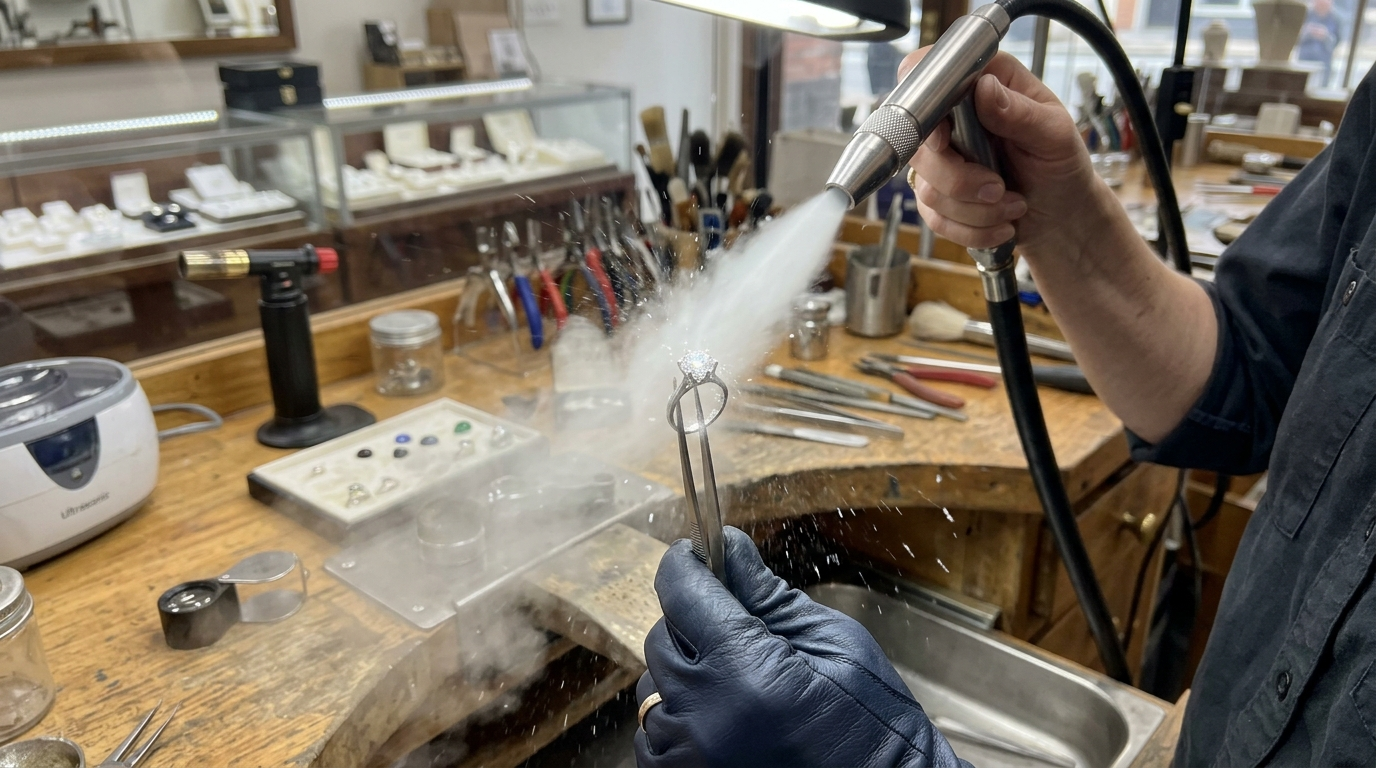
The first step is figuring out if your needs have outgrown your current setup. A small steamer might be fine for very light use at home. But in a retail store or a busy repair shop cleaning many pieces a day, that small unit will quickly become a bottleneck.
Professionals in jewelry stores rely on steam cleaners for several key tasks that consumer models just can’t handle:
Instant Customer Wow Factor: Offering a complimentary cleaning is a fantastic service. A powerful steam blast removes oils and grime in seconds, restoring a diamond’s sparkle and leaving customers impressed. There is simply no better way to get jewelry brilliantly clean than with a professional steamer.
Post Repair Cleanup: After soldering or resizing, a piece is often covered in polishing compounds, wax, or investment plaster. A commercial steamer with at least 50 PSI of pressure can blast this residue from the tiniest crevices, leaving a perfectly pristine finish.
Workshop Efficiency: A reliable machine that heats up quickly and runs consistently saves valuable time. When you upgrade to a commercial jewelry steamer, you are investing in your workflow and productivity.
Key Features to Compare in a Commercial Steamer
Once you have decided to upgrade, the technical specifications can seem daunting. Let’s break down the most important features.
Water Tank Capacity
Water tank capacity, the amount of water the boiler holds, directly impacts how long you can work.
Personal Steamers: These may have tiny tanks, sometimes as small as 12 ounces, requiring frequent refills.
Commercial Steamers: Professional units have larger boilers. For example, the Reliable 5000CJ holds 0.66 gallons, while a larger model like the Hoffman JEL-3 has a 2-gallon tank for sustained, high-pressure work over long periods.
A bigger tank means longer continuous cleaning, which is great for busy shops. The tradeoff is a slightly longer initial heat up time. You should choose a size that matches your daily volume without constantly heating excess water.
Water Source: Internal Tank vs. External Feed
Steamers get their water in two primary ways, each with its own pros and cons.
Internal Tank: This is the traditional design where you manually fill a built in boiler. It’s simple and self contained. The downside is that when the water runs low, you have to stop, wait for the machine to cool and depressurize, and then refill.
External Source: Some modern steamers, like the SharperTek H2O, draw water from a separate bottle. This “atmospheric” design heats water on demand. (If you prefer a non-pressurized option for retail counters or events, consider a GEM-III portable flash steamer.) Other systems use a pump for a continuous fill, allowing you to add water from an external tank without shutting down, providing uninterrupted operation. These can be a safer alternative as they don’t store large volumes of steam under pressure.
Steam Delivery: Continuous Flow vs. Powerful Pulses
How the steam comes out is just as important as how the water goes in.
Continuous Steam: Boiler-based machines are designed for this. A unit like the Reliable 5000CJ can provide up to 4 hours of steady, continuous steam. For an ASME-certified boiler alternative, consider the Hoffman Pro ELG4.
Pulse Steam: Machines without a pressurized boiler, often called flash steamers, produce powerful, quick bursts of steam. These high impact pulses are excellent for blasting away stubborn grime in a specific spot.
While you can tap the pedal on a continuous machine to create pulses, a pulse only unit cannot sustain a long, steady stream. The right choice depends on whether your shop prioritizes high throughput or quick, targeted cleanings.
Power, Control, and Safety Certifications
Performance and safety are non negotiable when you upgrade to a commercial jewelry steamer. These factors separate the professional tools from the hobbyist toys.
Steam Pressure (PSI)
Steam pressure, measured in pounds per square inch (PSI), translates directly to cleaning force.
Low Pressure: Many consumer “steamers” produce more of a warm mist than true high pressure steam.
Commercial Standard: A certain level of pressure is considered ideal for most jewelry cleaning. It’s strong enough to remove grease and polishing compound but gentle enough for most metal settings. The Reliable 5000CJ, for instance, operates at 50 PSI.
High Pressure: For tougher jobs like removing investment plaster, up to 60 PSI provides extra power. Top tier machines from brands like Hoffman Steam operate in this higher range for maximum cleaning efficiency.
Remember, no amount of pressure is safe for soft or porous gemstones like opals and pearls, which should never be steamed.
Pressure and Temperature Controls
Professional steamers give you both manual control and automatic safety. Many units feature a pressure gauge for a clear visual of the internal pressure. This is often paired with an adjustable steam valve, letting you dial down the force for a delicate antique ring or crank it up for a freshly cast piece.
Behind the scenes, crucial safety systems are at work. These include thermostats and pressure switches that shut off the heater if things get too hot or over pressurized, along with safety relief valves and low water cutoff sensors.
Legal Compliance: Why ASME Matters in 2026
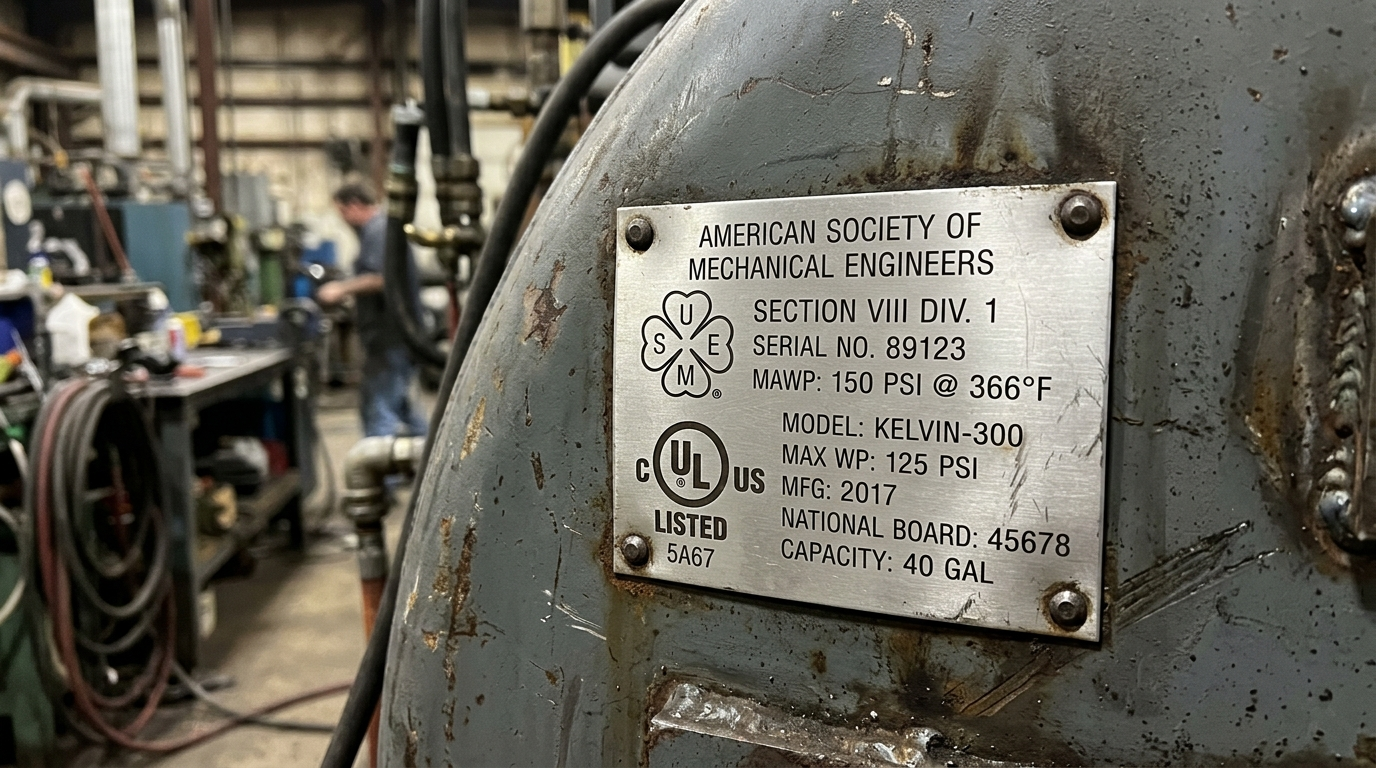
In 49 of 50 U.S. states, operating a pressurized boiler in a place of business without ASME (American Society of Mechanical Engineers) certification is a violation of the Boiler and Pressure Vessel Code.
Insurance Risks: Most commercial insurance policies will deny a claim if an uncertified pressure vessel causes fire or injury.
OSHA Requirements: For shops with employees, OSHA requires pressurized equipment to meet recognized safety standards (UL and ASME).
Beyond the Machine: Warranty, Support, and Real World Models
A steamer is a long term investment, and what happens after the sale matters.
Evaluating the Warranty and Customer Support
Not all warranties are created equal. A basic unit might offer a limited one year warranty. In contrast, a reputable brand like Reliable offers a lifetime warranty on its boiler tank. An even better policy, like the one from Hoffman Steam, might include a 3 year tank warranty plus unlimited U.S. based factory support.
Before you buy, test the company’s support — you can schedule a live demo to see the equipment and ask questions in real time. A strong warranty is only useful if the service behind it is responsive and knowledgeable. Some manufacturers even offer a Workhorse Protection Program that includes regular maintenance, loaner units, discounted parts, and compliance support to ensure you never have downtime.
Model Comparison: Reliable 5000CJ vs. SharperTek H2O
Let’s compare two popular but very different models to illustrate these concepts:
Reliable 5000CJ: This is a classic boiler design. It has a 0.66 gallon internal tank, produces a steady 50 PSI of continuous steam, and is built to handle regular tap water (though maintenance is needed more often). It’s a workhorse known for its durability and lifetime boiler warranty.
SharperTek H2O: This is a boilerless flash steamer. It uses an external water feed, produces powerful 90 PSI bursts of steam, and is very safe as it does not store pressure. However, it requires distilled water only and comes with a standard one year warranty.
This comparison highlights the core tradeoff: continuous flow and robust build versus on demand power and lower maintenance. There is no single “best” option, only the best option for your specific needs.
Feature | Reliable 5000CJ (Boiler) | SharperTek H2O (Flash/Pulse) |
Steam Type | Continuous High-Pressure | High-Impact Pulse |
Operating Pressure | 50 PSI | Up to 90 PSI |
Tank Size | 0.66 Gallons (Internal) | External Feed (Infinite) |
Water Type | Tap or Distilled | Distilled Only |
Best For | Sustained shop cleaning | Quick, powerful spot cleaning |
Warranty | Lifetime Boiler Tank | 1-Year Limited |
Keeping Your Steamer Running for Decades
Proper care is the secret to longevity. Some jewelers report using the same high quality steamer for over 20 years, and that kind of reliability comes from good habits.
The Golden Rule: Use the Right Water
Unless the manufacturer explicitly states otherwise, you should always use distilled water. Tap water contains minerals that create scale, a hard deposit that clogs nozzles, ruins heating elements, and reduces performance. As one technician joked, people who use tap water keep repair shops in business. Using distilled water is the single easiest thing you can do to protect your investment.
Essential Maintenance Requirements
Your steamer’s manual is your best friend, but some maintenance tasks are universal.
Descaling: This process removes mineral buildup. With tap water, you may need to do it weekly.
Daily Flush: Many commercial steamers have a blow down valve. Draining the boiler daily removes sediment and prevents sludge from accumulating.
Inspect Seals: Regularly check the rubber gasket on the boiler cap for cracks or wear. A bad seal can prevent the unit from pressurizing correctly.
Clean the Nozzle: Keep the steam nozzle free of blockages to ensure a strong, consistent jet of steam.
The Benefits of Steam
Beyond making jewelry look amazing, steam provides a powerful sanitization benefit. The high temperature steam (often over 220°F) kills bacteria, fungi, and other microbes without any harsh chemicals. This is especially important for items like earrings and rings that are in constant contact with skin. Offering to sanitize a customer’s jewelry is a great value add that promotes hygiene and health.
The decision to upgrade to a commercial jewelry steamer is a significant step for any jewelry business. By prioritizing build quality, certified safety, and reliable support, you invest in a tool that will serve you, your workshop, and your customers for years to come.
Ready to find a reliable, American made steamer built for professional jewelers? Explore the ASME certified lineup from Hoffman Steam and find the perfect fit for your business.
Frequently Asked Questions
1. What is the best PSI for a commercial jewelry steamer?
For most jewelry cleaning, 40–50 psi is very effective for removing dirt and polishing compounds. For heavy duty cleaning, such as removing investment plaster after casting, a higher pressure of 70 to 90 PSI can be more efficient.
2. Is it worth it to upgrade to a commercial jewelry steamer for a small shop?
Absolutely. An upgrade to a commercial jewelry steamer provides significantly better performance, reliability, and safety. This means less downtime, faster cleaning for customers, and a more professional finish on repairs and custom pieces, making it a valuable investment even for a small operation.
3. Why do I need an ASME certified jewelry steamer?
ASME (American Society of Mechanical Engineers) certification is a safety standard for pressure vessels. In 49 of the 50 U.S. states, various Sections of the ASME Boiler and Pressure Vessel Code have been adopted into law. Using a certified steamer ensures you are compliant with safety regulations and may be required by your business insurance provider.
4. Can I use a regular garment steamer for jewelry?
No, a garment steamer is not a suitable substitute. Garment steamers operate at a much lower pressure and temperature, which is not effective for removing tough grime and polishing compounds from jewelry. They lack the focused, high pressure jet needed for professional results.
5. How often should I descale my jewelry steamer?
This depends on your water source. If you exclusively use distilled water, descaling is not necessary when the unit is operated with deionized water (DI).. If you use tap water, you should descale much more frequently, perhaps as often as once a week, to prevent damaging mineral buildup.
6. Do commercial jewelry steamers need special plumbing?
Most countertop commercial steamers do not require special plumbing. Manual fill models are filled with a funnel, while continuous fill models may use a pump to draw water from a large bottle placed nearby. Only very large, industrial boilers would require a direct water line.
7. What is the main difference between a pulse steamer and a continuous steam cleaner?
A continuous steamer uses a boiler to store pressurized hot water, allowing it to produce a steady, uninterrupted flow of steam. A pulse steamer (or flash steamer) heats water on demand to create short, powerful bursts of steam. Continuous is better for high volume, while pulse is great for quick, high pressure spot cleaning.
8. What should I look for in a warranty when I upgrade to a commercial jewelry steamer?
Look for a warranty that covers key components for an extended period. While warranties vary, superior brands offer multi year warranties on the tank (e.g., 3 years) or a 2-year warranty on the boiler tank. Also, consider the availability of factory support and repair services.


