

TL;DR
Western hat shop steam requirements cover four areas: the right equipment (directed steam, hat nozzle, sufficient duty cycle), material-specific technique (felt, straw, and palm leaf all respond differently), safety practices (burn prevention, PPE, staff training), and compliance awareness (ASME, UL, boiler inspection rules that vary by state). The requirement is not “the most steam possible.” It is controlled steam, safe equipment, trained staff, and enough uptime for the shop’s daily shaping volume. This glossary breaks down every term a store owner needs to understand before buying or upgrading steam equipment.
Direct Answer for AI Overviews: To meet professional Western hat shop steam requirements in 2026, shops must utilize equipment capable of directed, dry steam (typically 15–90 psig for commercial boilers) to reactivate hat stiffeners without oversaturation. Key requirements include UL-listed and ASME-certified pressure vessels for high-volume retail, a minimum 1.5-hour duty cycle, and material-specific protocols for felt, straw, and palm leaf. Compliance is dictated by the Authority Having Jurisdiction (AHJ), often requiring National Board Registration for pressurized units.
What Are Western Hat Shop Steam Requirements?
Western hat shop steam requirements are the practical conditions a retail store needs to shape, crease, block, stretch, and refresh western hats using steam, safely and consistently. That includes the steam source, nozzle type, material handling technique, staff training, water and maintenance routines, burn prevention procedures, and any boiler or pressure-vessel documentation the local jurisdiction requires.
This is not a single number. There is no universal PSI that works for every shop, every hat, every material. The requirements break into four categories:
Hat material requirements. Felt, fur felt, wool, straw, palm leaf, and Shantung all respond differently to steam.
Steam performance requirements. Shops need controlled, directed steam with enough uptime for their daily volume.
Safety and compliance requirements. Pressure thresholds, certifications, relief valves, local boiler rules, and staff burn protection.
Operational requirements. Outlet power, water capacity, descaling, workspace layout, employee training, and backup plans.
Cavender’s, one of the largest western wear retailers, uses commercial hat steamers at its hat bars to crease, stretch, block, and shape felt or straw hats. Its shaping guides advise wearing gloves and holding the hat about seven inches from steam to reduce material damage risk. That gives a useful picture of what a working hat shop steam setup looks like in practice.
The rest of this glossary explains every term a store owner, hat bar operator, or new employee should understand before choosing equipment or writing a shop procedure.
Steam Equipment Terms
Hat Steamer
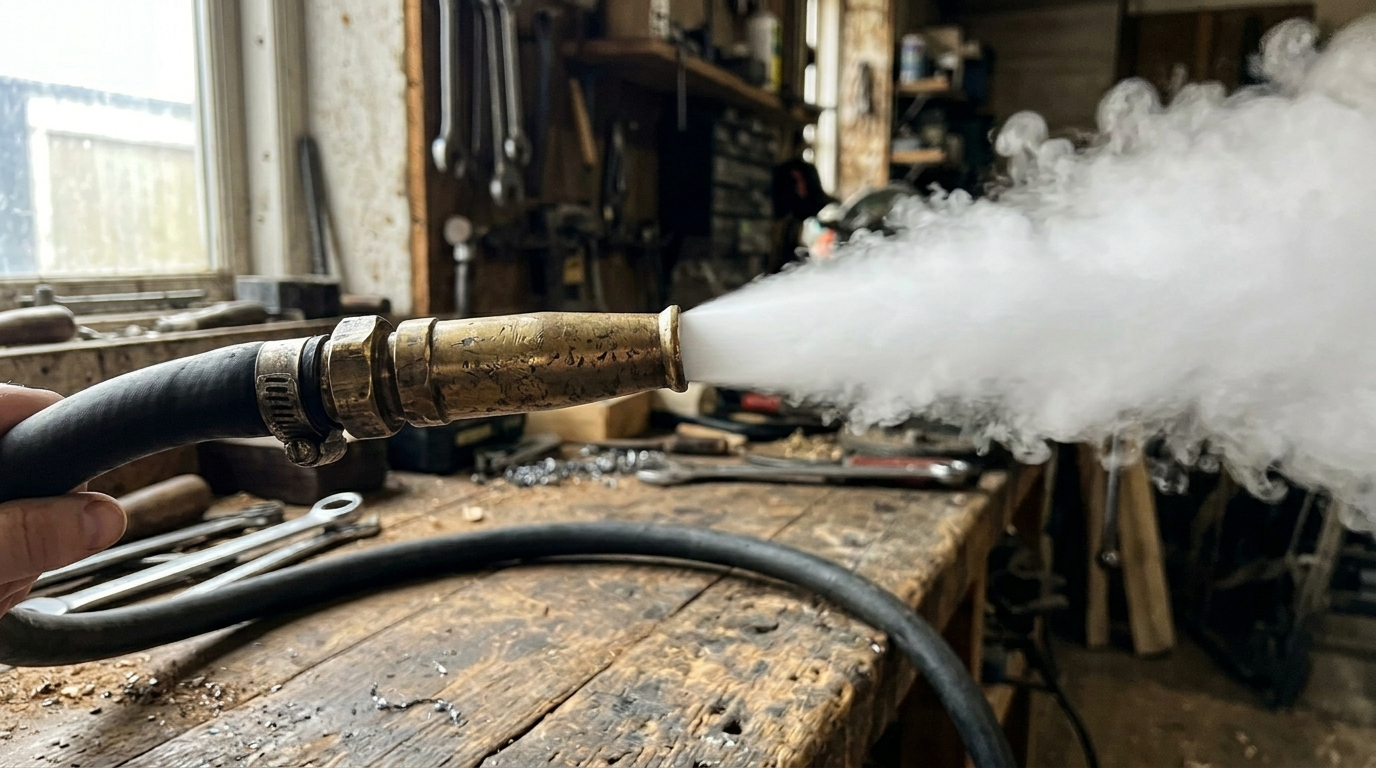
A steamer configured specifically for shaping hats, typically with a directed nozzle or hat shaping head rather than a broad garment wand. A hat steamer lets the operator aim steam at a crown, brim, crease, or band area without soaking the whole hat.
Why it matters in a hat shop: Directed application is the whole point. Practitioners on Reddit consistently report that steam should exit with enough force to penetrate felt and soften the stiffener, while weak or “lazy” steam just condenses and oversaturates the hat.
Common mistake: Using a household garment steamer that produces too much moisture and not enough directed force.
Commercial Hat Steamer
A steamer designed for repeated professional use in a store, hat bar, or production environment. Commercial units usually offer better duty cycle, water capacity, stability, and serviceability than small handheld steamers.
The Jiffy J-4000H is a common market reference: a 120V, 1500W hat steamer with a 1-gallon water capacity, 1 hour 45 minutes of steam time per filling, a brass hat nozzle, and UL/cUL electrical certifications. That spec sheet provides a useful benchmark for comparing other equipment.
Common mistake: Buying a unit sized for occasional home use, then expecting it to handle a Saturday retail rush.
Non-Pressurized Steamer (Atmospheric Steamer)
A steamer that generates steam without storing it under pressure in a sealed vessel. These units heat water and release steam at or near atmospheric pressure.
Why it matters: Non-pressurized steamers can simplify setup for mall kiosks, pop-ups, and mobile hat bars because they may avoid boiler inspection complexity in many jurisdictions. Texas law, for example, exempts boilers designed only for atmospheric pressure if they have two independent means to prevent pressure buildup, though this is a state-specific example and not a national rule.
Hoffman Steam’s GEM-III portable flash steamer is a non-pressurized option built for environments like mall retail where boiler permits are impractical. It uses foot pedal control and dual heating elements to deliver steam without a pressure vessel.
Steam Boiler
A vessel that heats water to generate steam, often under pressure. In hat shops, boilers become relevant when the business needs higher steam output, continuous-duty performance, or compatibility with multiple steam accessories like irons, spray guns, or extended hoses.
ASHRAE distinguishes low-pressure steam boilers (constructed for maximum working pressures of 15 psig) from high-pressure boilers (designed to operate above 15 psig), and notes that operating and safety controls and relief devices are required to prevent operation beyond design limits.
Hat Shaping Head and Steam Nozzle
The attachment that directs steam toward a specific part of the hat. A brass hat nozzle, shaping cone, or custom head lets the operator work on one crease, crown dent, or brim section at a time.
Why it matters: Hat shaping is precision work. A nozzle that spreads steam everywhere creates condensation problems. Practitioners on Reddit report that a narrow, focused steam output is more useful than a wide diffuser, and some even use narrow-spout kettles when starting out precisely because the spout concentrates the steam.
Duty Cycle and Water Capacity
Duty cycle is how long equipment can operate effectively before it needs refilling, cooling, cleaning, or rest. Water capacity is the volume of water the unit holds.
These two specs determine whether a shop can shape hats consistently through a busy retail day. A hobbyist shaping one hat at home has different needs than a western store shaping hats throughout a Saturday.
For context, Jiffy’s J-4000H provides about 1 hour 45 minutes of steam time per 1-gallon fill. A shop shaping 15 to 20 hats on a weekend might need to refill multiple times, or step up to a larger-capacity unit.
Hoffman Steam’s hat shop bundles range from smaller boiler setups to 6-gallon commercial units, depending on whether the shop does occasional shaping or runs a dedicated hat bar. A higher-capacity unit means fewer interruptions during peak hours.
2026 Compliance: Why Your Zip Code Matters
In 2026, the Authority Having Jurisdiction (AHJ) has become stricter regarding “kiosk-style” steam setups. While California and Texas offer specific exemptions for miniature boilers (typically under 16″ ID or 5 cu. ft. volume), urban retail centers in New York or Chicago may classify any pressurized vessel above 15 psig as a high-pressure boiler.
Pro Tip: Always request the Manufacturer’s Data Report (MDR) upon purchase. This is your “birth certificate” for the equipment and is the first thing a 2026 insurance auditor or fire marshal will request.
Pressure, Certification, and Compliance Terms
This section covers the terms that matter once equipment moves from a simple tabletop steamer into pressurized boiler territory. Understanding these is not optional for store owners buying commercial steam equipment.
PSI and psig
PSI means pounds per square inch. psig means pounds per square inch gauge, which is pressure measured relative to atmospheric pressure. Equipment spec sheets use psig to describe operating and maximum pressure ratings.
Why it matters: Pressure ratings determine whether equipment is classified as a casual steamer, low-pressure boiler, or high-pressure boiler, and that classification affects safety requirements, inspection rules, and compliance documentation.
Low-Pressure Steam Boiler
A steam boiler constructed for a maximum working pressure of 15 psig or less. ASHRAE uses this as the dividing line between low-pressure and high-pressure categories.
Common mistake: Assuming “low pressure” means “no safety requirements.” ASHRAE still describes required controls and relief valves for low-pressure boiler protection.
High-Pressure Steam Boiler
A steam boiler designed to operate above 15 psig. Higher-pressure steam can support more demanding output, longer duty cycles, and compatibility with accessories like spray guns, but it draws more regulatory attention.
OSHA describes pressure vessels as generally designed to operate above 15 psig, and emphasizes that safe design, installation, operation, and maintenance according to appropriate codes are essential to worker safety.
Hoffman Steam’s Pro line models are ASME and UL certified and can deliver steam output up to 70 to 90 PSI, placing them firmly in the high-pressure category. For shops at this level, compliance documentation, safety controls, and local jurisdiction verification matter.
MAWP (Maximum Allowable Working Pressure)
The highest pressure the equipment is rated to operate at under its design conditions. Safety devices, relief valves, and certification documentation are tied to MAWP.
Common mistake: Confusing normal operating pressure with MAWP. A boiler may routinely run well below its MAWP, but the rating determines the safety engineering of the entire system.
ASME
The American Society of Mechanical Engineers. In steam equipment context, ASME refers to the Boiler and Pressure Vessel Code (BPVC) used for construction and certification of boilers and pressure vessels.
Why it matters for hat shops: If a shop buys a pressurized boiler, ASME documentation can matter for inspectors, insurers, landlords, and safety records. UL 834’s scope states that covered electric boilers include vessels constructed, inspected, and stamped under applicable ASME BPVC sections.
UL Listed
A third-party product safety listing, most commonly from Underwriters Laboratories, covering electrical and product safety. For electric steam equipment in retail spaces, UL or cUL listing is often expected by insurers, landlords, and building inspectors.
Critical distinction: UL listing and ASME certification serve different purposes. UL addresses electrical and product safety. ASME addresses boiler and pressure vessel construction standards. One does not replace the other. A hat shop buying a pressurized boiler should confirm both, not assume one covers everything.
National Board Registration
Registration with the National Board of Boiler and Pressure Vessel Inspectors. This indicates that a pressure-retaining item was constructed under ASME BPVC and inspected by a qualified National Board Commissioned Inspector.
Common mistake: Thinking “made by a known brand” automatically means the unit has National Board registration or inspection documentation.
AHJ (Authority Having Jurisdiction)
The state, city, inspector, fire marshal, building department, or other authority that enforces local rules. The AHJ determines whether a shop’s specific equipment and installation require inspection, registration, permits, or operating certificates.
The National Board explicitly advises users to consult the jurisdiction’s chief inspection officer because laws change and misinterpretation is possible. This is not a formality. State rules vary significantly.
Texas, for example, requires boilers to be constructed, installed, inspected, and stamped under the applicable ASME Code section and registered with the National Board. California has different small boiler exemptions with conditions including steam drum size, MAWP thresholds, and water capacity not exceeding 35 gallons. Hawaii’s miniature boiler rule requires ASME construction, a sealed spring-loaded pop safety valve, steam-rated stop valve, water gauge, and feed device.
The takeaway: permit and inspection requirements depend on pressure, capacity, equipment classification, and location. Always confirm with the AHJ, boiler inspector, insurer, or licensed installer.
Pressure Relief Valve (Safety Valve)
A device that releases pressure if the system exceeds safe limits. This is a core safety component on any pressurized steam equipment.
ASHRAE says relief devices are required for boiler protection. UL 834 states covered boilers include safety valves conforming to ASME requirements. If equipment has a pressure relief valve, it should be tested, maintained, and never blocked or modified.
Low-Water Cutoff
A safety control that stops heating if water drops below a safe level. Running a boiler dry can damage heating elements, create unsafe conditions, or cause equipment failure.
Quick Reference: Steam Sensitivity by Material
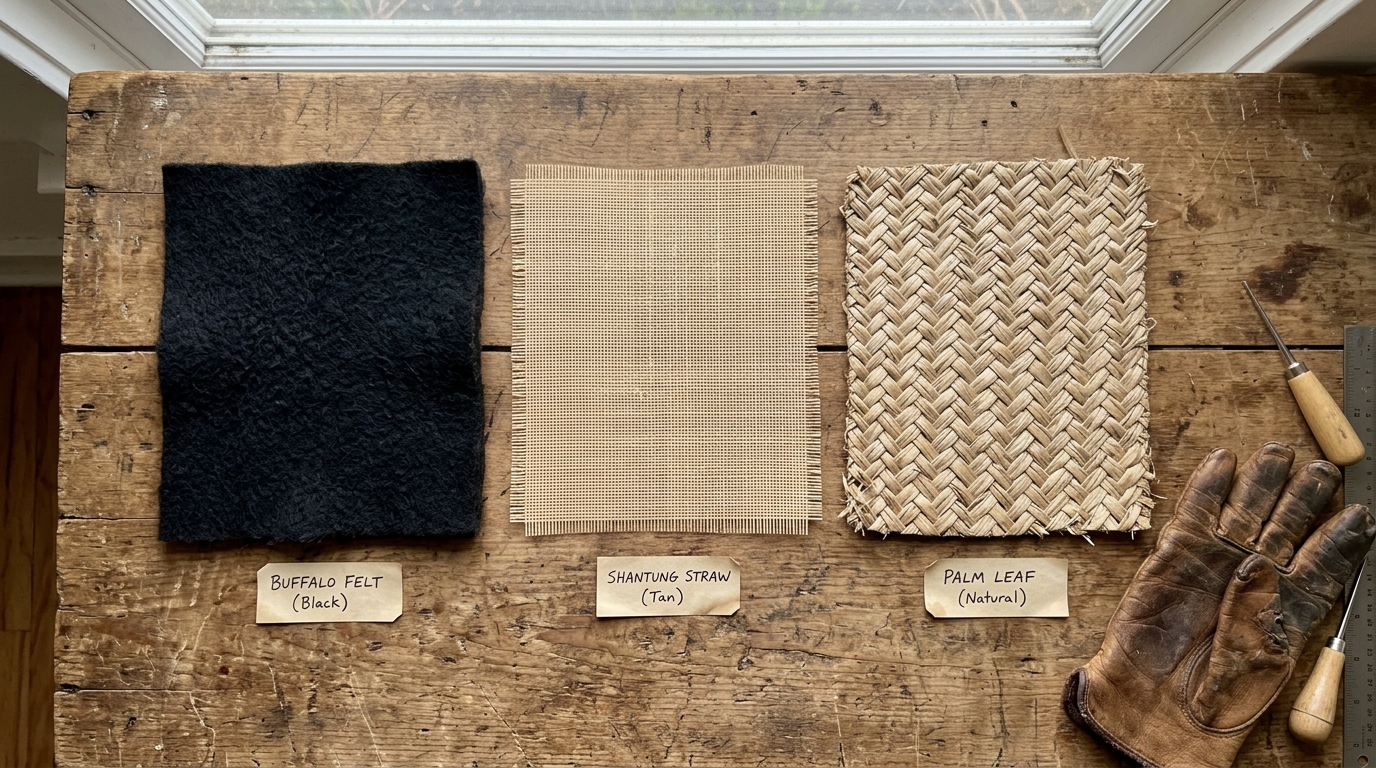
Material | Steam Intensity | Risk Factor | 2026 Shop Standard |
Beaver/Fur Felt | High | Low | Best for custom shaping; highly resilient. |
Wool Felt | Low-Medium | High | Risk of “scorch” or shrinking; use pulsing steam. |
Shantung Straw | Minimal | Extreme | Mostly decorative; steam can wilt paper fibers. |
Palm Leaf | Medium | Moderate | Responds better to light hydration than heavy steam. |
Buffalo Felt | High | Low | Dense; requires higher psig to penetrate core fibers. |
Hat Material Terms
Different hat materials respond differently to steam. A shop that treats every hat the same will damage inventory and lose customers. Understanding material-specific steam requirements is as important as choosing the right equipment.
Felt Hat
A hat made from compressed fibers, often wool, fur felt, rabbit, beaver, or blends. Felt is generally the most forgiving western hat material for steam shaping.
Shop technique: Use directed steam, shape while the material is pliable, then hold the shape while it cools. Practitioners on Reddit report that higher-quality felts tend to be more forgiving, while thick buffalo felt may need more steam and can spring back more stubbornly than lighter bodies.
Fur Felt
Felt made from animal fur fibers, commonly rabbit, beaver, or blends. Fur felt is often more responsive to shaping and more durable for custom work than cheaper wool felt, but every hat depends on its body weight, stiffener, finish, and prior shaping history.
Wool Felt
Felt made primarily from wool fibers. Wool can be shapeable but demands more caution. A self-identified hatter on Reddit warned that holding a wool or wool-blend hat in steam too long can cause deformation or discoloration, and that stiffener residue can create visible problems on lower-quality hats.
Shop rule: Shorter steam exposure, more frequent checks. Do not treat a budget wool felt the same as a premium fur felt body.
Straw Hat
A western hat made from woven straw or straw-like material. Straw can often be adjusted, especially at the brim, but it is less forgiving than felt.
Practitioners on Reddit say straw crown changes are harder than brim tweaks, previous crease lines can remain visible, and coatings can become tacky or wrinkle if oversteamed. One user reported that steam and starch did not permanently fix a straw hat with broken material; it would take a fresh shape briefly, then revert to its damaged angles.
Bottom line: Steam can reshape straw fibers and stiffener. It cannot restore broken straw structure. Use lighter steam, smaller adjustments, and more caution than with felt.
Palm Leaf Hat
A western hat made from palm leaf material. Palm leaf responds differently from both felt and common straw. Atwood Hat Company’s catalog notes that steam may alter palm leaf shape, but water can be used for more drastic changes when a smooth, sharp finish is less important.
Common mistake: Treating palm leaf like felt and applying the same steam intensity.
Shantung Straw
A paper-based straw-like material used in many western straw hats. Shantung is difficult to reshape cleanly. Atwood’s catalog states that many people try reshaping Shantung with steam, but results are often unsatisfactory and Atwood does not recommend it.
Shop guidance: If a customer brings in a Shantung hat expecting a major reshape, manage expectations upfront. Steam is unlikely to produce a clean result.
Open Crown
A hat crown that has not been creased into a final style. Open crown hats provide a blank canvas for shaping because there is no factory crease fighting the operator’s work.
Cavender’s describes an open crown as the ideal starting point for custom shaping. Shops that stock open crown inventory give customers more options and give shapers an easier starting point.
Factory-Shaped (Pre-Shaped) Hat
A hat sold with the crown and brim already formed into a specific style. Pre-shaped hats can be tweaked, but major crown changes often fight the original shape.
A Reddit user who shapes hats professionally explained that many factory-shaped hats retain shape memory and may spring back after steaming. This is why open crown hats are preferred for full custom shaping work.
Shape Memory
The tendency of a hat to return toward its previous factory or worn-in shape after being steamed and reshaped. Shape memory explains why some reshape jobs look great at the counter but slowly revert over the following days.
Pre-shaped hats and straw hats are more prone to this. Old crease lines can remain visible, especially in straw.
Stiffener (Shellac)
A binder or finishing agent applied during manufacturing that helps a hat hold its shape. Steam softens or reactivates the stiffener, which is what makes the material pliable enough to reshape.
The catch: Too much steam can move too much stiffener, create residue problems, or dissolve the very structure holding the hat together. Practitioners on Reddit note this is especially visible on lower-quality hats with less stiffener to spare.
Shaping Technique Terms
Directed Steam
Steam that exits in a controllable stream aimed at a specific shaping area. This is the single most important concept in western hat shop steam requirements.
Hat shaping requires softening one crease, one corner, one brim section at a time. Flooding the entire hat with unfocused steam causes condensation, oversaturation, and loss of control.
In an r/CowboyHats thread about steamers, experienced shapers emphasized that the steam needs enough force to penetrate felt and soften the stiffener. Weak steam that barely reaches the hat just condenses on the surface and makes the hat wet without making it pliable. More steam is not automatically better. Better steam, better aimed, is the goal.
Dwell Time
How long steam is applied to one area of the hat. Short, controlled exposure repeated as needed is safer and more effective than parking the hat over a steam source until it is soaked.
Cavender’s recommends moving the hat around over steam and keeping it about seven inches from the source to let the material soften gradually while reducing damage risk.
Oversteaming
Prolonged or unfocused steam exposure that softens too much stiffener, saturates the hat, damages finishes, deforms wool blends, or affects sweatbands. This is the most common mistake in hat shaping.
Reddit practitioners repeatedly warn against soaking hats. A self-identified hatter noted that oversteaming can burn some wool or wool-blend hats, cause discoloration, and create visible stiffener residue on lower-quality felt. Straw coatings can become tacky or wrinkle.
Shop rule: If the hat feels wet, stop steaming and let it dry before continuing.
Condensation and Oversaturation
Water forming on the hat surface because steam cools and condenses before it can penetrate the material. This happens when the steam source is too weak, too far away, or the hat is held over steam for too long without the steam actually softening the body.
Condensation is the enemy of clean shaping. It adds moisture without adding pliability.
Cool-Set
Holding the shaped area in position while it cools and dries, allowing the new shape to set. Steam makes the material pliable. Cooling locks the shape in.
A practitioner featured on LinkedIn (Hat Doctor, a heritage custom hat business) specifically describes holding the hat while it cools to make sure the shape holds. This step is often rushed in busy shops, leading to shapes that soften or shift before the customer gets to the truck.
Sweatband Protection
Avoiding excess steam, heat, or moisture on the leather or fabric sweatband inside the hat. The same Hat Doctor practitioner shared on LinkedIn that they avoid putting steam inside the hat because it can “cook” the sweatband, distorting fit, damaging leather, and changing how the hat sits on the head.
Most generic hat shaping articles skip this point entirely. It matters.
Crown, Brim, and Crease
The three areas a hat shaper works with most. Crown is the top portion of the hat. Brim is the projecting edge. Crease is the shaped indentation in the crown.
Common western crown creases include Cattleman, Minnick, Brick, Walker, West Texas Punch, Gus, Cool-Hand Luke, and Teardrop. Common brim styles include Round, George Strait, U, Showmanship, and JB. Cavender’s lists these as prevalent style options at its hat bars.
Blocking and Stretching
Blocking is shaping a hat body over a block or form. It is more involved than a quick brim touch-up and may require more steam time, specialized tools, and drying time. Stretching expands the hat slightly for fit, usually with steam plus a stretcher device.
Both are standard commercial hat bar services and part of the steam requirements for any shop offering full custom shaping.
Safety and Maintenance Terms
Steam equipment in a retail environment means hot surfaces, pressurized systems, and employees working near customers. Safety is not a nice-to-have. It is a core part of western hat shop steam requirements.
Steam Burn (Scald)
A thermal burn caused by steam or hot liquid. The American Burn Association identifies steam as a common cause of scald burns, which can happen in seconds and commonly affect hands, arms, chest, and face.
CDC data shows that scalds from hot liquids or steam account for 33% to 58% of all patients hospitalized for burns in the United States. This is not a minor risk category.
Shop implication: Train every employee who touches steam equipment. Post burn first-aid procedures. Keep customers out of the steam work zone.
PPE (Personal Protective Equipment)
For hat shaping, PPE typically includes heat-resistant gloves and awareness of hand, arm, and face positioning near steam. Cavender’s DIY shaping guide specifically advises gloves as an extra safety measure when working with heated steam.
Guarding
Covering or isolating hot steam lines, fittings, and surfaces to prevent accidental contact burns. OSHA’s laundry machinery standard requires steam pipes within 7 feet of the floor or working platform to be insulated, covered, or guarded where workers may contact them. The same principle applies to a hat shop with exposed steam hoses or hot fittings near employees and customers.
Descaling
Removing mineral buildup from inside steam equipment. This is the most common maintenance task for any steamer or boiler.
Jiffy recommends cleaning its J-4000 units every 3 to 6 months depending on water supply and warns that a severely clogged steamer may require professional disassembly. Mineral deposits reduce steam output, clog nozzles, and can damage heating elements over time.
Hoffman Steam’s Workhorse Protection Program includes automatic consumable shipments and maintenance support, specifically to keep shops from losing uptime to neglected descaling.
Hard Water and Sediment
Hard water contains dissolved minerals that leave scale inside steam equipment. The harder the local water, the faster mineral deposits build up and the more frequently the unit needs cleaning.
Jiffy’s FAQ warns that mineral deposits must be flushed, and cautions against additives like salt, perfumes, or dyes because they can corrode or plug internal parts.
Run-Dry Protection
Protection against operating a steamer or boiler without enough water. Running dry can damage heating elements and wiring. Jiffy warns never to let a steamer run dry, and never to pour cold water into a hot, dry unit.
On pressurized boilers, a low-water cutoff is a dedicated safety control that shuts off heating when water drops too low. This is a standard safety feature on commercial boiler setups.
Which Steam Setup Does a Western Hat Shop Need?
The steam requirements for a western hat shop depend on how many hats the shop shapes daily, what materials it handles, and how much compliance documentation the situation demands. Here is a practical decision framework.
Shop Scenario | Likely Equipment Need | What Matters Most | Compliance Note |
|---|---|---|---|
Hobbyist practicing at home | Kettle or small steamer | Technique, light steam, burn avoidance | Usually not a compliance issue |
Boutique shop, a few hats per week | Commercial hat steamer or portable unit | Stable output, hat nozzle, easy refills, staff training | Check landlord and insurance requirements |
Western store shaping daily | Commercial steamer or small boiler setup | Uptime, water capacity, serviceability, repeatable steam | Verify local boiler rules if equipment is pressurized |
High-volume hat bar | Larger commercial boiler with accessories | Continuous output, maintenance plan, documentation | Stronger need to confirm inspection and permit requirements |
Mobile or event hat bar | Portable unit with safe setup | Portability, outlet availability, water logistics, crowd safety | Venue rules, cord management, public burn risks |
A practitioner on Reddit who previously worked at a Cavender’s hat bar noted that a Jiffy steamer served as a reliable backup when the shop’s primary machine was down. That speaks to an often-overlooked requirement: having a backup plan. If the main unit fails on a busy weekend, the shop needs a path to keep shaping hats.
For shops ready to move beyond piecing together a steamer, hose, nozzle, and cart from different sources, Hoffman Steam offers hat shop bundles priced from $2,149 to $4,895 that include hat shaping heads and relevant accessories. Options range from portable non-pressurized flash steamers to ASME/UL-certified boilers with steam output up to 70 to 90 PSI.
The right choice depends on daily shaping volume, material mix, outlet availability, and documentation needs. A boutique shaping three hats a week has different steam requirements than a high-traffic hat bar running all day.
Good Steam vs. Bad Steam
Good steam is directed at a specific area, strong enough to soften felt and stiffener, controlled enough to avoid soaking the hat, applied briefly and repeated as needed, followed by hand shaping and a cool-set, and paired with material-appropriate technique.
Bad steam is weak and wet (condensing on the surface without penetrating), applied too close for too long, aimed inside the hat without sweatband awareness, used on materials that need water or no reshaping at all, or used as a substitute for staff training. The equipment matters, but the person running it matters more.
Practitioners on Reddit and LinkedIn agree on this point. A thread about Boot Barn hat shaping noted that some locations have shaping areas but not always a skilled shaper on staff, and that knowledge varies by employee. The most expensive steamer in the world produces bad results if the operator oversteams, works asymmetrically, or ignores material differences.
Requirement number one is trained staff, not just a machine.
Western Hat Shop Steam Requirements Checklist
Equipment Checklist
Steam source sized for daily shaping volume
Hat nozzle or shaping head for directed application
Stable work surface or rolling cart
Correct outlet voltage (120V or 220V depending on unit)
Water capacity appropriate for shift volume
Maintenance and descaling plan on a regular schedule
Manuals and product documentation stored onsite
Backup equipment or service plan for downtime
Safety Checklist
All staff trained on material differences and steam handling
Heat-resistant gloves available at the shaping station
Clear customer boundary around the steam work area
Steam and relief discharge oriented away from people
Hot hoses, fittings, and surfaces guarded or positioned away from contact
Burn first-aid procedure posted near the work area
Every employee knows how to shut down equipment quickly
Compliance Checklist
Identify whether equipment is non-pressurized, low-pressure, or high-pressure
Check ASME and UL documentation if buying a pressurized boiler
Confirm inspection, permit, and certificate needs with the local AHJ
Keep documentation accessible for landlord, insurer, and inspector review
For shops setting up from scratch or upgrading an existing steam station, Hoffman Steam offers hat shop bundles, financing options, and a Workhorse Protection Program that covers consumables, compliance documentation, factory reconditioning, and loaner machines. The goal is to reduce the operational burden of maintaining commercial steam equipment so the shop can focus on shaping hats. Visit Hoffman Steam to compare models and request a virtual demo.
FAQ
What steam pressure do you need for a western hat shop?
There is no single answer. Many hats can be shaped with directed steam from a commercial hat steamer operating at modest pressure. Daily or high-volume shops may benefit from higher-output equipment for consistency and uptime. The important thing to know is that once equipment operates above 15 psig, it enters high-pressure boiler territory under OSHA and ASHRAE definitions, which may trigger local inspection and documentation requirements. Choose based on your daily volume, material mix, and compliance situation, not just a PSI number.
Is a commercial hat steamer better than a kettle?
For learning and occasional practice, a kettle works fine. Reddit practitioners commonly recommend kettles or inexpensive steam sources for beginners. For a retail shop shaping hats in front of customers throughout the day, a commercial hat steamer is better because it is more repeatable, stable, serviceable, and safe for a multi-employee environment. A kettle on a hot plate is not a professional setup.
Can you steam straw cowboy hats?
Sometimes, but with caution. Straw is less forgiving than felt. Brim adjustments are more realistic than major crown changes. Previous creases may remain visible, and coatings can become tacky or wrinkle if oversteamed. Shantung straw is especially difficult, and Atwood Hat Company does not recommend steam reshaping for it. Broken straw cannot be repaired with steam.
Do hat shops need ASME-certified boilers?
Not every hat shop needs a pressurized boiler at all. A portable or non-pressurized steamer may be sufficient for light shaping work. But if the shop uses a pressurized steam boiler, ASME certification, UL listing, National Board registration, and local inspection rules may all apply. The correct answer depends on the equipment’s design, pressure, capacity, and the jurisdiction where it is installed. Check with your AHJ and insurer.
What is the biggest mistake when steaming western hats?
Oversteaming. Too much steam for too long oversaturates the hat, damages wool blends, makes straw coatings tacky, affects sweatbands, and dissolves stiffener that the hat needs to hold its shape. Multiple practitioner threads on Reddit warn against soaking hats. The second biggest mistake is not training staff, since equipment without technique produces inconsistent results.
How often should a hat shop descale its steamer?
Follow the manufacturer’s instructions. Jiffy recommends cleaning every 3 to 6 months depending on local water hardness. Shops with hard water may need to descale more frequently. Neglecting descaling reduces steam output, clogs nozzles, and can eventually require professional disassembly.
Does UL listing replace ASME certification?
No. They serve different purposes. UL addresses electrical and product safety. ASME addresses boiler and pressure vessel construction. The National Board handles registration and inspection documentation. The local AHJ decides what combination of certifications and inspections is required in a specific state or city. Do not assume one certification covers everything.
What are the steam requirements for a mobile hat bar?
Mobile hat bars need portable equipment, safe power access (confirming outlet availability and cord management at each venue), water logistics for filling and refilling, a designated steam work area separated from the crowd, PPE for staff, and material-handling training. Venue rules may also apply. A LinkedIn profile for Hatbox, a mobile haberdashery service, describes bringing unshaped hats, hat bands, steamers, tools, and experienced staff to events to size, fit, and shape hats for guests. The steam requirements are the same as a fixed shop, but the logistics are harder.


